
Discover everything you need to know about setting up your new Columbia Gas account, comparing local rates, and maximizing energy efficiency in your home
Key Takeaways
- Compare local supply rates using the Columbia Gas Choice program to potentially lower your monthly bill.
- Enroll in budget billing and assistance programs to prevent unexpected financial spikes during freezing winter months.
- Download the Columbia Gas mobile app to easily manage your account, pay your bill, and track your daily usage.
Moving into a new residence brings a wave of excitement, but coordinating your utilities can quickly turn that joy into a stressful chore. If you are relocating to a territory powered by NiSource, securing your natural gas connection is likely a top priority on your to-do list. We designed this guide to help you seamlessly establish your Columbia Gas login, compare energy choice rates without the headache, and uncover eco-conscious ways to lower your household carbon footprint. You deserve a comfortable, energy-efficient home from day one, so we will walk you through everything from activating your meter to shaving dollars off your monthly heating bill.
Where Does Columbia Gas Provide Service?
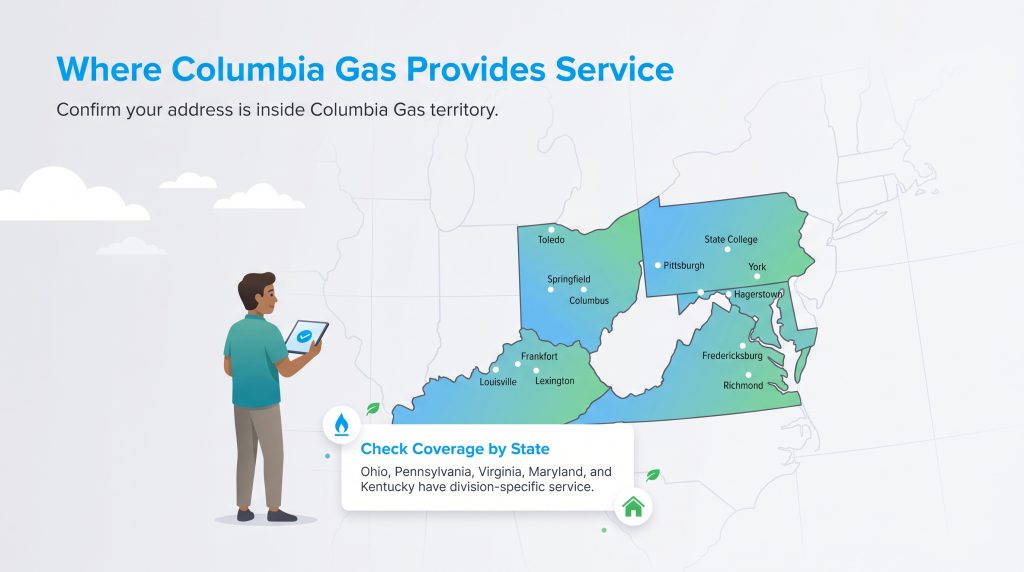
Before you dive into opening a new account, you need to confirm that your fresh address falls within their coverage footprint. Operated by NiSource, this major utility provider delivers natural gas to hundreds of thousands of customers across the Midwest and Mid-Atlantic regions. They operate through five distinct subsidiaries, powering a mix of dense urban centers and sprawling suburban neighborhoods.
Because coverage is heavily division- and county-specific, you will manage your service exclusively through the operating company designated for your state. Available relief programs, connection fees, and processing timelines vary slightly from region to region. Some primary service territories include:
- Ohio: Powering major economic hubs like Columbus, Toledo, and Springfield.
- Pennsylvania: Supplying neighborhoods throughout Pittsburgh, York, and State College.
- Virginia: Keeping homes warm in regions around Richmond and Fredericksburg.
- Maryland: Serving residential customers in communities like Hagerstown and Cumberland.
- Kentucky: Delivering reliable natural gas to central Kentucky, including Louisville, Lexington, and Frankfort.
Columbia Gas Plans and the Choice Program
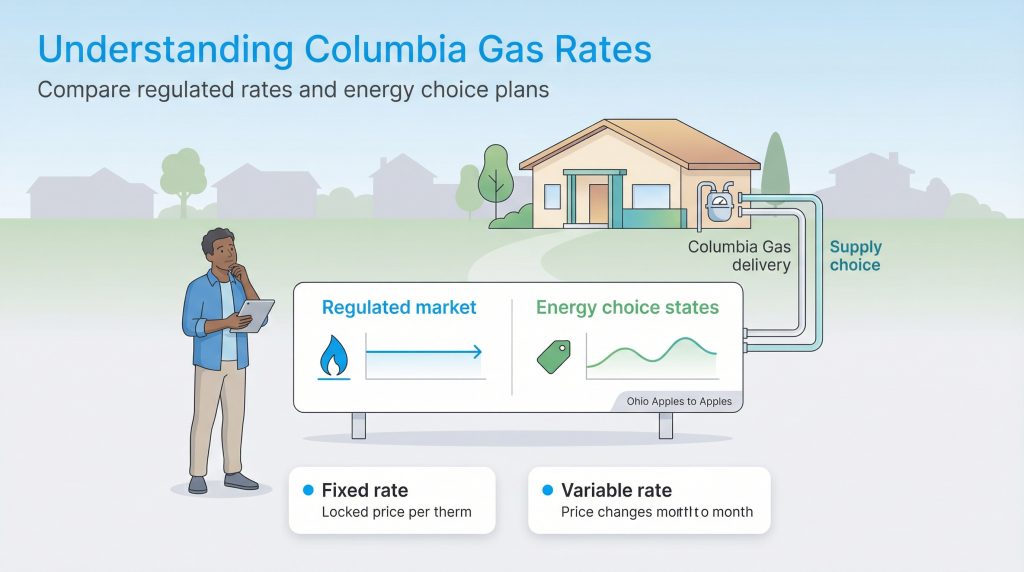
Nobody wants to open their first utility bill and face an unexpected financial shock. Making sense of Columbia Gas rates boils down to understanding how natural gas is priced in your specific state. In fully regulated markets, the utility company procures the gas and passes the cost directly to you without a markup, meaning everyone pays a standard offer rate approved by local public utility commissions.
However, if you live in a deregulated market, you have the freedom to shop around for the generation portion of your bill through the Columbia Gas Choice program. The utility will still deliver the fuel and maintain the underground pipes, but you can purchase the actual raw natural gas from a third-party competitive retail supplier. Taking the time to evaluate these alternative suppliers can sometimes yield noticeable savings over the default assigned rate.
To effectively shop for a new rate, look at your recent billing statement to find your “Price to Compare.” This specific number shows exactly what you are currently paying per Ccf or therm for the gas supply. If a retail supplier offers a rate lower than your Price to Compare, you will save money on the generation portion of your bill.
Evaluating Retail Supplier Options
When reviewing third-party natural gas suppliers, look closely at the contract terms to find the right fit for your household. Check for early termination fees, clarify the contract duration, and note any monthly base charges. To see how these options stack up in real time, residents of Columbia Gas of Ohio can explore the official Ohio Apples to Apples natural gas portal.
| Plan Type | How It Works & What to Watch For |
| Standard Choice Offer (SCO) | The default, regulated rate assigned if you do not actively choose a supplier. It fluctuates based on wholesale market prices and is passed on without an additional markup. |
| Third-Party Fixed-Rate Plans | Locks in your generation cost for a set duration, shielding you from sudden market spikes during a bitter winter. Always check for early termination fees before signing. |
| Third-Party Variable-Rate Plans | Fluctuates month to month based on market conditions. Watch out for low introductory rates that may spike significantly during peak winter heating demand. |
Understanding Your Columbia Gas Bill Delivery and Supply
Utility bills are notoriously dense, often packed with industry jargon that leaves customers scratching their heads. If you want to take full control of your monthly energy expenses, you need to understand exactly what you are paying for. Your statement is fundamentally divided into two primary categories: Delivery Charges and Supply Charges.
- Delivery Charges: This is the operational cost associated with transporting the natural gas to your home. It covers the maintenance of local pipelines, physical infrastructure upgrades, emergency response teams, and meter reading. Because Columbia Gas owns the physical pipes, these charges are regulated by the state and remain non-negotiable regardless of who supplies your gas.
- Supply Charges: This covers the actual cost of the raw natural gas you consumed during the billing cycle. Unlike delivery fees, supply charges in deregulated states are open to competition. If you enroll in the Choice program, this is the section of your bill where you will see your newly negotiated rate reflected.
Separating these two costs makes it much easier to digest your monthly statement. If you notice a sudden spike in your bill, checking whether your consumption increased or your variable supply rate jumped is a smart first step in diagnosing the problem.
Step-by-Step Guide to Starting or Transferring Service
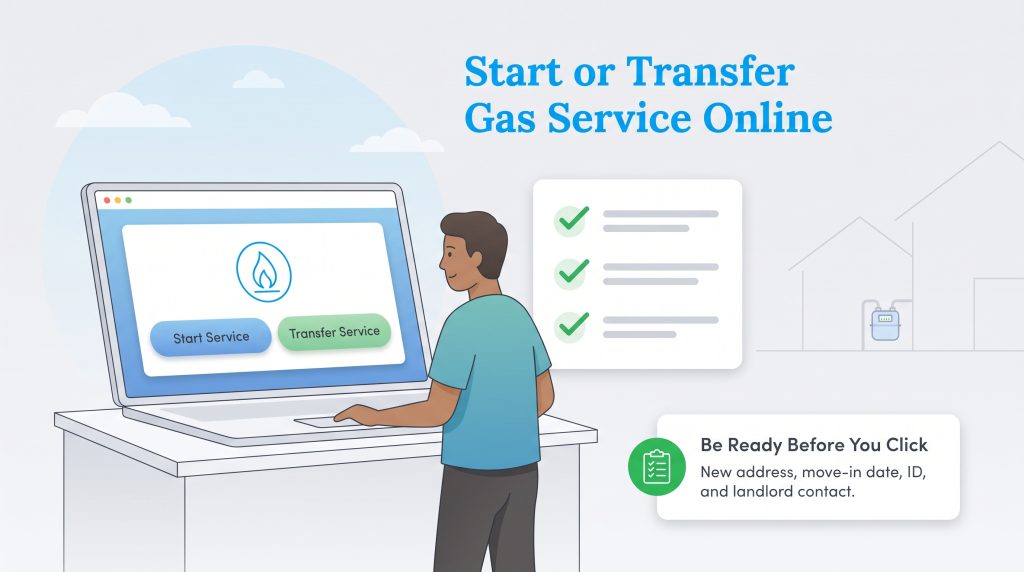
Getting your utilities turned on should not require an afternoon stuck on hold. When you need to initiate a Columbia Gas start service request, navigating to their official web portal allows you to manage the entire process online. Before you begin, gather your new address, requested start date, personal identification, and your landlord’s contact information if you are renting.
Once you have those details handy, follow these straightforward steps to establish your connection:
- Locate your physical meter: Check your property before going online. If your home has an indoor or locked meter, an adult must be present for a technician to safely establish your setup.
- Navigate to the portal: Visit the official website for your state’s specific division and access the Columbia Gas login page.
- Select start or transfer: Choose the option to move your existing account or create a brand-new one from scratch.
- Verify your identity: Provide the required identification details to establish your account and complete a standard soft credit check.
- Schedule the date: Pick a move-in date that aligns with your arrival, ideally booking it a week in advance to avoid delays.
If you are wondering how to transfer service from an old address to a new one, the online dashboard handles this seamlessly. You just need your current account number and the new service address. If your new property requires physical line inspections or you simply prefer speaking to a human, dialing the Columbia Gas customer service number is the right move. For more actionable tips on managing your moving timeline, browse our comprehensive utility setup checklist.
Columbia Gas Mobile App and Payment Options
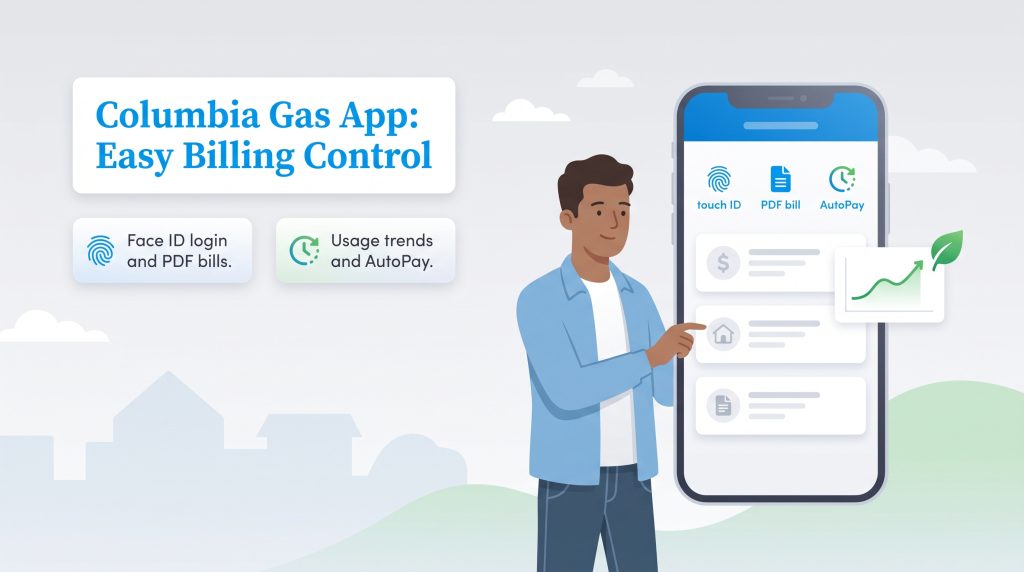
Once your account is up and running, managing your Columbia Gas bill pay process is incredibly streamlined. By downloading the official Columbia Gas mobile app, you gain complete control over your home’s energy profile right from your pocket. The platform includes a variety of specific, verified features designed to make account management practically effortless:
- Touch ID and Face ID login: Access your secure dashboard instantly without needing to memorize complex passwords.
- PDF bill downloads: Easily save and print your official monthly statements for personal record-keeping or proof of residency.
- Multiple account management: Seamlessly switch between different properties if you oversee a business, a rental unit, or a secondary home.
- Month-over-month usage tracking: View detailed historical data to spot consumption trends and adjust your smart thermostat accordingly.
Additionally, the app allows users to enroll in Paperless Billing to reduce mailbox clutter and set up AutoPay so your monthly balance is automatically deducted from a linked bank account on your due date.
Fees, Assistance Programs, and Financial Support
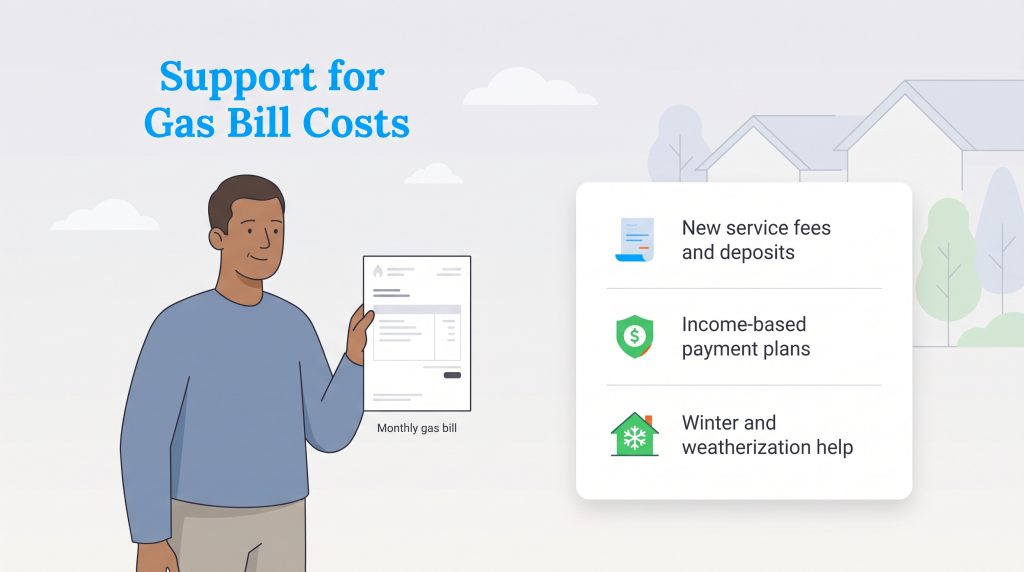
Beyond the cost of the actual gas you consume, your monthly bill includes standard operational charges. Expect to see a modest start or service fee on your first statement when establishing a new connection. If you are a first-time customer without an established credit history, the utility might require a refundable security deposit to initiate your service.
Some utilities accept a formal letter of credit from a previous provider to bypass steep security deposits. If the document proves a consistent history of on-time payments, they may be able to waive your upfront fee entirely.
Financial Assistance and Relief Programs
Life can be unpredictable, and keeping up with winter heating bills is incredibly tough. Fortunately, Columbia Gas actively participates in several state-specific financial assistance programs. For example, eligible low-income Ohio residents can enroll in the Percentage of Income Payment Plan Plus (PIPP Plus), which caps monthly utility payments at a highly manageable percentage of their total household income.
During brutal cold snaps, the Winter Crisis Program provides emergency financial assistance to prevent vulnerable residents from facing dangerous disconnections. Additionally, the WarmChoice® program offers free, subsidized home weatherization services — like advanced insulation and furnace repairs — to eligible customers, helping permanently lower their heating demand.
Deals, Discounts, and Energy Efficiency Rebates
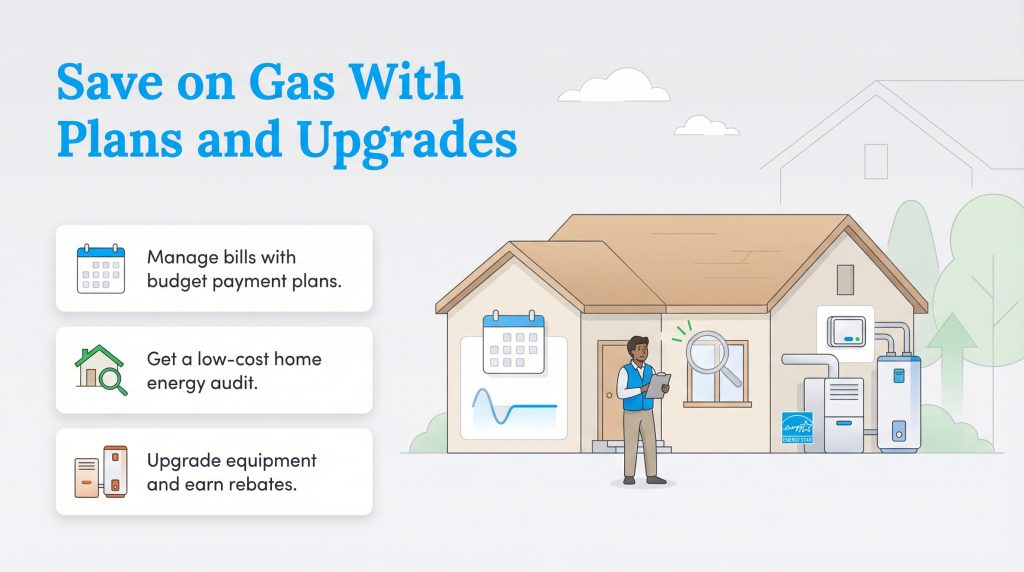
Keeping your home comfortable does not have to drain your wallet or heavily burden the environment. If you want to eliminate the shock of high winter heating bills, enrolling in the Columbia Gas budget plan is a fantastic way to manage your expenses. This billing arrangement calculates your projected annual gas usage and spreads costs evenly across 12 months. Normalizing seasonal spikes into predictable payments makes household budgeting much simpler.
Beyond billing adjustments, tapping into energy efficiency programs allows you to actively reduce your consumption. We highly recommend looking into their subsidized home energy audits. A professional will inspect your property to identify drafts, poor insulation, and failing equipment.
When it is time to replace old hardware, choosing an energy-saving option pays off. The company frequently offers substantial cash rebates for homeowners who upgrade to high-efficiency furnaces, smart thermostats, and advanced water heaters. Upgrading to ENERGY STAR heating and cooling products not only trims your monthly utility costs but serves as an environmentally mindful choice that significantly lowers your household carbon footprint over time.
Sustainability and NiSource Green Initiatives
As a subsidiary of NiSource, Columbia Gas is actively working to minimize its environmental impact and support a cleaner energy future. NiSource has pledged significant corporate commitments toward achieving carbon neutrality, setting ambitious net-zero greenhouse gas emission targets for the upcoming decades.
Their broad sustainability strategy includes exploring accessible carbon offset solutions for residential customers and investing heavily in biodiversity protection across their pipeline infrastructure. Furthermore, the company is actively upgrading its network to support renewable natural gas (RNG). This eco-conscious alternative captures naturally occurring methane from agricultural waste and landfills, transforming harmful atmospheric emissions into usable, environmentally mindful energy for your home.
How to Report a Gas Leak or Emergency
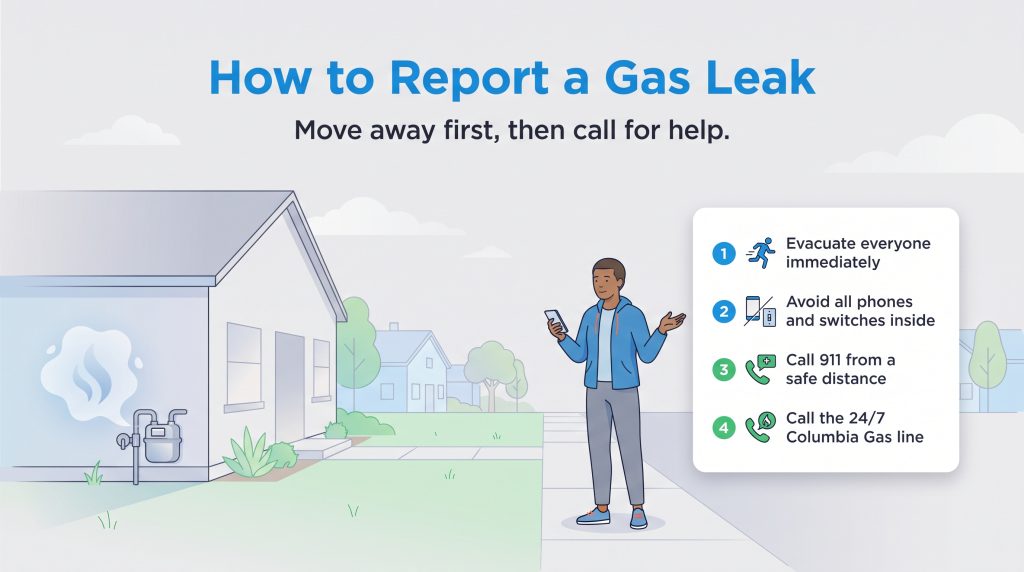
Safety always comes first when dealing with natural gas infrastructure. If you suspect a reportable gas leak, notice a sulfur-like “rotten egg” odor, or hear an unusual hissing sound near your physical meter, you must act quickly and deliberately. Follow this strict, step-by-step emergency protocol:
- Evacuate the premises immediately: Get your family and pets outside and safely away from the building without delay.
- Avoid using electronics or light switches: Do not use your cell phone, flip any light switches, or attempt to start a car nearby. Even a microscopic spark can ignite the gas.
- Call 911: Once you are safely away from the property and across the street, contact local emergency responders.
- Call the 24/7 Columbia Gas emergency number: Notify the utility immediately so they can dispatch a specialized response team to shut off the main supply and secure the area.
Columbia Gas vs. Electric Heat: A Sustainable Choice?
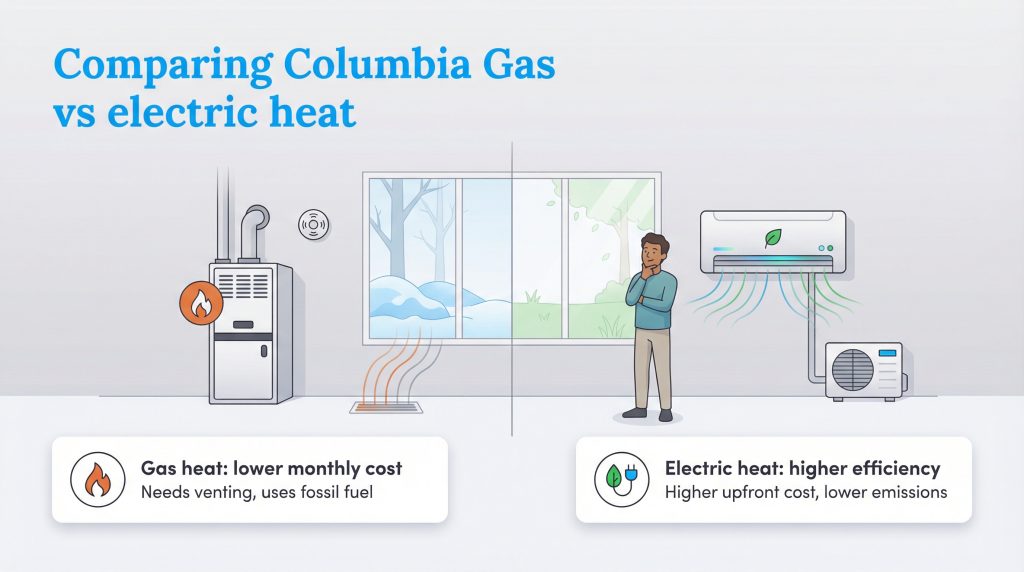
Deciding how to heat your new home involves balancing upfront equipment costs, long-term operational expenses, and your personal sustainability goals. When weighing traditional heating options against electric alternatives, the conversation usually centers on high-efficiency natural gas furnaces versus modern electric heat pumps.
Natural gas furnaces typically carry lower monthly operational costs in regions with harsh, freezing winters. They deliver intense, fast heat that quickly warms a drafty house. However, gas systems require proper venting, active carbon monoxide monitors, and rely heavily on fossil fuels. To understand how gas pricing impacts these operational costs nationally, you can review data from the U.S. Energy Information Administration.
Conversely, electric heat pumps act as an eco-conscious alternative. They pull ambient heat from the outside air rather than combusting fuel, making them highly efficient. While the upfront installation cost for a robust heat pump system is often higher than a standard gas furnace, you gain the added benefit of summer air conditioning from the exact same unit.
| Heating Method | Pros | Cons |
| Natural Gas Furnace | Fast, intense heating; lower monthly fuel costs in cold climates; reliable during winter grid outages if paired with a generator. | Relies on fossil fuels; requires carbon monoxide monitoring; vulnerable to fluctuating commodity prices. |
| Electric Heat Pump | Eco-conscious alternative; provides both heating and cooling; highly efficient energy transfer. | Higher upfront installation costs; can temporarily lose efficiency in extreme sub-zero temperatures. |
Customer Reviews: Is Columbia Gas a Good Provider?
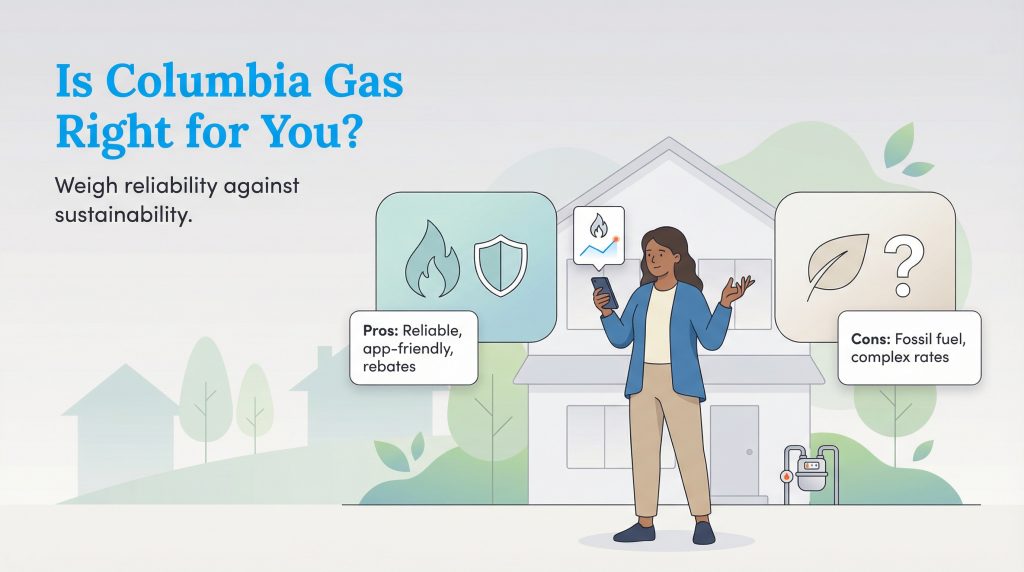
When evaluating your utility setup, exploring reviews from existing customers provides valuable insights into what you can expect month to month. On official Better Business Bureau (BBB) profiles, the most frequent consumer complaints generally center around billing discrepancies, particularly related to estimated meter readings during months when physical inspections are skipped.
Across community forums like Reddit, users frequently express frustration over sudden third-party supplier rate hikes once their promotional fixed-rate contracts expire, alongside complaints about extended wait times to reach a live customer service agent during the busy winter season. Conversely, Columbia Gas earns high marks for physical infrastructure reliability and their stellar digital tools. Customers praise the consistent heating during brutal winter storms, fast response times for gas leak calls, and a practically effortless mobile app experience.
| Pros | Cons |
| Excellent digital tools and mobile app functionality | Long customer service wait times during winter |
| Highly reliable infrastructure during severe weather | Billing discrepancies tied to estimated meter readings |
| Robust low-income assistance and weatherization programs | Confusion surrounding third-party rate contract renewals |
Preparing for Your Columbia Gas Setup
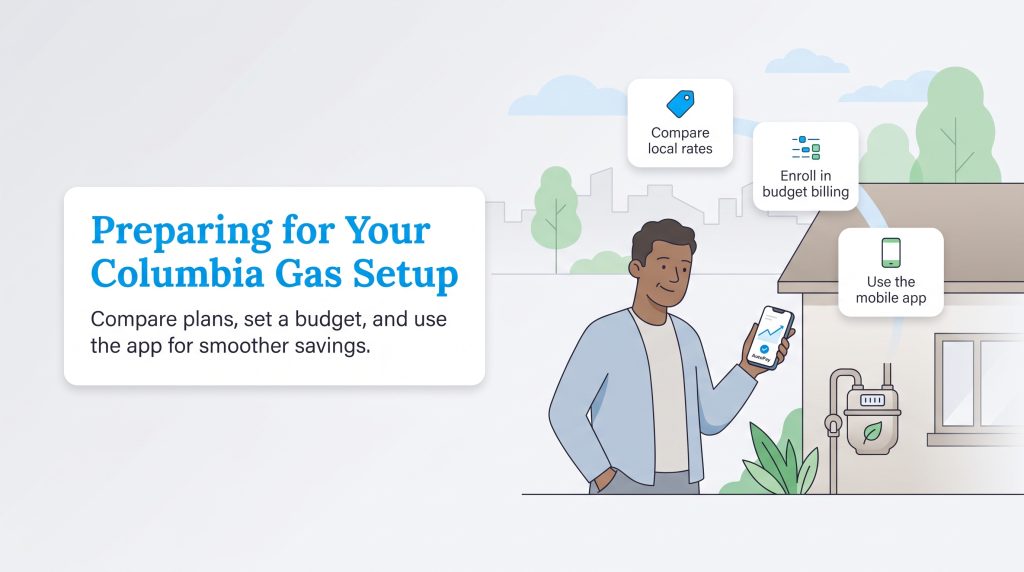
Moving into a new space offers the perfect clean slate to rethink how you manage your monthly utilities. Setting up your natural gas connection does not have to be a frustrating chore filed away at the bottom of your moving checklist. By taking a proactive approach to your account configuration, you set yourself up for consistent, long-term savings.
To maximize your setup and ensure a smooth transition, we recommend taking the following actionable steps as soon as your service is activated:
- Compare local rates: If you live in an energy choice state, utilize the Choice program to negotiate your supply charges.
- Enroll in budget billing: Normalize your seasonal spikes by setting up a budget payment plan right away.
- Utilize the mobile app: Download the app to monitor your daily consumption and set up seamless AutoPay features.
Making these small, environmentally mindful choices today will keep your home comfortable, protect your wallet against unpredictable winter spikes, and meaningfully reduce your environmental footprint year after year.
Frequently Asked Questions About Columbia Gas
How do I participate in the Columbia Gas Choice program?
Where can I find the Columbia Gas customer service and login portal?
Does Columbia Gas offer payment assistance for low-income households?
How do I read my Columbia Gas meter to check my usage?
How long does it take to start Columbia Gas service?
Do I need to be home for gas service to be turned on?
What is the difference between Columbia Gas and a retail supplier?
What is the Columbia Gas budget payment plan?
How do I report a gas leak to Columbia Gas?
Are there energy efficiency rebates available through Columbia Gas?
How do I cancel my Columbia Gas service?
What happens if I forget to renew my fixed-rate gas supplier contract?
Does Columbia Gas charge a deposit to start service?
About the Author

LaLeesha has a Masters degree in English and enjoys writing whenever she has the chance. She is passionate about gardening, reducing her carbon footprint, and protecting the environment. She also recently served as President of the Board for City Sprouts (a community garden).