Whether you’re moving into Unitil territory or trying to lower your bill, knowing how delivery, supply, and energy choice work can help you avoid costly surprises.
Key Takeaways
- Unitil delivers electricity and natural gas in select New England communities, but your supply options depend on your state and service type.
- Competitive electric suppliers may offer fixed rates or renewable plans, but you’ll need to compare terms carefully.
- Energy efficiency programs and account tools can help you manage costs, reduce waste, and avoid seasonal bill surprises.
Moving to a new home brings enough headaches without adding utility confusion to the mix, especially when trying to navigate services with Unitil, a regional provider delivering electricity and natural gas to over 200,000 customers across New Hampshire, Massachusetts, and Maine. We want to clear up the confusion so you can confidently set up your services, break down complex billing statements, and confidently manage your household energy usage. Our goal is to equip you with the insights you need to compare energy rates and keep more of your hard-earned money right where it belongs — in your bank account.
About Unitil (Gas & Electric)
| Customer Service Number | 1-888-301-7700 |
| Emergency Outage Number | 1-866-933-3821 |
| Account Login | MyUnitil Portal |
Unitil operates as a modern public utility holding company, focusing its current infrastructure on safely distributing electricity and natural gas throughout key New England regions. Rather than dwelling on its historical origins, the company today prioritizes reliable energy grid maintenance, modern storm response capabilities, and maintaining the vast network of pipelines and power lines necessary to serve its growing customer base.
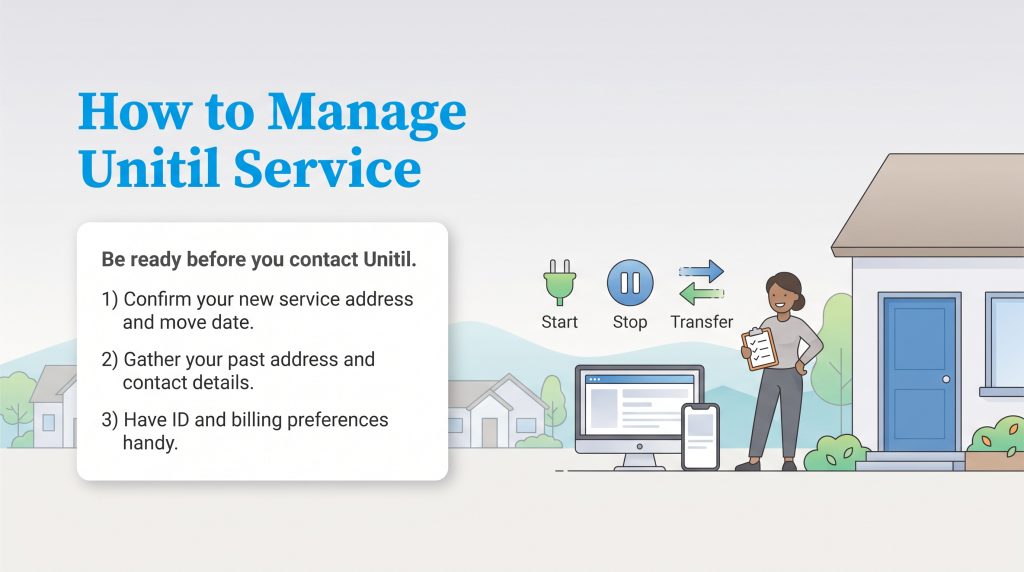
Setting up your utilities doesn’t have to be a major hurdle. Unitil makes it painless to manage your account, whether you are a first-time customer opening a brand-new service or an existing resident transferring service across town. The most important rule of thumb is to give the utility plenty of notice by initiating your request several business days before your desired move-in date.
Unitil Coverage Area
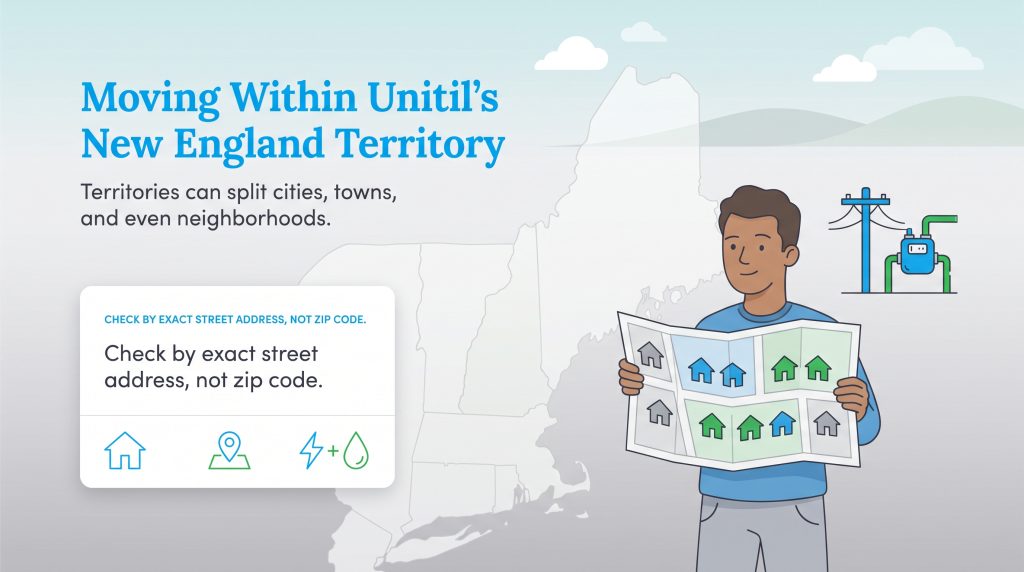
Unitil operates as a regional electricity and natural gas delivery company serving specific communities across New England. Since utility territories are strictly drawn by state regulators, you might have one provider for electricity and an entirely different one for your natural gas. When figuring out your coverage, your exact street address matters more than your ZIP code because utility territories can split cities, towns, and even neighborhoods.
To help you identify your services, here is a quick breakdown of the three states where Unitil provides energy delivery:
- New Hampshire (Gas & Electric): Serving extensive areas including Merrimack County, the beautiful Seacoast region, the Concord area, and the Exeter/Hampton area.
- Massachusetts (Gas & Electric): Delivering primarily to northern communities, specifically focusing on Fitchburg, Gardner, Lunenburg, and surrounding communities.
- Maine (Gas Only): Providing natural gas delivery (but no electric service) to major population centers such as Portland, Lewiston/Auburn, Biddeford, and nearby communities.
If you are still mapping out your relocation details, be sure to visit our comprehensive moving resources hub for more tips on seamlessly transferring your household services.
📌 Quick Fact: Unitil generally acts as the delivery utility, maintaining poles, wires, pipelines, meters, and local infrastructure. In eligible electric choice markets, you may be able to choose the company that supplies the electricity while Unitil continues delivering it.
Unitil Plans and Pricing
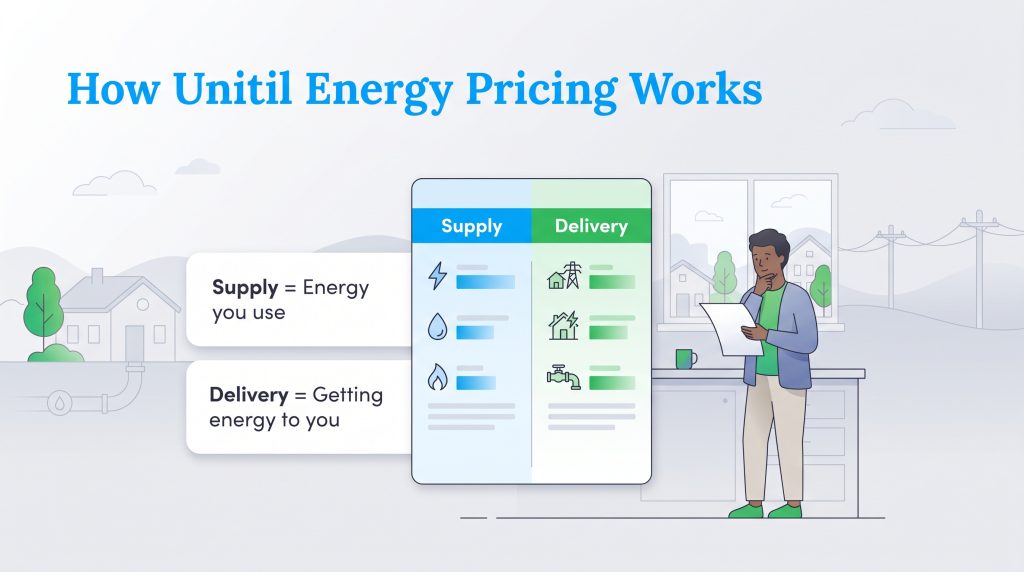
Understanding your utility bill is a vital step toward lowering your energy costs. Every Unitil electric and natural gas bill is split into distinct categories, primarily supply charges and delivery charges. Knowing how these components operate will help you make sense of seasonal bill fluctuations and budget effectively.
The delivery charge is what Unitil bills you to transport power or gas safely through local infrastructure to your home. These rates are strictly regulated. However, you often have choices regarding your supply charges. Because New England states operate under deregulated energy markets, you are not forced to buy your electricity supply directly from your utility company.
| Plan Type | Average Rate / Structure | Best For |
|---|---|---|
| Default Variable Supply | Fluctuates seasonally based on market costs and regulatory approvals. | Customers who want a hands-off approach with no contract. |
| Competitive Fixed Rate | Locked-in cents per kWh for term lengths ranging from 6 to 36 months. | Households seeking budget stability and avoiding winter price spikes. |
| Time of Use (TOU) | Variable rates depending on peak vs. off-peak hours. | Homes that easily run heavy appliances late at night. |
| Natural Gas Rates | Variable therm charges based on wholesale winter demand. | Homes relying heavily on gas for winter heating. |
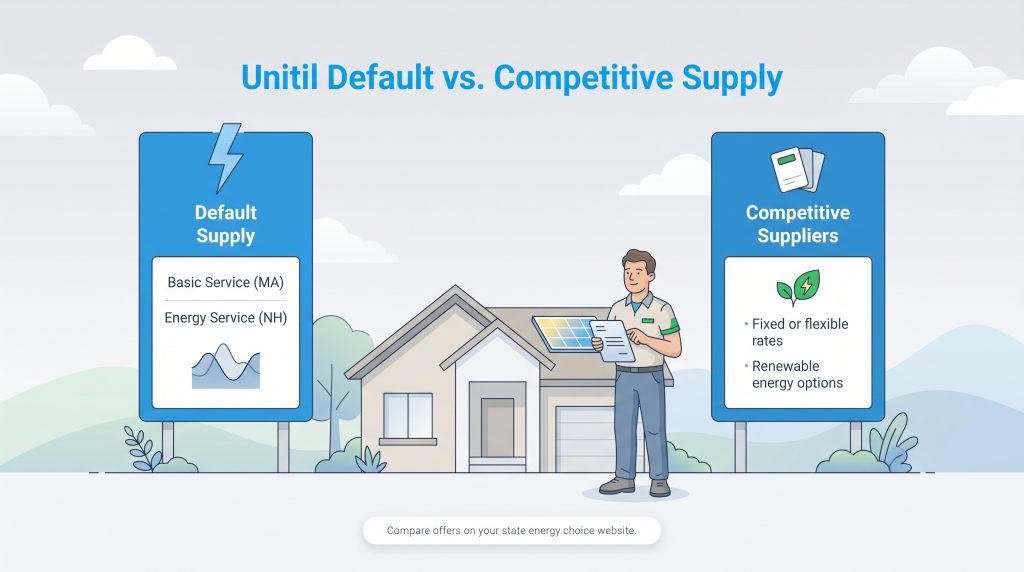
If you do nothing when you set up your account, you are automatically placed on Unitil’s default supply. In Massachusetts, this default electric supply is commonly called Basic Service, while in New Hampshire, it is often referred to as Energy Service. These rates fluctuate depending on the season and wholesale market conditions, often peaking in the winter.
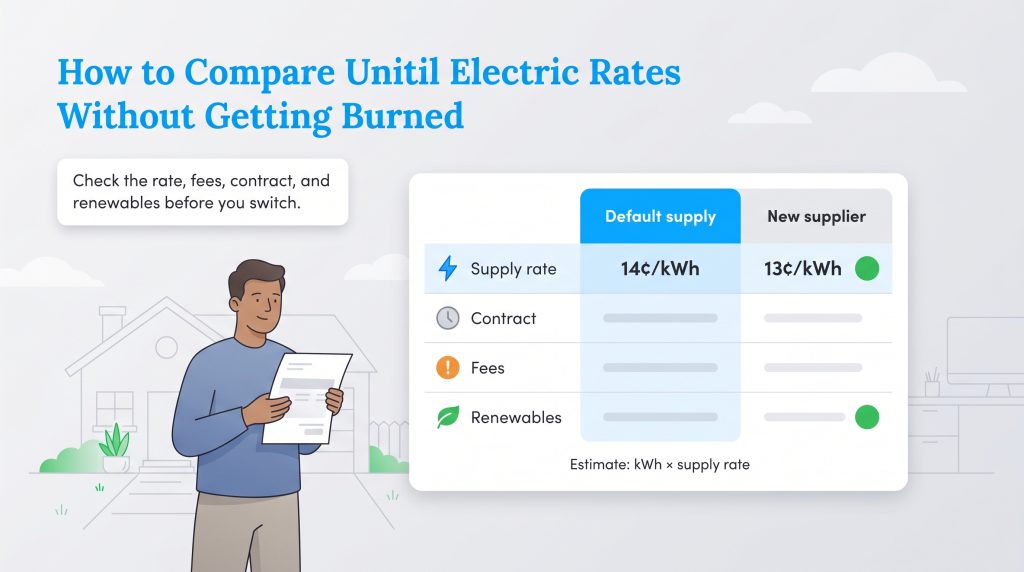
To securely shop for competitive electric supply rates and avoid these seasonal swings, always use your state’s official energy choice portal. Unitil electric customers in New Hampshire can use the New Hampshire Department of Energy shopping portal, while Unitil electric customers in Massachusetts can compare offers through Energy Switch MA. If your home relies heavily on gas for heating or cooking, you can explore our guide to understanding your natural gas pricing options for more ways to manage your fossil fuel usage.
Deals, Discounts, and Ways to Save
Managing energy costs isn’t just about turning down the thermostat; it is also about taking advantage of financial utility programs if you qualify. Unitil participates in several state-mandated affordability programs designed to help low-income households keep their lights and heat on year-round.
The Electrical Assistance Program (EAP) provides eligible residential customers with a specific discount on their monthly electric bills. Additionally, the Home Energy Assistance (HEA) program focuses on reducing heating costs during the frigid New England winters. To apply for these essential deals and discounts, you must contact your local Community Action Agency. They will evaluate your application, verify your income eligibility based on household size, and help process your direct enrollment.
How to Report and Search for Unitil Outages
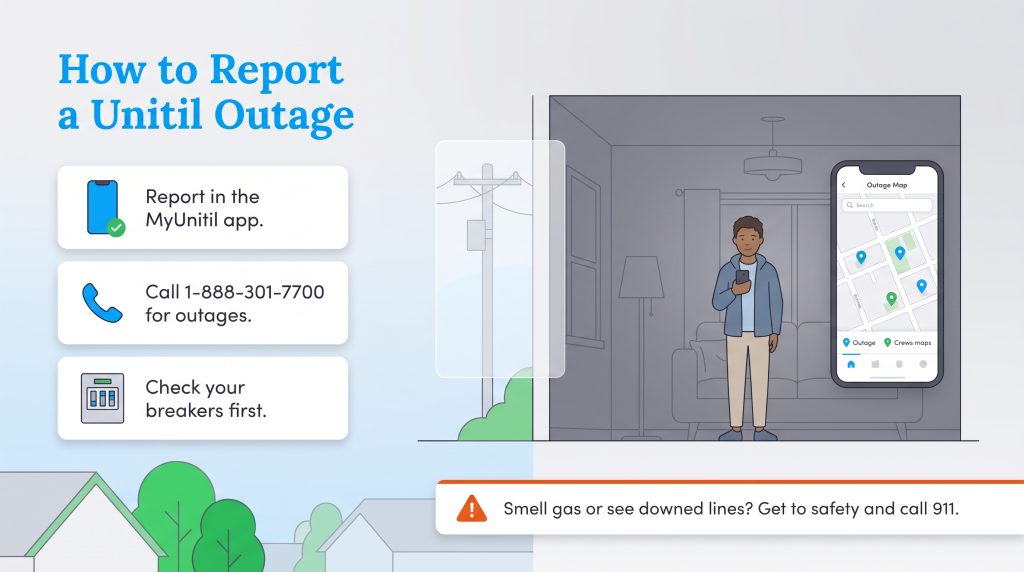
Severe New England weather means power outages are sometimes unavoidable. When the lights suddenly go out, your first step should be accessing the official Unitil outage map online to check for critical grid updates and report your status.
- Navigate to the Unitil website on your mobile device and locate the “Outage Center.”
- Open the Unitil outage map to view currently affected geographic areas, active crew dispatch status, and estimated restoration times.
- Report your specific outage through the portal to ensure crews know your exact address and street location.
Always prioritize safety during any storm or grid interruption. If you spot downed wires outside or smell natural gas in your home, evacuate the area immediately. Dial 911 first, followed directly by the Unitil emergency number at 1-866-933-3821.
MyUnitil Portal and Bill Pay Options
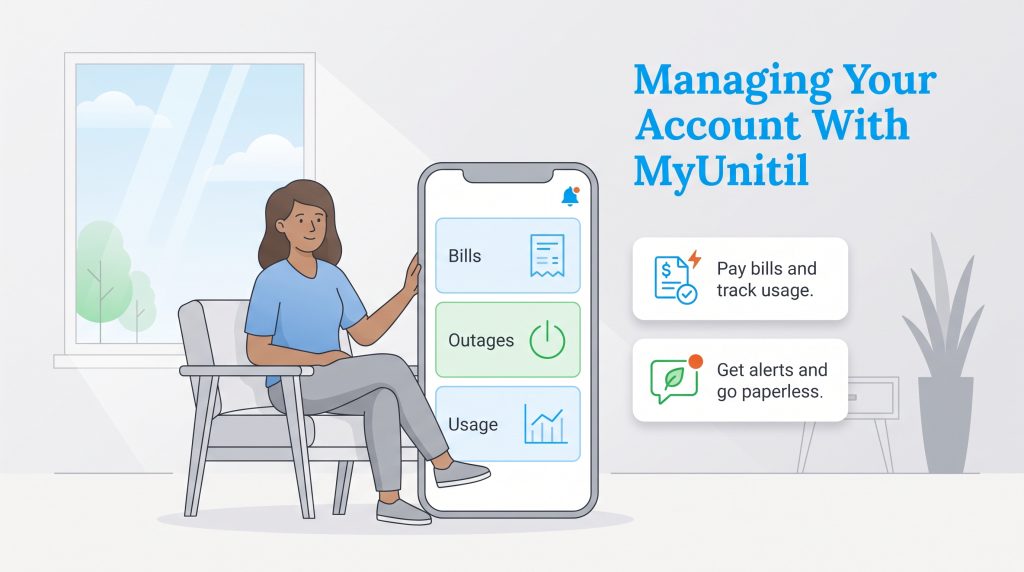
Although you might hear mentions of mobile apps, it is important to note that Unitil currently relies on its robust, mobile-responsive web portal rather than a standalone mobile app for comprehensive account management. By logging into the MyUnitil portal from your smartphone browser or computer, you gain a streamlined way to track usage, receive text alerts, and securely pay your electric and gas bills.
Unitil provides several exact methods customers can use to handle their monthly statements. You can choose the payment option that best fits your financial routine:
- Online via MyUnitil: Securely pay your bill using a checking account, savings account, or credit card directly in the portal.
- By Phone: Call customer service to process a payment securely over their automated voice system.
- By Mail: Send a traditional check or money order in the mail to the designated remittance address.
- Through Quick Pay: Make a fast, one-time online payment without the need to log into a registered account.
Fees and Guarantees
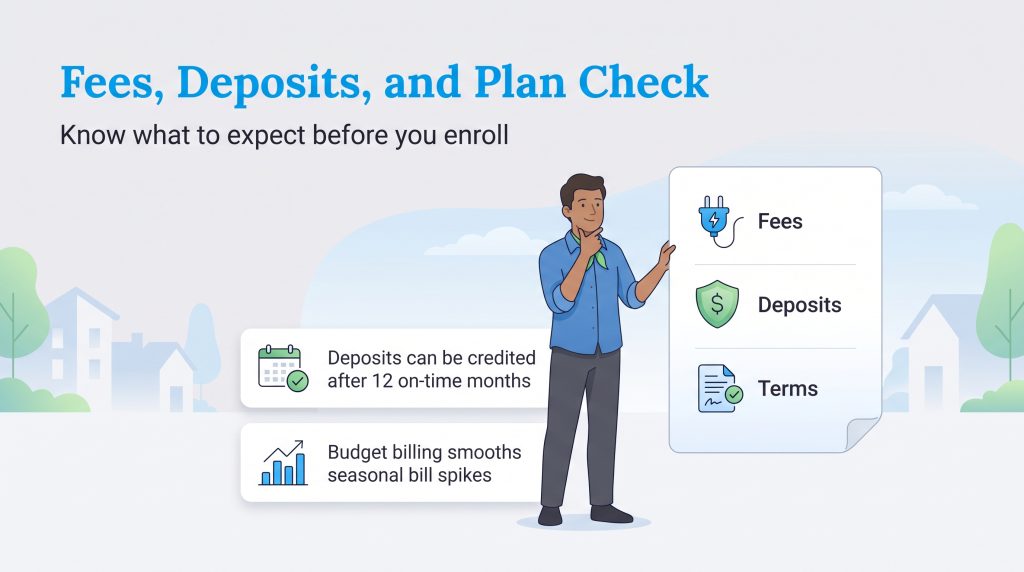
Before you finalize your account setup, you should know exactly what extra charges might appear on your first bill. Like most utility companies, Unitil may apply standard connection or reconnection fees when you initiate service. Additionally, failure to pay your bill on time can result in late fees being applied to your subsequent statement.
If you prefer to pay your bills using a credit card rather than a bank draft, be aware of transaction policies. While residential credit cards are often accepted seamlessly, Unitil implements a specific credit card surcharge fee for transactions processed with corporate or commercial credit cards. Reviewing these fees — alongside potential new-customer deposit requirements — helps you avoid unexpected budgetary surprises.
Sustainability and Green Energy Initiatives
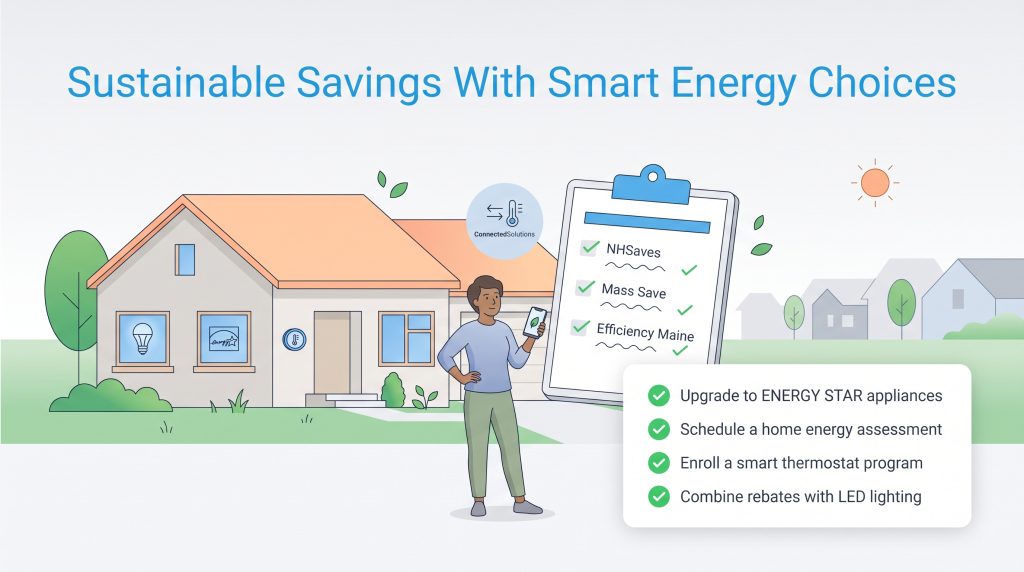
You don’t need to freeze in the winter or sweat through the summer to lower your energy costs. Unitil actively partners with robust state programs — like NHSaves in New Hampshire and Mass Save in Massachusetts — to offer energy efficiency rebates to its customers. These initiatives provide generous financial incentives for weatherizing your home, sealing air leaks, and scheduling comprehensive home energy audits.
On a broader scale, Unitil’s default energy mix incorporates a variety of regional renewable sources to lower their carbon footprint, prominently featuring integrations with sustainable hydroelectric facilities and biomass plants. To complement these grid-level sustainability efforts, consider upgrading your own household systems:
- Swap out old incandescent bulbs for LED lighting to drastically cut daily usage.
- Apply for appliance rebates when upgrading refrigerators, washers, or heat pump water heaters.
- Enroll in the ConnectedSolutions program to earn rewards simply by optimizing your heating and cooling with a smart thermostat.
🌱 Eco Edge: If you choose a renewable electricity plan from a competitive supplier, check whether it is backed by renewable energy certificates and whether the supplier clearly explains the energy source. For an environmentally mindful choice, pair cleaner supply with lower usage through better insulation and efficient heating and cooling.
Unitil Customer Reviews and Ratings
When evaluating any utility provider, it helps to look at third-party sentiment across platforms like the Better Business Bureau (BBB) and local community forums like Reddit. Generally, customer reviews highlight that Unitil’s physical energy delivery and severe weather storm response times are highly reliable. Customers appreciate that the lights stay on and that maintenance crews work quickly during nor’easters.
However, consumer sentiment isn’t entirely flawless. Some customers express clear frustration over operating within a regional utility monopoly, noting limited alternative supplier choices in certain localized areas. There is also occasional annoyance directed toward complex billing surcharges and higher-than-average seasonal rate adjustments. While the physical delivery remains solid, the customer service experience can sometimes feel constrained by strict state regulatory frameworks.
Why Choose (or Not Choose) Unitil
Because your delivery utility is tied directly to your geographic location, you rarely have the luxury of “choosing” Unitil over a neighboring utility like Eversource. However, understanding their core strengths and weaknesses can help you navigate your account more effectively and make informed supply choices.
- Pros:
- Highly reliable energy delivery and proactive storm restoration efforts.
- Strong, integrated partnerships with excellent state energy efficiency rebate programs.
- Cons:
- Limited alternative competitive supplier options in certain specific regions.
- Subject to higher-than-average seasonal default rates during peak New England winters.
Taking Control of Your Unitil Energy Bill
While Unitil securely delivers your natural gas and electricity while maintaining the local grid infrastructure, the ultimate power to manage your costs lies in your hands. You don’t have to be at the mercy of fluctuating seasonal default rates. By taking advantage of the mobile-responsive MyUnitil portal to monitor your daily usage, capitalizing on state-sponsored efficiency rebates to weatherize your home, and actively shopping for competitive electricity suppliers, you can meaningfully lower your monthly expenses.
Embracing these actionable steps ensures your household runs efficiently and affordably. Don’t let confusing billing terms or seasonal market shifts intimidate you. Take a few minutes today to review your current rate, explore your local energy options, and secure a plan that aligns with your family’s budget and eco-conscious goals.
Frequently Asked Questions About Unitil
If you still have lingering questions about your new energy service, you aren’t alone. We have gathered the most common questions customers ask when setting up or managing their Unitil utility accounts.
How do I report a power outage to Unitil?
Does Unitil provide natural gas or electricity?
Where does Unitil operate?
How do I set up a new Unitil account for my home?
Does Unitil offer energy efficiency rebates?
How do I switch my electricity provider from Unitil?
Is Unitil cheaper than Eversource?
About the Author

David has been an integral part of some of the biggest utility sites on the internet, including InMyArea.com, HighSpeedInternet.com, BroadbandNow.com, and U.S. News. He brings over 15 years of experience writing about, compiling and analyzing utility data.