
Understanding the latest state decisions can help you navigate upcoming price shifts and protect your monthly budget.
Key Takeaways
- State regulators stepped in to cap rate hikes for Granite State Electric (Liberty Utilities) customers, keeping the new default rate at 15.835¢/kWh instead of a projected 21.128¢/kWh.
- Unitil default rates will rise by 20% to 14.348¢/kWh starting Aug. 1, 2026, adding about $15 to a typical monthly household bill.
- You have powerful energy-saving choices to beat these rate increases, including switching to a competitive energy supplier, joining a community power program, or tapping into utility-funded efficiency rebates.
If you are setting up utilities in a new Granite State home or simply keeping an eye on your monthly expenses, we have some important news about your upcoming electric bills. On June 19, 2026, the New Hampshire Public Utilities Commission (PUC) made two major rulings that will reshape what you pay for power starting Aug. 1, 2026. While regulators stepped in to block a massive 53% price shock for some residents, other households will still see a notable 20% increase in their default utility supply rates. Fortunately, as your knowledgeable neighbor, we are here to break down exactly why these rates are changing, who is affected, and the smart, environmentally mindful choices you can make to protect your wallet and reduce your energy footprint.
Why Your New Hampshire Electric Rates Are Shifting
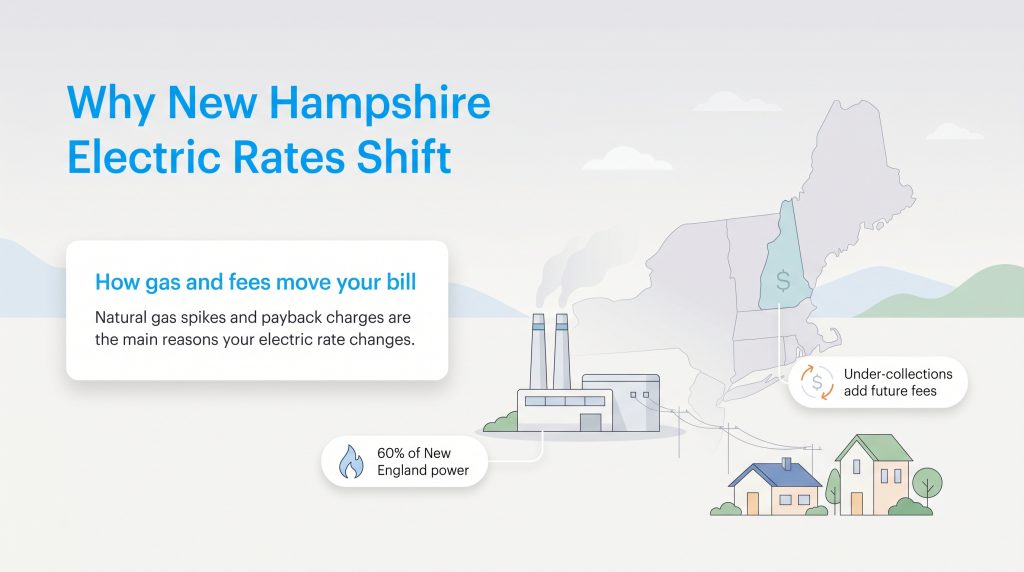
To understand why your electric bill fluctuates, it helps to look at how New Hampshire gets its power. The regional power grid, ISO-New England, relies on natural gas to generate roughly 60% of its electricity. Because New England has limited pipeline capacity, natural gas prices frequently spike during periods of high demand, driving up the wholesale cost of electricity.
The Hidden Burden of Utility Under-Collections
When New Hampshire utilities set their default service rates every six months, they calculate proxy prices to estimate future market costs. However, these estimates often fall short of the actual market prices, leaving the utility with a massive unpaid debt known as an under-collection. Statewide, these unpaid default supply balances topped $50 million as of April 30, 2026. To recover this cash, utilities add reconciliation charges to future default bills, which is the primary driver behind the rate changes hitting Granite State homes.
The New Rates: Liberty Utilities and Unitil Breakdown
The PUC’s June decisions treated our state’s major utility providers quite differently based on their outstanding supply debts. Let’s break down the specific numbers for both utilities so you can see exactly what is changing on your bill starting Aug. 1, 2026.
Granite State Electric (Liberty Utilities) Capped at 15.835¢/kWh
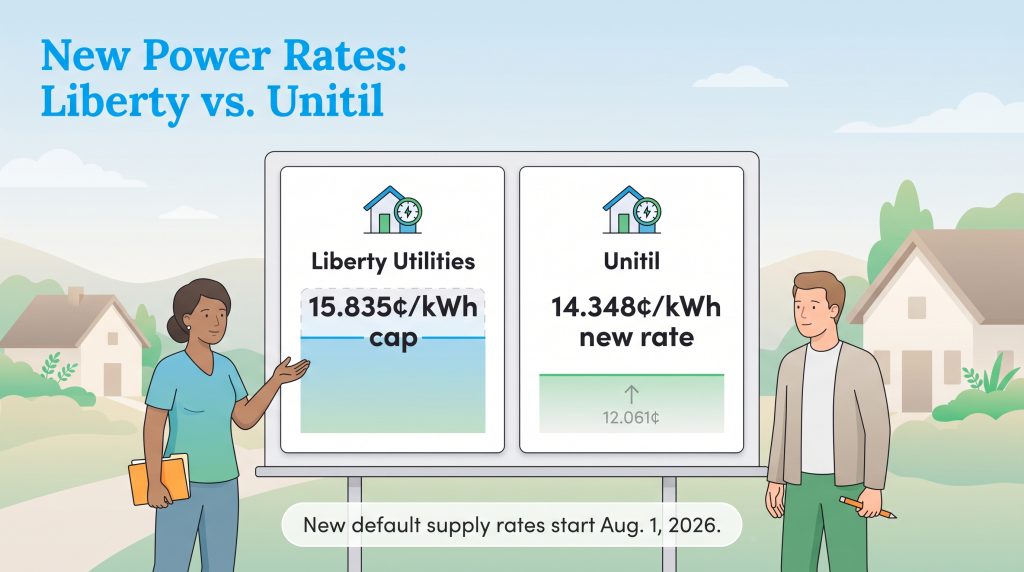
In its initial request to the state, Liberty Utilities proposed a staggering 53% increase that would have pushed its residential default supply rate to 21.128¢/kWh. This proposed spike was fueled by a massive $9 million deficit in outstanding supply costs. Worried about the severe rate shock this would inflict on a shrinking pool of default customers, the PUC intervened and capped the adjustment surcharge. As a result, Liberty’s small customer group default rate will be capped at a much more manageable 15.835¢/kWh starting Aug. 1, 2026.
Unitil Energy Systems Rising to 14.348¢/kWh
Meanwhile, Unitil customers are facing a default rate increase of about 20%. The PUC approved a rate hike that will bring residential default supply rates from 12.061¢/kWh to 14.348¢/kWh. While the state did implement some minor contract adjustments to help soften the blow for Unitil ratepayers, this approved rate is still a significant step up from what residents paid earlier in the year.
How the New Rates Impact Your Monthly Bill
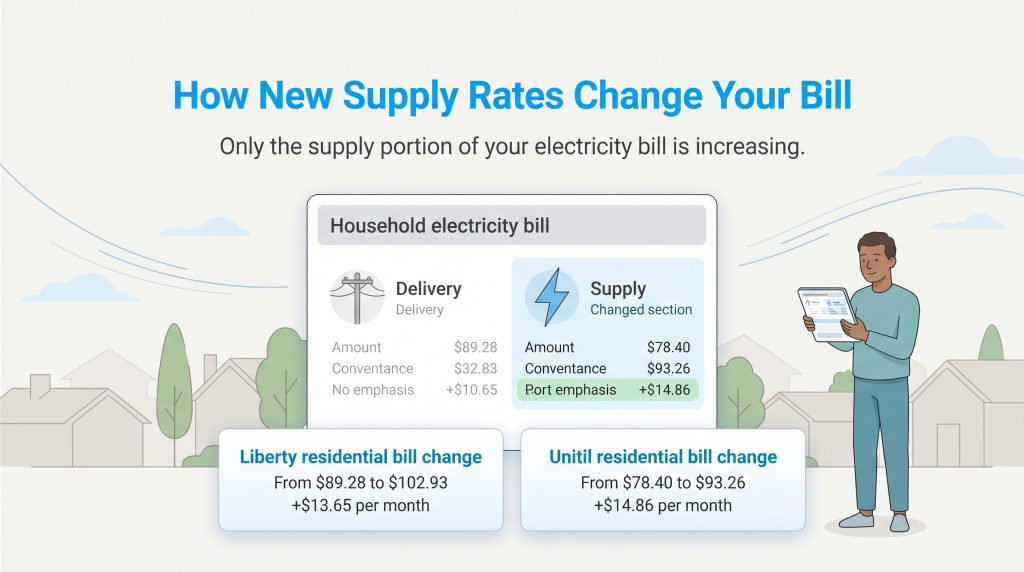
Your electricity bill is split into two main sections: delivery charges (which pay for the physical poles, wires, and grid maintenance) and supply charges (the actual electricity you use). The new PUC rulings only affect the supply portion of your bill. If you use a typical 650 kWh of electricity each month, here is how the new rates will translate into real dollars on your monthly statement starting Aug. 1, 2026:
Granite State Electric (Liberty Utilities) Residential Supply Bill Impact:
- Previous Monthly Supply Bill: $89.28 (at 13.735¢/kWh)
- Approved New Monthly Supply Bill: $102.93 (at 15.835¢/kWh)
- Total Monthly Increase: +$13.65 (saving you from a projected $137.33 bill!)
Unitil Energy Systems Residential Supply Bill Impact:
- Previous Monthly Supply Bill: $78.40 (at 12.061¢/kWh)
- Approved New Monthly Supply Bill: $93.26 (at 14.348¢/kWh)
- Total Monthly Increase: +$14.86
Major Cities and Communities Impacted by the Shifts
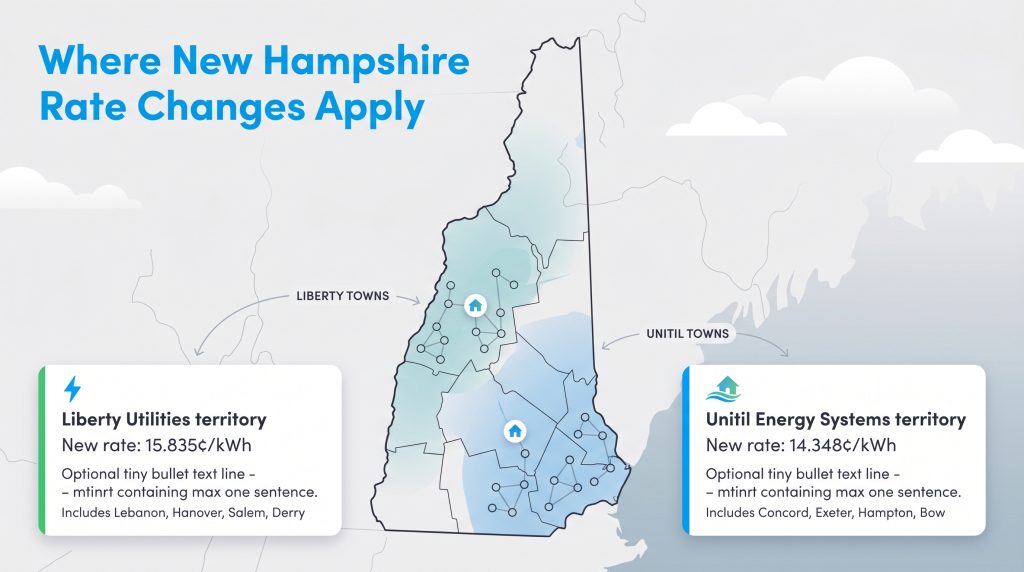
Because New Hampshire utilities operate in distinct, non-overlapping franchise areas, your geographic location dictates which rate changes apply to your home. Let’s look at which towns and cities are served by each provider.
Granite State Electric (Liberty Utilities) Territory
Liberty Utilities serves approximately 44,000 customers concentrated in western, southern, and central portions of the state. The major cities and towns impacted by Liberty’s new 15.835¢/kWh rate include Lebanon (the largest city in their territory), Hanover, and Enfield.
Unitil Energy Systems Territory
Unitil serves roughly 75,000 customers located across the Capital and Seacoast regions. If you live in Concord, Exeter, or Hampton, your home is in Unitil territory and will be subject to the new 14.348¢/kWh default supply rate.
What You Can Do to Protect Your Monthly Budget
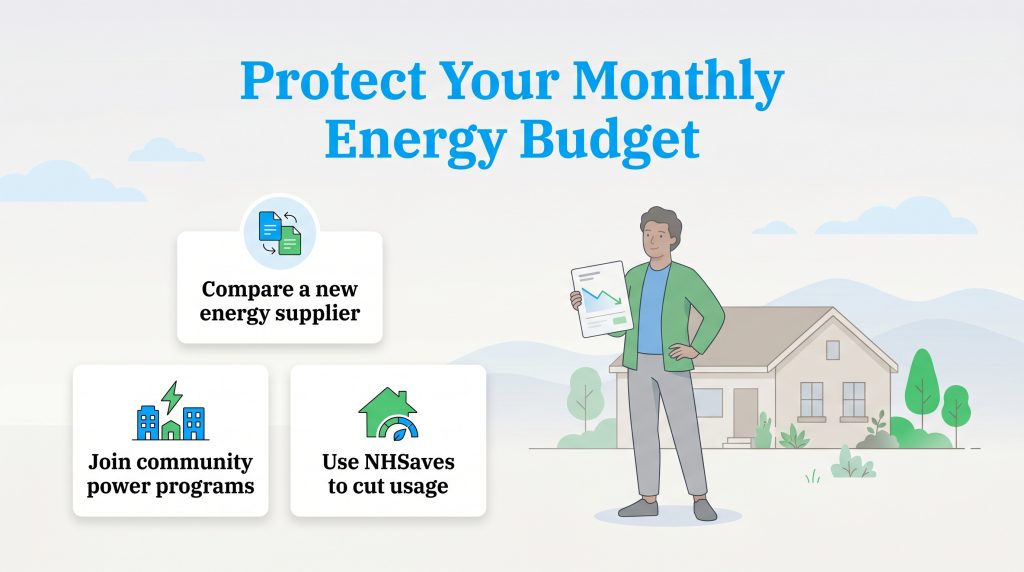
We know that rising utility bills can put a strain on your family’s budget, but you are not powerless in this shifting energy market. Thanks to New Hampshire’s deregulated energy choice laws, you have several excellent options to bypass utility default rate increases and keep your monthly expenses in check.
Compare and Switch to a Competitive Energy Supplier
Under retail choice, you can easily shop around and purchase your power supply from a licensed Competitive Electric Power Supplier (CEPS). To explore your options, you can use the New Hampshire Department of Energy Shopping Tool to easily compare active supplier rates and find a plan that works for you. Choosing a competitive supplier is completely seamless — there are zero service interruptions, and your local utility will still deliver the power, maintain the grid, and restore service during outages. Just make sure to keep a close eye on your contract’s end date, as some fixed-rate plans can automatically transition into expensive variable rates if you forget to renew.
Join Your Local Community Power Program
Another fantastic, eco-conscious alternative is municipal aggregation. More than 60 New Hampshire communities have joined the Community Power Coalition of New Hampshire to pool their purchasing power and secure competitive, stable electricity rates. These programs, like the popular Granite Basic plan, run on an opt-out basis, meaning you are automatically enrolled if you haven’t already chosen a private supplier. Joining community power is a great way to support local clean energy initiatives while enjoying full rate transparency and the freedom to opt out or switch plans at any time without a penalty.
Tap into NHSaves Efficiency Programs to Lower Your Usage
The absolute best way to lower your electric bill is to use less energy in the first place. You can access valuable rebates and energy-saving assistance through NHSaves, a cooperative energy efficiency partnership funded by New Hampshire utilities. Homeowners and renters can schedule a comprehensive, no-cost home energy audit and qualify for up to $6,000 in rebates for professional weatherization projects like air sealing and insulation. If you are looking to upgrade your appliances, heating, or cooling equipment, you can find valuable discounts on high-efficiency heat pumps and ENERGY STAR certified devices. Plus, if you meet state income-eligible guidelines, NHSaves covers 100% of the cost for professional weatherization and equipment replacement.
Take Control of Your Home Energy Future
While New Hampshire’s shifting electricity landscape can feel a bit overwhelming, the transition to higher utility default rates is a perfect reminder of the power of customer choice. By exploring competitive suppliers, looking into community power programs, and taking advantage of utility-backed energy efficiency rebates, you can make an environmentally mindful choice that saves you money and energy. Taking a few small, proactive steps today will not only protect your monthly budget from upcoming rate hikes but will also help us build a cleaner, more resilient, and sustainable energy future for our local communities.
Frequently Asked Questions About New Hampshire Utility Rates
What is utility default service?
How does a community power program work in New Hampshire?
Will switching to a competitive supplier affect the reliability of my electricity?
How do I sign up for NHSaves programs?
About the Author

Claudio is a sustainability-focused writer with a background in Anthropology and Psychology from NC State University. He has spent over 15 years working in writing, interpretation, and translation, driven by a deep interest in how human culture shapes the environment. Today, he shares his curiosity with readers by writing about sustainable living solutions and the connection between everyday choices and environmental impact.