
We have broken down the latest price shifts from major utilities and found the best ways for you to lower your monthly heating costs
Key Takeaways
- Major utilities like Eversource and Liberty have seen significant rate decreases, providing much-needed relief for many households this winter.
- You can switch to a competitive supplier to lock in a fixed rate and protect yourself from seasonal price spikes during the coldest months.
- State programs like Mass Save and LIHEAP offer vital financial assistance and energy-saving audits to help you reduce your overall energy burden.
Natural gas costs in the Bay State are some of the highest in the country, and keeping up with the constant rate changes can feel like a full-time job. Whether you are moving into a new home or just trying to manage your current budget, understanding why your bill fluctuates is the first step toward taking control. We have analyzed the latest shifts from Berkshire Gas, Eversource, Liberty, Unitil, and National Grid to help you navigate this complex market. From infrastructure upgrades to global market trends, several factors are at play, but the good news is that you have more options than ever to lower your costs and make your home more energy-efficient.
Why Your Natural Gas Rates Are Moving
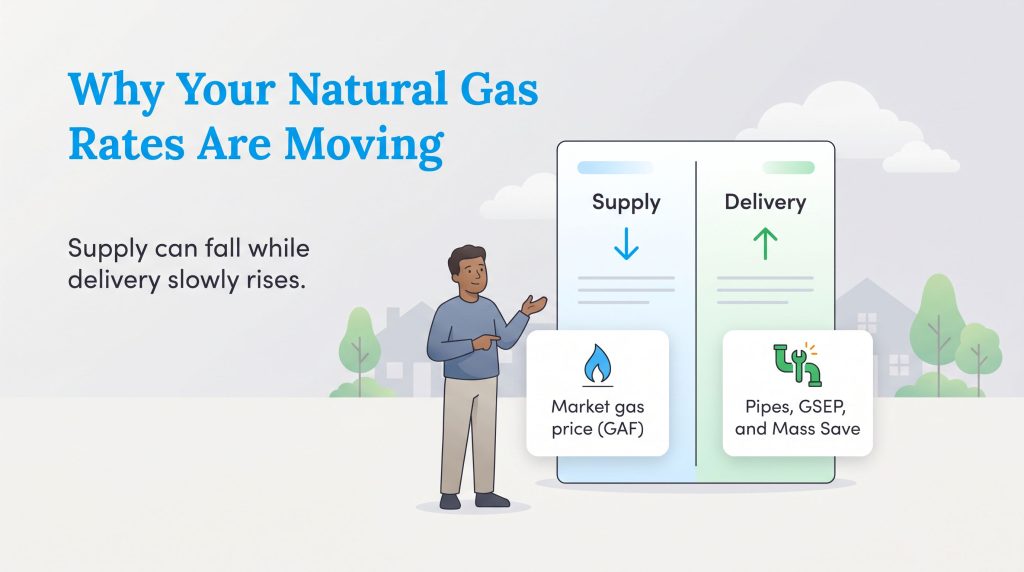
When you look at your gas bill, you are essentially seeing two different stories. The first is the supply cost, often called the Gas Adjustment Factor (GAF), which is the price the utility pays to buy the gas on the open market. These costs are a direct pass-through, meaning the utility doesn’t make a profit on them. The recent drops for Eversource and Liberty customers are largely due to these supply costs coming down as market conditions stabilize.
The second part of your bill is the delivery cost, which covers the pipes, maintenance, and state-mandated programs. In Massachusetts, the Gas System Enhancement Program (GSEP) is a major driver of delivery costs because our state has some of the oldest gas infrastructure in the nation. Replacing those aged cast iron and steel pipes is expensive, and those costs are often reflected in the slight increases we see from companies like Berkshire Gas and Unitil. Additionally, every bill includes a small surcharge for the Mass Save program, which funds the energy efficiency audits and rebates we all use to improve our homes.
A Closer Look at the 2026 Rate Changes
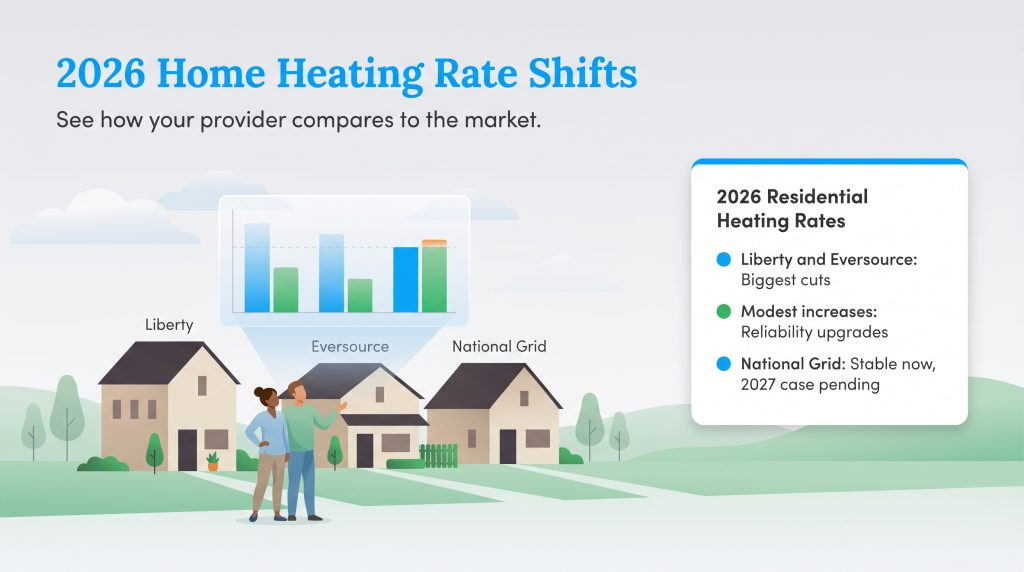
The landscape for 2026 shows a major divide between utilities. While some residents are seeing their rates cut nearly in half, others are facing modest increases to support system reliability. We have compiled the current residential heating rates to show you exactly how your provider compares to the rest of the market.
| Utility Provider | Previous Rate ($/Therm) | Current Rate ($/Therm) | Change |
| Berkshire Gas | $1.4341 | $1.4675 | +2.3% |
| Eversource Gas | $1.8569 | $0.9647 | -48.1% |
| Liberty Utilities | $1.9935 | $0.8036 | -59.7% |
| Unitil | $1.6632 | $1.6918 | +1.7% |
| National Grid | $1.7901 | $1.7901 | 0.0% |
The most dramatic shifts come from Liberty and Eversource, where families could see significant savings this year. National Grid has kept its rates stable for the moment, though it is important to note that they have a pending rate case that could impact bills starting in Jan. 2027.
Major Cities and Areas Affected
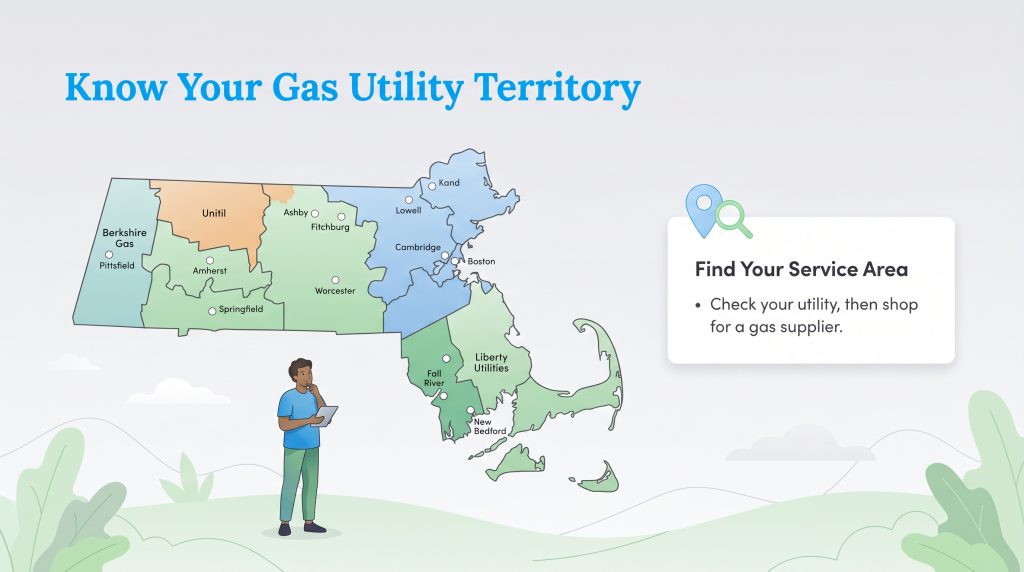
The impact of these rates depends entirely on where you live. Because each utility has a specific franchise area, you generally cannot choose your delivery company, but you can choose who supplies the gas. National Grid serves the largest urban core, including Boston, Worcester, and Lowell. If you live in these areas, your rates have stayed steady, but you should keep an eye out for upcoming public hearings regarding future adjustments.
Eversource handles a large portion of Western and Southeastern Massachusetts, covering cities like Springfield, Cambridge, and New Bedford. Liberty Utilities is the primary provider for the Fall River and Blackstone corridors, while Berkshire Gas serves 20 cities and towns in the western part of the state, including Pittsfield and Amherst. Finally, Unitil serves the north-central region, primarily around Fitchburg and Ashby. Knowing your territory is the first step in using tools like Energy Switch MA to find a better deal.
How to Take Charge of Your Gas Bill
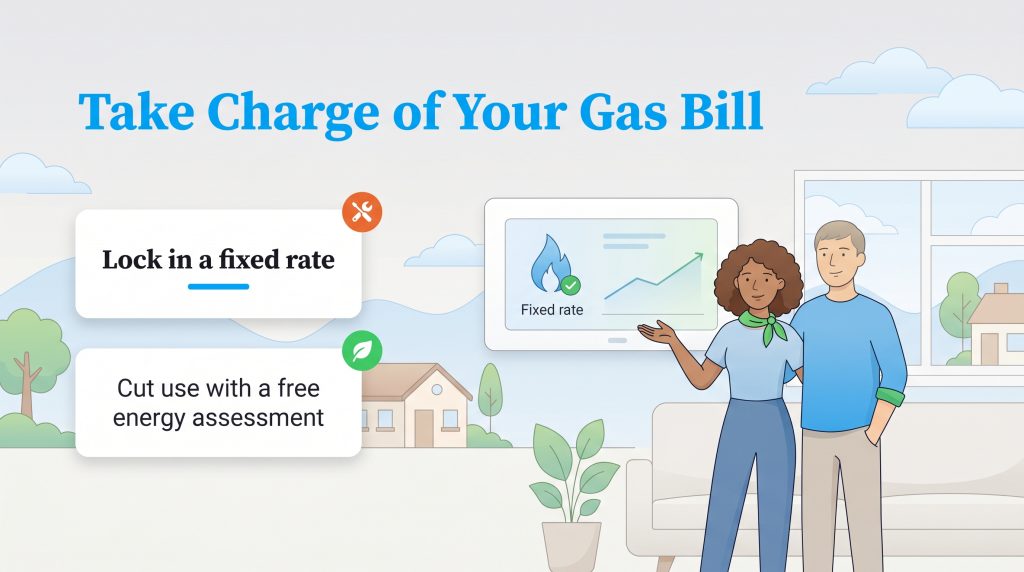
You don’t have to be at the mercy of default utility rates. Since the state deregulated the energy market, you have the right to choose a competitive supplier. Companies like Constellation, Direct Energy, and IGS Energy offer various plans that might fit your household better than the standard utility offer.
Locking in Fixed Rates
A fixed-rate plan is often the best choice for budget-conscious families. It allows you to lock in a set price per therm for anywhere from six to 36 months. This protects you if the market price of gas spikes during a particularly brutal winter. While variable rates might look cheaper in the summer, they can jump significantly when demand is high, so we usually recommend a fixed-rate “eco-conscious alternative” if you want peace of mind.
Boosting Your Efficiency
The most sustainable way to lower your bill is to use less gas. We highly recommend scheduling a no-cost home energy assessment through the Mass Save. They can provide you with free LED bulbs, water-saving showerheads, and heavy rebates on insulation. Reducing your home’s “leaks” means your furnace doesn’t have to work as hard, which lowers your therm usage regardless of what the current rate is.
Financial Assistance for Massachusetts Households
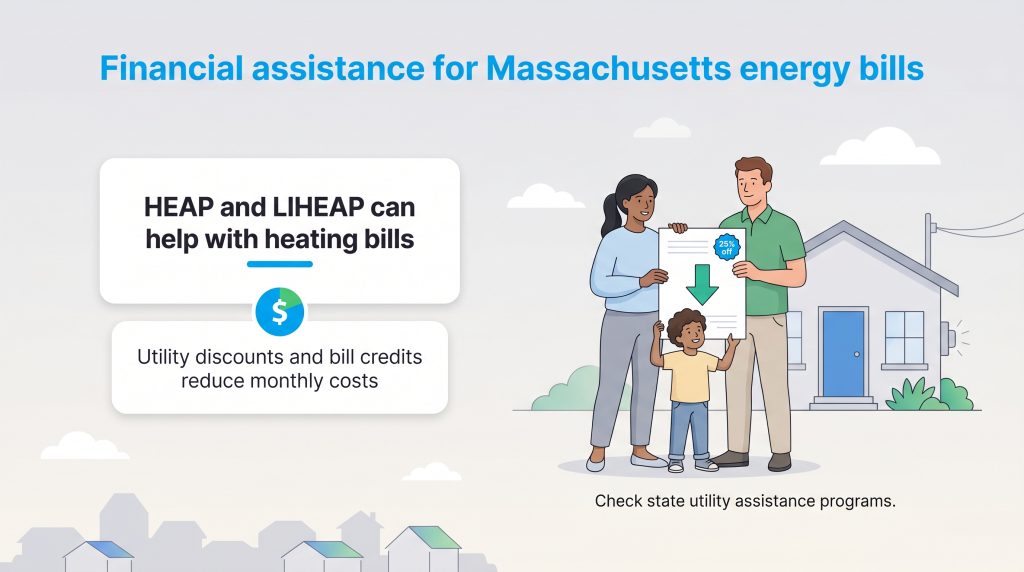
If you are struggling to keep up with your utility payments, there are several safety nets available. The Home Energy Assistance Program (HEAP), often called LIHEAP, is a federal program that helps eligible households pay their heating bills. For the 2026 season, a family of four can earn up to $99,573 and still potentially qualify for aid.
Beyond federal help, most utilities offer a “discount rate” for low-income customers, often listed as the R-2 rate class on your bill. This can provide a 25% discount on your total monthly charges. Specifically, a recent settlement for Liberty Utilities customers includes a $20 bill credit during Jan. and Feb. starting in 2027 and a new six-tier discount framework to help those with the highest energy burdens. You can find more information about these programs on the official state utility assistance page.
Looking Ahead to a Sustainable Energy Future
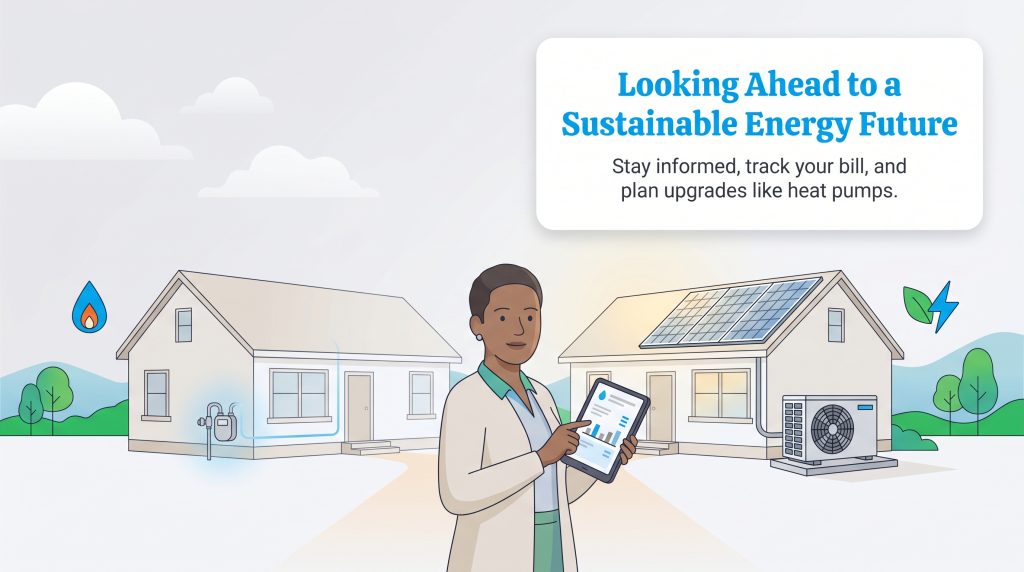
Massachusetts is moving toward a greener future, but natural gas remains a primary heating source for most of us for now. While the current rate decreases for some providers offer a breather, staying proactive is your best defense against future volatility. We recommend checking your bill regularly and exploring energy-saving options like heat pumps when you are ready to make a bigger change. By staying informed and using the resources available, you can keep your home comfortable without breaking the bank.
Frequently Asked Questions About Massachusetts Gas Rates
Can I switch my natural gas provider in Massachusetts?
What is the difference between supply and delivery charges?
How do I know if I am eligible for the low-income discount rate?
Why are my gas rates higher in the winter?
About the Author

Claudio is a sustainability-focused writer with a background in Anthropology and Psychology from NC State University. He has spent over 15 years working in writing, interpretation, and translation, driven by a deep interest in how human culture shapes the environment. Today, he shares his curiosity with readers by writing about sustainable living solutions and the connection between everyday choices and environmental impact.