

Understanding the Fixed Fees on Your Gas Bill and Finding Actionable Ways to Lower Your Total Energy Costs
Key Takeaways
- The Columbia Gas of Ohio delivery charge is a regulated fee that covers the maintenance of pipes, meters, and safety infrastructure, not the actual natural gas you use.
- Various riders like the Infrastructure Replacement Rider are added to this base delivery fee to pay for specific system upgrades approved by the Public Utilities Commission of Ohio (PUCO).
- While you cannot lower the delivery charge itself, you can reduce your total bill by comparing gas supplier rates and improving your home’s energy efficiency.
Opening your natural gas statement during a mild weather month and seeing a high total due can be incredibly frustrating, leading many residents to wonder why the average columbia gas bill ohio households receive keeps climbing. To make sense of these rising energy costs, you must distinguish between the two distinct parts of your statement: the “delivery” side, which comprises the fixed mandatory connection fees, and the “supply” side, which reflects the market-based cost of the fuel itself. In this comprehensive guide, we will break down exactly what the columbia gas of ohio delivery charge covers, explain the recent legal rulings upholding the PUCO columbia gas rate increase, and show you exactly where you still have control to reduce columbia gas of ohio bill totals.
What Is the Columbia Gas of Ohio Delivery Charge?
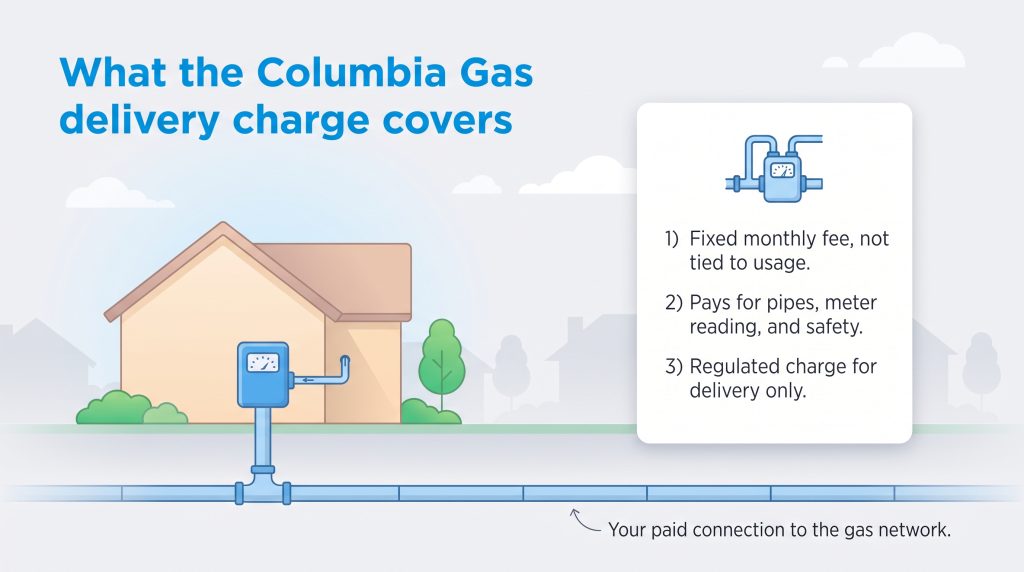
The primary delivery charge on your statement is a mandatory fixed monthly baseline fee applied to all residential accounts. Every single customer must pay this non-negotiable cost regardless of their actual gas usage. Instead of paying for the natural gas commodity itself, these Ohio natural gas distribution rates cover the structural expenses of bringing fuel safely to your property. Specifically, this fee goes directly to the utility to fund essential operational tasks — including pipeline maintenance, routine meter reading services, and round-the-clock emergency response crews. Columbia Gas of Ohio does not profit from the supply portion of your bill; they only earn operational revenue through these PUCO-regulated delivery charges.
Before any fuel is even ignited in your furnace, these fixed delivery fees ensure that thousands of miles of underground infrastructure remain highly pressurized, structurally sound, and ready for use. By paying this columbia gas of ohio fixed delivery charge, you are essentially renting your direct connection to the regional energy grid.
Why Is the Fixed Delivery Charge Increasing to $58?
If you have recently opened your statement and asked yourself, “why is my columbia gas bill so high?”, the answer traces back to a major regulatory shift designed to modernize the state’s aging grid. Following a sweeping 2023 PUCO-approved settlement and a subsequent June 2026 Ohio Supreme Court ruling upholding that decision, the utility was granted permission to enact a phased rate increase. This legally binding structure allows Columbia Gas to recover the massive, ongoing costs associated with upgrading vulnerable underground infrastructure across older neighborhoods as it replaces aging, leak-prone steel and cast-iron pipes.
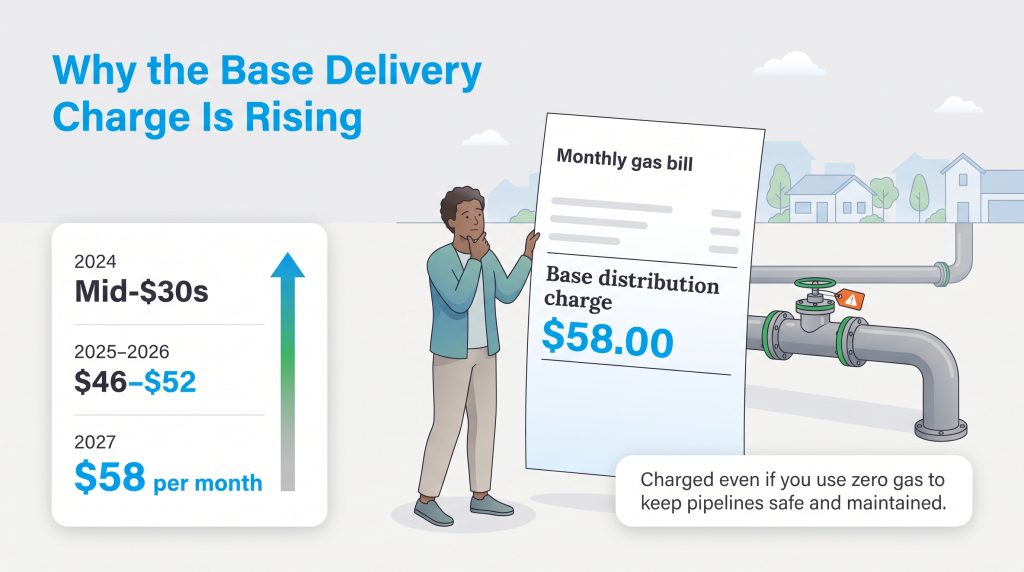
Under this newly approved framework, the fixed monthly cost portion of residential bills is increasing significantly. What used to be a baseline delivery fee in the mid-$30s will incrementally step up over the next few years until it reaches approximately $58 per month by 2027. While no consumer enjoys absorbing a higher baseline bill, state regulators and the courts deemed these increases absolutely essential to fund critical pipeline safety improvements and prevent hazardous system failures.
Here is a quick breakdown of how your fixed monthly customer charge is projected to scale up under the PUCO-approved timeline:
| Year | Average Projected Fixed Monthly Base Distribution Charge |
|---|---|
| Previous Standard Rate | Mid-$30s |
| 2025 – 2026 | $46.00 to $52.00 |
| 2027 Target Rate | $58.00 |
🚩 Heads Up: Even if you turn off your furnace completely for a month and use zero natural gas, you will still receive a bill for this fixed delivery charge. It guarantees the pipes in your neighborhood remain secure and operational year-round.
Delivery Charge vs Gas Supply Charge: What Is the Difference?
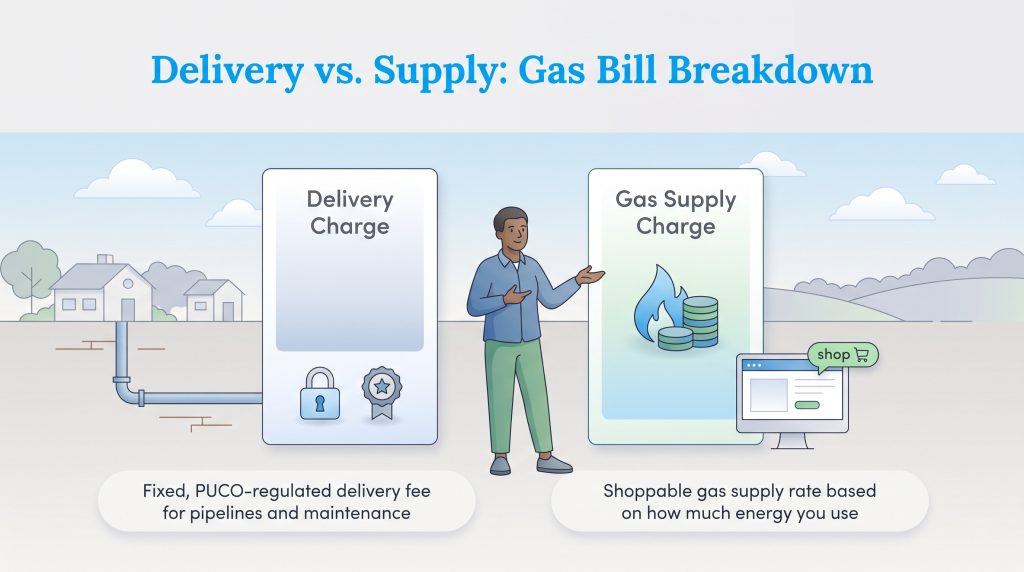
To successfully navigate the columbia gas supply vs delivery charge, you must separate the shipping cost from the actual product and read your meter correctly. Because Ohio operates a deregulated energy market, your monthly statement is strictly split into two halves. Review the table below to understand exactly how these distinct charges impact your wallet, and why you might want to choose a retail natural gas provider.
| Delivery Charge | Gas Supply Charge |
|---|---|
| Fixed and firmly regulated by PUCO | Variable or fixed based on your market choice |
| Pays for neighborhood infrastructure and maintenance | Pays for the actual volume of natural gas (Ccf) used |
| Paid directly to Columbia Gas of Ohio | Paid to an independent supplier (or Columbia Gas by default) |
| Mandatory fee that cannot be removed | 100% shoppable through energy choice ohio natural gas programs |
Understanding the Standard Choice Offer
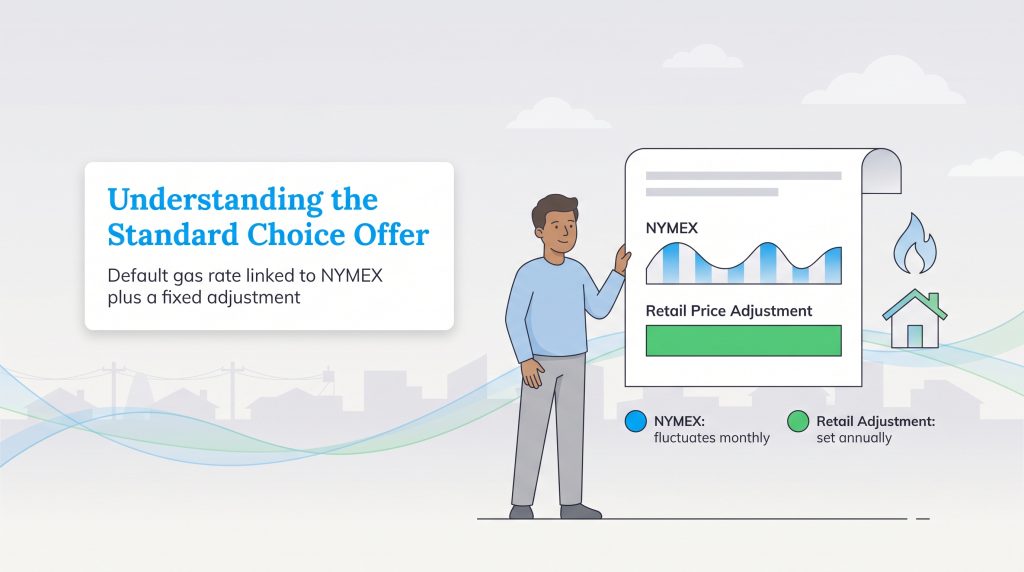
If you have not proactively chosen a retail natural gas provider in this deregulated market to manage your supply charges, your utility company will secure your fuel through a default rate known as the Standard Choice Offer (SCO). The SCO calculates your supply rate using two primary components: the wildly fluctuating New York Mercantile Exchange (NYMEX) wholesale price and a fixed Retail Price Adjustment. Because this default SCO supply rate drifts up and down every single billing cycle based on market volatility, it offers very little price stability during heavy winter heating months.
1. Shop for Lower Supply Rates
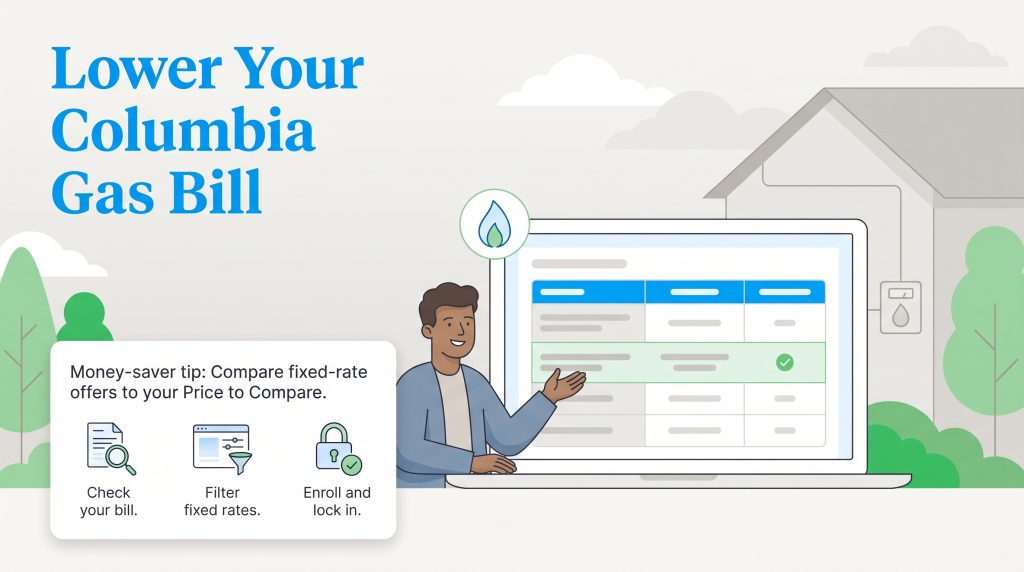
Since the utility sets the delivery fee in stone, the absolute best strategy to offset high delivery fees on your gas bill is to compare natural gas suppliers in Ohio to lock in a cheaper supply rate. Using the state-run comparison tool allows you to easily abandon the fluctuating default SCO rate in favor of a highly stable, competitive price per Ccf.
Here is your step-by-step guide to finding a better deal and locking in savings:
- Locate Your Account Info: Grab your recent bill, find your 15-digit Columbia Gas account number, and note your current Price to Compare to see exactly what you pay for supply right now.
- Access the State Tool: Visit the official Energy Choice Ohio website and navigate to the natural gas “Apples to Apples” comparison chart for your designated territory.
- Filter the Rates: Sort your available choices by “Fixed Rate” and select “No Monthly Fee” to quickly weed out variable plans that might spike unexpectedly later on.
- Compare Rates in Ccf: Confirm you are looking at Ccf pricing (some suppliers quote in Mcf, which equals 10 Ccf). Identify a fixed supplier rate noticeably lower than your current default price, reviewing the terms carefully for any early termination fees.
- Enroll Securely: Click the verified link to the supplier’s website to execute the switch. They will automatically notify Columbia Gas, and your new locked-in rate will seamlessly appear on your standard bill within one or two billing cycles.
💸 Money-Saver: Replacing a volatile variable supply rate with a long-term fixed-rate plan is the most reliable way to offset mandatory delivery hikes before winter arrives.
2. Improve Home Energy Efficiency and Weatherization
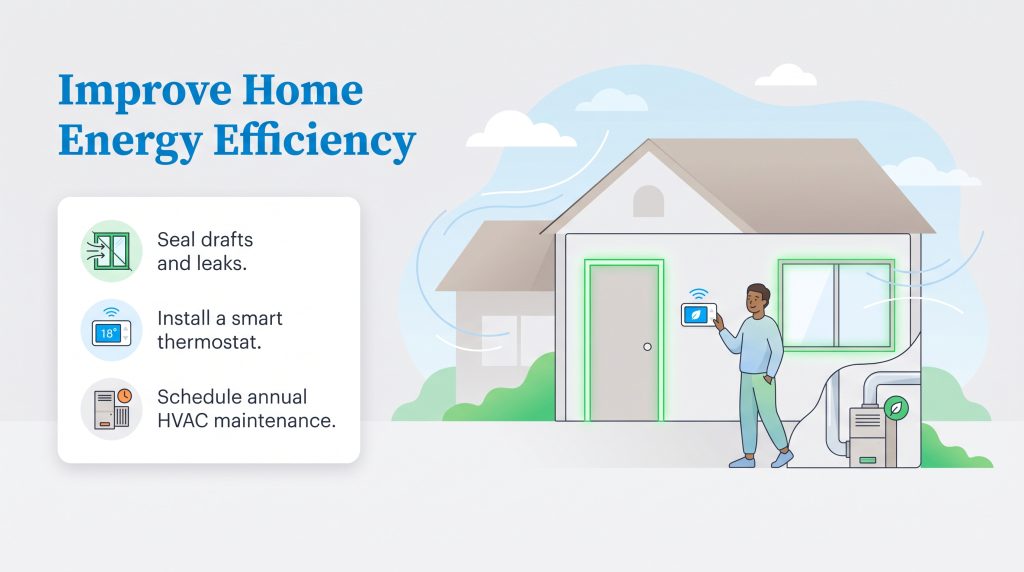
Beyond optimizing your supply rate, aggressively lowering the volume of gas you burn will immediately shrink the usage-based portions of your bill. Taking proactive, environmentally mindful steps to upgrade your home’s energy efficiency is a surefire way to fight back against rising utility costs. To drastically cut down on excessive furnace cycles and reduce your carbon footprint, focus on these three highly specific eco-conscious upgrades:
- Seal Drafts and Leaks: Inspect your windows, doors, and attic hatches for noticeable air gaps. Applying inexpensive weatherstripping and silicone caulk traps warm air inside, ensuring your furnace does not have to constantly burn fuel to compensate for heat loss.
- Install a Smart Thermostat: Swap out your manual dial for a programmable ENERGY STAR-certified smart thermostat. These devices can automatically drop your home’s temperature by 7 to 10 degrees while you sleep or work, shaving up to 10% off your annual heating costs.
- Schedule Annual HVAC Maintenance: A dirty furnace works twice as hard to push air through clogged filters and unlubricated motors. Have a licensed technician clean and tune your heating system annually to maximize fuel efficiency and prolong the lifespan of the unit.
3. Apply for Low-Income Assistance Programs
If you are struggling to keep up with scaling delivery charges despite shopping for rates and insulating your home, the state of Ohio offers robust energy assistance programs. Eligible households can easily apply through their local Community Action Agency for essential low-income weatherization assistance. Furthermore, residents can look into the Home Energy Assistance Program (HEAP) which provides a one-time credit applied directly to an overwhelming winter heating bill, or the Percentage of Income Payment Plan Plus (PIPP Plus) to establish highly manageable, year-round utility payments based on household earnings.
Taking Control of Your Next Columbia Gas Bill
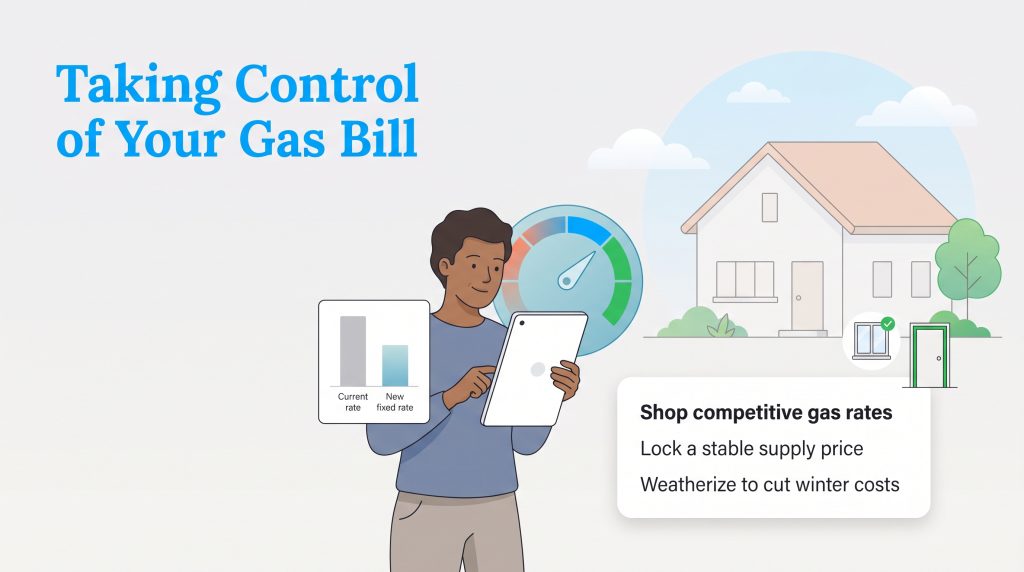
Do not wait until the first deep freeze of winter to take control of your mounting energy expenses. Pull up your most recent natural gas statement right now, locate your 15-digit account number, and check your current supply rate against the competitive fixed-rate offers available in your zip code. By proactively securing a lower, stable supply rate and completing a few simple eco-conscious weatherization projects around your home, you can successfully offset the sting of rising delivery fees and keep your household budget firmly on track all season long.
Frequently Asked Questions About Columbia Gas of Ohio Charges
Why is my Columbia Gas of Ohio bill so high this month?
Can I choose a different company for my natural gas delivery in Ohio?
What is the infrastructure replacement rider on my bill?
What is the difference between Columbia Gas delivery charges and the SCO?
Why did my Columbia Gas fixed customer charge increase?
Does changing my natural gas supplier affect my delivery charge?
Is there a way to get help if I can’t afford my Columbia Gas bill?
About the Author

LaLeesha has a Masters degree in English and enjoys writing whenever she has the chance. She is passionate about gardening, reducing her carbon footprint, and protecting the environment. She also recently served as President of the Board for City Sprouts (a community garden).

David has been an integral part of some of the biggest utility sites on the internet, including InMyArea.com, HighSpeedInternet.com, BroadbandNow.com, and U.S. News. He brings over 15 years of experience writing about, compiling and analyzing utility data.