
Compare AES Ohio electricity rates, explore the latest price to compare, and confidently choose the best energy plan for your home.
Key Takeaways
- AES Ohio (formerly Dayton Power & Light) serves over 527,000 customers across West Central Ohio and handles all local power delivery.
- The current AES Ohio Price to Compare (PTC) is your essential benchmark when shopping for competitive retail energy plans.
- You can use the Energy Choice Ohio program to secure fixed-rate alternatives that protect you from seasonal market spikes.
If you live in West Central Ohio, there is a good chance AES Ohio powers your daily life, but you might not realize you have the power to control how much you pay for that electricity. Navigating your monthly utility bill shouldn’t feel like deciphering an ancient text, especially when finding the right electricity rate can keep more money in your pocket. Whether you still refer to the utility by its old name, Dayton Power and Light, or you are simply looking for the best way to report a sudden power outage, we are here to help. Let’s break down the current AES Ohio electricity rates, explore how the Energy Choice Ohio program works, and review exactly what to look for on your monthly bill so you can make the smartest energy decisions for your household.
About AES Ohio and Coverage Area
AES Ohio traces its roots back to 1911 and operates as a regulated electric utility based in Dayton, Ohio. For decades, locals knew the company as Dayton Power and Light (DP&L), but it recently rebranded to align with its parent organization, the global energy company AES Corporation. Today, AES Ohio serves over 527,000 customer accounts across West Central Ohio. With over a century of operating history, the utility emphasizes reliable electricity delivery, continuous infrastructure investment through forward-thinking smart grid programs, and active community engagement to keep the local economy thriving.
The AES Ohio service territory spans approximately 6,000 square miles, covering a diverse mix of urban centers and rural farming communities. This substantial footprint encompasses a significant portion of West Central Ohio, most notably serving residents in Montgomery, Greene, Miami, and Clark counties. Major cities within this coverage map include Dayton and Springfield, alongside numerous surrounding townships. Regardless of who you eventually choose as your retail energy supplier, AES Ohio maintains the massive network of overhead and underground transmission lines to ensure your lights stay on year-round.
AES Ohio Current Rates and Price to Compare
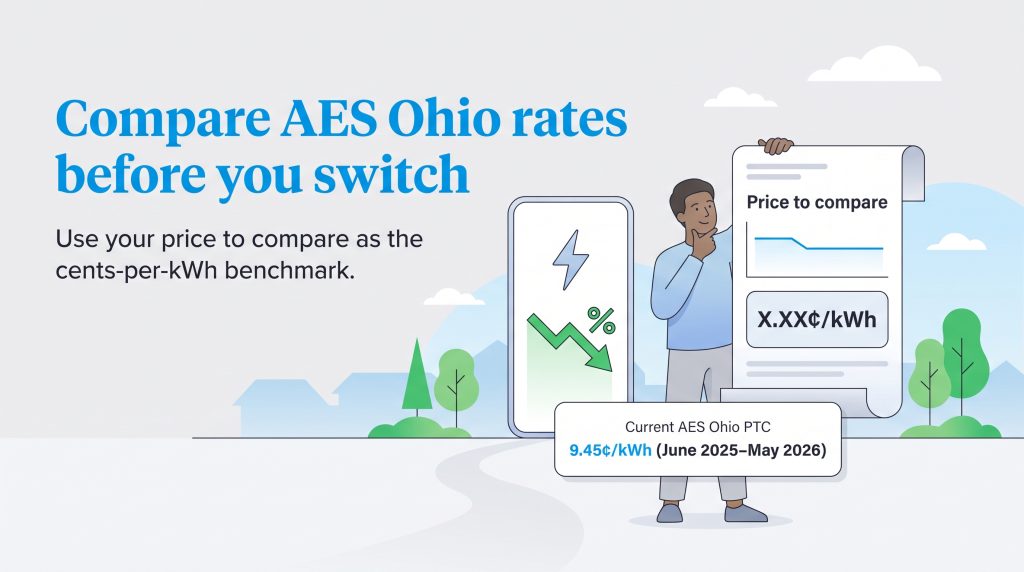
If you do not actively choose a competitive electricity supplier, AES Ohio provides your power by default through what is known as the Standard Service Offer (SSO). The rate associated with this default supply is called the AES Ohio price to compare (PTC). Knowing your current PTC is incredibly important because it gives you a direct, cents-per-kWh benchmark to use when shopping around for better rates. If a retail supplier offers a rate lower than your current PTC, switching will immediately save you money on the supply portion of your monthly statement.
| Time Period | Standard Service Offer (PTC) | Rate Type |
|---|---|---|
| June 2025 – May 2026 | 9.45 cents/kWh | Variable Default Supply |
| June 2024 – May 2025 | 10.81 cents/kWh | Variable Default Supply |
| June 2023 – May 2024 | 10.81 cents/kWh | Variable Default Supply |
The Standard Service Offer is determined through competitive wholesale auctions overseen by the Public Utilities Commission of Ohio (PUCO). Because wholesale energy markets fluctuate with global supply and demand, the AES Ohio price to compare changes periodically — typically updating at the start of June each year. As seen in the table above, the 2025–2026 rate of 9.45 cents per kilowatt-hour (kWh) represents a welcome drop from previous years, but it remains a variable rate susceptible to future adjustments if the energy market shifts.
Understanding Types of Energy Plans
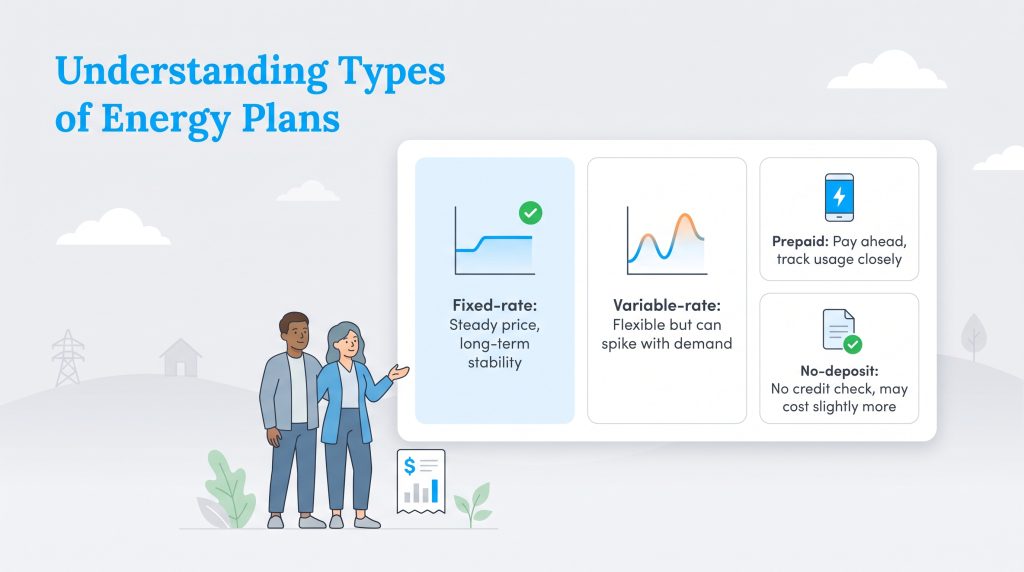
Shopping for a new electricity provider in Ohio opens the door to several different plan structures. Understanding this industry terminology is the best way to ensure you pick an energy plan that truly fits your household budget and long-term financial goals.
- Fixed-Rate Plans: These plans lock in your electricity supply rate for the duration of your contract, which typically lasts anywhere from 12 to 36 months. Fixed rates are our top recommendation because they protect you from market volatility and seasonal price spikes. Keep in mind that leaving a fixed-rate contract early often results in an early termination fee (ETF), so be sure you understand the terms before signing up.
- Variable-Rate Plans: With a variable plan, your rate changes from month to month based on the wholesale cost of electricity. While you might enjoy lower rates during mild spring or fall months when energy demand drops, you carry the risk of massive price spikes during extreme summer heatwaves or winter freezes. These plans usually do not have cancellation fees, offering maximum flexibility.
- Prepaid Plans: Working similarly to a prepaid cell phone, these plans allow you to pay for your electricity before you use it. You load funds into a digital account, and your daily household usage deducts from that balance. When the balance gets low, you simply top it off to avoid disconnection.
- No-Deposit Plans: If you have a low credit score or lack credit history, many providers offer no-deposit options. These plans bypass the traditional credit check, though they sometimes come with slightly higher rates or require you to set up auto-pay to secure the account.
How to Read Your AES Ohio Bill and Access Your MyAES Login
AES Ohio recently redesigned its billing statements and updated its entire account numbering system, which caused a bit of initial confusion for long-time customers in the Miami Valley. Knowing how to read your new bill and successfully manage your AES Ohio login is crucial, especially if you plan to monitor your usage or switch to a competitive retail electric provider.
Before you can review your digital bill, you need to register for the MyAES web portal. Because of the recent system upgrade, first-time users must re-register or set up their portal access using their newly issued AES Ohio account number. Simply navigate to the login page on the AES Ohio website, click “Register for an Account,” and enter your new 10-digit number along with your ZIP code to securely link your profile.
Once you have access to your bill, here are the core elements you need to review:
- Find Your Account Number: Look at the top right corner of the first page. Your AES Ohio account number is now a 10-digit figure. If you are setting up service with a new supplier, you must provide this exact number so they can correctly seamlessly transfer your supply.
- Locate the Price to Compare Message: Turn to the “Messages” or “Important Information” section of your bill. You will see a clearly labeled sentence stating your current AES Ohio price to compare in cents per kWh.
- Review Your Supply vs. Delivery Charges: Your bill is fundamentally split into two halves. The “Delivery Charges” go straight to AES Ohio for maintaining the physical grid, fixing wooden poles, and keeping the system reliable. You cannot change these fees. The “Supply Charges” cover the actual electricity you consumed. This is the section you have the power to lower by shopping around.
- Check Your Usage History: Most bills include a small bar graph showing your kWh usage over the past 12 months. Reviewing this graph helps you estimate how much electricity you typically use during peak summer and winter months so you can plan your budget accordingly.
Choosing a Retail Electric Provider in Ohio
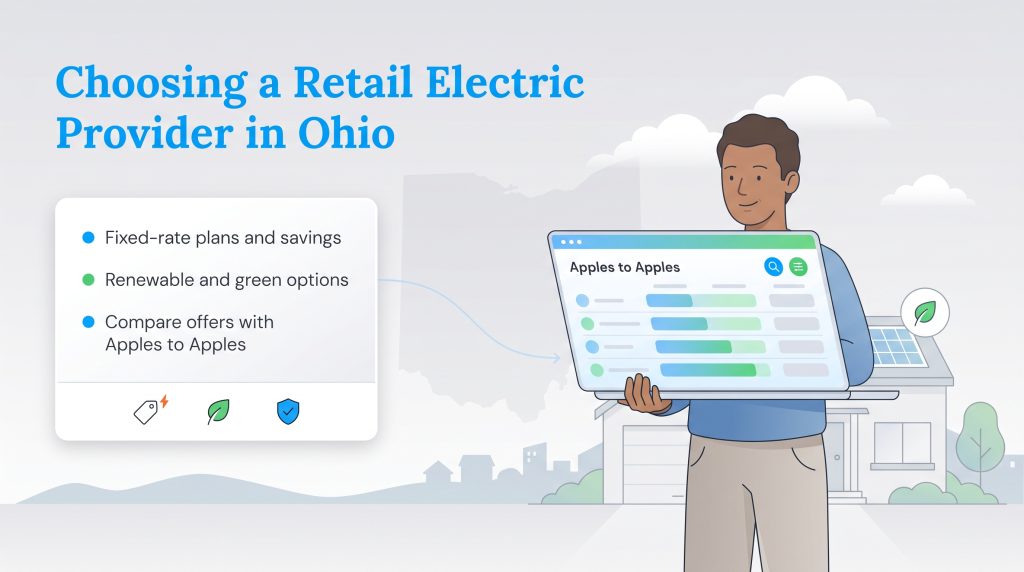
In Ohio’s deregulated energy market, you have the option to select a retail electric supplier (REP) while AES Ohio continues to deliver the power securely to your home. By taking the time to shop around, you can often secure a fixed-rate plan that offers significant cost savings over the default standard offer, alongside fantastic perks like renewable energy options to shrink your carbon footprint.
When evaluating REPs, the absolute best place to start is the PUCO’s “Apples to Apples” comparison tool, which lists current, certified offers in your area. Below is a look at a few of the top competitors serving the AES Ohio footprint:
Clearview Energy: Clearview often features ultra-low introductory fixed-term rates and is highly regarded for strong customer ratings and a heavy focus on renewable-friendly plans. Their competitive price point makes them a go-to for eco-conscious and cost-savvy consumers alike.
Constellation Energy: Constellation is a massive national supplier with an established reputation for rock-solid reliability and accessible customer service. If you value a well-known brand and predictable billing, this is a top pick.
APG&E (American Power & Gas of Ohio): APG&E is routinely praised for flexibility (offering short-term contract options) and user-friendly terms (sometimes waving early termination fees). It’s a great option if you expect your living situation or energy needs may change soon.
Energy Harbor: Energy Harbor tends to offer stable fixed-rate plans that sit comfortably under the utility’s default rate and features multiple clean energy add-on options. They are an excellent choice for someone seeking long-term budget stability.
IGS Energy: While IGS is widely known for both natural gas and electric services, they have a dominant foothold in Ohio’s competitive electric market. They frequently offer green-energy choices and flexible contract lengths tailored to residential users.
Before you enthusiastically commit to a switch, verify if the rate is fixed or variable, check the total contract length, look closely for hidden monthly service fees in the fine print, and evaluate their customer service reputation online.
How to Report an AES Ohio Power Outage & View the Map
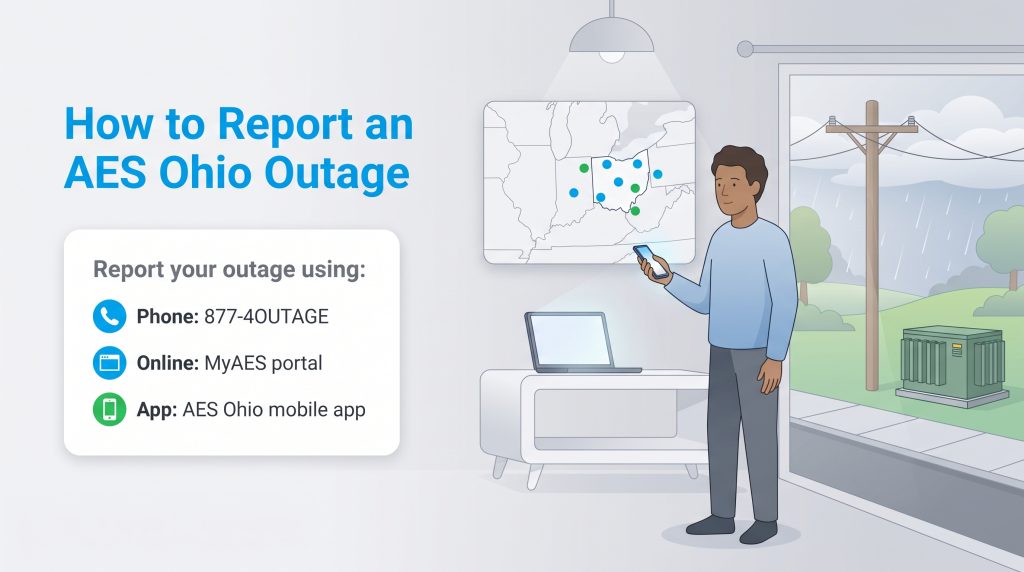
Even if you switch your electricity supplier to a different retail company, AES Ohio remains entirely responsible for the physical wires, wooden poles, and neighborhood transformers. This means they are the only company you ever need to contact during a sudden blackout. The biggest mistake homeowners make during an AES Ohio power outage is assuming a neighbor has already reported the issue. If you experience a service disruption, reporting it immediately yourself helps the utility dispatch repair crews more accurately.
You can report a blackout using any of the following reliable methods:
- Phone: Call the automated AES Ohio outage line directly at 877-4OUTAGE (877-468-8243). Have your account number or the phone number associated with your billing profile ready to speed up the process.
- Online Portal: Log into your MyAES portal to report the issue. Doing this triggers real-time data updates directly onto the interactive AES Ohio outage map, allowing you and your neighbors to track estimated restoration times.
- Mobile App: Tap the “Report Outage” button within the free AES Ohio mobile application for instant submission.
For a broader look at grid stability across the region, especially during severe Midwestern thunderstorms, you can also track major weather events and statewide outages through reliable third-party monitors like PowerOutage.us.
Customer Service, Bill Payment Options, and Moving Service
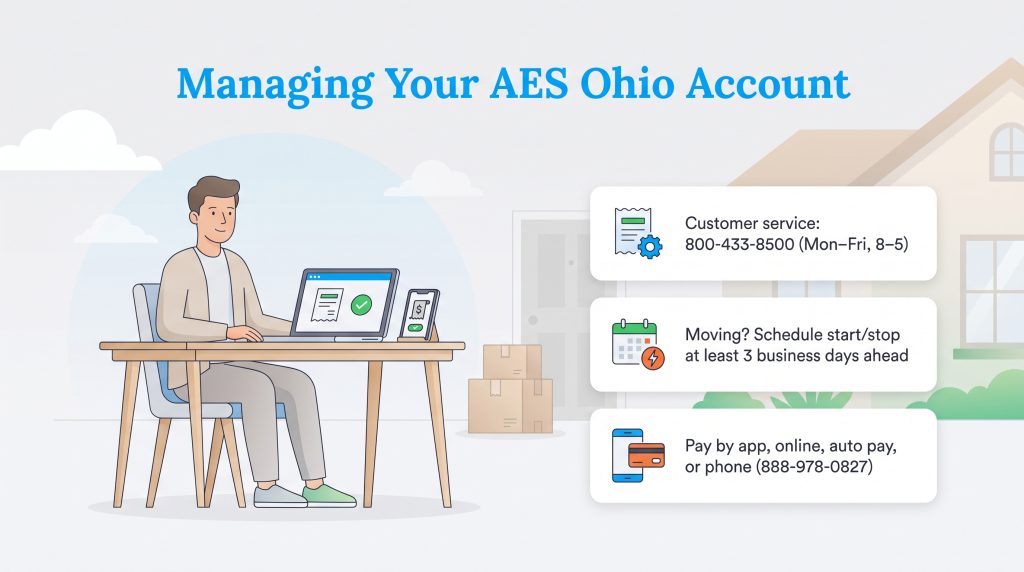
Whether you need to clarify a bizarre charge on your monthly statement or are preparing to relocate across town, accessing proper support is essential. The main AES Ohio customer service number is 800-433-8500. Live representatives are available to assist you Monday through Friday, from 8:00 a.m. to 5:00 p.m.
If you need to start, stop, or transfer service because you are moving to a new home, do not wait until moving day. You must contact AES Ohio at least three business days in advance. This vital lead time ensures the utility can process your request, verify meter readings, and physically switch on the power at your new address before you arrive with a moving truck full of boxes.
When it comes time to actually pay your AES Ohio bill, the company provides several secure, flexible payment methods to match your lifestyle:
- Digital Payments via Third Parties: You can securely pay your AES Ohio bill online using specialized utility payment processors like KUBRA EZ-PAY or doxo. These services often allow you to use a credit card, debit card, or standard electronic check.
- AES Ohio E-Bill: We highly recommend setting up paperless billing through the MyAES portal. The E-Bill program cuts down on unnecessary paper waste and ensures you never lose a statement in the mail.
- Automated Phone Payments: If you prefer handling finances over the phone, use the dedicated automated payment line by calling 888-978-0827.
- AES Ohio Mobile App: While the app sits at a modest rating on digital stores, it allows you to instantly pay your bill, set up auto-pay, track hourly usage trends, and even split payments among roommates without relying on external cash-sharing apps.
Energy Assistance Programs
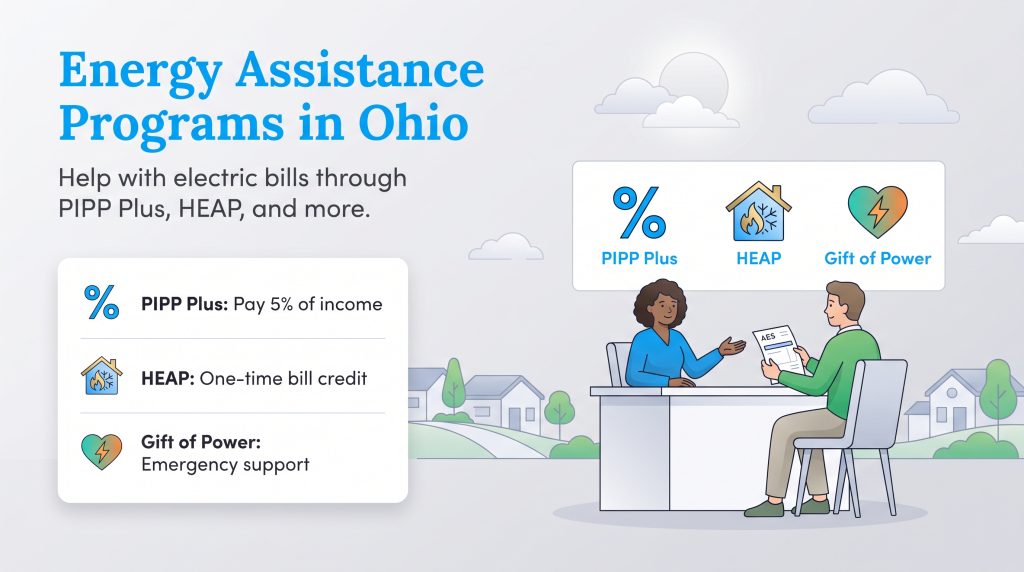
Ohio winters can be brutally cold, and summer heatwaves easily push household air conditioners to the absolute limit. If you are struggling to keep up with rising energy costs, you do not have to face the daunting threat of disconnection alone. The state of Ohio and AES Ohio partner to offer several targeted energy assistance programs designed to provide immediate relief for low-income residents.
- PIPP Plus (Percentage of Income Payment Plan): This state-mandated program allows eligible Ohioans to pay exactly 5% of their gross monthly household income toward their electric bill, regardless of how much electricity they actually consume. If you make your reduced payments on time each month, the state gradually forgives your outstanding balance.
- HEAP (Home Energy Assistance Program): HEAP provides a one-time federal credit applied directly to your AES Ohio utility bill to help offset the massive costs of winter heating. There are also specific crisis programs (Winter Crisis and Summer Crisis) available for households facing an immediate disconnection notice.
- Gift of Power: AES Ohio independently runs the Gift of Power program, an emergency relief fund funded by corporate and customer donations. This fund assists local families who fall slightly outside federal low-income guidelines but still face severe, unexpected financial hardship and imminent power shutoffs.
To apply for PIPP Plus or HEAP, you will need to schedule an appointment with your local Community Action Agency. Be prepared to provide proof of income for all household members, your most recent AES Ohio bill, and photo identification.
Rebates, Discounts, and Smart Grid Sustainability Initiatives
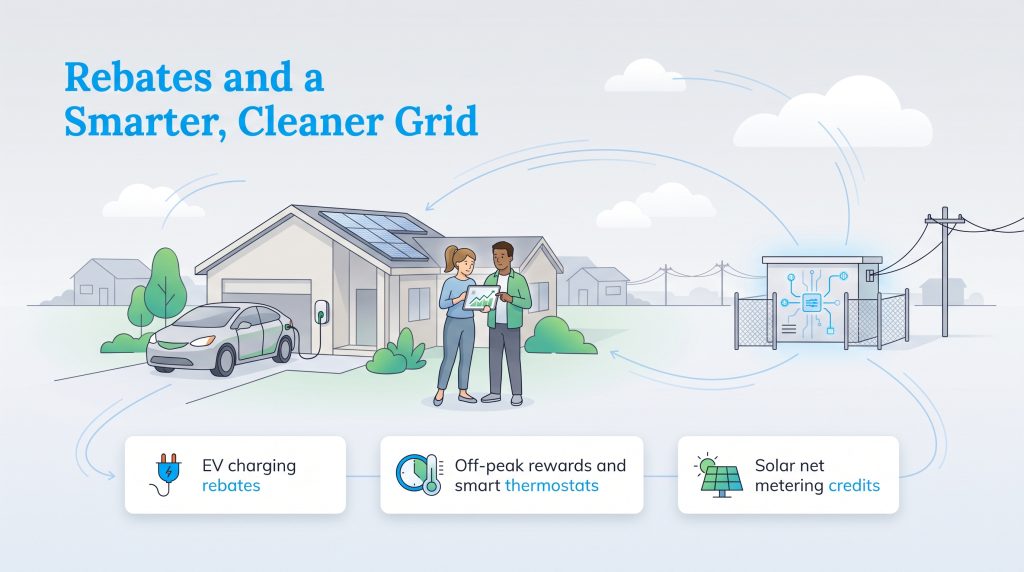
Improving your home’s energy efficiency puts much less strain on the local grid and leaves considerably more money in your wallet. While AES Ohio’s state-mandated energy efficiency programs ended in compliance with recent Ohio legislation, the company continues to aggressively support long-term sustainability through robust infrastructure upgrades, targeted incentives, and a shifting digital portfolio.
A major focus of these upgrades is AES Ohio’s 4-year Smart Grid modernization plan. This massive capital investment aims to drastically improve overall grid reliability across the Miami Valley. By installing self-healing grid technology and advanced digital tracking systems, the utility can automatically reroute power during severe weather, reducing the length and frequency of neighborhood outages while offering customers far more precise data on their daily consumption.
According to their latest environmental disclosure, the AES Ohio energy mix is actively transitioning away from legacy fossil fuels. The current breakdown includes:
- Natural Gas: 41.5%
- Nuclear: 32%
- Coal: 17% (AES has announced an intent to exit coal generation entirely by the end of 2025)
- Renewables (Wind, Solar, Hydro, Biomass): ~9.5%
To help residents comfortably adopt a greener, environmentally mindful choice in their daily lives, AES Ohio offers several robust consumer programs:
- EV Charging Rebates: The utility thoughtfully allocated $5.1 million for electric vehicle charging rebates, available on a first-come, first-served basis for qualifying home and business installations.
- Off-Peak EV Charging Rewards: Customers can earn an initial one-time enrollment incentive of $150 and secure annual rewards up to $100 simply for charging their vehicles during low-demand overnight off-peak hours.
- Smart Thermostat Incentives: Discounts are routinely available through the AES Ohio Marketplace for popular smart thermostat brands, which expertly automate your home’s heating and cooling cycles.
- Net Metering Programs: If you decide to install residential solar panels on your property, AES Ohio will properly install a specialized net meter to measure the excess power you feed back into the grid, potentially earning you valuable generation credits on your monthly statement.
Customer Reviews and Ratings
Understanding the actual, lived experience of other local customers provides incredibly valuable context well beyond official utility press releases. A thorough review of customer sentiment across the Better Business Bureau, mobile app stores, and local community forums like Reddit’s r/dayton reveals a decidedly mixed, though relatively typical, response for a major regional utility company.
The most frequent customer praises focus heavily on the physical reliability of the grid itself. When severe Midwestern storms roll through the Miami Valley, residents generally note that AES Ohio repair crews work swiftly, bravely, and efficiently to restore power to affected neighborhoods. The rollout of new smart meters has also drawn positive remarks for completely eliminating the need for invasive manual meter readings and providing much more accurate, predictable billing cycles.
However, the utility has unfortunately faced its fair share of recent criticism. A major billing system overhaul led to a widespread wave of temporary login issues, accidental auto-pay resets, and immense confusion over the newly issued 10-digit account numbers. On the Better Business Bureau profiles and app store review sections, users frequently cite frustratingly long customer service wait times during morning peak hours and occasional struggles navigating the updated website interface. Thankfully, the utility appears to be steadily smoothing out these digital bumps as the new software system matures.

- Calculate Your Moving Costs
- Compare Moving Companies
- Get Multiple Quotes
- Move with Confidence
The Final Verdict: Is Sticking With AES Ohio the Best Choice?
Deciding between the AES Ohio default supply and a competitive retail electric provider ultimately comes down to your personal appetite for price stability. Review the pros and cons carefully to ensure you confidently select the best option for your household budget.
Pros of Keeping AES Ohio Default Supply:
- Zero effort required; it is the automatic default option provided upon move-in.
- No complex long-term contracts or hidden early termination fees.
- Prices are heavily regulated and safely auctioned transparently by the PUCO.
Cons of Keeping AES Ohio Default Supply:
- The rate is fully variable and dangerously fluctuates based on unpredictable wholesale market conditions.
- You completely miss out on highly competitive promotional rates offered by private suppliers.
- Fewer options to consciously select 100% renewable energy plans to support the environment.
Sticking with the AES Ohio Standard Service Offer is best suited for renters on short, unpredictable leases or individuals who absolutely do not want the minor hassle of managing active energy contracts. However, if you confidently own your home or plan to stay in your current residence for a year or more, actively switching to a fixed-rate plan with a retail electric provider is almost always the smarter financial move. Locking in a solid rate effectively protects your household budget against wild, unpredictable summer and winter energy spikes.
Making Your Next Energy Move With AES Ohio
Taking confident control of your energy expenses does not have to be an intimidating chore. By completely understanding your current price to compare, consistently keeping an eye on your usage trends via the AES Ohio app, and eagerly exploring the deregulated options available through Energy Choice Ohio, you have all the tools necessary to make an informed, budget-friendly decision. Grab your latest digital bill, secure that new 10-digit account number, and take five minutes to compare local rates today — your future self will certainly appreciate the financial savings.
Frequently Asked Questions About AES Ohio
What is the AES Ohio customer service number?
How do I log in to my AES Ohio account?
Where can I view the AES Ohio outage map?
How do I start or stop AES Ohio service when moving?
What is the current AES Ohio price to compare?
Is AES Ohio the same as Dayton Power and Light?
How do I report a power outage to AES Ohio?
Does AES Ohio offer renewable energy options?
How do I read my meter?
If I choose a new supplier, who do I call when my power goes out?
How do I switch to a new electric supplier?
1. You actively select a new supplier and agree to their offer.
2. The new supplier will formally notify AES Ohio of the impending switch.
3. AES Ohio will safely update your account. There is never an interruption in your daily service, and absolutely no technician needs to visit your home.
Will I get two bills?
– Delivery Charges: from AES Ohio for properly using their wires and utility poles.
– Supply Charges: safely billed from your newly chosen competitive supplier.
What if I change my mind after switching?
Does AES Ohio have peak charging hours for EVs?
About the Author

David has been an integral part of some of the biggest utility sites on the internet, including InMyArea.com, HighSpeedInternet.com, BroadbandNow.com, and U.S. News. He brings over 15 years of experience writing about, compiling and analyzing utility data.