
A temporary fuel charge will raise electric bills for over 500,000 Hoosiers this summer, but standardized billing and local assistance programs can help you keep costs under control.
Key Takeaways
- Monthly electric bills will increase by $9.52 for a typical residential customer using 1,000 kWh from June through August 2026 to recover unexpected winter storm fuel costs.
- Indiana operates under a regulated electric market, meaning residential customers cannot switch electricity providers or lock in lower rates to avoid this charge.
- A new state-standardized Levelized Billing program is now available to help you smooth out seasonal price spikes by averaging your payments over a rolling 12 months.
Setting up a new home or managing your monthly budget in Central Indiana just got a little more complicated, as local energy bills are heading up for the hot summer months. On June 10, 2026, the Indiana Utility Regulatory Committee approved a temporary fuel rate adjustment for AES Indiana that will raise electricity bills for more than 500,000 residential customers from June through August 2026. In this article, we will break down why these rates are shifting, explore which cities are affected, explain why you cannot simply switch providers, and share practical, eco-conscious steps you can take to lower your energy usage and keep your hard-earned money in your pocket.
The Storm Behind the Surcharge: Why Your Rates Are Changing
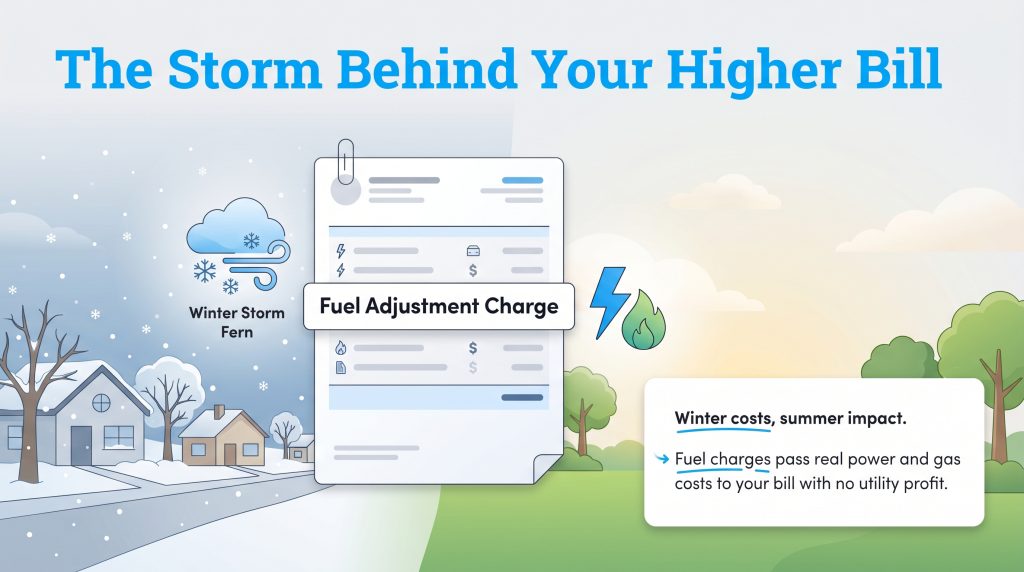
You’re probably wondering why a freezing winter storm in January is impacting your electricity bills during the dog days of summer. It all comes down to a regulatory mechanism called the Fuel Adjustment Clause (FAC), which allows utilities to pass actual fuel procurement and purchased power costs directly to consumers. Because this clause acts as a straight pass-through, the utility doesn’t make a single penny of profit on these adjustments.
The Double-Whammy of Winter Storm Fern
In January 2026, an intense weather event known as Winter Storm Fern brought extreme, subfreezing temperatures and wind chills dipping to -20 degrees Fahrenheit across Central Indiana. The storm dumped 11 inches of snow on Indianapolis — the heaviest single-storm total the city had seen in 12 years — triggering state and federal emergency declarations.
This historic cold snap caused massive supply disruptions, forcing more than 10% of total U.S. natural gas production offline due to physical freeze-offs. At the exact same time, heating demand skyrocketed. Because transmission bottlenecks physically blocked low-cost wind power in Illinois from moving east to Indiana, regional wholesale electricity prices surged dramatically. Since AES Indiana relies on market-priced fuel and purchased power for over half of its total operations and maintenance expenses, the utility had to pay premium spot-market prices to keep the lights on.
Mapping the Impact: Who Is Affected?
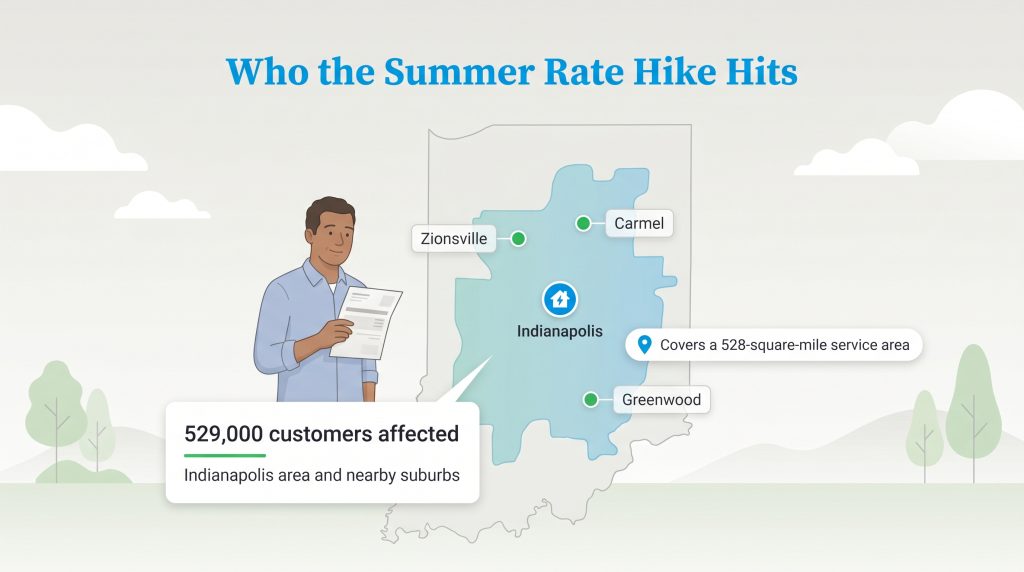
This temporary rate adjustment doesn’t hit everyone in the state, but it does cover the entire 528-square-mile retail service territory of AES Indiana. If you live in or around the Indianapolis metropolitan area, you’re likely among the 529,000 customers affected by this three-month summer surcharge.
Major Cities and Communities Under the Surcharge
The bulk of the impacted households are concentrated in Marion County, but the rate increase also reaches into parts of several surrounding counties, including Boone, Hamilton, Hancock, Hendricks, Johnson, Morgan, Owen, Putnam, and Shelby. Major cities and suburban towns feeling the pinch include Indianapolis, Carmel, Greenwood, Lawrence, and Plainfield.
Breaking Down the Bill: What Will You Actually Pay?
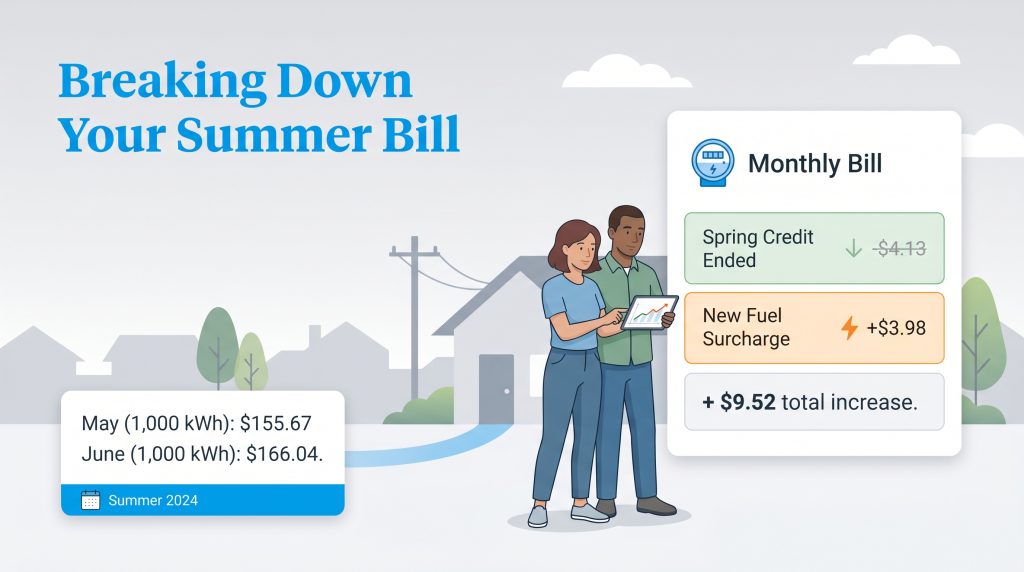
To understand how this change affects your monthly household budget, we need to look at how different billing components interact on your utility statement. While the temporary surcharge adds a new fee of $3.98 per month for a household using 1,000 kilowatt-hours (kWh) of electricity, the net impact on your bill compared to the spring is actually higher. That’s because a previous spring credit of $4.13 per month has expired, leading to a total net monthly bill increase of $9.52.
Calculating the Summer Usage Math
A typical residential customer using exactly 1,000 kWh per month will see their bill rise from a baseline of $155.67 in May to $166.04 in June. However, your actual impact might differ slightly depending on your household’s real-world energy footprint. The average residential customer on the system uses 938 kWh per month, which means their bill will rise from $147.44 in May to $157.16 in June.
Watch Out for Pending Base Rate Hikes
This summer fuel charge isn’t the only rate adjustment on the horizon. AES Indiana has a separate base rate review pending before the state under Cause No. 46258, which is aimed at funding grid infrastructure and clean energy transitions. If state regulators approve the proposed settlement, a permanent base rate increase of roughly $10.00 per month for a 1,000 kWh user will take effect in July 2026, pushing typical summer bills even higher.
Let’s see how these combined adjustments could shape your energy costs this summer:
| Month (2026) | Active Billing Components | Bill at 1,000 kWh | Bill at Average Usage (938 kWh) |
| May (Baseline) | Standard rates (including -$4.13 spring credit) | $155.67 | $147.44 |
| June | New fuel surcharge (+$3.98 charge, net +$9.52 shift) | $166.04 | $157.16 |
| July | Fuel surcharge + proposed base rate increase (pending approval) | $169.78 | $160.67 |
| August | Fuel surcharge + proposed base rate increase (pending approval) | $169.78 | $160.67 |
(Source: AES Indiana Summer Reliability Forum )
Market Realities: Can You Switch Providers to Avoid the Hike?
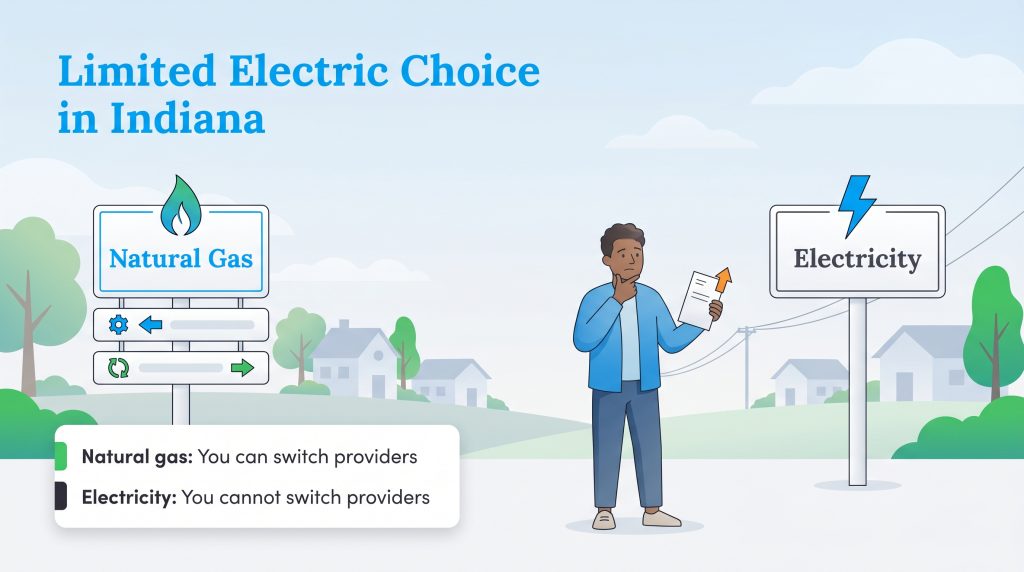
When faced with rising bills, your first instinct might be to shop around for a cheaper energy company or lock in a lower fixed rate. However, we have to look closely at the rules of the road in Indiana, because the electric market operates very differently from other home utilities. While some states allow full retail choice, Indiana residential electric customers are bound to their local monopoly utility.
The Difference Between Gas and Electricity in Indiana
If you’re setting up natural gas services in Indiana, you actually do have the power of choice. The state’s natural gas market is deregulated, meaning you can compare rates from retail energy marketers and lock in a fixed-rate protection plan to avoid seasonal winter spikes.
Retail electricity, on the other hand, remains strictly regulated. AES Indiana holds an exclusive right to serve its defined territory, meaning you can’t switch to another provider or buy power from an independent broker. Your only options for managing these rising costs are to lower your energy consumption, enroll in specialized billing structures, or apply for utility-sponsored relief programs.
Practical Ways to Manage and Lower Your Energy Bills
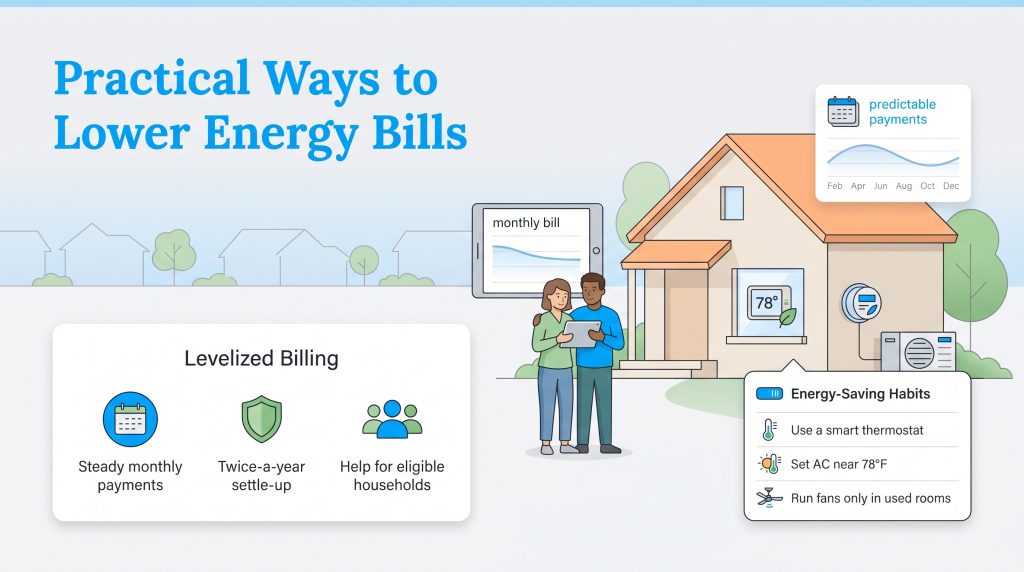
Since you can’t shop around for a new electric supplier, the most effective way to lower your bill is to change how you pay for and consume your electricity. We highly recommend taking a proactive approach to both your billing setup and your household energy habits. Combining smart financial tools with simple, sustainable actions can significantly take the sting out of this summer’s rate hike.
Predictable Budgeting with Levelized Billing
To comply with a new state law, House Enrolled Act (HEA) 1002, Indiana utilities have transitioned their traditional “Budget Billing” programs to a standardized plan called Levelized Billing. Instead of letting your bill spike during scorching summer months, this plan calculates your payment based on a rolling average of your past 12 statements. You pay a steady, predictable amount every month.
Your account is reviewed twice a year — on your April and October bills — in a process called a “settle-up”. During this review, the utility compares your actual energy use to your paid average and adjusts your future monthly payment accordingly to keep it accurate. Standard customers must be current on their bills to sign up, but there’s an important exception. Under HEA 1002, low-income customers who qualify for the state’s Energy Assistance Program will be automatically enrolled in Levelized Billing starting Aug. 1, 2026, though they can choose to opt out by July 30, 2026, if they prefer standard billing.
Leveraging State and Utility Assistance Programs
If you find yourself struggling to keep up with utility payments, several excellent safety nets are available. The state-run Low-Income Home Energy Assistance Program (LIHEAP), often called the Energy Assistance Program (EAP), provides a one-time annual benefit directly to your energy provider. Eligible households must meet gross income guidelines set at or below 60% of the State Median Income. While the application window for the current cycle closed on April 20, 2026, the portal will reopen for the next season on Oct. 1, 2026.
For immediate, short-term support, you can turn to utility-specific relief programs:
- The Power of Change Program: Administered alongside the non-profit Dollar Energy Fund, this pilot program offers a one-time emergency grant of up to $240 per year for income-eligible residential accounts facing service disconnection. To qualify, your household gross income must be at or below 150% of the Federal Poverty Guidelines.
- Flexible Payment Extensions: If you just need a few extra days to cover a bill, you can request a short-term extension online or divide your outstanding balance over a three- or six-month period through a long-term agreement.
Sustainable, Eco-Conscious Habits to Shrink Your Bills
Beyond financial tools, making an environmentally mindful choice in your daily routine is the absolute best way to permanently lower your electric bills. Heating and cooling make up the largest share of home energy use, so focusing on these areas will yield the biggest savings.
Consider these practical, energy-saving options to beat the summer heat:
- Install a Smart Thermostat: Upgrading to an ENERGY STAR certified smart thermostat is an excellent eco-conscious alternative that can save you up to 8% annually on heating and cooling. These devices automatically adjust temperatures when you’re away or sleeping.
- Optimize Your AC Settings: Set your thermostat to 78 degrees Fahrenheit when you’re at home, and raise it higher when you leave. Every degree you raise the temperature can save you up to 3% on cooling costs.
- Utilize Ceiling Fans Wisely: Run ceiling fans counterclockwise to create a cool breeze, but remember that fans cool people, not rooms — turn them off when you leave the space to save power.
- Track Your Real-Time Usage: Use AES Indiana’s PowerView portal to monitor your hourly energy use and set up automated alerts to catch high-consumption habits before they inflate your monthly bill.
Taking Charge of Your Home Utility Budget
While temporary fuel surcharges and pending base rate adjustments make managing home expenses more challenging, you’re far from powerless. By combining state-regulated levelized billing with conscious energy-saving choices, you can effectively soften the blow of these summer price hikes. Taking a few proactive steps today — whether that means signing up for rolling average payments or adopting simple, eco-conscious habits — will keep your home comfortable, your carbon footprint low, and your monthly budget secure.
Frequently Asked Questions About the AES Indiana Rate Hike
Can I switch to a different electric company in Indiana to find a lower rate?
What is the new Levelized Billing program, and how does it help?
Is AES Indiana making a profit off of this temporary rate increase?
What should I do if I am having trouble paying my electric bill this summer?
About the Author

Claudio is a sustainability-focused writer with a background in Anthropology and Psychology from NC State University. He has spent over 15 years working in writing, interpretation, and translation, driven by a deep interest in how human culture shapes the environment. Today, he shares his curiosity with readers by writing about sustainable living solutions and the connection between everyday choices and environmental impact.