
Understanding how the newly completed electric rate increases in Indiana impact your monthly utility bills and finding practical ways to protect your monthly household budget
Key Takeaways
- CenterPoint Energy completed a multi-phased electric rate hike in early 2026 that increases typical residential bills by approximately 20% to 22.7%.
- Because Indiana operates as a strictly regulated monopoly, residential customers cannot choose another electric utility or lock in competitive third-party rates.
- Taking advantage of utility energy-efficiency rebates and programs is the most effective way to lower your monthly energy consumption and save money.
If you have opened your recent mail only to find a shocking jump in your electric bill, you are definitely not alone. We know how stressful it is to watch your hard-earned money vanish just to keep the lights on and your home comfortable. Residential electric customers of CenterPoint Energy in southwestern Indiana are currently adjusting to a major, multi-phased rate restructuring that wrapped up its final implementation phase in early 2026. This change means a typical household is seeing bills climb by about 20% (or up to $35 monthly) depending on how much energy is used. We want to help you make sense of these rising costs, explain why your rates are shifting, clarify which cities are impacted, and show you the smartest steps you can take to keep your utility budget under control.
Why Are CenterPoint Rates Changing in Indiana?
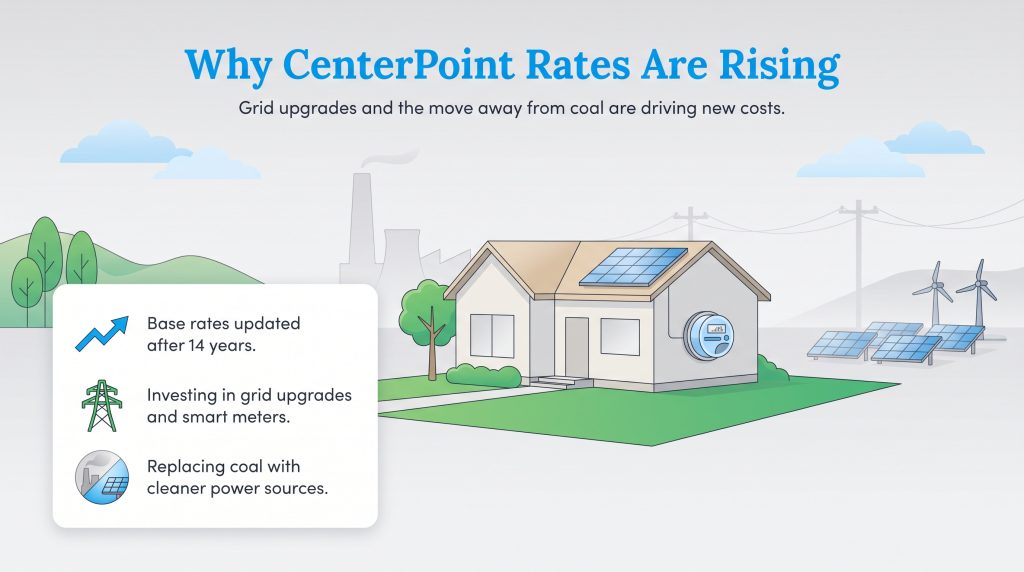
CenterPoint Energy’s electric utility, which was formerly known as Vectren, operates as a regulated monopoly in southwestern Indiana. In Dec. 5, 2023, the utility filed a petition under Cause Number 45990 with the Indiana Utility Regulatory Commission (IURC) requesting its first comprehensive electric base rate increase in over 14 years. The IURC approved a final order on Feb. 3, 2025, which allowed an annual revenue increase of $80 million. While this was lower than CenterPoint’s initial request of $118.8 million, it still represents a substantial financial adjustment for households that rolled out in phases through early 2026.
Recovering Over a Decade of Infrastructure Projects
Because CenterPoint had not updated its base rates since 2011, the utility used this rate case to recover capital costs for grid projects built over the previous decade. These investments include upgrading transmission and distribution lines, replacing aging poles, and installing approximately 159,000 smart meters across the region. The company argues these investments are necessary to keep your power delivery reliable and safe.
The Transition from Coal to Clean Energy
Another primary driver of the rate hike is CenterPoint’s federally mandated transition away from coal-fired power generation. In October 2023, the utility retired its A.B. Brown coal-fired generation units. To replace this baseline electricity, CenterPoint is investing in clean energy projects, including the 191-megawatt Posey Solar Facility, which cost $429 million to build. They also constructed two new natural gas backup combustion turbines in 2025 at a cost of $334 million, alongside a 20-year pipeline lease that costs $546 million plus fuel charges. Additionally, until these local projects are fully online, CenterPoint must purchase extra power capacity on the open market, passing these reliability charges directly to you through billing trackers.
How These Changes Impact Your Monthly Bill
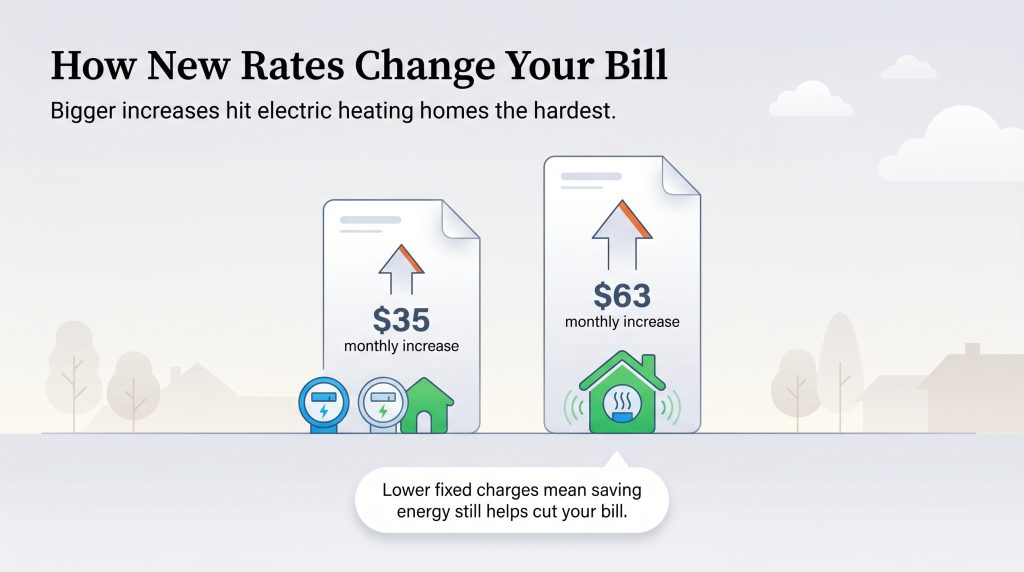
The actual financial impact on your household depends on whether you heat your home with electricity or natural gas, as well as your overall monthly consumption. For a standard customer using 799 kWh of electricity, the cumulative monthly bill has jumped by about $35.03, moving from a baseline of $154.02 up to $189.05. However, the 22% of customers who use electric heating (Rate EH) are facing the steepest climbs — with average bills rising by up to $63.33 monthly during the coldest winter months.
To help you visualize how these adjustments affect different households, we compiled the monthly billing changes below:
| Customer Class and Usage Level | Pre-Case Monthly Bill | Step 1 Increase (Feb. 3, 2025) | Early 2026 Final Monthly Bill | Cumulative Monthly Rise |
| Standard Residential (799 kWh) | $154.02 | $11.18 | $189.05 | $35.03 |
| Electric Heating (Rate EH) | Higher Baseline | $20.66 | Peak Winter Impact | Up to $63.33 |
Additionally, while CenterPoint originally proposed raising the flat monthly fixed customer charge from $10.84 to $23.20 (a 114% hike), consumer groups successfully fought to limit the base fixed charge to $11.00. This minor victory helps keep the fixed portion of your bill lower, meaning you still have some control over your overall costs through energy conservation.
Can You Switch Providers to Lock in Lower Rates?
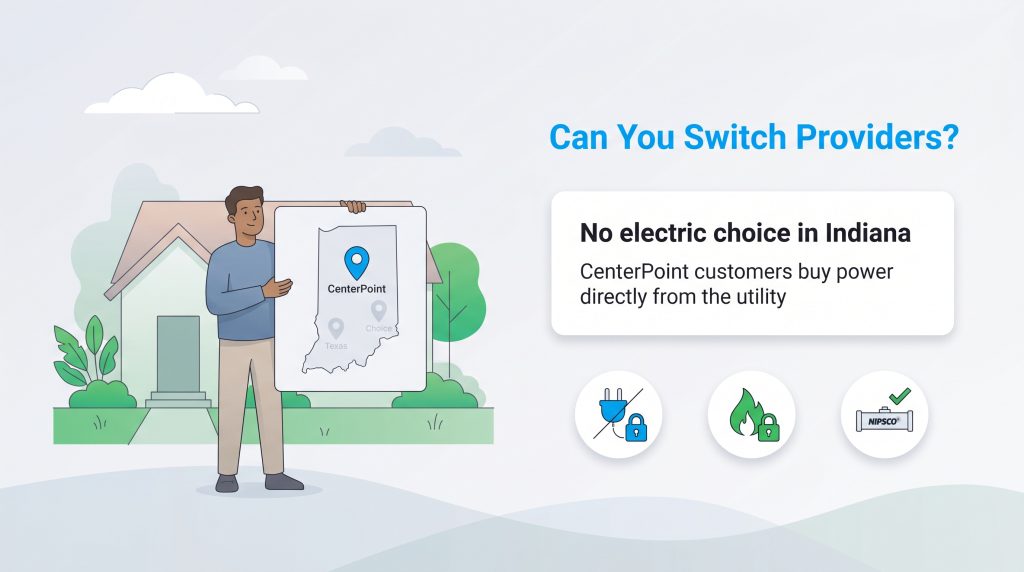
When rates go up, your first instinct is likely to look for a competitive offer from another supplier to lower your costs. However, we have to clear up a major misconception about the Indiana utility market. Indiana does not allow residential choice for electric service. If you live in CenterPoint’s electric service area, they are your sole utility, and you must purchase your power directly from them at state-approved rates.
Many online energy portals advertise “the power to choose” or offer third-party electric and gas contracts for “Center Point, Indiana”. Do not let this confuse you! These advertisements are targeting a tiny, incorporated town called Center Point in Clay County, Indiana. They do not apply to the broader customer base served by CenterPoint Energy, the Houston-based utility company.
Additionally, while states like Texas allow consumers to choose their retail electric provider, Indiana restricts residential energy options. Only Northern Indiana Public Service Company (NIPSCO) operates a voluntary CHOICE program for natural gas in Indiana. CenterPoint’s natural gas customers in Indiana do not have the option to switch suppliers and must buy their fuel directly from the utility.
Major Indiana Cities and Areas Impacted by CenterPoint Rates
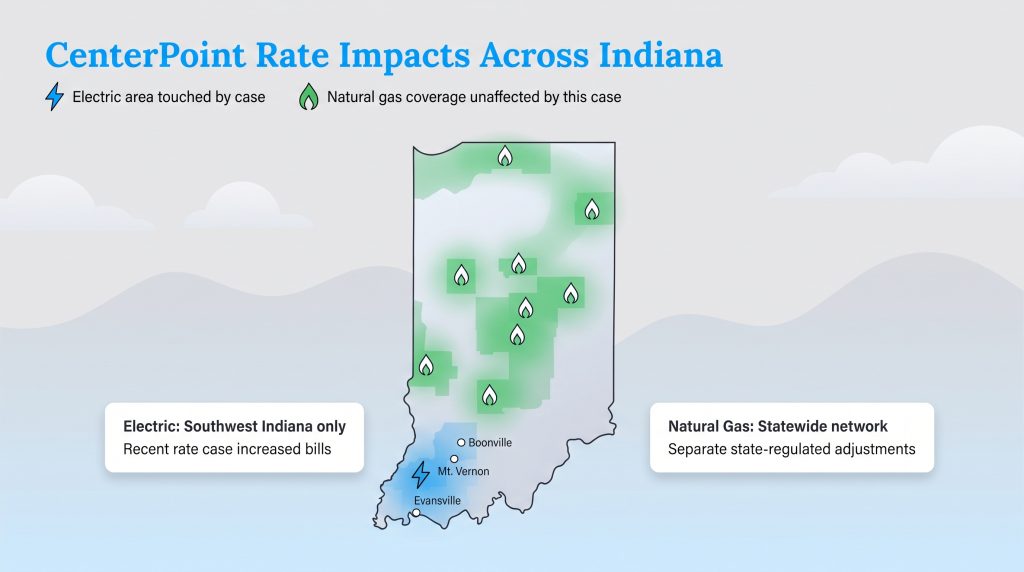
It is important to know that CenterPoint’s utility footprint in Indiana is split between two separate divisions: electric and natural gas. The recent Cause Number 45990 rate case only altered electric rates in southwest Indiana, leaving natural gas rates unaffected.
CenterPoint’s electric division serves about 150,000 customers across seven counties in southwestern Indiana, including Gibson, Dubois, Pike, Posey, Spencer, Vanderburgh, and Warrick counties. The major metropolitan area impacted by this electric rate increase is Evansville, along with surrounding communities like Mt. Vernon and Boonville.
On the other hand, CenterPoint provides natural gas to over 775,000 customers in 56 counties statewide. This includes major markets such as Bloomington, Terre Haute, Lafayette, Bedford, Columbus, Seymour, and the suburban areas surrounding Indianapolis, including Carmel, Fishers, Noblesville, Greenwood, Zionsville, and Brownsburg. While these gas customers did not see their bills change from the electric rate case, they are still subject to separate state-regulated natural gas distribution adjustments.
What Can You Do to Lower Your Utility Bills?
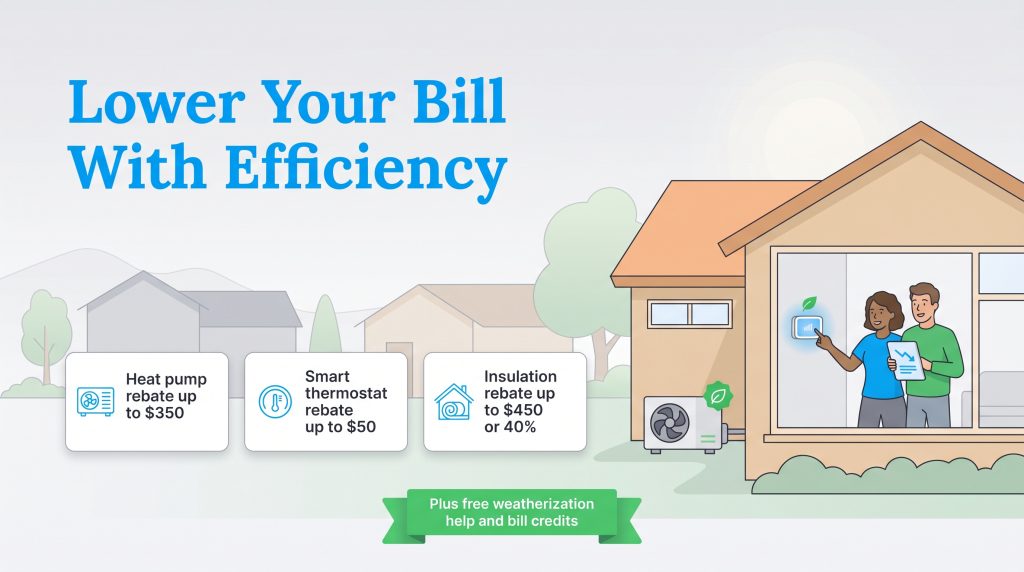
Since you cannot switch electric providers, the best way to fight back against rising utility rates is to lower your overall energy usage. Thankfully, CenterPoint partners with Franklin Energy to offer several energy-saving programs and rebates to help you transition your home into an efficient, eco-conscious space.
Take Advantage of Energy-Saving Rebates
One of the best ways to soften the blow of rate hikes is through CenterPoint’s Residential Rebate Program. If you upgrade your old heating and cooling systems to an energy-saving option, you can receive significant cash-back rebates. For example, installing a high-efficiency air source heat pump can earn you up to $350 back, while choosing a smart thermostat — an excellent environmentally mindful choice — can earn you a rebate of up to $50. You can also get up to $450 or 40% of material and labor costs back for upgrading your attic insulation to reduce drafts and lower your winter heating demand. You can explore qualifying equipment on the Energy Star database to ensure maximum efficiency before you buy.
Leverage Free Home Energy Programs and Tools
If you qualify based on your household income, the Neighborhood Weatherization Program is an outstanding resource. An energy technician will perform a free walkthrough of your home to see where you are losing energy and can install weatherstripping, low-flow water fixtures, and efficient LEDs on the spot at no cost. Additionally, all electric customers can enroll in the Smart Cycle program, which offers direct bill credits in exchange for letting CenterPoint briefly cycle your air conditioner during high-demand summer afternoons.
Consumer Protections and Billing Relief for Vulnerable Families
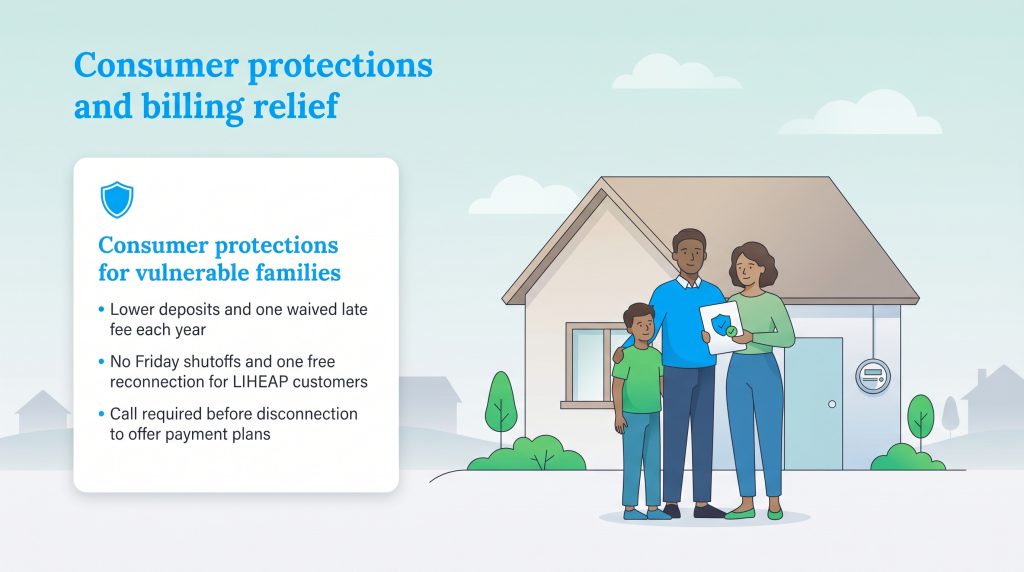
Because these rate increases hit low-income and fixed-income families the hardest, state regulators and consumer advocacy groups, including the Citizens Action Coalition (CAC), negotiated several structural protections in the final agreement. These guidelines are designed to help families stay safe, maintain their power, and manage past-due balances without facing immediate remote disconnections.
First, security deposits for customers who qualify for the federal Low-Income Home Energy Assistance Program (LIHEAP) are capped at $50. Additionally, CenterPoint must waive its after-hours remote reconnection fee of $54.19 once per year for LIHEAP accounts, and all residential customers can request to waive a late payment charge once per year. To prevent families from losing power over the weekend when administrative offices are closed, CenterPoint is banned from executing disconnections on Fridays. Finally, if you are struggling with payments, CenterPoint is legally required to place a collection call to help you set up an interest-free payment plan before disconnecting your service. For more information on your rights or to participate in public testimonies, you can visit the Indiana Office of Utility Consumer Counselor (OUCC).
Taking Charge of Your Energy Future
While adjusting to a 20% electric rate hike is never easy, understanding the rules of Indiana’s utility market allows you to make smart, targeted changes to protect your wallet. Since you cannot switch to a different electric utility, focusing on demand-side management, utilizing high-efficiency upgrades, and applying for utility rebates are your most powerful defense mechanisms. By combining conservation efforts with available community assistance programs, you can take control of your utility costs and build a more sustainable, energy-efficient home.
Frequently Asked Questions About CenterPoint Indiana Rates
Can I switch my electricity provider in Evansville to escape the rate hike?
Is there a natural gas Choice program for CenterPoint customers in Indiana?
Does the rate hike impact natural gas rates in Indiana?
What assistance is available if I am struggling to pay my CenterPoint bill?
About the Author

Claudio is a sustainability-focused writer with a background in Anthropology and Psychology from NC State University. He has spent over 15 years working in writing, interpretation, and translation, driven by a deep interest in how human culture shapes the environment. Today, he shares his curiosity with readers by writing about sustainable living solutions and the connection between everyday choices and environmental impact.