

Choosing Between SCANA and Xoom Depends on Your Household’s Heating Needs, Budget Priorities, and Preference for Fixed or Variable Pricing
Key Takeaways
- Xoom Energy frequently offers lower introductory rates, making it ideal for budget-conscious consumers who actively monitor their utility contracts.
- SCANA Energy boasts strong local brand recognition and straightforward billing structures on several of its standard plans.
- Both providers utilize the same local infrastructure, meaning your natural gas reliability remains identical regardless of which marketer you choose.
When a notoriously chilly Georgia winter sets in and your furnace kicks into overdrive, comparing different deregulated marketers is a smart strategy to reclaim control over your budget. We broke down exactly how these two major companies stack up when it comes to contract flexibility, recurring fees, and overall value. Finding the ideal fit helps you lock in long-term savings and avoid surprise charges when temperatures drop. Bottom Line: SCANA Energy vs. Xoom Energy comes down to your personal priorities; Xoom Energy wins for active budget seekers willing to secure short-term contracts for the lowest rates, while SCANA Energy is the superior choice for homeowners prioritizing established, local customer service and forgiving fee structures.

- $0.399 /THM
- $5.95-6.95
- None
- 1-36 Months

- $0.659 /THM
- $5.85
- None
- 1-24 Months
*rates may vary by location and household usage
Head-to-Head Comparison: SCANA vs Xoom
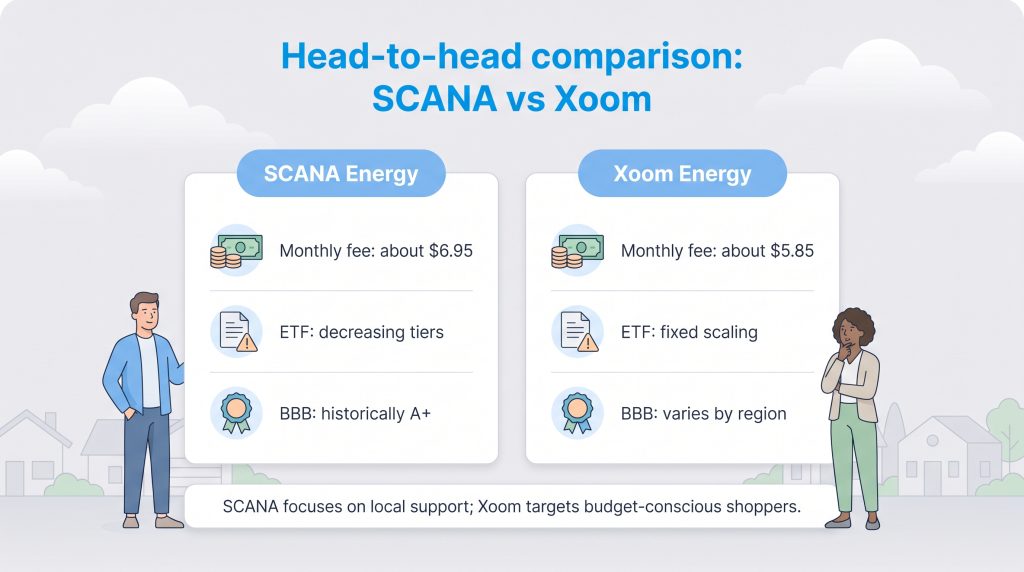
| Provider Feature | SCANA Energy | Xoom Energy |
|---|---|---|
| Monthly Customer Service Fee | Typically $6.95 | Typically $5.85 |
| Average Early Termination Fee (ETF) | Decreasing tiered structure | Fixed scaling structure |
| Better Business Bureau (BBB) Rating | Historically high (A+) | Varies by regional market |
| Target Customer | Stability and local support | Budget-conscious shoppers |
Before analyzing the extensive fine print, a quick overview highlights where each natural gas marketer truly excels. The table above breaks down the primary differences in recurring costs, cancellation penalties, and target customer profiles so you can instantly see which brand aligns with your household budget.
Understanding the Rates: Fixed vs Variable Plans
Locking in a great deal involves more than just glancing at the advertised per-therm rate. If your goal is truly finding the cheapest gas provider in Atlanta, you have to look past the headline numbers and evaluate the full contract structure. A typical Georgia natural gas bill combines charges from both your chosen marketer and the utility company. Comparing these robust natural gas plans requires factoring in potential seasonal spikes and introductory rate expiration timelines.
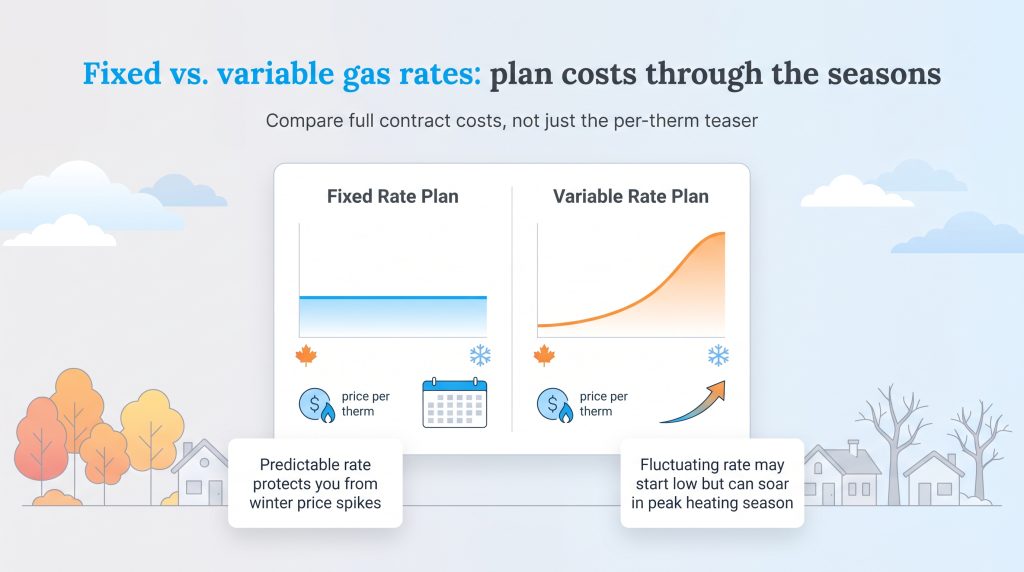
When evaluating the fixed vs variable rate gas plans Georgia offers, doing a little math upfront prevents massive seasonal bill spikes. A fixed-rate contract locks in your price per therm for a set duration, usually spanning anywhere from six to 36 months. This predictable pricing model is mathematically preferable right before the winter season begins, making fall the best time to switch natural gas providers. When freezing temperatures sweep across the state, wholesale energy demand skyrockets. If you secured a low fixed rate during the mild autumn months, you remain completely shielded from those sudden market surges.
Conversely, variable-rate plans fluctuate from month to month based on volatile current market conditions. While a variable plan offers the flexibility of absolutely zero early termination fees, taking on that financial risk during peak heating season often backfires. You might secure an incredible rate in October, only to see it double by January when you need your furnace the most.
| Plan Name | Rate | Plan Type | Base Charge | Cancellation Fee | |
|---|---|---|---|---|---|
| Introductory Variable Rate - $100 Bill Credits | $0.399 /THM | 1 Months Month to Month Rate | $5.95 MRC (Monthly Recurring Charge) is a fixed monthly fee charged by the energy provider, separate from the cost of the energy you use. | Check Availability | |
| 18 Month | $0.489 /THM | 18 Months fixed rate Rate | $9.95 MRC (Monthly Recurring Charge) is a fixed monthly fee charged by the energy provider, separate from the cost of the energy you use. | $200 | Check Availability |
| 12 Month | $0.499 /THM | 12 Months fixed rate Rate | $9.95 MRC (Monthly Recurring Charge) is a fixed monthly fee charged by the energy provider, separate from the cost of the energy you use. | $150 | Check Availability |
| 6 Month | $0.589 /THM | 6 Months fixed rate Rate | $6.95 MRC (Monthly Recurring Charge) is a fixed monthly fee charged by the energy provider, separate from the cost of the energy you use. | $150 | Check Availability |
| 24 Month | $0.599 /THM | 24 Months fixed rate Rate | $9.95 MRC (Monthly Recurring Charge) is a fixed monthly fee charged by the energy provider, separate from the cost of the energy you use. | $250 | Check Availability |
| 36 Month | $0.649 /THM | 36 Months fixed rate Rate | $9.95 MRC (Monthly Recurring Charge) is a fixed monthly fee charged by the energy provider, separate from the cost of the energy you use. | $300 | Check Availability |
| Plan Name | Rate | Plan Type | Base Charge | Cancellation Fee | |
|---|---|---|---|---|---|
| SureLock 12 | $0.659 /THM | 12 Months fixed rate Rate | $5.85 MRC (Monthly Recurring Charge) is a fixed monthly fee charged by the energy provider, separate from the cost of the energy you use. | $100.00 | Check Availability |
| SureLock 24 | $0.689 /THM | 24 Months fixed rate Rate | $5.85 MRC (Monthly Recurring Charge) is a fixed monthly fee charged by the energy provider, separate from the cost of the energy you use. | $150.00 | Check Availability |
Monthly Fees and Hidden Costs Explained
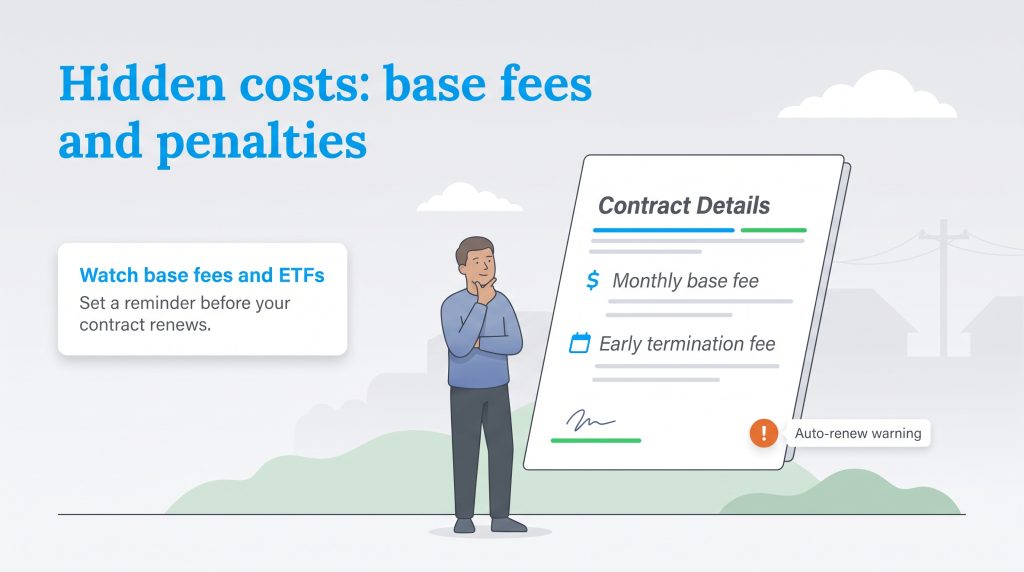
The true cost of any utility plan lives buried in the fine print. While comparing the per-therm rate is essential, failing to account for cancellation penalties or recurring base charges instantly negates your savings. Both marketers charge a standard monthly fee just for keeping your account active, but their structures diverge wildly when penalizing customers who leave a contract early.
The Xoom Energy monthly customer service fee is often slightly cheaper, generally hovering at $5.85 compared to SCANA Energy’s standard $6.95 charge. While a dollar difference seems minor, it adds up over a 24-month agreement. However, the SCANA Energy early termination fee structure is far more forgiving for renters and those likely to move. SCANA typically uses a tiered system where the financial penalty actually decreases the closer you get to your contract’s end date — starting at $150 and stepping down to $50 in your final months.
In contrast, Xoom Energy generally assigns a flat penalty based strictly on the original term length of the plan. If you break a Xoom contract, you can expect a flat fee of $50, $100, or $200 depending on whether you signed a 12-month or 24-month agreement.
🚩 Heads Up: You must set a calendar reminder 30 to 45 days before your fixed contract expires to shop for new rates. If you do not actively renew or switch, both marketers will automatically roll your account into an expensive variable month-to-month plan.
Customer Service and Public Service Commission Ratings
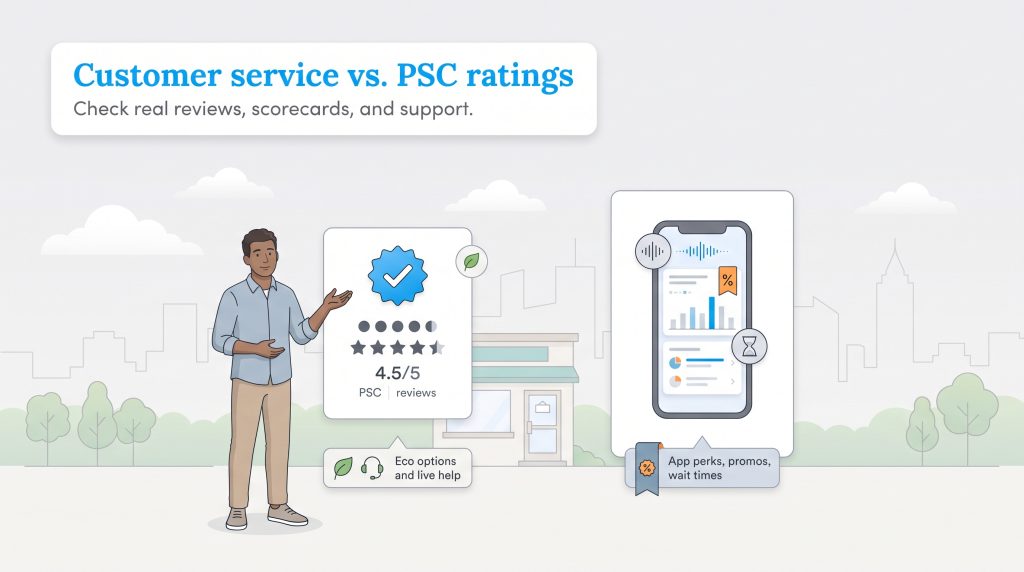
Scoring a rock-bottom rate feels fantastic right up until you experience a billing issue and cannot get a helpful representative on the phone. Evaluating actionable historical metrics like the Georgia Public Service Commission (PSC) scorecard and aggregate customer sentiment paints a much clearer picture of your ongoing experience.
SCANA Energy maintains a formidable local reputation and consistently performs well on state complaint scorecards. Their dedicated regional call centers and strong local presence make reaching a live agent quick and painless. On the other hand, analyzing the Xoom Energy customer reviews Atlanta residents post online reveals a mixed bag typical of massive national providers. Common themes among local Xoom reviews include:
- Praise for their highly functional mobile app and easy-to-navigate online self-service portal.
- Positive feedback regarding their aggressively low introductory promotional rates.
- Frustration with slightly longer wait times during peak winter storm outages.
- Minor complaints about navigating an automated phone tree to reach specialized billing agents.
Special Programs: Senior Discounts and Green Energy
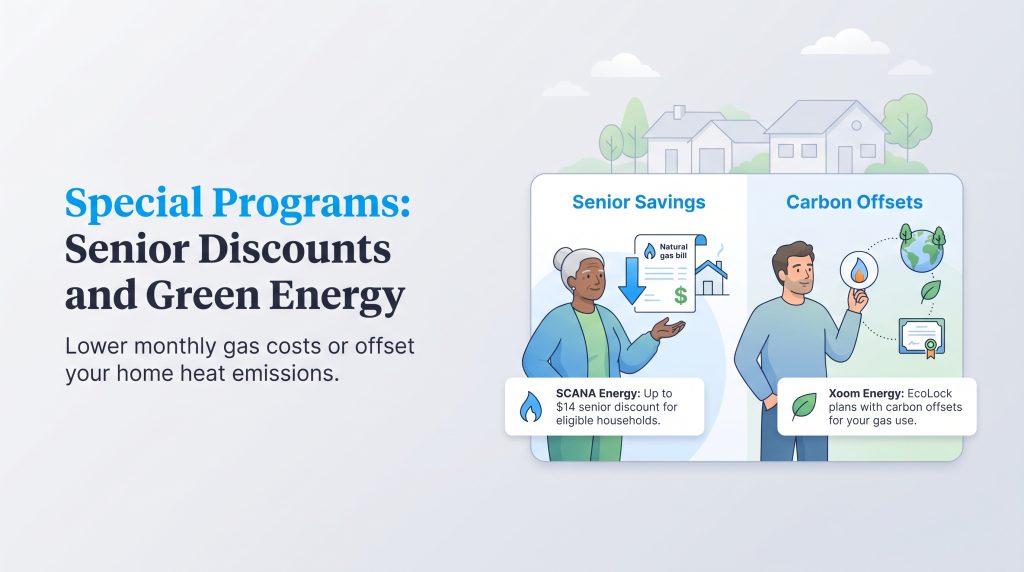
As demographics shift and consumers prioritize specific values, finding a provider that caters to your unique household needs is critical. Both marketers offer specialized programs that successfully set them apart from standard budget competitors.
For local residents, the SCANA Energy senior citizen discount is a major draw. Homeowners aged 65 and older who meet specific low-income guidelines set by the Georgia PSC can qualify for up to a $14 discount on their monthly base charges, plus potentially reduced per-therm rates. This localized benefit helps fixed-income households dramatically reduce their winter heating burdens.
If minimizing your carbon footprint is a priority instead, Xoom Energy takes the lead with its extensive EcoLock plans. Since natural gas is inherently a fossil fuel, Xoom purchases certified carbon credits to offset the emissions generated by your home heating. This eco-conscious alternative actively funds vital renewable energy projects and forestry initiatives, allowing you to heat your home while balancing your environmental impact. To see how these offset strategies generally work, you can explore the EPA’s breakdown of carbon offsets.
The Role of Atlanta Gas Light in Your Bill
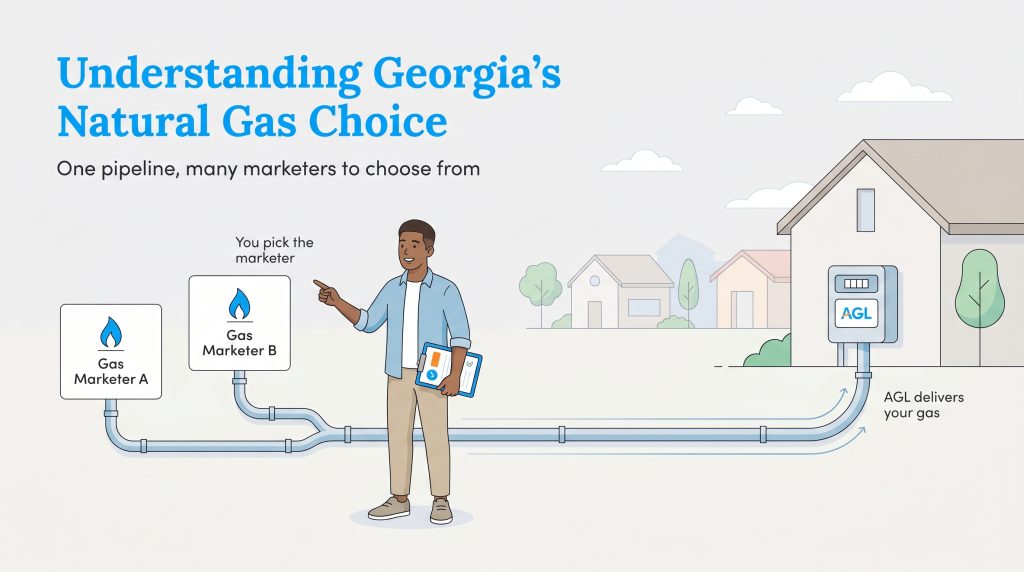
Before you obsess over which company represents the best natural gas marketer in GA, you absolutely need to understand how the Georgia deregulated natural gas market operates. You aren’t actually picking the company that physically pipes fuel into your home. Atlanta Gas Light (AGL) owns and maintains all the physical pipelines, delivers the gas to your meter, and dispatches crews for all emergency leak responses.
This infrastructure arrangement means your physical gas reliability remains absolutely identical whether you choose SCANA or Xoom. Because AGL handles the heavy lifting, Atlanta Gas Light pass-through charges are automatically applied to your monthly bill regardless of your chosen marketer. These mandatory base charges cover essential pipeline maintenance and meter reading. Your chosen marketer simply purchases the wholesale gas and handles your customer service.
This setup means switching natural gas providers is purely an administrative change. We recommend checking out the Georgia Public Service Commission’s gas marketers pricing comparison for a deeper dive into how this deregulated system gives you the ultimate power of choice.
💡 Pro Tip: When coordinating a switch from SCANA to Xoom Energy, let your new marketer handle the complex transition with Atlanta Gas Light. You will not lose heat, and nobody needs to visit your home to flip a switch.
Selecting the Best Natural Gas Provider for Your Home

Determining the right marketer ultimately comes down to your personal management style and financial risk tolerance. If you actively track your utility contracts and love chasing the absolute lowest introductory numbers, leveraging a shorter-term promotional rate from Xoom Energy provides an excellent opportunity to save on your gas bill. Their national scale allows them to aggressively undercut local pricing, making them an incredibly attractive option for diligent shoppers focused on immediate savings.
Conversely, if you want rate stability and prefer a hands-off approach to energy management, opting for a longer fixed-term contract with SCANA Energy is the wisest move. Their strong local presence, highly accessible customer service agents, and forgiving early termination fee structures provide incredible peace of mind. By assessing your previous heating bills and knowing exactly how much you value localized support, you can confidently lock in a plan that keeps your home cozy all winter without stressing your wallet.
Frequently Asked Questions About SCANA and Xoom Energy
If you still have lingering concerns about picking a new natural gas marketer, you aren’t alone. We gathered up the most common questions regarding these two major providers to help finalize your decision.
Is Xoom Energy better than SCANA Energy?
What is the SCANA Energy early termination fee compared to Xoom Energy?
Who is the cheapest natural gas provider in Georgia right now?
Does SCANA Energy or Xoom Energy have a cheaper monthly customer service fee?
Will I lose natural gas service if I switch from SCANA to Xoom?
What happens when my introductory fixed rate expires?
Do I need to pay a deposit for Xoom Energy or SCANA Energy?
Who do I call if there is a gas leak: SCANA, Xoom, or someone else?
About the Author

David has been an integral part of some of the biggest utility sites on the internet, including InMyArea.com, HighSpeedInternet.com, BroadbandNow.com, and U.S. News. He brings over 15 years of experience writing about, compiling and analyzing utility data.

Claudio is a sustainability-focused writer with a background in Anthropology and Psychology from NC State University. He has spent over 15 years working in writing, interpretation, and translation, driven by a deep interest in how human culture shapes the environment. Today, he shares his curiosity with readers by writing about sustainable living solutions and the connection between everyday choices and environmental impact.