
Comparing the top natural gas marketers in Georgia helps you lock in the lowest per-therm rates, avoid hidden fees, and secure reliable service for your home.
Key Takeaways
- True Natural Gas often advertises competitive introductory per-therm rates, making it an attractive option for budget-conscious households looking to potentially lower their monthly utility bills.
- SCANA Energy provides robust customer service and can offer targeted discount programs, offering peace of mind and stability backed by a well-established corporate history.
- Comparing the fine print on early termination and monthly customer service fees is the most reliable way to determine which provider actually costs less over a standard 12-month contract.
Moving into a new place or staring down a rising utility bill in Georgia often brings a wave of unnecessary stress, especially when you have to choose between competing companies. We want to cut through the marketing noise and give you a straightforward, unbiased look at two of the state’s most popular providers. Our goal is to break down the actual costs, customer experiences, and contract details so you can confidently pick the right option for your budget. By the end of this comparison, you will know exactly how to evaluate these marketers and decide which company deserves to power your home.

- $0.599 /THM
- $5.95-6.95
- None
- 1-36 Months
- $0.699 /THM
- $5.95
- None
- 1-24 Months
*rates may vary by location and household usage
Upfront Pricing: Comparing Rates and Monthly Charges
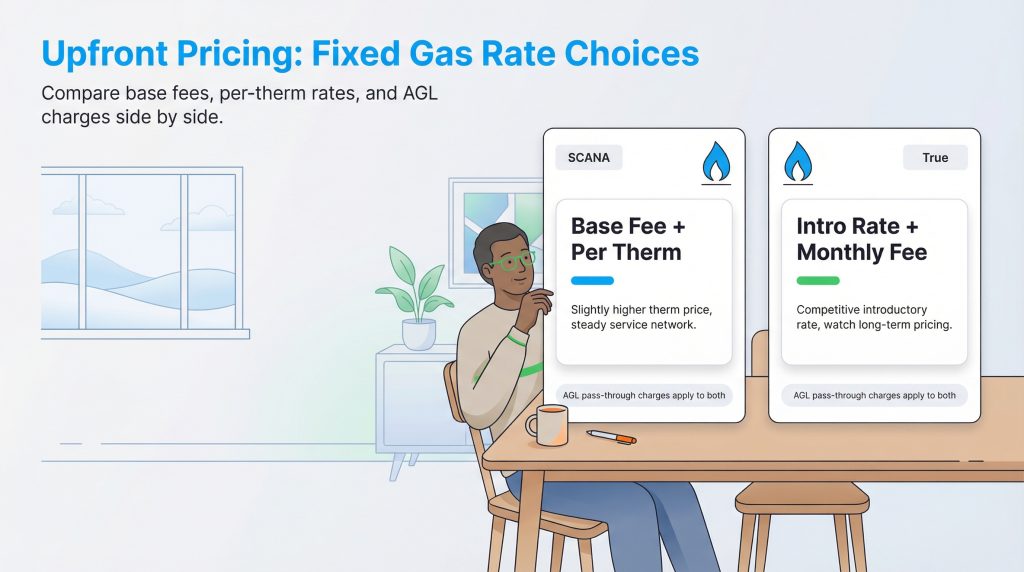
Both of these companies operate as certified marketers within the Atlanta Gas Light (AGL) territory, but their pricing structures cater to different household budgets. Navigating the natural gas market requires you to look closely at the numbers rather than relying on promotional flyers. When we examine how SCANA Energy vs. True Natural Gas set their rates for 2026, you will notice differences in how they structure their base fees and per-therm charges.
True Natural Gas Plans & Pricing
True Natural Gas often aims to capture new customers with highly competitive introductory rates.
| Plan Name | Rate | Plan Type | Base Charge | Cancellation Fee | |
|---|---|---|---|---|---|
| Senior Citizen Plan | $ /THM | Rate | $3.45 | Check Availability | |
| Six Month Plan | $0.699 /THM | 6 Months Fixed Rate | $5.95 | Yes | Check Availability |
| 12 Month Plan | $0.719 /THM | 12 Months Fixed Rate | $5.95 | Yes | Check Availability |
| 18 Month Plan | $0.735 /THM | 12 Months Fixed Rate | $5.95 | Yes | Check Availability |
| 24 Month Plan | $0.769 /THM | 24 Months Fixed Rate | $5.95 | Yes | Check Availability |
| Variable Market Pricing Plan | $1.990 /THM | 1 Months Variable Rate | $5.95 | None | Check Availability |
SCANA Energy Plans & Pricing
SCANA Energy tends to balance slightly higher therm prices with established service networks and reliability.
| Plan Name | Rate | Plan Type | Base Charge | Cancellation Fee | |
|---|---|---|---|---|---|
| Introductory Variable Rate - $100 Bill Credits | $0.599 /THM | 1 Months Variable Rate | $5.95 | None | Check Availability |
| 12 Month - $50 in Bill Credits | $0.799 /THM | 12 Months Fixed Rate | $6.95 | $150 | Check Availability |
| 24 Month - $75 Bill Credits | $0.799 /THM | 24 Months Fixed Rate | $6.95 | $150 | Check Availability |
| 36 Month - $100 in Bill Credits | $0.829 /THM | 36 Months Fixed Rate | $6.95 | $300 | Check Availability |
It is also important to remember that regardless of which marketer you choose, your final bill will include AGL pass-through charges. Atlanta Gas Light owns the physical pipelines and charges a base fee to maintain them, which your marketer passes along to you. Because natural gas usage spikes dramatically during those short but chilly Georgia winters, securing a favorable 12-month fixed rate is crucial for keeping your December and January bills manageable. Evaluating the rate structures side-by-side reveals exactly how these two stack up against each other.
| Therm Usage Scenario | Example Per-Therm Rate | Example Monthly Service Charge | Estimated Supply Cost (Excludes AGL Fees) |
|---|---|---|---|
| 30 therms (Low Usage) | $0.60 | $6.00 | $24.00 |
| 60 therms (Average Usage) | $0.60 | $6.00 | $42.00 |
| 90 therms (High Usage) | $0.60 | $6.00 | $60.00 |
Peeling Back the Fine Print on Hidden Fees
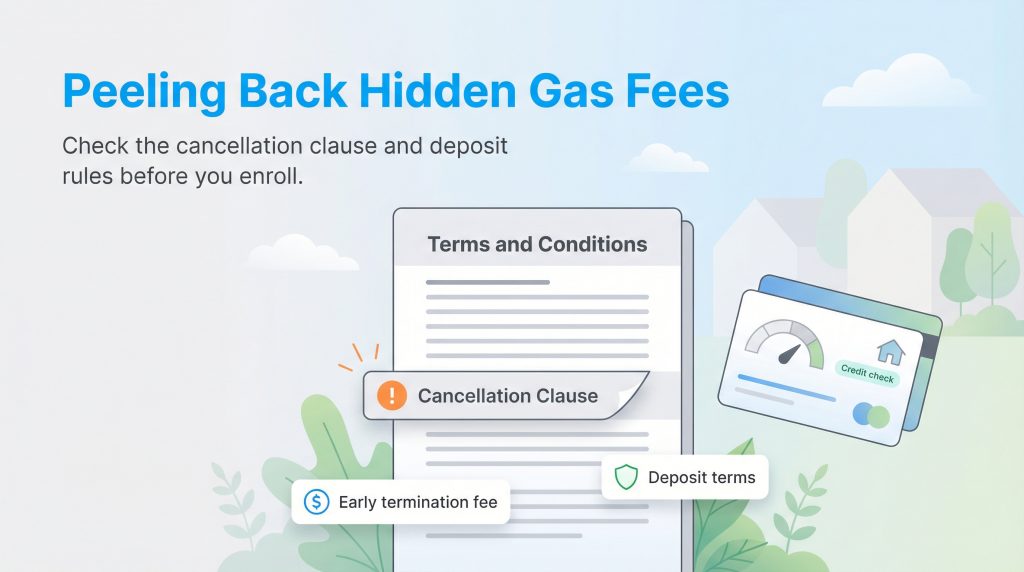
Looking strictly at the per-therm price is a common oversight when hunting for the cheapest natural gas in Georgia. Providers pad their margins with fees hidden deep in the terms of service, and you need to know what happens if your life circumstances change. Early termination fees (ETFs) are standard across the industry, but they vary heavily based on your contract length. Early termination fees vary by plan length and promotion. Before you enroll, open the plan’s Terms and Conditions and search for the cancellation clause so you know the exact dollar amount. Both companies might require an upfront deposit if your credit score falls below a certain threshold. Fortunately, marketers may run a credit check to determine this amount, but you can often get it waived by providing a letter of good standing from a previous utility provider.
Customer Reviews, Reliability, and Trust
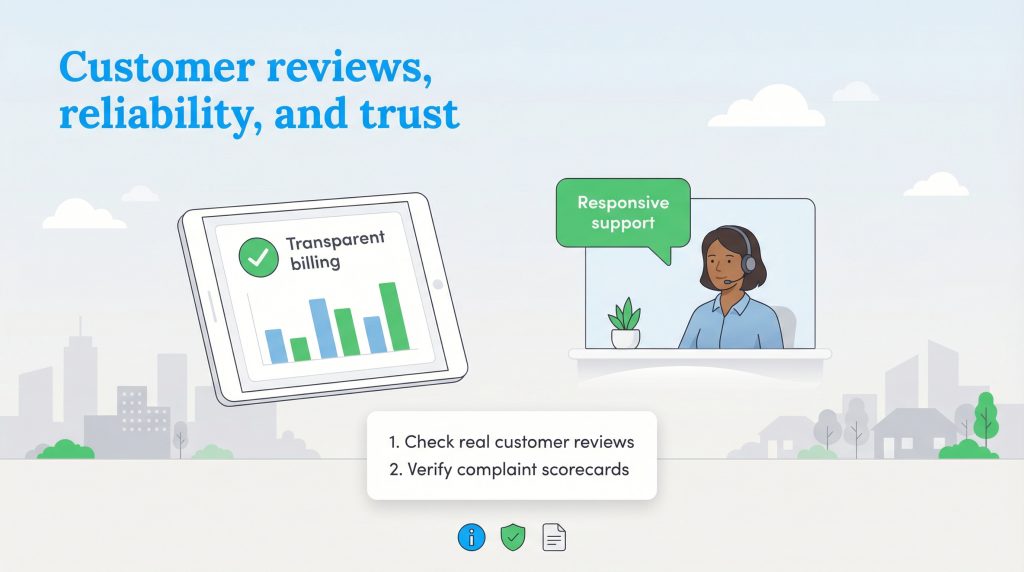
A low rate means nothing if your provider constantly messes up your billing or keeps you on hold for an hour. Evaluating customer satisfaction provides a realistic picture of what you will experience day-to-day. When analyzing True Natural Gas reviews, customers consistently praise the company for its transparent invoicing and lack of billing surprises. They appreciate the no-nonsense approach to managing accounts online. Conversely, SCANA Energy reviews often highlight the brand’s long-standing presence in local communities and highly responsive customer support teams. SCANA has built solid trust over decades of service, which appeals to homeowners prioritizing stability over saving a few pennies per therm. To verify these reputations yourself, you can check the directory of certified marketers or review their official customer complaint scorecards at the Georgia Public Service Commission. Both providers maintain strong regulatory standing, meaning you can expect a baseline of professional service regardless of your final choice.
Choosing Between Fixed and Variable Rate Plans
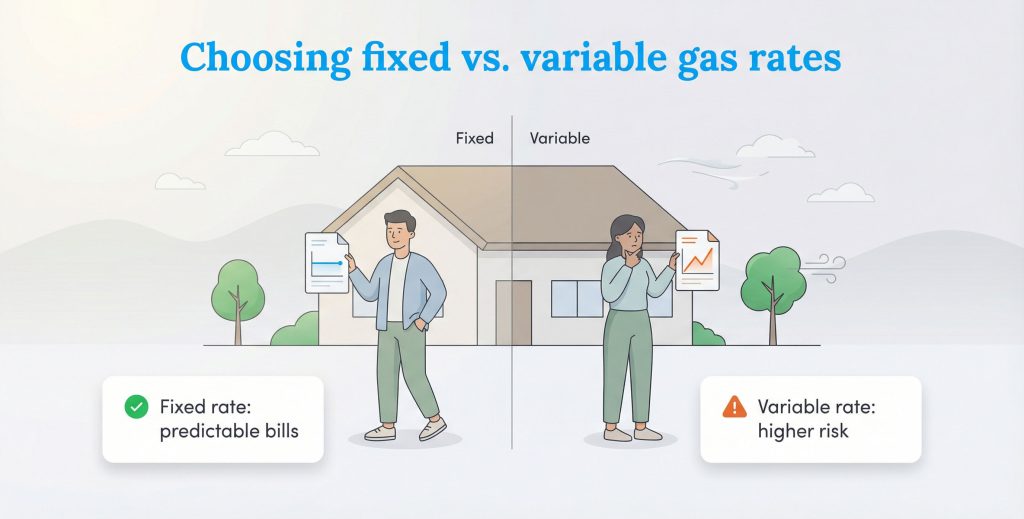
Deciding how to structure your contract is just as important as picking the company itself. The wholesale natural gas market fluctuations can heavily impact what you pay each month if you aren’t protected by the right plan. If you are comparing a True Natural Gas variable rate vs. a fixed contract, you need to match the choice to your current living situation. A fixed-rate plan locks in your per-therm price for the duration of the contract, shielding you from sudden winter price hikes. Variable rates float with the market, offering flexibility without cancellation fees but exposing you to unpredictable spikes.
- Fixed-Rate Pros: Highly predictable monthly budgeting, protection against seasonal price surges, and long-term peace of mind.
- Fixed-Rate Cons: Requires a commitment, and early termination fees apply if you move or switch early.
- Variable-Rate Pros: Supreme flexibility with zero early cancellation fees, making it perfect for short-term renters or those planning an imminent move.
- Variable-Rate Cons: Rates can skyrocket during cold months, leading to surprisingly high and unpredictable utility bills.
Eco-Friendly Options and Special Discounts
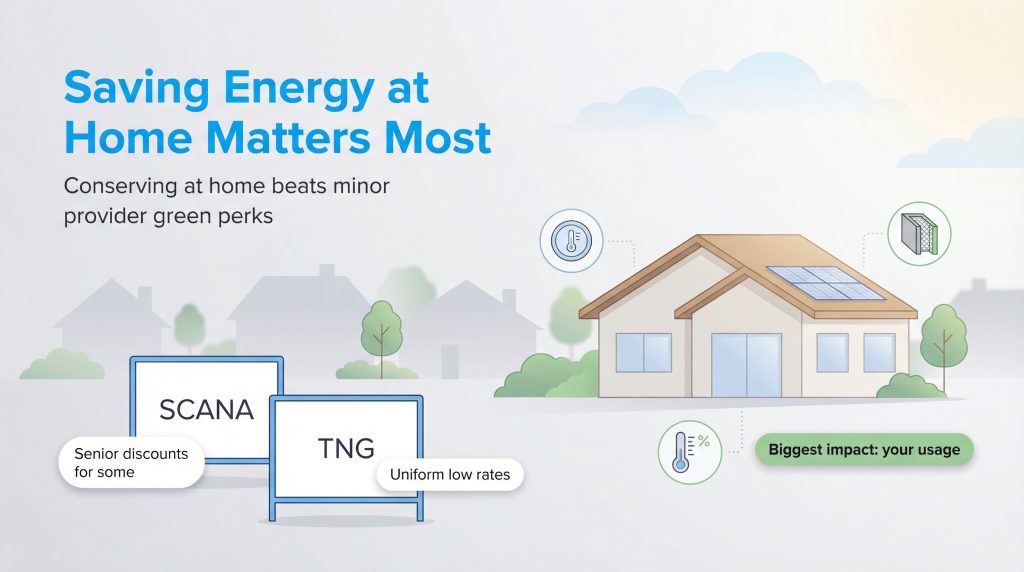
If making an environmentally mindful choice is important to you, the natural gas sector can sometimes feel limiting. Neither company is entirely built around green energy, but they do offer distinct advantages depending on your demographic. SCANA frequently appeals to older residents. SCANA sometimes offers senior-focused plans or discounts depending on current market promotions and eligibility. True Natural Gas lacks an identical robust senior program but offsets this by keeping standard rates uniformly low for everyone. If you are setting up your home in Atlanta and want to minimize your carbon footprint, your best bet is focusing on household conservation rather than relying exclusively on a provider’s green energy portfolio.
How to Secure the Best Natural Gas Plan in Georgia
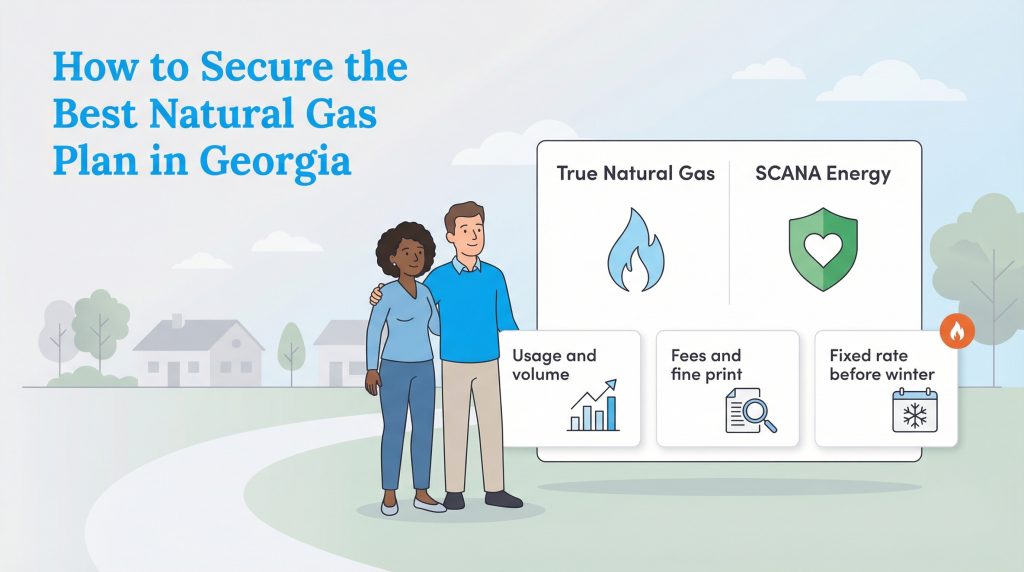
Wrapping up this Georgia natural gas marketers comparison, the right choice ultimately depends on your unique household needs. If your primary goal is slashing your monthly expenses and you use a high volume of gas, True Natural Gas often provides the raw per-therm savings to make it happen. On the flip side, if you value a highly established company with excellent community roots, or if you qualify for targeted senior benefits, SCANA Energy stands out as a premium choice. Finding the best natural gas provider in Georgia means evaluating your past usage, checking the fine print for hidden fees, and locking in a competitive fixed rate before the winter chill sets in. Taking the time to compare your options today ensures you will enjoy reliable, affordable warmth all season long.
Frequently Asked Questions About Georgia Natural Gas Marketers
What is the main difference between SCANA Energy and True Natural Gas?
How do I switch natural gas providers in Georgia?
Will my gas service be interrupted if I switch from SCANA to True Natural Gas?
Does SCANA Energy require a deposit to start service?
What is a monthly customer service charge on my gas bill?
Are there senior citizen discounts for natural gas in Georgia?
About the Author

David has been an integral part of some of the biggest utility sites on the internet, including InMyArea.com, HighSpeedInternet.com, BroadbandNow.com, and U.S. News. He brings over 15 years of experience writing about, compiling and analyzing utility data.