
An interim rate hike took effect on July 17, 2026, but smart home strategies can keep your energy bills under control
Key Takeaways
- An interim 5% rate increase went into effect on July 17, 2026, adding an average of $2.89 per month to typical residential natural gas bills.
- Iowa operates under a regulated utility market, meaning you cannot switch gas providers or lock in rates with alternative suppliers.
- You can manage the higher costs by utilizing budget billing, utility rebates, and energy-saving upgrades.
Moving into a new home or watching your monthly expenses climb can feel overwhelming, especially when utility rates start trending upward. On July 17, 2026, MidAmerican Energy implemented a temporary 5% natural gas rate increase for its Iowa customers while state regulators review a permanent rate case. While we cannot stop these rising delivery fees, we can help you understand exactly why your bill is changing, which major cities are affected, and the best steps you can take to keep your hard-earned money in your wallet.
Why MidAmerican Natural Gas Rates Are Changing
If you are wondering why you have to pay more to heat your home, the answer lies in the massive physical network required to deliver gas to your door. MidAmerican Energy manages more than 25,000 miles of natural gas pipelines across Iowa. To keep this system safe, reliable, and compliant with modern safety regulations, the utility is undertaking significant upgrades.
Keeping the Pipeline Network Safe and Reliable
The primary driver of the rate case — formally designated as Docket No. RPU-2026-0001 with the state regulators — is infrastructure investment. MidAmerican is upgrading older, low-pressure gas mains to modern, intermediate-pressure systems to reduce leaks and ensure steady heating during freezing winters. The company is also completing 24 miles of high-pressure transmission pipeline safety inspections between 2024 and 2027. Additionally, rising labor costs, inflation, and mandatory pipe relocations for public road projects have pushed operating costs higher.
How the Rate Hike Impacts Your Monthly Bill
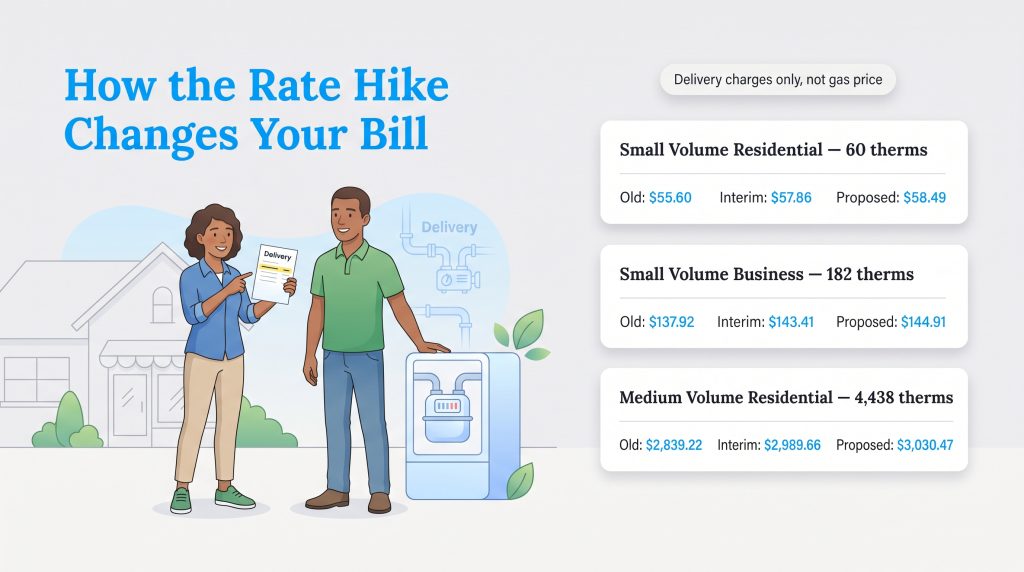
It is important to know that this rate change only affects the delivery portion of your bill, which covers pipeline operations and physical equipment. The actual cost of the natural gas commodity fluctuates with wholesale markets and is passed through to you without any utility markup.
Breaking Down the Cost for Typical Households
For the typical residential household using an average of 60 therms per month, the interim rate increase adds about $2.89 to your monthly statement, raising it from $55.60 to $57.86. If the permanent rate case is approved as proposed, the final bill will settle at around $58.49.
To see how different usage levels and customer classes are affected, we have put together a quick comparison of the current, interim, and proposed final bills:
| Customer Class | Monthly Usage (Therms) | Old Bill | Interim Bill (Effective July 17, 2026) | Proposed Final Bill (2027) |
| Small Volume Residential | 60 | $55.60 | $57.86 | $58.49 |
| Small Volume Business | 182 | $137.92 | $143.41 | $144.91 |
| Medium Volume Residential | 4,438 | $2,839.22 | $2,989.66 | $3,030.47 |
What You Can Do about Changing Rates in Iowa
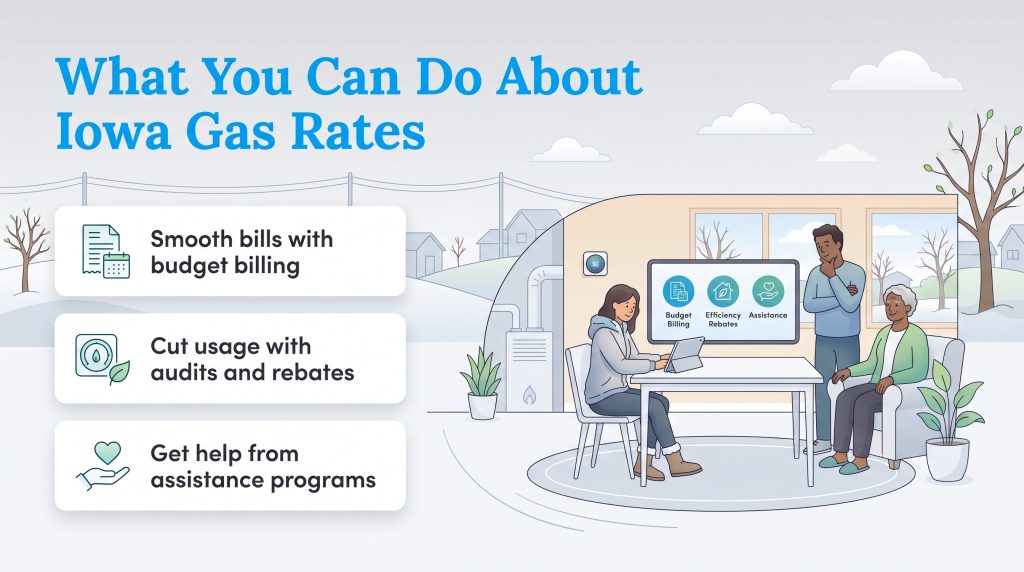
In many deregulated states, energy choice allows customers to shop around, compare plans, and switch suppliers to lock in lower natural gas rates. However, as we outline in our UtilitiesForMyHome Iowa directory, Iowa operates under a regulated utility structure. This means you cannot switch to a different natural gas utility or shop for a third-party supplier. You must receive service from the utility assigned to your specific territory. Fortunately, you still have powerful, actionable options to lower your monthly expenses.
Enroll in Budget Billing
If you dread the winter billing spikes that come with freezing Iowa winters, budget billing is a fantastic tool. MidAmerican calculates your projected annual utility costs based on historical usage and divides it into 12 equal monthly payments. While it does not reduce your total energy use, it eliminates seasonal surprises and makes your household budgeting incredibly predictable.
Leverage Utility Rebates and Home Energy Audits
One of the most effective ways to lower your bill is to consume less energy. MidAmerican offers extensive energy-saving options through its regulated efficiency programs. You can access the MidAmerican Energy efficiency portal to schedule a home energy audit, install a smart thermostat, and qualify for cash rebates on ENERGY STAR certified heating systems. These environmentally mindful choices will trim your bills for years to come.
Tap Into Financial Assistance Programs
If the rate increase creates a genuine financial hardship, assistance programs are available to keep your heat on. The federal Low-Income Home Energy Assistance Program (LIHEAP) provides direct grants toward winter heating costs, with applications opening in Oct. or Nov. depending on your household demographics. Additionally, county-level Veterans Affairs offices in Iowa can provide emergency relief grants of $300 or more to prevent disconnections for eligible military veterans.
Major Iowa Cities and Areas Impacted by the Rate Increase
The rate changes filed under Docket No. RPU-2026-0001 apply to all MidAmerican natural gas customers throughout its Iowa territory. This service area is vast, spanning almost two-thirds of the state and covering major metropolitan hubs, suburban communities, and rural towns alike.
Affected Regional Hubs and Cities
If you live in one of the following regions, you are impacted by the rate change:
- Central Iowa Metro: Des Moines, West Des Moines, Waukee, and surrounding suburban areas.
- Eastern Iowa Corridor: Iowa City and the Quad Cities — including Davenport and Bettendorf.
- Northeast Iowa Sector: Waterloo, Cedar Falls, and adjacent municipal areas.
- Northwest Iowa Hub: Sioux City.
- Western Iowa Border: Council Bluffs, Glenwood, and nearby border communities.
Key Milestones and Regulatory Refund Safeguards
The temporary rates that went into effect on July 17, 2026, are not set in stone. The Iowa Utilities Commission will spend the next several months investigating MidAmerican’s expenses, auditing their books, and hosting public hearings before making a final decision in late summer 2027.
Public Voice and Refund Protections
State regulators have scheduled four consumer comment meetings in Sept. 2026 to hear directly from you about service quality and the rate proposal. If the commission ultimately decides that final rates should be lower than the temporary rates, MidAmerican is legally required to refund the difference to your account, plus interest. This built-in consumer safeguard ensures you do not overpay during the review period.
Taking Charge of Your Iowa Energy Expenses
While seeing delivery rates climb is never welcome news, understanding the changing regulatory landscape in Iowa empowers you to make smarter financial choices. By combining budget billing with energy-saving tools like home weatherization, you can protect your wallet and reduce your environmental footprint at the same time. We encourage you to look into local energy audit opportunities and utility rebate programs to turn these rate changes into a launching pad for a more energy-efficient, sustainable home.
Frequently Asked Questions About the MidAmerican Iowa Gas Rate Increase
Can I switch my natural gas provider in Iowa to lock in a lower rate?
What is the difference between a natural gas delivery rate and a supply charge?
What happens if the state ultimately approves a lower rate than the temporary increase?
About the Author

Claudio is a sustainability-focused writer with a background in Anthropology and Psychology from NC State University. He has spent over 15 years working in writing, interpretation, and translation, driven by a deep interest in how human culture shapes the environment. Today, he shares his curiosity with readers by writing about sustainable living solutions and the connection between everyday choices and environmental impact.