Everything you need to know about setting up your power, understanding your bill, and maximizing green energy options with Alliant Energy.
Key Takeaways
- Review the primary coverage zones across Iowa and Wisconsin to confirm whether your new home falls within the network.
- Discover straightforward strategies for managing your daily usage and avoiding peak billing hours.
- Learn how to start, stop, or move Alliant Energy service online and explore accessible renewable energy programs.
Welcome to your new Midwest home! Moving into a fresh space brings a flurry of tasks, but we want to make securing your utilities the easiest part of the process. In most Alliant service areas, your utility provider is determined by your address. This guide is most useful if Alliant already serves your new home or you are checking whether it does. We will walk you through how to start or move Alliant Energy service, what to check before your first bill arrives, and which energy-saving options may help lower your costs.
What Is Alliant Energy?
Founded in 1917 and headquartered in Madison, Wisconsin, Alliant Energy operates as a major public utility holding company. For over a century, the company has provided essential energy services across the Midwest, powering homes and businesses through a vast network of infrastructure. As a regulated utility, they play a dual role in many communities by supplying both electricity and natural gas, streamlining the billing process for households that rely on both utilities to keep things running comfortably year-round.
To deliver these services effectively across state lines, the corporation operates through two primary subsidiaries. In Iowa, they operate under the name Interstate Power and Light Company, while in Wisconsin, they operate as Wisconsin Power and Light Company. This structure allows them to adhere to specific state regulations while continuing to modernize the local grid and expand their portfolio of renewable energy resources.
Alliant Energy Service Area and Coverage Map
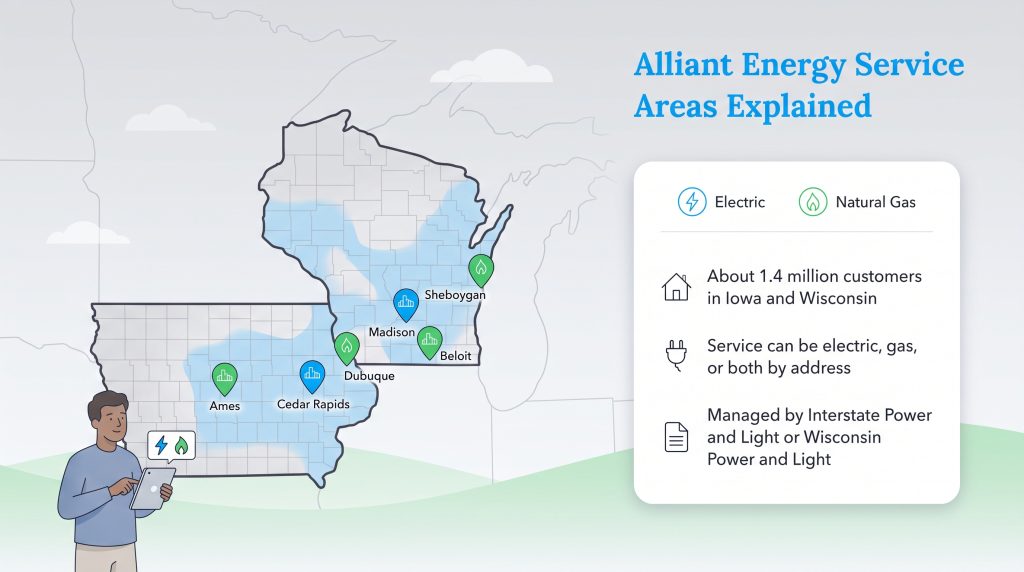
Alliant Energy serves about 1.4 million electric and natural gas customers across Iowa and Wisconsin, according to company-published information. Their operational footprint spans heavily across these two states, delivering power to diverse communities ranging from bustling urban centers to quiet rural neighborhoods. Understanding your specific territory helps clarify your expected rates, which specific operating subsidiary manages your account, and the available local efficiency rebates.
Coverage availability can vary highly by address and utility type. In and around major communities such as Cedar Rapids, Dubuque, Ames, Madison, Sheboygan, and Beloit, your home may receive electricity, natural gas, or both from Alliant depending on the local service territory. Remember that your service will be managed by Interstate Power and Light Company in Iowa, and Wisconsin Power and Light Company if you live across the border. Because utility maps are drawn by public commissions, you might find that while you use Alliant, a neighbor a few streets over relies on a different municipal provider entirely.
📌 Quick Fact: Depending on your specific municipality and local infrastructure, your home might receive just electricity, just natural gas, or both utility services directly from Alliant Energy.
Understanding Alliant Energy Plans and Pricing
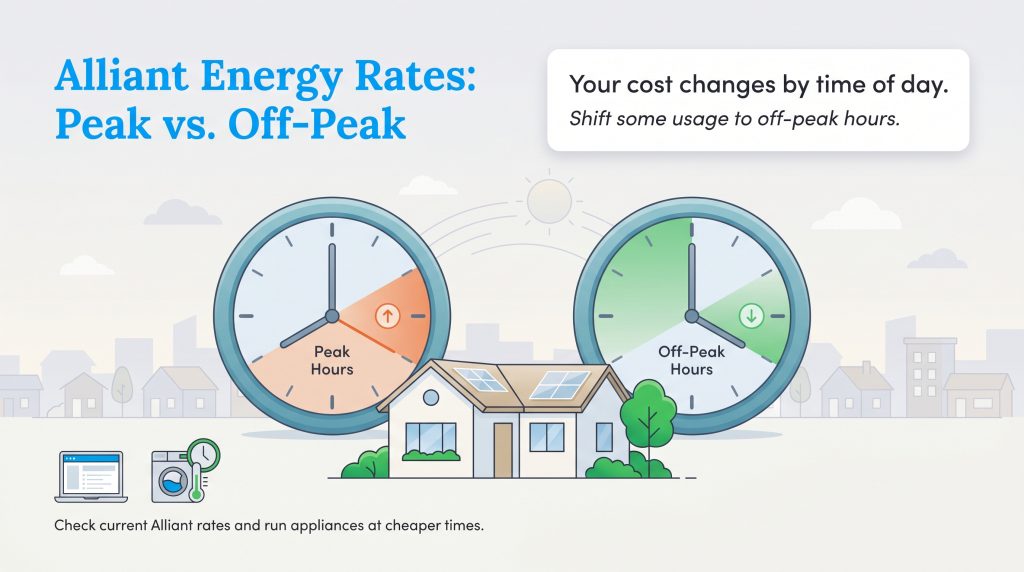
Because the company operates across state lines, electricity pricing varies heavily based on different public utility commission regulations in Iowa and Wisconsin. You will not find a single, universal price tag for power. Instead, your Alliant Energy rates per kWh depend on your exact location, the current season, and the specific residential tariff applied to your home. Exploring an Alliant Energy time of day pricing plan is one of the smartest ways to mitigate these costs and take control of your monthly bill.
| State | Residential Service Type | What to Check | Official Source |
|---|---|---|---|
| Iowa | Electric and/or natural gas | Customer charge, per-kWh energy charge, riders, taxes, and seasonal adjustments | Alliant Energy Iowa rates page |
| Wisconsin | Electric and/or natural gas | Customer charge, per-kWh energy charge, fuel adjustments, and state-specific tariffs | Alliant Energy Wisconsin rates page |
Many customers can benefit immensely from checking Alliant Energy’s official rates page and understanding time-of-use electric rates. Alliant offers Time-of-Day (TOD) pricing, which charges you less for electricity consumed during off-peak hours and more during periods of high grid demand. Peak and off-peak windows vary by state and rate plan, so check Alliant’s current Time-of-Day pricing details before shifting your appliance schedule. For some Alliant Time-of-Day plans, weekday afternoon and early evening hours may cost more than overnight or weekend usage. The advantages of shifting your energy usage to off-peak hours include drastically lower cents-per-kWh charges, reduced strain on the regional power grid, and much more predictable monthly statements.
Adapting to these varied pricing structures does not require drastic lifestyle changes. Simple behavioral tweaks, like setting a timer on your washing machine, charging your electric vehicle at midnight, or pre-cooling your home before the afternoon rush, allow you to take full advantage of cheaper overnight rates while keeping your home perfectly comfortable.
How to Set Up or Move Your Alliant Energy Service
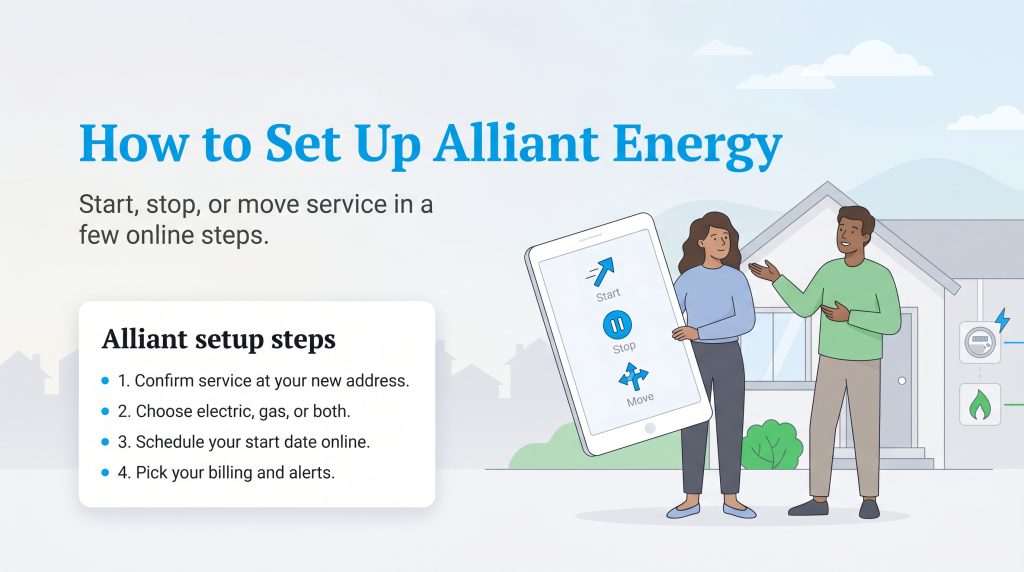
Positioning your new home for success starts with a frictionless digital setup. Start your request through Alliant Energy’s official start, stop, or move service page. Keeping your new home utility setup checklist handy ensures you have all the proper documentation ready to go, such as your social security number, lease agreement, and specific move-in date.
If You’re Moving Into Alliant Territory, Do This First
- Confirm whether Alliant serves your exact address by using their online boundary map.
- Check whether you need electric, gas, or both, as some homes use a different municipal provider for water or gas.
- Submit your start-service request several business days before move-in to ensure a technician is available if a physical meter reading is required.
- Review current rates and billing options to see if a specialized plan fits your lifestyle.
- Enroll in usage alerts, paperless billing, or renewable options to optimize your account from day one.
Handling an Alliant Energy moving request requires a few specific pieces of information. To ensure your account is authorized and verified correctly, follow these exact steps online:
- Navigate to the Alliant Energy website and select “Start, Stop or Move Service.”
- Provide your full new residential address and your desired start date.
- Provide identifying information, such as your driver’s license or social security number, to verify your identity.
- Select your preferred billing method and review any initial setup terms before confirming the activation.
🚩 Heads Up: Always initiate your service transfer at least five business days before your official move-in date to guarantee the lights are on and the house is comfortable when you arrive.
Energy-Saving Programs and Billing Options to Review
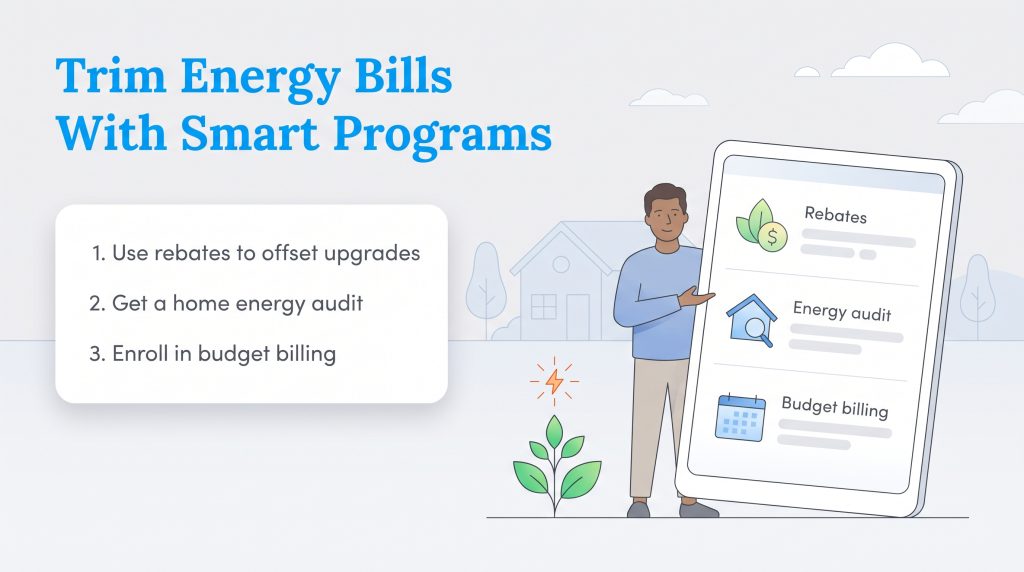
Lowering your utility costs goes hand-in-hand with making environmentally mindful choices. Alliant provides excellent energy efficiency programs to reward proactive homeowners and renters. Rebate availability changes by state, equipment type, and program year, so check Alliant’s current rebate marketplace before buying a thermostat, upgrading an old appliance, or scheduling an HVAC installation. Taking advantage of these incentives helps offset the upfront costs of modernizing your home.
Beyond purchasing new hardware, we highly recommend scheduling a home energy audit to pinpoint hidden drafts, poor window seals, and insulation gaps. Combining these physical home improvements with smart billing strategies empowers you to take absolute control over your monthly expenditures and drastically reduce your carbon footprint.
As an additional way to manage costs, consider signing up for Budget Billing. This program averages out your annual energy costs into predictable monthly payments, which prevents massive winter heating or summer cooling spikes from wrecking your budget. Keep in mind that Budget Billing usually involves a “settle-up” month at the end of your 12-month cycle, where you either receive a credit for overpaying or owe a balance if you used more energy than estimated.
Taking Advantage of the Alliant Energy Mobile App
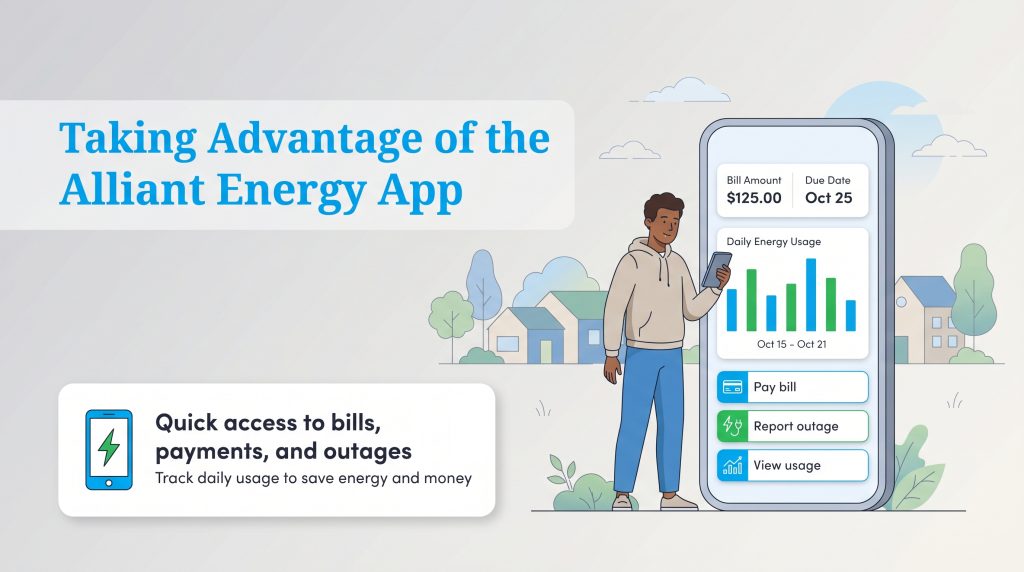
Modern utility management requires modern digital tools. The free Alliant Energy mobile app, available on both iOS and Android, puts complete account control directly in your pocket. The app is highly rated among utility platforms, boasting an impressive 4.7 stars on the App Store for its intuitive design. Features like secure login via Face ID or Touch ID mean you never have to scramble for a forgotten password when you need to check your balance.
Users consistently list Alliant Energy bill pay as the primary feature alongside detailed usage tracking. By reviewing your daily and hourly charts, the app helps you spot specific energy patterns — like a struggling air conditioner running constantly or a water heater operating inefficiently. Identifying these patterns allows you to adapt your habits for a more sustainable, cost-effective household.
Alliant Energy Green Energy and Solar Options
Utility providers carry a massive responsibility to modernize the grid, and Alliant Energy leans heavily into this transition. Through its Clean Energy Blueprint, Alliant has announced plans to reduce coal generation and expand renewable energy resources, including widespread wind and solar projects. These infrastructure upgrades aim to deliver cleaner, more resilient power to local communities without sacrificing reliability during extreme Midwest weather.
You have the power to participate directly in these conservation efforts. Exploring Alliant Energy green energy options gives you a tangible way to reduce your personal carbon footprint. Opting into voluntary renewable programs supports local grid improvements while mirroring the broader benefits of green power programs championed by environmental organizations.
🚩 Heads Up: Watch out for solar scams and misinformation. Aggressive third-party solar salespeople sometimes falsely claim affiliation with Alliant Energy to pressure you into signing expensive contracts. Always verify directly with Alliant before agreeing to roof installations.
Beyond private solar installations, you can also support clean energy through provider-managed initiatives that do not require any physical equipment purchases.
🌱 Eco Edge: The Second Nature renewable energy program allows renters and homeowners alike to voluntarily offset 25%, 50%, or 100% of their electricity use with green energy for a small premium.
How to Report and Search for Alliant Energy Outages
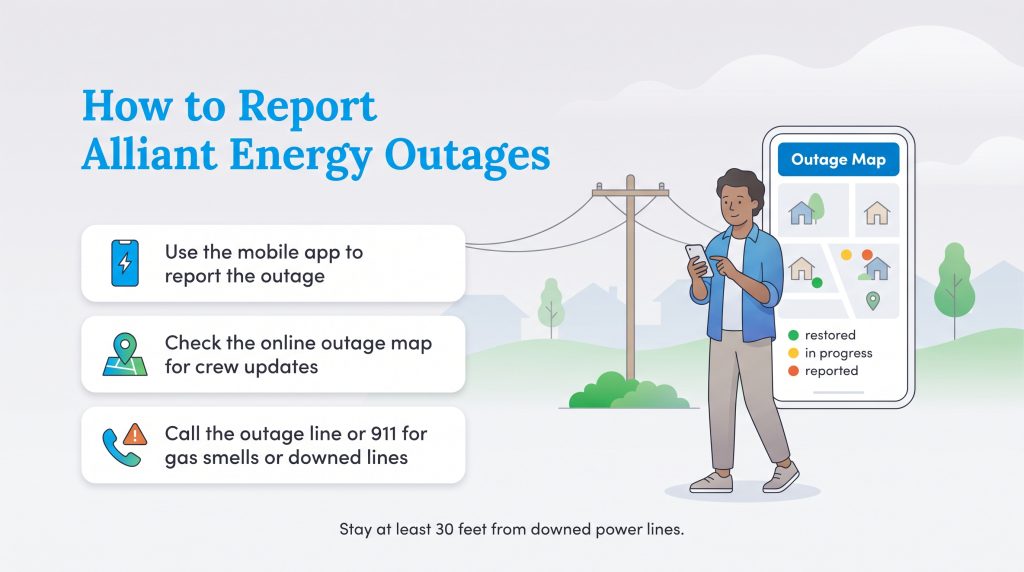
Severe Midwest weather occasionally disrupts service, but knowing exactly how to respond minimizes the frustration. If the power goes out, prioritize safety above all else. Keep emergency flashlights accessible and always stay far away from downed power lines. If you see a downed line, stay at least 30 feet away and report it immediately. If you smell gas, leave the area and call emergency services and the utility from a safe location. We highly recommend opting into proactive text alerts via the mobile app so you receive immediate restoration estimates without needing to constantly check your phone.
When you need to investigate a localized blackout or alert the utility company to grid damage, utilizing the Alliant Energy outage map is highly effective. You can initiate a report and check on neighborhood progress through several fast channels:
- Report the outage instantly using the mobile app dashboard.
- Check the interactive online outage map to see if crews are already assigned.
- Call the automated emergency outage line to log your address verbally.
Possible Billing Charges to Review Before You Start Service
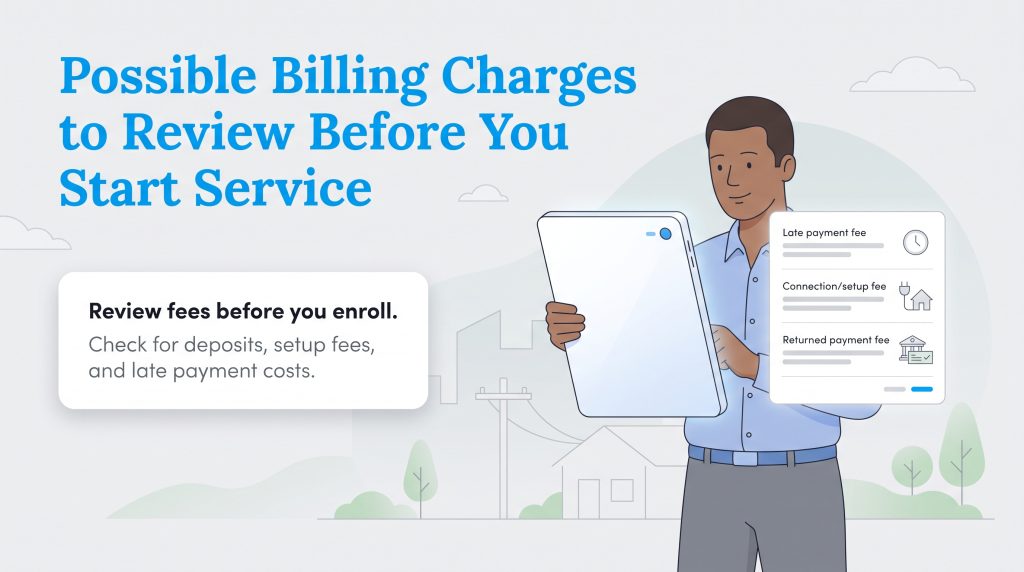
Depending on your account history, state rules, and service type, Alliant may require a deposit or apply certain billing-related charges. Before you submit your start-service request, review the terms shown during enrollment and check your first bill for any one-time charges. Fortunately, deposits can often be waived if you agree to a soft credit check or provide a letter of good standing from your previous utility provider.
Maintaining a transparent view of your billing guarantees a smoother relationship with your provider. Below is a breakdown of common fees you might encounter if you miss a deadline or require a specific service adjustment.
| Fee Type | Typical Condition |
|---|---|
| Late Payment Fee | Applied when a monthly balance is not paid by the stated due date (usually a percentage of the overdue amount). |
| Connection / Setup Fee | A one-time administrative charge applied to your first bill when starting or moving service. |
| Returned Payment Fee | Charged if a bank rejects your electronic payment or check due to insufficient funds. |
Alliant Energy Customer Reviews and Ratings
Researching customer sentiment reveals a mixed but expected picture for a large utility conglomerate. Like many monopolies in regulated markets, Alliant faces its share of scrutiny. When analyzing real user experiences, the Alliant Energy mobile app is consistently praised, earning 4.7 stars for its clean interface, simple bill pay mechanics, and accurate outage reporting.
However, the broader customer service experience often tells a different story. Customers on platforms like the Better Business Bureau (BBB) and local Reddit forums frequently express frustration over rising winter rates and unexpected time-of-day pricing spikes. These billing complaints often stem from households that fail to adjust their daily habits when switching to a time-of-use plan. Additionally, some users note poor customer support resolutions, particularly during peak summer moving seasons when call wait times increase.
Contact Alliant Energy Customer Service
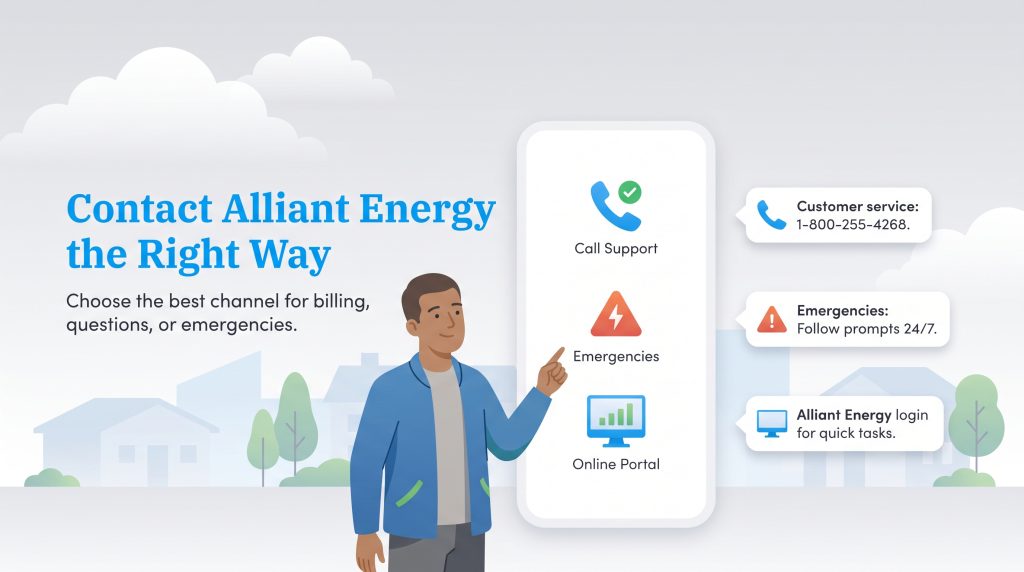
Having the right contact information readily available saves you valuable time during an emergency or a sudden billing dispute. Whether you need to report a dangerous downed power line or negotiate a payment extension, reaching out through the proper channels ensures a faster response. We highly suggest managing simple tasks, like updating your autopay methods or reviewing past statements, directly through the Alliant Energy login portal.
| Resource | Contact Method | Best Used For |
|---|---|---|
| Alliant Energy Customer Service | 1-800-255-4268 | General account inquiries, billing questions, and complex transfer requests. |
| Emergency Hotline | 1-800-255-4268 (Follow prompts) | Reporting downed power lines, gas leaks, or immediate safety hazards. |
| Online Portal | Alliant Energy Login | Paying bills, analyzing usage graphs, and enrolling in paperless billing. |
| Operating Hours | Monday – Friday, 8:00 a.m. to 5:00 p.m. | Standard support; emergencies are handled 24/7. |
What to Expect If Alliant Energy Serves Your Address
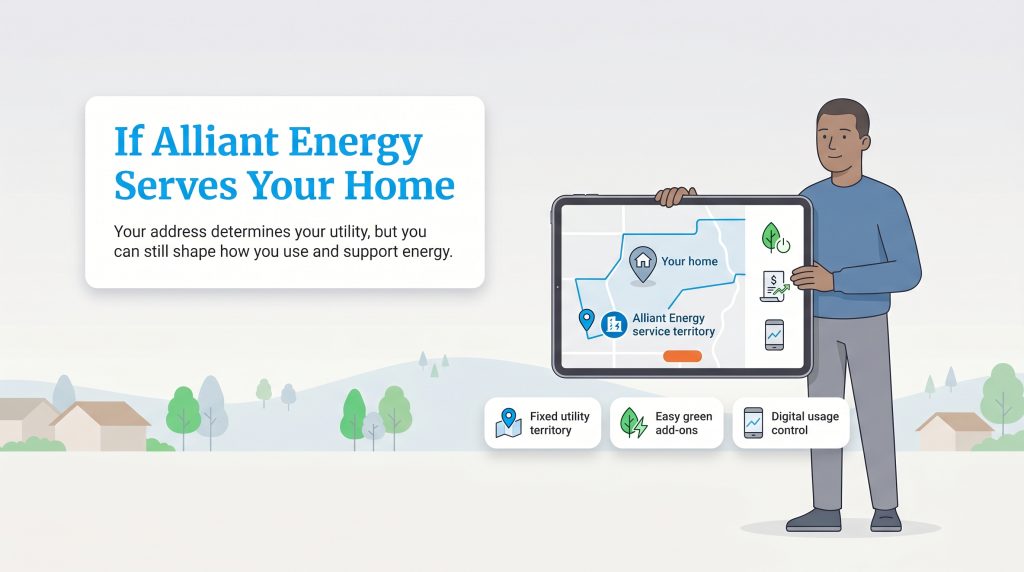
In most regulated utility territories, you usually do not choose between Alliant Energy and MidAmerican Energy. Your provider is determined by your address. If you are comparing homes in different Iowa communities, check each utility’s service territory, current residential rates, renewable options, and billing tools before estimating your monthly costs.
| Factor | Alliant Energy | MidAmerican Energy |
|---|---|---|
| Where it matters | Parts of Iowa and Wisconsin | Parts of Iowa, Illinois, Nebraska, and South Dakota |
| Can you choose? | Usually no; address-based | Usually no; address-based |
| What to compare | Rates, fees, renewable programs, outage tools | Rates, fees, renewable programs, outage tools |
Alliant Energy also excels with flexible, accessible green energy enrollment options. Their Second Nature program is exceptionally easy to join, giving eco-conscious customers immediate avenues to support renewable generation. If supporting clean energy transition while maintaining precise digital control over your usage is a priority, Alliant delivers a robust product.
Ultimately, because these are regulated utility territories, you usually do not have a choice in your provider. Your address dictates your utility company. Still, understanding these subtle nuances helps you manage your expectations, optimize your usage, and interact with your designated provider effectively.
Verdict: Is Alliant Energy Right for Your Home?
Because Alliant Energy operates within a regulated market structure, most customers cannot simply choose a competitor based on their street address. If your new home falls within their Iowa or Wisconsin footprint, they will be your default provider. Fortunately, they offer a highly reliable service equipped with modern digital tools that make managing a sustainable, cost-effective home entirely possible.
Your best strategy for keeping costs low with Alliant is to actively use their highly rated mobile app, monitor time-of-use rates, and leverage budget billing to prevent seasonal surprises. By tracking your hourly usage, participating in voluntary renewable programs, and shifting your heavy appliance loads to off-peak times, you gain back control over your monthly budget while contributing to a smarter, greener power grid.
Frequently Asked Questions About Alliant Energy
Is Alliant Energy gas or electric?
What is the Alliant Energy customer service number?
How do I read the Alliant Energy service area map?
How long does it take to start Alliant Energy service?
Are there Alliant Energy green energy options for renters?
Does Alliant Energy let me choose my electric provider?
Can I use Alliant Energy if I rent?
Does Alliant Energy have a grace period for late payments?
Where do I find the Alliant Energy login to pay my bill?
How do I report a downed power line to Alliant Energy?
About the Author

David has been an integral part of some of the biggest utility sites on the internet, including InMyArea.com, HighSpeedInternet.com, BroadbandNow.com, and U.S. News. He brings over 15 years of experience writing about, compiling and analyzing utility data.