Whether you are relocating to the Midwest or simply looking to lower your monthly electricity expenses, this comprehensive guide explains how to start service, navigate your rates, and maximize your savings with MidAmerican Energy.
Key Takeaways
- Discover how to verify your coverage area and easily set up service before your big move.
- Learn how regulated pricing and tariffs dictate your monthly natural gas and electric rates.
- Uncover budget billing programs and mobile tools designed to simplify your account management.
If you are moving into the Midwest, setting up your electricity and natural gas with MidAmerican Energy is likely at the top of your to-do list. As a proud subsidiary of Berkshire Hathaway Energy, this prominent utility provider serves over 1.6 million customers across Iowa, Illinois, Nebraska, and South Dakota. Because navigating new utility connections often feels overwhelming when relocating, we designed this guide to help you manage your new account, understand your regional rate structures, and take full advantage of their convenient app features and eco-conscious programs.
MidAmerican Energy Coverage Area and Major Cities
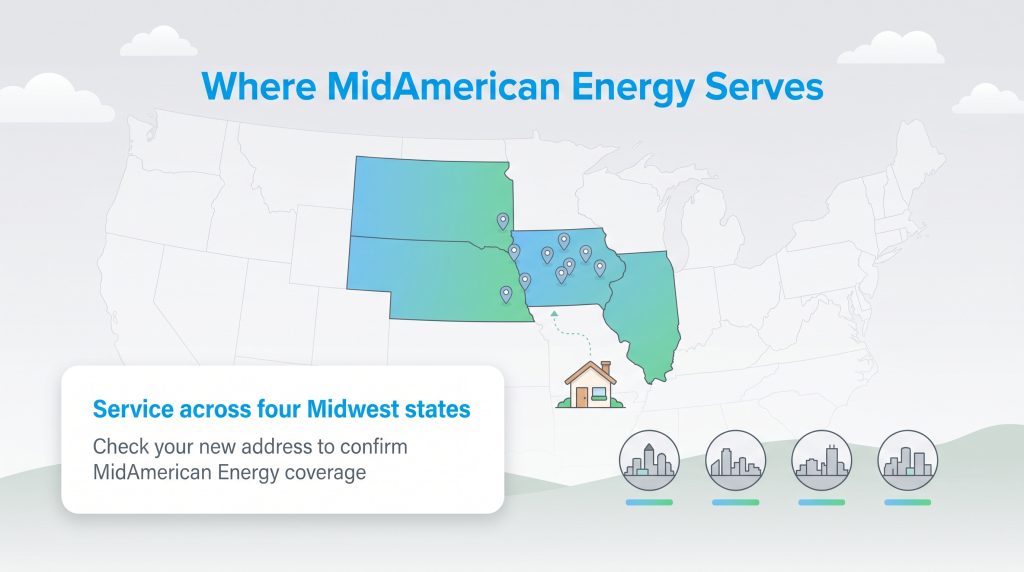
Plotting a move to the heartland means you need to verify your utility providers early in the process. The MidAmerican Energy coverage area spans four states: Iowa, Illinois, South Dakota, and Nebraska. Because utility territories are strictly regulated and geographically bound by state utility commissions, your ability to access their services depends entirely on your exact street address.
While their extensive network covers plenty of rural communities, they are the default utility for many of the region’s largest urban centers. If you are relocating to any of the following major cities, you will likely need to schedule a connection with them:
Before your move-in day, always confirm whether your specific property requires electric service, natural gas service, or both from MidAmerican. Some addresses might use a different provider entirely for their winter heating needs, so asking your landlord or real estate agent early prevents any unexpected service gaps during your transition.
Plans, Pricing, and Tariffs
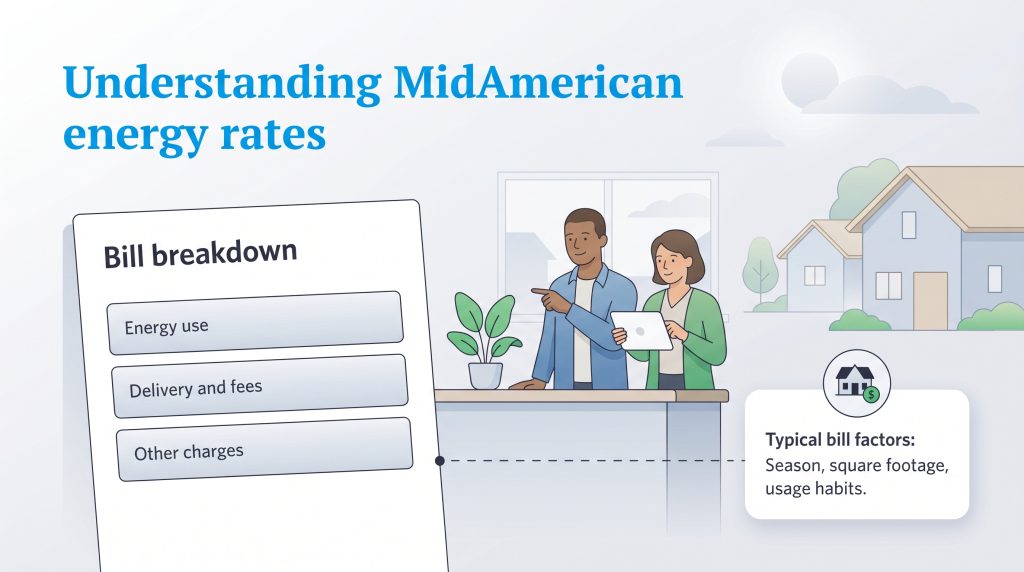
Nobody likes opening a utility bill that feels like a mystery. To accurately forecast your household budget, you need a firm grasp of MidAmerican Energy rates and how they translate to your monthly statement. As a rate-regulated utility, the company does not arbitrarily set its own prices. Instead, pricing is standardized and rigorously monitored by state utility commissions, such as the Iowa Utilities Commission.
This regulatory oversight is generally excellent news for your wallet. In fact, Iowa electric rates are roughly 44% below the national average, making your essential utility costs notably more affordable than those found in many coastal states. When reviewing your localized tariffs, your total cost will reflect distinct regulated components based on whether you operate a residential or commercial account.
| Account Type | Common Pricing Structures & Tariff Rules |
|---|---|
| Residential | Focuses on basic fixed service charges, tiered seasonal energy usage (summer versus winter electricity rates), and standard distribution fees for household grid access. |
| Business & Commercial | Often includes demand charges (based on peak kilowatt usage), specialized tariffs for high-volume manufacturing facilities, and reactive power charges. |
Keep in mind that securing these rates occasionally comes with initial setup requirements. When you apply for a new connection, the company may request an upfront deposit based on your credit history or previous utility payment record. Fortunately, these deposits are not permanent fees, and refund timelines are clearly outlined in your state’s tariff guidelines.
How to Report and Track MidAmerican Energy Outages
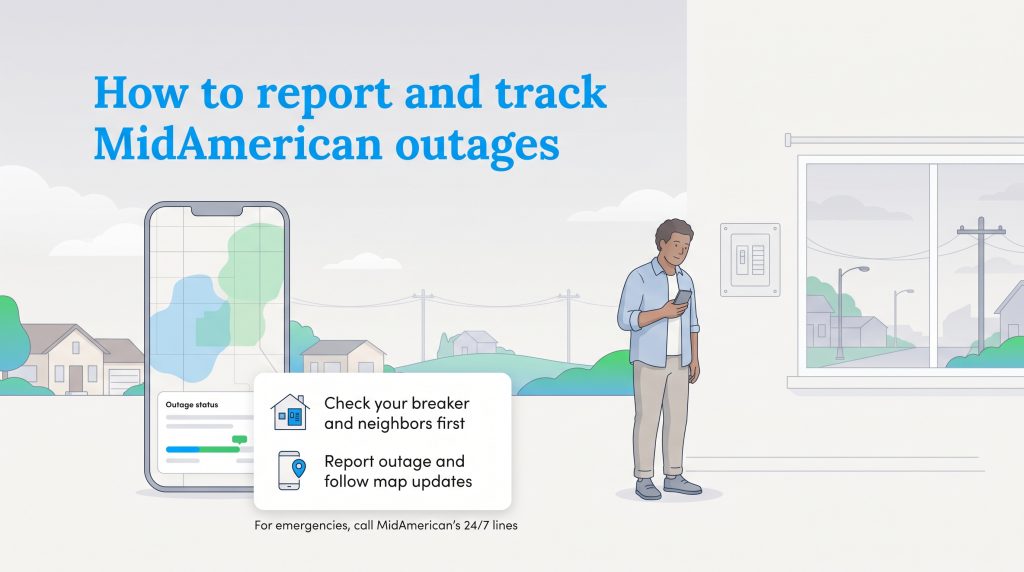
Severe Midwest thunderstorms and intense winter blizzards can occasionally knock out power, but knowing exactly what to do drastically reduces the stress of a blackout. If the lights go out, first verify it is not an isolated issue with your home’s breaker box. Once you confirm a neighborhood-wide problem, you need to report the MidAmerican Energy power outage immediately so repair crews can respond.
For immediate safety concerns or to report an active emergency, call their dispatch lines right away. For an electrical outage or a downed power wire, call 1-800-799-4443. If you smell natural gas or suspect a dangerous gas leak, evacuate the area entirely and dial 1-800-595-5325.
Tracking repair progress is simple once the issue is safely reported. You can easily view the interactive storm restoration and outage map online through their official website or directly via the mobile app. These helpful digital tools provide real-time updates on affected regions, crew dispatch status, and estimated restoration times for your specific neighborhood.
Billing Options, Fees, and Ways to Save
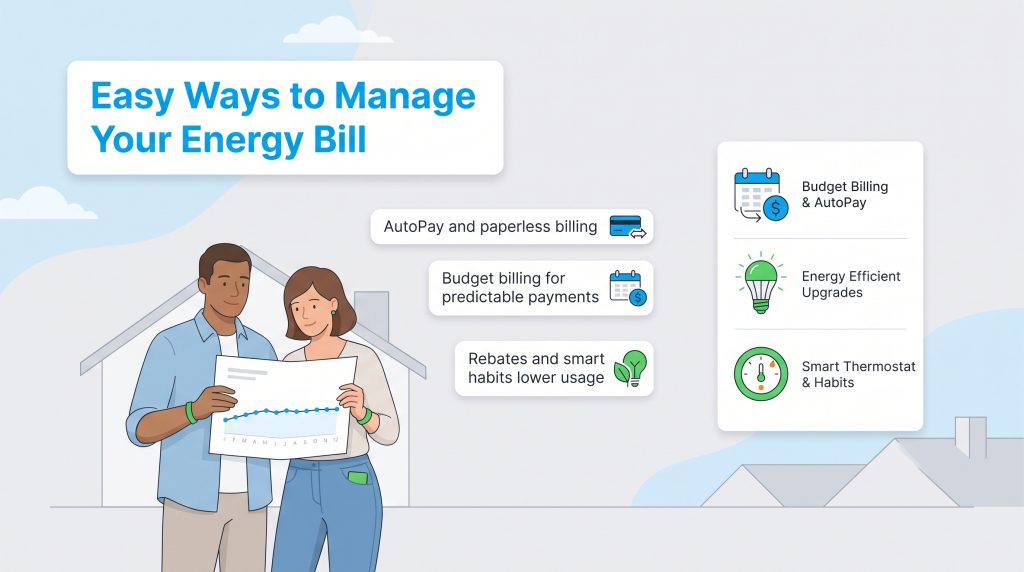
Keeping your monthly expenses predictable is a priority for most households, and taking advantage of flexible payment programs helps you manage your budget effectively. If you want to avoid sweltering summer air conditioning spikes or high winter heating costs, enrolling in the MidAmerican Energy budget billing program is an excellent strategy. Budget billing equalizes your monthly payments by averaging your annual energy usage, protecting you from seasonal price shocks entirely.
When it is time to pay your MidAmerican Energy bill, you have several convenient payment methods to choose from. You can easily enroll in AutoPay for hands-off processing, sign up for Paperless billing to reduce physical mail clutter, or make one-time online payments using the secure Paymentus platform. If you prefer handling your finances in cash, you can visit local Western Union kiosks to settle your balance, though you should note this method incurs a $1 convenience fee per transaction.
Beyond structured billing options, optimizing your household habits keeps your overall costs low. Simple steps like replacing old incandescent bulbs with energy-efficient LEDs, sealing drafts around drafty windows, and utilizing a smart thermostat can drastically reduce your baseline consumption. The company also frequently offers eco-conscious equipment rebates for appliance recycling and HVAC upgrades, so it pays to check their digital portal before purchasing new appliances.
Navigating the MidAmerican Energy Mobile App
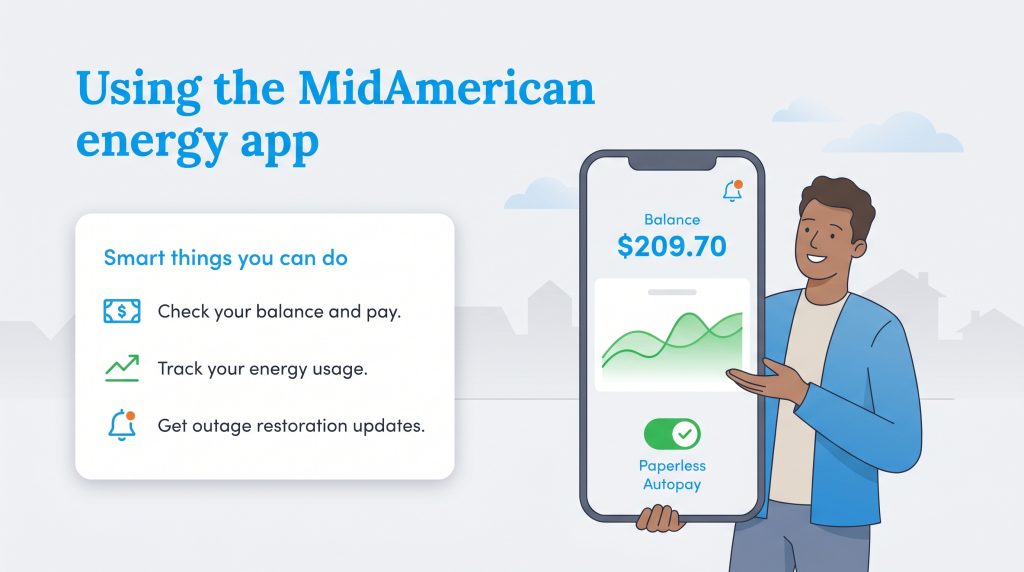
Managing your electricity should not require sitting on hold or hunting down postage for a paper check. Navigating the MidAmerican Energy mobile app streamlines your entire account management experience right from your smartphone. Available as a free download on both the App Store and Google Play, the platform puts your essential utility details front and center.
Using the app greatly simplifies your daily administrative chores. According to its store listings, it features robust data encryption to ensure your personal payment details stay secure while in transit. Once you create your secure MidAmerican Energy login, you can immediately utilize the app to handle a variety of tasks:
- Pay bills instantly and manage your preferred AutoPay settings.
- Report neighborhood outages and receive push notifications for storm restoration updates.
- Track your daily, weekly, and monthly home energy usage trends.
- Enroll in the highly popular budget billing program with just a few simple taps.
MidAmerican Energy Reviews, Ratings, and BBB Standing
Building a sense of trust with your provider is crucial, especially when you are locked into a specific regulated service territory. Evaluating MidAmerican Energy reviews gives you a transparent look at what everyday residential customers experience. The company proudly holds an A+ accreditation with the Better Business Bureau (BBB), which signals a strong corporate commitment to resolving consumer disputes and maintaining highly transparent business practices.
When reviewing MidAmerican Energy customer service feedback, a distinct contrast emerges between their digital convenience and routine administrative hurdles. On the App Store, their mobile application boasts an impressive 4.6-star rating. Users frequently praise its highly intuitive design, seamless outage tracking, and effortless payment processing capabilities. Conversely, feedback reported to the BBB routinely centers around standard utility frustrations — such as lengthy billing inquiries, delayed deposit refunds, and the typical friction of navigating a large corporate call center.
Sustainability and Wind Power Initiatives
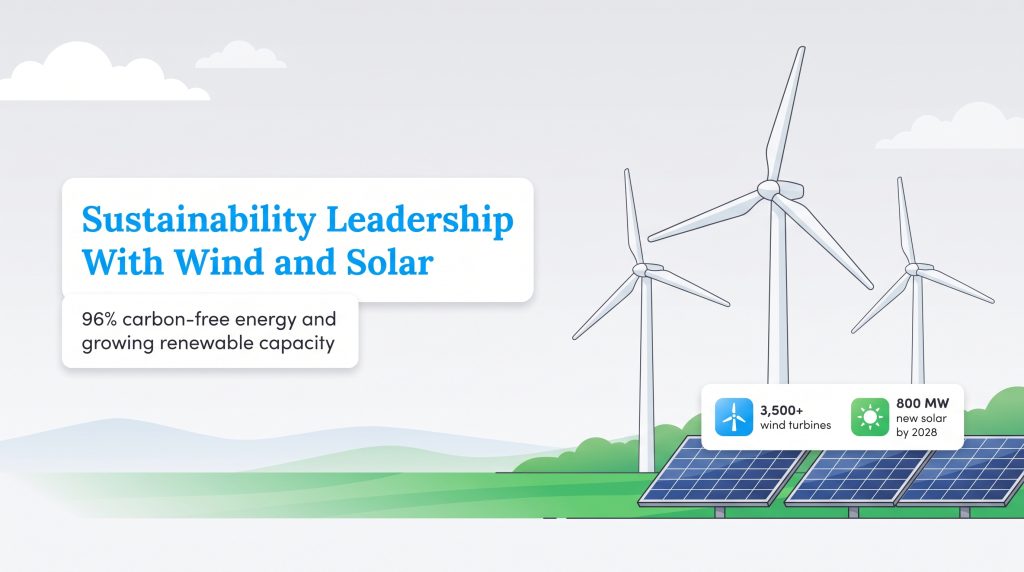
For the eco-conscious consumer, local energy efficiency is only one piece of the broader sustainability puzzle. You will be pleased to know that MidAmerican Energy wind power and green generation programs are actively leading the charge across the Midwest grid. The provider has invested heavily in renewable infrastructure, recently delivering an astonishing 96% carbon-free energy to its Iowa customers over the course of the year.
Their firm commitment to a greener grid is backed by massive, tangible hardware upgrades. The company currently operates over 3,500 wind turbines, making it one of the absolute largest utility-owned wind generation portfolios in the United States. Furthermore, they are expanding their renewable footprint far beyond wind alone, adopting an ambitious timeline to add 800 megawatts of solar energy to their generation mix by 2028.
Powering Your New Midwest Home with MidAmerican Energy
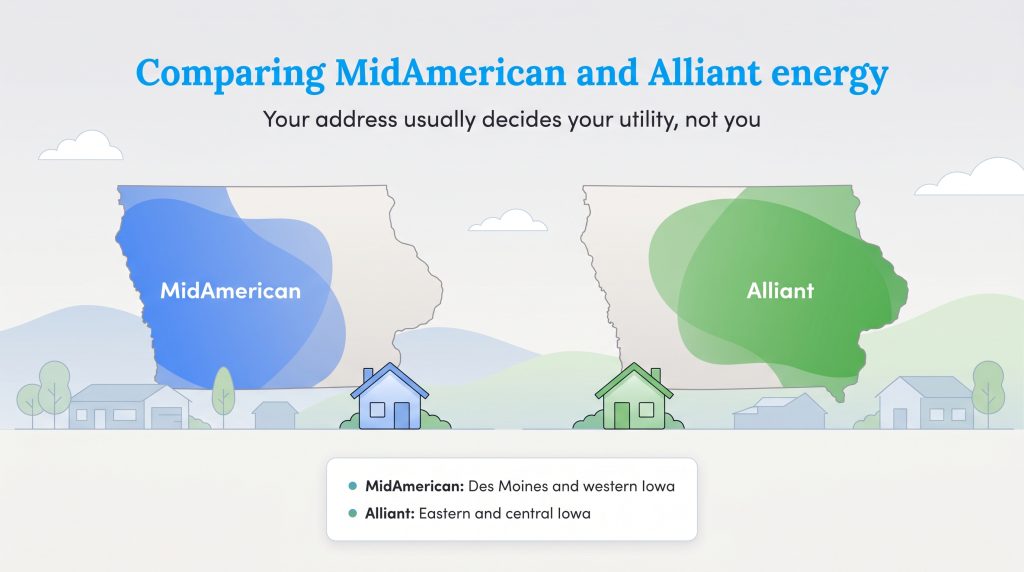
When exploring your Midwest energy options, you might naturally wonder how MidAmerican stacks up against neighboring providers like Alliant Energy. In reality, because these are heavily regulated utilities, your exact street address dictates your provider. If you live in western Iowa or the Des Moines metro area, MidAmerican is usually your default utility option.
Fortunately, landing in this specific service territory comes with substantial built-in advantages. The primary benefits of becoming a customer include access to electric rates significantly below the national average, a highly rated mobile app for effortless account management, and a robust renewable energy mix that prioritizes wind and solar power generation.
Securing reliable power for your new home sets the foundation for a stress-free relocation. By setting up your digital account early, monitoring your real-time usage, and leaning into their eco-conscious rebate programs, you can take full control of your household expenses. Ready to get the power turned on? You can quickly start or transfer service on the official portal to ensure your lights are working the moment you move in.
Frequently Asked Questions About MidAmerican Energy
Where does MidAmerican Energy provide utility service?
Is MidAmerican Energy a gas or electric company?
How do I report a power outage or gas leak to MidAmerican Energy?
How can I pay my MidAmerican Energy bill?
Does MidAmerican Energy have a mobile app?
What factors impact MidAmerican Energy rates?
Does MidAmerican Energy offer budget billing?
About the Author

David has been an integral part of some of the biggest utility sites on the internet, including InMyArea.com, HighSpeedInternet.com, BroadbandNow.com, and U.S. News. He brings over 15 years of experience writing about, compiling and analyzing utility data.