
Determining The Best Natural Gas Provider In Georgia Comes Down To Comparing Your Monthly Recurring Charges, Price Per Therm, And The Eco-Friendly Perks Each Marketer Offers
Key Takeaways
- Understanding the difference between the supply charge and the delivery charge is the first step to lowering your winter heating bills in Georgia’s deregulated market.
- True Natural Gas shines with transparent, low-cost billing, while Gas South frequently appeals to value-conscious buyers through flexible rate plans and substantial community donations.
- Switching your provider won’t interrupt your service, allowing you to seamlessly lock in a better rate before temperatures drop.
Navigating Georgia’s deregulated utility market can be tricky, but comparing Gas South vs. True Natural Gas is the perfect place to start when securing the most competitive rates for your home. If you’re moving into a new place and setting up gas service, choosing the right provider means cutting through the noise of complex contracts and promotional jargon. We’ve broken down the 2026 pricing structures, early termination fees, and eco-friendly perks for both marketers to help you lock in a reliable plan that keeps your home warm and your household budget perfectly intact.

- $0.390 /THM
- $6.95-9.95
- None
- 1-24 Months
- $0.749 /THM
- $5.95
- None
- 1-24 Months
*rates may vary by location and household usage
At A Glance: Side-By-Side Comparison
If you need a quick answer on how these two utility heavyweights stack up in 2026, we’ve broken down the essentials. Reviewing this snapshot helps you quickly gauge which marketer aligns best with your household budget and personal values.
| Metric | Gas South | True Natural Gas |
|---|---|---|
| Standard Monthly Recurring Charge | $6.95 – $9.95 (varies by promotional plan) | Standardized at $5.95 for most residential plans |
| Early Termination Fee | Up to $150 (often prorated closer to contract end) | Standard $150 penalty for breaking a 12-month fixed contract |
| Senior Plan Availability | Yes, supports the AGL pass-through discount | Yes, supports the AGL pass-through discount |
| Eco-Friendly Options | No major residential carbon offset plans actively promoted | Offers specific carbon offset tiers for eco-conscious shoppers |
| Mobile App Availability | Yes, features a robust and highly polished mobile app | No dedicated app; utilizes a minimalist browser-based portal |
Pricing And Rate Plans Breakdown
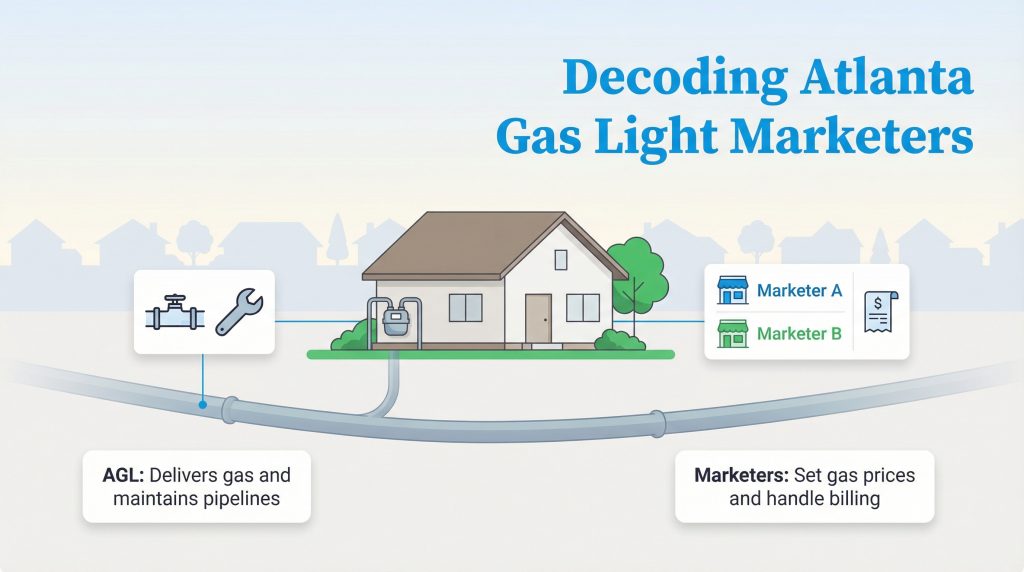
Before examining specific pricing tiers, it’s essential to understand how Georgia’s deregulated market works. Atlanta Gas Light (AGL) owns and maintains the physical pipelines, meaning they handle all physical fuel delivery. Retail marketers like Gas South and True Natural Gas buy that natural gas on the open market, sell it to you, and manage your billing. When you pay your monthly invoice, a portion goes to the marketer for the gas supply, and another portion goes to AGL as a pass-through delivery charge. Because AGL sets the base delivery rates for everyone, switching marketers only changes the supply rate and your monthly administrative fee.
🚩 Heads Up: No matter which marketer you ultimately choose, Atlanta Gas Light remains your reliable delivery utility. If you ever smell gas or experience an outage, you’ll still call AGL directly to handle the emergency.
Clarifying Your Monthly Gas Bill Components
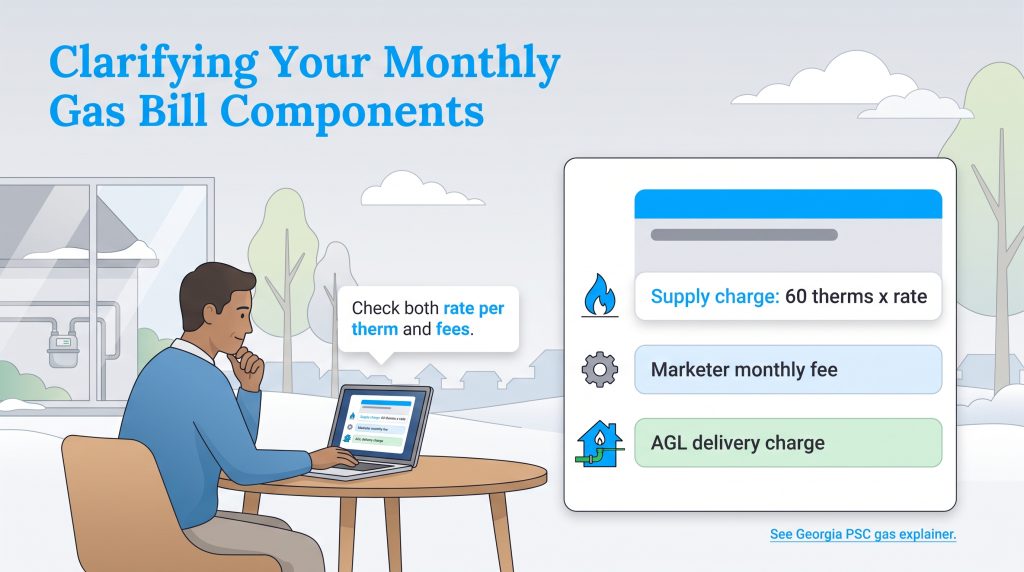
To truly compare providers, it helps to see how these charges play out in reality. Suppose you use 60 therms of gas during a winter month. Your bill will include the supply charge (those 60 therms multiplied by your marketer’s current rate), the marketer’s monthly recurring charge, and AGL’s pass-through delivery charge. By breaking down your bill this way, you can easily see why evaluating both the therm rate and the administrative fee is so critical for your household budget. To check current consumer protections, the Georgia Public Service Commission’s natural gas explainer page offers excellent resources for verifying rate fairness.
Fixed-Rate Vs Variable-Rate Plans
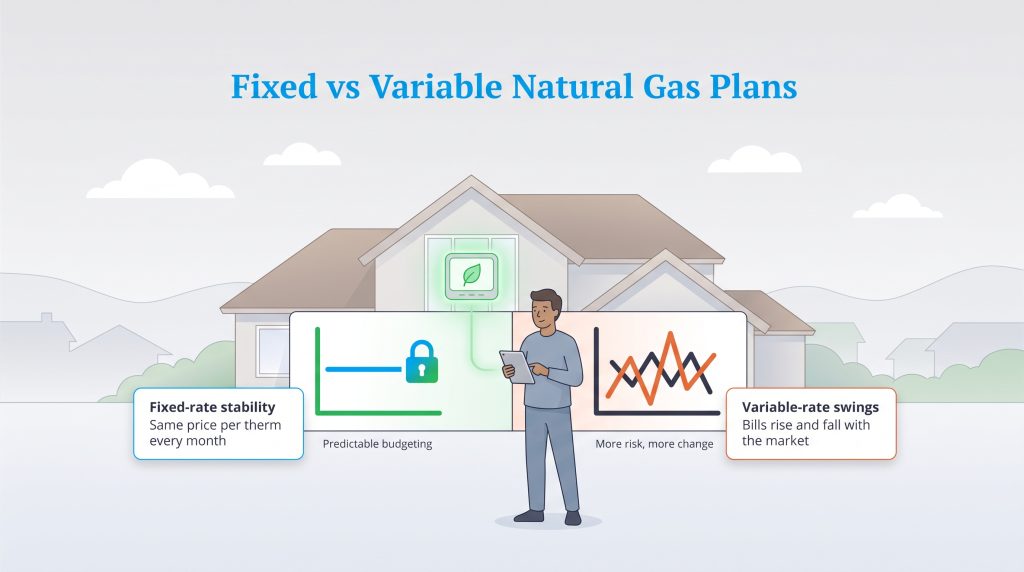
When you start comparing options, you’ll immediately notice the difference between fixed and variable plans. A fixed-rate plan locks in your exact price per therm for a set contract length, shielding you from market volatility. If you’re pairing a new smart thermostat with your HVAC system to create an eco-conscious alternative for winter heating, a fixed rate ensures your conservation efforts aren’t wiped out by sudden wholesale price spikes. Conversely, variable-rate plans fluctuate month-to-month based on market conditions. While they offer flexibility without cancellation fees, they can result in alarmingly high bills during the coldest months.
| Plan Name | Rate | Plan Type | Base Charge | Cancellation Fee | |
|---|---|---|---|---|---|
| Intro Variable | $0.390 /THM | 1 Months Month to Month Rate | $6.95 to 9.95 MRC (Monthly Recurring Charge) is a fixed monthly fee charged by the energy provider, separate from the cost of the energy you use. | $150.00 | Check Availability |
| 12 Month Fixed plus $50 in Bill Credits | $0.670 /THM | 12 Months fixed rate Rate | $6.95 to 9.95 MRC (Monthly Recurring Charge) is a fixed monthly fee charged by the energy provider, separate from the cost of the energy you use. | $150.00 | Check Availability |
| 6 Month Fixed plus $50 in Bill Credits | $0.690 /THM | 6 Months fixed rate Rate | $6.95 to 9.95 MRC (Monthly Recurring Charge) is a fixed monthly fee charged by the energy provider, separate from the cost of the energy you use. | $150.00 | Check Availability |
| 24 Month Fixed plus $50 in Bill Credits | $0.770 /THM | 24 Months fixed rate Rate | $6.95 to 9.95 MRC (Monthly Recurring Charge) is a fixed monthly fee charged by the energy provider, separate from the cost of the energy you use. | $150.00 | Check Availability |
| Variable | $2.090 /THM | 1 Months Month to Month Rate | $6.95 to 9.95 MRC (Monthly Recurring Charge) is a fixed monthly fee charged by the energy provider, separate from the cost of the energy you use. | $150.00 | Check Availability |
Gas South features standard fixed plans but stands out with the Gas South OnePrice Plan. Rather than charging you a traditional fixed price-per-therm rate, this unique flat-fee model evaluates your home’s historical usage to provide a perfectly predictable monthly bill that never changes, regardless of the weather. While you might pay a slight premium for this level of stability, it’s highly valued by budget-conscious families.
| Plan Name | Rate | Plan Type | Base Charge | Cancellation Fee | |
|---|---|---|---|---|---|
| Senior Citizen Plan | $ /THM | Rate | $3.45 | Check Availability | |
| 12 Month Plan | $0.691 /THM | 12 Months Fixed Rate | $5.95 | Yes | Check Availability |
| 24 Month Plan | $0.714 /THM | 24 Months Fixed Rate | $5.95 | Yes | Check Availability |
| Six Month Plan | $0.721 /THM | 6 Months Fixed Rate | $5.95 | Yes | Check Availability |
| Variable Market Pricing Plan | $2.08 /THM | 1 Months Variable Rate | $5.95 | None | Check Availability |
True Natural Gas keeps things remarkably simple. They focus heavily on traditional fixed-rate and standard variable options, leaning into their famously low customer service charge rather than proprietary billing structures.
Senior Citizen Discounts And Plans
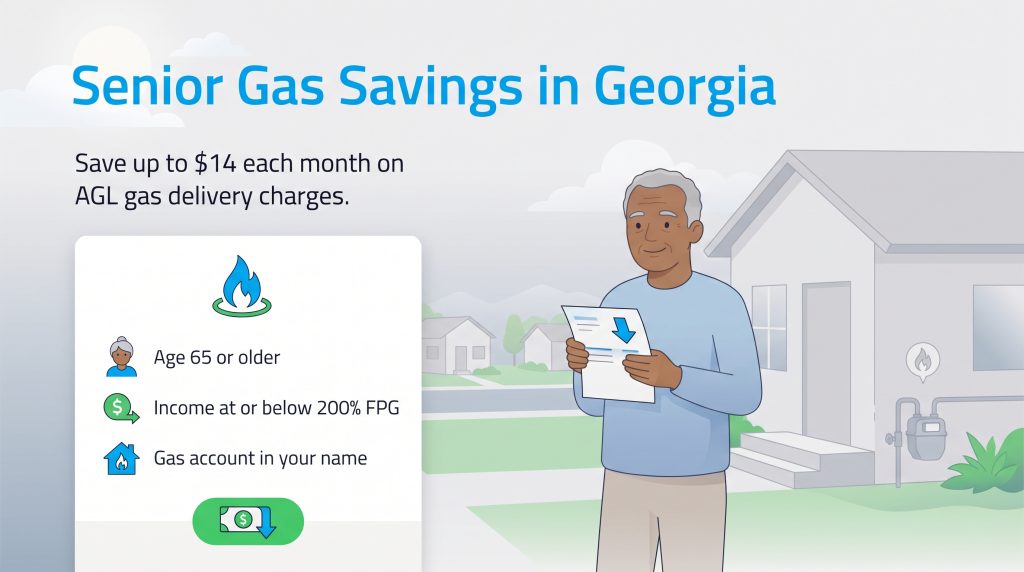
For older residents seeking relief on their utility bills, finding a senior citizen gas discount in Georgia is easier than you might think. Both Gas South and True Natural Gas support the official Atlanta Gas Light senior citizen pass-through discount. To qualify for this program, you must be at least 65 years old and have a total annual combined household income that falls at or below 200% of the Federal Poverty Guidelines (roughly $31,920). The natural gas account must also be in your name. Once approved, eligible seniors receive a discount of up to $14 off their monthly AGL base delivery charge, freeing up room in the budget for other essentials.
Hidden Fees: MRCs And Early Termination
One of the biggest hurdles in choosing a new marketer is deciding whether to prioritize a lower monthly fee or a lower therm rate. Evaluating natural gas monthly recurring charges (MRCs) is critical, especially for low-usage households where high fees easily erase small usage savings.
- Gas South MRCs: Typically range from $6.95 to $9.95 per month, depending heavily on the specific promotional plan or fixed term length you select.
- True Natural Gas MRCs: Frequently lock in at a standard $5.95 per month, establishing them as a clear winner for consumers who despise high administrative fees.
Additionally, you must consider the penalty for breaking a contract early. Leaving a fixed-rate plan before its expiration date triggers an early termination fee (ETF). True Natural Gas enforces a strict $150 early cancellation fee for breaking a 12-month fixed contract. Gas South utilizes a similar $150 penalty for 12-month contracts; however, they occasionally prorate this amount, meaning the fee could drop to $50 if you only have a month or two left on your term.
| Household Type | Usage Level | What to Prioritize |
|---|---|---|
| Small Apartment or Mild Winter | Low | Lower Monthly Recurring Charge (MRC): A high monthly fee can easily wipe out any savings from a slightly cheaper therm rate. |
| Large Home or Gas Heating | High | Lower Therm Rate: When you churn through gas, securing the lowest possible price per unit is crucial. |
| New Home or Uncertain Usage | Variable | Shorter Term or Variable Plans: Consider a flexible option until you establish a reliable usage history. |
Customer Service And Digital Bill Pay Experience
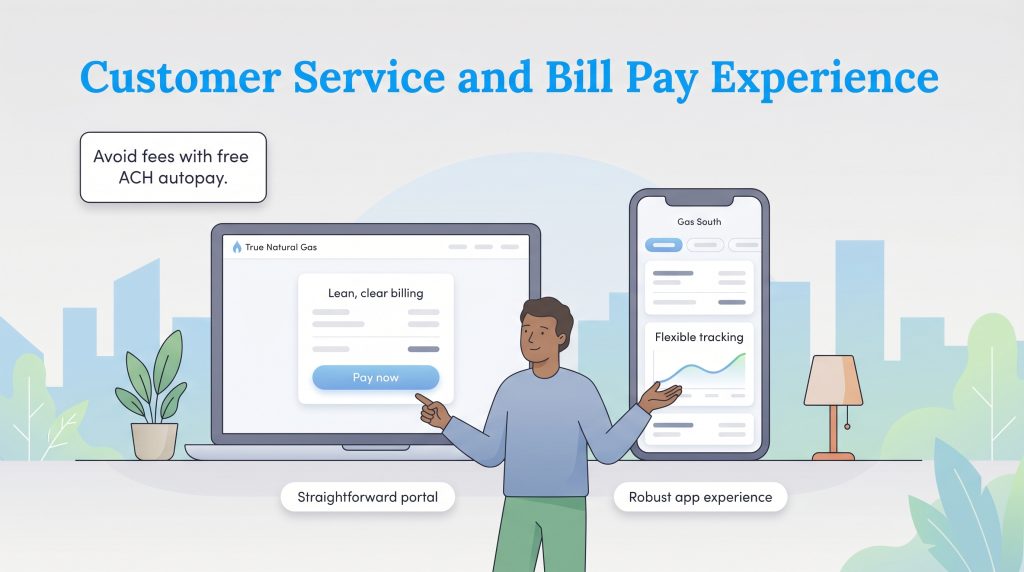
Beyond the raw numbers, your digital experience and customer support accessibility dictate your daily satisfaction. True Natural Gas customer service consistently earns high praise for its straightforward, cooperative mindset. As an affiliate of Coweta-Fayette EMC, they provide a minimalist online portal where users can log in, view usage, and pay bills without navigating a maze of upsells. Gas South, on the other hand, boasts a highly polished mobile app and a robust digital dashboard, making it incredibly intuitive to track historical data on the go.
Eco-Friendly Initiatives And Community Impact
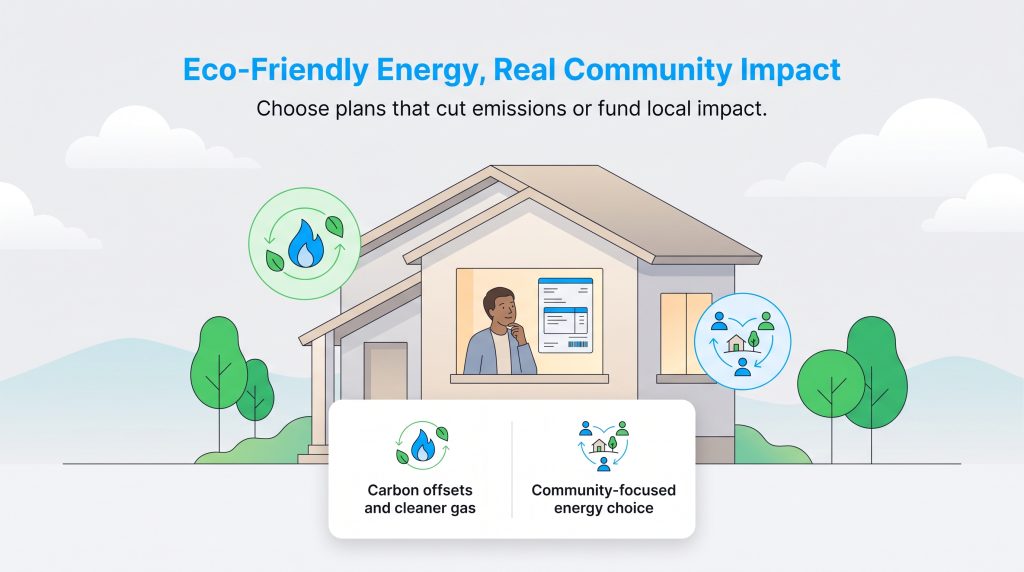
As sustainability becomes a primary concern for homeowners, choosing an environmentally mindful choice for heating is increasingly popular. The U.S. Energy Information Administration’s natural gas overview confirms that it burns cleaner than oil or coal, but you can go further. True Natural Gas appeals directly to this demographic by offering specific carbon offset tiers, allowing users to neutralize their footprint for a few extra dollars each month. Conversely, Gas South appeals heavily to values-based shoppers through community impact rather than direct renewable natural gas (RNG) captured from organic waste. Both companies offer ways to feel good about your utility bill, whether you’re passionate about sustainable living or community outreach.
💡 Pro Tip: Gas South’s pledge to donate 5% of its profits to children in need provides ongoing support to local food banks, educational foundations, and pediatric healthcare facilities.
How To Switch Natural Gas Providers In Georgia
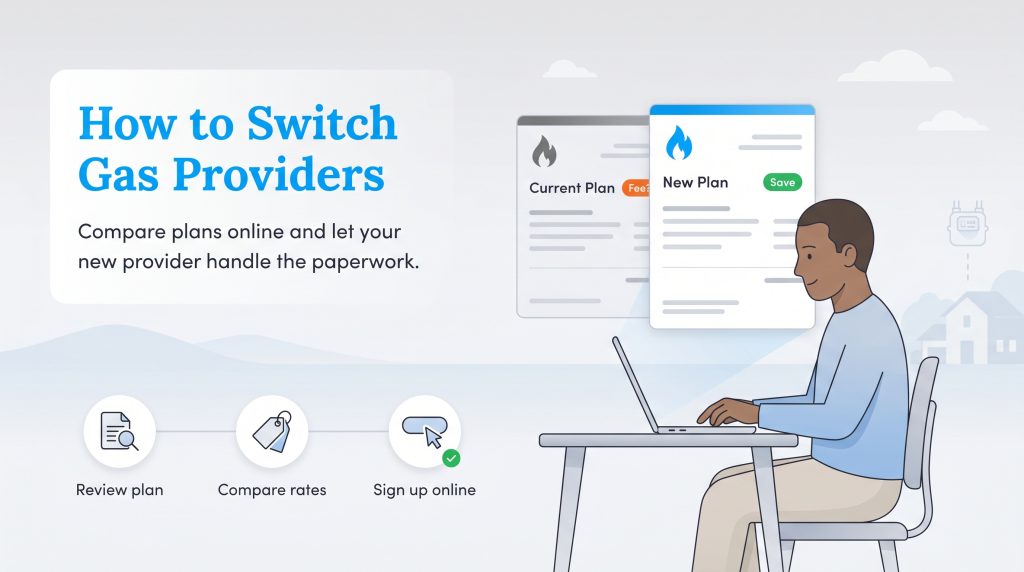
If you’ve found a better rate and want to make the switch, the transition is seamless. The process to switch natural gas providers in Georgia is entirely digital. You never have to worry about a technician coming to your house or losing heat. Once you select the company offering the cheapest natural gas in GA for your lifestyle, your new marketer securely coordinates everything with Atlanta Gas Light to handle the background paperwork.
- Review your current contract: Log into your current account to see if you’re on a fixed-rate or month-to-month plan.
- Identify early termination fees: Check the expiration date. Leaving a fixed contract early triggers a cancellation fee.
- Compare new plans: Weigh the price per therm and monthly recurring charge for both marketers.
- Sign up online: Enter your address on your new provider’s website and select a plan.
- Let the marketers handle the rest: Your new company securely coordinates the swap with AGL and your old provider.
💸 Money-Saver: Always verify the exact expiration date of your current contract. Marketers typically allow you to sign up for a new plan up to 30 days before your old one expires without hitting you with an early termination penalty.
Our Verdict: Which Provider Is Right For Your Home?

Deciding between these two heavyweights ultimately comes down to your priorities. To make your final decision easier, here’s a scannable breakdown of where each brand truly excels.
Gas South Pros And Cons
- Pro: Innovative billing options like the OnePrice Plan offer unmatched budget stability.
- Pro: Phenomenal community impact, with 5% of profits donated to children in need.
- Pro: Excellent digital infrastructure, including a highly rated mobile app.
- Con: Monthly administrative fees are generally higher, ranging up to $9.95 on certain plans.
True Natural Gas Pros And Cons
- Pro: Consistently low administrative fees, standardizing at just $5.95 per month.
- Pro: Direct eco-friendly tiers allow customers to purchase carbon offsets easily.
- Pro: Extremely transparent, straightforward billing driven by a cooperative-style approach.
- Con: Lacks a dedicated mobile app and extensive community donation pledges.
A Simple Way To Pick Your Plan This Week
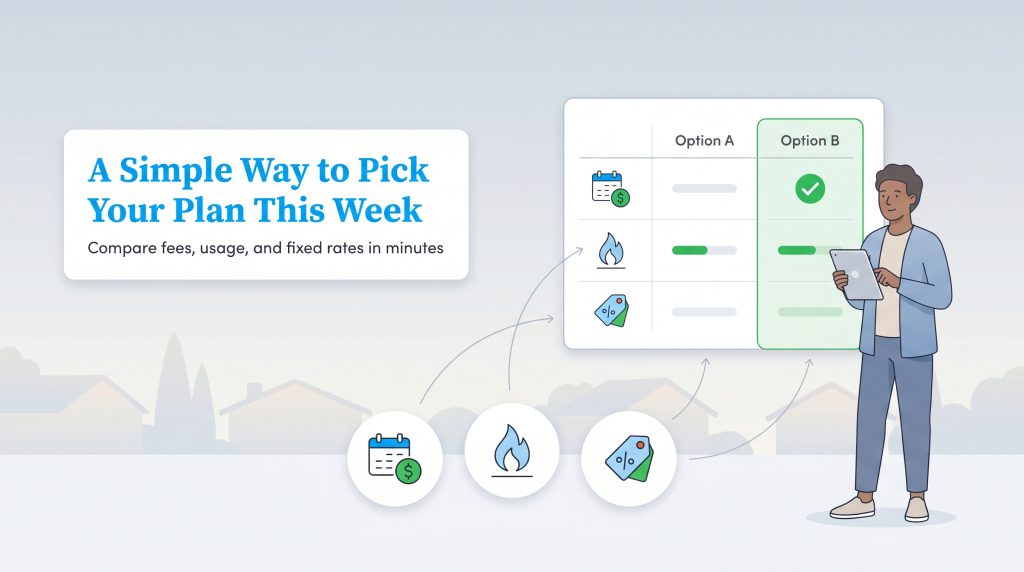
Choosing between Gas South and True Natural Gas doesn’t have to be a stressful endeavor. By evaluating your past usage habits and deciding whether you need to prioritize rock-bottom monthly fees or unmatched rate stability, you can easily find the perfect fit. Take a few minutes to compare the latest promotions, select the brand that aligns with your household needs, and confidently lock in a plan that keeps your home warm all winter long.
Frequently Asked Questions About Gas South And True Natural Gas
Is it better to choose a fixed or variable natural gas rate in Georgia?
A fixed-rate plan provides budget stability by locking in your price per therm for the duration of the contract, which is incredibly helpful during winter price spikes. Variable rates change monthly based on market conditions, offering flexibility without cancellation fees, but they carry the risk of sudden cost increases during peak heating season.
What is a monthly recurring charge (MRC) on my gas bill?
The MRC is an administrative fee charged by your retail marketer that you pay every month, regardless of how much gas you actually consume. It covers the company’s internal costs for customer service, billing operations, and general account maintenance.
Will my gas be turned off if I switch from Gas South to True Natural Gas?
No, your physical service will never be interrupted when switching between marketers. Atlanta Gas Light continues to maintain the pipelines and physical delivery of the fuel, making the change an entirely administrative background process handled seamlessly by the billing companies.
How do I switch from Gas South to True Natural Gas?
Switching from Gas South to True Natural Gas is a completely digital process. You simply sign up for your preferred plan on the True Natural Gas website. They will securely coordinate the administrative switch with Atlanta Gas Light and formally cancel your active Gas South plan behind the scenes, ensuring you never experience a service interruption.
Who handles gas leaks or outages, the marketer or Atlanta Gas Light?
Atlanta Gas Light manages the physical pipeline infrastructure and responds to all emergencies. Whether you’re enrolled with Gas South, True Natural Gas, or any other retail marketer, you must always contact Atlanta Gas Light directly if you smell gas or experience an outage.
Are there cancellation fees if I switch natural gas providers early?
Yes, if you’re currently enrolled in a fixed-rate plan, leaving before the contract expires usually triggers an early termination fee. Most providers in Georgia charge up to $150 for breaking a 12-month contract early, though some companies will prorate this penalty if you’re close to the end of your term.
What is the Gas South OnePrice Plan and is it worth it?
The Gas South OnePrice Plan replaces the traditional price-per-therm billing method with a flat, predictable monthly rate based on your historical usage. It’s highly beneficial for families prioritizing strict budget stability, though you typically pay a slight premium for this convenience compared to standard fixed-rate plans.
Do Atlanta Gas Light pass-through charges change if I switch from Gas South to True Natural Gas?
No, Atlanta Gas Light pass-through charges remain exactly the same regardless of which retail marketer you choose. Your savings when switching will come solely from securing a lower supply rate or a reduced monthly customer service charge.
Which natural gas provider has the cheapest rates in GA?
The cheapest provider constantly fluctuates based on the current market price per therm and seasonal promotions. Consistently checking the monthly recurring charges and comparing fixed-rate promotions from top marketers is the most reliable way to secure a low overall bill for your home.
About the Author

David has been an integral part of some of the biggest utility sites on the internet, including InMyArea.com, HighSpeedInternet.com, BroadbandNow.com, and U.S. News. He brings over 15 years of experience writing about, compiling and analyzing utility data.