
Make your move smoother by knowing when to transfer existing services and when to start fresh with new providers.
Key Takeaways
- Know the difference early: Transferring service is usually possible for local moves, while setting up new utilities is required for long-distance moves or switching providers in deregulated markets.
- Timing prevents blackouts: Schedule your disconnects and connects at least two weeks in advance to ensure you have lights and water on move-in day.
- Go green when you move: A new address is the perfect opportunity to switch to eco-conscious providers or renewable energy plans if you live in an energy-choice state.
Moving involves an endless stream of boxes, packing tape, and logistical headaches, but forgetting about your utilities can turn a stressful day into a disaster. Utilities are the invisible essentials that make a house livable, and nothing kills the excitement of a new home faster than walking into a dark, cold living room because the power isn’t on. Whether you simply need to move an existing account or cancel everything to start fresh with a new provider, understanding the process ensures you have lights, water, and internet the moment you walk through the door.
Transferring vs. Setting Up: What’s the Difference?
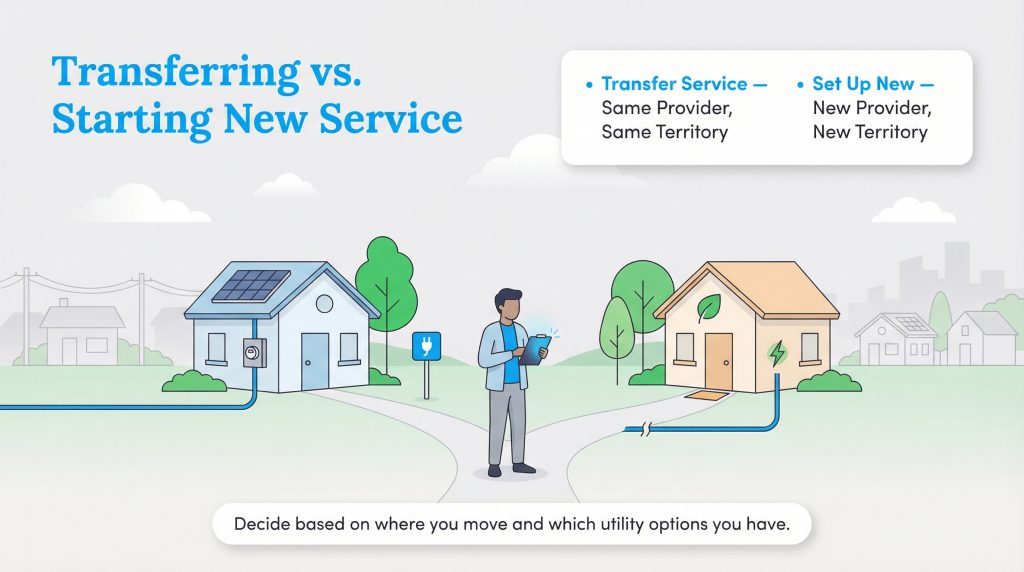
Knowing when to transfer utilities vs. cancel and restart service depends on where you’re moving and which providers serve your new home. Before you pick up the phone, you need to know if you are keeping your current provider or starting a new relationship. Understanding the difference between transferring an account and setting up new utilities saves you time and prevents billing errors later.
Transferring Your Service
Transferring applies when you move within the same service territory. This is common for local moves where the utility company—like the municipal water department or a regional electric monopoly—remains the same. When you transfer, you keep your account history, which means you typically avoid new credit checks and hefty deposit fees. You simply tell the provider your move-out date for the old address and the move-in date for the new one.
Setting Up New Utilities
If you are moving to a new city, state, or utility jurisdiction, you generally must close your old account and open a brand new one. This often requires a credit check and potentially a deposit. However, this is also a major opportunity. In deregulated markets, you aren’t stuck with a single option. You can shop around for electricity or natural gas providers that offer better rates or renewable energy incentives. Treat this as a chance to audit your spending and find a plan that fits your budget.
Learn more about Setting Up Utilities for a New Home
How To Decide Whether To Transfer or Start Fresh
If you are unsure which path is right for you, use this simple decision framework to guide your next steps:
- Stay with your provider: If you are moving within the same city and are happy with your service, a simple transfer is the easiest route.
- Start fresh: If you are moving to a different service territory or state, you must cancel your old service and set up a new account.
- Switch to save: If you are unhappy with your current provider or rate, even if a transfer is possible, consider canceling and setting up with a new provider to secure a better deal or a greener plan.
Your Moving Utilities Checklist: A Timeline for Success
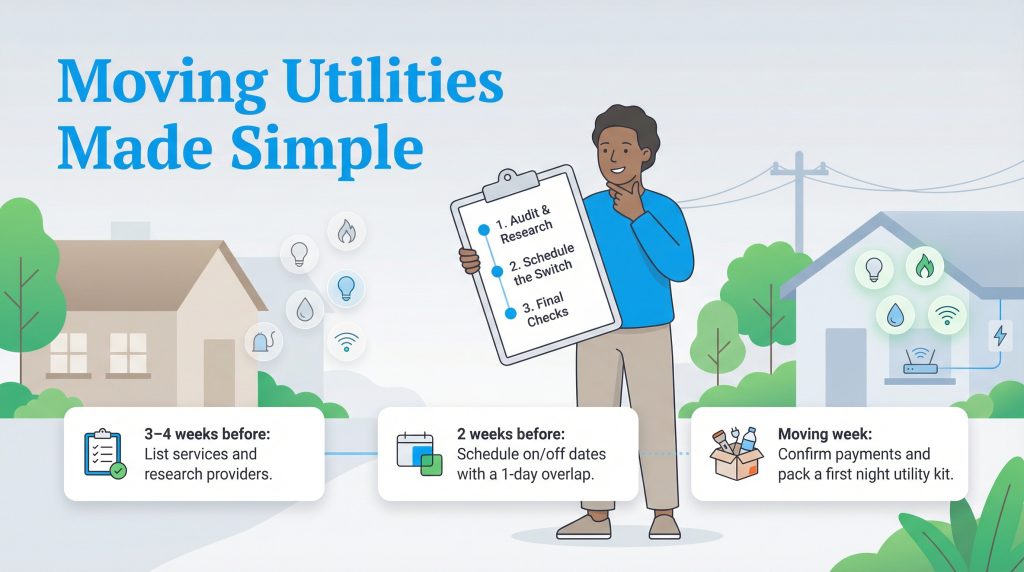
If you’re wondering how to transfer utilities to your new address or set up utilities for the first time, timing is everything. If you wait until the last minute, you risk technician delays and blackout periods. Follow this timeline to keep your services running smoothly.
3–4 Weeks Before: The Audit and Research Phase
Start by making a comprehensive list of your current services. This should include power, natural gas, water, sewer, trash, internet, and security systems. Once you have your list, research providers for your new address. Do the current providers service that area? If not, who does? This is also the best time to consider the environmental impact of your new home. Many providers now offer 100% wind or solar options, sometimes at similar prices to conventional energy plans, depending on your market.
2 Weeks Before: Schedule the Switch
Two weeks out is the sweet spot for scheduling your services. If you call too early, your work order might get lost; if you call too late, technicians may be booked. When you schedule your dates, use the “overlap strategy.” Have services turned on at your new house one day before you move in and turned off at your old house one day after you move out. This buffer ensures you have power for late-night packing and immediate access to lights and water when you arrive at the new place.
Moving Week: The Final Checks
As moving day approaches, clear any outstanding balances with your current providers. Paying off your balance helps ensure you receive your deposit back promptly. It is also wise to pack a “First Night Kit” containing flashlights, phone chargers, an extension cord, basic tools, snacks, and bottled water. Even with perfect planning, storms or outages can happen, so having essentials accessible in a specific box prevents scrambling in the dark.
Handling Specific Utilities
Different utilities have different rules. While electricity might be a quick online form, water service often requires more paperwork. Here is how to handle the nuances of each service type.
Electricity and Natural Gas
If you are in a regulated area, you have one choice for your provider, making the process straightforward. In energy choice markets, you have to select a supplier, or you will be placed on a default “variable rate” plan that can be expensive. Modern smart meters often allow companies to activate service remotely, but if your new home has an older meter, a technician may need physical access to the property.
Water, Sewer, and Trash
Water and sewer services are almost always municipal, meaning they are run by the city or county. Unlike private companies, these departments often have stricter documentation requirements. You may need to visit city hall or the county clerk’s website to upload specific documents. Be prepared to provide a government-issued ID, a copy of your lease or closing disclosure, and sometimes a voided check if you want to set up autopay immediately.
Internet, Cable, and Smart Home Tech
Internet service is not guaranteed to be the same speed just because you kept the same provider. Always check the specific coverage map for your new neighborhood to avoid being stuck with slow DSL when you paid for fiber. Additionally, do not forget your smart home devices. Reset Wi-Fi thermostats and smart locks to factory settings before you leave your old house so the new owners can set them up without issues.
Costs, Deposits, and Hidden Fees
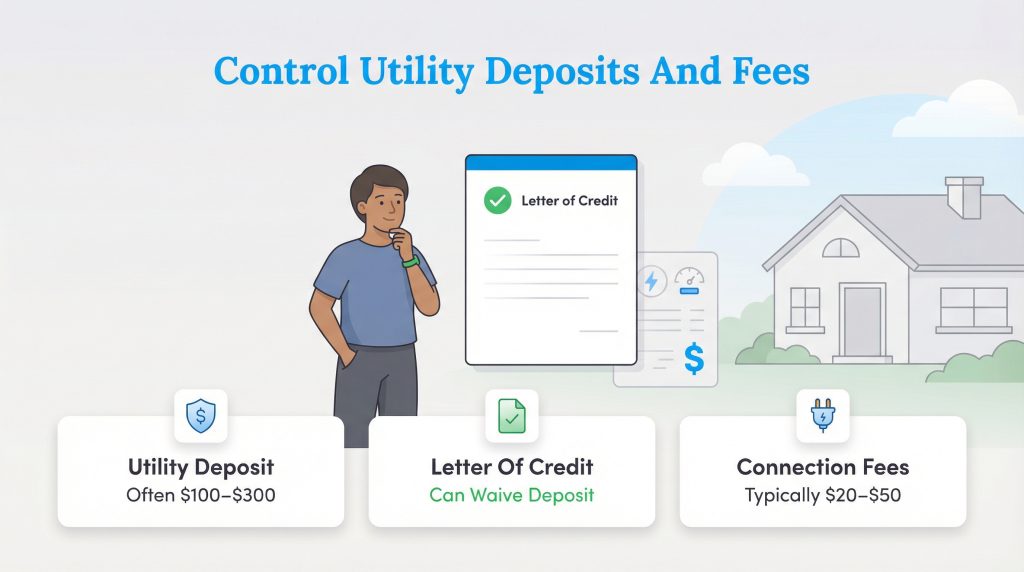
Moving is expensive, and utility fees can add up if you aren’t paying attention. Understanding these costs upfront helps you budget better.
Utility Deposits and Letters of Credit
If you are setting up new utilities and don’t have a payment history with that specific company, many utilities charge deposits, often around $100–$300, depending on your credit and location. You can often avoid this expense by asking your previous provider for a “Letter of Credit.” This document proves you paid your bills on time for the last 12 months. Presenting this to your new utility company can frequently waive the deposit requirement entirely.
Connection Fees
Even if you transfer service, you might see a “connection fee” or “activation charge” on your first bill. Connection fees are often in the $20–$50 range, but they vary by provider. While annoying, they are standard administrative costs for setting up the account and reading the meter for the first time.
Money-Saver: Ask about autopay discounts. Many providers will waive a connection fee or offer a lower monthly rate if you enroll in automatic billing during setup. For more ways to reduce expenses, read our guide on how to save on your electric bill.
Settling In and Verifying Your Bill
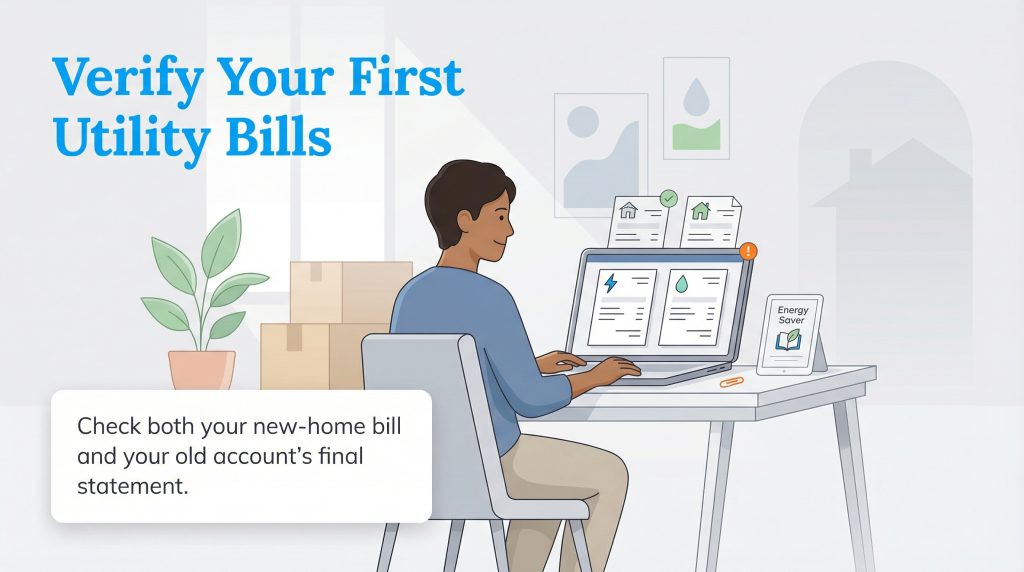
Once the dust has settled and the boxes are unpacked, take a moment to audit your accounts. When your first bill arrives for the new home, check it carefully to ensure the rate per kilowatt-hour or gallon matches what you were quoted. Mistakes happen, and catching them early is easier than fighting for a refund months later. Simultaneously, keep an eye out for the final bill from your old address. Confirm that your account is fully closed and that the process for refunding any previous deposits has been initiated. For more tips on keeping your new home efficient from day one, check out the Department of Energy’s Energy Saver guide.
Bringing Your Utilities Along Smoothly When You Move
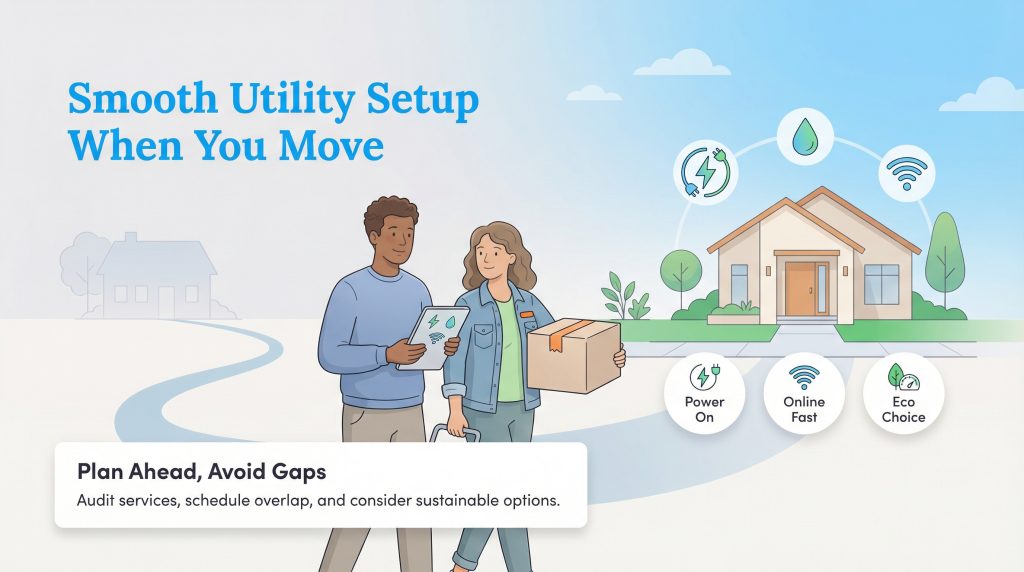
Successfully transferring or setting up your utilities allows you to focus on the fun parts of moving, like decorating and exploring your new neighborhood. By auditing your services early, deciding whether to transfer or start fresh, and scheduling your connections with an overlap buffer, you can avoid stress and blackout periods. At UtilitiesForMyHome, we recommend using this transition as an opportunity to review your energy habits and potentially switch to a more sustainable provider. With a little planning and the right checklist, you will have the lights on and the internet running the moment you step through the door.
FAQs About Moving Utilities
How far in advance should I call to transfer utilities?
Does it cost money to transfer utilities?
Can I transfer my internet to a new address?
What documents do I need to set up utilities for the first time?
Will my utilities work on the weekend if I move on a Saturday?
Do I need to be home when they turn on the lights?
About the Author

LaLeesha has a Masters degree in English and enjoys writing whenever she has the chance. She is passionate about gardening, reducing her carbon footprint, and protecting the environment.