
Everything you need to know about scheduling, transferring, and budgeting for utilities before move-in day
Key Takeaways
- Check your lease first to see which utilities are included in your rent and which are your responsibility.
- Schedule service activation at least two weeks before your move-in date to avoid power outages or rush fees.
- Ask providers about connection fees and deposits upfront so you can budget for immediate costs.
Getting the keys to a new apartment is exciting, but walking into a dark, cold room because the electricity isn’t on kills the vibe immediately. While you are busy packing boxes and renting a truck, you might easily forget about the invisible services that make a house a home. This guide provides a stress-free, step-by-step roadmap for setting up essential services so you can focus on unpacking rather than waiting on hold with the cable company.
First Steps: Determine Your Utility Responsibilities
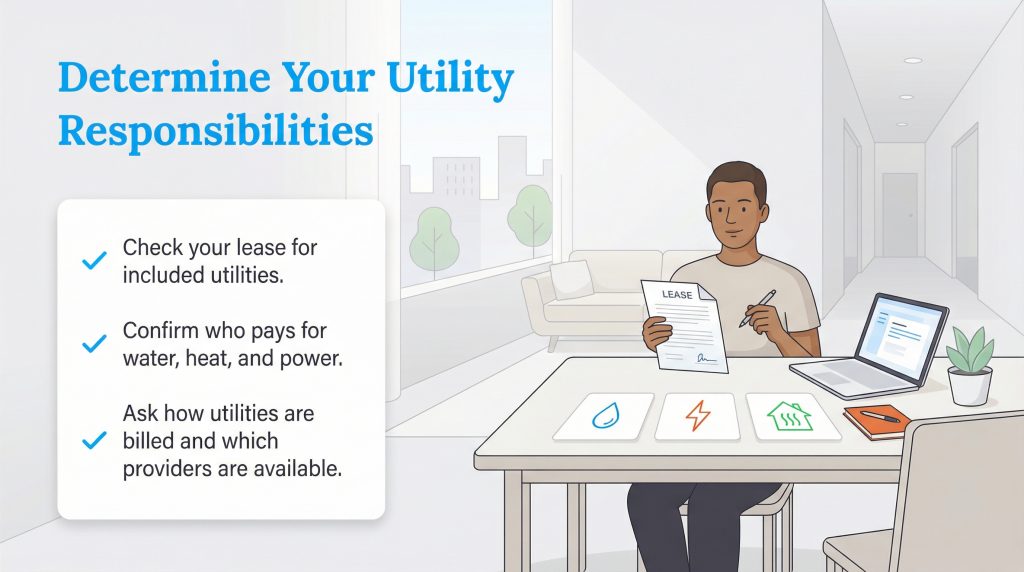
Before you pick up the phone, you need to know exactly what you are responsible for paying. Utility arrangements vary wildly from building to building. In some older apartment complexes, heat and water might be included in your rent because the building runs on a single boiler system. In newer buildings or single-family rentals, you often pay for everything separately.
Check your lease agreement carefully. It should clearly list which utilities do renters pay for and which are covered by the landlord. If the language is vague, clarify it immediately. You don’t want to assume water is free only to get a bill three months later.
Questions to Ask Your Landlord About Utilities
Don’t sign a lease without digging for details. When speaking to your landlord or property manager, ask specific questions to avoid surprises. Ask: “Is the water sub-metered or charged as a flat fee?” “Who is the preferred internet provider for the building?” and “Is the heating system gas or electric?” Knowing these answers helps you budget accurately and choose the right providers.
Get It in Writing. Once you get answers to your utility questions, ensure they are reflected in the lease or an addendum. Verbal agreements are hard to enforce if a dispute arises later about who owes what for the water bill.
The Essential Renters Utility Setup Checklist
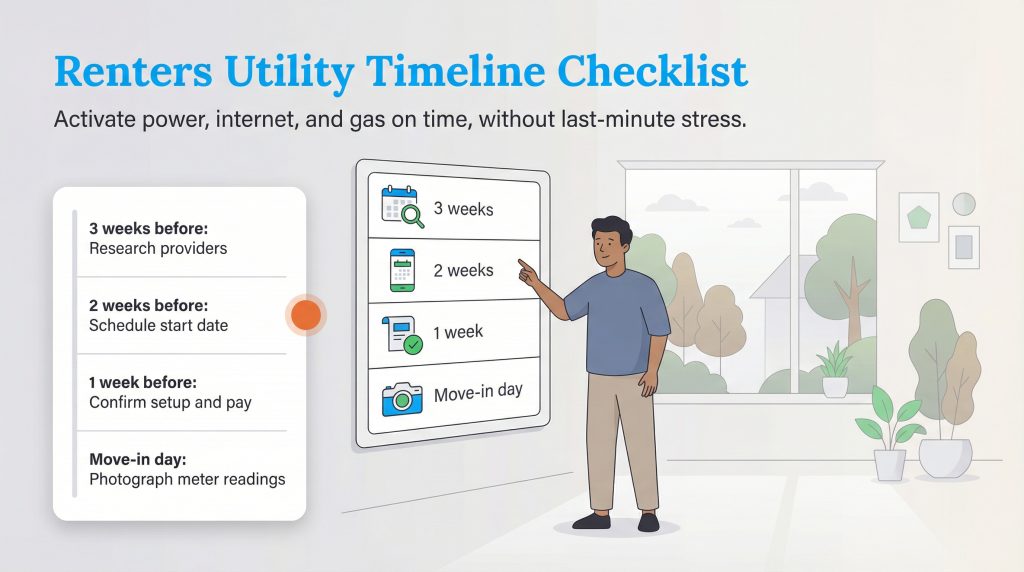
Timing is everything when setting up services. Leaving it until the last minute can result in delay fees or days without power. Follow this utility setup timeline for renters to stay on track.
3 Weeks Before Move-In: Research and Compare
Start by identifying the available providers for your new address. For utilities like electricity and gas, you may only have one local utility company that owns the lines, but you might have a choice of suppliers. For internet and cable, check which companies service the building. Use this time to compare speeds and pricing packages for high-speed internet options.
2 Weeks Before Move-In: Schedule Service
This is the sweet spot for setting up electricity and gas for rental units. Call your chosen providers or go online to schedule your service start date. Aim to have services activated one day before you actually move in. This ensures the lights work when you arrive to clean or drop off your first load of boxes. Visit our electricity guide if you need help understanding rate structures.
1 Week Before Move-In: Confirm and Pay
Double-check your appointment confirmations. If a technician needs to come out (common for internet or cable installation), ensure someone will be there to let them in. Pay any required security deposits now to prevent holds on your account.
Move-In Day: Document Everything
As soon as you walk in, locate your electric, gas, and water meters (if accessible). Take clear photos of the current readings. This is your first-time renter utility checklist safety net. If the previous tenant didn’t cancel their service correctly, or if the utility company estimates your first bill, these photos prove exactly where your usage started.
Understanding Your Utility Options in Deregulated Markets
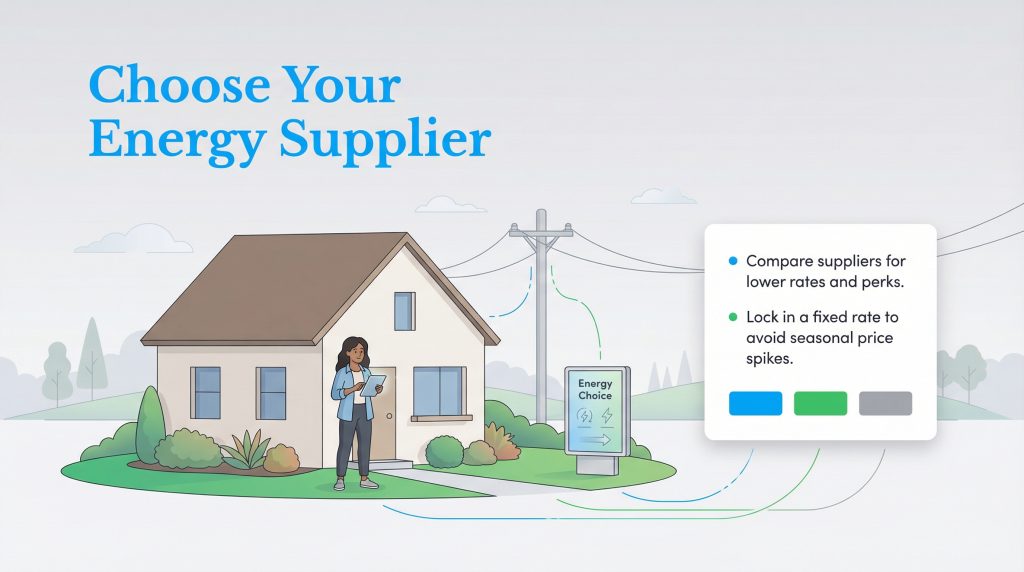
If you are moving to a state like Texas, Pennsylvania, Ohio, or Illinois, you might encounter “Energy Choice.” This means that while a local utility company delivers your power, you can choose the company that supplies it. This competition often leads to lower rates or better perks for new customers.
You can use this opportunity to shop around. You aren’t stuck with the standard rate unless you choose to be. You can lock in a fixed rate for 12 months or longer, which protects you from seasonal price spikes.
Eco Edge: Choose Green Power. In deregulated areas, many suppliers offer 100% renewable energy plans sourced from wind or solar. Choosing a green plan is one of the easiest ways to lower your carbon footprint without changing your daily habits. Check sites like Power to Choose (Texas) or PA Power Switch to filter for renewable options.
Average Apartment Utility Costs: What to Expect
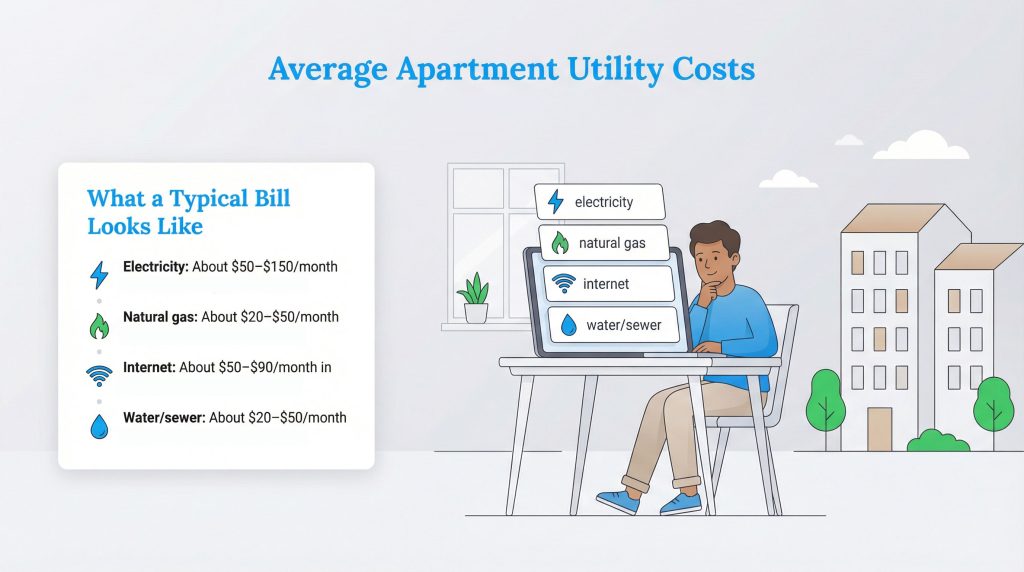
Budgeting for a new place involves more than just rent. Average apartment utility costs depend heavily on the size of your unit, the local climate, and the efficiency of the building. However, having a rough estimate helps you plan. According to the U.S. Energy Information Administration (EIA), factors like air conditioning and water heating significantly impact these totals.
- Electricity: $50–$100/month for a studio or one-bedroom; $100–$150+ for two bedrooms. Expect higher bills in peak summer or winter months if you have electric heat or A/C. You can lower these costs by choosing energy-efficient appliances with the ENERGY STAR label or adjusting your thermostat.
- Natural Gas: $20–$50/month. This is often lower in summer but can spike in winter if used for heating.
- Internet: $50–$90/month depending on speed.
- Water/Sewer: $20–$50/month if not included in rent. Check out our water utility guide for tips on conservation.
How to Transfer Utilities to a New Address
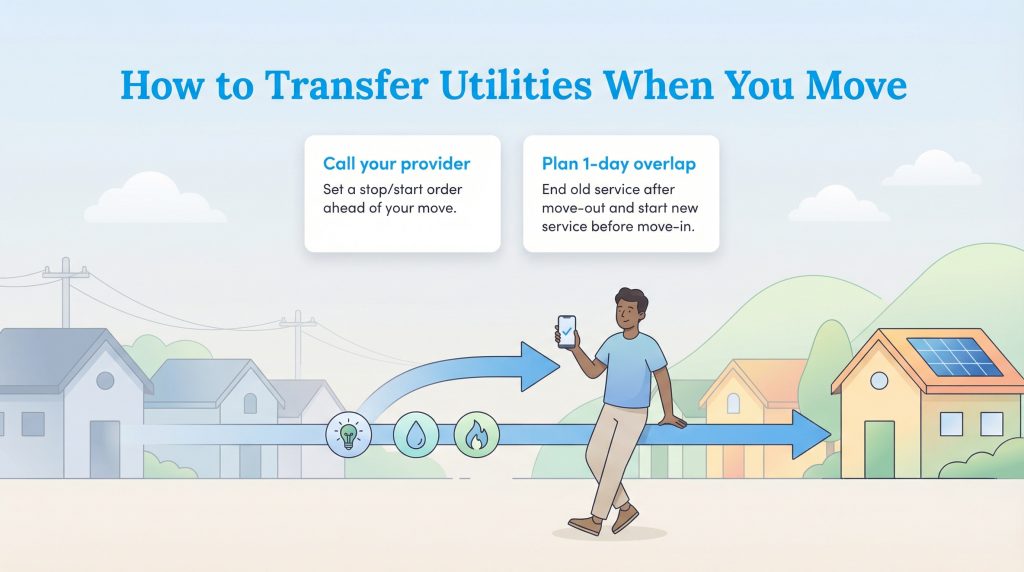
If you are moving locally and sticking with the same utility providers, you might be able to simply transfer your service. However, transferring utilities to new address isn’t instant or automatic. You still need to contact the provider to initiate a “Stop/Start” order. Visit our moving resources for more relocation tips.
Request that the service at your old apartment ends the day after you move out and the service at your new place starts the day before you move in. This overlap costs a few dollars but ensures you have power, hot water, and lights at both locations while you are cleaning and hauling furniture.
Hidden Costs and Fees to Watch For
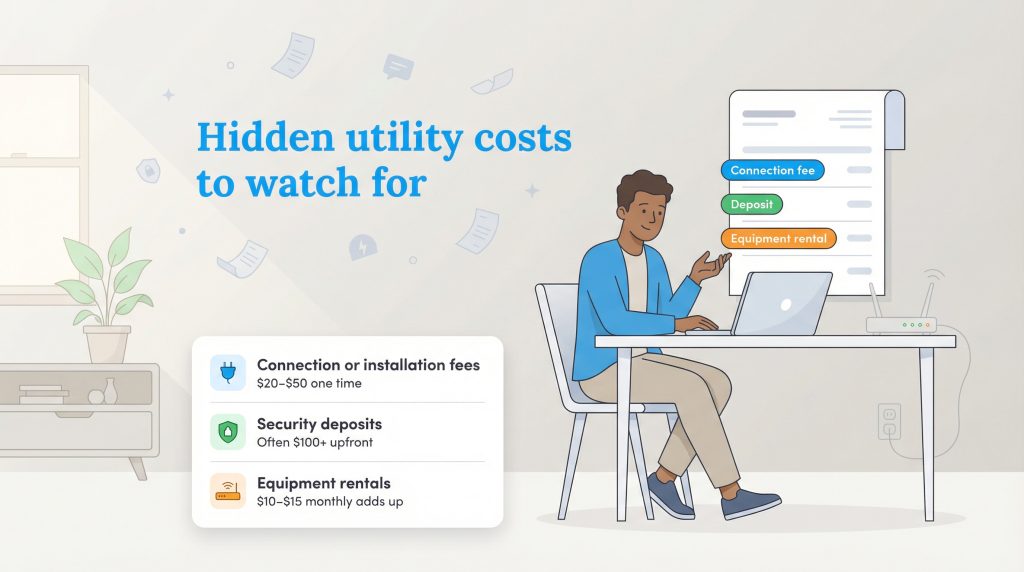
When budgeting, keep an eye out for one-time fees that can add up quickly. Most utility companies charge a connection or installation fee on your first bill. This can range from $20 to over $50 per service.
Security deposits are another common surprise. Apartment utility deposit requirements are usually based on your credit history. If you have no credit or a low score, you might have to pay $100 or more upfront. You can sometimes get this waived by providing a “letter of credit” from your previous utility company showing 12 months of on-time payments.
Finally, watch out for equipment rental fees. Internet providers often charge $10 to $15 a month to rent a modem and router. Buying your own compatible energy-saving equipment upfront can save you hundreds of dollars over the course of a lease.
Enjoying Your New Powered-Up Home
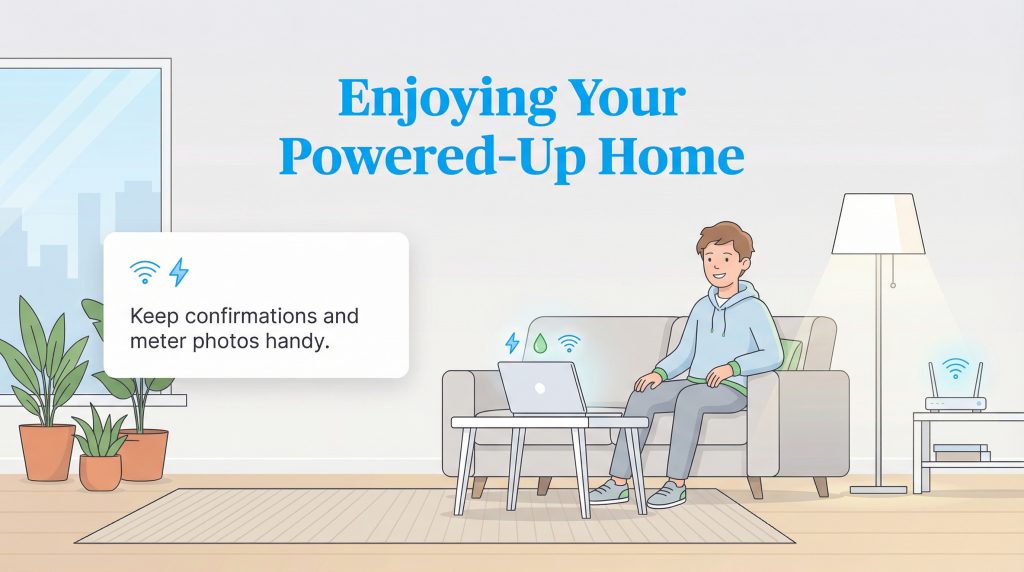
Setting up utilities is a rite of passage for every renter. While it involves a few phone calls and some paperwork, handling it early guarantees a smooth transition. Once the lights are on and the Wi-Fi is connected, you can relax and make your new apartment truly feel like home. Keep digital copies of your confirmation numbers and those initial meter photos, they are your best defense against future billing errors.
FAQs About Renting and Utilities
How long does it take to set up utilities in an apartment?
Can I choose my own internet provider in an apartment?
Do I need a credit check to set up utilities?
What happens if I forget to set up electricity before moving in?
Is water usually included in the rent?
Can I change electricity providers in the middle of a lease?
About the Author

LaLeesha has a Masters degree in English and enjoys writing whenever she has the chance. She is passionate about gardening, reducing her carbon footprint, and protecting the environment.