

Choosing the Right Electricity Plan for Your Apartment Requires Understanding Your Usage and Matching Your Contract to Your Lease
Key Takeaways
- Most “bill credit” plans are designed for houses, so renters should look for plans with low rates at the 500 kWh usage level to avoid unexpected fees.
- Always match your electricity contract length to your lease term or choose a plan with a portable transfer option to avoid early termination penalties.
- If you have a limited credit history, consider prepaid or no-deposit electricity plans to get connected without paying a large upfront cost.
Moving into a new apartment is stressful enough without overpaying for power, which is why finding the best energy plans for renters is essential for keeping your monthly expenses low. Renters have entirely different needs than traditional homeowners, primarily due to much lower overall usage and shorter, stricter lease terms. Choosing the wrong contract can lock you into hidden fees or usage traps that cost hundreds of dollars over the year, but securing a cheap, flexible electricity rate is simple when you know exactly what to look for.
Why Renters Need Unique Electricity Plans
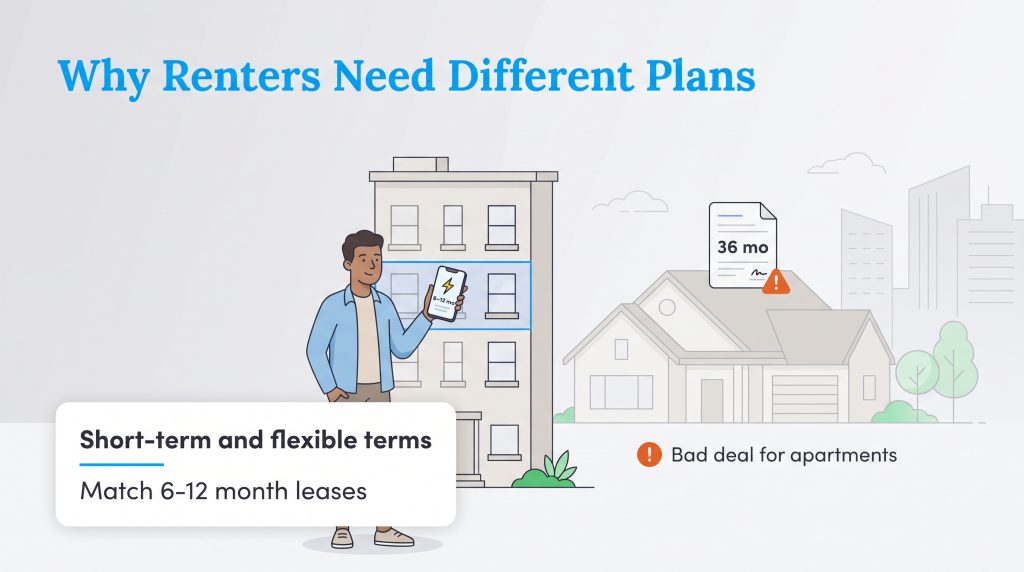
You might assume that electricity pricing is universal, but the utility plan that works perfectly for a large four-bedroom house will often be a terrible deal for a one-bedroom apartment. Homeowners typically require high consumption plans that offer bulk discounts for massive amounts of power. Because your apartment footprint is significantly smaller, relying on those same pricing structures usually backfires and leads to artificially inflated bills.
Renters also face lifestyle factors that require far more flexibility. Renters often sign short-term leases, making it impractical to lock into a rigid 36-month contract. You need the freedom to pack up and move without paying exorbitant exit penalties. Furthermore, living arrangements can change rapidly when you rent. Whether you are splitting bills in shared housing or adapting to a new roommate situation, you need a straightforward electricity contract that aligns perfectly with a 6-month or 12-month timeline. You can always compare electricity plans in your area to see what flexible options exist for your specific living arrangement.
Average Apartment Energy Usage Explained
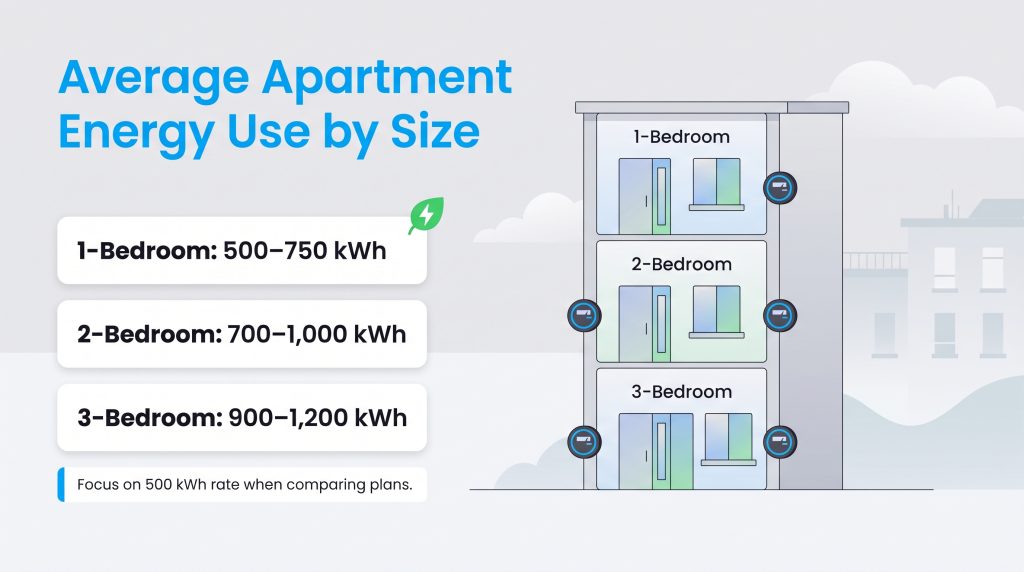
To find the best electricity plans for apartments, you first need to establish your baseline consumption. Providers structure their pricing based on how much power you use in a single month, and renters typically fall into the lowest usage brackets. Here is a quick breakdown of average apartment energy usage based on unit size:
- 1-Bedroom Apartment: Averages 500 to 750 kWh per month
- 2-Bedroom Apartment: Averages 700 to 1,000 kWh per month
- 3-Bedroom Apartment: Averages 900 to 1,200 kWh per month
When you are shopping for a new contract, you must prioritize the 500 kWh rate column on a provider’s fact sheet. Focusing on this specific tier ensures you are getting an accurate price quote for your smaller living space rather than an inflated estimate based on a large home.
How to Spot Low Usage Fees and Bill Credit Traps
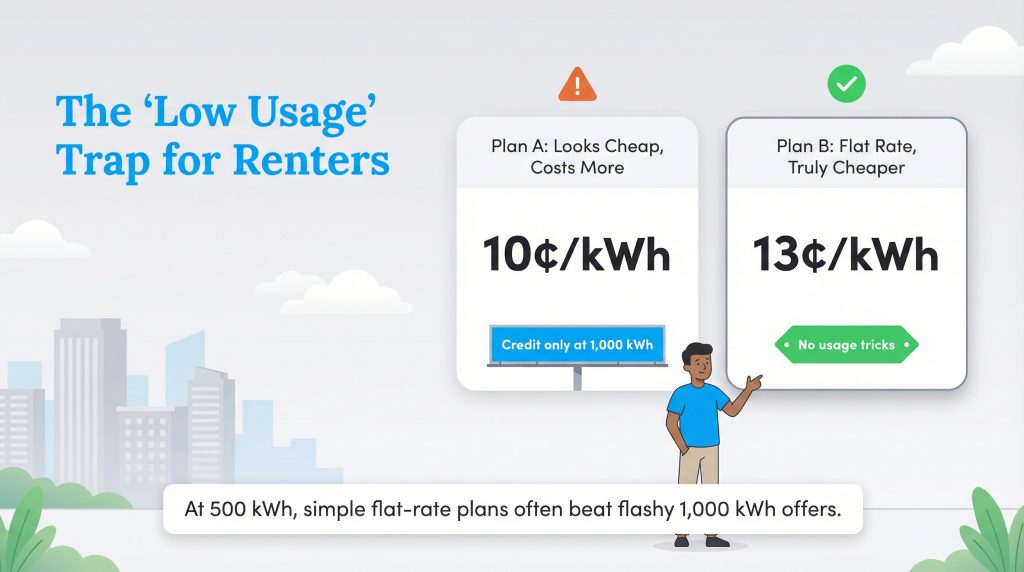
The stark difference in energy consumption creates what is known as the “low usage trap.” Many energy providers advertise extremely low teaser rates, like 10 cents per kWh, to grab your attention. However, if you read the fine print on these low usage energy plans, you will see that the cheap rate relies on a bill credit that only kicks in after you hit a specific minimum threshold.
These bill credit plans often require a minimum usage threshold of 1,000 kWh or even 2,000 kWh that renters in small apartments will simply never hit. Since an efficient apartment rarely reaches that 1,000 kWh mark, you miss the credit entirely, and your effective rate skyrockets.
To secure cheap electricity for apartments, you must ignore marketing gimmicks and look strictly at the price for 500 kWh. Here is a simplified example of how two different plans compare if you use exactly 500 kWh in a month:
| Plan Type | Advertised Rate (at 1000 kWh) | Real Cost at 500 kWh |
| Plan A (Bill Credit Plan) | 10¢ / kWh | 18¢ / kWh (Credit missed) |
| Plan B (Flat Rate Plan) | 13¢ / kWh | 13¢ / kWh (Stable rate) |
Even though Plan A looks cheaper in the advertisement, Plan B is the better financial choice. A flat-rate plan provides stable pricing and never penalizes you for conserving energy.
Fixed-Rate Versus Month-to-Month Energy Plans
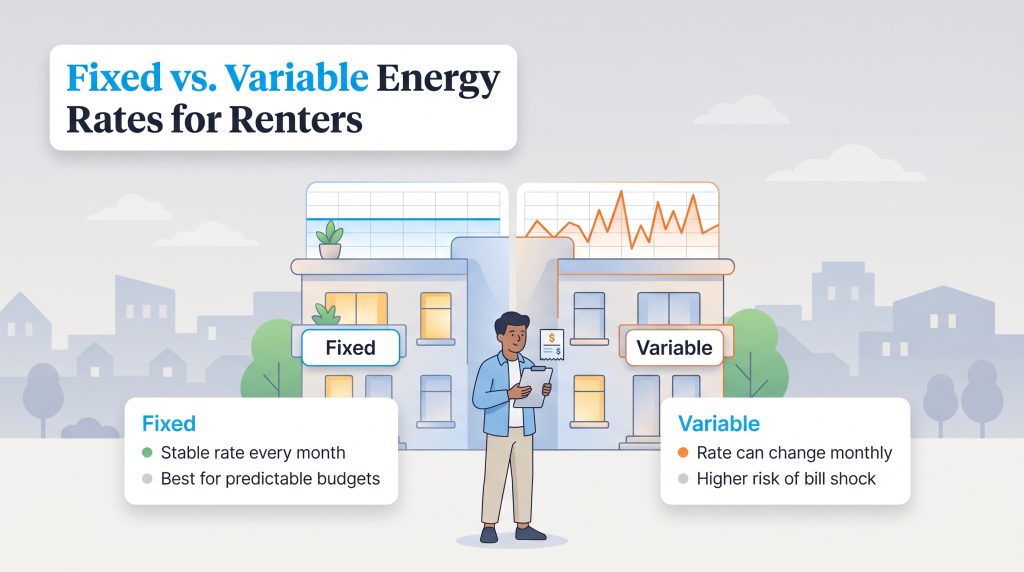
When navigating the market, deciding between fixed vs. variable electricity rates is one of the most important choices you will make. Understanding the mechanics of each plan type will protect your monthly budget from unexpected surges.
- Fixed-Rate Plans: You lock in a specific price per kWh for the entire duration of your contract, offering protection against seasonal price spikes. Fixed-rate apartment electricity is ideal for standard 12-month leases.
- Month-to-Month Energy Plans (Variable): These plans usually require no long-term commitment, letting you leave at any time without a penalty. However, the provider can legally change your rate every single month based on wholesale market conditions, which can lead to severe bill shock.
Best Short-Term Electricity Contracts
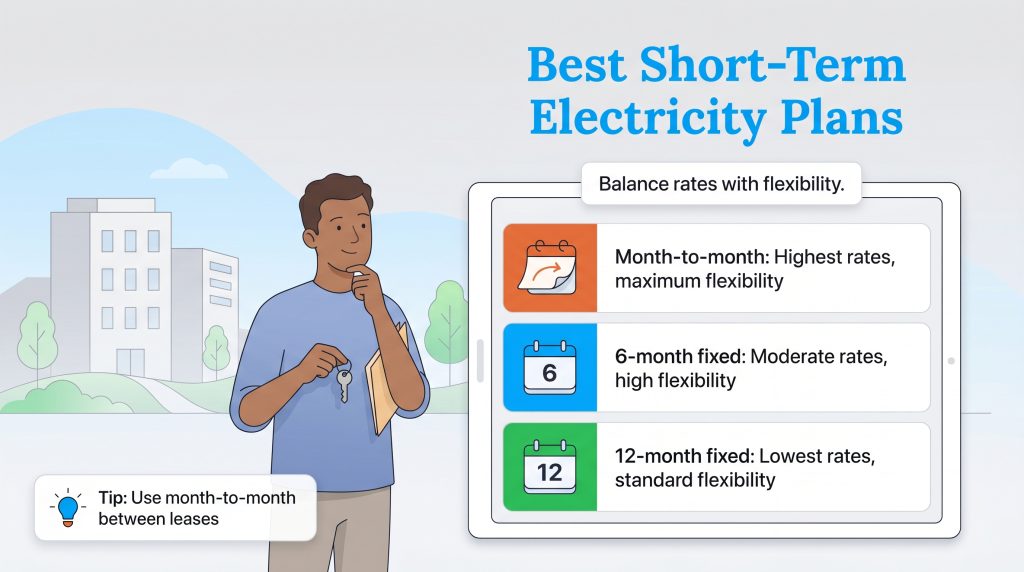
Standard homeowner energy contracts often stretch for 24 or 36 months, which rarely aligns with a traditional apartment agreement. Thankfully, renters have access to flexible, short-term electricity plans tailored to shorter living arrangements.
To avoid penalties, you must match your fixed-rate contract term exactly to your lease length. If you sign a 12-month lease, only shop for 12-month fixed plans. If you are simply filling a gap between moves or staying in a short-term sublet, month-to-month options prevent you from getting trapped in restrictive terms, even if the base rate is slightly higher.
Beware of Early Termination Fees
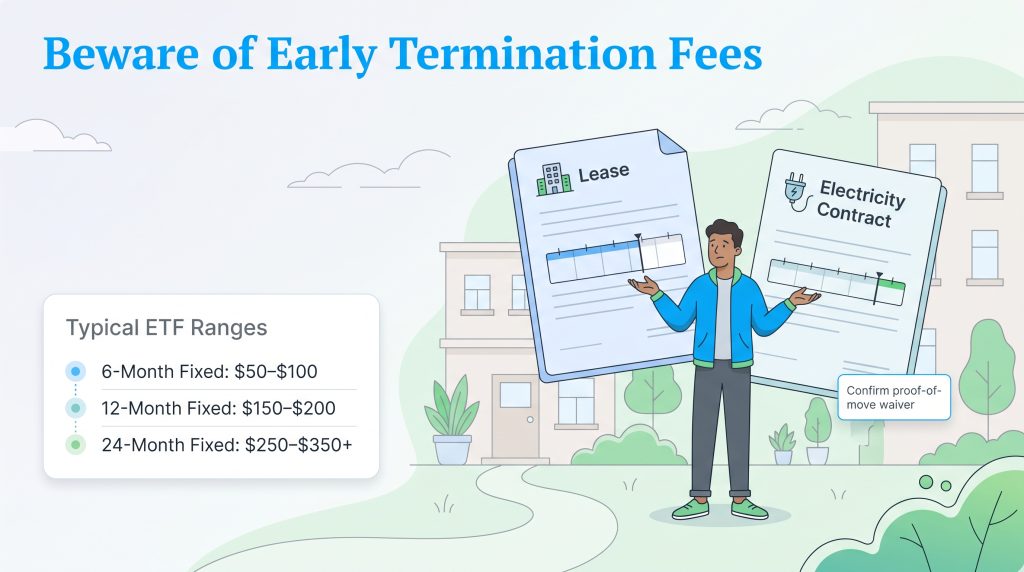
Signing an electricity contract that outlasts your apartment lease is a costly mistake. If you move out before your term ends, providers will often slap you with early termination fees energy penalties. These ETFs instantly wipe out any seasonal savings you thought you secured by locking in a low rate.
Here is a look at standard ETF ranges based on contract length:
| Contract Length | Average ETF Range |
| 6-Month Fixed | $50 to $100 |
| 12-Month Fixed | $150 to $200 |
| 24-Month Fixed | $250 to $350+ |
If you need to break your contract, there is often a legitimate way to get an ETF waived. Most reputable providers will cancel the fee if you provide official documentation — such as a new lease or a forwarded utility bill — proving you are moving to an address outside their service zone. Always confirm this “proof of move” waiver exists in the fine print before signing.
Shopping in Deregulated Energy Markets
If you live in an area where utility monopolies have been broken up, you have the power to choose your electricity provider. Navigating deregulated energy markets for renters gives you the distinct advantage of shopping around for the lowest possible rate, rather than being forced into whatever price the local utility dictates. In a deregulated market, the local utility company still maintains the physical power lines and responds to outages, but you get to select the retail supplier that generates your actual bill.
Major states that offer robust energy choice programs include Texas, Pennsylvania, Ohio, Maryland, and New Jersey. To safely explore your options, you should utilize official, state-sponsored comparison websites rather than relying on aggressive door-to-door sales tactics.
For instance, renters in Texas can use official platforms to compare state electricity plans, while those in Pennsylvania can verify real-time utility offers. Using these official zip code tools guarantees that you are viewing legitimate plans without hidden markup fees from third-party brokers.
How to Compare Electricity Rates for Your Apartment
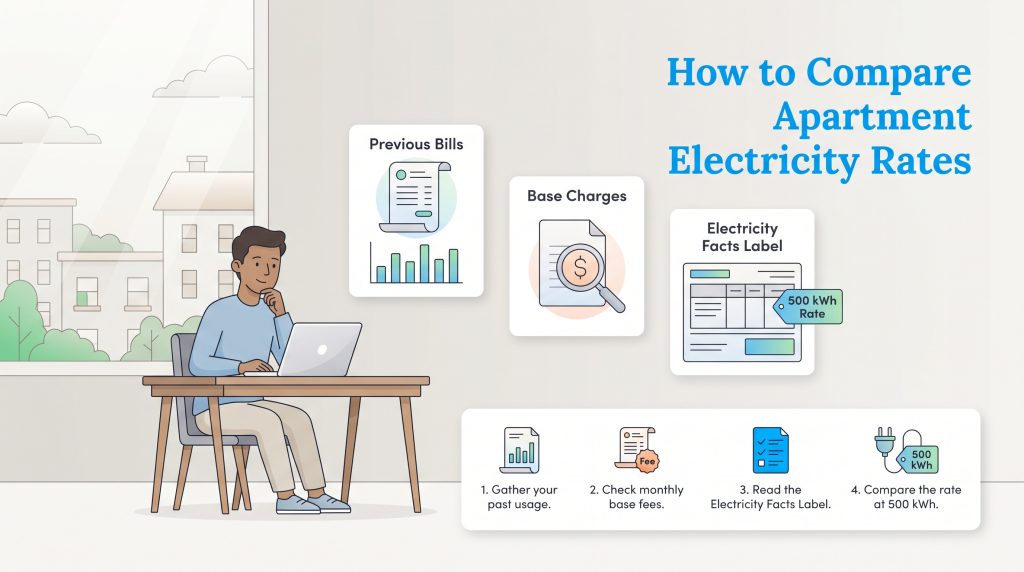
Finding the most affordable power requires a bit of straightforward research. Follow this simple framework to accurately compare electricity rates and secure a contract that fits your specific rental footprint.
- Gather Previous Bills: Look at your past utility statements to determine your exact average monthly usage. If you are moving into a brand-new unit, ask the landlord for historical averages.
- Check for Hidden Base Charges: Many plans tack on a flat monthly “base fee” ranging from $5 to $10 just for having an active account. These base charges heavily inflate bills for low-usage renters.
- Read the Electricity Facts Label (EFL): Never buy an energy plan based solely on the marketing headline. Open the Electricity Facts Label (EFL) document to see exactly how the pricing tiers are structured.
- Verify the Rate at 500 kWh: Ignore the bold prices advertised for 1,000 or 2,000 kWh. Verify exactly what the plan costs at the 500 kWh threshold to ensure you are getting a genuinely cheap rate for an apartment.
No Deposit Electricity for Renters
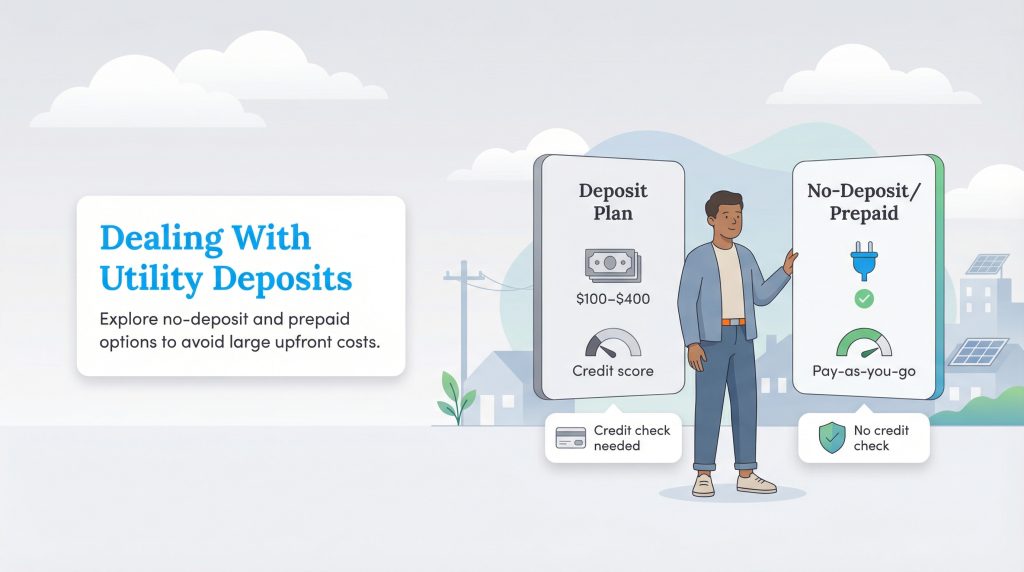
Setting up utilities can sometimes be a hurdle if you do not have an established credit history or if your credit score is lower than what providers prefer. Many standard electricity companies run a hard credit check before turning on your service, and they may ask for a security deposit that can range from $100 to $400. This large upfront cost is incredibly frustrating when you are already paying a deposit for the apartment itself.
Fortunately, no deposit electricity for renters is widely available through specific providers offering prepaid plans and soft-credit checks. Prepaid electricity works similarly to a pay-as-you-go mobile phone. You load money into your account upfront, and the cost of your electricity is deducted daily, allowing you to bypass the credit check entirely.
Here is a brief step-by-step guide to securing cheap electricity rates for apartments without paying massive upfront fees:
- Search for Prepaid Options: Filter your energy comparison tool specifically for prepaid or pay-as-you-go plans.
- Verify Soft-Credit Checks: Look for providers that explicitly advertise “soft-credit checks,” which will not impact your credit score or require a massive deposit.
- Check for Deposit Waivers: Many providers waive deposits for seniors (typically 65+), victims of family violence, or those who provide a “letter of credit” from a previous utility.
Be sure to check your state’s regulations to confirm what is available in your area. For more information on assistance programs, you can visit USA.gov.
Eco-Friendly Options for Apartment Dwellers
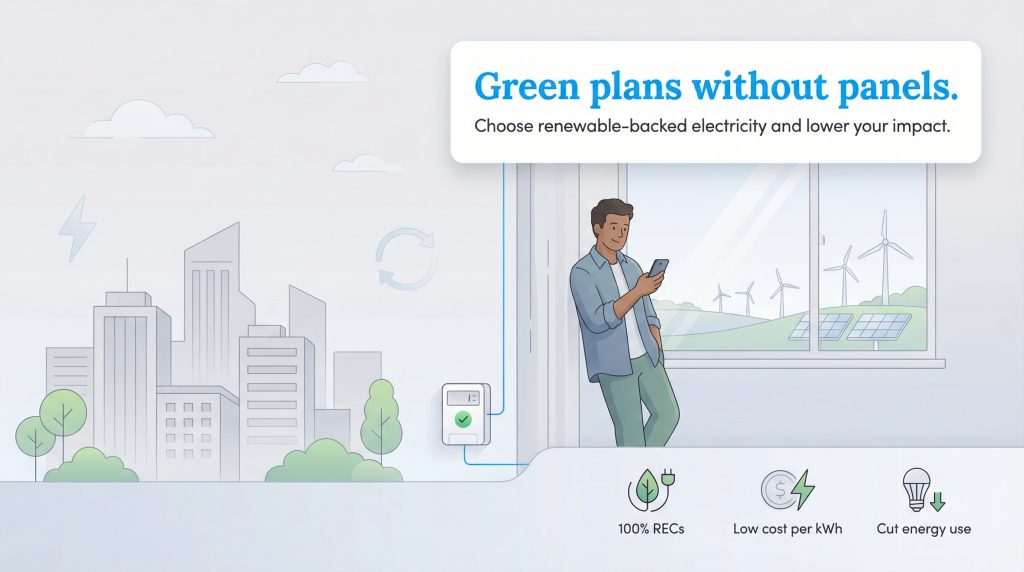
Just because you rent an apartment doesn’t mean you can’t support the transition to green energy. You might not have the authority to install solar panels on the roof, but you can still choose an electricity plan that sources power entirely from green generation, and you can learn more about sustainable energy options. Many modern utility providers offer plans backed by 100% Renewable Energy Credits (RECs). This means that for every unit of electricity you use, the company purchases an equivalent amount of renewable power from wind or solar farms to feed back into the local grid.
In highly competitive energy markets, choosing an eco-conscious alternative often costs only a fraction of a cent more per kWh — and sometimes they are priced completely on par with traditional fossil-fuel plans. Supporting clean energy is a practical, environmentally mindful choice to reduce your personal carbon footprint without making any physical modifications to your rental unit. You can pair these green plans with simple ways to save on your electric bill, such as swapping out old lightbulbs for LEDs, to further amplify your impact.
How to Transfer Utilities When You Move
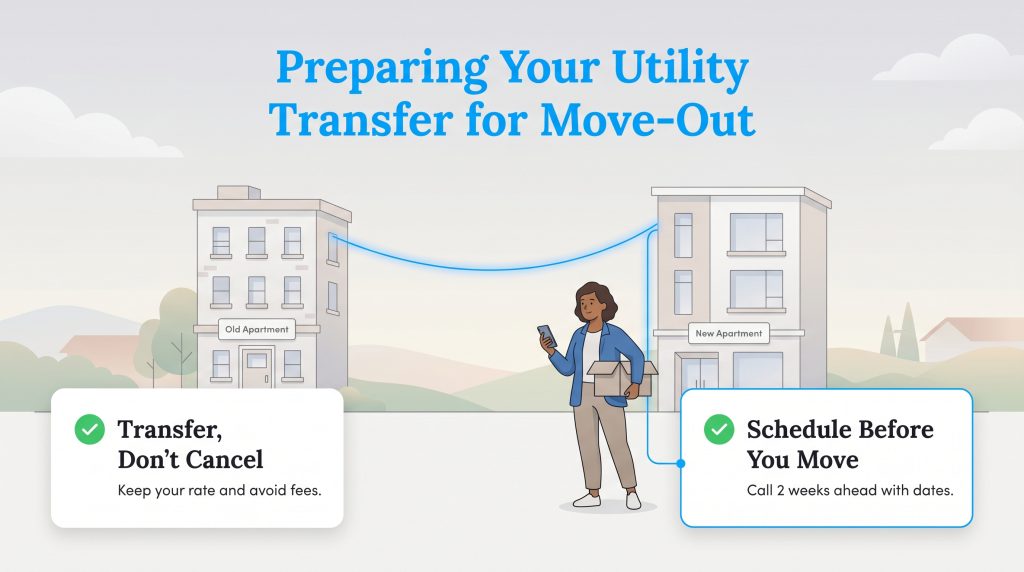
When your lease ends and it is time to move, you don’t necessarily have to cancel your electricity service and pay a penalty. If you are relocating to another apartment within the same deregulated area, transferring utility service allows you to take your current contract with you. This simple process helps you maintain your low locked-in rate without breaking your agreement or incurring new setup fees.
Here is a step-by-step guide on how to successfully transfer your service:
- Notify Your Provider Early: Contact your electricity provider at least two weeks before your official moving date to initiate the request.
- Provide New Address Details: Give them your new address and the exact date you need the service activated.
- Schedule the Disconnection: Arrange for a disconnection at your old apartment for the day after your lease officially ends to avoid paying for the next tenant’s power.
- Confirm Transfer Fees: Ask if there are any standard connection fees for the new address, though these are usually much cheaper than breaking a contract.
Taking these proactive steps ensures a seamless transition of power, keeping your lights on and your budget entirely intact.
Securing the Best Energy Plan for Your Apartment
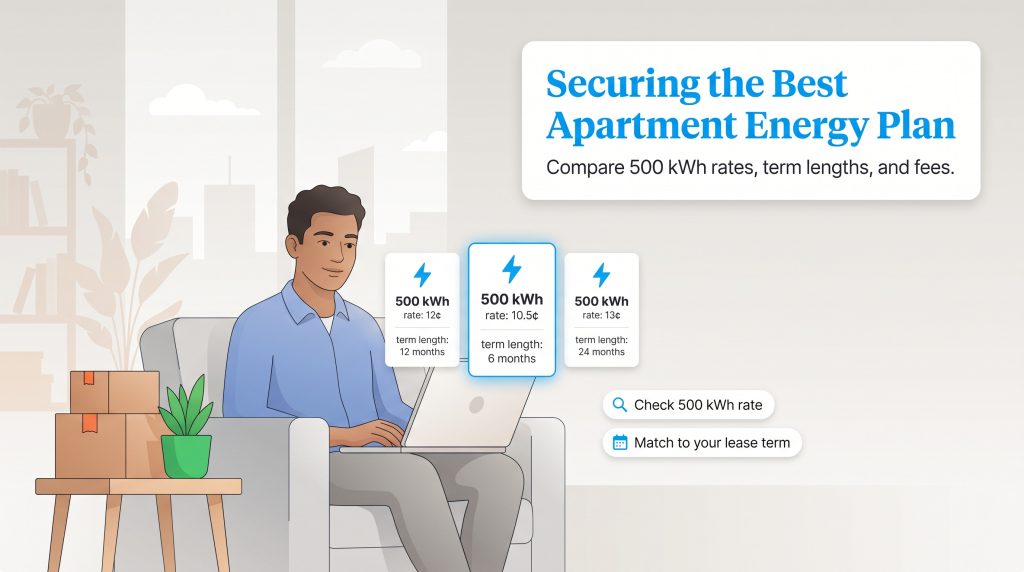
Finding the right energy plan for your apartment ultimately comes down to acknowledging your specific usage and prioritizing flexibility. By matching your lease length to your contract, verifying the exact rate at the 500 kWh tier, and actively comparing multiple providers, you can bypass the costly gimmicks hidden within standard homeowner plans. Taking a few extra minutes to read the fine print keeps more cash in your pocket every single month, leaving you with extra funds to decorate and enjoy your new space.
Frequently Asked Questions About Energy Plans for Renters
How much electricity does an average apartment use?
What happens to my energy plan if I break my lease early?
Are fixed-rate or month-to-month plans better for short-term rentals?
Can I avoid paying an early termination fee if I move out of state?
Can I transfer my energy plan if I move to a new apartment?
Can I get electricity if I have bad credit?
Is a fixed or variable rate better for renters?
How do I find the best electricity plans for apartments near me?
About the Author

Claudio is a sustainability-focused writer with a background in Anthropology and Psychology from NC State University. He has spent over 15 years working in writing, interpretation, and translation, driven by a deep interest in how human culture shapes the environment. Today, he shares his curiosity with readers by writing about sustainable living solutions and the connection between everyday choices and environmental impact.

David has been an integral part of some of the biggest utility sites on the internet, including InMyArea.com, HighSpeedInternet.com, BroadbandNow.com, and U.S. News. He brings over 15 years of experience writing about, compiling and analyzing utility data.