
Navigating the deregulated energy market and setting up essential services for your new Texas home.
Key Takeaways
- Texas has a unique deregulated electricity market, meaning most residents must choose their own Retail Electric Provider (REP) rather than being assigned one.
- Water and natural gas services remain regulated and are typically managed by your local municipality or a designated regional utility company.
- Hidden fees like TDU delivery charges can surprise newcomers, so learning how to read an Electricity Facts Label (EFL) is critical before signing a contract.
Welcome to the Lone Star State! Moving here is an exciting adventure, but between the packing tape and the moving trucks, the last thing you want to worry about is whether the lights will turn on when you flip the switch. We know that the unique utility system in Texas can feel a bit like learning a new language, especially if you are coming from a state where one traditional company handles everything. Don’t worry, getting connected is easier than it looks. This guide will walk you through navigating the deregulated electricity market, setting up water and gas, and finding the right services to make your new house feel like home from day one.
How the Texas Electricity Market Works
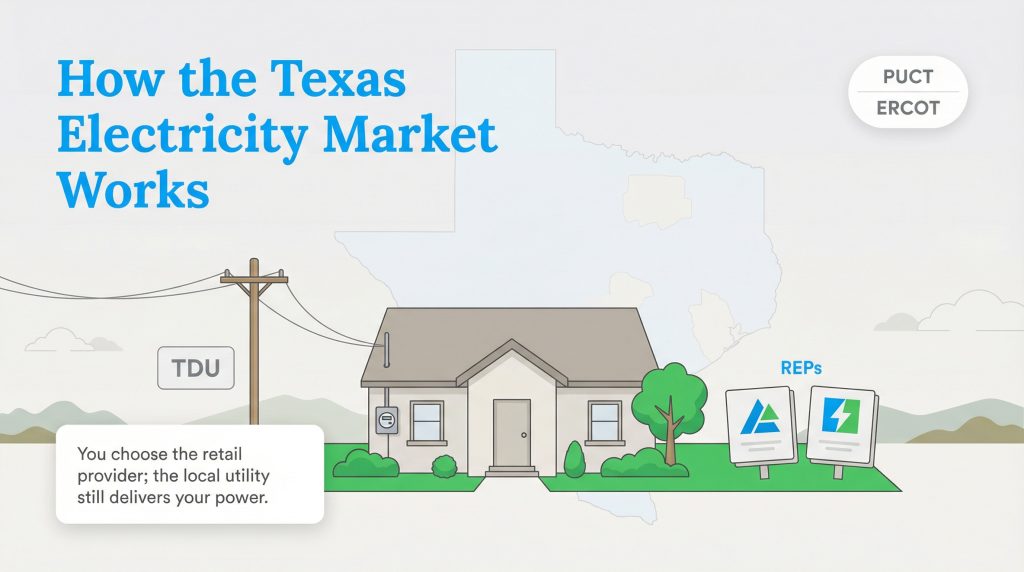
If you are new to Texas, the term “deregulation” might sound like confusing industry jargon, but it is actually a system designed to give you more control. In about 85% of the state, including major metro areas like Houston and Dallas, the electricity market is deregulated. This means you have the power to choose your Retail Electric Provider (REP). The company that owns the wires and reads the meters (the Transmission and Distribution Utility, or TDU) stays the same based on where you live, but you get to pick the company that sells you the electricity and sends you the bill. The market is overseen by the Public Utility Commission of Texas (PUCT) and the grid is managed by the Electric Reliability Council of Texas (ERCOT).
However, this rule doesn’t apply everywhere. Some areas are still regulated, meaning a city-owned utility or a cooperative provides your power, and you don’t have a choice of providers. It is important to know which camp your new home falls into so you don’t waste time shopping for a plan you can’t use. If you are moving from a regulated Texas city like Austin or San Antonio into a deregulated area such as Dallas or Houston, this might be your first time choosing a provider. To learn more about how these markets function, you can read our guide on understanding electricity.
Steps to Choose the Best Electricity Provider
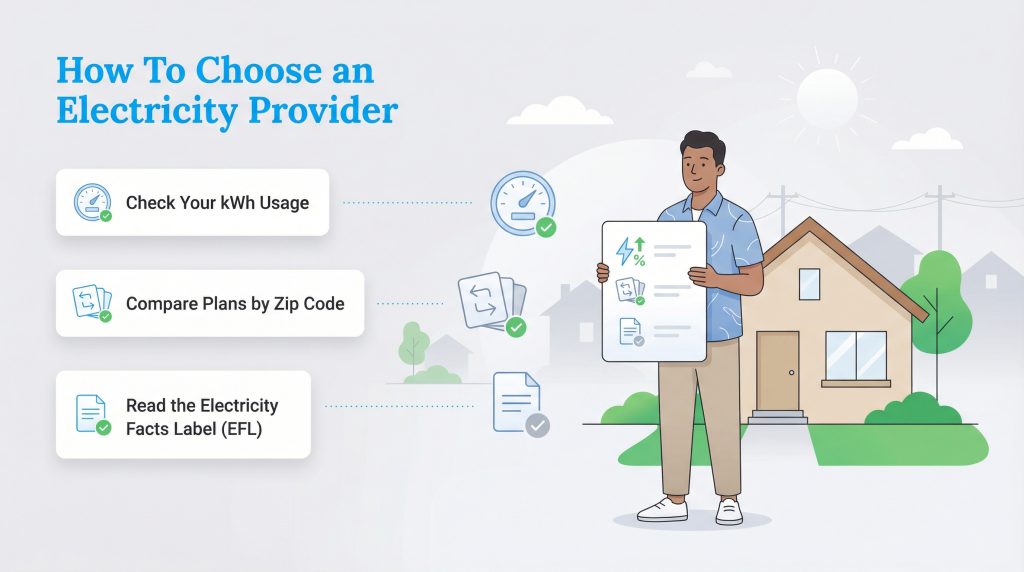
Shopping for electricity in Texas is a lot like shopping for a cell phone plan or car insurance. You want to find the best rate for your specific needs. Here is a simple step-by-step process to help you find a reliable provider without overpaying.
1. Check Your Usage
Electricity rates in Texas are often priced in tiers based on how much energy you use: 500 kWh (apartment), 1,000 kWh (small home), or 2,000 kWh (large home). It is vital to know your home’s historical usage if possible. A plan might look cheap at 2,000 kWh but be expensive if you only use 800 kWh a month. If you don’t have past bills, you can ask the landlord, prior owner, or property manager for typical monthly kWh use.
2. Compare Plans
Once you know your approximate usage, you can start comparing offers. The official Public Utility Commission of Texas (PUCT) website, PowerToChoose.org, allows you to filter plans by zip code. While this is a great resource, be cautious of “gimmick” plans that offer free nights or weekends, as they often come with much higher daytime rates. For example, a plan that looks cheap at 2,000 kWh but spikes at 500–1,000 kWh can cost more if you are in an apartment or energy-efficient home.
3. Read the EFL
The Electricity Facts Label (EFL) is the most important document you will read. Think of it as the “nutrition label” for your energy plan. It breaks down the exact price per kilowatt-hour at different usage levels and lists the contract terms. Never sign up for a plan without reading the EFL first. Look specifically for minimum usage fees, bill credits that disappear below a threshold, early termination fees, and whether TDU charges are clearly included in the advertised rate.
See our list of Best Electric Providers in Texas
Fixed-Rate vs. Variable-Rate Plans: Which Is Right for You?
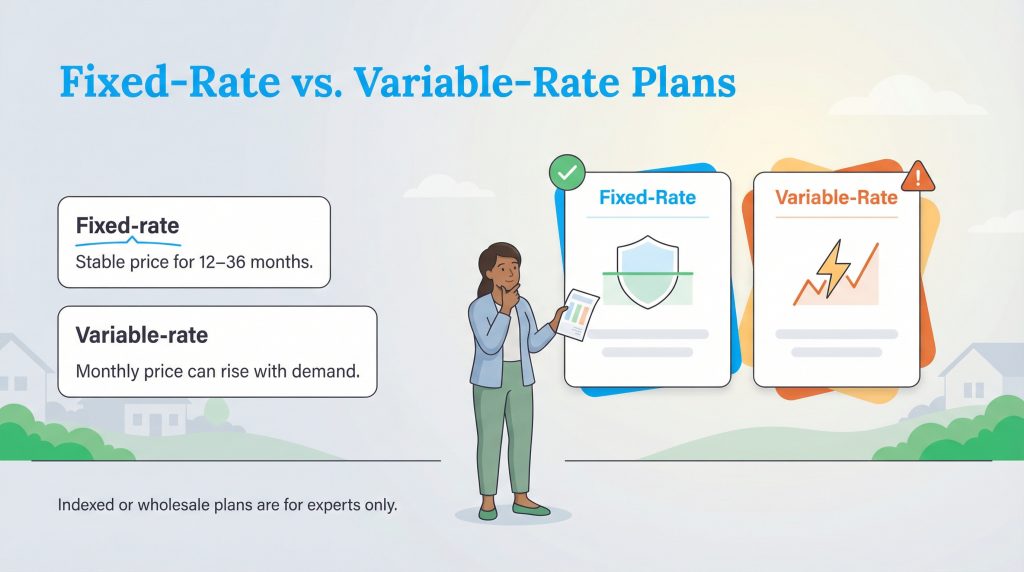
When you browse electricity plans, you will generally see two main types: fixed-rate and variable-rate. A fixed-rate plan locks in your price per kilowatt-hour for the length of your contract, usually ranging from 12 to 36 months. This offers stability and protection against price spikes. We highly recommend fixed-rate plans for new residents because they make budgeting much easier. If you are unsure how long you will stay, a 12-month fixed plan can balance stability with flexibility.
A variable-rate plan has no long-term contract, but the rate can change every month based on market conditions. While this offers flexibility, it can be risky. During the hot Texas summers when demand is high, variable rates can skyrocket, leading to a surprisingly high bill. You might also see “indexed” or wholesale plans; these are extremely volatile and are best avoided unless you are an energy expert who watches the market daily.
The Hidden Cost: Understanding TDU Delivery Charges
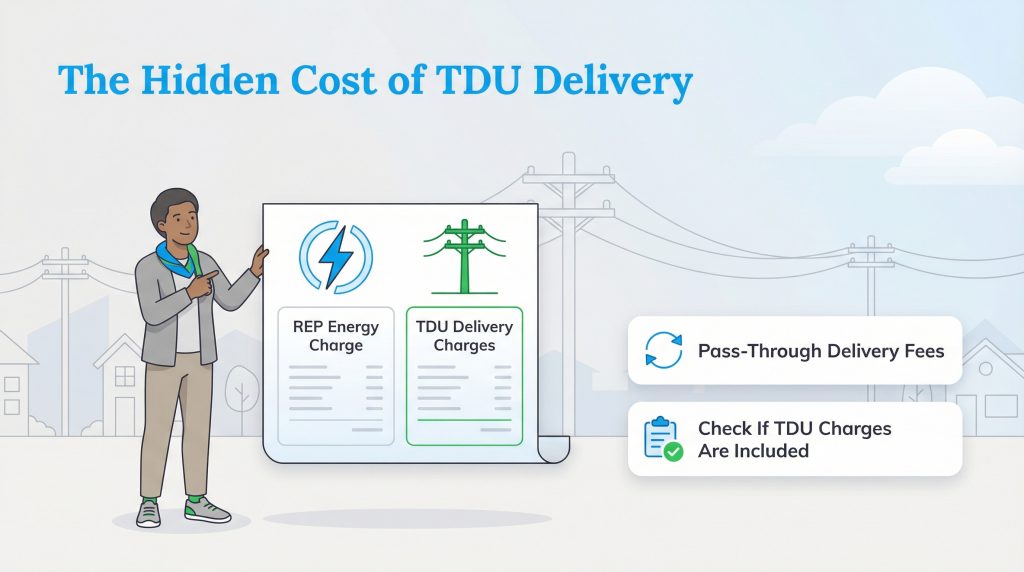
One of the most common surprises for people moving to Texas is the structure of their electric bill. The rate you see advertised by a Retail Electric Provider is often just the energy charge. On top of that, you must pay delivery charges to the Transmission and Distribution Utility (TDU) that serves your area. These companies maintain the poles and wires.
Common TDUs in Texas include Oncor, CenterPoint Energy, AEP Texas, and Texas-New Mexico Power (TNMP). These delivery charges are “pass-through” costs, meaning your REP collects them from you and pays the TDU. They are usually a combination of a fixed monthly fee and a per-kilowatt-hour charge. When comparing plans, ensure the advertised rate includes standard TDU charges so you are comparing apples to apples.
Setting Up Water, Natural Gas, and Trash Services
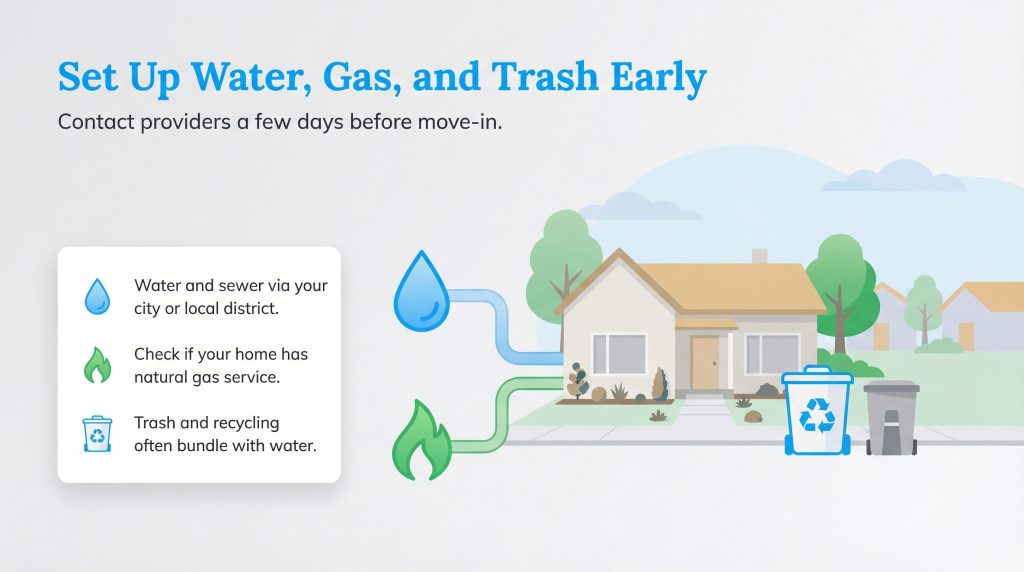
While electricity might require some shopping around, setting up your other utilities is usually much more straightforward. These services remain regulated throughout the state, so you generally have only one provider option based on your address. Keep in mind that water and gas deposits or connection fees may apply. Since setup can take a few business days, it is best not to leave this for the last minute.
Water and Sewer
Water and wastewater services are typically managed by your city’s municipal utility department or a local utility district (MUD). To set this up, visit your city’s official “.gov” website or call their utility services department. You will usually need to provide a lease or deed and identification to start service.
Natural Gas
Not every home in Texas has natural gas connections. If yours does, your provider is likely a large regional company like Atmos Energy, CenterPoint Energy, or Texas Gas Service. You can learn more about what to expect with gas appliances in our natural gas guide.
Trash and Recycling
In most cities, trash and recycling services are bundled with your water bill. If you are moving to a rural area outside city limits, you may need to contract directly with a private waste management company to schedule regular pickups.
Setting Up Texas Utilities as a Renter or Homeowner
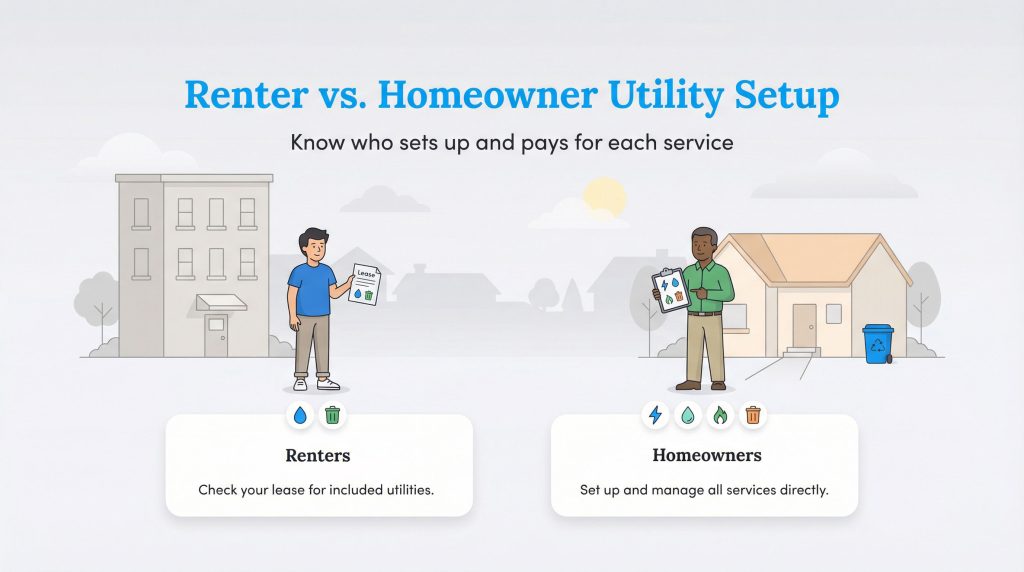
Whether you are renting an apartment or buying a house, your utility responsibilities can differ significantly. Knowing what to expect prevents billing headaches later.
For Renters
If you are renting, check your lease agreement carefully. In many apartment complexes, water, trash, and sometimes even internet are bundled into your monthly rent or billed back to you by the management company. However, you will almost always need to set up your own electricity account in deregulated areas. Be aware that some older properties or specific zones might have a single master electric meter, meaning you pay a portion of the building’s usage rather than choosing your own provider.
For Homeowners
Homeowners are typically responsible for setting up all services directly, including electricity, water, natural gas, and trash collection. When buying a home, it is crucial to check if there are any existing contracts or municipal accounts tied to the property that need to be transferred or closed by the previous owner. You generally have more freedom to choose services, but you also bear the full responsibility for maintenance fees and line items like trash bin rentals.
Timeline for Transferring and Setting Up Utilities When You Move to Texas
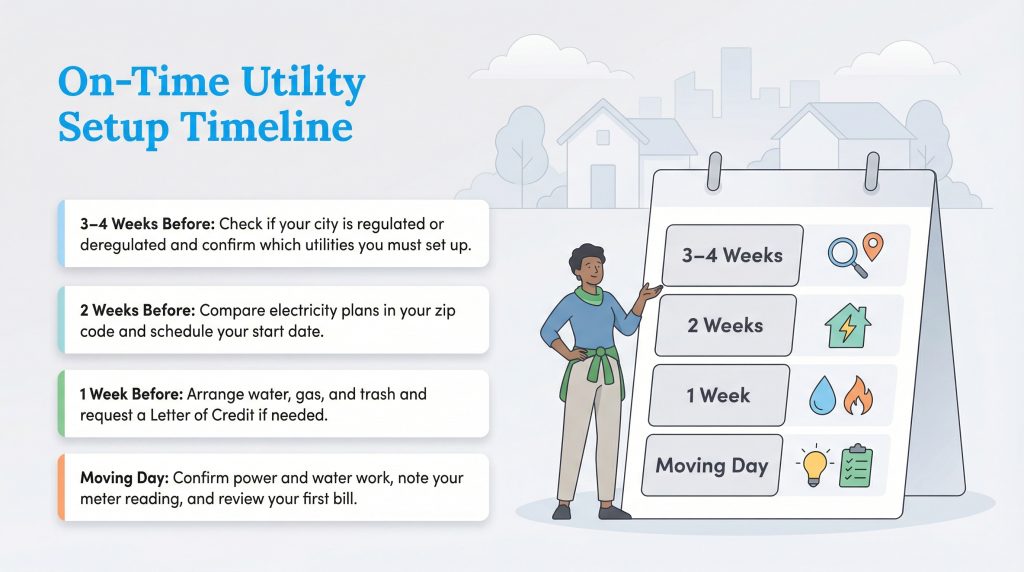
Timing is everything when it comes to a smooth move. Use this checklist to ensure you aren’t left in the dark on your first night in your new home.
- 3–4 Weeks Before: Research whether your new city is deregulated or regulated. Confirm with your landlord or seller which utilities you are responsible for setting up.
- 2 Weeks Before: Begin researching electricity providers in your zip code. Compare rates and read the Electricity Facts Labels for your top choices. Schedule your service start date.
- 1 Week Before: Call your water and gas companies to schedule your service start date. Confirm trash and recycling arrangements. Request a “Letter of Credit” from your current utility provider if you have good payment history.
- Moving Day & First Week: Verify that the lights are working and the water is running. Take a photo of the electricity meter reading (if accessible) for your own records. Confirm your first bill reflects the expected rate and start date.
Going Green: Sustainable Choices for Your Texas Home

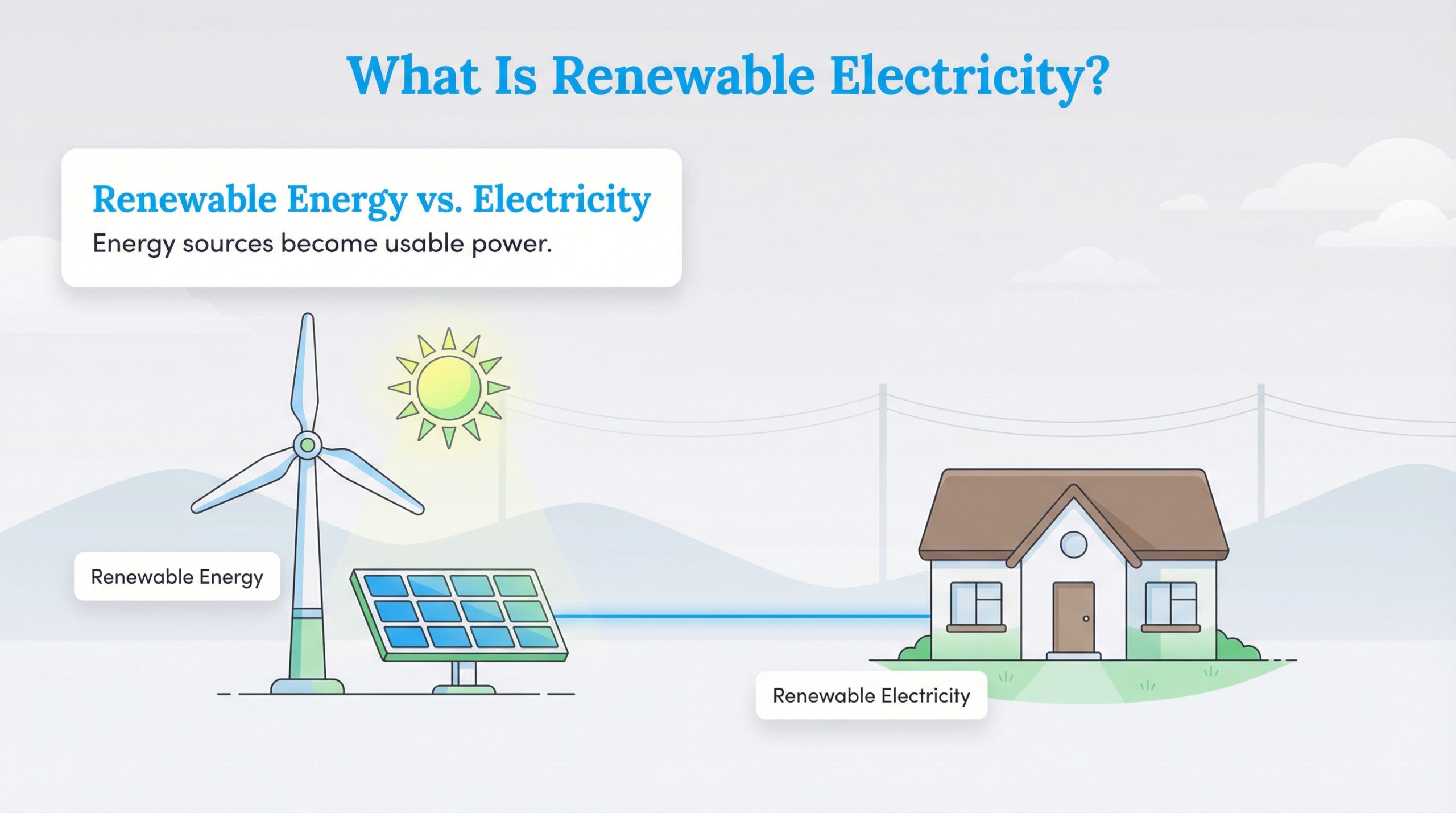
Texas is a leading producer of wind energy in the United States, and solar power is growing rapidly. This makes it incredibly easy to make eco-conscious choices for your home. Many Retail Electric Providers offer plans that are backed by 100% renewable energy. Choosing these plans is an environmentally mindful choice that lowers your carbon footprint and supports renewable generation. Surprisingly, these green plans are often very competitive and sometimes even cheaper than fossil-fuel-heavy plans.
Beyond choosing a green energy plan, consider installing a smart thermostat. In a state where air conditioning can account for a huge portion of your energy usage, a smart thermostat helps you optimize cooling schedules to save money and reduce strain on the grid. You can find more about the benefits of smart thermostats at ENERGY STAR. For more ideas on renewable energy at home, check out our solar energy resources or read about how to save on your electric bill.
Making Yourself at Home in Texas

The “power to choose” system might seem complex at first glance, but with a clear checklist and an understanding of the difference between regulated and deregulated services, you can navigate it with confidence. It offers a great opportunity to find a plan that fits your lifestyle and budget perfectly. By taking a little time to understand your usage and reviewing the details of your contract, you can avoid hidden fees and enjoy the benefits of a competitive market. If you choose a renewable plan and a few smart devices, you will be cutting both your bills and your footprint from day one. Once your lights are on and your water is running, you can focus on the fun part, exploring your new neighborhood and enjoying everything Texas has to offer.
FAQs About Texas Utilities
How much are average utility bills in Texas?
Can I bring my electricity plan with me if I move within Texas?
Do I need a social security number to set up electricity in Texas?
What happens if I forget to choose an electricity provider?
Are there specific requirements for renters versus homeowners?
About the Author

David has been an integral part of some of the biggest utility sites on the internet, including InMyArea.com, HighSpeedInternet.com, BroadbandNow.com, and U.S. News. He brings over 15 years of experience writing about, compiling and analyzing utility data.