

Verizon 5G is usually the better fit where available, while Viasat can reach homes beyond terrestrial networks.
Key Takeaways
- Verizon 5G offers flat monthly pricing without equipment fees, but coverage depends strictly on cell tower proximity.
- Viasat provides service to remote areas, but its plans include a monthly equipment lease and are subject to network deprioritization.
- Checking your exact address for eligibility helps you avoid unexpected installation costs and ensures you secure the right setup for your move.

- 5 Gbps
- Fiber
- Unlimited
- $30.00/mo

- 150 Mbps
- Satellite
- 150-850 GB
- $39.99/mo
*Not all internet providers and speeds available in all areas.
Moving to a place with wide-open spaces shouldn’t mean sacrificing a reliable connection, yet finding out fiber hasn’t reached your new neighborhood is a familiar frustration for many rural homeowners. We know how daunting it feels to stare down limited broadband options, which is why we want to clear the air on two of the most popular alternatives on the market today. By diving deep into the performance metrics, total costs, data policies, and availability requirements of Viasat vs. Verizon Home Internet, our goal is to help you pick the right setup for your household. Whether you’re aiming for lag-free video calls, predictable monthly bills, or understanding how to evaluate equipment power usage, we have the practical insights you need to make a confident decision. We compared published provider plans, Broadband Facts labels, and service terms to bring you these insights, but since we haven’t tested these services at your exact address, availability and performance may differ.
The Short Answer: Verizon 5G Home Internet vs. Viasat
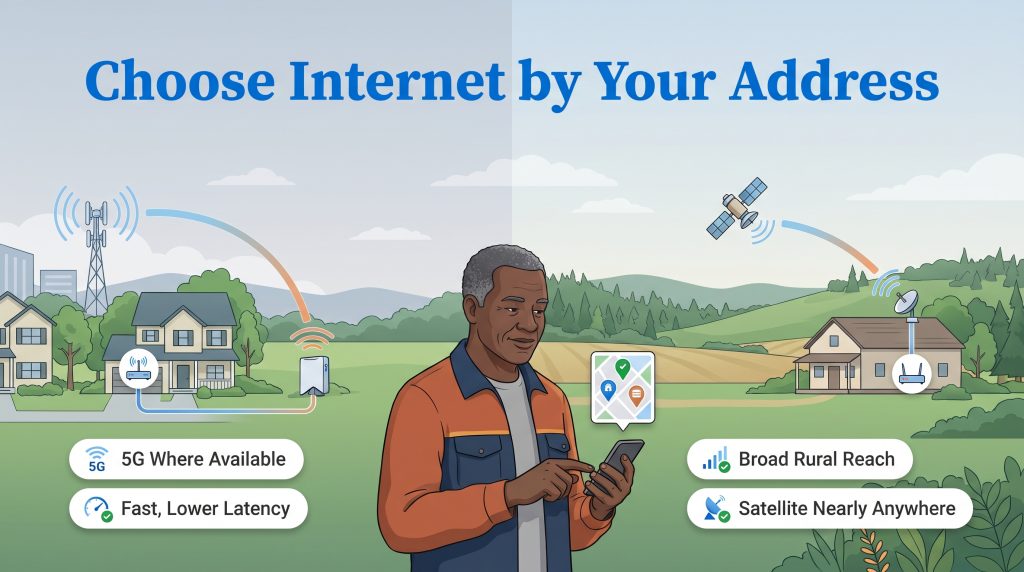
If you just need the bottom line on which service belongs in your new home, the decision largely hinges on your exact address. When 5G cellular is available at your specific location, Verizon is generally the more responsive, affordable, and straightforward option. It operates on modern cellular networks to deliver fast speeds without restrictive data limits. However, cell towers have physical limitations. If you live miles past the edge of town, Viasat acts as a necessary broadband alternative for deep rural areas where cellular signals simply fade away.
Comparing Verizon 5G home internet vs. Viasat side by side reveals distinct differences in how these networks operate. While satellite technology ensures nobody is left completely off the grid, 5G provides a tighter, more urban-like internet experience. Here’s a quick snapshot of how they stack up based on current published broadband labels.
| Feature | Verizon 5G Home Internet | Viasat Unleashed |
|---|---|---|
| Advertised Typical Download Speeds | 85 – 1,000 Mbps (depends on 5G Home or 5G Home Plus plan and location) | 30 – 40 Mbps (up to 150 Mbps maximum) |
| Latency | 30 – 50 ms (Low delay) | 645+ ms (High delay) |
| Data Caps | Unlimited (No hard caps) | Unlimited (deprioritized during congestion if typical usage is exceeded) |
| Base Price | Included equipment, flat monthly rate (discounts for mobile and Auto Pay customers) | Introductory monthly promo rate plus a $15 monthly equipment lease fee |
How Speed and Latency Affect Daily Use
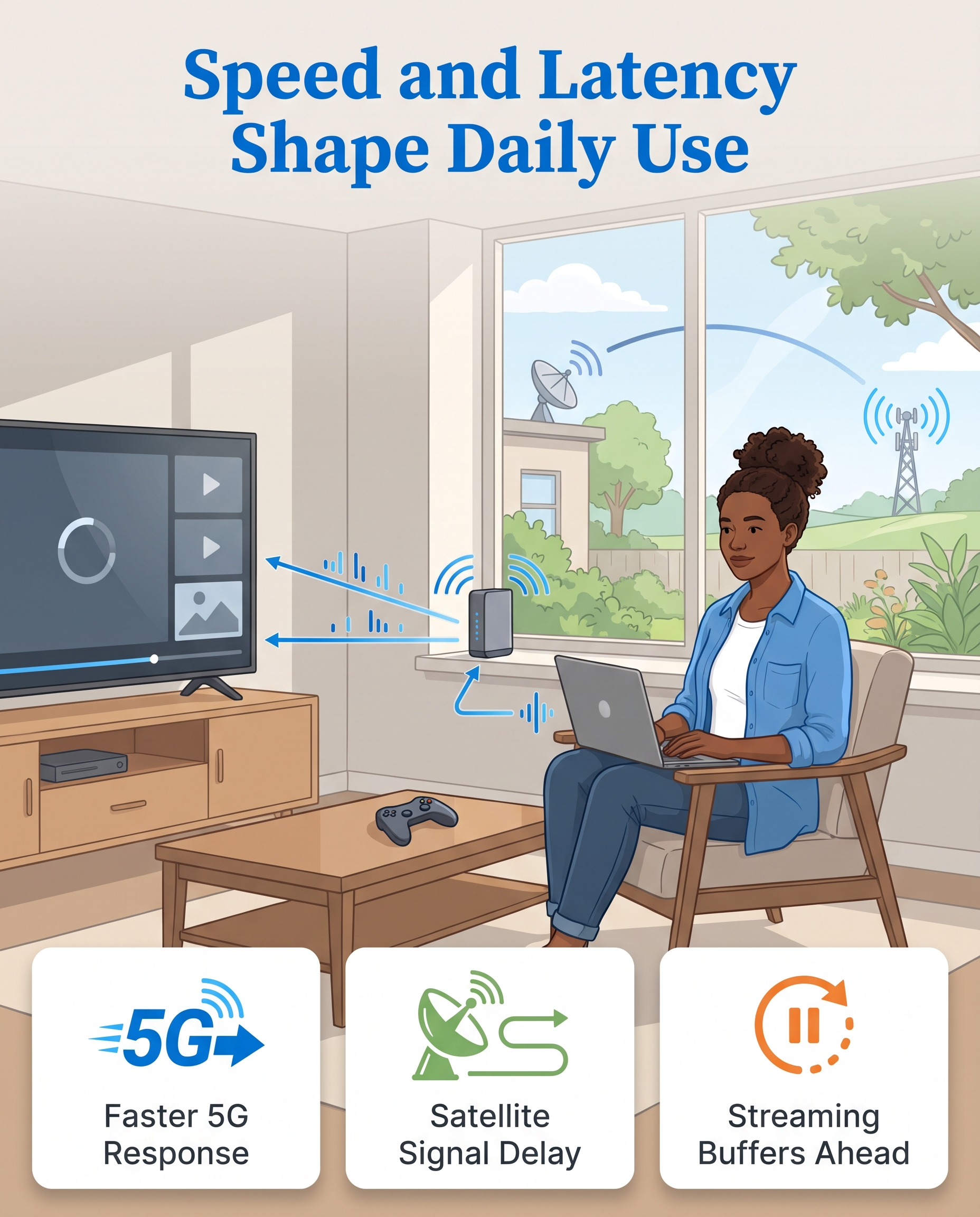
When assessing raw performance, you might naturally wonder whether a terrestrial wireless home internet is better than satellite. The answer involves looking beyond just download speeds and understanding how the data actually travels to your devices. Viasat advertises maximum speeds up to 150 Mbps for its Unleashed plans, but its FCC Broadband Facts label indicates typical download speeds of around 30 to 40 Mbps and uploads around five to six Mbps. That’s adequate for streaming movies or downloading standard files, but multiple users on the network may experience buffering.
Verizon 5G download speeds vary based on your specific plan — such as 5G Home versus 5G Home Plus — and your proximity to a tower, with ranges typically between 85 and 300 Mbps, or even up to 1,000 Mbps in select optimal coverage areas. But the real differentiator is latency. Latency is the split-second delay it takes for data to travel from your device to the server and back. Viasat’s geostationary satellite connection generally has substantially higher latency than terrestrial 5G because signals must travel multiple legs between the customer, a satellite roughly 22,000 miles in space, and ground infrastructure. As a result, Viasat latency typically sits around 645 milliseconds. In contrast, Verizon 5G ping times usually hover between 30 and 50 milliseconds. That delay matters most for competitive gaming and real-time conversations, while video streaming is usually less sensitive once playback has buffered.
Heads Up
Heavy rain or snow can weaken a satellite connection. Verizon 5G can also experience disruptions from weak signals, obstructions, outages, or severe weather, so test the service at your home rather than assuming either option is completely weatherproof.
Comparing Pricing, Equipment, and Total Costs
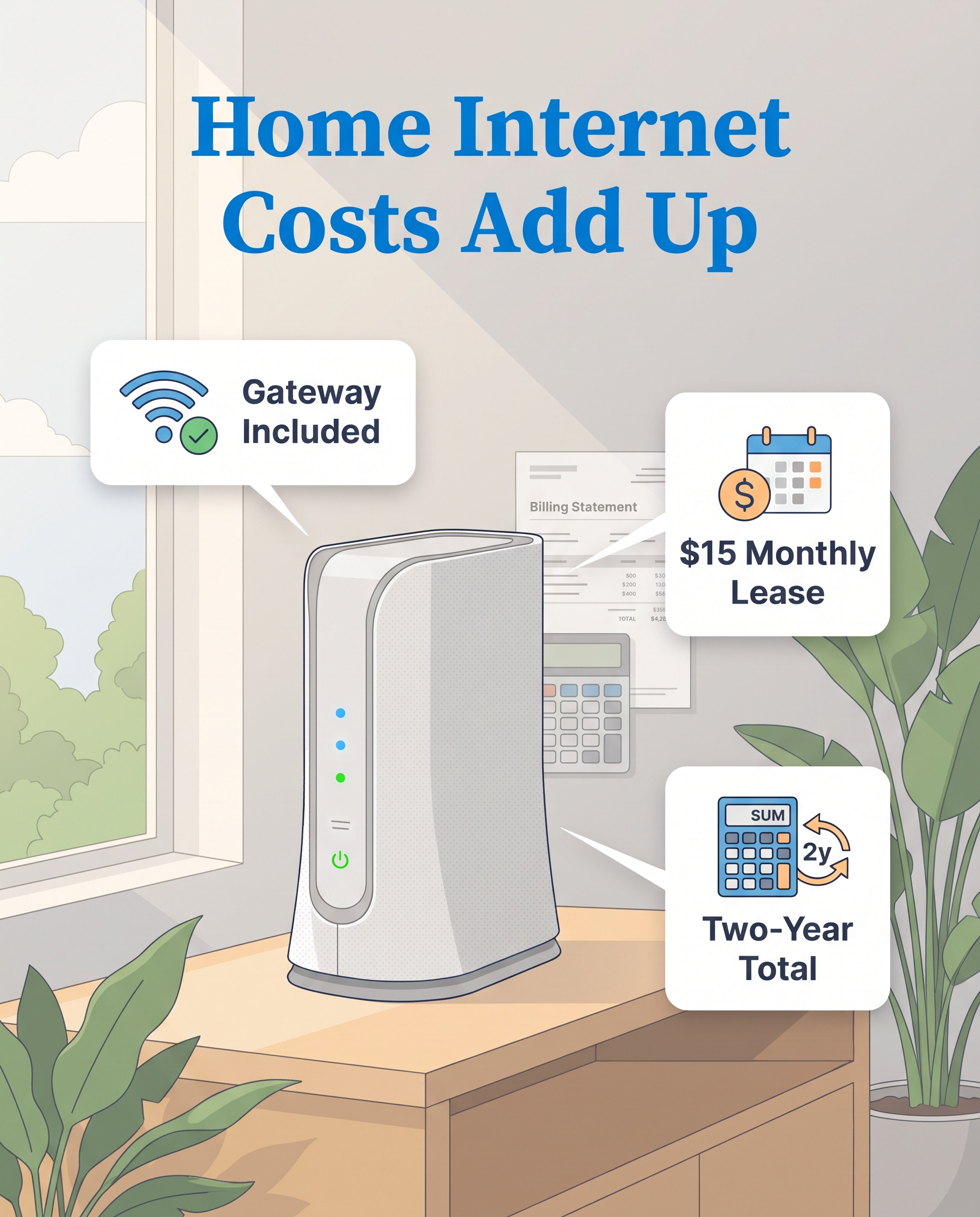
Budgeting for a new home means looking at the total cost of ownership, not just the promotional sticker price. When comparing these two services, the financial structures look entirely different. Verizon prides itself on straightforward, flat-rate billing. Their 5G gateway is included in your monthly subscription, and if you already have a qualifying Verizon mobile plan along with Auto Pay, the home internet cost drops significantly. The advertised price is what you pay, though you must return the equipment if you ever cancel to avoid nonreturn fees.
Checking the Viasat offer available at your address requires a slightly sharper pencil. While the Unleashed plans have eliminated the restrictive hard data caps of the past, you still need to account for additional fees. Viasat charges an equipment lease fee of $15 per month, and depending on your property, you might also face a one-time professional installation charge ranging from $0 to $500 depending on credit checks and complexity. Additionally, introductory promotional prices on Viasat often increase after the first 12 months. When exploring other rural internet providers, always factor in the hardware expenses. Verizon gives you cost certainty from day one, whereas satellite internet demands a closer look at the fine print to uncover your true out-of-pocket expenses.
Money-Saver
When comparing overall monthly expenses, always calculate the total cost over a two-year period, factoring in any promotional price expirations and ongoing equipment leases, to get a clear picture of your long-term budget.
Verizon Home Internet Plans
| Plan Name | Price | Download Speeds | Connection Type | |
|---|---|---|---|---|
| High Speed Internet | $40 /month | Up to 15 Mbps | DSL | Check Availability |
| Verizon Home Internet Lite | $35 /month | Up to 25 Mbps | 5G | Check Availability |
| Verizon Home Internet Lite Extra | $55 /month | Up to 25 Mbps | 5G | Check Availability |
| 5G Home | $50 /month | Up to 100 Mbps | 5G | Check Availability |
| 5G Home Plus | $60 /month | Up to 150 Mbps | 5G | Check Availability |
| Fios 300 Mbps | $30 /month | Up to 300 Mbps | Fiber | Check Availability |
| 5G Home Ultimate | $75 /month | Up to 300 Mbps | 5G | Check Availability |
| Fios 500 Mbps | $65 /month | Up to 500 Mbps | Fiber | Check Availability |
| Fios 1 Gig | $80 /month | Up to 1000 Mbps | Fiber | Check Availability |
| Fios 2 Gig | $90 /month | Up to 2.3 Gbps | Fiber | Check Availability |
| Fios 5 Gig | $104.99 /month | Up to 5 Gbps | Fiber | Check Availability |
Viasat Plans
| Plan Name | Price | Download Speeds | Connection Type | |
|---|---|---|---|---|
| 12 Mbps / 65 GB Internet | $49.99 /month | Up to 12 Mbps | Satellite | Check Availability |
| Viasat Essentials | $39.99 /month | Up to 50 Mbps | Satellite | Check Availability |
| Viasat Unleashed | $69.99 /month | Up to 150 Mbps | Satellite | Check Availability |
Comparing Equipment Energy Use
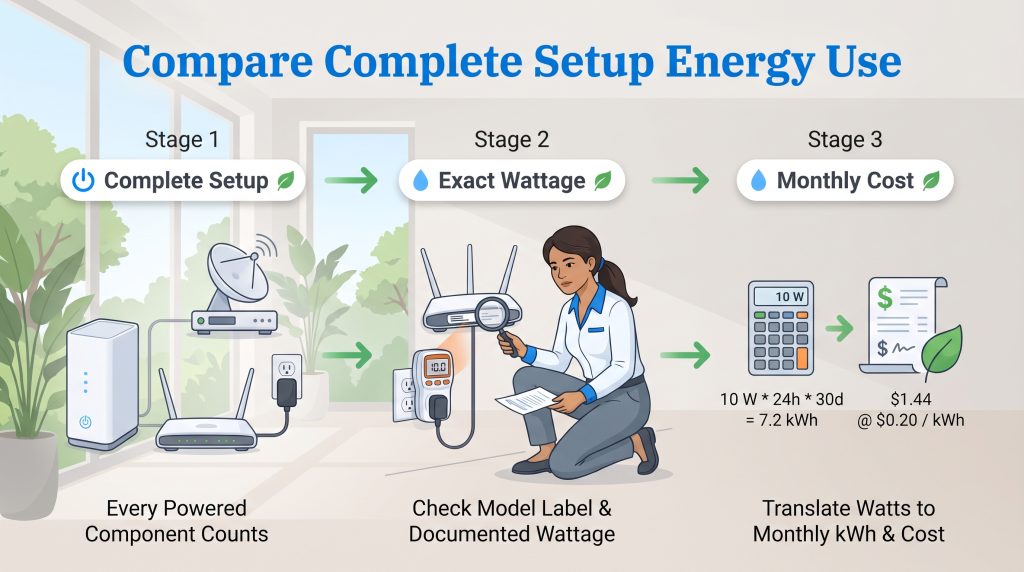
Establishing a greener household starts with the devices you plug in every day. To estimate operating cost, compare the electricity used by the complete setup — not just the indoor router. Use measured consumption or documented average power figures for the specific equipment models provided by your internet service. Because passive power draws can vary widely depending on the hardware versions shipped to your home, there is no blanket rule that one service inherently uses less electricity than the other in all conditions.
If your goal is saving on your electric bill, seek out the energy specifications for the exact gateway or satellite dish you receive. To put the energy use in perspective, a hypothetical device averaging 10 watts uses about 7.2 kWh over 30 days. At $0.20 per kWh, that costs about $1.44 per month. While these are not measured figures for either provider, tracking these details ensures you make an environmentally mindful choice that aligns with broader home sustainability goals. We don’t recommend switching off your internet equipment to save power, as modern homes typically rely on a continuous, dependable connection for essential smart home devices and security systems.
Eco Edge
Returning your internet equipment properly when you move or cancel service prevents e-waste and ensures providers can refurbish perfectly good hardware for the next user.
Check Availability at Your New Address
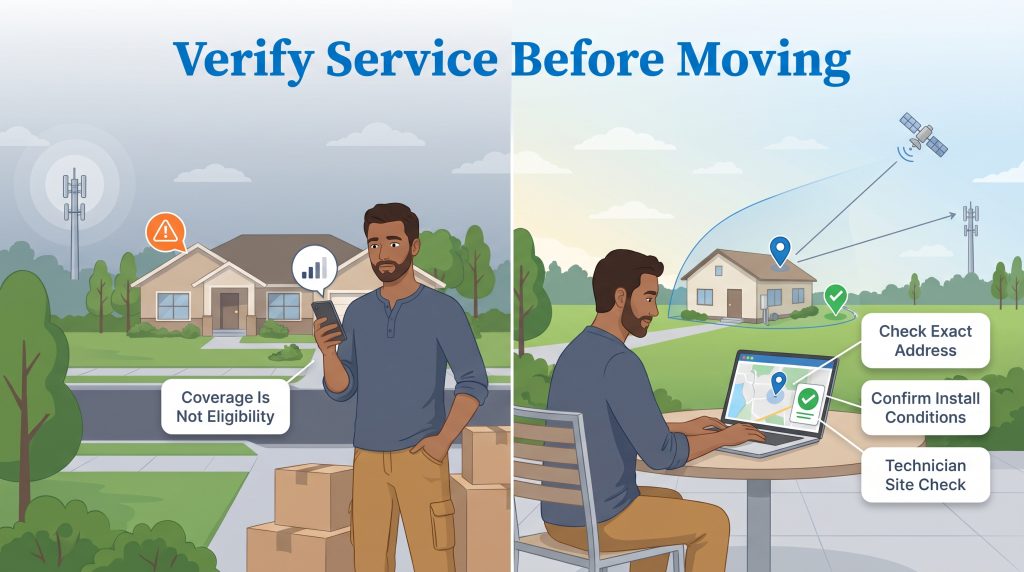
The ultimate deciding factor between these two services usually boils down to where your property lines are drawn. As you search for internet providers, you’ll quickly discover that geographical segmentation dictates your options. Cellular networks are rapidly expanding into suburbs and rural edges, bringing high-speed connectivity to previously underserved neighborhoods. However, mobile 5G coverage doesn’t automatically mean an address qualifies for 5G Home Internet. Eligibility also depends on local network capacity and proximity to the specific cell tower.
In remote locations where terrestrial networks can’t reach, Viasat can serve many properties well beyond the limits of fiber or cellular networks, subject to a clear view of the sky and a suitable installation site. To see exactly what serves your address, we highly recommend checking the FCC National Broadband Map. You should always verify current official Verizon and Viasat offers directly, checking both availability and any installation conditions specific to your new home.
Making the Best Connection Choice for Your New Home
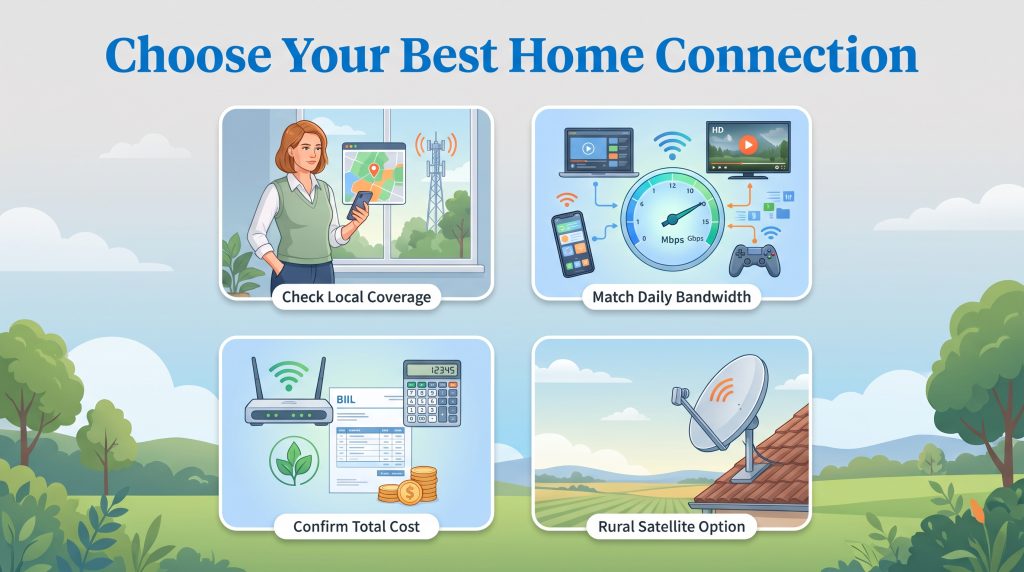
Finding the right broadband solution requires balancing your physical location, daily bandwidth needs, budget, and personal sustainability goals. If you’re fortunate enough to live within a strong cell tower footprint with available capacity, Verizon 5G stands out as our top recommendation. Its low latency, predictable flat-rate pricing, and unlimited data make it a highly efficient addition to your household. At the same time, we recognize Viasat as a powerful, necessary solution if your new property sits miles off the beaten path. Before moving, test any existing internet at the property, secure installation permission if you are renting, and confirm the total monthly costs before scheduling activation. As you unpack boxes and settle into your new space, rest easy knowing that both technologies offer robust ways to keep you connected to the things that matter most.
Frequently Asked Questions About Viasat vs. Verizon Home Internet
If you’re still weighing your options between these two providers, here are some quick answers to common questions about setting up your rural internet service.
Is Verizon Mobile Coverage the Same as 5G Home Internet Availability?
What Should You Check Before Canceling Your Current Internet?
Can You Install Viasat at a Rental Home?
Which Service Is Better for Working From Home?
Do I Need Professional Installation for Viasat or Verizon?
Can I Game on a Satellite Internet Connection?
About the Author

David has been an integral part of some of the biggest utility sites on the internet, including InMyArea.com, HighSpeedInternet.com, BroadbandNow.com, and U.S. News. He brings over 15 years of experience writing about, compiling and analyzing utility data.

LaLeesha has a Masters degree in English and enjoys writing whenever she has the chance. She is passionate about gardening, reducing her carbon footprint, and protecting the environment. She also recently served as President of the Board for City Sprouts (a community garden).