

Comparing Cox’s primarily wired connection to Starlink’s satellite network helps you choose the most reliable and cost-effective internet for your lifestyle.

- 7 Gbps
- Cable & Fiber
- Unlimited
- $30.00/mo

- 400 Mbps
- Satellite
- Unlimited
- $55.00/mo
*Not all internet providers and speeds available in all areas.
Key Takeaways
- Cox offers faster top download speeds and lower latency, making it a strong choice for competitive gaming and heavily connected smart homes in areas with wired infrastructure.
- Starlink provides unmatched rural availability with transparent pricing, serving as an ideal solution for those outside of traditional cable service zones.
- Powering your home network with renewable energy can lower your home’s monthly electricity footprint, though satellite equipment still carries a manufacturing and operational impact.
If you are moving to a new property or simply weighing your options for better home connectivity, choosing the right internet service provider is an important decision. Pitting Cox vs. Starlink head-to-head is a smart way to compare two vastly different approaches to home internet. We understand the need to find a connection that fits your daily habits without breaking your household budget. Our goal is to provide a straightforward, real-world comparison to help you confidently select the best provider for your household.
Quick Verdict: Which Internet Provider Wins?
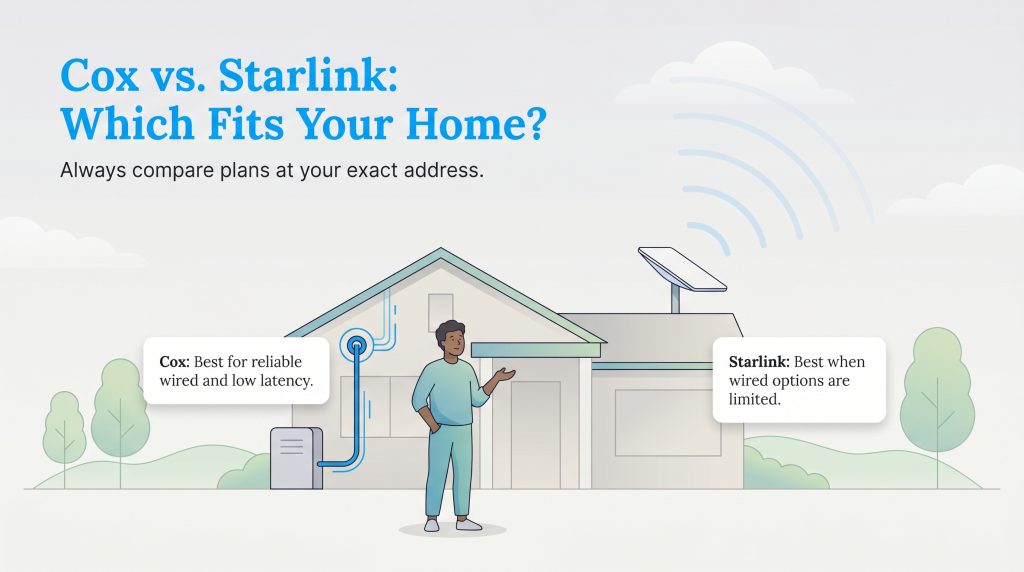
Cox is usually the clear winner if you have access to a reliable wired connection, need low latency, and prefer lower startup costs. Starlink takes the crown if your wired options are slow, unavailable, or geographically restrictive. Because the best choice depends entirely on your address, we recommend reviewing the pros and cons of both networks before committing.
Cox Cable Pros and Cons
- Pro: Much faster top download and upload speeds (up to 2,000 Mbps).
- Pro: Consistently low latency, making it the superior choice for competitive gaming and seamless video calls.
- Pro: Very low initial startup costs and inexpensive self-installation options.
- Con: Subject to a strict 1.25 TB data allowance on most standard residential plans.
- Con: Notorious for promotional rate hikes after your initial 12-month agreement expires.
Starlink Pros and Cons
- Pro: Exceptional availability in remote areas anywhere with a completely unobstructed view of the sky.
- Pro: Simple, transparent monthly pricing with zero hidden fees or term contracts.
- Pro: Standard residential service offers unlimited data without traditional hard caps or overage charges.
- Con: Steep upfront equipment investment ($349 to $599 depending on your region and the generation kit).
- Con: Noticeably higher latency compared to cable, which may introduce a slight delay during rapid online tasks.
Cox vs. Starlink: Side-by-Side Spec Comparison
When choosing between Starlink internet vs Cox cable, looking at the raw specifications side-by-side is the quickest way to see which provider aligns with your daily digital routine. The table below highlights the most significant technical and financial differences you will encounter when shopping for either service in 2026.
| Specification | Cox Cable | Starlink |
|---|---|---|
| Max Download Speed | Up to 2,000 Mbps | Up to 400 Mbps (varies by network capacity) |
| Starting Price | $55/month (promotional rate) | $120/month (standard residential) |
| Average Latency | 20–30 ms | 40–70 ms |
| Data Caps | 1.25 TB (unlimited costs extra) | Unlimited standard data |
| Contract Requirements | 12-month terms common | No contracts; cancel anytime |
| Equipment Costs | ~$15/month router rental | $349–$599 upfront hardware purchase |
Understanding the Technology Behind the Connections
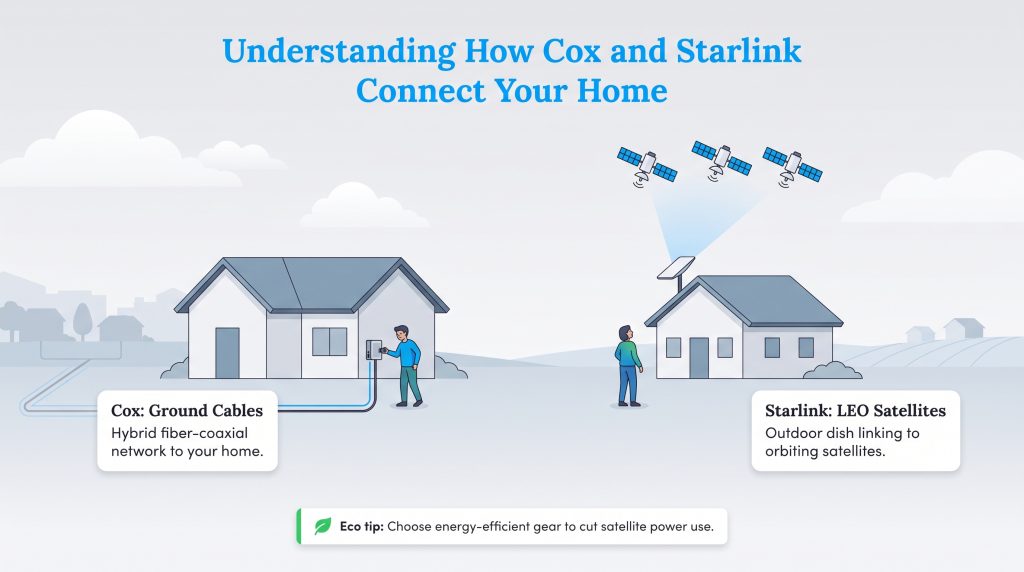
To make an informed choice, it helps to know exactly how these two networks deliver data to your home. Cox primarily delivers your internet connection through a Hybrid fiber-coaxial cable network, bringing fiber lines into neighborhoods and finishing the run to your house with coaxial cables. It is a proven, robust system capable of massive bandwidth, but it only benefits homes located within areas where Cox has actively laid underground infrastructure.
Starlink operates quite differently. Developed by SpaceX, it relies on a vast constellation of Low Earth Orbit (LEO) satellites rather than buried wires. Your home connects to these fast-moving satellites via a motorized or kickstand-based outdoor dish. This technology drastically expands access, reaching remote locations where traditional wired providers simply refuse to build infrastructure.
Speed, Latency, and Gaming Performance
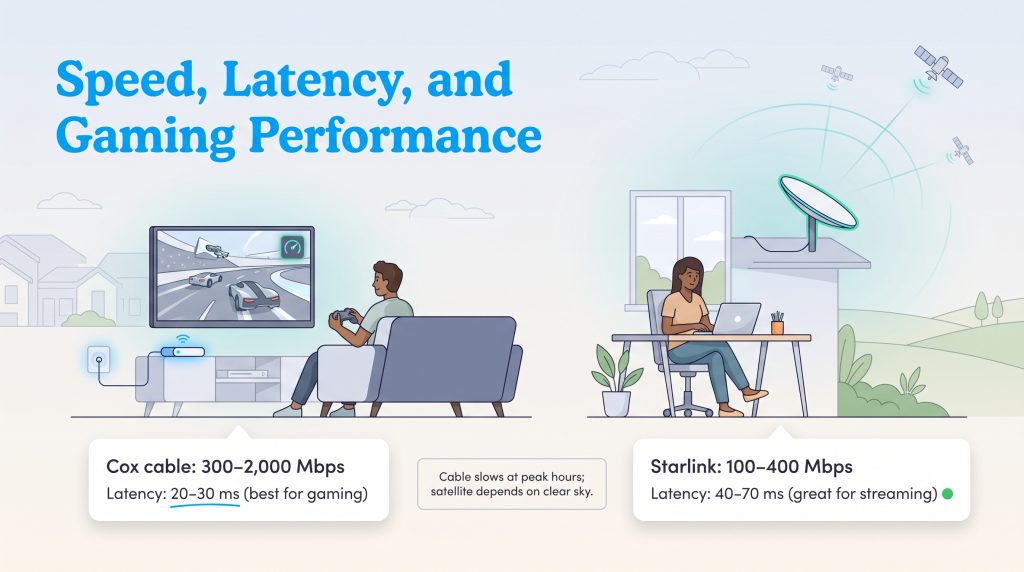
Any modern speed test will quickly reveal how fundamentally different these two services behave in everyday use. Because Cox runs on a physical cable network, it delivers highly competitive speeds, with real-world download averages consistently hitting between 300 Mbps and 2,000 Mbps. When comparing Cox gigabit vs Starlink, Cox is far superior for tasks like downloading massive 100GB video games or transferring giant work files in mere minutes.
However, the real differentiator for heavy users is latency. If you are researching Cox vs Starlink gaming performance, you must understand how ping works. Latency is the time it takes for data to travel from your device to the server and back. Cox offers specific latency estimates averaging 20 to 30 milliseconds (ms). This incredibly low ping minimizes lag and ensures split-second reactions in competitive multiplayer games. Starlink provides specific latency estimates of 40 to 70 ms. While this is a massive leap forward for satellite technology, competitive gamers will absolutely notice that slight delay compared to a wired cable connection.
Starlink still holds its own for general use, with real-world speed test averages showcasing typical residential download speeds between 100 Mbps and 400 Mbps — more than enough to handle multiple 4K Netflix streams simultaneously. If you have a densely connected smart home and a gamer in the family, Cox’s raw bandwidth and low ping offer a significantly smoother experience. But if you simply want reliable internet to stream movies and work comfortably, Starlink handles those core lifestyle demands with ease.
Pricing, Data Caps, and Hidden Fees
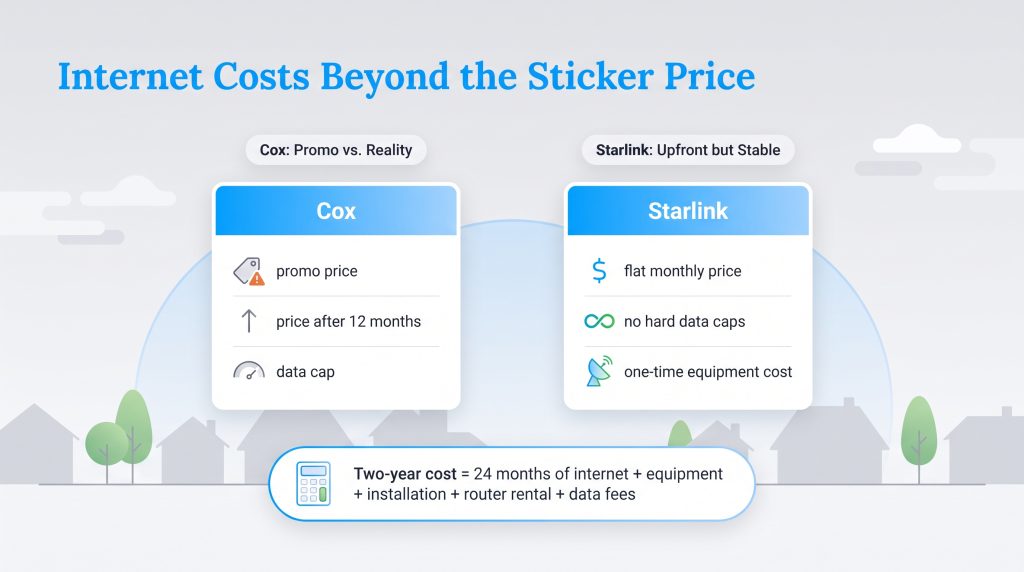
When we talk to homeowners, the biggest point of frustration is almost always the long-term cost. Understanding Starlink vs Cox pricing requires looking far beyond the initially advertised monthly rate. Cox heavily markets introductory promotional rates starting around $55 to $85 per month. While these seem incredibly affordable, they almost always disguise steep hikes once your 12-month promotional period expires.
Additionally, comparing the Cox data cap vs Starlink reveals a stark difference in network management. Most Cox residential plans include a monthly data allowance of 1.25 TB. If your household exceeds this limit, you will face hefty overage charges unless you proactively pay an extra $50 per month for unlimited data.
Cox Promotional Hikes Exposed
| Cox Plan Speed | Initial 12-Month Rate | Price After 12 Months (Est.) |
|---|---|---|
| Go Fast (100 Mbps) | $55.00 | $80.00+ |
| Go Faster (500 Mbps) | $75.00 | $100.00+ |
| Go Super Fast (1 Gig) | $85.00 | $120.00+ |
Cox Plans and Pricing
| Plan Name | Price | Download Speeds | Connection Type |
|---|
Conversely, Starlink takes a refreshingly transparent approach. Standard residential plans typically run around $120 per month with zero contractual obligations and no traditional hard data caps. The massive caveat to Starlink’s pricing is the steep upfront cost of the satellite dish and hardware. Depending on regional offers, this equipment fee usually runs between $349 and $599. You are purchasing the hardware outright instead of renting a router for a small monthly fee. This initial investment can induce severe sticker shock, but it completely shields you from surprise price hikes and data cap penalties down the road.
Starlink Plans and Pricing
| Plan Name | Price | Download Speeds | Connection Type | |
|---|---|---|---|---|
| Residential 100 Mbps | $55 /month | Up to 100 Mbps | Satellite | Check Availability |
| Residential 200 Mbps | $85 /month | Up to 200 Mbps | Satellite | Check Availability |
| Roam 100 GB | $55 /month | Up to 300 Mbps | Satellite | Check Availability |
| Roam Unlimiited | $175 /month | Up to 300 Mbps | Satellite | Check Availability |
| Roam 300 GB | $80 /month | Up to 300 Mbps | Satellite | Check Availability |
| Residential Max | $130 /month | Up to 400 Mbps | Satellite | Check Availability |
Equipment and Installation: Panoramic Wi-Fi vs. Starlink Gen 3
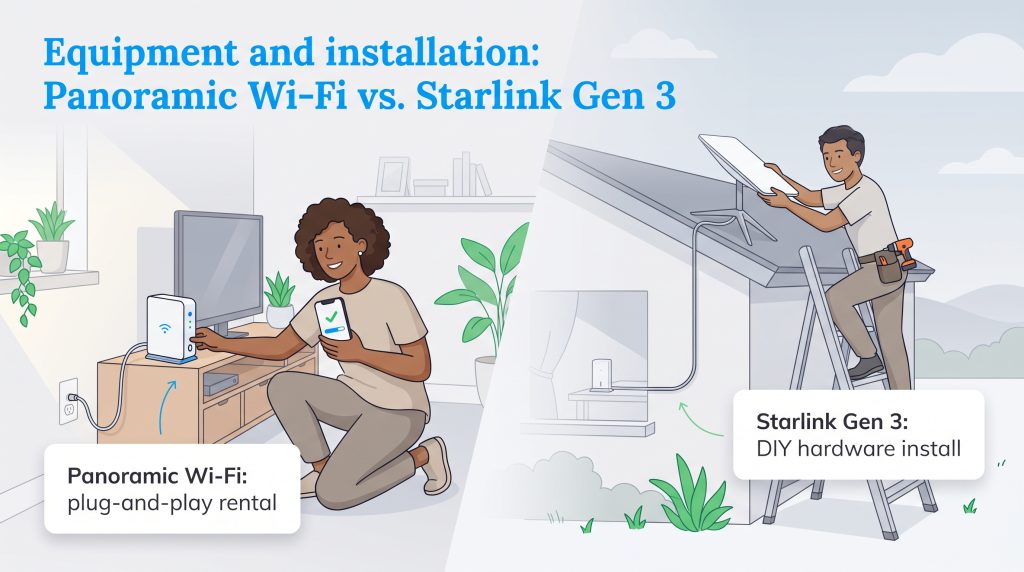
Getting your home network up and running smoothly heavily depends on the hardware you install. When evaluating Starlink Gen 3 vs Cox Panoramic Wifi, you are looking at two entirely different approaches to home connectivity and equipment ownership.
Cox strongly encourages users to rent their Panoramic Wi-Fi gateway for an additional fee of about $15 per month. This device acts as both your modem and your wireless router, offering advanced Wi-Fi 6 capabilities and integrated security through the Cox app. The beauty of this rental model is that if the hardware breaks or becomes outdated, Cox replaces it for free. Installation is exceptionally simple — if your home is already wired for cable, you just plug the gateway into the coaxial outlet, follow the prompts on your phone, and you are online in minutes.
Starlink, on the other hand, requires you to purchase the Gen 3 hardware kit upfront for $349 to $599. This kit includes a weather-resistant dish featuring a manual kickstand (rather than the older motorized mounts), an advanced Wi-Fi 6 router, and the necessary heavy-duty cabling. Self-installation is mandatory for Starlink unless you hire an independent contractor. You must mount the dish securely outside — often on a roof, eave, or clear patch of lawn — and snake the cable through an exterior wall into your home. The Starlink app does an excellent job guiding you through finding an unobstructed slice of the sky, but the physical installation requires significantly more elbow grease than setting up a Cox modem.
Availability and Rural Internet Options
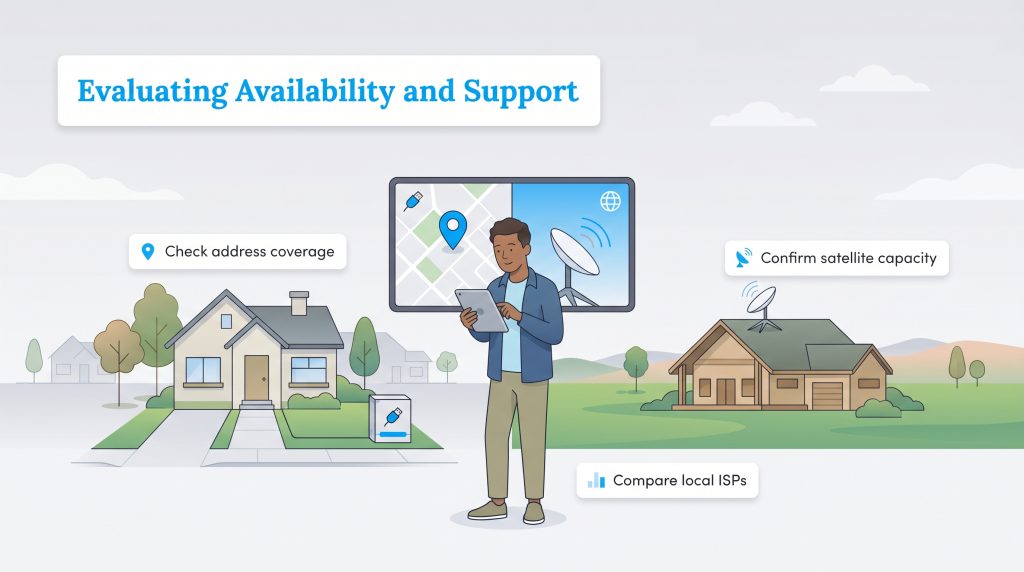
Even the most impressive internet plan is useless if you cannot get it at your address. Cox operates an extensive wired network, but its geographical footprint is entirely bound to specific regions, municipalities, and local neighborhoods. If you live just outside the city limits or in a newly developed subdivision, you might find yourself stuck outside their service zone.
This limitation is exactly why switching to satellite is highly popular for families seeking viable rural internet options. Moving to a remote property or the edge of suburbia no longer means suffering through sluggish dial-up speeds. Starlink is available in many rural areas, though the stability of your service still depends on local satellite capacity and ensuring your dish has a completely clear view of the northern sky.
We highly recommend checking official wired broadband availability at your specific address using the FCC National Broadband Map before making any final commitments. Alternatively, try checking satellite capacity directly through Starlink’s coverage map. If you are thoroughly exploring your options, spend a few minutes comparing all internet service providers in your area to see what fits your lifestyle.
Eco-Conscious Internet: Power Consumption and Impact
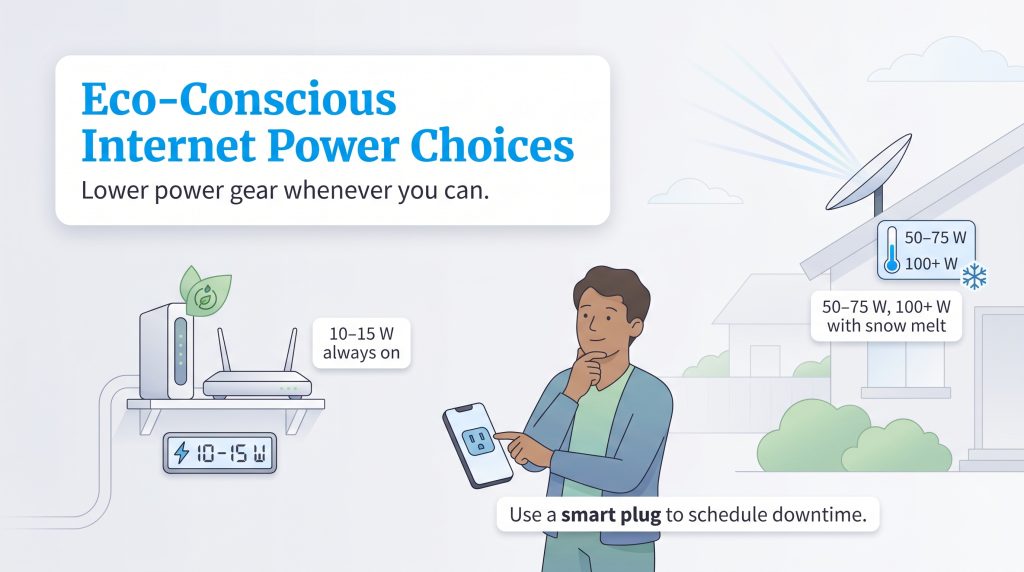
When selecting utilities for your home, many homeowners overlook the continuous electrical draw of their networking equipment. If building an environmentally mindful choice is a priority for your household, you should note the stark difference in power consumption between these two providers.
A standard Cox cable modem combined with a router generally pulls a very modest 10 to 15 watts of continuous power. In contrast, the Starlink dish is a highly advanced piece of actively transmitting equipment. During normal operation, the Starlink Gen 3 dish typically draws roughly 50 to 75 watts. Furthermore, Starlink units feature a built-in “Snow Melt Mode” that automatically activates in freezing weather, causing power consumption to spike over 100 watts to prevent ice accumulation on the dish.
Preparing Your Home for the Switch
Healthy competition in the broadband space is a meaningful benefit for consumers everywhere. Having viable alternatives forces providers to offer better service, fairer prices, and stronger infrastructure. If you have decided to switch from one provider to another, ensuring a seamless transition requires a bit of logistical planning.
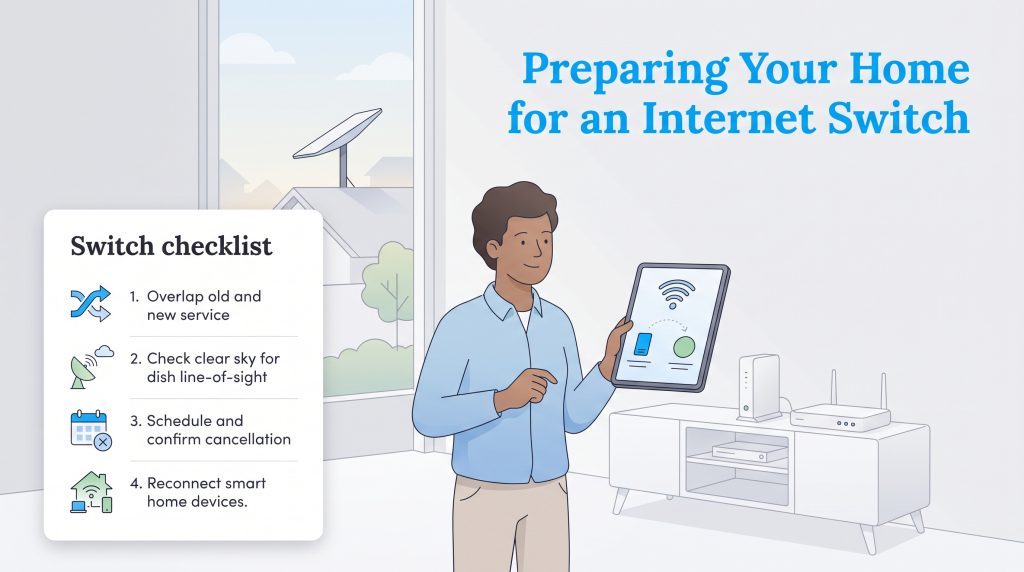
Follow this checklist to prepare your home and avoid frustrating internet outages during your transition:
- Overlap your services: Never cancel your current Cox or Starlink plan until the new equipment is fully installed and actively running speed tests. Plan for a one-week overlap to serve as a buffer.
- Map out dish placement: If moving to Starlink, download the app beforehand and use the augmented reality tool to scan the sky above your roof. Ensure no trees or chimneys will obstruct the signal.
- Schedule your cancellation: Once your new network is functional, contact your old provider immediately. Remember that Cox may require you to return rented equipment, like the Panoramic Wi-Fi gateway, within a specific timeframe to avoid penalty fees.
- Update smart home devices: Be prepared to spend an afternoon reconnecting your smart thermostats, security cameras, and smart plugs to your new Wi-Fi network’s name and password.
Making Your Final Internet Decision for Your Home
The ideal network for your household ultimately depends on your specific geographical location, daily online habits, and comfort with upfront equipment investments. Whether you stick with the grounded reliability and blazing fast gigabit speeds of traditional cable or launch into the limitless flexibility of satellite tech, ensuring your home stays seamlessly connected has never been more achievable. Take the time to map out your digital needs, and you will secure a service that keeps your entire family streaming, gaming, and working without interruption.
Frequently Asked Questions About Cox and Starlink
Is Starlink better than Cox for online gaming?
How does Cox gigabit vs Starlink compare for working from home?
Does Starlink have data caps like Cox?
Can I bypass the Cox data cap without paying extra?
How difficult is it to switch from Cox to Starlink?
What are the hidden fees with Cox cable internet?
Does weather affect Starlink more than Cox?
About the Author

David has been an integral part of some of the biggest utility sites on the internet, including InMyArea.com, HighSpeedInternet.com, BroadbandNow.com, and U.S. News. He brings over 15 years of experience writing about, compiling and analyzing utility data.

LaLeesha has a Masters degree in English and enjoys writing whenever she has the chance. She is passionate about gardening, reducing her carbon footprint, and protecting the environment. She also recently served as President of the Board for City Sprouts (a community garden).