

Choosing between Brightspeed and Verizon Home Internet comes down to what technology is available in your neighborhood and your family’s daily bandwidth needs.
Key Takeaways
- Verizon 5G Home Internet offers a fast, plug-and-play wireless solution for homes stuck with legacy DSL connections.
- Brightspeed is rapidly expanding its high-speed fiber network, making it a top contender for future-proof reliability if it has reached your street.
- Both providers offer attractive options with no data caps and no annual contracts, giving you the flexibility to switch without paying early termination fees.

- 2 Gbps
- Fiber
- 1 TB
- $29.00/mo

- 300 Mbps
- 5G
- Unlimited
- $35.00/mo
*Not all internet providers and speeds available in all areas.
It can be incredibly frustrating for suburban and rural homeowners to feel trapped with sluggish, unreliable internet options. When deciding on Brightspeed vs. Verizon Home Internet, you often face a dilemma: wait for Brightspeed’s growing fiber expansion to reach your neighborhood, or switch to Verizon’s immediately available 5G network. Brightspeed and Verizon have also explored fixed wireless solutions for certain legacy-network customers, but residential shoppers still need to compare what is available at their own address. We will help you determine which of these services can best keep your household streaming, working, and gaming consistently.
Bottom Line Up Front: Comparing 5G and Fiber Head-to-Head
Here is the practical answer: choose Brightspeed if you can get fiber, but seriously consider Verizon 5G Home Internet if Brightspeed only offers DSL at your address. When you pit Brightspeed vs Verizon 5G Home Internet against each other, you are usually comparing fiber vs. 5G home internet technologies. Verizon relies on fixed wireless infrastructure, capturing a mobile cellular signal and converting it for your devices. Meanwhile, Brightspeed utilizes either legacy copper DSL or fiber-optic lines. One quick clarification: Verizon Fios and Verizon 5G Home Internet are not the same service. Fios is fiber internet available mostly in parts of the Northeast and Mid-Atlantic, while Verizon 5G Home Internet is fixed wireless service that uses Verizon’s cellular network. If fiber is available at your address, it generally wins out for speed and long-term stability. However, if your only Brightspeed option is an aging DSL line, Verizon’s 5G Home Internet is typically the better choice for both performance and price. Below, we break down exactly how these services stack up so you can confidently pick the right fit.
| Feature | Brightspeed Fiber | Brightspeed DSL | Verizon 5G Home Internet |
|---|---|---|---|
| Typical Starting Price | Typically $49.99/mo to $89.99/mo | Typically $50.00/mo | Typically $50.00/mo (lower with mobile bundle) |
| Speed Range | Typically 200 Mbps to 2,000 Mbps | Typically 10 Mbps to 100 Mbps | Typically 85 Mbps to 1,000 Mbps (depending on area) |
| Upload Speeds | Symmetrical (matches download speeds) | Up to 10 Mbps | 10 Mbps to 20 Mbps |
| Latency | Very low (excellent for gaming) | Moderate | Variable depending on local signal |
| Install Type | Technician usually required | Self-install or technician | Plug-and-play self-install |
| Connection Type | Fiber-optic | Legacy Copper | Fixed Wireless 5G |
| Best For | Heavy streamers and connected smart homes | Basic browsing where fiber is not available | Suburban and rural homes escaping DSL |
Understanding the Technology: 5G Wireless vs. DSL and Fiber
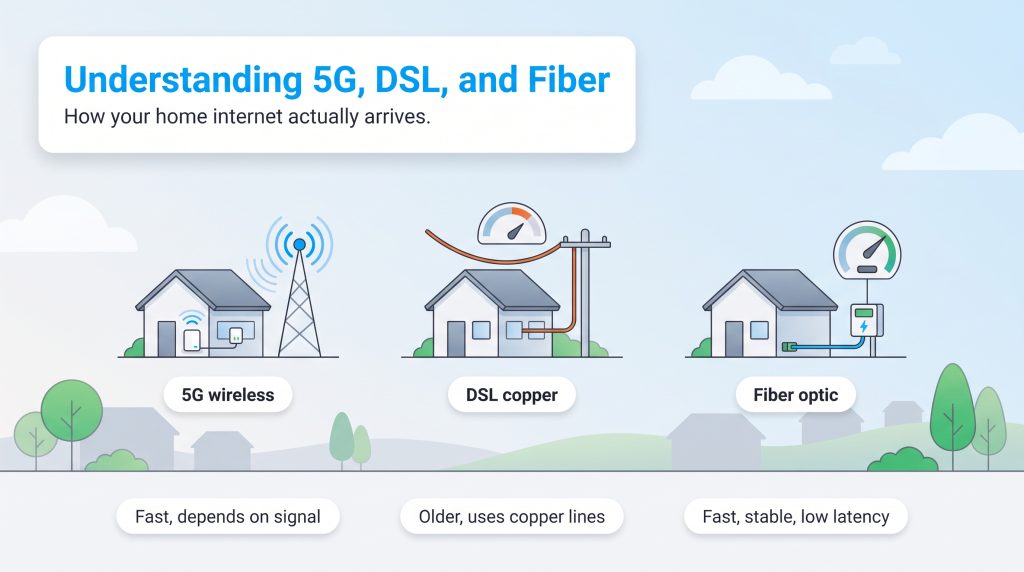
To truly understand what you are paying for, it helps to know how these internet connections actually reach your living room. We promise to skip the heavy corporate jargon and give you the straightforward facts about how your data travels.
Verizon’s 5G Network Advantage
Verizon utilizes its expansive network of cell towers to beam a 5G signal directly to a small receiver inside your home. This fixed wireless approach is ideal for folks who desperately need better speeds but do not want to wait around for physical cables to be buried in their yard. You simply plug in the gateway by a window, catch a strong cell signal, and start surfing the web within minutes. The trade-off is consistency. Fixed wireless can be excellent when your home has a strong signal, but speeds may dip if your gateway placement is poor or the nearby tower is congested.
Brightspeed’s Transition From CenturyLink to Fiber
Brightspeed launched after acquiring former CenturyLink and Lumen assets in 20 states, and it has since been investing heavily in fiber expansion to replace aging copper infrastructure. With Brightspeed replacing CenturyLink in many regions, they are heavily investing in XGS-PON fiber technology. In simple terms, this means you get symmetrical internet speeds, allowing you to upload video files or join Zoom calls just as fast as you download movies. If you game online or take frequent video calls, latency matters as much as raw download speed. Fiber usually delivers lower and more consistent latency than fixed wireless, while 5G performance can change depending on tower congestion, weather, building materials, and gateway placement.
Coverage and Availability: Who Reaches Your Neighborhood?
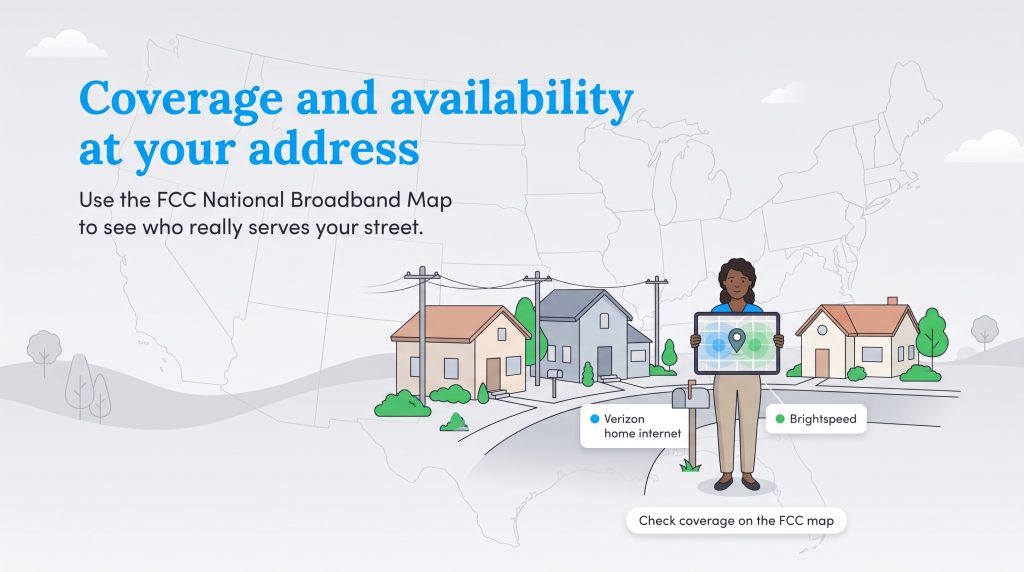
When you are choosing an internet provider, the best service in the world means nothing if it does not reach your front door. Verizon boasts a massive nationwide coverage footprint, leveraging its existing cellular infrastructure to reach many homes across the country. Conversely, Brightspeed is highly concentrated within a 20-state region, primarily servicing the Midwest, the South, and specific pockets along the East Coast. Verizon 5G Home Internet can be a strong option in suburban and select rural areas, especially where Brightspeed DSL is the only wired alternative.
Even if you live in one of those 20 states, internet availability is strictly hyper-local. A provider might wire your neighbor’s street for fiber but leave yours waiting for another year. If you want to bypass the marketing hype and see an unbiased look at who actually serves your exact address, we recommend checking the FCC National Broadband Map. This governmental tool allows you to accurately check your Verizon home internet availability map options alongside Brightspeed’s confirmed service areas without having to hand over your email address to a sales team.
How to Compare Brightspeed and Verizon at Your Address
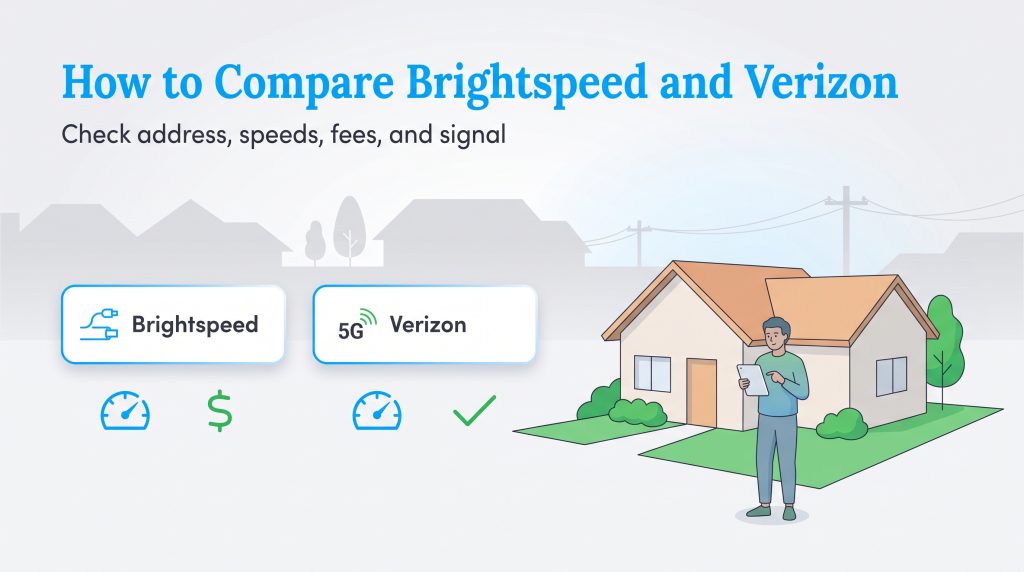
Before you commit to either service, checking your exact address is essential to confirm what is genuinely available. Here is a quick process to help you compare your options properly:
- Check Brightspeed availability and note whether the result is fiber or DSL.
- Check Verizon 5G Home Internet availability.
- Compare upload speeds, not just download speeds.
- Confirm equipment fees, taxes, and promotional pricing terms.
- Test Verizon’s signal quality during your return window if you choose fixed wireless.
Pricing, Fees, and Value for Your Money
Compared with many internet providers, both companies tend to keep the basic residential offer fairly simple, but you still need to check taxes, equipment terms, autopay requirements, and promotional expiration dates before ordering. Both providers generally offer residential internet plans without annual contracts or traditional data caps, but you should confirm the details for your address before signing up. Verizon typically includes its 5G gateway, while Brightspeed equipment terms can vary by plan and location. Check whether your quoted monthly price includes the gateway before you check out.
Because prices and speeds vary by address, check Brightspeed’s current plan details and Verizon’s 5G Home Internet availability before choosing. Verizon 5G Home Internet typically starts around $50 per month, but they frequently offer steep discounts that drop the price down to $35 or $40 if you bundle the service with a qualifying unlimited mobile phone plan. Brightspeed’s fiber plans generally start around $49.99 per month for their base 200 Mbps tier, scaling up to $89.99 or more for those who require multi-gigabit speeds.
Brightspeed Plans & Pricing
| Plan Name | Price | Download Speeds | Connection Type | |
|---|---|---|---|---|
| Up to 40 Mbps | $50 /month | Up to 40 Mbps | DSL | Check Availability |
| Fiber Internet 200 Mbps | $29.99 /month | Up to 200 Mbps | Fiber | Check Availability |
| Fiber Internet 500 Mbps | $39.99 /month | Up to 500 Mbps | Fiber | Check Availability |
| Fiber Internet 1 Gig | $49.99 /month | Up to 940 Mbps | Fiber | Check Availability |
| Fiber Internet 2 Gig | $69.99 /month | Up to 2 Gbps | Fiber | Check Availability |
| Fiber Internet 8 Gig | $89.99 /month | Up to 8 Gbps | Fiber | Check Availability |
Verizon Plans & Pricing
| Plan Name | Price | Download Speeds | Connection Type | |
|---|---|---|---|---|
| High Speed Internet | $40 /month | Up to 15 Mbps | DSL | Check Availability |
| Verizon Home Internet Lite | $35 /month | Up to 25 Mbps | 5G | Check Availability |
| Verizon Home Internet Lite Extra | $55 /month | Up to 25 Mbps | 5G | Check Availability |
| 5G Home | $50 /month | Up to 100 Mbps | 5G | Check Availability |
| 5G Home Plus | $60 /month | Up to 150 Mbps | 5G | Check Availability |
| Fios 300 Mbps | $30 /month | Up to 300 Mbps | Fiber | Check Availability |
| 5G Home Ultimate | $75 /month | Up to 300 Mbps | 5G | Check Availability |
| Fios 500 Mbps | $65 /month | Up to 500 Mbps | Fiber | Check Availability |
| Fios 1 Gig | $80 /month | Up to 1000 Mbps | Fiber | Check Availability |
| Fios 2 Gig | $90 /month | Up to 2.3 Gbps | Fiber | Check Availability |
| Fios 5 Gig | $104.99 /month | Up to 5 Gbps | Fiber | Check Availability |
Equipment and Eco-Conscious Internet Choices
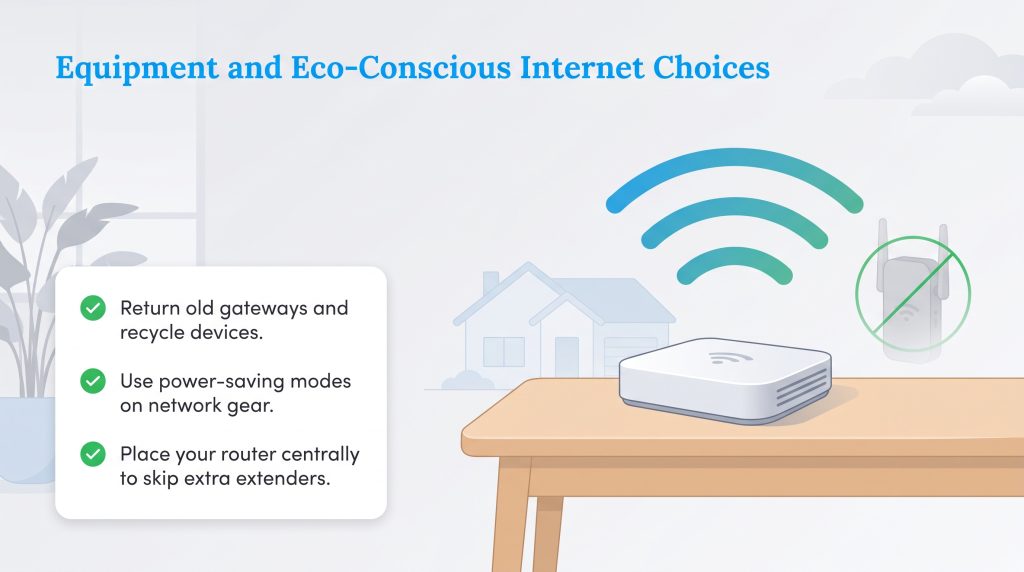
The physical hardware sitting on your desk plays a massive role in your everyday browsing experience. When comparing Brightspeed DSL vs Verizon 5G, or even Brightspeed’s newer fiber gateways, you will find that both companies provide modern Wi-Fi 6 capable routers. From a sustainability standpoint, the best move is to avoid unnecessary equipment. Brightspeed Fiber can also be an environmentally mindful choice if it helps you use fewer extra devices, such as extenders or secondary hotspots, to keep your home connected. If you want to further optimize your digital footprint and learn how to save on your electric bill, there are a few practical steps you can take:
- Return old provider-owned gateways and recycle outdated electronics responsibly.
- Use smart power-saving modes that reduce energy usage when network devices are inactive.
- Place your router centrally so you do not need extra plastic Wi-Fi extenders drawing power around the house.
Which Provider Is Better for Your Household?
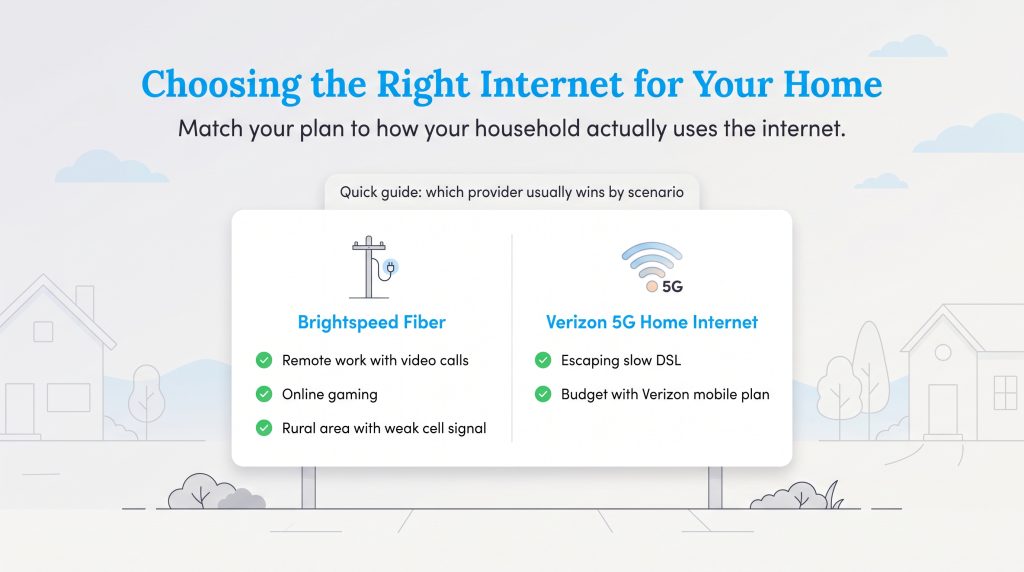
To help you make the best choice for your unique situation, we have broken down some common scenarios. Here is a quick guide on who generally comes out on top based on your household’s daily activities:
| Household Need | Better Choice | Why |
|---|---|---|
| Remote work with video calls | Brightspeed Fiber | Lower latency and symmetrical upload speeds |
| Escaping slow DSL | Verizon 5G Home Internet | Faster setup and often better download speeds |
| Online gaming | Brightspeed Fiber | More stable ping and lower latency |
| Budget with Verizon mobile plan | Verizon 5G Home Internet | Mobile bundle discounts may lower the price |
| Rural area with weak cell signal | Brightspeed (if stable) | Fixed wireless depends heavily on signal quality |
Is Brightspeed Better Than Verizon?
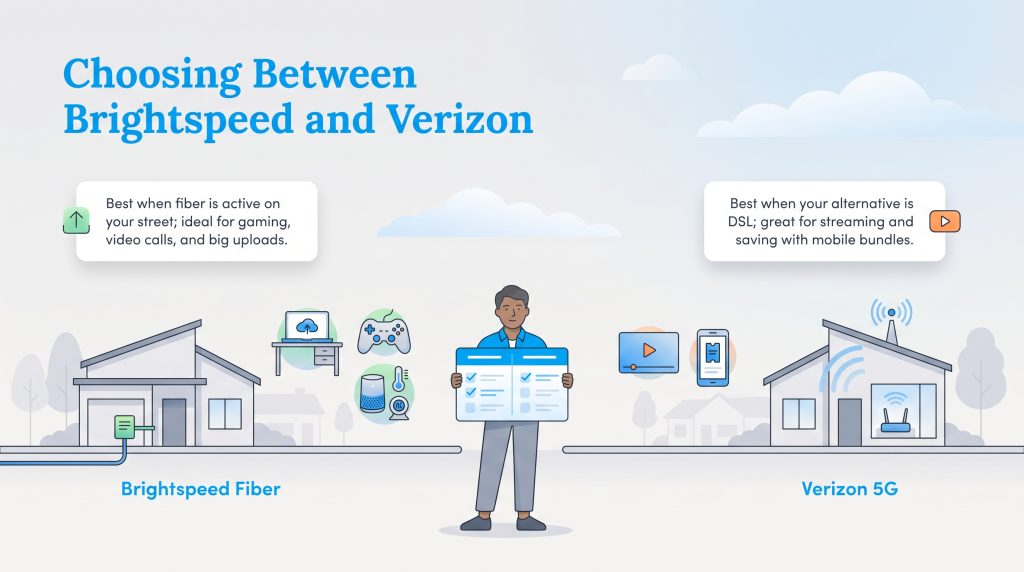
People constantly ask us, “Is Brightspeed better than Verizon?” The truth is that answering this subjective question requires breaking down your specific household use cases. What works beautifully for a casual web surfer might be a total nightmare for a competitive online gamer.
When to Switch From Verizon to Brightspeed
We highly recommend you switch from Verizon to Brightspeed if their new fiber network is completely built out and active on your street. When evaluating Brightspeed fiber vs Verizon home internet, a wired fiber-optic connection is usually more stable than fixed wireless, especially for gaming, video calls, and large uploads. Symmetrical fiber speeds — where your download vs. upload speed is matched — are excellent features for remote workers uploading massive files, heavy gamers needing low latency, and large smart homes running dozens of connected devices simultaneously.
When to Stick With Verizon 5G
On the flip side, we recommend sticking with Verizon 5G if your only other option is Brightspeed’s legacy DSL. A 5G fixed wireless connection will almost always outperform aging copper lines, delivering faster downloads and more reliable video streaming. Furthermore, you should definitely use Verizon if you already pay for a premium Verizon mobile plan, as that bundle discount makes the monthly internet cost incredibly tough to beat.
Making the Call on Your Next Internet Provider
Deciding between these two telecommunications giants ultimately comes down to your address and your patience. If you have access to Brightspeed’s newly laid fiber lines, take it for the unmatched reliability and symmetrical speeds. It is an energy-saving option that future-proofs your home for years to come. However, if you are stuck with outdated DSL and tired of endless buffering, Verizon 5G Home Internet is your best escape route for immediate relief. As you go about setting up utilities in your new home, take a moment to verify exactly what wiring exists on your street. A little upfront research can help you avoid slow speeds, surprise fees, and a service that does not fit how your household actually uses the internet.
Frequently Asked Questions About Brightspeed and Verizon
Does Brightspeed or Verizon have data caps?
Can I install Verizon 5G Home Internet myself?
Is Verizon Fios the same as Verizon 5G Home Internet?
Which internet provider is best for a smart home?
Are there early termination fees if I switch providers?
Is Verizon 5G Home Internet good for gaming?
What should I do if Brightspeed Fiber is not available yet?
About the Author

David has been an integral part of some of the biggest utility sites on the internet, including InMyArea.com, HighSpeedInternet.com, BroadbandNow.com, and U.S. News. He brings over 15 years of experience writing about, compiling and analyzing utility data.

LaLeesha has a Masters degree in English and enjoys writing whenever she has the chance. She is passionate about gardening, reducing her carbon footprint, and protecting the environment. She also recently served as President of the Board for City Sprouts (a community garden).