
Coal has fueled the electric grid for over a century, but rising costs and environmental concerns are changing how it powers our homes.
Key Takeaways
- Coal power accounts for a shrinking percentage of the U.S. energy grid as renewables and natural gas become more affordable.
- The process involves burning mined coal to create steam, which spins a turbine to generate electricity for your home.
- Homeowners can often choose cleaner alternatives by shopping for renewable energy plans or installing solar panels.
You might flip a switch without thinking about where the light comes from, but the source of your electricity impacts both your monthly bill and the environment. For decades, coal has served as the reliable workhorse of the American energy grid, keeping the lights on day and night. However, the energy landscape is shifting rapidly as technology advances and priorities change. In this guide, we break down exactly what coal power is, how it works, and what the transition away from fossil fuels means for your household utilities.
What Is Coal Power?
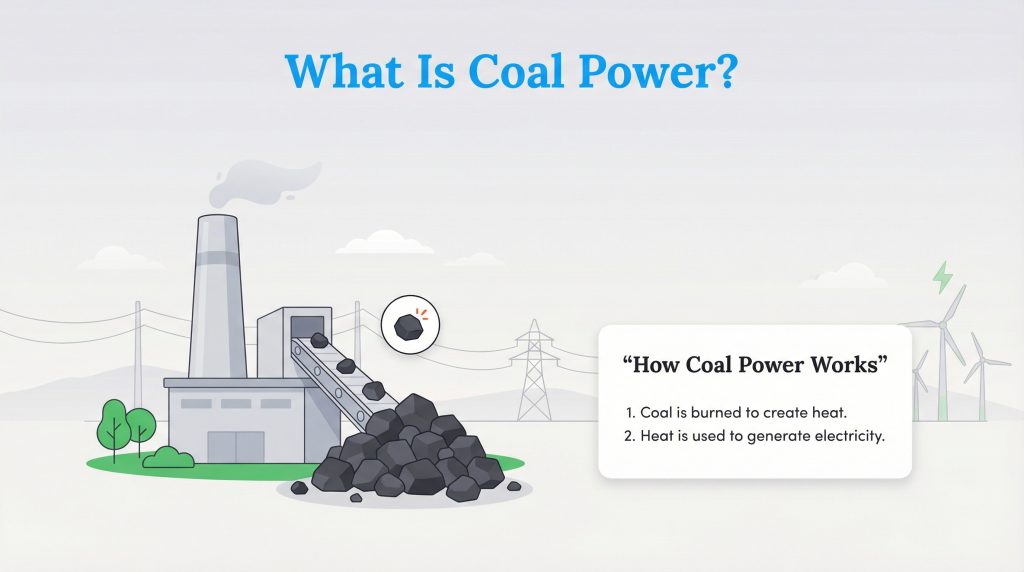
Coal power is electricity generated through the thermal combustion of coal, a combustible black or brownish-black sedimentary rock. This rock is composed mostly of carbon and hydrocarbons, formed over millions of years from the remains of ancient vegetation. When we burn it, we release the energy stored in those ancient plants to create heat.
There are different types of coal used for energy, ranging from Anthracite (hard coal with high energy content) to Lignite (softer coal with lower energy). Regardless of the specific type, utilities have historically relied on coal as a “baseload” power source. This means it can produce energy steadily around the clock, unlike variable sources like wind or solar. While its dominance is fading, it remains a significant part of electricity generation in many parts of the country.
How Does a Coal Power Plant Work?
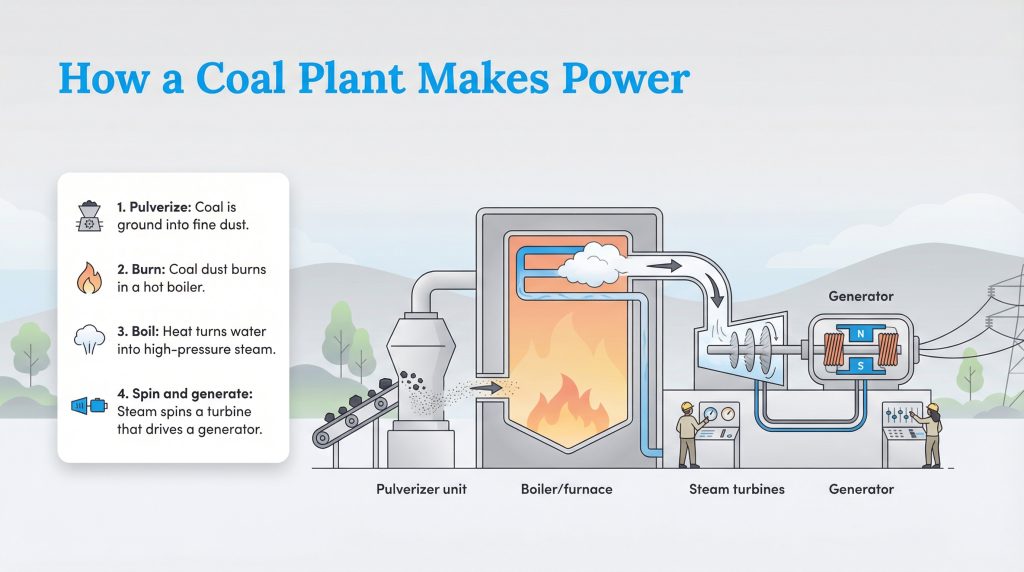
The machinery inside a coal plant is massive and complex, but the basic concept is actually quite simple. It is all about using fire to boil water. Here is the step-by-step process of how a rock becomes the electricity charging your phone:
- Pulverizing: Before it is burned, the coal is crushed into a fine dust in a large machine called a pulverizer. This increases the surface area, allowing it to burn hotter and faster.
- Combustion: The coal dust is blown into a giant furnace (boiler), where it combusts at incredibly high temperatures.
- Steam Generation: The heat from the burning coal boils water flowing through pipes inside the boiler, turning it into high-pressure steam.
- Generation: This steam rushes against the blades of a turbine, spinning it at high speeds. The turbine is connected to a generator, which uses magnets and copper wire to convert that mechanical motion into electrical energy.
From the Plant to Your Plug: The Grid Connection
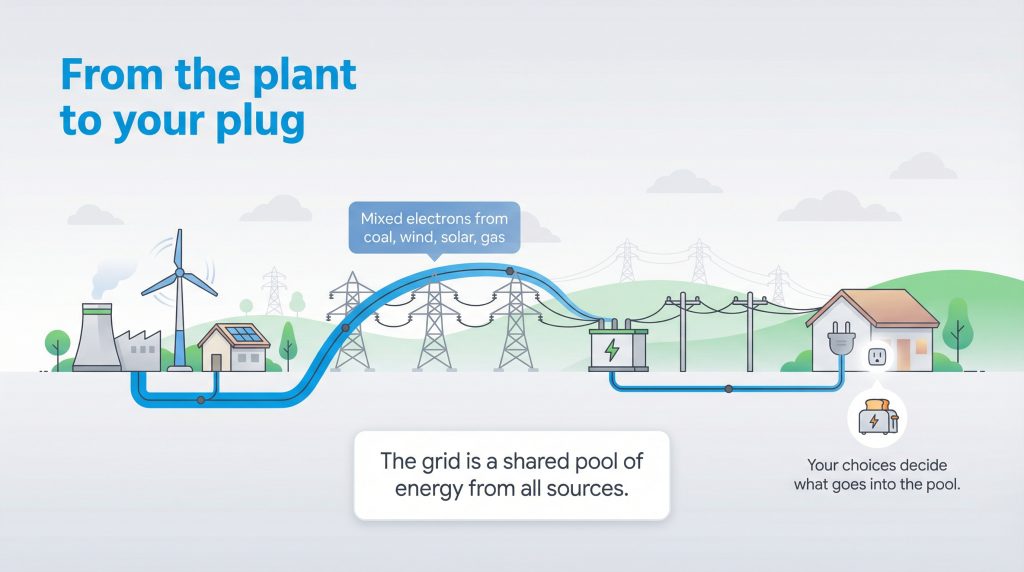
Once the generator creates the electricity, the journey is far from over. The voltage is stepped up by transformers so it can travel efficiently over long-distance transmission lines. It eventually reaches a local substation, where the voltage is lowered back down to safe levels for distribution to your neighborhood.
It is important to understand that the electrical grid acts like a giant pool. Electrons generated by coal plants mix with electrons from wind farms, solar panels, and natural gas plants. When you plug in your toaster, you cannot filter out the “coal electrons” from the “solar electrons.” However, your financial choices can influence how much coal is poured into that pool in the first place.
The Pros and Cons of Coal Energy
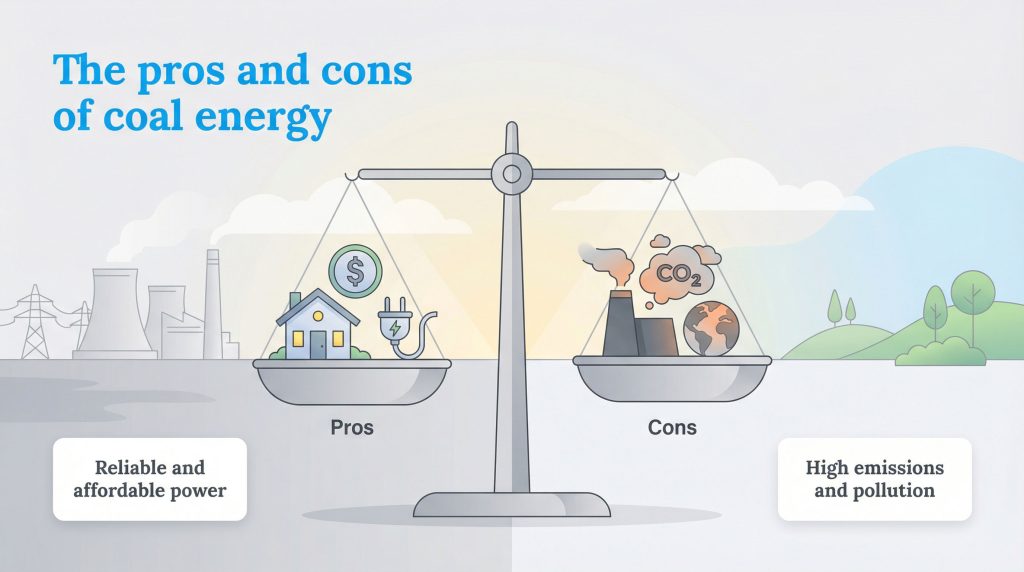
Coal helped build the modern economy, but it comes with significant drawbacks that are becoming harder to ignore. Here is a breakdown of why utilities use it and why many are moving away from it.
| Advantages of Coal Power | Disadvantages of Coal Power |
|---|---|
| Reliability: Works 24/7 regardless of weather conditions. Abundance: The U.S. has massive domestic coal reserves. Infrastructure: Plants and supply lines are already built and established. | Emissions: High levels of greenhouse gases and pollutants. Mining Impact: Can damage landscapes and local water tables. Rising Costs: In many regions, it is now more expensive to operate than building or running new wind, solar, or natural gas projects. |
Comparing Energy Sources: Costs and Emissions
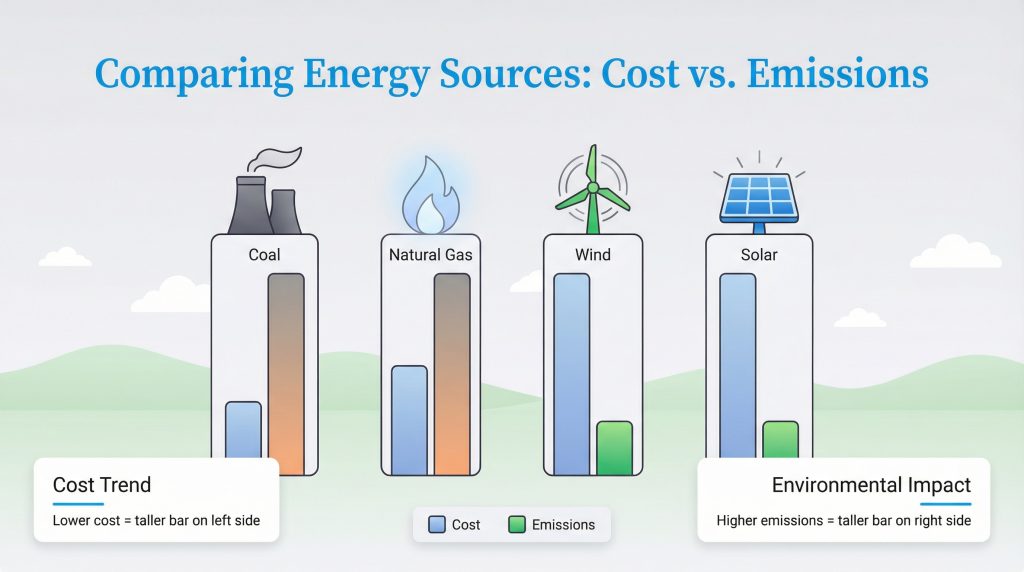
To help you see how coal stacks up against other common energy sources, we’ve compared them based on typical cost trends and environmental impact.
| Energy Source | Typical Cost Trend | Emissions |
|---|---|---|
| Coal | Operating costs can be high as plants age and fuel prices fluctuate. | Highest CO₂ and air pollutant emissions per unit of electricity. |
| Natural Gas | Often cheaper than coal but still tied to market fuel price swings. | Lower CO₂ than coal but still a fossil fuel with methane concerns. |
| Solar | Upfront installation cost, but very low operating cost once built. | No direct emissions during operation. |
Environmental Impacts and Health Concerns
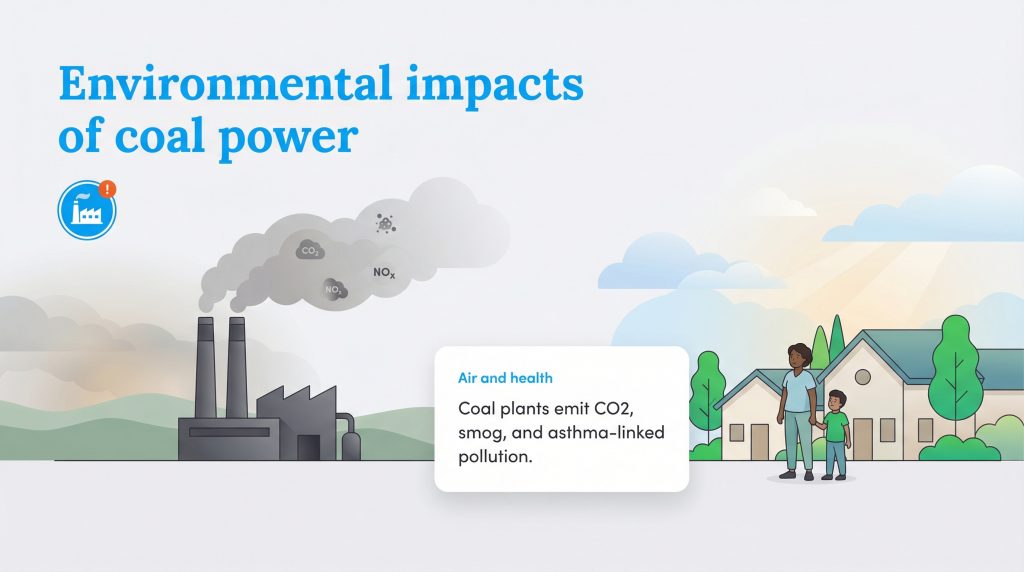
The primary reason for the shift away from coal is its environmental footprint. Burning coal releases significant amounts of carbon dioxide, which is a major driver of global climate change. In addition to carbon, coal plants emit sulfur dioxide (which causes acid rain) and nitrogen oxides (which contribute to smog). These emissions can affect air quality and have been linked to respiratory issues like asthma in communities located near power plants.
You may hear the term “clean coal technology” in discussions about energy. This refers to methods used to reduce these impacts, such as installing “scrubbers” in smokestacks to trap pollutants before they escape. While these technologies help reduce local air pollution, they are expensive to install and do not eliminate the carbon emissions responsible for climate issues. For more detailed data on emissions and air quality, you can review reports from the Environmental Protection Agency (EPA).
The Future of Coal: Is It Going Away?
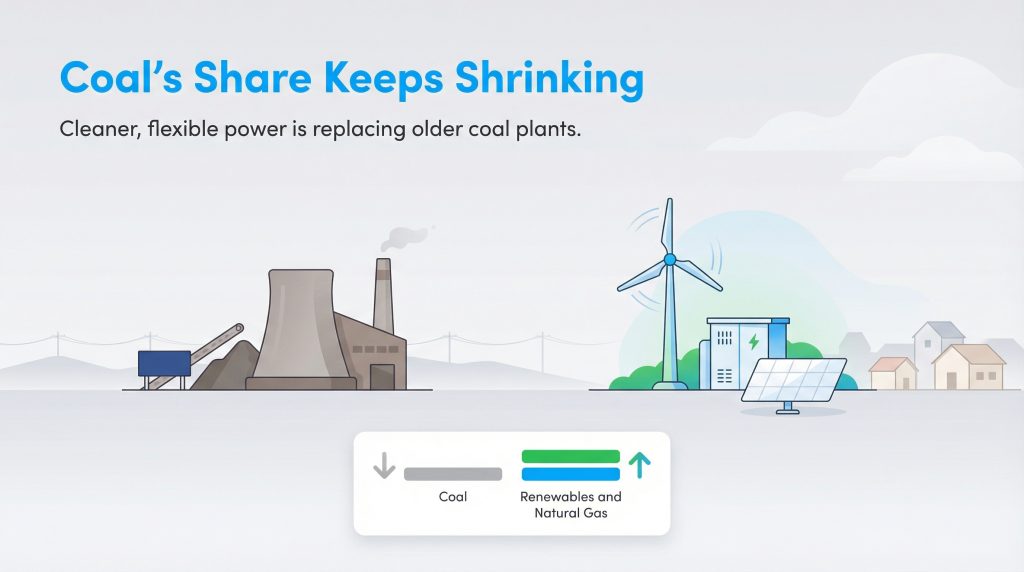
The role of coal in the United States is shrinking. In recent years, hundreds of coal-fired power plants have been retired, and very few new ones are being built. This isn’t just about environmental regulation; it is largely about economics. Natural gas has become abundant and cheap, and the cost of building renewable energy projects has plummeted.
According to the U.S. Energy Information Administration (EIA), coal’s share of electricity generation has dropped significantly over the last decade. As we look toward 2030 and beyond, grid operators are prioritizing flexible, cleaner energy sources. While coal will likely remain part of the mix for years to come to ensure reliability, its days as the dominant king of the grid are effectively over. Because older coal plants are becoming more expensive to maintain compared to modern alternatives, relying heavily on them can sometimes lead to higher utility rates over time.
Can You Choose Where Your Power Comes From?
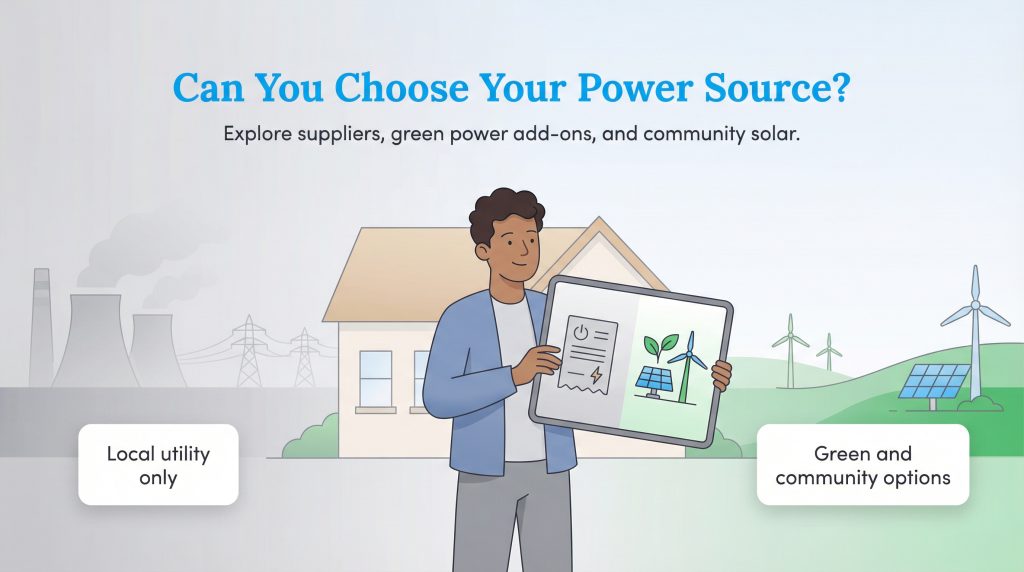
If you are concerned about the impact of coal power, you might be able to do something about it. In deregulated energy markets, like those in Texas, Pennsylvania, and Ohio, you have the power to choose your electricity supplier. Many providers offer plans backed by 100% renewable energy, ensuring that your usage is matched by wind or solar generation. If you are moving soon, checking our moving utility checklist can help you compare available providers and their green energy credentials.
Even if you live in a regulated market where you must buy from the local utility, you still have options. Many utilities offer “Green Power” programs where you pay a small premium to support renewable projects. Alternatively, you can look into community solar subscriptions, which allow you to support local solar arrays without installing panels on your own roof. If you are interested in generating your own power, check out our guide to solar energy for homeowners.
Money-Saver: Going green doesn’t always cost more. In many competitive markets, renewable energy plans are now priced lower than traditional fossil-fuel plans due to the falling costs of wind and solar technology. For more tips on lowering your monthly expenses, read our guide on how to save on your electric bill.
Making Smarter Energy Decisions for Your Home
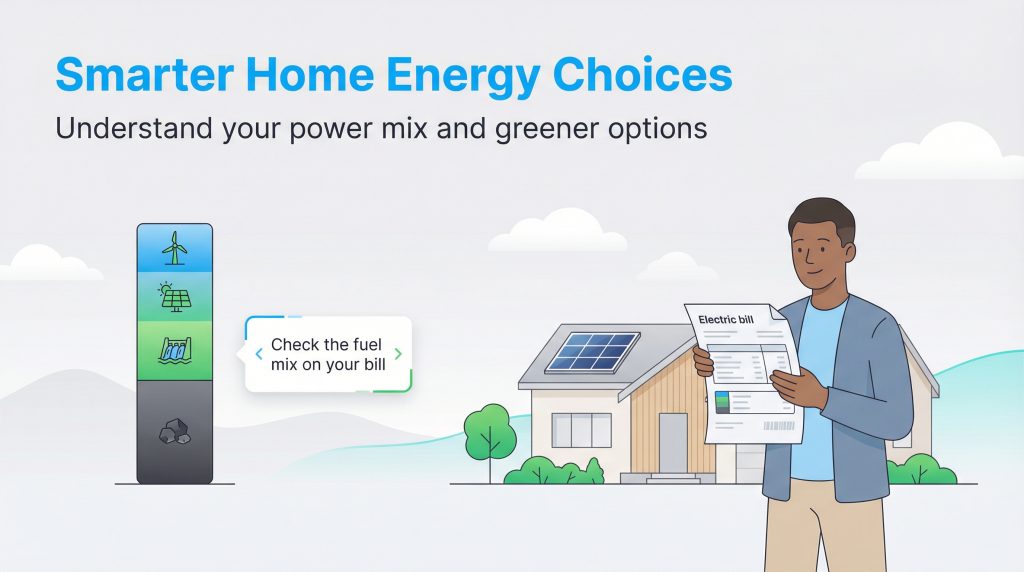
While coal provided the energy that built much of our modern infrastructure, the future is clearly moving toward cleaner, more efficient sources. Understanding where your power comes from allows you to make informed decisions about your household budget and your environmental footprint. Check your next electric bill to see your “fuel mix” disclosure, and explore what green options are available in your area to take control of your home’s energy impact. At UtilitiesForMyHome, we are here to help you navigate these choices so you can find the best fit for your lifestyle and values.
FAQs About Coal Power
Is coal renewable or nonrenewable?
Why are coal power plants closing down?
Does coal power cost more than solar energy?
How much of the U.S. electricity comes from coal?
Can I run my house without using coal power?
About the Author

LaLeesha has a Masters degree in English and enjoys writing whenever she has the chance. She is passionate about gardening, reducing her carbon footprint, and protecting the environment.