


Small setup choices, smart thermostat habits, and cooler daily routines can help you cut summer electricity costs without giving up comfort.
Key Takeaways
- Set your smart thermostat around 78 degrees Fahrenheit when you’re home, then raise it when you’re away to reduce cooling demand.
- Shift major appliance use to off-peak hours if your electric plan charges lower rates at certain times.
- Choose ENERGY STAR-certified appliances when replacing old equipment in your new home to establish long-term, eco-conscious efficiency.
Moving into a new home requires significant effort, and a high utility bill doesn’t make the transition any easier on your household budget. Finding actionable tips for saving on electricity bill for the summer helps you establish eco-conscious cooling habits from the day you unpack. With the right thermostat schedules, strategic window treatments, and mindful appliance routines, you can keep your home comfortable while working to lower electric bill in summer.
| Tip | Upfront Cost | Effort Level | Best For |
|---|---|---|---|
| Program thermostat | Low to medium | Easy | Daily cooling savings |
| Replace HVAC filter | Low | Easy | Better airflow |
| Add blackout curtains | Low to medium | Easy | Sunny rooms |
| Use off-peak hours | Free | Easy | Time-of-use plans |
| Seal air leaks | Low | Moderate | Preventing drafts |
| Upgrade appliances | High | Moderate | Long-term savings |
| Claim federal rebates | Free | Moderate | Offsetting upgrade costs |
Why Summer Electric Bills Go Up
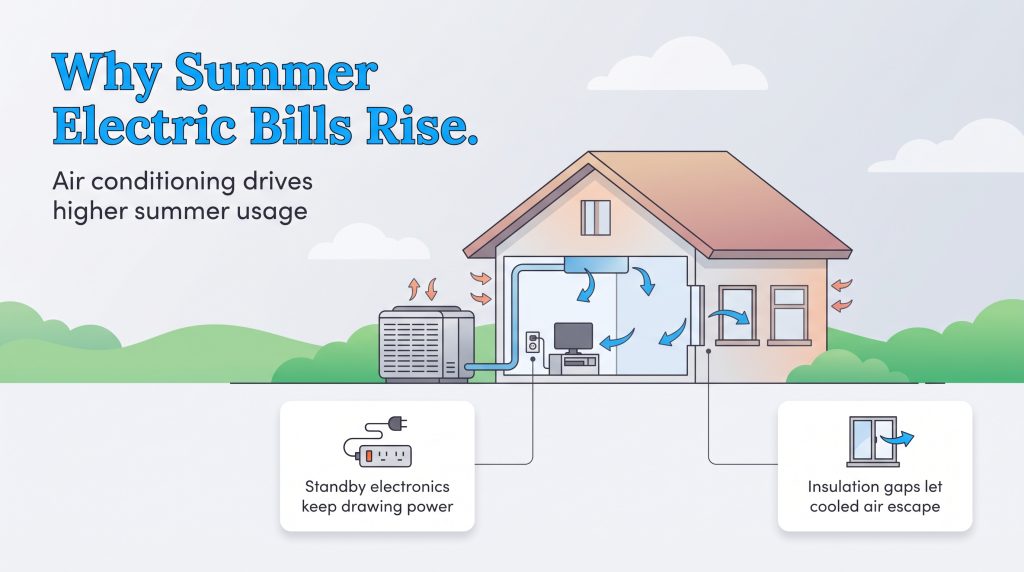
In warm climates, many households see a noticeable jump in utility costs between June and September. Understanding what drives these costs simplifies understanding your electric bill and helps you tackle the problem at the source. Three main culprits typically cause these high seasonal utility bills:
- Air conditioning usage: Your central cooling system works overtime to fight off outdoor heat, drawing significantly more power than in mild weather.
- Phantom energy drain: Electronics left plugged in on standby mode create a persistent, low-level power drain all day long.
- Poor insulation: Hidden structural flaws allow precious chilled air to escape, forcing the HVAC unit to cycle on far more frequently.
According to federal data regarding average residential electricity usage, seasonal shifts drastically impact the amount of kilowatt-hours a typical family consumes. We recommend reviewing past usage history if you can access it by asking the previous owner or checking your provider’s dashboard after your first billing cycle.
| Task | When to Do It | Why It Helps |
|---|---|---|
| Check your electric rate plan | Before or during move-in | Confirms whether off-peak savings apply |
| Replace HVAC filters | First week | Improves airflow and efficiency |
| Apply weatherstripping | First week | Blocks hot drafts from entering the home |
| Program thermostat schedule | First week | Prevents overcooling when you are away |
| Install curtains or shades | First month | Reduces solar heat gain |
| Review provider usage dashboard | After first bill cycle | Helps spot unusual usage patterns |
📌 Quick Fact: Heating and cooling operations combined often make up the largest share of household energy use.
Conduct a Home Energy Audit First
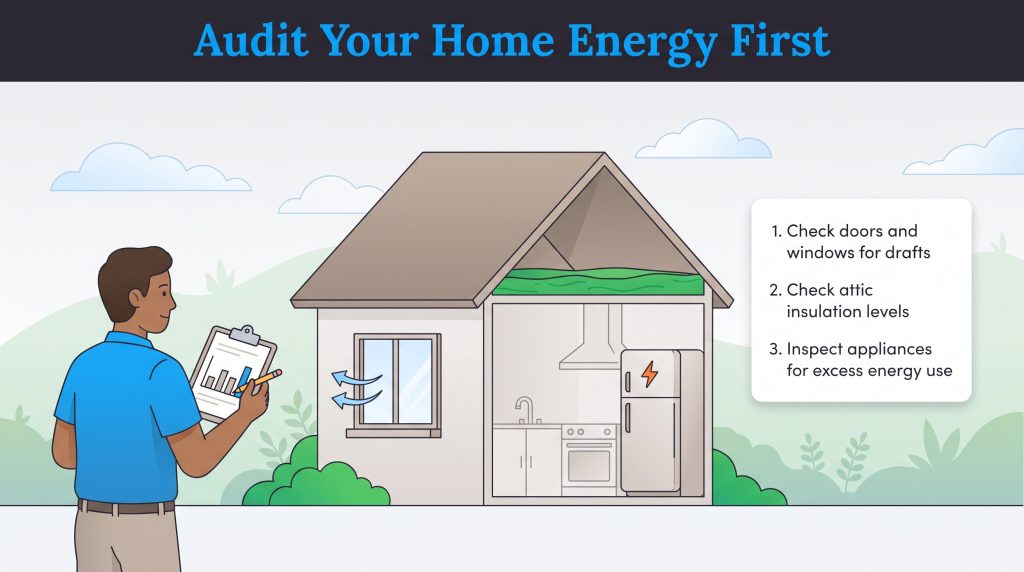
Before making major home upgrades, establish a clear baseline of your energy usage to identify specific inefficiencies in your new home. You can perform a DIY home energy audit or hire a professional to thoroughly inspect the property. Establishing this baseline guarantees your targeted efforts actually address the areas wasting the most electricity.
During a comprehensive home energy audit, be sure to check three specific areas. First, look for drafts around doors and windows that allow cooled air to escape. Second, check the insulation levels in your attic to ensure heat isn’t radiating down into your living space. Finally, inspect your major appliances to identify any outdated models that might consume excess power during normal operation.
1. Optimize Your Summer Thermostat Settings
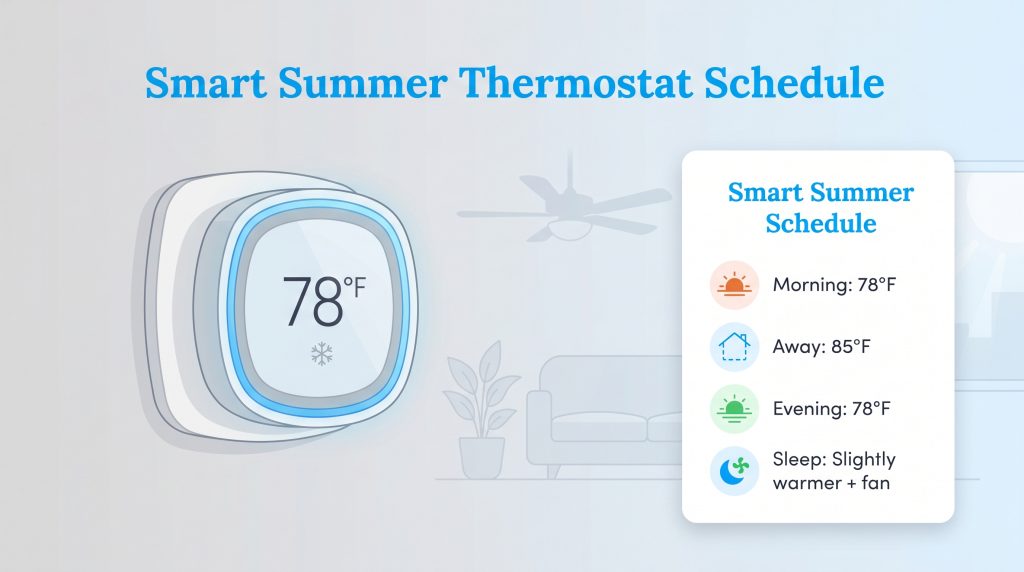
Installing a programmable smart thermostat remains one of the most effective ways to automate your seasonal savings immediately. Dialing in the optimal summer thermostat settings guarantees your air conditioning system rests rather than overworking itself to maintain a freezing climate. The Department of Energy recommends finding an energy-efficient AC temperature, typically keeping your thermostat set to 78 degrees Fahrenheit while you are awake and relaxing indoors.
Upgrading to an ENERGY STAR-certified smart thermostat removes the burden of manually adjusting the dial every time you leave the room. For optimal indoor comfort and maximum efficiency, we suggest implementing the following daily schedule:
| Time of Day | Recommended Setting |
|---|---|
| Morning | 78 degrees Fahrenheit |
| Away | 85 degrees Fahrenheit |
| Evening | 78 degrees Fahrenheit |
| Sleep | 80-82 degrees Fahrenheit (with ceiling fan) |
2. Use Away Mode to Cut Cooling Costs
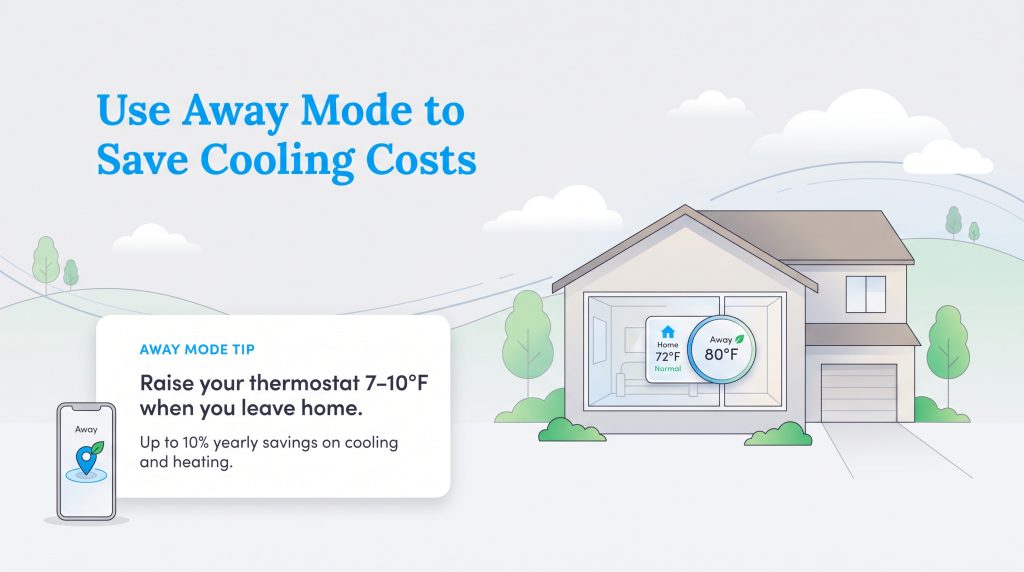
Many homeowners incorrectly believe that keeping the AC running at a constant, low temperature all day requires less overall energy than letting the house warm up. In reality, modern houses naturally lose their cooling capacity to the hot outdoors, meaning a system constantly battling to hold 72 degrees Fahrenheit in an empty house burns through excessive electricity. To save money, simply program your device to raise the ambient temperature by seven to 10 degrees Fahrenheit whenever everyone departs for work or school.
💸 Money-Saver: According to the Department of Energy, adjusting your thermostat seven to 10 degrees Fahrenheit from its normal setting for eight hours a day can save up to 10% a year on heating and cooling.
3. Leverage Off-Peak Electricity Hours
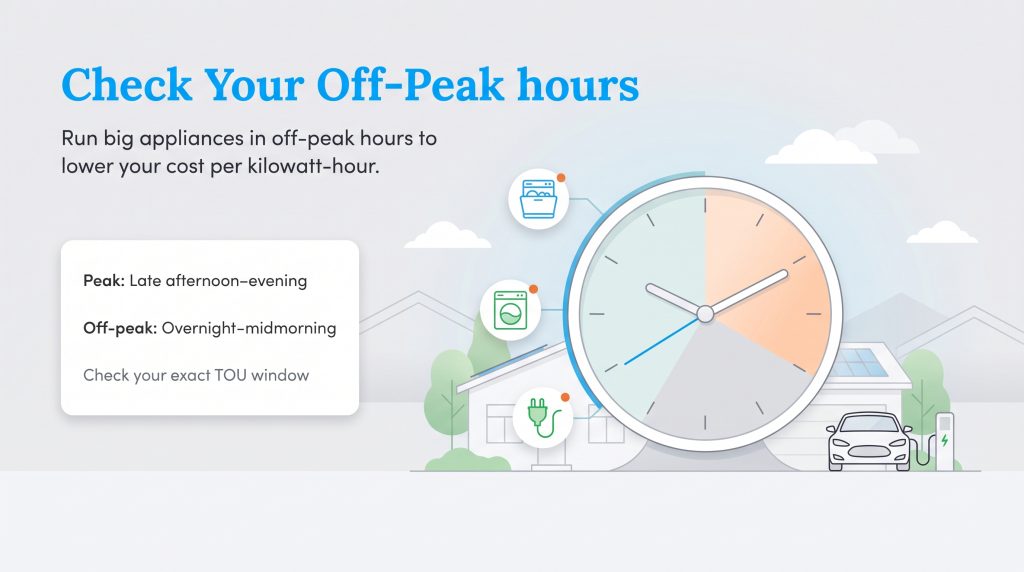
When you set up service at a new address, your local provider might offer a time-of-use energy plan that charges different prices based on the time of day. Under these tiered plans, you can save a significant amount of money by shifting your power consumption away from the late afternoon when community demand peaks. To lower what you pay per kilowatt-hour, always wait until off-peak hours to run your dishwasher, fire up your electric dryer, or plug in your EV charger.
| Peak Hours (Often late afternoon to evening) | Off-Peak Hours (Late night/early morning) |
|---|---|
| Microwave usage, grilling outside, reading, watching television, light device charging | Running the dishwasher, doing heavy laundry, charging electric vehicles, bulk meal prep |
4. Block Afternoon Sun With Window Coverings
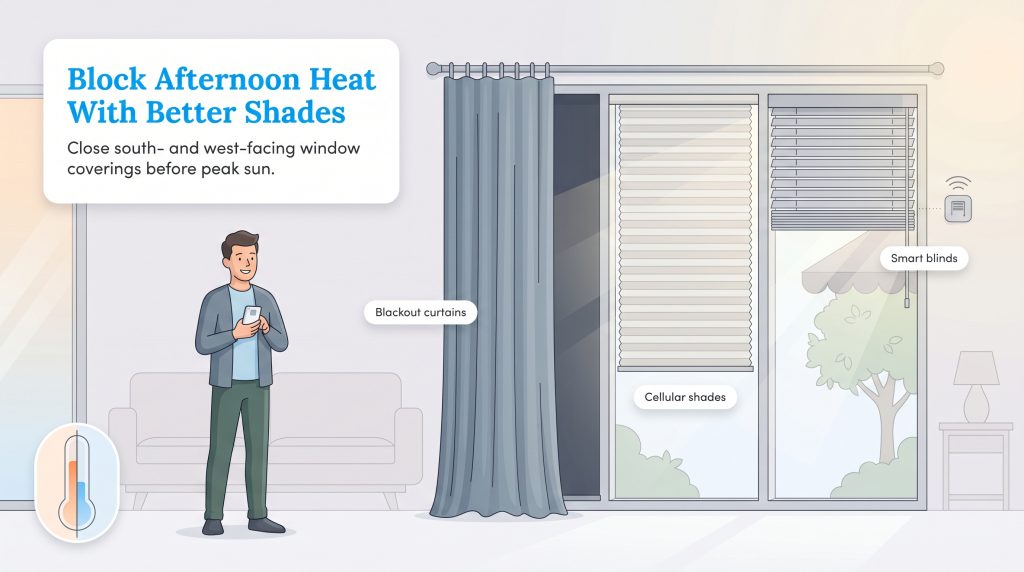
Direct summer sunlight streaming through uncovered glass quickly turns your living room into a localized greenhouse. Passive cooling techniques block that incoming thermal radiation before it enters your conditioned space, reducing how hard your HVAC equipment works. Closing your energy-efficient window coverings on the south- and west-facing sides of your house during the brightest parts of the day keeps the interior naturally cool.
Investing in heavy blackout curtains, cellular shades that utilize insulating honeycomb structures, or automated smart blinds creates a formidable physical barrier against afternoon rays. If you are currently renting, consider utilizing tension-rod blackout curtains or applying a temporary, removable thermal window film. Smart blinds even integrate directly with your central home hub, automatically lowering themselves based on the position of the sun.
5. Run Ceiling Fans Counterclockwise
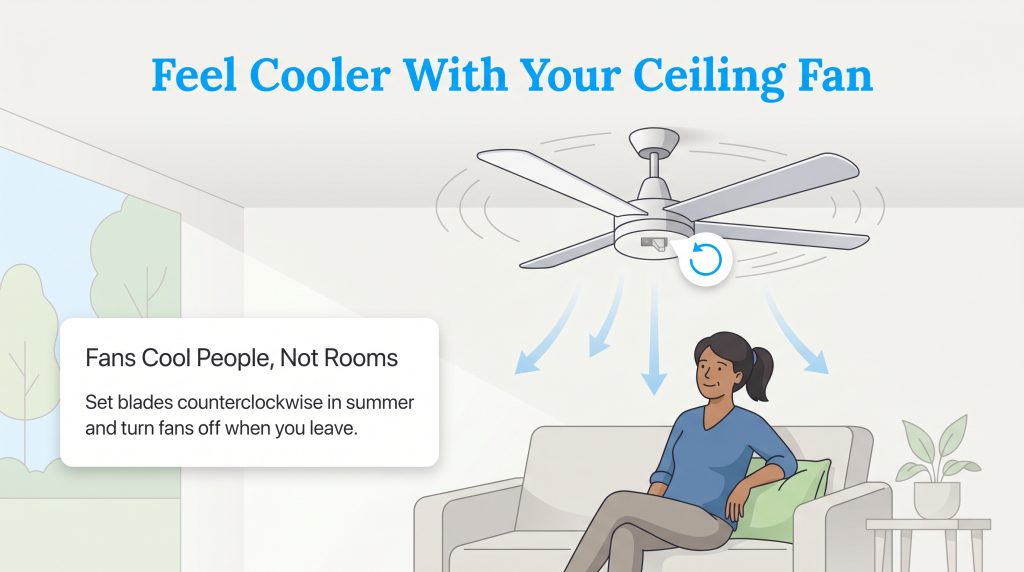
Mastering how to keep your house cool hinges on understanding the wind-chill effect. A counterclockwise ceiling fan pushes a column of crisp air downward, causing rapid evaporation of moisture from your skin. This scientifically makes you feel several degrees colder without lowering the actual temperature of the room.
However, it is important to remember that fans only cool people, not empty rooms. Leaving a fan spinning in a vacant bedroom wastes electricity and can introduce heat from the motor friction back into the environment. Always remember to turn the fan off immediately when leaving the room to protect your energy budget.
💡 Pro Tip: Locate the small directional toggle switch on the base of your ceiling fan motor and flip it so the blades rotate counterclockwise during the hot summer months.
6. Perform Routine HVAC Filter Maintenance
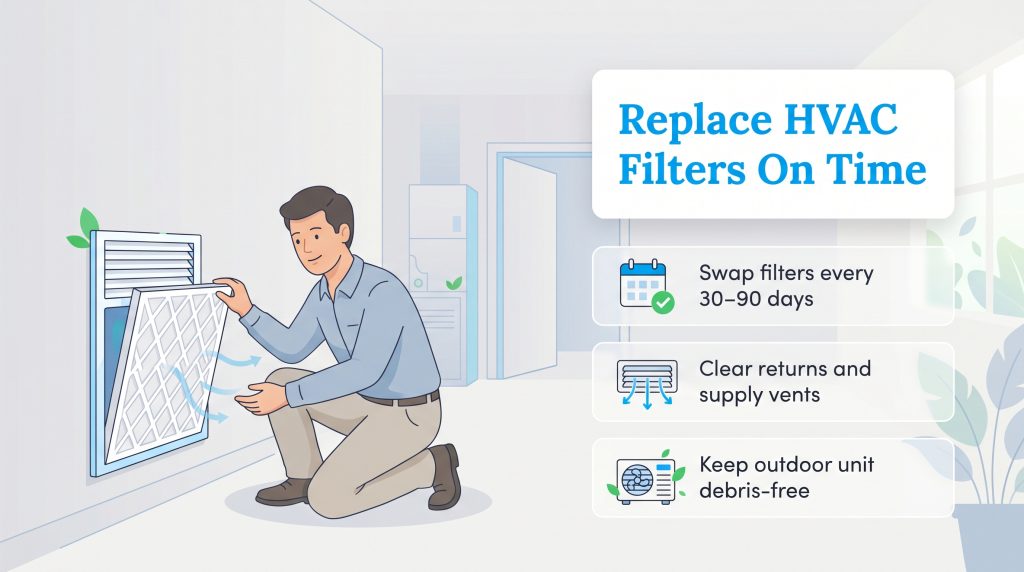
Ignoring your dirty air filters practically guarantees a massive spike in your monthly utility expenses. A mechanical blower motor straining to pull fresh air through a mat of dust consumes excess electricity while barely pushing chilled air through the vents. Routine HVAC filter maintenance protects your mechanical components from early failure and keeps indoor airflow robust. If you are unfamiliar with the duct layout of your new property, follow these simple steps to replace your filter:
- Locate the large return vents situated in your hallways or identify the primary filter slot located on the main air handler unit.
- Turn off the entire HVAC system directly at the thermostat to prevent loose debris from getting sucked into the ductwork.
- Remove the old filter, verify the exact size dimensions, and slide the new replacement in with the printed airflow arrows pointing toward the machine.
7. Adjust Your Water Heater Temperature
Your air conditioner isn’t the only appliance working hard during the summer months. Lowering your water heater temperature to exactly 120 degrees Fahrenheit is an easy way to capture additional energy savings. This simple adjustment prevents unnecessary standby heat loss and reduces overall energy consumption across your home.
Many manufacturers ship water heaters with the default thermostat set to 140 degrees Fahrenheit, which is often hotter than necessary for daily household use. Lowering this setting ensures you only pay to heat water you actually need, keeping your utility costs in check even when you take hot showers or run the washing machine.
8. Run High-Energy Appliances Efficiently
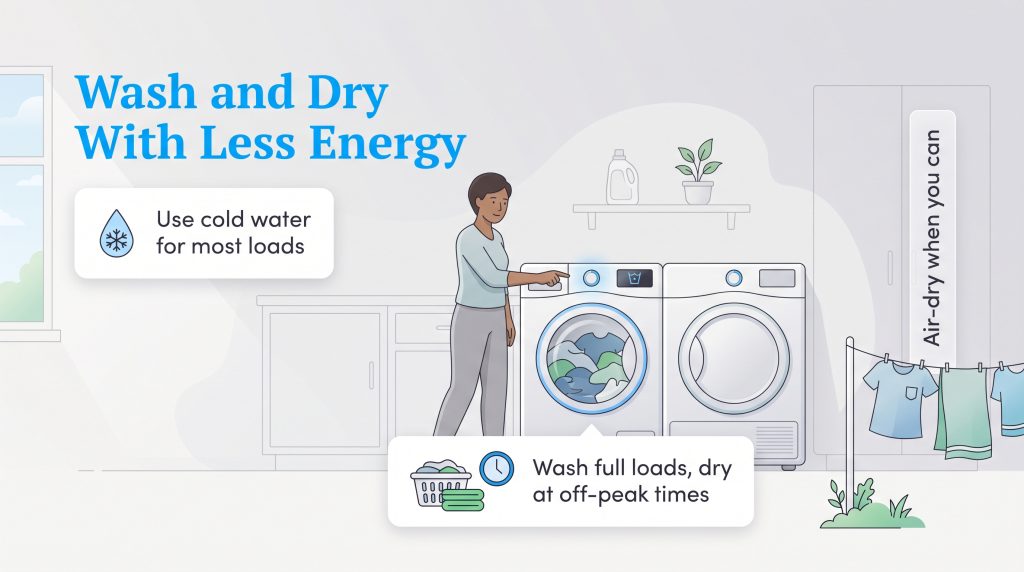
A surprising amount of household power goes into getting your clothes and dinner plates clean, but a few simple tweaks to your wash routine can instantly shrink your footprint. Switching your modern washing machine strictly to cold water cycles cleans everyday laundry effectively while bypassing the electricity needed to fire up the water heater. To maximize the baseline efficiency of every cycle, ensure you only run completely full loads in both your washer and dishwasher.
You also need to treat your clothes dryer with caution between the months of June and August. Dryers add unnecessary ambient heat and introduce high indoor humidity risks. Stick to running the dryer during off-peak hours to avoid grid premiums, or bypass the machine entirely by utilizing a backyard clothesline as a zero-cost, eco-conscious alternative.
9. Eliminate Phantom Energy Drain With Smart Plugs
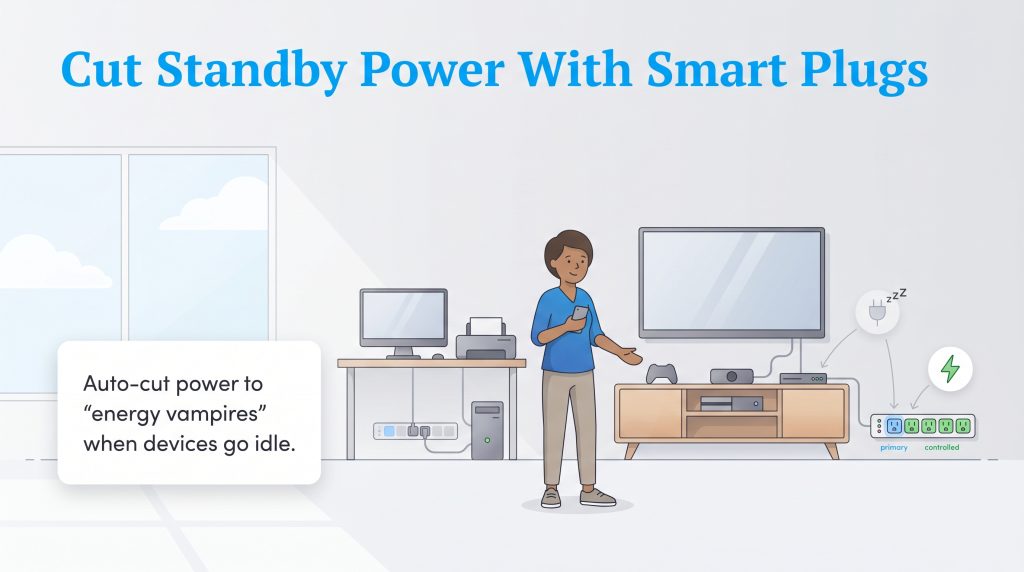
Phantom energy drain occurs when electronics continuously draw trace amounts of standby power even while turned off. These deceptive power drains lurk behind your television stand and under your home office desk, quietly driving up your monthly bill. Setting up a new home office presents the perfect opportunity to stop these leaks before they establish a foothold in your budget.
We recommend plugging your gaming consoles, computers, laser printers, and older televisions into intuitive smart plugs or advanced power strips. These smart strips automatically sense power drops and sever the active electrical connection to peripheral devices the moment the primary device powers down. Eliminating this standby consumption trims unnecessary base load without requiring you to crawl on the floor to unplug tangled cables every night.
10. Upgrade to Energy-Efficient Appliances
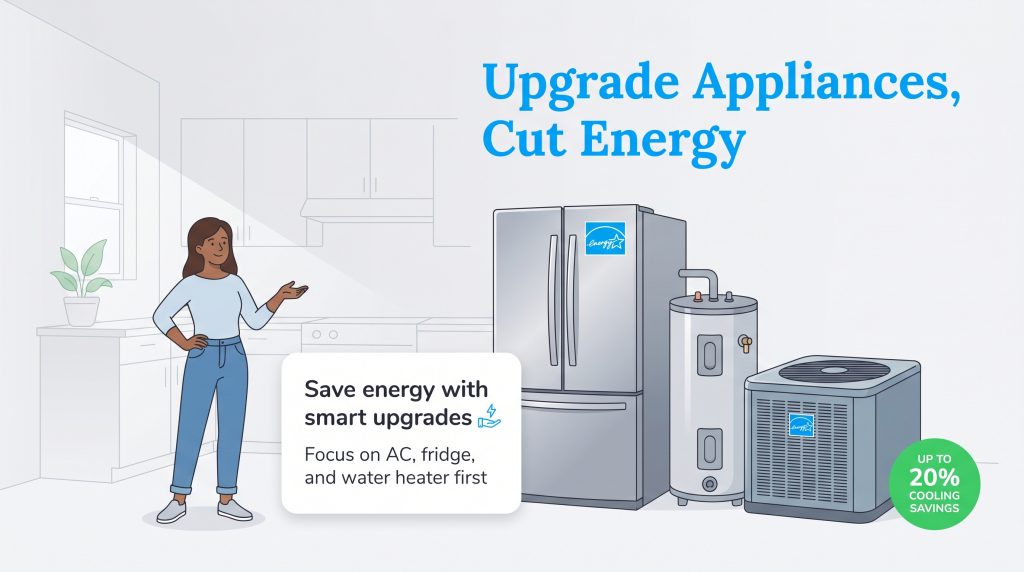
Moving into a new residence gives you the perfect excuse to closely scrutinize the hardware occupying your kitchen and utility closets. If you inherited outdated equipment from a previous owner, swapping them out pays dividends over the lifespan of the new machines. Upgrading to energy-saving appliances targets the biggest power consumers on your property, serving as one of your best long-term strategies to save on your electric bill.
While the initial purchasing price might seem intimidating, modern certified models operate using a remarkably small fraction of the electricity required by inefficient units built over a decade ago. If you cannot afford a brand-new appliance right away, confidently try a few low-cost maintenance steps instead. Regularly use the built-in eco mode on your dishwasher, thoroughly clean your refrigerator coils, and avoid keeping a highly inefficient spare fridge running in a hot garage.
🌱 Eco Edge: Replacing an older central AC system with an ENERGY STAR-certified model can reduce cooling costs by about 20%, depending on the unit and your home.
11. Track Daily Utility Usage Before You Upgrade
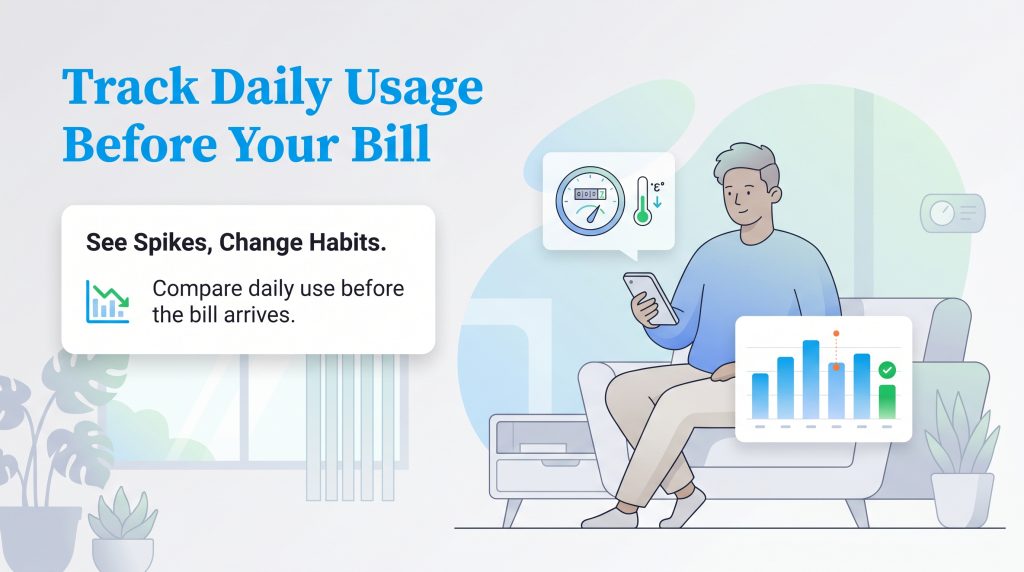
Before you invest in upgrades, track your daily utility usage to see exactly how much power your current appliances consume. Many modern power providers offer mobile apps or online dashboards that read data straight from your outdoor smart meter, helping you easily identify strange usage patterns and modify your habits in near real-time.
12. Seal Air Leaks With Weatherstripping
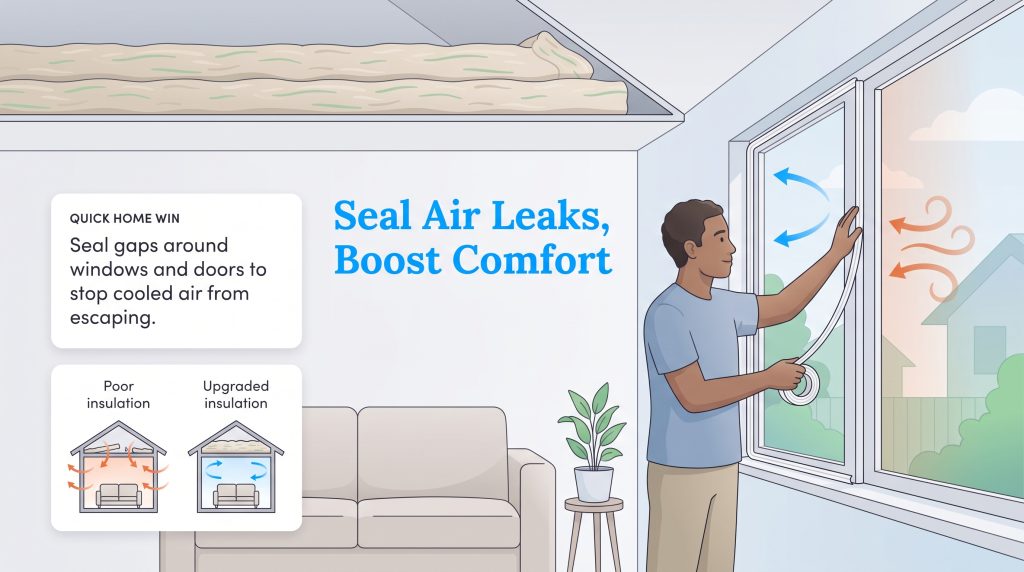
Addressing the physical building envelope of your property offers excellent returns on your investment. If your doors and windows feature tiny gaps, your air-conditioned breeze will drift outside while humid heat invades your living room. Fixing this hidden structural flaw immediately reduces your cooling costs and enhances your indoor comfort level.
Start your defensive strategy by carefully inspecting the perimeter of every exterior door and window. Actively apply fresh, high-quality weatherstripping and insulation around the movable door frames and run a tight bead of silicone caulk along the edges of stationary window panes to lock out external drafts.
💡 Pro Tip: To quickly spot hidden air leaks, hold a lit incense stick near your closed window frames on a windy day; if the smoke wavers horizontally, you have a draft that urgently needs sealing.
13. Switch to LED Lighting and Use Natural Light
If you recently moved into a charming older house, you might still find outdated incandescent lightbulbs occupying the overhead fixtures. Traditional incandescent bulbs are terrible at converting electricity into usable light, wasting roughly 90% of their consumed energy entirely as ambient heat. When you flip the switch on multiple outdated bulbs, you inadvertently introduce miniature space heaters into the very rooms you are trying to cool.
You must quickly swap out those ancient bulbs for advanced, eco-conscious LED alternatives to lower your indoor temperatures and reduce your lighting costs. Modern LED bulbs emit almost zero radiant heat. During the day, you should also turn off artificial lights completely and use natural sunlight to brighten your home without generating unnecessary thermal energy.
14. Cook Outdoors to Reduce Indoor Heat
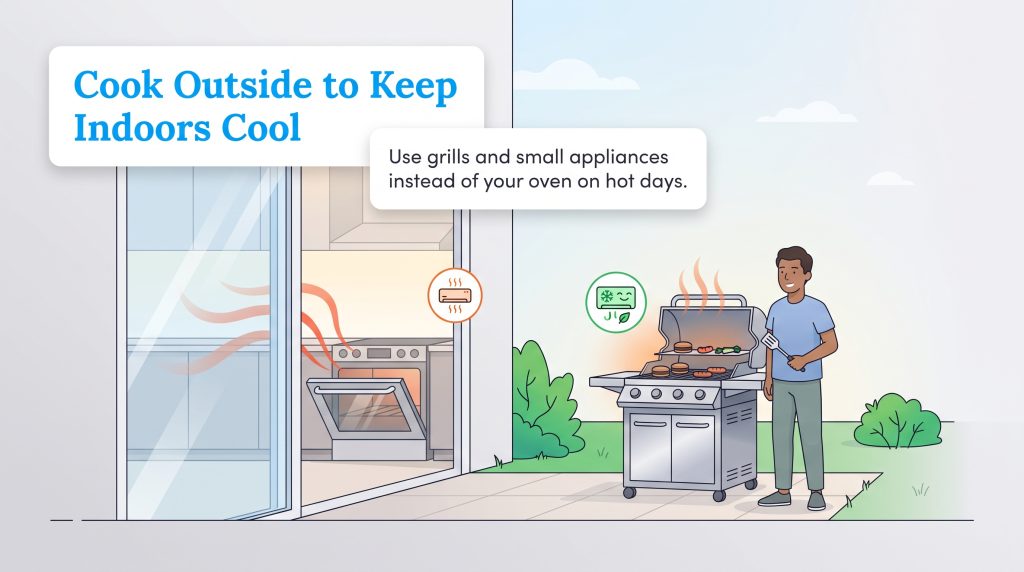
The daily habits you practice in your kitchen play a huge role in determining how hard your HVAC system works. Using a conventional oven pumps intense heat directly into the center of your home, forcing your AC unit to cycle on merely to counteract the appliance. To preserve your chilled environment, embrace alternative cooking methods during the summer months:
- Fire up the barbecue grill outside on the patio to keep smoke and thermal energy away from your conditioned space.
- Rely on your small microwave for quick meals during peak afternoon heat.
- Use a convenient slow cooker or air fryer on the counter, as these gadgets utilize significantly less electricity than a full-sized electric range.
15. Claim Federal Energy Rebates for Upgrades
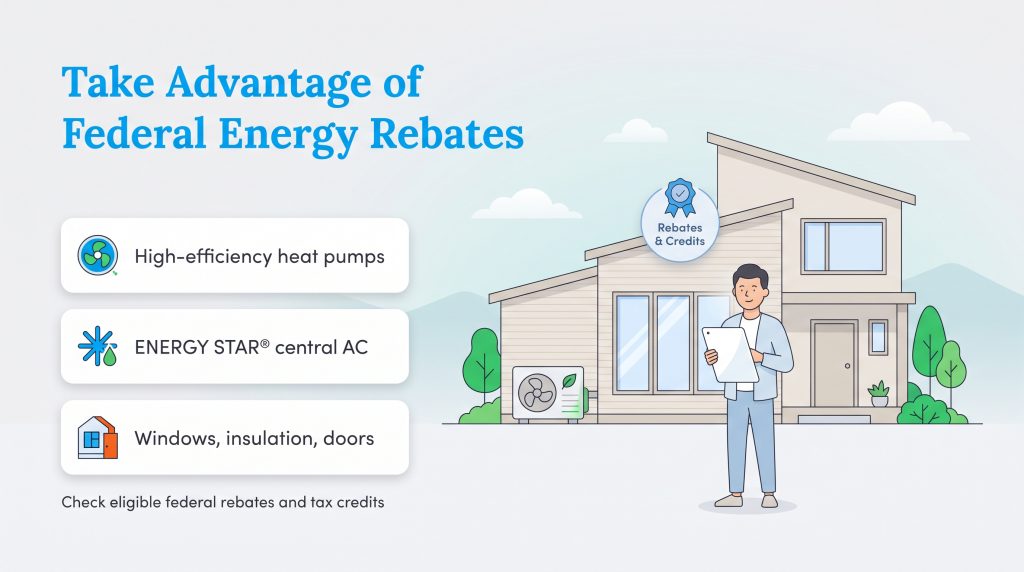
If you plan to purchase new eco-friendly cooking appliances, energy-efficient exterior doors, or an advanced HVAC system to further reduce heat, remember to check for available federal energy rebates. Smartly utilizing the Energy Efficient Home Improvement Credit helps offset the upfront costs so you can confidently afford top-tier equipment.
16. Plant Shade Trees and Use Strategic Landscaping
Optimizing the natural environment surrounding your property beautifully enhances your home’s ability to deflect the scorching sun. Strategic landscaping fundamentally serves as your home’s first robust line of defense against severe summer heatwaves. By carefully utilizing nature to alter the microclimate right outside your front door, you significantly lighten the daily workload on your mechanical cooling systems.
We recommend planting deciduous trees directly on the south and west sides of your property. During the peak summer season, the thick canopy of leaves blocks direct sunlight, which significantly reduces the thermal load on your AC unit. When winter arrives, the bare branches brilliantly allow warming sunlight to pass right through, helping naturally heat your home when you actually need it.
Preparing Your Home for Peak Summer Heat
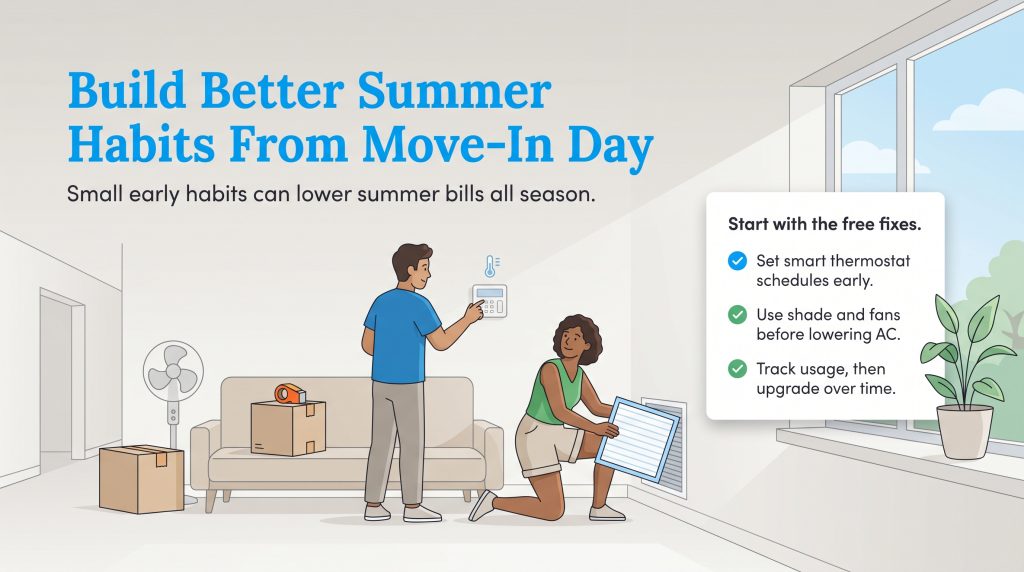
Automate your thermostat settings and actively maintain your mechanical equipment to effortlessly defend against high seasonal utility costs. Before the hottest months arrive, always check your current energy provider rates to ensure you are enrolled in the most cost-effective plan available.
Frequently Asked Questions About Summer Electricity Savings
What is the cheapest thermostat setting for summer?
What is the most energy-efficient AC temperature for summer?
What are the best air conditioner energy saving tips?
Do evaporative coolers save more money than AC in the summer?
Do ceiling fans actually lower my electric bill?
How much can I save by unplugging appliances?
Is it cheaper to leave the AC on all day or turn it off?
What time of day is electricity cheapest in the summer?
How much can weatherstripping reduce cooling costs?
Should I change electric plans before summer?
About the Author

LaLeesha has a Masters degree in English and enjoys writing whenever she has the chance. She is passionate about gardening, reducing her carbon footprint, and protecting the environment. She also recently served as President of the Board for City Sprouts (a community garden).

David has been an integral part of some of the biggest utility sites on the internet, including InMyArea.com, HighSpeedInternet.com, BroadbandNow.com, and U.S. News. He brings over 15 years of experience writing about, compiling and analyzing utility data.

Jared Evans is a licensed electrician and the owner of Full Circuit Electric in Omaha, Nebraska. As an expert reviewer for UtilitiesForMyHome.com, Jared uses his 10+ years of hands-on experience to ensure our electrical advice is safe, accurate, and easy to follow. Whether he's troubleshooting a complex wiring issue or sharing tips on green energy upgrades, Jared is dedicated to helping you power your home efficiently — and safely.