
Find the perfect filtration system to remove lead, PFAS, and impurities based on your living situation and budget.
Key Takeaways
- Renters should prioritize portable options like pitchers or countertop filters that require no plumbing changes and move easily with you.
- Homeowners can invest in under-sink or whole-house systems for superior long-term savings, convenience, and property value.
- Look for NSF certifications to ensure your selected filter actually removes harmful contaminants like lead, PFAS, and microplastics.
Finding the right water filter can feel overwhelming with so many technical terms and gadgets on the market, but improving your home’s water quality is one of the smartest health investments you can make. We have analyzed the top-rated systems available in 2026 to help you navigate the sea of options, specifically categorizing them by how easy they are to install and maintain depending on whether you lease your apartment or own your home.
Quick Look: Top Water Filters at a Glance
| Category | Top Pick | Best For | Key Feature | Price |
|---|---|---|---|---|
| Best Pitcher | ZeroWater 10-Cup Ready-Pour | Renters | 5-stage filter certified to reduce lead and dissolved solids | ~ $45.00 |
| Best Under-Sink | Aquasana Claryum 3-Stage | Homeowners | Retains healthy minerals while filtering | ~$199.00 |
| Best Whole-House | SpringWell CF1 System | Homeowners | High flow rate for city water | ~$1000.00 |
| Best Budget | PUR Plus Faucet Mount | Renters | Installs in minutes without tools | ~$33.00 |
Why Your Home Needs a Water Filter
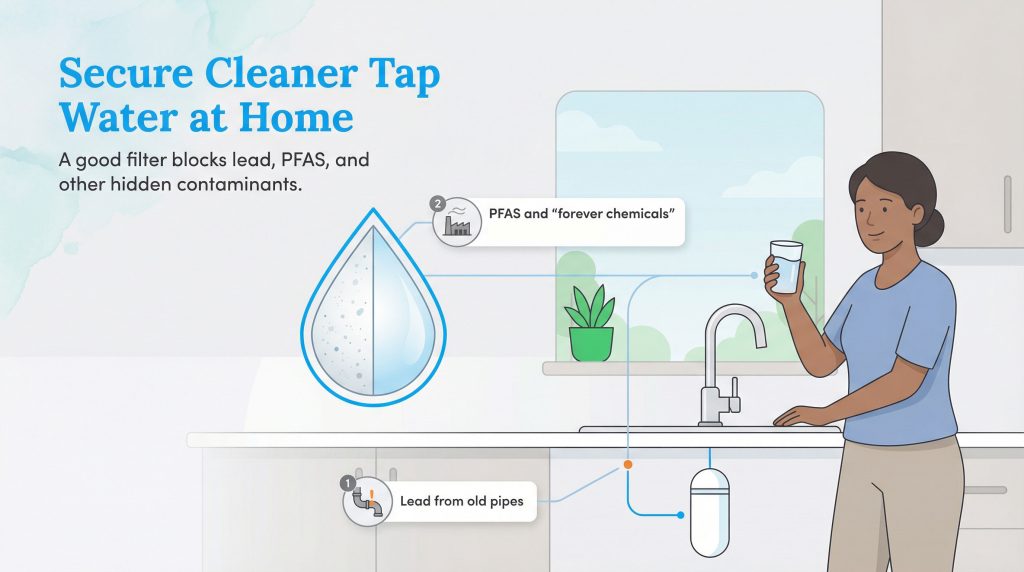
While municipal water treatment plants do a solid job of removing major pathogens, water can pick up contaminants as it travels through aging pipes to your faucet. Even if your city water meets federal standards, legal limits for certain chemicals may still be higher than what health experts recommend. Old service lines can leach lead into your supply, and emerging contaminants like PFAS (often called “forever chemicals”) are being detected in water systems nationwide.
Installing a quality filter is the most effective line of defense against these invisible threats. Water filters that remove lead act as a final barrier, ensuring that pipe corrosion doesn’t end up in your glass. Similarly, a specialized water filter for PFAS can significantly reduce your exposure to these persistent industrial chemicals. For more authoritative context on what might be in your local supply, you can review the EPA’s Ground Water and Drinking Water page.
Best Water Filters for Renters (No-Installation Options)
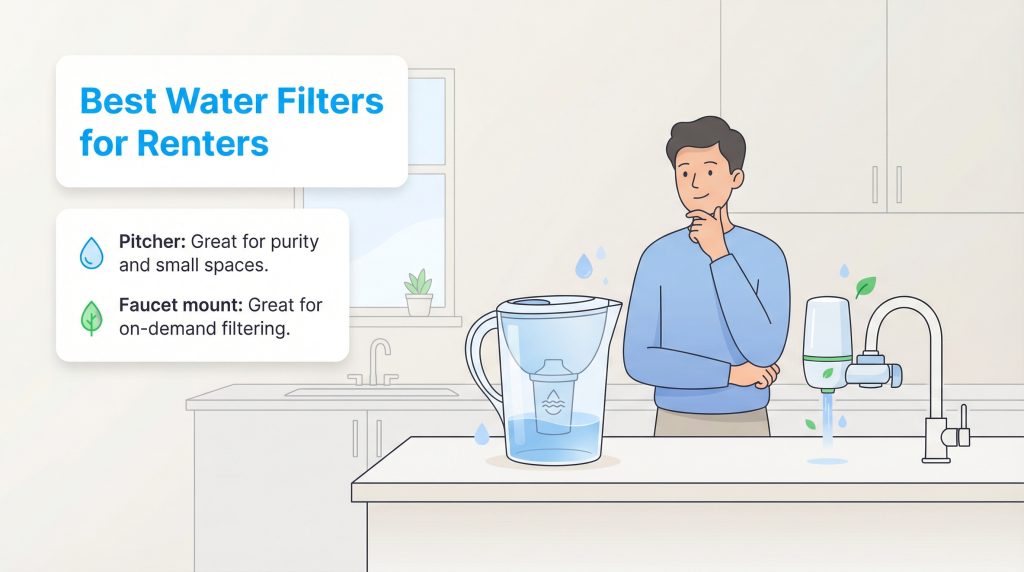
Renters often feel stuck with bad tasting tap water because they can’t drill holes in granite countertops or mess with plumbing, but high-quality portable filtration is better than ever. Modern pitchers and faucet mounts are now powerful enough to rival permanent systems, offering you lease-friendly flexibility without sacrificing safety.
Best Water Filter Pitcher: ZeroWater 10-Cup Ready-Pour Pitcher
If your priority is water purity, the ZeroWater 10-Cup Ready-Pour Pitcher is widely considered the best water filter pitcher for removing dissolved solids. Unlike standard 2-stage filters, ZeroWater uses a 5-stage filtration process that is NSF-certified to reduce lead and chromium. The “Ready-Pour” design allows you to dispense water while the reservoir is still filtering, solving the annoying wait time common with other brands.
This is also an excellent best countertop water filter alternative if you lack fridge space. However, be aware that because it filters so thoroughly, you may need to replace filters more frequently if your tap water is particularly hard. The system comes with a TDS (Total Dissolved Solids) meter so you know exactly when it’s time to swap the cartridge.
Best Faucet Water Filter: PUR Plus Faucet Mount System
The PUR Plus Faucet Mount is the best faucet water filter for renters who want on-demand filtered water without filling a pitcher. It snaps directly onto your existing standard faucet in minutes with no tools required. We love the vertical design, which saves sink space, and the simple lever that lets you switch between filtered water for drinking and unfiltered water for doing dishes.
This model is certified to reduce over 70 contaminants, including lead and mercury, making it far superior to basic sediment filters. Look for NSF 42 and 53 certifications on the packaging to confirm these capabilities. The “MineralClear” core filters water over natural minerals for a crisp, refreshing taste.
Best Water Filters for Homeowners (Under-Sink and Whole-House)
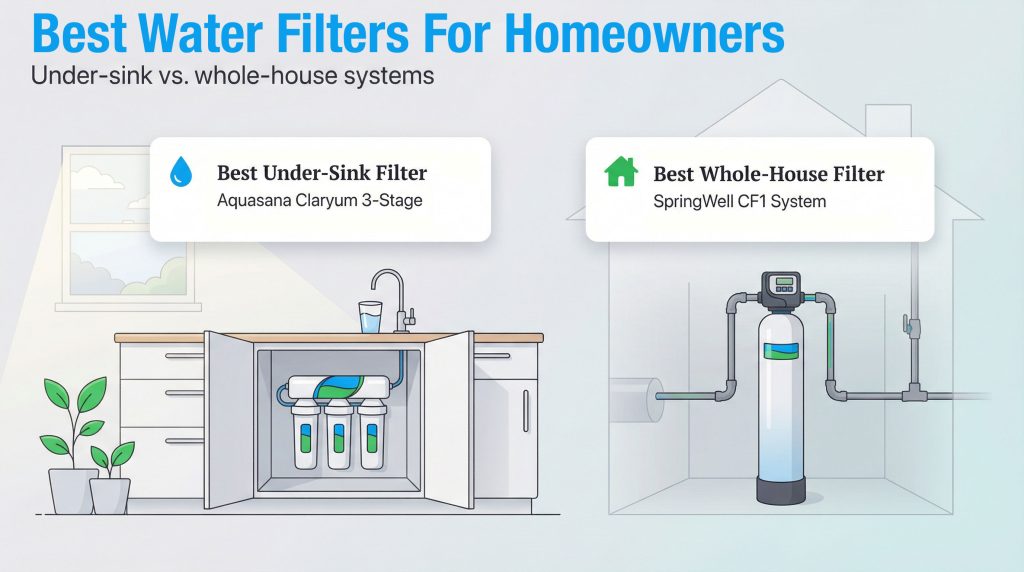
If you own your home, you can upgrade from refilling pitchers to installing systems that provide on-demand purified water directly from a dedicated spigot or your main line. Permanent installations generally offer faster flow rates, cheaper long-term maintenance, and superior contaminant removal capabilities compared to portable options.
Best Under Sink Water Filter: Aquasana Claryum 3-Stage Max Flow
For a balance of performance and ease, the Aquasana Claryum 3-Stage is our top pick for the best under sink water filter. It installs inside your cabinet and connects to a dedicated faucet, keeping your countertop clutter-free. This system uses “selective filtration” to remove 77 contaminants (with NSF/ANSI 42, 53, and 401 certifications for things like chlorine, lead, pesticides, and pharmaceuticals) while retaining healthy minerals like calcium and potassium.
While this is a powerful carbon-based system, some homeowners may prefer the best reverse osmosis system (like the Waterdrop G3P800) for maximum purity. Reverse osmosis systems will remove nearly everything from the water, including minerals and fluoride, which is ideal if you have serious contamination concerns. You can learn more about residential water quality and different filtration types in our dedicated Water Hub.
Best Whole House Water Filter: SpringWell CF1 Water Filter System
The SpringWell CF1 is widely regarded as the best whole house water filter for homes on municipal water. Installed at your home’s point of entry, it treats every drop of water before it reaches your showers, dishwasher, and laundry machine. This protects your appliances from sediment buildup and protects your skin from drying chlorine.
While the CF1 is perfect for city water, it is not designed for private wells. If you need the best water filter for well water, look for SpringWell’s dedicated well water systems that specifically target iron, sulfur, and manganese.
How to Choose: Contaminants and Cost of Ownership
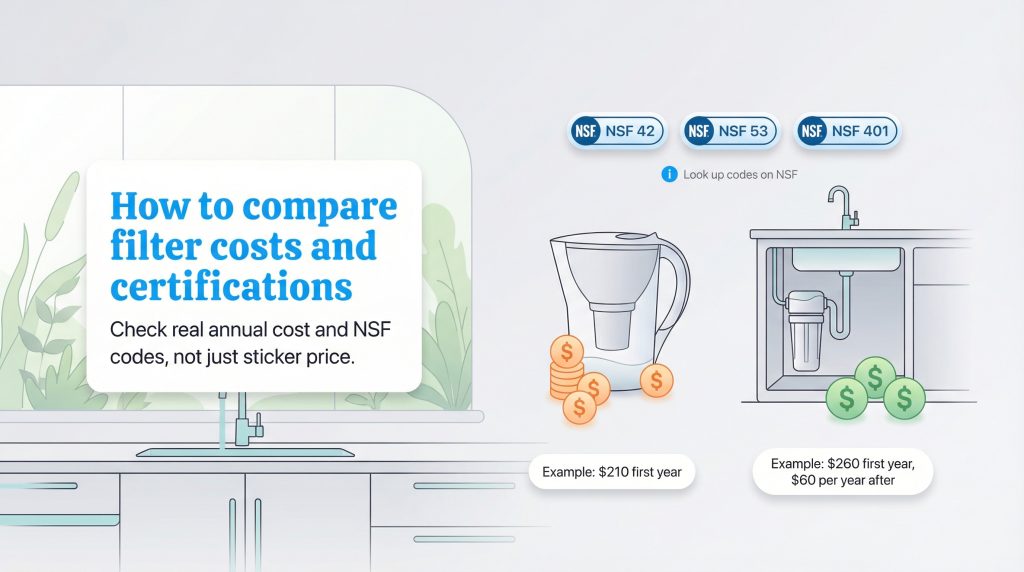
Choosing the best filter isn’t just about the upfront price tag; you must calculate the annual cost of replacement filters to understand the true value. A seemingly cheap system can become expensive if the filters have a short lifespan or a high replacement cost.
Understanding NSF Certifications
Don’t just trust the marketing on the box; look for the specific NSF/ANSI codes that verify the filter does what it claims. These independent certifications ensure that the product has been rigorously tested to remove specific contaminants.
- NSF 42: Improves taste and odor (primarily removes chlorine).
- NSF 53: Removes health effects like lead, cysts, and VOCs.
- NSF 401: Removes emerging compounds like prescription drugs and pesticides.
You can verify a product’s certification claims by visiting NSF International directly. If you are specifically concerned about “forever chemicals,” look for NSF 53 or 58 listings that explicitly mention PFAS reduction.
Calculating the “Real” Price
A cheap pitcher might cost you more in the long run if the filters need changing every two weeks. For example, imagine a $30 pitcher with $15 filters that need replacing monthly will cost you $210 in the first year alone. In contrast, a $200 under-sink system with filters that last six months might cost you $260 upfront, but only $60 per year to maintain afterward. Always check the “gallon capacity” of the replacement filters to estimate your annual running costs. You can also dig into other ways to cut home costs in our guide to saving on your utility bills.
Eco-Conscious Filtration: Ditching Plastic Bottles
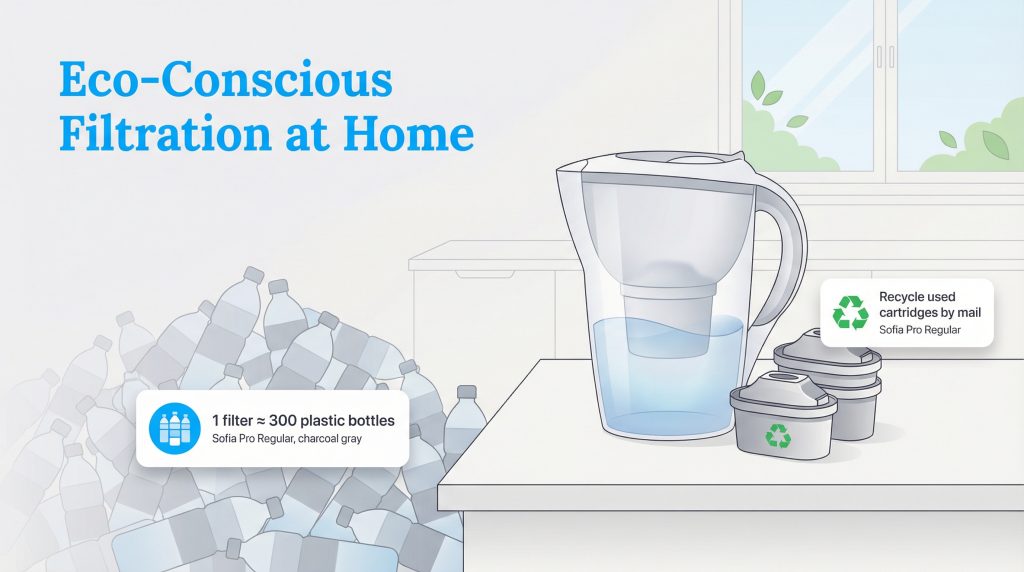
Switching to home filtration is one of the most impactful ways to reduce your household’s single-use plastic waste. A single standard water filter pitcher cartridge can replace up to 300 standard 16.9-ounce plastic water bottles. Over a year, a family of four can easily keep thousands of plastic bottles out of landfills and oceans simply by using a faucet mount or pitcher, depending on how much bottled water they’re replacing.
For an even greener approach, look for brands that support recycling. You can often find sustainable living solutions where manufacturers provide prepaid shipping labels to send back used cartridges, ensuring the plastic casing and carbon media are properly repurposed rather than thrown in the trash.
Improving Your Home’s Water Quality Today
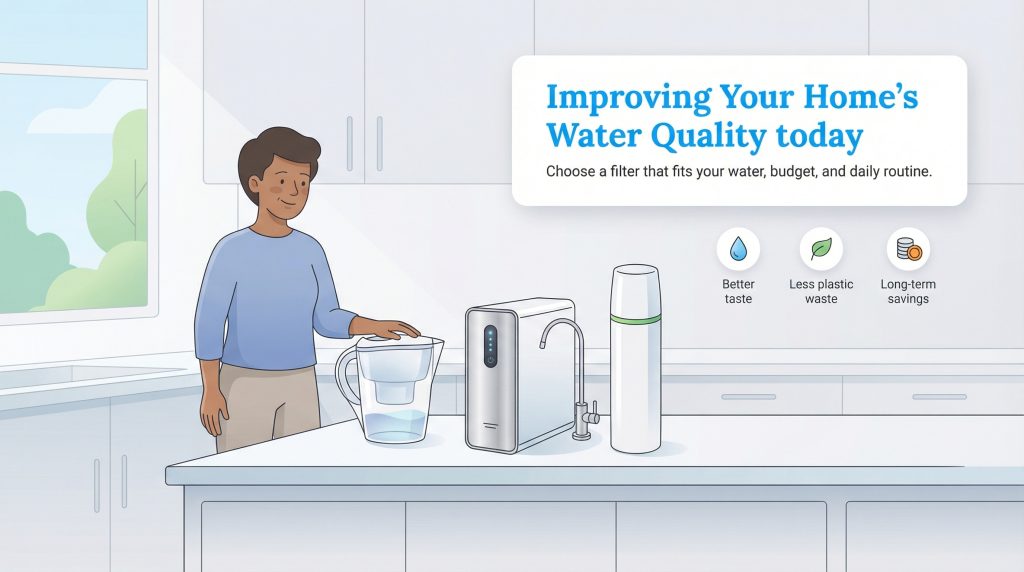
Securing cleaner, safer water for your household starts with investing in a quality water filter, giving you peace of mind regardless of whether you are in a temporary apartment or your forever home. By matching the filter type to your specific contaminants and lifestyle, you can enjoy better-tasting water while saving money and reducing plastic waste. Whether you choose a simple pitcher or a complete whole-house system, the best filter is the one you will actually use every day.
FAQs About Water Filters
How do I know which contaminants are in my water?
Do water filters remove essential minerals?
Can I use a whole house filter for drinking water?
How often should I really change my water filter?
Are fridge water filters as good as bottled water?
About the Author

LaLeesha has a Masters degree in English and enjoys writing whenever she has the chance. She is passionate about gardening, reducing her carbon footprint, and protecting the environment.