
Harnessing the breeze can lower your electric bill, but it requires the right location and significant upfront planning.
Key Takeaways
- Residential wind turbines require specific wind speeds (typically 10+ mph) and ample acreage to be efficient and compliant with local zoning laws.
- The cost of a home wind system ranges from $20,000 to over $70,000, though federal tax credits can significantly reduce the final price tag.
- Wind energy vs. solar energy often comes down to consistency; while wind can generate power at night, it is generally less predictable and requires more maintenance than solar panels.
There is something undeniably appealing about generating your own electricity, watching the blades spin in the backyard while your meter slows down. However, achieving true energy independence with wind isn’t as simple as planting a turbine in the ground and plugging it in. Wind power is a highly site-specific technology that works wonders for some rural homeowners but makes little sense for the average suburbanite. This guide will walk you through the practical realities of residential wind power so you can determine if your property is a good candidate for this major investment.
What Is Residential Wind Power?
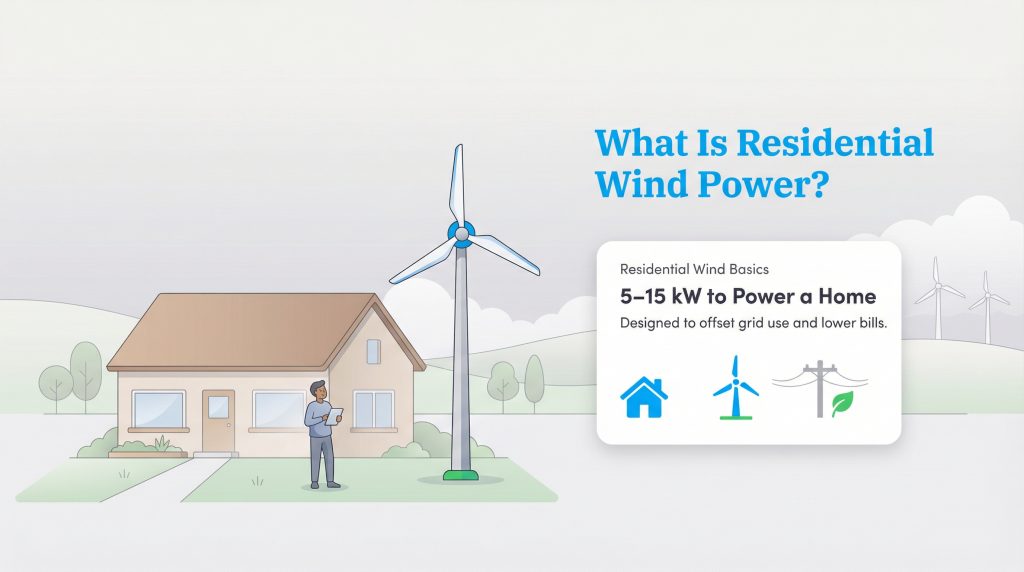
When people think of wind energy, they often picture the massive, white utility-scale wind farms lining the highways. Those industrial giants are marvels of engineering, but they are very different from the small wind turbines used for individual properties. Residential wind power, often called distributed wind or domestic wind energy, focuses on smaller units designed to power a single home, farm, or small business.
While a commercial turbine might generate several megawatts of power, residential units are much more modest. They typically range in capacity from about 5 kW to 15 kW for whole-home systems. In a good wind location, a 10-kW turbine can roughly cover the needs of a typical household. The goal of these systems is to offset your reliance on the grid, lower your monthly bills, and reduce your carbon footprint.
How Do Home Wind Turbines Work?
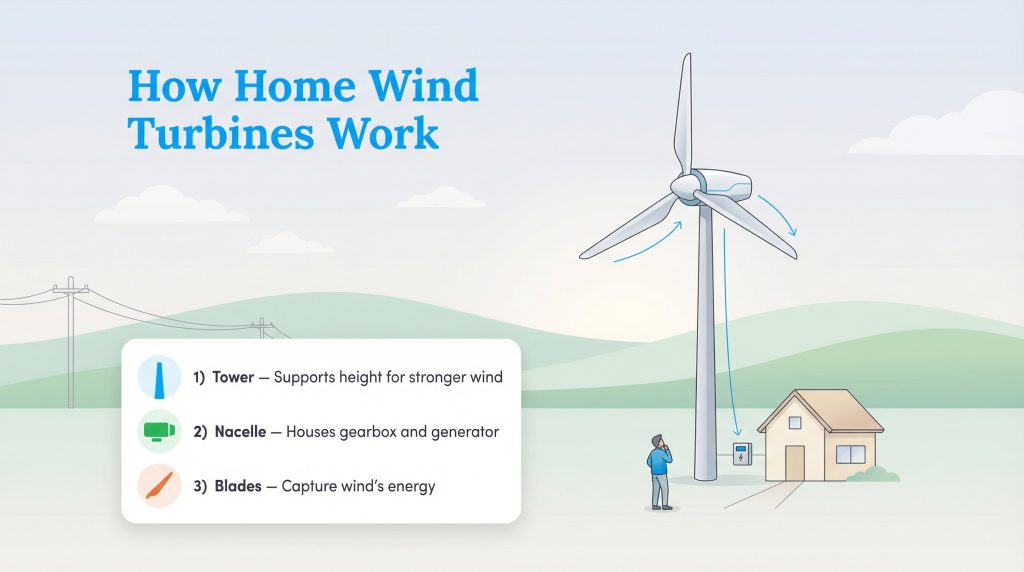
The physics behind wind energy is relatively straightforward. Wind turns the turbine’s blades around a rotor, which spins a generator to create electricity. For most homeowners, the setup is a grid-tied system. This means your turbine is connected to the public utility grid. When the wind blows, you use your own power; when it’s calm, you pull electricity from the utility company just like everyone else. If you generate more than you need, many utility companies allow you to sell that excess power back through net metering programs.
A typical residential wind system is made up of three main components:
- The Tower: This supports the turbine structure. Because wind speeds increase significantly with altitude, a taller tower usually means more power generation.
- The Nacelle: This is the body of the turbine that sits atop the tower. It houses the key machinery, including the gearbox and generator.
- The Blades: Usually made of fiberglass or composite materials, the blades capture the wind’s kinetic energy and convert it into mechanical energy.
For more information on how grid connections and utility bills work, you can check our guide to electric service basics.
The Feasibility Checklist: Can You Install a Wind Turbine?
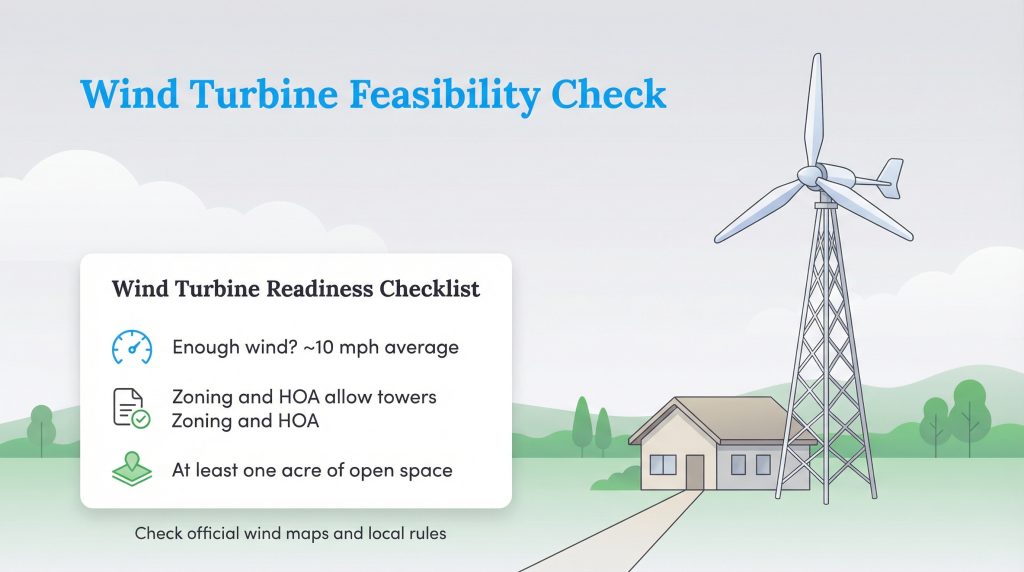
Before you start looking at brochures or pricing models, you need to determine if your property can physically and legally support a wind turbine. If you cannot answer “yes” to the following three requirements, wind power is likely not the right solution for you.
1. Do You Have Enough Wind?
You need an average annual wind speed of around 10 mph (4.5 meters per second) for a wind turbine to be worth the investment. Wind is inconsistent, and without a steady average speed, the turbine will sit idle too often to pay for itself. You can find wind maps online, but the best data comes from government resources like the Department of Energy’s WindExchange.
2. Are You Allowed to Build It?
Zoning and permitting are often the biggest hurdles. Most homeowners associations (HOAs) and suburban municipalities have strict height restrictions (often capping structures at 35 feet) and noise ordinances that effectively ban wind turbines. To find out for sure, contact your local county planning department and review your HOA covenants specifically for “accessory structures” and height limits. Consequently, residential wind power is almost exclusively an option for rural properties where neighbors are far away and zoning is more flexible.
3. Do You Have Enough Space?
Safety and efficiency require space. To avoid turbulence caused by buildings and trees, and to ensure safety in the unlikely event of a structural failure, you generally need at least about one acre of land. If you live in a dense neighborhood with less than an acre, solar panels are a much better fit for your situation.
The Cost of Wind Power for Homes
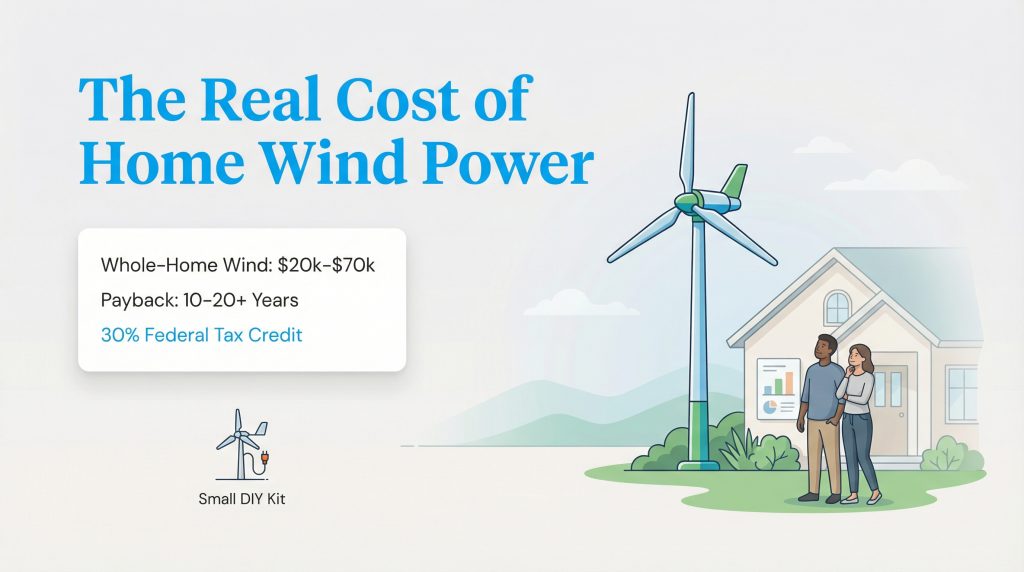
Installing a residential wind turbine is a significant financial commitment. While you might see small DIY wind power kits online for a few thousand dollars, these rarely generate enough power to run a home, though they can be useful for small off-grid needs like powering a shed or charging a battery bank. A legitimate, professionally installed whole-home system (5 kW to 15 kW) typically costs between $20,000 and $70,000 depending on system size, tower height, and site conditions. This price includes the turbine, the tower, zoning fees, and installation labor.
The return on investment (ROI) depends heavily on your local electricity rates and wind consistency. In areas with expensive electricity and strong winds, a system might pay for itself in 10 to 15 years, and saving on your electric bill becomes easier. In areas with cheap utility power, the payback period could stretch to 20 years or more. Fortunately, federal incentives like the Investment Tax Credit (ITC) apply to small wind turbines, which can currently credit 30% of eligible project costs against your tax liability.
Money-Saver: Before you buy, check the Database of State Incentives for Renewables & Efficiency (DSIRE). Many states offer cash rebates that stack on top of the federal tax credit, drastically cutting your payback time.
Wind Energy vs. Solar Energy: Which Is Better?
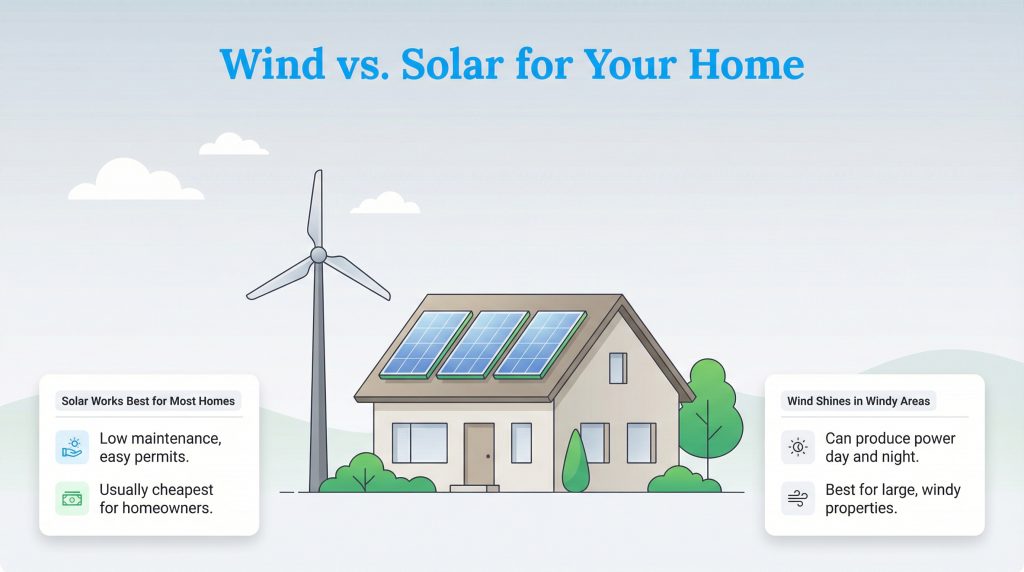
When weighing renewable options, most homeowners eventually compare wind energy vs. solar energy. For the vast majority of residential properties, solar comes out on top. Solar panels have no moving parts, require very little maintenance, and are much easier to permit in cities and suburbs. They are also generally cheaper upfront.
However, wind has distinct advantages in the right environment. A wind turbine can generate power 24 hours a day, including at night and during stormy weather when solar panels are dormant. In consistently windy regions, a wind turbine can be more efficient per square foot of collector space than solar. Ultimately, solar is the safer bet for 90% of homeowners, while wind is a powerful specialized solution for those with large lots in windy areas. If you think solar might be a better fit, explore our solar energy guide.
To help you compare the two, here is a breakdown of the key differences:
| Factor | Home Wind Turbines | Solar Panels |
|---|---|---|
| Upfront Cost | High ($20,000–$70,000+) | Moderate ($15,000–$30,000+) |
| Maintenance | Requires annual mechanical checks | Very low (cleaning only) |
| Best Property Type | Rural, open land (1+ acre) | Suburban or rural (any roof) |
| Zoning/HOA | Difficult (height restrictions) | Friendly (widely accepted) |
| Power Consistency | Variable (day and night) | Predictable (daytime only) |
Pros and Cons of Home Wind Energy
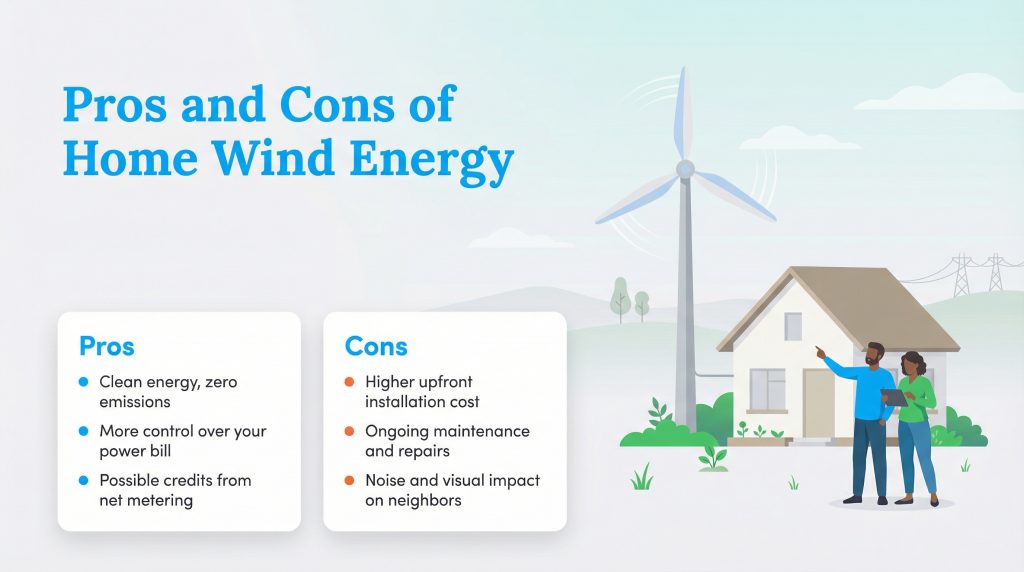
To help you summarize your decision, here is a quick look at the advantages and disadvantages of installing a residential wind system.
Pros:
- Clean Energy: Wind power creates zero emissions, helping you drastically reduce your household’s carbon footprint.
- Energy Independence: Generating your own power protects you from fluctuating utility rates.
- Net Metering: You can potentially sell excess electricity back to the grid, earning credits on your bill where programs are available.
Cons:
- High Upfront Cost: The initial investment is substantial compared to other energy upgrades.
- Maintenance: Moving parts mean wear and tear. Turbines require annual checks and eventual repairs.
- Noise and Visuals: Some neighbors may object to the look of the tower or the “whoosh” sound of the blades.
Is a Wind Turbine in Your Future?
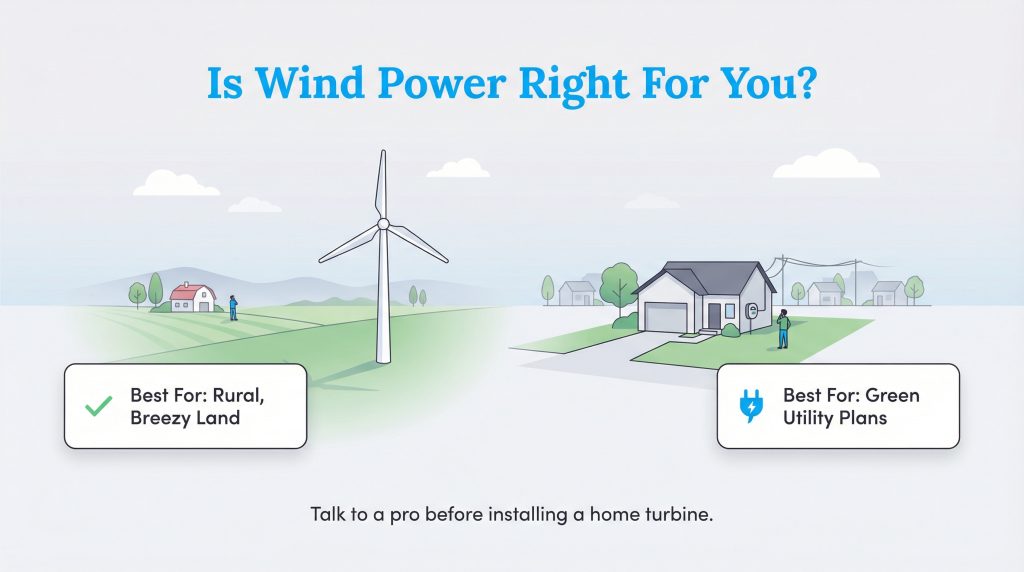
Wind power is a remarkable tool for sustainability, but it isn’t a one-size-fits-all solution. It requires a specific combination of land, wind speed, and zoning freedom that most suburban homes simply don’t possess. If you live on a rural acre with a steady breeze, we highly recommend getting a professional site assessment to see the numbers for yourself. For everyone else, signing up for a green energy plan from your utility provider is likely the most practical way to support renewable energy.
FAQs About Residential Wind Power
How much wind is required for a wind turbine?
Are home wind turbines noisy?
Can I power my whole house with wind?
Do wind turbines work when there is no wind?
How long do residential wind turbines last?
Do I need batteries with a home wind turbine?
Can I install a wind turbine if I live in a neighborhood with an HOA?
About the Author

David has been an integral part of some of the biggest utility sites on the internet, including InMyArea.com, HighSpeedInternet.com, BroadbandNow.com, and U.S. News. He brings over 15 years of experience writing about, compiling and analyzing utility data.