
Manage your utility account, compare rates, and find customer service contacts for Peoples Gas in Illinois, Pennsylvania, and Florida.
Key Takeaways
- Identify your specific Peoples Gas provider based on your state to access the correct login and customer service portals.
- Customers in Illinois and Pennsylvania can choose their natural gas supplier to lock in fixed rates and potentially lower their monthly bills.
- If you suspect a gas leak, evacuate your home immediately before calling the 24/7 emergency hotline for your local utility.
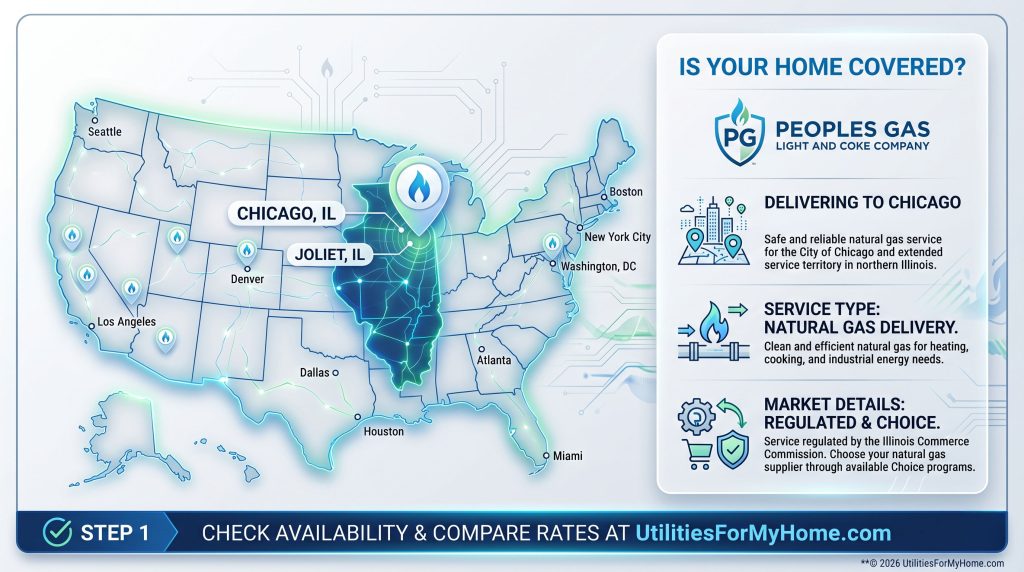
When setting up utilities in a new home, few things cause more confusion than searching for “Peoples Gas” and landing on a website for a completely different state. Because three distinct utility companies operate under the Peoples Gas name — serving Chicago, the Pennsylvania and Kentucky region, and Florida — pinpointing the right provider is your first step. We have organized everything you need to manage your specific account, from direct bill pay logins and regional rate comparisons to mobile apps and emergency contact numbers.
Which Peoples Gas Serves Your Home?
Let’s cut straight to the chase and route you to the correct company. These three utilities share a brand name, but completely different parent organizations own and operate them across separate regional grids. Selecting the wrong portal will leave you locked out of your account, so match your location to the correct parent organization below.
- Illinois (Chicago): Owned by WEC Energy Group. You will manage your account through the Peoples Gas Chicago Login.
- Pennsylvania and Kentucky: Owned by Essential Utilities. You will pay bills and view usage via the Peoples e-Account Login.
- Florida: Owned by TECO Energy. You will handle your natural gas service through the TECO Peoples Gas Login.
How to Pay Your Peoples Gas Bill
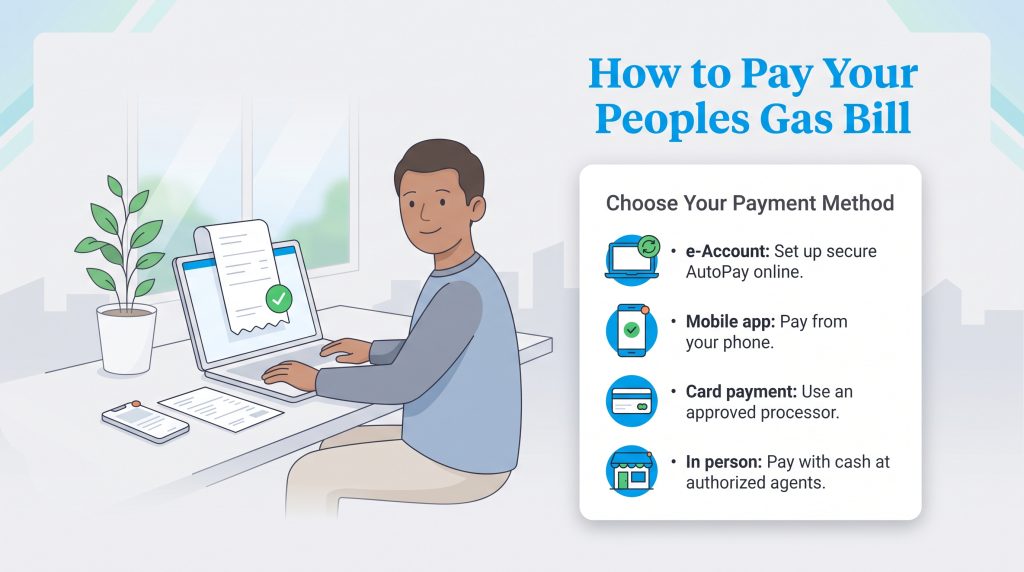
Once you secure your natural gas service, you have a handful of secure ways to pay your monthly utility bill. Setting up an online account is the most efficient route, but you can also leverage mobile apps, third-party payment processors, and physical drop-off locations depending on your specific region.
- e-Account Portals: This is the central hub for all three regional providers. By creating an online e-Account, you can link your checking account to set up free, automatic monthly bank drafts (AutoPay). This ensures you never miss a due date or get hit with a late fee.
- Mobile App (Chicago Only): If you live in Illinois, you can download the dedicated “Peoples Gas Chicago” mobile app for iOS or Android. It allows you to pay your bill instantly with a saved payment method, report outages, and check your daily natural gas consumption.
- Credit and Debit Card Payments (ACI Speedpay / BillMatrix): If you prefer to pay with a credit card or debit card, the utility will route you through an authorized third-party processor like ACI Speedpay (often used in Chicago) or BillMatrix (for TECO Florida). Keep in mind that these vendors generally charge a flat convenience fee — typically between $1.95 and $2.95 per transaction.
- Pay by Phone: You can utilize the automated interactive voice response (IVR) systems 24 hours a day by dialing your regional customer service number. Have your full account number and payment details ready before you call.
- In-Person Authorized Agents: Need to pay with cash? All three utilities partner with local retailers like Walmart, Kroger, and authorized Western Union locations. You must bring a physical copy of your latest bill or your exact account number to the customer service desk.
Contact Information and Emergency Numbers
Natural gas leaks demand an immediate, urgent response. If you smell gas — typically resembling a distinct sulfur or rotten egg odor — hear a hissing sound near a gas line, or suspect a leak, evacuate the premises immediately.
Once you are secure across the street or down the block, contact 911, followed by your respective utility’s 24/7 emergency dispatch.
| Provider | 24/7 Gas Leak Emergency | Customer Service Phone |
|---|---|---|
| Peoples Gas Chicago | 866-556-6002 | 866-556-6001 |
| Peoples Natural Gas (PA) | 1-800-400-4271 | 1-800-764-0111 |
| Peoples Gas Florida (TECO) | 877-832-6747 | 877-832-6747 |
Peoples Gas Chicago (Illinois)
Officially known as The Peoples Gas Light & Coke Company, this major natural gas utility has roots dating back to 1849 in Chicago. Now a subsidiary of WEC Energy Group, it continues to serve Chicago and its northern suburbs alongside its sister brand, North Shore Gas. The company delivers gas to roughly 830,000 residential, commercial, and industrial customers across more than 4,300 miles of pipeline.
Rates, Tariffs, and Bill Breakdown
While Peoples Gas predominately serves the city of Chicago, North Shore Gas extends coverage into the northern suburbs.
- Core service area: City of Chicago, north, south, and central neighborhoods.
- Northern suburbs: Evanston, Skokie, Wilmette, Winnetka, and other North Shore communities (via North Shore Gas).
- Not served: Western suburbs like Oak Park and Cicero, or southern suburbs such as Orland Park and Tinley Park.
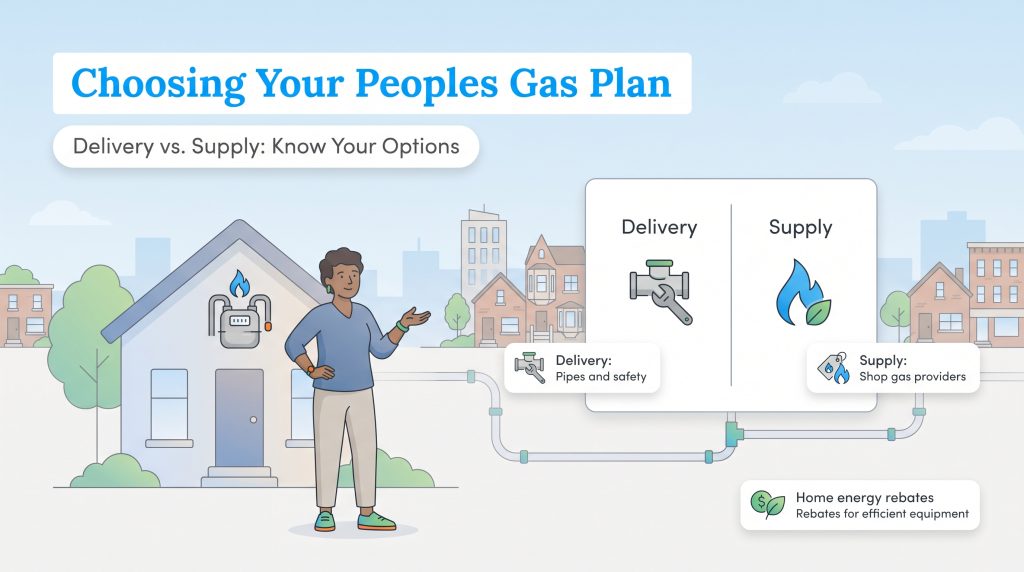
When you review your Chicago utility bill, you will notice the costs are split into two primary buckets: Delivery Charges and Supply Charges. The delivery charges cover the physical maintenance of the pipes, the reading of your meter, and safety inspections. This portion of the bill is heavily regulated and includes the Qualified Infrastructure Plant (QIP) charge. The QIP is a state-approved surcharge that funds the ongoing removal of outdated, leak-prone cast-iron pipes, replacing them with modern, durable polyethylene lines to keep your neighborhood safe.
The supply charge, however, represents the actual cost of the natural gas molecules you burned. Because Illinois deregulates natural gas supply, you are free to shop for a retail natural gas provider (RNGP) for your actual gas supply rather than paying the default utility rate. Fixed-rate plans shield you from unexpected price spikes in the commodity market, and some suppliers even offer renewable natural gas (RNG) blends.
Here are some reputable RNGP options in Chicagoland:
| Provider | Term Length | Renewable Options | Customer Rating |
|---|---|---|---|
| Constellation | Varies | Yes | High |
| IGS Energy | Varies | Yes | High |
| Spark Energy | Varies | Not specified | Moderate |
Rebates and Efficiency Programs
Through the Home Energy Rebate Program, Peoples Gas promotes energy efficiency with attractive incentives for City of Chicago homes. If you upgrade your old, inefficient equipment, you can receive significant cash back that dramatically lowers the upfront cost of your renovation:
- Heating equipment: High-efficiency furnaces qualify for up to $225; energy-saving boilers can net you up to $500.
- Water heaters: Tankless or indirect natural gas heaters qualify for up to $150.
- Thermostats: Modern smart thermostats that learn your heating habits qualify for a $25 rebate.
- Weatherization: Instant discounts on attic insulation, air sealing, and ducting improvements can reach up to $1,200 when installed by approved local contractors.
Peoples Natural Gas (Pennsylvania and Kentucky)
If you live in western Pennsylvania or select regions of Kentucky, your provider is Peoples Natural Gas. This division operates as a subsidiary of Essential Utilities and delivers natural gas to hundreds of thousands of residential and commercial addresses throughout the Appalachian region.
PA Gas Deregulation and Price to Compare
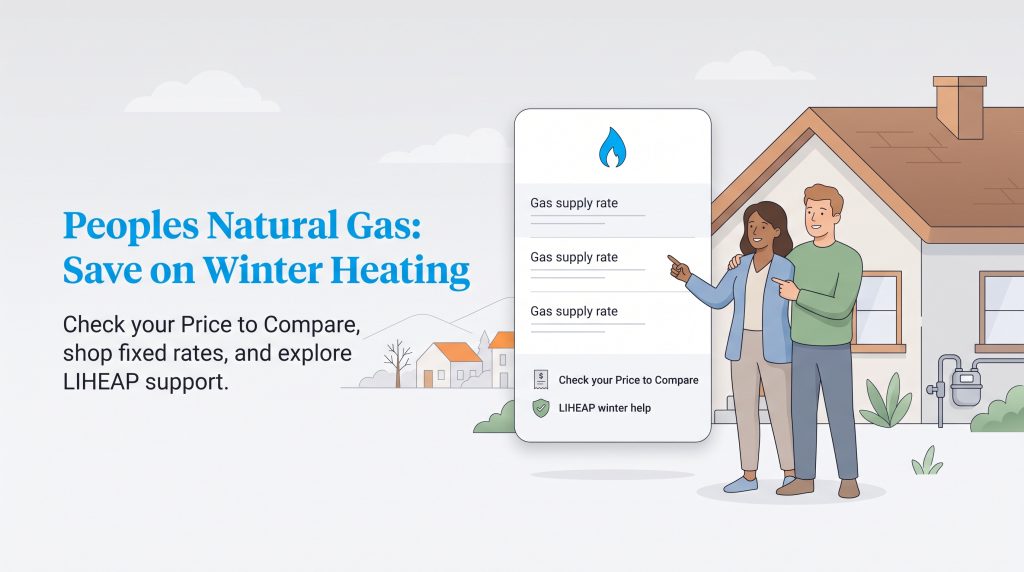
Pennsylvania operates a deregulated natural gas market. Your utility bill displays a default supply rate known as the “Price to Compare” (PTC). The PTC is the exact rate Peoples Natural Gas charges for the fuel supply itself if you do not actively choose a competitor. This baseline rate frequently fluctuates — typically shifting every financial quarter based on the global commodities market.
We strongly recommend checking your utility bill’s PTC every three months. By using state-approved comparison platforms like PA Power Switch or Choose Energy, you can easily shop around for third-party suppliers to beat that default rate. Locking in a competitive fixed rate guarantees predictable pricing through the freezing winter months when natural gas demand skyrockets, shielding your household budget from unexpected seasonal spikes.
LIHEAP and Customer Assistance
Winter heating bills can easily strain a household budget, especially during intense Pennsylvania cold snaps. Income-qualified households can apply for the Low-Income Home Energy Assistance Program (LIHEAP) directly through the Peoples Natural Gas portal or state social service offices. This federally funded initiative provides vital cash grants to help families cover their winter heating costs, and the best part is that you do not have to repay the assistance. Additional crisis grants are available if you face an immediate shut-off notice or broken heating equipment.

- Calculate Your Moving Costs
- Compare Moving Companies
- Get Multiple Quotes
- Move with Confidence
TECO Peoples Gas (Florida)
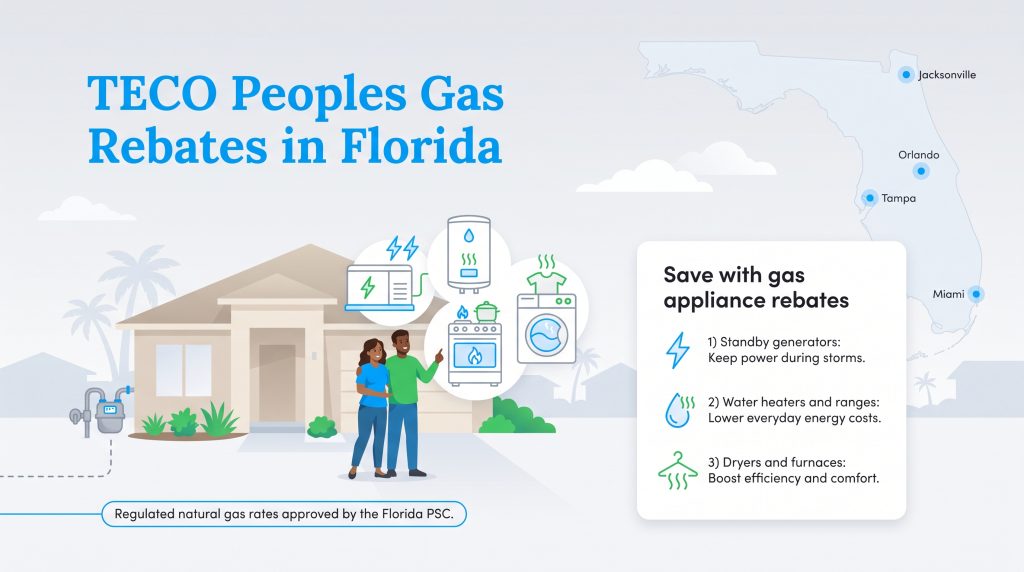
Florida residents rely on TECO Peoples Gas, which currently stands as the largest natural gas distribution utility in the state. Owned by TECO Energy, this provider maintains a vast network of underground pipelines to deliver safe, reliable natural gas across the Florida peninsula, ensuring homes and businesses stay fueled year-round.
Coverage Area and Regulated Rates
The Florida coverage map spans major metropolitan areas, including Tampa, Orlando, Miami, and Jacksonville. Unlike Illinois and Pennsylvania, Florida’s residential natural gas market is fully regulated. This means TECO Peoples Gas handles both the physical delivery and the supply of your energy. You cannot shop around for a third-party retail supplier. Instead, the Florida Public Service Commission closely monitors and approves all utility rates to ensure fair, transparent, and consistent pricing for residents across the state.
Appliance Rebates and Hurricane Resilience
If you are converting older, power-hungry electric appliances to natural gas, TECO offers a robust residential rebate program to help offset those initial upfront costs. Natural gas appliances reduce your monthly utility costs while providing highly reliable performance — an essential benefit during hurricane season when the regional electrical grid frequently goes down.
Current TECO incentives for Florida residents include:
- Whole-Home Standby Generators: Substantial rebates for installing permanent natural gas generators that keep your lights on and your refrigerator running during tropical storms.
- Water Heaters: Cash back for installing energy-efficient tankless or traditional natural gas water heaters.
- Ranges and Cooktops: Incentives for switching to a natural gas stove, which allows you to continue cooking meals safely even when the power is completely out.
- Clothes Dryers and Furnaces: Financial rewards for upgrading to highly efficient gas models that dry clothes faster and heat your home with less energy waste.
Starting, Stopping, or Transferring Service
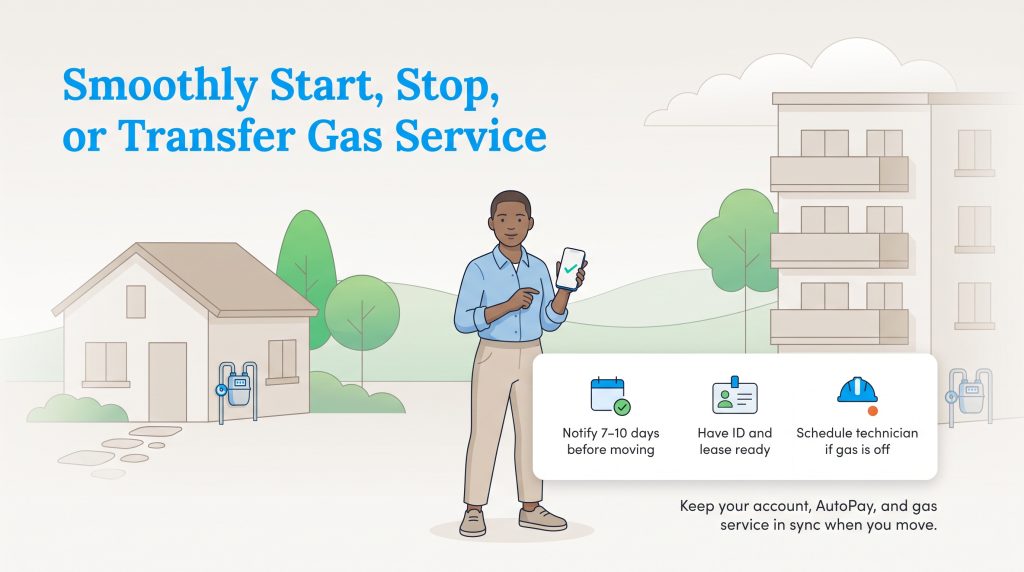
Moving is inherently stressful, but securing your natural gas service doesn’t have to be. Whether you are closing on a new house or moving into an apartment, you need to provide your utility company with advance notice to ensure your gas is flowing on move-in day. Follow this straightforward checklist to manage your service requests effectively:
- Notify the Utility Early: Submit your request through your respective e-Account portal or via the customer service phone line at least seven to 10 days before your move. Peak moving seasons in the summer and early fall can cause significant technician backlogs.
- Prepare Your Identification: You will need to verify your identity to open a new account. Have your Social Security number, driver’s license, or state ID ready. Renters may also be asked to provide a copy of their signed lease agreement.
- Schedule the Technician Visit: If the gas was completely shut off by the previous tenant, a utility technician must visit the property in person to perform a mandatory safety inspection and turn the physical valve. Someone 18 years or older must be present at the home during this service window to grant the technician access to indoor meters and appliances.
- Transferring Service: If you are moving within the same regional coverage area, you can request a “Transfer of Service.” This keeps your existing account number active, links your billing history, and seamlessly shifts your AutoPay settings to the new address.
Customer Reviews, Ratings, and Complaints
Evaluating customer feedback prepares you for the realities of setting up a new service. Based on reviews from the Better Business Bureau (BBB) and discussions on localized community forums like Reddit, consumer experiences vary based on the specific region and the time of year.
- High Fixed Delivery Charges: A frequent grievance among Reddit users in Chicago and Pennsylvania revolves around steep, fixed delivery fees. Even if you use very little natural gas during the summer, the baseline delivery and QIP surcharges remain on your bill to cover year-round infrastructure maintenance.
- Customer Service Wait Times: In Chicago, residents frequently note general wait-time complaints when calling customer service lines during peak moving seasons (like early fall and spring). We strongly recommend utilizing the mobile apps and online self-service tools whenever possible to bypass the phone queues entirely.
- Billing Glitches and Missing e-Bills: Across Pennsylvania and Florida, some BBB complaints mention occasional payment processing glitches or missing email notifications for e-billing. It is always a smart practice to take screenshots or keep email receipts of your transactions until they clear your bank, and regularly log into your portal to verify your balance.
Sustainability and Community Initiatives
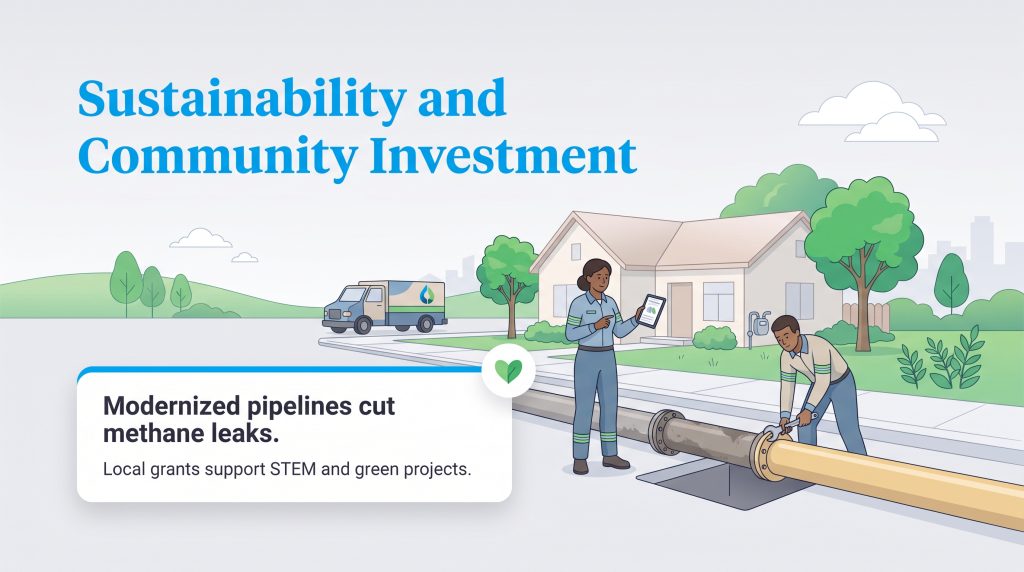
The energy sector is rapidly evolving. To keep up, all three of these utility parent companies are making massive infrastructure investments to reduce their environmental impact and safeguard the local communities they serve.
WEC Energy Group (Chicago) has pledged to achieve net-zero methane emissions in its natural gas distribution operations by 2030, alongside a 60% cut in overall operational emissions by 2035. As part of this commitment, they are spending up to $300 million annually to dig up old, leak-prone cast-iron pipes and replace them with durable polyethylene lines. Essential Utilities (Pennsylvania) and TECO Energy (Florida) run parallel pipeline modernization initiatives. Upgrading aging infrastructure minimizes fugitive methane emissions — a highly potent greenhouse gas — and secures a safer, environmentally mindful choice for neighborhoods across the grid.
Beyond environmental stewardship, these utilities actively invest in their local neighborhoods through charitable giving programs. The philanthropic arms of WEC Energy Group and TECO Energy routinely provide community grants to local nonprofits, focusing heavily on STEM education, environmental conservation, and neighborhood revitalization projects. By directing funds back into the community, they help bolster local economies and support grassroots organizations striving to make a tangible difference.
Preparing for Your Next Utility Bill
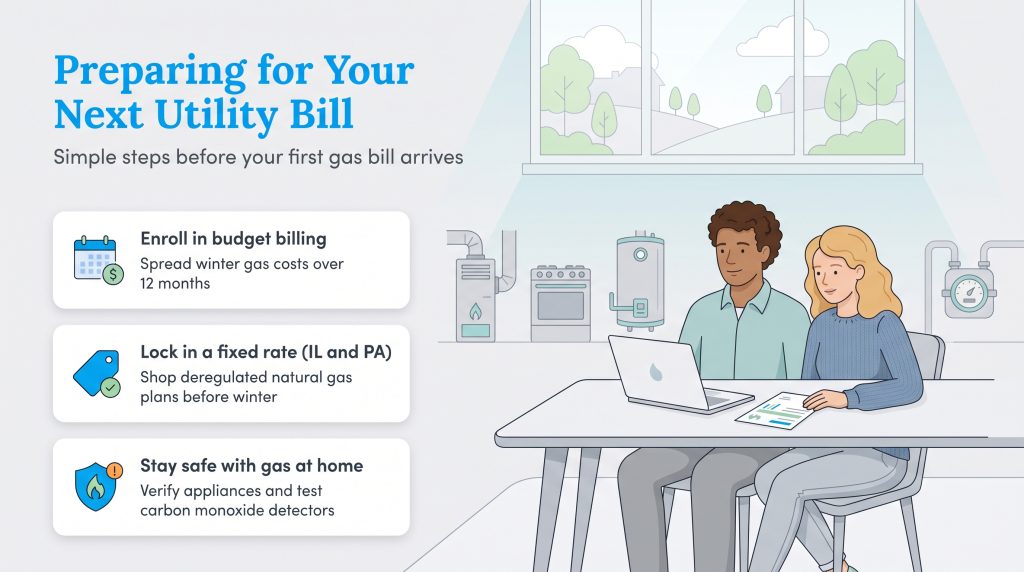
Moving into a new residence demands careful coordination, especially when establishing your utility accounts. Now that your service is connected and you understand your regional provider, follow this quick checklist to proactively manage your costs before your first bill arrives in the mail:
- Enroll in Budget Billing: Natural gas usage naturally spikes during cold months because your furnace works overtime. Opt into your utility’s Budget Billing program through your e-Account to smooth your costs across all 12 months, preventing massive winter bill shocks.
- Compare Retail Rates (IL and PA Only): If you live in a deregulated market, do not wait for the winter freeze to shop for a supplier. Check your default Price to Compare right now, and use state-approved platforms to lock in a fixed-rate plan before seasonal demand drives prices up.
- Verify appliance compatibility: Check that your kitchen stove, clothes dryer, and water heater are explicitly designed for natural gas rather than liquid propane or electricity. Using the wrong fuel source is incredibly dangerous.
- Test your detectors: Install carbon monoxide detectors on every level of your home, especially near sleeping areas, and test the batteries to ensure your household remains protected from invisible gas leaks.
Setting Up Your Utility Services Smoothly
Navigating utility setups doesn’t have to be a frustrating chore. By identifying your correct regional provider — whether you live in Chicago, Pennsylvania, or Florida — you can quickly access the right portals, compare fixed rates where applicable, and secure lucrative energy-efficient rebates. Take advantage of online accounts and mobile apps to put your billing on autopilot, stay ahead of your default utility rates, and always keep your regional emergency number saved in your phone for complete peace of mind.
Frequently Asked Questions About Peoples Gas
What is the difference between Peoples Gas Chicago and Peoples Natural Gas in PA?
They are entirely separate companies owned by different parent organizations. Peoples Gas Chicago is owned by WEC Energy Group and serves Illinois, while Peoples Natural Gas is owned by Essential Utilities and serves the Pennsylvania and Kentucky region.
How do I pay my Peoples Gas bill online?
You can pay your bill online by navigating to your specific regional provider’s website and logging into your e-Account portal. From there, you can securely link a checking account for free AutoPay, or you can use an authorized third-party processor to pay with a credit or debit card for a small convenience fee.
Can I choose my natural gas supplier if I have Peoples Gas?
Yes, if you live in Illinois or Pennsylvania! Both states operate deregulated natural gas markets, allowing you to pick a retail supplier for your gas supply while Peoples Gas continues to handle the physical delivery to your home. Florida customers do not have supplier choice, as their market remains fully regulated.
What is the Qualified Infrastructure Plant (QIP) charge on my bill?
The QIP charge is a state-approved surcharge found on the delivery portion of your utility bill. It allows the utility company to recover the ongoing costs of upgrading local pipeline infrastructure, specifically replacing aging cast-iron pipes with modern, leak-resistant polyethylene lines to ensure neighborhood safety.
How do I start or stop Peoples Gas service when I move?
To start or stop your natural gas service, log into your online e-Account or call your regional customer service number at least seven to 10 days before your move-in date. You will need to provide your new address, verify your identity with a Social Security number or driver’s license, and potentially schedule a physical technician visit to turn on the gas valve.
Does Peoples Gas charge a fee for paying with a credit card?
Yes. If you choose to pay your utility bill using a credit or debit card, the transaction is processed through a third-party vendor (such as ACI Speedpay or BillMatrix). These vendors typically apply a convenience fee ranging from $1.95 to $2.95 per payment. You can avoid this fee entirely by linking a bank account directly for electronic checks or AutoPay.
What do I do if I smell natural gas in my home?
Evacuate the building immediately. Do not flip any light switches, use your cell phone, or do anything that could create a spark. Once you are safely outside and away from the property, call 911 and your regional 24/7 gas emergency hotline.
Why is my bill higher in winter?
Natural gas usage naturally spikes during cold months because your furnace works harder to heat your home. To save money, lower your thermostat by a few degrees, seal drafts around windows, and opt into Budget Billing to even out your payments across the entire year.
About the Author

David has been an integral part of some of the biggest utility sites on the internet, including InMyArea.com, HighSpeedInternet.com, BroadbandNow.com, and U.S. News. He brings over 15 years of experience writing about, compiling and analyzing utility data.