

Setting up your utilities in Illinois is manageable when you understand the deregulated energy market and know exactly which documents you need.
Key Takeaways
- Understanding Illinois’ deregulated energy market allows you to shop around for the most eco-conscious and cost-effective electricity suppliers.
- Organizing your required documents early — including your identification and lease agreement — ensures a smooth connection process without delays.
- Budgeting for initial utility connection fees and deposits prevents unexpected financial surprises during your first few weeks in a new home.
Relocating across state lines brings a massive to-do list, but getting your lights and water turned on shouldn’t add to your moving day anxiety. Whether you are settling into a bustling downtown apartment and need help with a Chicago utility setup, or you are moving to a quiet downstate suburb, navigating the details of moving to Illinois and setting up utilities requires a bit of localized knowledge. Because utility service territories strictly dictate who delivers your gas and power, figuring out exactly who to call requires confirming your specific ZIP code and regional boundaries. We will help you sort out the details, offering a highly actionable, step-by-step roadmap for connecting your essential services, transferring existing accounts, and avoiding unexpected connection delays, so you can start feeling right at home the moment you walk through the front door.
The Illinois Deregulated Energy Market Explained
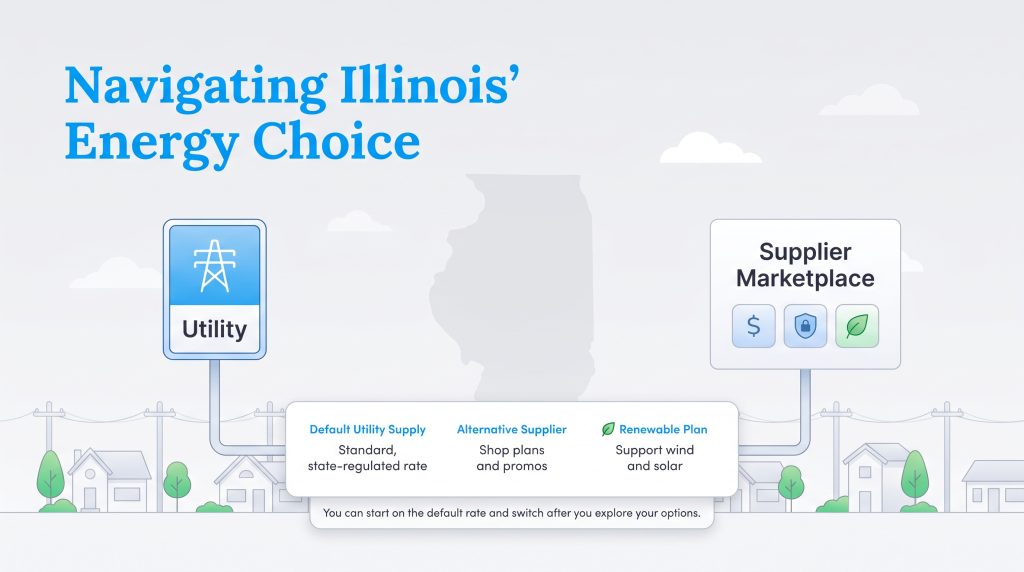
For out-of-state relocators, the concept of energy deregulation often causes a bit of confusion right out of the gate. In a standard regulated market, a single company handles every aspect of your electricity. However, under Illinois’ deregulated energy market, those responsibilities are split between two distinct entities: the utility and the supplier.
Your local utility company is the entity that physically delivers your power, maintains the electrical lines, reads your meter, and responds to neighborhood power outages. You cannot choose your utility; it is determined entirely by your geographic address. The supplier, on the other hand, is the company that actually generates or purchases the raw power you consume.
This separation puts the power of choice directly in your hands. You are free to shop the open market, compare various contract lengths, and hunt for the cheapest electricity rates available. If you choose not to shop around, you will simply receive default supply service through your local utility at a standard, state-approved rate. Should you decide to explore alternative plans, always compare the full terms, paying close attention to fixed rates, variable rates, and any early termination fees hidden in the fine print.
| Supply Type | Best For | What to Check |
|---|---|---|
| Default Utility Supply | Those who want standard, state-regulated procurement without shopping. | Seasonal rate changes determined by state regulators. |
| Alternative Retail Supplier | Households looking to lock in fixed rates or secure unique promotional pricing. | Early termination fees, variable rate shifts after promotions end. |
| Renewable Electricity Plan | Eco-conscious consumers wanting to support wind or solar generation. | Verification of renewable energy certificates (RECs) supporting the plan. |
Illinois Utility Companies by Region and ZIP Code
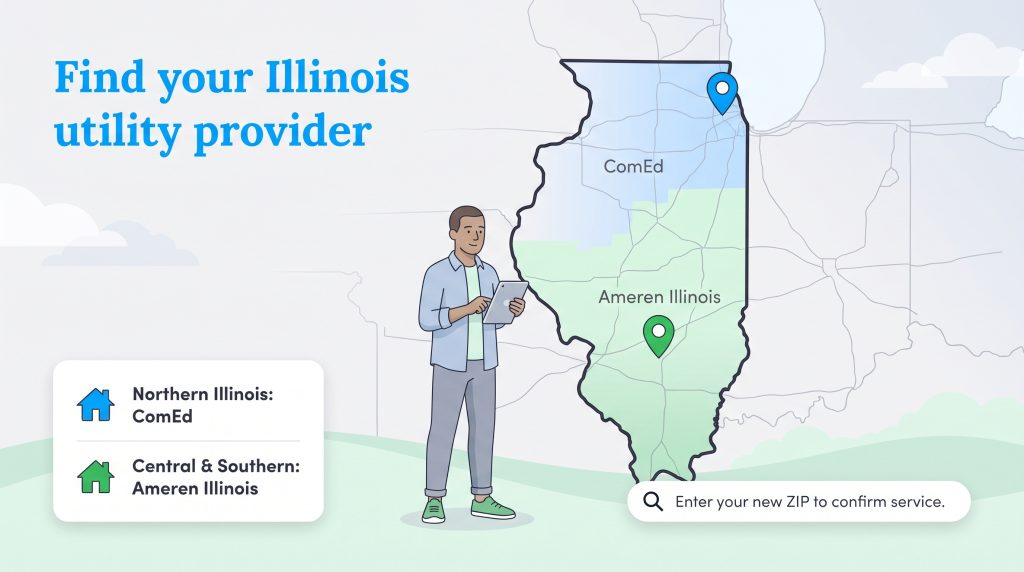
Finding your designated utility provider requires knowing the exact boundaries of the state’s major infrastructure networks. The state is served by major investor-owned utilities, alongside various smaller municipal systems and rural electric cooperatives. If you are moving to the northern part of the state, including the greater Chicagoland area, you will almost certainly need to initiate a ComEd start service request. Meanwhile, folks moving to central or southern cities — like Springfield, Peoria, or Carbondale — will fall under the Ameren Illinois territory.
Natural gas delivery territories are even more hyper-localized. For instance, the exact city-suburb boundary determines your provider. If your home is located within the physical city limits of Chicago, your gas is delivered by Peoples Gas. However, the moment you cross the street into a neighboring suburb like Oak Park or Evanston, your service territory shifts entirely to Nicor Gas or North Shore Gas. Understanding these specific Illinois utility providers by ZIP code ensures you don’t waste time calling the wrong company.
We created a comprehensive breakdown of the major utility delivery companies so you know exactly who to contact to schedule your service connections.
| Utility Service Type | Primary Service Region | Provider Name | Direct Contact Number |
|---|---|---|---|
| Electricity | Northern Illinois (Chicagoland) | ComEd (Commonwealth Edison) | 1-800-334-7661 |
| Electricity | Central & Southern Illinois | Ameren Illinois | 1-800-755-5000 |
| Natural Gas | Chicago City Limits | Peoples Gas | 1-866-556-6001 |
| Natural Gas | Northern Illinois Suburbs | Nicor Gas | 1-888-642-6748 |
| Natural Gas | Far Northeast Suburbs | North Shore Gas | 1-866-556-6004 |
| Natural Gas | Central & Southern Illinois | Ameren Illinois | 1-800-755-5000 |
How to Confirm Your Illinois Utility Provider by Address
Because service areas can overlap depending on your exact street address, it pays to verify your providers early. You can easily track down your specific utility companies by taking a few simple steps:
- Check your lease agreement, closing documents, or seller disclosures for a documented list of current providers tied to the property.
- Ask your new landlord, property manager, or real estate agent for a recommended neighborhood utility cheat sheet.
- Search your new city or village’s official website for details regarding public electric, water, sewer, and municipal trash service.
- Use the address lookup tools on the ComEd or Ameren Illinois websites to instantly confirm if they service your new street.
- For home network needs, use the FCC National Broadband Map to verify your internet and fiber options.
How to Set Up Water, Gas, Trash, and Internet in Illinois
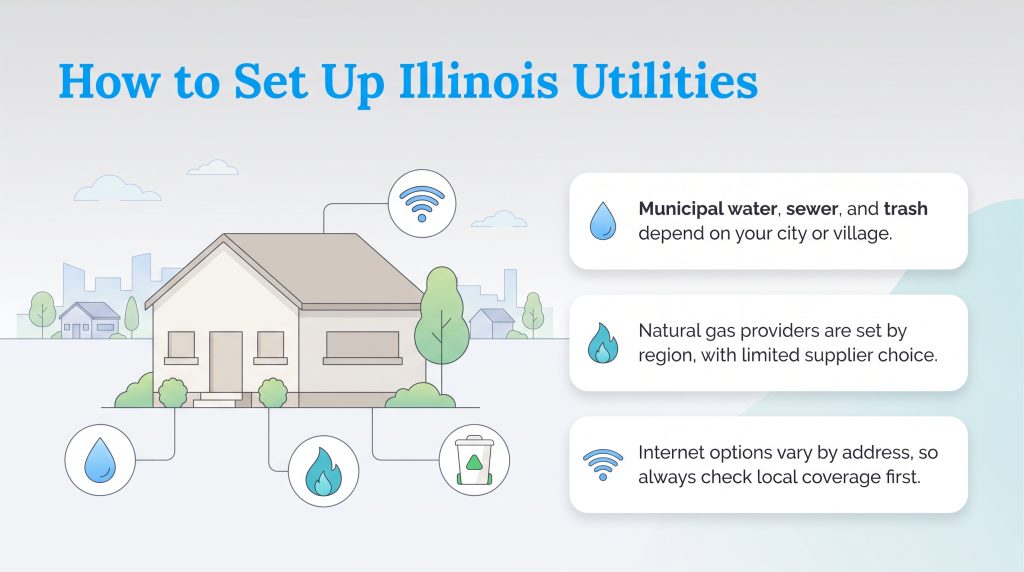
While electricity often dominates the relocation conversation, you cannot neglect the other essential household services. Figuring out how to set up utilities in Illinois means tackling the highly regional nature of your water, heating, and broadband networks. Delivery for these services is largely tied to your address, but knowing the nuances of each service type will help you avoid frustrating dead ends.
Natural Gas Connections
Keeping your home warm during a brutally cold Chicago winter relies heavily on reliable heating. Much like water, your natural gas providers are strictly defined by your geographic territory for delivery. As mentioned earlier, northern Illinois residents rely on a split system depending on their exact ZIP code. If you are moving directly into the city, you will need to initiate a Peoples Gas start service request. If you are moving to the suburbs, you will likely need to manage a Nicor Gas transfer service or contact North Shore Gas.
Downstate homes utilize Ameren Illinois for both their gas and electric delivery, which conveniently bundles both services onto a single monthly bill. Keep in mind that while many Illinois homes use natural gas, some older properties or new eco-conscious builds rely exclusively on electric heat, air-source heat pumps, or propane, so always verify your home’s HVAC setup before calling.
Municipal Water and Trash Services
Water and sewer services are managed directly at the municipal level by your specific city or village. When setting up your municipal water service, you cannot shop around; you must work directly with your local government. You will typically need to visit the local city hall website, call the village clerk’s office, or utilize the city’s online portal to establish an account. For example, Chicago residents manage their water accounts through the City of Chicago Department of Finance.
Many municipalities also bundle trash and recycling collection into this same monthly water bill. If you want to ensure your new home operates efficiently and sustainably, ask your municipality about their local recycling rules, bulk item pickup days, yard waste collection, and community composting programs available in your neighborhood.
High-Speed Internet and Cable
Your broadband options depend heavily on the infrastructure laid on your exact street. Before locking into a lengthy contract, spend some time checking local internet availability to find the best speeds. Xfinity (Comcast) maintains a massive footprint across the Chicagoland area and much of northern Illinois, making it a common choice for cable internet. AT&T is also widely available, offering high-speed fiber-optic connections in increasingly broader pockets of the state. In central and southern Illinois, providers like Metronet offer highly competitive fiber networks. Always enter your ZIP code directly into their respective databases to ensure you secure the bandwidth necessary for reliable remote work and seamless streaming.
Step-by-Step Utility Setup Checklist for Your Move
When dealing with the chaos of packing boxes and hiring movers, it is incredibly easy to let administrative tasks slip through the cracks. Knowing exactly how to set up utilities in Illinois requires a strategic timeline. Waiting until the last minute can leave you unpacking in the dark or taking freezing showers. Follow this chronological timeline and moving utilities checklist to ensure your Illinois service transfer process is smooth and stress-free.
3 Weeks Out: Identify and Audit
- Confirm the exact utility providers tied to your new address by asking your landlord, your real estate agent, or the previous homeowner.
- Gather all your required personal identification documents, lease agreements, and closing paperwork in a secure, easily accessible folder.
- If you plan to use an alternative retail electric supplier, use the Illinois Plug In tool to compare renewable energy plans and fixed-rate contracts.
2 Weeks Out: Initiate Transfers and Schedule Installations
- Call or visit the online portals for ComEd, Ameren, or your regional gas provider to schedule your exact activation dates.
- Schedule the disconnection of utilities at your current residence. Always set the shut-off date for 24 to 48 hours after you plan to physically move out, so you have power for final cleaning.
- Contact your chosen internet service provider to schedule an installation window. High-speed broadband technicians often book up weeks in advance during busy summer moving seasons.
1 Week Out: Finalize the Details
- Contact your local city hall or municipal clerk to establish your water, sewer, and trash collection accounts. Pay any required municipal activation fees.
- If a utility provider requires a security deposit due to an out-of-state credit history, request a waiver by providing a Letter of Good Credit from your previous provider.
- Note all confirmation numbers provided during your setup calls in a digital note on your phone.
Move-In Day: Verify and Test
- Flip the light switches, test the hot water, and verify the HVAC system is functioning immediately upon arrival.
- Locate your home’s main electrical breaker box and the primary indoor water shutoff valve in case of future emergencies.
- Read your electric and gas meters and snap a photo with your smartphone to timestamp the starting usage numbers.
What You Need to Open an Account
Nothing stalls a simple setup call faster than scrambling to find your personal information. When initiating your start service requests, having your paperwork organized in advance cuts the phone call time in half and prevents frustrating administrative roadblocks. Providers must legally verify your identity to prevent fraud, which requires you to present specific documentation.
Here is exactly what you should have handy before you dial your provider or log into their online portal:
- Primary Identification: Your Social Security Number (SSN). If you do not have an SSN, most Illinois utilities will accept an Individual Taxpayer Identification Number (ITIN) or allow you to verify your identity in person using alternate documents.
- Secondary Identification: A valid, government-issued photo ID, such as a state driver’s license, state ID card, or passport.
- Proof of Residence: A copy of your signed lease agreement if you are renting, or your final closing documents/deed if you are purchasing the home.
- Service Details: Your exact new service address (including the ZIP code and any specific unit or apartment numbers) and your desired activation date.
Meeting Illinois utility deposit requirements can be a jarring surprise for many new residents. Utility deposits are a standard industry practice designed to offset the risk of unpaid bills for brand-new accounts. If you lack a local credit history, have a poor credit score, or possess no prior utility track record within the state of Illinois, providers like ComEd, Ameren, and Nicor Gas may require an upfront security deposit before turning on the power.
Fortunately, the Illinois Commerce Commission (ICC) regulates these deposits, ensuring they are reasonable. Most utility deposits are fully refunded — often with a small amount of accrued interest — or credited directly back to your monthly bill after you complete a full year of consecutive, on-time payments.
Energy-Saving Moves to Make During Setup
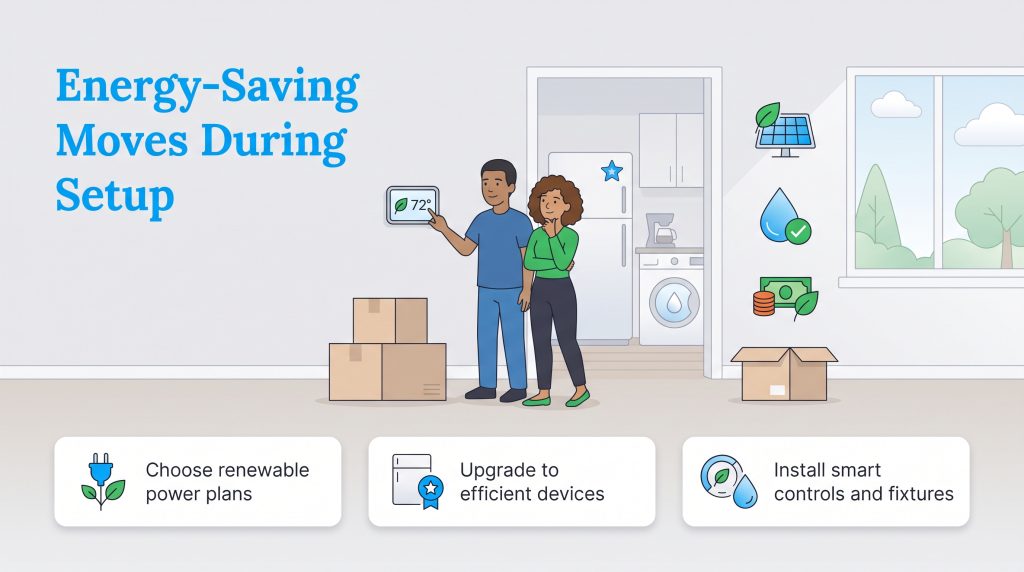
Making environmentally mindful choices doesn’t have to be complicated, and moving into a new home presents the perfect opportunity to establish sustainable habits from day one. A few minor adjustments and strategic investments during your initial setup can significantly lower your carbon footprint while simultaneously reducing your monthly utility costs over the long haul.
- Compare renewable electricity plans carefully through the official state tool, and verify that your chosen supplier uses verified renewable energy certificates (RECs) to offset your household usage.
- Choose ENERGY STAR appliances if your relocation requires you to purchase a new refrigerator, washer, or dryer. These certified devices consume significantly less electricity and water than standard models.
- Install a smart thermostat immediately upon moving in. These automated devices manage your heating and cooling based on your specific daily schedule, keeping you perfectly comfortable during harsh Midwest winters and humid summers without wasting energy when the house is empty.
- Look for WaterSense-labeled fixtures, such as low-flow showerheads and bathroom faucets, to effortlessly reduce your household water consumption without sacrificing water pressure.
- Check for efficiency rebates offered by your new utility providers. Many Illinois companies, including ComEd and Ameren, provide highly lucrative financial incentives for upgrading your home’s insulation, sealing ductwork, or installing energy-efficient HVAC systems.
Preparing for Your Illinois Move
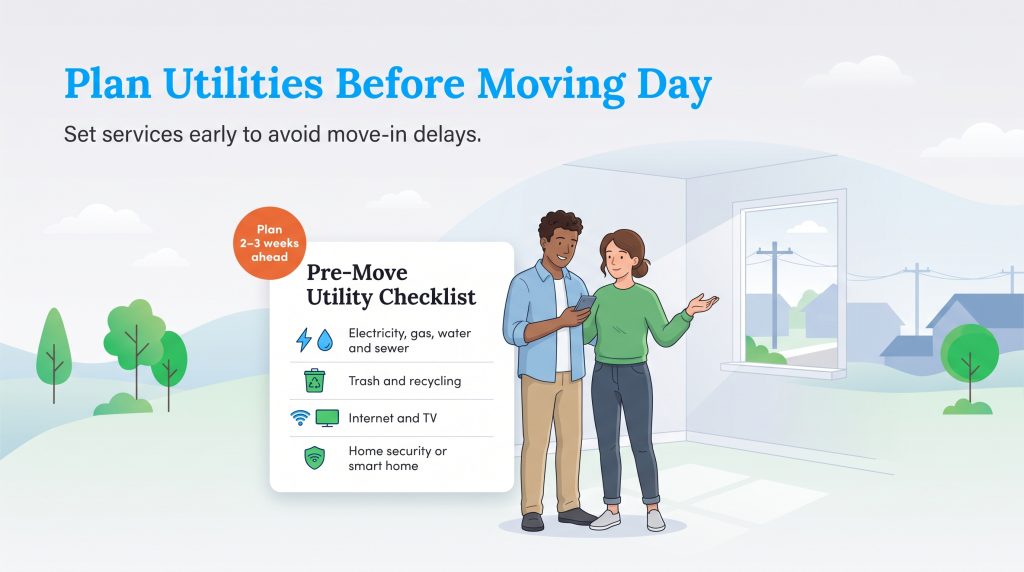
Tackling your essential household services might feel like a tedious chore wrapped in endless paperwork, but knocking these setup calls out early completely streamlines your entire moving experience. Getting your accounts established well ahead of time eliminates chaotic move-in day stress, ensuring the refrigerator runs cold, the heat turns on immediately, and your remote work setup connects to the Wi-Fi seamlessly. By proactively managing your utility transfers, you guarantee there is no lapse in service between leaving your old residence and settling into your new one.
As you approach moving day, rely on these three imperative tips to guarantee success. First, meticulously track all of your confirmation numbers and account IDs in a centralized digital note, as you may need to reference them if a technician is delayed. Second, take five minutes during your initial home walkthrough to physically locate your electrical breaker box and main water shutoff valve, preparing you for any sudden household emergencies. Finally, test every single service — flip every light switch, run the faucets, and adjust the thermostat — immediately upon receiving your keys. With these logistics securely handled, you are free to step back, relax, and start exploring everything your new Illinois neighborhood has to offer.
Frequently Asked Questions About Moving to Illinois Utilities
Still sorting through the details? These comprehensive answers cover the most common timing, provider, billing, and regional questions people run into when organizing their services in the Prairie State.
How do I set up utilities in Chicago specifically?
Do I have to choose an energy supplier when I move to Illinois?
Can I set up my Illinois utilities online, or do I need to call?
How much notice do I need to give to start utilities in Illinois?
Can I transfer my current utilities if I am moving within Illinois?
Why is my Illinois utility company asking for a deposit?
What happens to my utility setup if I move into a house with a locked meter?
How do I find out who provides water to my new Illinois address?
Can I choose a renewable electricity plan in Illinois?
Who do I call for a power outage in Illinois?
About the Author

David has been an integral part of some of the biggest utility sites on the internet, including InMyArea.com, HighSpeedInternet.com, BroadbandNow.com, and U.S. News. He brings over 15 years of experience writing about, compiling and analyzing utility data.

LaLeesha has a Masters degree in English and enjoys writing whenever she has the chance. She is passionate about gardening, reducing her carbon footprint, and protecting the environment. She also recently served as President of the Board for City Sprouts (a community garden).