
A mix of expiring federal tax credits, newly approved delivery rate hikes, and exploding wholesale capacity prices will add $15 to $30 to your average monthly power bill starting in June 2026.
Key Takeaways
- Expiring credits and higher delivery rates will hit ComEd and Ameren customers simultaneously as the $13 monthly federal tax-relief credit ends on May 31, 2026.
- Exploding wholesale capacity costs are driving these rate spikes, fueled by coal-fired power plant retirements and soaring electricity demand from massive new data centers across the state.
- You can fight back by switching to alternative suppliers, subscribing to community solar for a guaranteed discount, or upgrading your home’s energy efficiency.
If you have noticed your monthly electric bills getting heavier, you are not alone — and unfortunately, another rate increase is right around the corner. Starting in June 2026, a sudden alignment of expiring credits, state-approved infrastructure hikes, and a dramatic surge in regional grid capacity costs will add an estimated $15 to $30 to your average summer bill. Here at Utilities For My Home, we want to help you make sense of these complex changes and show you exactly how to protect your household budget from this upcoming energy bill spike.
Why Your Illinois Electric Rates Are Spiking
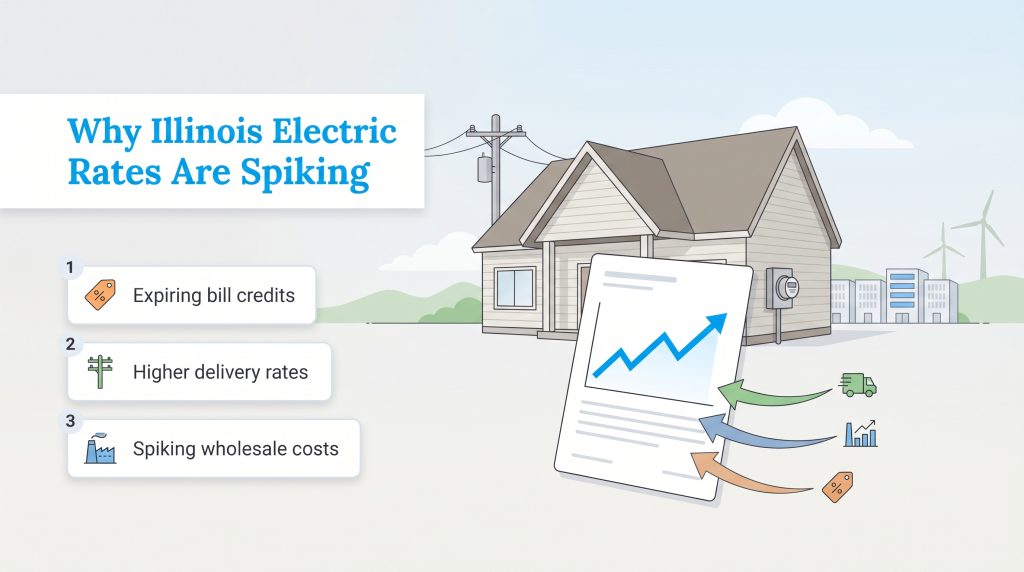
Understanding why utility rates climb can feel like trying to untangle a massive web of corporate jargon. However, the current rate shock boils down to three distinct forces hitting the Illinois power grid at the exact same time. It is a perfect storm of expiring bill discounts, state-approved delivery price increases, and massive spikes in the wholesale energy market.
The Expiration of Crucial Bill Credits
For the first five months of 2026, ComEd customers enjoyed some temporary relief thanks to a massive $803 million federal credit pool linked to the Inflation Reduction Act. This credit returned federal nuclear production tax subsidies back to ratepayers, saving the average household about $13 a month on their bills from January through May 2026. Unfortunately, this tax-relief program is scheduled to expire on May 31, 2026.
The sudden loss of this credit creates an artificial bill increase just as the high-demand summer cooling season begins. Ameren Illinois customers are also losing temporary relief, including a one-time five cents per kWh credit from a $38 million settlement with Dynegy Inc. over historical market manipulation.
New State-Approved Delivery Rate Hikes
Even before your electricity is generated, the physical cost of moving that power to your home is going up. On Jan. 1, 2026, the Illinois Commerce Commission approved permanent delivery rate increases for the state’s major utilities. ComEd was granted a $243 million hike, while Ameren received a $48 million increase. While regulators did strike millions of dollars from the utilities’ original requests to protect consumers, these newly approved tariffs mean you will pay more just to stay connected to the physical grid.
Exploding Wholesale Capacity Costs
The most volatile part of your bill is the cost of grid capacity, which is essentially a reservation fee paid to power plants to ensure they can produce enough electricity during peak summer hours. Regional grid operators run competitive annual auctions to secure this capacity, and the clearing prices are passed directly to your bill.
In northern Illinois, the capacity price run by grid operator PJM cleared at an unprecedented $329.17 per megawatt-day — a massive 1,038% increase from just two years ago when it sat at $28.92. Central and southern Illinois, which are operated by the MISO grid, face a similar story with summer capacity prices remaining highly constrained.
The Clean Energy Transition and Data Centers
Two primary factors are driving these capacity prices to historic heights: a shrinking supply of traditional energy and a massive surge in demand. Traditional coal-fired power plants are retiring faster than we can build new clean energy replacements, which leaves the grid with narrow reserve margins.
At the same time, high-density commercial loads like AI data centers are eating up the grid’s capacity. Data centers now consume roughly 5.43% of all electricity in Illinois, and independent monitors estimate that this explosive data center demand is directly responsible for 70% of the recent wholesale cost increases.
How This Rate Hike Impacts Your Monthly Bill
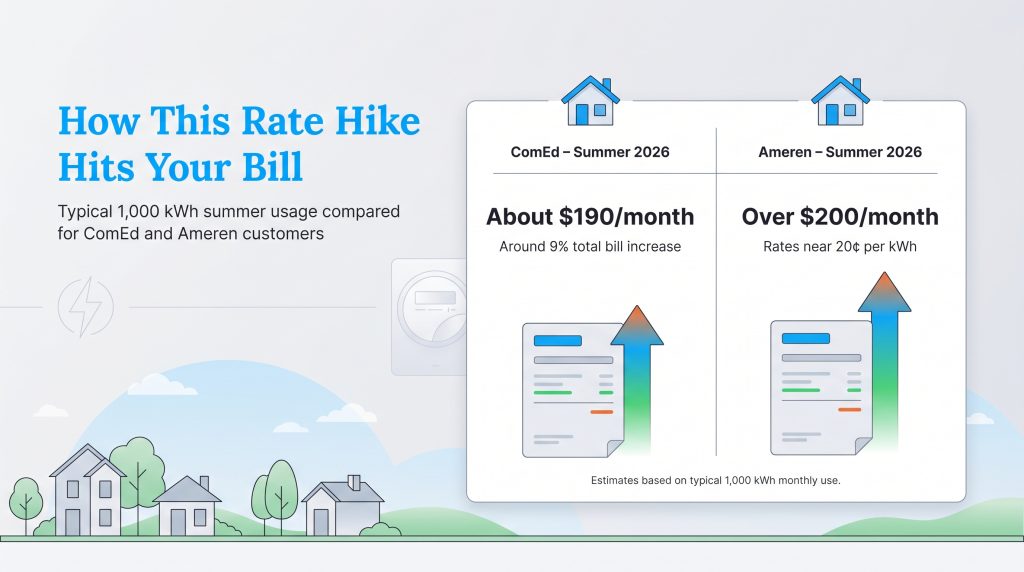
The real-world impact of these changes will depend on where you live and how much power you consume. For a typical household using 1,000 kWh per month, the combined impact of expiring credits and rising capacity charges will be noticeable. We have compiled a historical look and forward-looking projection to help you visualize where rates are heading.
| Year / Period | ComEd Average Bill | Ameren Summer Bill | Main Cost Drivers |
| 2021 Baseline | ~$90 | ~$90 | Low wholesale capacity charges and stable fuel markets |
| 2024 Transition | ~$125 | ~$125 | Rising capacity charges and post-pandemic demand |
| Early 2026 (Jan–May) | ~$170 | ~$155 | New delivery hikes offset by federal tax credits |
| Summer 2026 (June onward) | ~$190 | ~$200 | Expired tax credits and record capacity rates |
| 2030 (Projected) | ~$230+ | ~$230+ | Continuing data center expansion and plant retirements |
ComEd vs. Ameren Summer Bill Outlook
If you live in ComEd’s northern Illinois territory, your baseline supply rate is set to jump by approximately 12% on June 1, 2026, leading to a projected 9% increase on your total residential bill. For the average home, this means adding $10 to $15 per month during peak summer months, pushing your typical statement toward $190.
If you are an Ameren Illinois customer, you face an even steeper climb. Ameren territory has seen a whopping 94% rate increase since 2021. While winter rates hover around 15.5 cents per kWh all-in, summer seasonal rates combined with the capacity surge are projected to reach roughly 20 cents per kWh, pushing average summer bills past the $200 mark.
Major Illinois Cities and Areas Feeling the Pinch
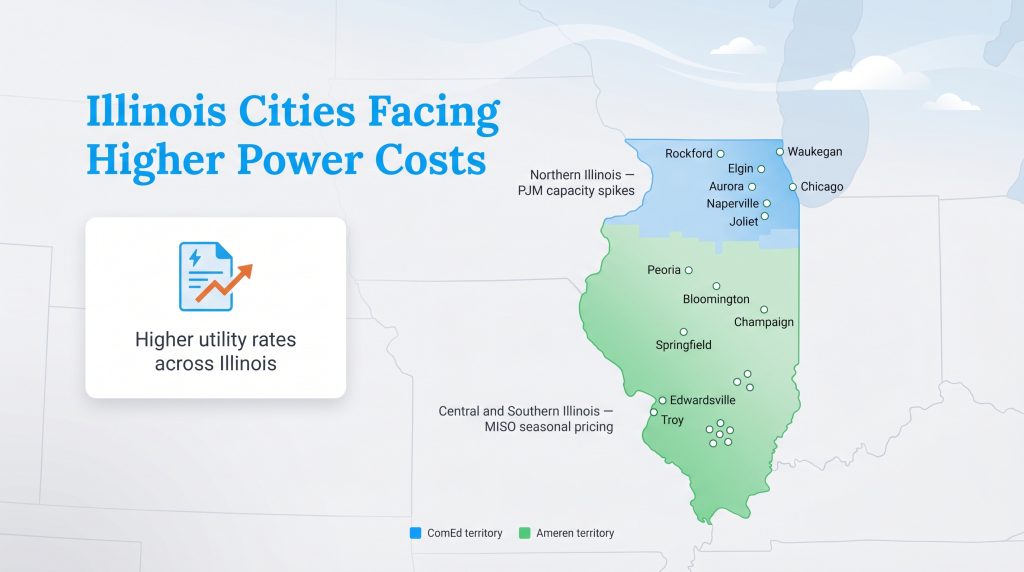
These rate increases are not confined to a single neighborhood — they affect millions of residents spanning nearly the entire state. Depending on your zip code, your service will fall under one of the two major utility giants.
ComEd Territory (Northern Illinois)
If you reside in the northern third of the state, you are served by ComEd and are fully exposed to the PJM capacity spikes. Major cities impacted by these rate adjustments include Chicago, Aurora, Joliet, Naperville, Rockford, Elgin, and Waukegan.
Ameren Territory (Central and Southern Illinois)
For residents living in central and southern Illinois, Ameren is your delivery provider, and your bills are tied to the MISO grid’s seasonal pricing. This massive territory covers mid-sized cities and rural municipal networks alike, including Springfield, Peoria, Champaign, and Bloomington.
Smart Ways You Can Lower Your Electric Bills Today
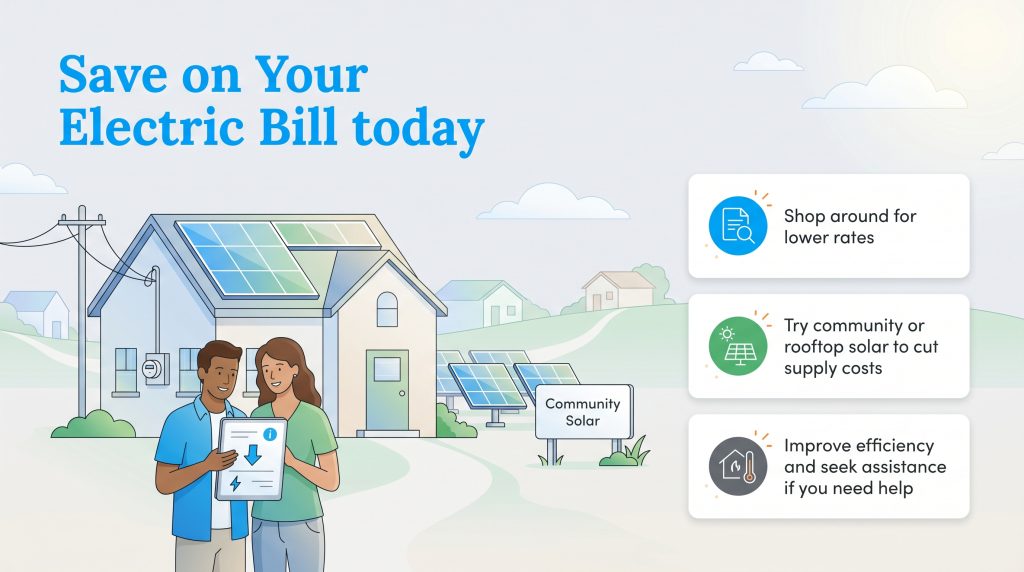
While you cannot control wholesale market capacity auctions or utility delivery infrastructure investments, you are far from helpless. There are several highly effective pathways to reclaim control over your monthly energy expenses and keep your hard-earned money in your wallet.
Shop Around and Lock in a Lower Rate
Because Illinois features a deregulated energy choice market, you have the right to purchase your actual electricity supply from a competitive retail provider rather than accepting your utility’s default rate. You can easily compare rates and plans through the official Plug In Illinois website run by the Illinois Commerce Commission.
However, we urge you to shop with caution. Always look out for “teaser rates” that start low but skyrocket after three months, and watch out for hidden monthly subscription fees or steep early exit penalties. If you want a deeper look at the process, check out our comprehensive Utilities For My Home Illinois guide to learn how to navigate energy choice safely.
Subscribe to a Community Solar Project
If you want to save money and support clean energy without the hassle of installing equipment on your roof, community solar is an incredible, low-risk option. You simply sign up to subscribe to a local solar farm, and the clean energy produced is fed directly back into the local power grid.
Your utility will apply virtual net metering credits to your monthly statement, and you will pay the solar developer for those credits at a guaranteed discount — typically saving you 10% to 20% on your standard supply rate with zero upfront costs.
Go Solar with Onsite Panels
Installing solar panels on your own home is the absolute best long-term shield against volatile grid capacity charges. When you buy a system outright, state and federal incentives can help shorten your payback period to eight to 10 years, leaving you with decades of virtually free power.
If you do not have the upfront capital, a $0-down solar lease lets you lock in a flat, predictable monthly rate that is often immediately lower than your current utility bill. Qualifying low-income households should also explore the state’s Illinois Solar For All program, which guarantees immediate energy savings with no upfront costs, no credit checks, and no ongoing solar payments.
Upgrade Your Home’s Energy Efficiency
The absolute cheapest kilowatt-hour of electricity is the one you never have to use in the first place. Simple behavioral changes and small home upgrades can go a long way in offsetting a 9% rate increase.
We recommend setting your thermostat to 76 to 78 degrees during peak summer afternoons, weatherizing drafty doors and windows to keep warm air out, and replacing your HVAC filters monthly to keep your cooling system running at peak efficiency.
Seek Bill Assistance and Support Programs
If you are struggling to make ends meet under these new rates, there are robust social safety nets designed to keep your power running. ComEd offers a Low-Income Discount program that provides direct bill reductions to qualifying households, and Ameren is actively preparing to launch a similar program.
If you are a senior or a moderate-income family that falls just above the qualification threshold for federal LIHEAP assistance, payment assistance programs like Warm Neighbors, Cool Friends can provide essential seasonal financial relief.
Taking Control of Your Energy Future
As the modern electric grid undergoes a massive transition toward cleaner energy, retail ratepayers are being asked to absorb the financial growing pains. With expiring credits and record-breaking capacity auctions taking effect this summer, doing nothing is a guaranteed recipe for higher bills. Fortunately, by taking a proactive approach — whether that means shopping for a competitive supply rate, subscribing to community solar, or investing in energy-efficient home improvements — you can successfully navigate this rate hike and keep your home comfortable without breaking the bank.
Frequently Asked Questions About Illinois Electric Rates
We know that navigating electric rate hikes can be incredibly confusing. Here are quick, direct answers to the most common questions we hear from Illinois utility customers.
Why is my Illinois electric bill going up in June 2026?
What is a capacity auction and why does it affect my rate?
Can switching to a different electricity supplier save me money?
What is the Illinois Solar for All program and who qualifies?
About the Author

Claudio is a sustainability-focused writer with a background in Anthropology and Psychology from NC State University. He has spent over 15 years working in writing, interpretation, and translation, driven by a deep interest in how human culture shapes the environment. Today, he shares his curiosity with readers by writing about sustainable living solutions and the connection between everyday choices and environmental impact.