
Discover if switching your home or business to a Dynegy electricity plan is the right move for your energy budget.
Key Takeaways
- Dynegy offers straightforward pricing with transparent fixed-rate plans, zero enrollment fees, and a robust satisfaction guarantee.
- The company participates in municipal aggregation, automatically enrolling residents in negotiated community rates but allowing for easy, penalty-free opt-outs.
- Dynegy operates solely as an energy supplier, meaning your local utility company still handles infrastructure maintenance and power outage response.
If you live in a deregulated market, selecting the right electricity provider can often feel overwhelming, but comparing Dynegy electric plans and rates can simplify your search. Operating as a prominent retail electric supplier under the expansive Vistra Corp umbrella, Dynegy proudly serves deregulated energy markets across the Midwest and Northeast with a strong focus on dependable, straightforward customer service. While numerous energy providers rely on confusing fine print and hidden charges, Dynegy’s commitment to upfront transparency means you receive clear options designed to fit real-life budgeting needs. Whether you are setting up a new residential account or exploring ways to manage your commercial overhead, our comprehensive review covers everything from their local coverage areas to their impressive satisfaction guarantee, empowering you to decide if making the switch is the smartest financial move for your home.
What Is Dynegy Energy?
Founded in 1984, Dynegy has evolved into a formidable retail electric provider (REP) and is now officially owned by Vistra Corp. Today, they supply electricity to over a million residential and commercial customers. Operating solely as an energy supplier, Dynegy purchases electricity on the wholesale market and sells it directly to consumers. Because they are one of the most visible Vistra Corp energy companies, they partner closely with your local utility company, which continues to handle the actual power delivery and infrastructure maintenance. Before exploring the specifics of their plans, it helps to understand the broader advantages and potential drawbacks of choosing them as your provider.
- Pros:
- ✅ Transparent pricing structure with absolutely no initial enrollment or connection fees.
- ✅ Offers attractive long-term, fixed-rate price security to shield you from market volatility.
- ✅ Total Satisfaction Guarantee provides excellent peace of mind if you need to switch plans.
- Cons:
- ❌ Limited service area restricted to select deregulated states in the Midwest and Northeast.
- ❌ Offers electricity plans only, meaning there are no natural gas bundles available.
- ❌ Customer confusion often arises around automatic municipal enrollment programs.
- ❌ No dedicated mobile app available, meaning all account management must be done via a web browser or phone call.
Dynegy Energy Plans and Pricing
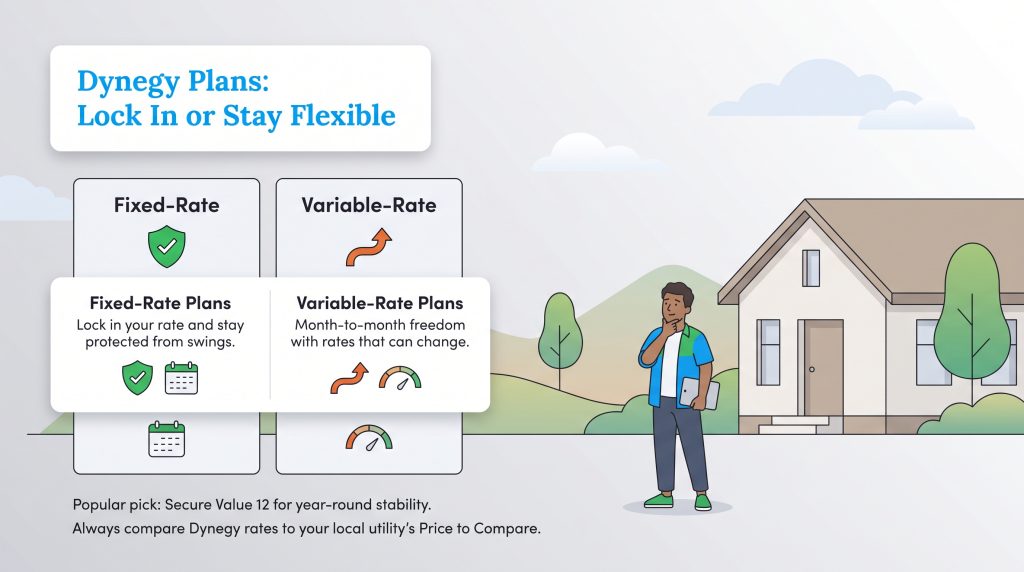
When reviewing your options, you will quickly find that Dynegy fixed rate plans offer straightforward, long-term value, entirely removing the hassle of hidden sign-up fees and confusing introductory gimmicks. Most modern households opt for these reliable Fixed-Rate Plans because they lock in your exact electricity rate for a set term, effectively shielding your budget from seasonal wholesale market fluctuations during freezing winters or scorching summers. Their popular Secure Value and Secure Select tiers offer a comprehensive variety of contract lengths, from a short-term 9-month option up to an extensive 24-month agreement. The Secure Value 12 plan consistently remains a crowd favorite for its balanced blend of competitive pricing and reliable annual stability.
Conversely, if you prefer maximum flexibility over long-term commitments, Dynegy’s Variable-Rate Plans allow you to pay rates that change monthly based on current wholesale market conditions. While this path exposes you to market price spikes, it offers the ultimate freedom to switch energy providers at any time without penalty.
| Plan Name | Term Length | Plan Type | Cancellation Fee | Best For |
|---|---|---|---|---|
| Secure Value 9 | 9 Months | Fixed-Rate | ~$100 (Varies by state) | Short-term leasing situations or temporary assignments. |
| Secure Value 12 | 12 Months | Fixed-Rate | ~$100 (Varies by state) | Renters or homeowners wanting year-round rate stability. |
| Secure Select | 15 Months | Fixed-Rate | ~$100 (Varies by state) | Customers seeking a mid-term contract with customized perks. |
| Secure Value 24 | 24 Months | Fixed-Rate | ~$100 (Varies by state) | Long-term residents looking to lock in low rates for two years. |
*Disclaimer: Exact electric rates, early termination fees, and specific plan availability vary significantly by zip code and your local utility territory. Always enter your exact address into their online portal to firmly verify current pricing before committing.
💡 Pro Tip: Before you sign up for a brand new plan, always check your local utility’s “Price to Compare” on your most recent electric bill. This essential step ensures you are securing a truly competitive rate with your new fixed-rate agreement.
Dynegy Coverage Area and Availability
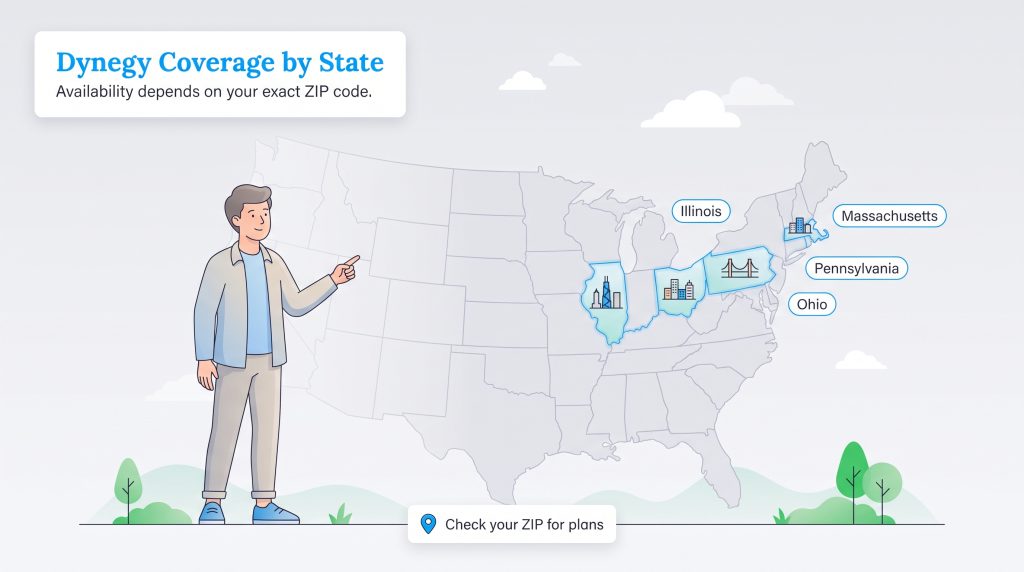
Dynegy Energy Ohio is a major part of the provider’s regional footprint, as they supply stable electricity to residential and commercial customers across several major deregulated markets. In these specific territories, they act strictly as a certified retail electric service provider (REP). It is important to note that actual plan availability within these states is strictly dependent on your exact zip code. If you are moving to or currently reside in one of their active regions, you might have access to their competitive pricing. Their service areas currently encompass the following primary markets:
- Illinois: Major cities and surrounding communities including Chicago, Aurora, and Naperville.
- Ohio: Expansive service areas encompassing Columbus, Cleveland, Cincinnati, Akron, and Toledo.
- Pennsylvania: Numerous municipalities throughout the state, including Philadelphia, Pittsburgh, and Allentown.
- Massachusetts: Key metropolitan areas such as Boston, Worcester, and Springfield.
Deals, Discounts, and Cash-Back Rewards
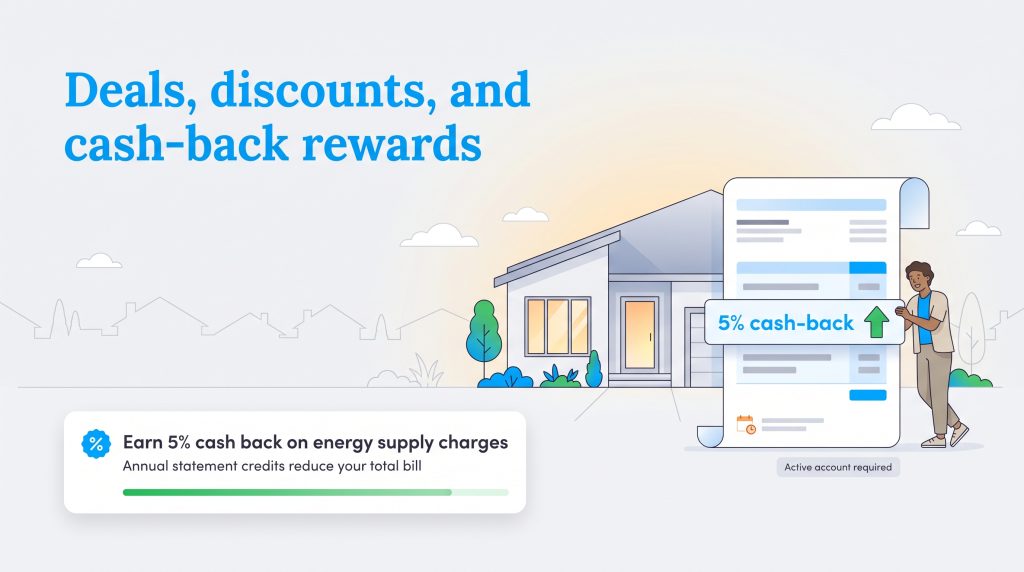
If maximizing your monthly budget is a top priority, looking for integrated perks can make a massive difference over the life of your contract. Dynegy frequently sets itself apart from standard utility offerings by providing lucrative 5% cash-back rewards on select residential plans. For consumers who regularly pay their bills on time and plan to stay put for a year or longer, these accumulated rewards can add up to significant annual savings.
Earning these specialized cash-back rewards is incredibly straightforward. When enrolled in an eligible plan, Dynegy calculates 5% of your customized energy supply charges each month. Instead of mailing you a physical check, they automatically apply this accumulated total as a direct statement credit to your account on an annual basis, or at the end of your contract term. This seamlessly lowers your overall yearly electricity expenses without requiring any extra effort on your part.
To ensure you successfully receive these statement credits, you must consistently maintain an active account in good standing. If you miss consecutive payments or unexpectedly cancel your contract early, you may permanently forfeit any unapplied cash-back balances. Always read your specific plan’s Electricity Facts Label (EFL) to verify exactly when and how these valuable discounts are officially distributed.
💸 Money-Saver: Keep an eye out for seasonal promotions during the mild weather months of spring and fall. Energy providers often roll out their most competitive cash-back plans when overall grid demand is historically low.
Understanding Municipal Aggregation
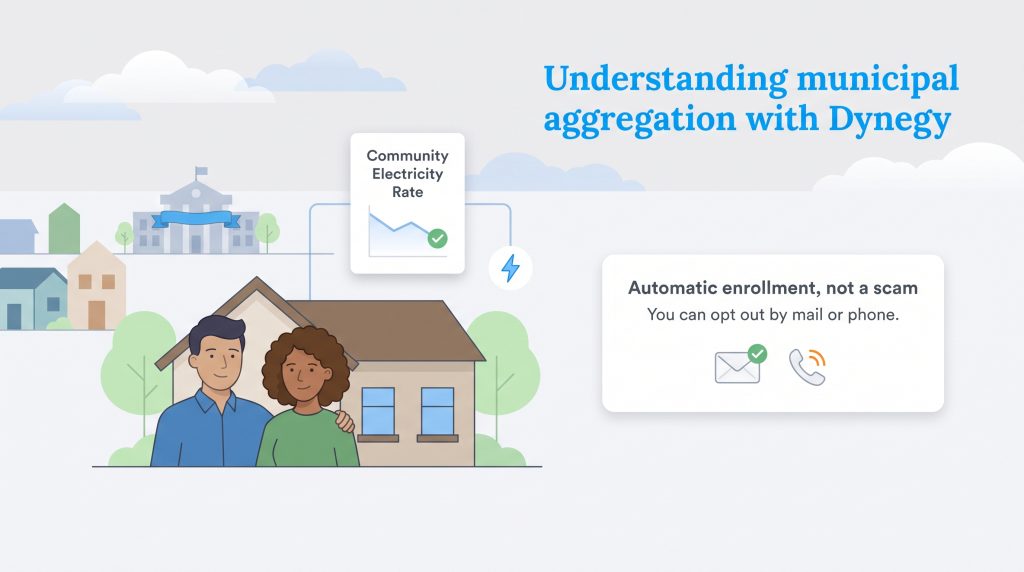
One of the most frequent ways residential customers discover they are officially using Dynegy is through an automated process known as Dynegy municipal aggregation. Local townships in Ohio and Illinois heavily utilize this system to negotiate a bulk electricity supply rate on behalf of their entire community. If your specific town successfully strikes a favorable deal to make Dynegy the community’s default supplier, eligible households are automatically enrolled in the program to receive the negotiated group discount.
While this community-focused initiative often results in highly competitive pricing, the automatic nature of the enrollment process occasionally catches unaware homeowners completely off guard. Rest assured, these are legally sanctioned, government-approved programs designed to leverage community buying power. However, if you strongly prefer to shop the open market yourself or stick with your utility’s default rate, you are never permanently locked into these agreements. You can easily process an opt-out without facing any fees or penalties. Follow these standard steps to officially decline the automated service:
- Watch your mail for the official municipal aggregation notification letter, which typically arrives a few weeks before the scheduled switch.
- Locate the enclosed physical opt-out card inside the envelope.
- Sign, date, and securely mail the card back before the deadline stated on the notice.
- Alternatively, call customer service directly at 833-265-6999 to have your specific account removed from the community pool over the phone.
Fees and the Total Satisfaction Guarantee
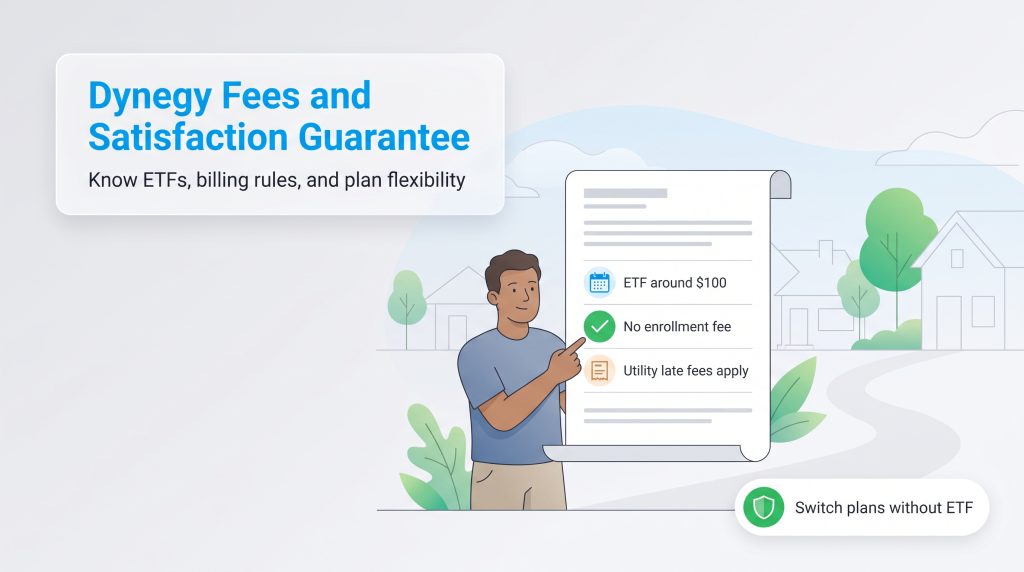
When evaluating a new energy supplier, understanding their fee structure is just as critical as reviewing their advertised rates. Dynegy prides itself on straightforward billing, but there are still a few contractual stipulations you must be aware of to prevent unexpected charges on your monthly statement.
- Early Termination Fees (ETF): If you sign up for a fixed-rate plan and decide to cancel before your contract expires, you will typically incur an ETF. For most standard residential plans in states like Ohio and Illinois, this fee hovers around $100. Always check your specific contract terms, as this penalty actively discourages mid-contract cancellations.
- Zero Enrollment Fees: Unlike some predatory providers, you will not face an upfront connection, application, or basic enrollment fee when you initially sign up for their service.
- Late Payment Penalties: Since your local utility continues to handle the billing process, any late fees associated with a missed payment are dictated by your utility’s specific terms of service, not the supplier directly.
To further support their customers, the company backs their offerings with a robust Total Satisfaction Guarantee. This unique guarantee ensures that if you are unhappy with your chosen fixed-rate plan, you have the flexibility to switch to a different Dynegy plan without paying the standard early termination fee. This risk-free safety net allows you to easily adjust your energy strategy if your budget changes or if you realize a different term length better suits your household’s needs.
Sustainability and Renewable Energy Options
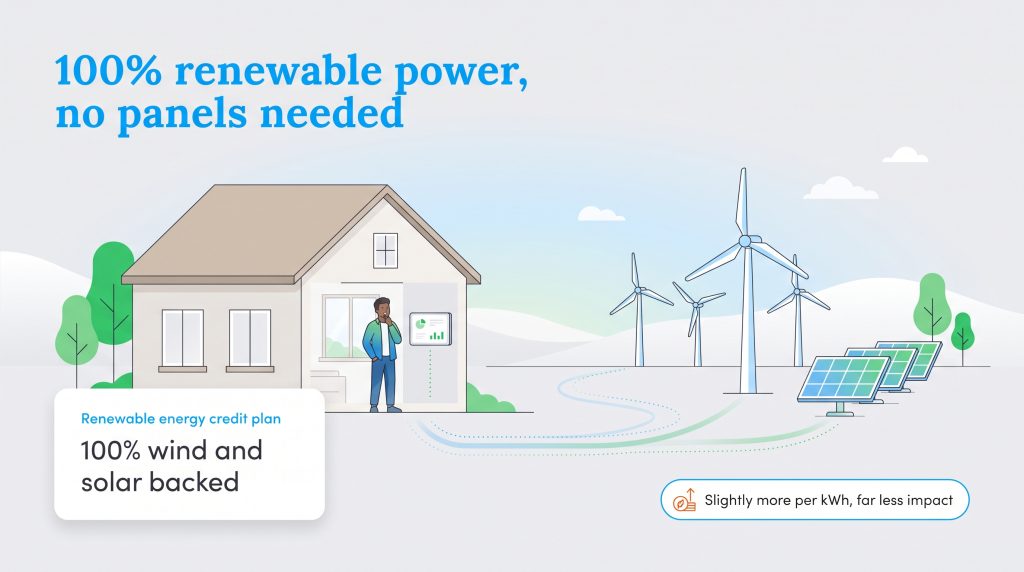
If deeply reducing your household’s carbon footprint is a top priority, the company actively offers several viable pathways to support clean energy generation. As a highly environmentally mindful choice, their available Renewable Energy Plans allow you to reliably power your home while directly supporting vital sustainable infrastructure development across the country.
Through their specific renewable tiers, residential customers can seamlessly opt-in to 100% renewable generation plans. To technically achieve this, the provider purchases and utilizes renewable energy credits (RECs) on your behalf. This verified system ensures that for every megawatt-hour of electricity you actively consume, an equivalent amount of clean, renewable energy — typically sourced from wind or solar farms — is generated and added directly back to the national grid. Choosing an eco-conscious alternative backed by RECs is an incredibly effective way to drastically shrink your environmental impact without having to worry about installing physical solar panels on your own roof.
🌱 Eco Edge: Opting for a 100% renewable plan might cost a fraction of a cent more per kilowatt-hour, but it heavily supports the long-term, sustainable growth of green infrastructure in your specific region.
How to Read Your Bill and Access Dynegy Login
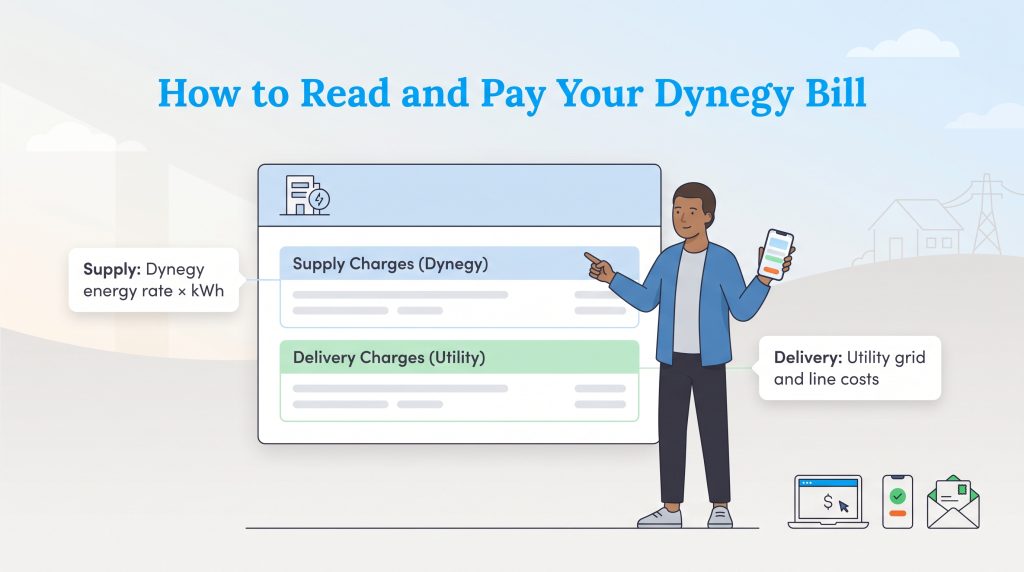
A significant point of initial confusion for many new customers revolves around managing bill pay and properly understanding the exact differences between supplier and utility responsibilities. When you successfully switch your service to a new provider, you will not suddenly start receiving two separate bills in the mail. Instead, your standard payment process remains incredibly streamlined through a single, consolidated monthly statement sent directly by your local utility company.
Here is exactly how your monthly charges are transparently broken down on that final statement:
- Supply Charges (Paid to Dynegy): This prominent line item covers the actual, wholesale cost of the electricity you consume. It is mathematically calculated by multiplying your total kilowatt-hour (kWh) usage for the month by the locked-in rate from your chosen plan.
- Delivery Charges (Paid to Your Local Utility): This unavoidable portion covers the high cost of maintaining the local power lines, utility poles, and physical grid infrastructure. Your local utility company (such as Duke Energy or FirstEnergy) assesses this state-regulated charge regardless of which retail electric supplier you ultimately choose.
Because your local utility retains control of the billing process, you will continue to submit your monthly payments directly through their system. However, if you want to check your specific supply rate, view your contract end date, or manage your rewards, you will need to utilize the Dynegy login portal. Simply navigate to the provider’s official website, click the “My Account” button in the upper corner, and enter your credentials. From this dashboard, you have full control over your active supply plans.
Customer Service and Reporting Outages
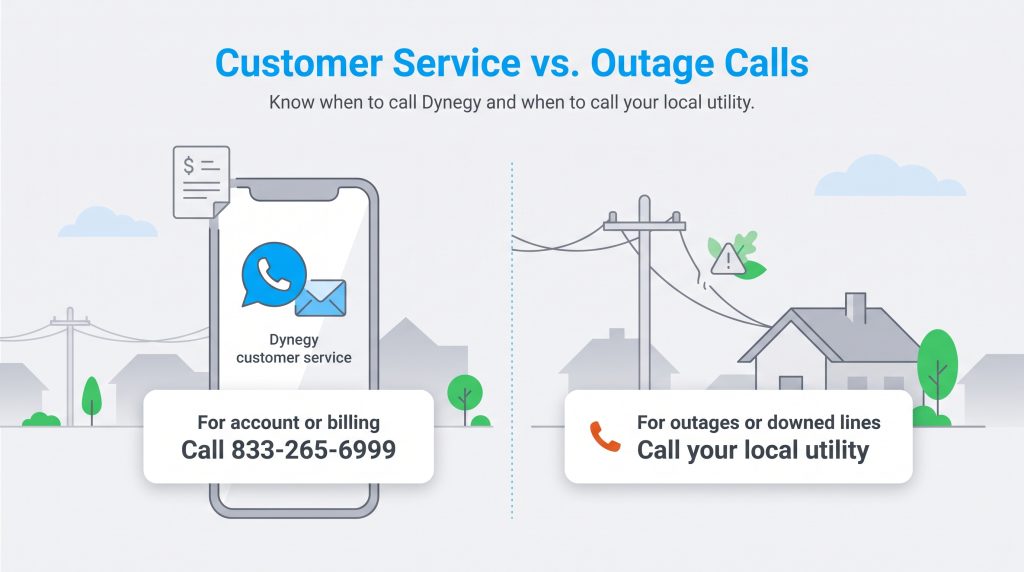
Managing your account smoothly requires knowing exactly who to contact when an issue arises. If you have distinct questions regarding your chosen supply rate, wish to discuss municipal aggregation, or need to switch to a different plan under their Total Satisfaction Guarantee, you need to reach out to Dynegy customer service directly.
You can easily contact their support team via phone at 833-265-6999. Their dedicated residential agents are available Monday through Friday, from 8:00 a.m. to 11:00 p.m. EST. If you prefer digital communication for non-urgent billing inquiries, you can also email their support team at [email protected].
When severe weather strikes, many customers frantically search for a Dynegy outage map online. However, because they operate solely as a retail electric supplier, they do not own, manage, or repair the physical power lines running through your neighborhood. Instead of wasting time looking for a Dynegy outage map, you must immediately contact your local Transmission and Distribution Service Provider (TDSP) to report downed lines, damaged transformers, or unexpected power disruptions.
Your local TDSP is legally responsible for safely dispatching repair crews and providing accurate estimated restoration times through their own local maps. Keep the following regional utilities’ outage response networks handy:
- AEP Ohio: Call 800-672-2231
- FirstEnergy (Ohio/PA): Call 888-544-4877
- ComEd (Illinois): Call 800-334-7661
- Duke Energy (Ohio): Call 800-543-5599
🚩 Heads Up: Take a moment to save your local utility’s emergency response number in your mobile phone contacts right now. Scrambling in the dark to find the correct number during a severe blackout is a frustrating hassle you want to avoid.
Dynegy Energy Aid Program
For households facing unexpected financial hardship, the Dynegy Energy Aid program provides crucial bill payment assistance. This specialized, community-focused initiative uses donated funds from employees, customers, and the corporation itself to directly support low-income consumers who may be struggling to keep the lights on.
The program is actively available to qualified residents in Pennsylvania, Ohio, and Illinois. Because the funds are administered locally rather than directly through the provider’s corporate office, you must apply through your local community action agency. These local agencies carefully evaluate applications based on state-specific income guidelines and household size to ensure the energy assistance grants reach the families who need them the most. If you need a bit of help bridging a financial gap, checking your eligibility for the Energy Aid program is an excellent first step toward regaining control of your utility budget.
Dynegy Energy Reviews, Complaints, and Ratings
When diving into Dynegy Energy reviews across various consumer forums, the sentiment is generally mixed — a common reality for any large retail electric supplier. They consistently hold respectable ratings with the Better Business Bureau (BBB), where their dedicated support team is actively known to respond to consumer inquiries and efficiently resolve intricate billing disputes in a timely, professional manner.
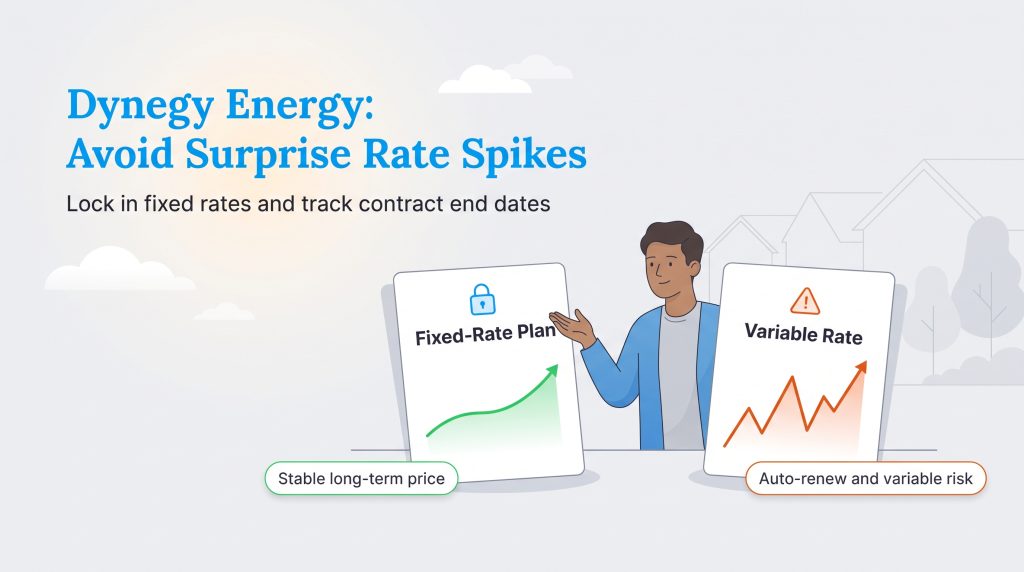
However, taking a much closer look at consumer complaints on community platforms like Reddit reveals a few common, recurring frustrations. In specialized local threads, particularly within the Cincinnati and Toledo forums, the most prevalent negative feedback centers on unexpected, steep rate spikes. These spikes typically occur once a customer’s initial fixed-rate promotional contract naturally expires, automatically shifting their account to a volatile, variable month-to-month rate. If you fail to renew your contract on time, you expose yourself to these drastic price hikes.
Another major point of public contention across these local Reddit communities is widespread auto-enrollment confusion. Many homeowners aggressively ask if the company is fraudulent simply because they were unexpectedly opted into a municipal aggregation community rate without fully reading the mailed notices. Fortunately, if you proactively manage your contract end dates and thoroughly understand the local municipal aggregation opt-out process, you can easily bypass these common pitfalls. The genuine, overarching benefit of their service firmly lies in their long-term, fixed-rate price security, which actively protects vigilant customers from volatile wholesale market swings.
Who Is Dynegy Energy Best For?
Selecting the right retail energy supplier entirely depends on your specific household habits, your geographical location, and your preferred style of account management. To help you quickly decide if they are the right fit for your lifestyle, we have broken down exactly who stands to benefit the most from their services.
- Choose Dynegy Energy If:
- You are a long-term renter or homeowner who desperately wants to lock in a secure, fixed electricity rate for 12 to 24 months.
- You want the unparalleled flexibility of a Total Satisfaction Guarantee to freely switch between plans without penalty if market rates drop.
- You appreciate earning practical 5% cash-back rewards applied directly to your annual utility statements.
- You want a completely hassle-free setup with zero upfront enrollment fees.
- Do Not Choose Dynegy Energy If:
- You strongly prefer handling all of your digital account management through a sleek, dedicated mobile app (they currently lack one).
- You are actively seeking convenient dual-fuel bundles that cleverly combine both electricity and natural gas into one package.
- You are prone to completely ignoring contract expiration notices and frequently forget to renew your fixed-rate plans.
Making the Switch to a Dynegy Energy Plan
Choosing the right energy provider involves weighing upfront costs against long-term stability and customer perks. If you decide that transitioning to a Dynegy electricity plan is the best move for your household, you can expect a few core benefits to seamlessly streamline your daily energy management.
- Single-bill convenience with transparent fixed rates: Dynegy seamlessly integrates your supply costs into your existing local utility statement, allowing you to lock in competitive pricing for up to 24 months without tracking down a secondary monthly bill.
- Flexible Total Satisfaction Guarantee: If you are unhappy with your chosen plan or simply realize a different term length better suits your household, their guarantee allows you to adjust your strategy and avoid feeling trapped by standard early termination fees.
- Rewarding loyalty for consistent customers: By consistently paying your bill on time, you can easily earn practical 5% cash-back rewards applied directly to your annual utility costs, actively lowering your overall energy budget.
Frequently Asked Questions About Dynegy Energy
Is Dynegy a good energy company?
Yes, Dynegy is widely considered a solid, reliable choice for consumers who heavily prioritize long-term budget stability. Their transparent fixed-rate plans, zero enrollment fees, and highly responsive customer service team make them a strong contender in deregulated markets, provided you remember to renew your contract before it expires to avoid variable rate hikes.
Does Dynegy check your credit before enrollment?
Like most major retail electric providers, Dynegy typically performs a soft credit check during the initial enrollment process to verify your identity and determine if an upfront deposit is required to establish your new service.
What is the difference between Dynegy and my local utility?
Dynegy operates solely as a retail electric supplier, meaning they purchase electricity on the wholesale market and sell it to you at a specific rate. Your local utility company (such as ComEd or AEP) remains responsible for delivering that electricity to your home, maintaining the physical power lines, and responding to localized grid outages.
Is Dynegy Energy a scam?
No, Dynegy is a 100% legitimate, certified retail electric provider and a prominent subsidiary of Vistra Corp, one of the largest independent power producers in the country. Customer confusion often stems from automated municipal aggregation letters, which are officially sanctioned, bulk-discount community programs negotiated by local governments, not fraudulent activity.
How do I contact Dynegy Energy customer service?
You can easily contact their residential customer service team by calling 833-265-6999 Monday through Friday, from 8:00 a.m. to 11:00 p.m. EST. For non-urgent matters, you can also reach them via email at [email protected].
Does Dynegy Energy have a mobile app?
No, Dynegy currently does not offer a dedicated mobile application for account management. All of your plan renewals, address changes, or plan switches must be handled directly through their standard website portal using a web browser or by calling their customer service line.
Why did my Dynegy Energy rate suddenly go up?
If your monthly bill suddenly spiked, your initial fixed-rate contract likely expired. When this happens, Dynegy automatically transitions your account to a variable month-to-month rate, which fluctuates heavily with current wholesale market conditions. To intelligently avoid these unexpected price hikes, you should always renew your fixed-rate plan before the current term officially ends.
How do I opt out of Dynegy Energy municipal aggregation?
You can easily opt out without facing any penalties by signing and returning the physical opt-out card you received in the mail before the stated deadline. Alternatively, you can call their customer service center directly at 833-265-6999 to have your home promptly removed from the community pool over the phone.
Will I still call my local utility for a power outage if I use Dynegy?
Yes, you must always call your local utility company (such as ComEd, Duke Energy, or AEP) during a power outage or blackout. Dynegy only supplies the raw electricity; your regional utility actually maintains the physical power lines and actively dispatches the emergency repair crews.
Does Dynegy charge early termination fees (ETFs)?
Yes, if you cancel a fixed-rate contract mid-term to switch to a completely different provider, you may be subject to an early termination fee. This exact fee is typically around $100 in states like Ohio, though the amount strongly varies by location. However, Dynegy’s unique Total Satisfaction Guarantee seamlessly allows you to switch between their own specific plans without facing this penalty.
Will I receive two bills if I switch to Dynegy Energy?
No, you will not receive two separate pieces of mail. While Dynegy successfully handles your specific energy supply, those designated charges will seamlessly appear on the single, unified monthly statement sent directly to you by your local utility company.
Does Dynegy offer natural gas plans?
No, Dynegy explicitly specializes exclusively in retail electricity supply. If your specific home requires a reliable natural gas supplier, you will need to actively partner with a completely different retail energy provider or safely rely on the default utility rate.
About the Author

David has been an integral part of some of the biggest utility sites on the internet, including InMyArea.com, HighSpeedInternet.com, BroadbandNow.com, and U.S. News. He brings over 15 years of experience writing about, compiling and analyzing utility data.