
Discover everything you need to know about setting up your new Columbia Gas account, comparing local rates, and maximizing energy efficiency in your home
Juggling moving boxes, address changes, and utility setups can quickly turn your excitement about a new home into a stressful chore. If you are moving into a territory powered by NiSource, sorting out your natural gas connection is likely high on your to-do list. We put together this guide to help you seamlessly set up your Columbia Gas account, navigate rate comparisons without the headache, and uncover smart, eco-conscious alternatives to lower your carbon footprint. You deserve a cozy, energy-efficient home from day one, so we are going to walk you through everything from activating your meter to shaving dollars off your monthly heating bill.
Where Does Columbia Gas Provide Service?
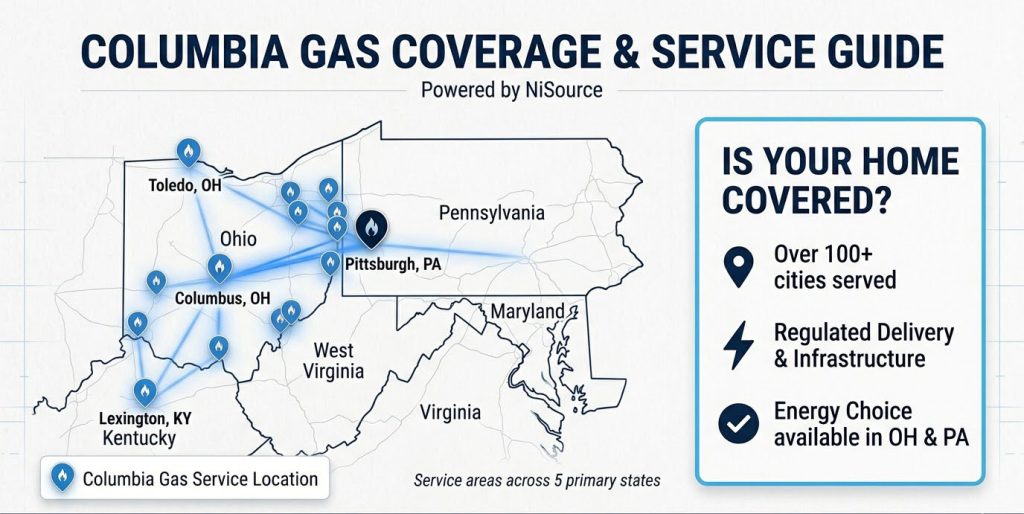
Before you dive into opening a Columbia Gas new account, it helps to confirm that your fresh address actually falls within their coverage footprint. Operated by NiSource, this utility provider delivers natural gas to hundreds of thousands of customers across multiple states (varies by division) in the Midwest and Mid-Atlantic regions. You will typically find them serving a mix of dense urban centers and sprawling suburban neighborhoods.
Coverage is division- and county-specific, so you will manage service through the Columbia Gas division for your state (Ohio, Pennsylvania, Virginia, Maryland, or Kentucky). Programs, fees, and timelines vary. If you are relocating, check to see if your new home lands in one of these primary service territories. Examples include:
- Ohio: Powering major hubs like Columbus and Toledo.
- Pennsylvania: Supplying neighborhoods throughout Pittsburgh and surrounding boroughs.
- Virginia: Keeping homes warm in regions around Richmond and other parts of the state.
- Maryland: Serving residential customers in communities like Hagerstown and parts of the Baltimore suburbs.
- Kentucky: Delivering reliable natural gas to central Kentucky, including Louisville and Lexington.
Step-by-Step Guide to Starting or Transferring Service
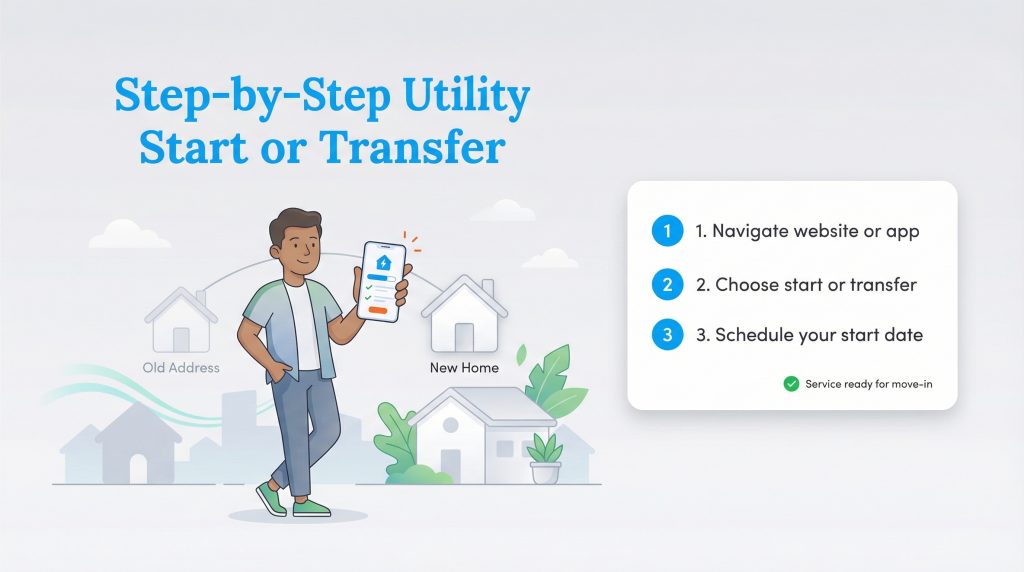
Getting your utilities turned on should not require an afternoon stuck on hold. When you need to initiate a Columbia Gas start service request, the digital self-service tools are your best friend. Navigating to the official web portal or downloading the Columbia Gas mobile app allows you to manage the entire process from your smartphone. The app is particularly convenient for movers, giving you the power to track your activation status, monitor initial usage, and enroll in paperless billing while you are still unpacking.
Before you begin, gather what you will need: your new address, requested start date, identification (like a Social Security number), and your landlord’s contact information if you are renting. Once you have those details handy, follow these steps to establish your connection:
- Navigate to the portal: Visit the official website for your state’s Columbia Gas division or download their mobile app.
- Select start or transfer: Choose the option to move your existing account or create a brand-new one.
- Verify your identity: Provide the required identification details to establish your account.
- Schedule the date: Pick a move-in date that aligns with your arrival, ideally a week in advance.
- Confirm access: Ensure the utility meter is accessible in case a technician needs to perform a physical unlock.
If you are wondering how to transfer Columbia Gas service from an old address to a new one, the online dashboard handles this seamlessly. You just need your current account number, the new service address, and your requested start date. Setting up a Columbia Gas new account as a first-time customer is equally straightforward, though you might need to provide a Social Security number or alternative ID for a soft credit check, depending on your state’s specific policies.
Sometimes, digital tools hit a snag. If your new property has a locked meter, requires physical line inspections, or you simply prefer speaking to a human, dialing the Columbia Gas customer service number is the right move. Representatives can manually process your move-in request and dispatch a technician if necessary. For more tips on managing your timelines, browse our comprehensive utility setup checklist.
Understanding Columbia Gas Rates and Pricing Plans
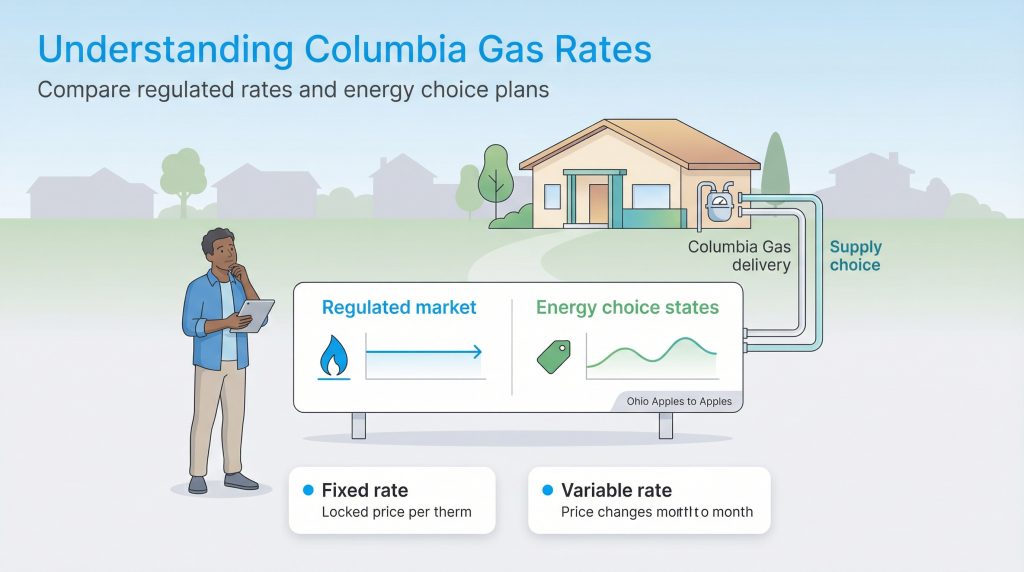
Nobody wants to open their first utility bill and face an unexpected financial shock. Making sense of Columbia Gas rates boils down to understanding how natural gas is priced in your specific state. In regulated markets, the utility company procures the gas and passes the cost directly to you without a markup, meaning everyone pays the standard offer rate approved by local public utility commissions.
However, if you live in a deregulated market, often referred to as an energy choice state like Ohio or Pennsylvania, you have the freedom to shop around for the generation portion of your bill. Columbia Gas will still deliver the fuel and maintain the pipes, but you can purchase the actual gas from a third-party competitive retail supplier. Taking the time to compare Columbia Gas rates against these alternative suppliers can sometimes yield noticeable savings.
When evaluating offers, you will encounter fixed and variable rate plans. A fixed-rate plan locks in your price per therm or Ccf for the duration of the contract, shielding you from sudden market spikes during a bitter winter. Conversely, variable rates fluctuate month to month based on wholesale market conditions. To see how these options stack up in real time, Ohio residents can explore the official Ohio Apples to Apples natural gas portal.
Evaluating Retail Supplier Options
When reviewing third-party natural gas suppliers, look closely at the contract terms to find the right fit for your household. You will want to compare contract lengths, check for early termination fees, note any monthly base charges, and verify if introductory rates jump significantly after a few months. Also, confirm whether budget billing is compatible with your chosen supplier, as this can vary widely.
| Plan Type | What to Watch For |
| Fixed-Rate Plans | Check for early termination fees and verify how long the fixed price lasts before it expires or renews. |
| Variable-Rate Plans | Watch out for low introductory rates that may spike significantly during peak winter demand. |
Exploring Fees, Guarantees, and Special Equipment
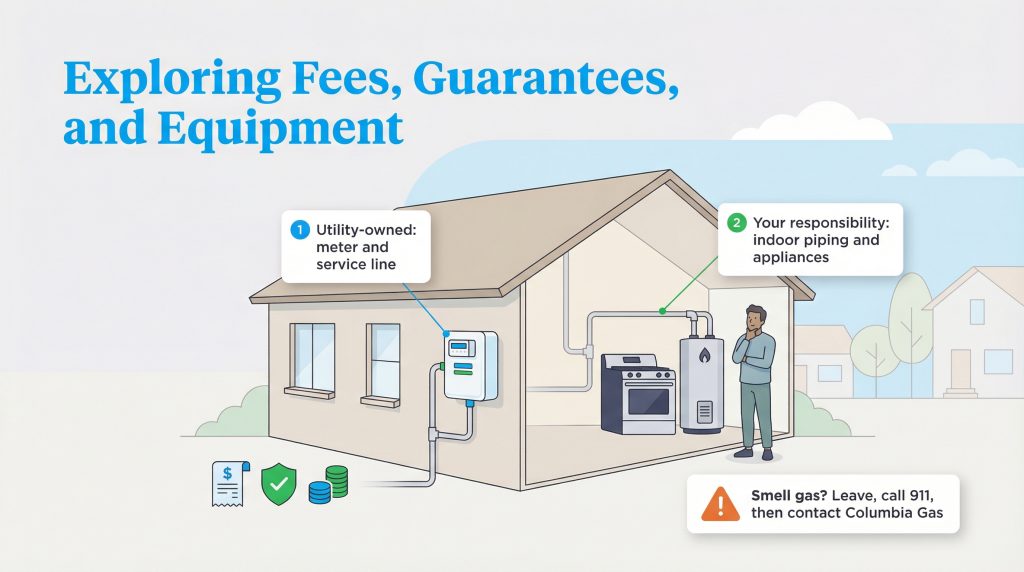
Beyond the cost of the actual gas you consume, your monthly bill includes a few standard operational charges. Expect to see a start or service fee depending on your local tariff on your first statement when establishing a new connection. Furthermore, if you are a first-time customer without an established credit history, the utility might require a refundable security deposit to start service. You should also be mindful of late payment fees, which accrue if your balance remains unpaid past the due date.
In terms of physical infrastructure, Columbia Gas owns and maintains the natural gas meters and the exterior service lines running up to your house. Once the gas flows past the meter and into your home, the indoor piping and connected appliances become your responsibility to maintain. Thankfully, they back up their network with rigorous safety guarantees. If you ever smell a distinct “rotten egg” odor or suspect a gas leak, leave the area immediately, avoiding the use of electronics or light switches. Call 911 from a safe distance, then contact your local Columbia Gas emergency response team. They will guide your next steps; charges, if any, depend on circumstances and local rules.
How to Save Money With Deals and Efficiency Programs
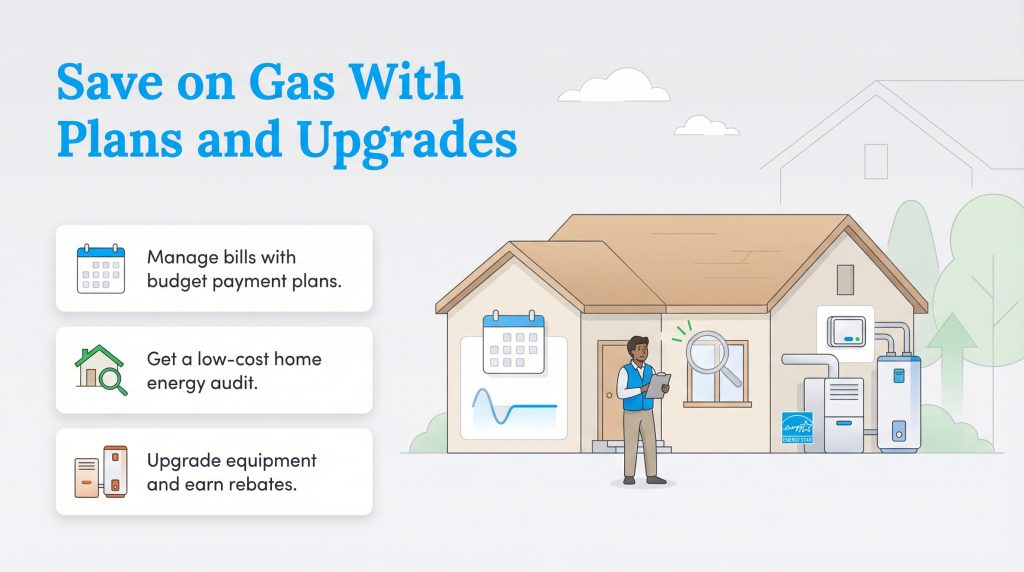
Keeping your home comfortable does not have to drain your wallet or heavily burden the environment. If you want to eliminate the shock of high winter heating bills, enrolling in the Columbia Gas budget payment plan is a helpful way to manage your expenses. This billing arrangement spreads costs more evenly across the year, with periodic adjustments based on your actual consumption. Normalizing those seasonal spikes into predictable payments often makes budgeting simpler.
Beyond billing adjustments, tapping into Columbia Gas energy efficiency programs allows you to actively reduce your consumption. We highly recommend looking into their subsidized home energy audits. A professional will inspect your property, identifying drafts, poor insulation, and failing equipment. Based on those findings, you might qualify for weatherization assistance to help seal up your house.
When it is time to replace old hardware, choosing an energy-saving option pays off. The company frequently offers substantial cash rebates for homeowners who upgrade to high-efficiency furnaces, smart thermostats, and advanced water heaters. Upgrading to ENERGY STAR heating and cooling products not only trims your monthly utility costs but also serves as an environmentally mindful choice that significantly lowers your household carbon footprint over time.
Comparing Columbia Gas vs. Electric Heat
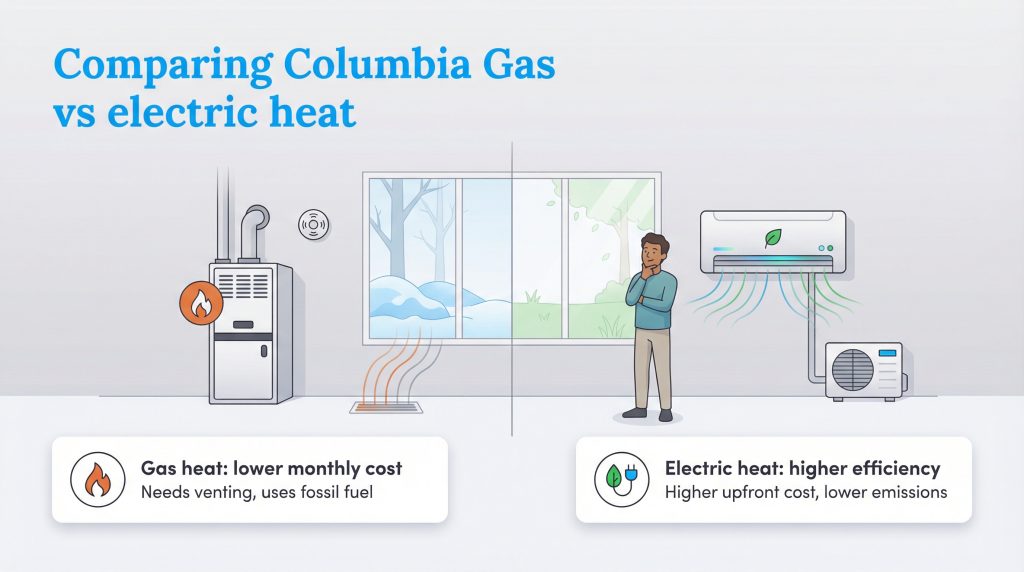
Deciding how to heat your new home involves balancing upfront equipment costs, long-term operational expenses, and your personal sustainability goals. When weighing Columbia Gas vs electric heat, the conversation usually centers on traditional high-efficiency natural gas furnaces versus modern electric heat pumps.
Natural gas furnaces typically carry lower monthly operational costs in regions with harsh, freezing winters. They deliver intense, fast heat that quickly warms a drafty house. However, gas systems require proper venting, carbon monoxide monitors, and rely heavily on fossil fuels. To understand how gas pricing impacts these operational costs nationally, you can review data from the U.S. Energy Information Administration.
Conversely, electric heat pumps act as an eco-conscious alternative. They pull ambient heat from the outside air rather than combusting fuel, making them highly efficient and vastly better for your carbon footprint. While the upfront installation cost for a robust heat pump system is often higher than a standard gas furnace, you gain the added benefit of summer air conditioning from the exact same unit. The following table highlights the distinct advantages and drawbacks of each approach.
| Heating Method | Pros | Cons |
| Columbia Gas (Natural Gas) | Fast, intense heating; lower monthly fuel costs in cold climates; reliable during winter grid outages if paired with a generator. | Relies on fossil fuels; requires carbon monoxide monitoring; fluctuating commodity prices. |
| Electric Heat (Heat Pump) | Eco-conscious alternative; provides both heating and cooling; highly efficient energy transfer. | Higher upfront installation costs; can lose efficiency in extreme sub-zero temperatures. |
Pros and Cons: Is Columbia Gas a Good Utility Provider?
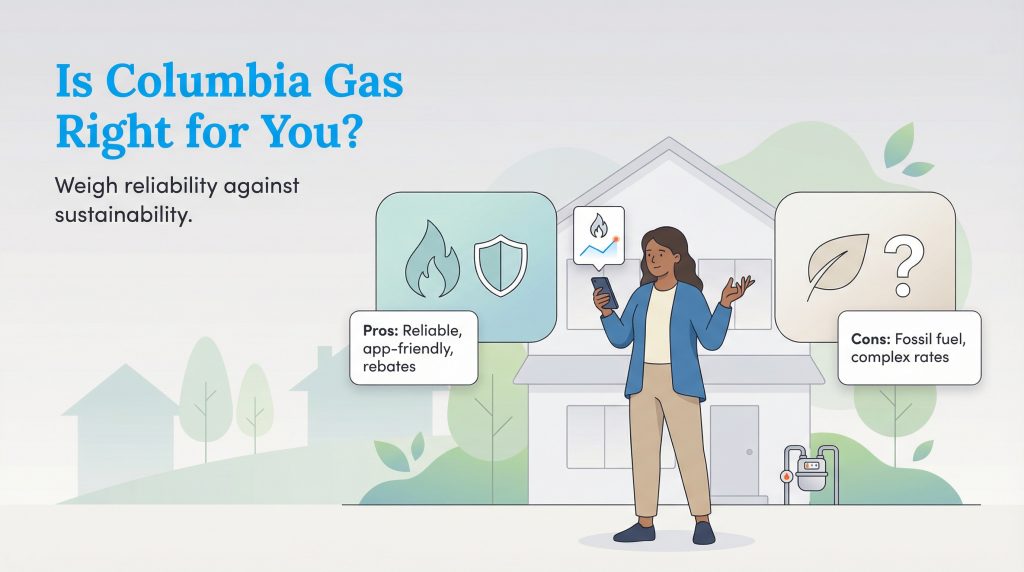
When you sit down to evaluate your utility options, you are probably wondering: is Columbia Gas a good utility provider? Generally speaking, they boast a solid reputation for infrastructure reliability and customer convenience. Their mobile app makes managing payments and monitoring usage a breeze, which is a major perk for busy households. Additionally, their robust portfolio of energy efficiency rebates provides tangible financial incentives for homeowners looking to upgrade their systems.
On the flip side, relying exclusively on a natural gas provider means remaining tied to fossil fuels, which might conflict with your long-term sustainability goals. Furthermore, navigating the varying supplier rates in deregulated zones can feel overwhelming if you do not want to actively manage your energy contracts. Ultimately, if you value dependable winter heating, digital account management, and aggressive efficiency incentives, they remain a highly practical and trustworthy choice for your home.
Taking Control of Your Home Energy Costs
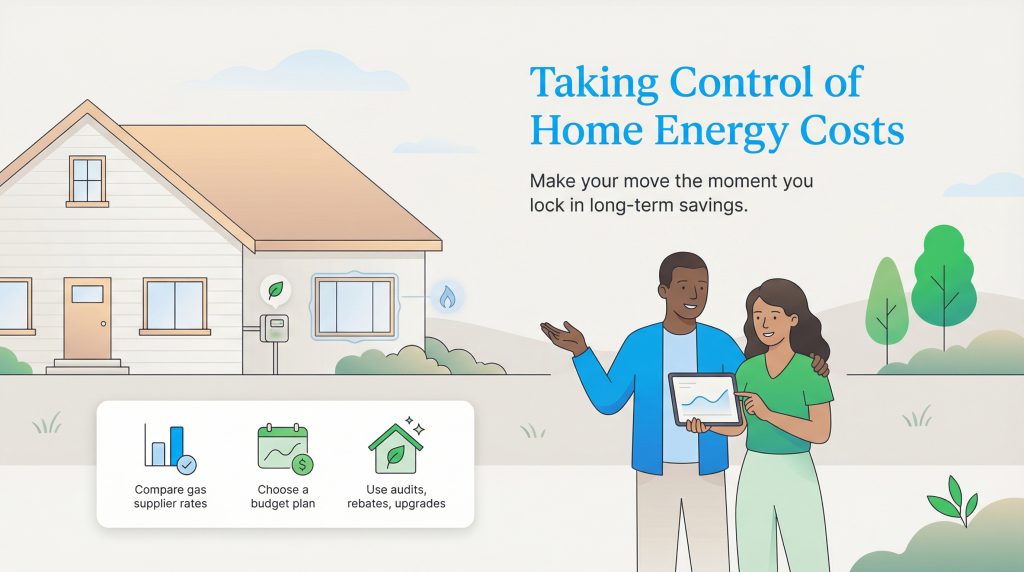
Moving into a new space offers the perfect clean slate to rethink how you manage your monthly utilities. Setting up your natural gas connection does not have to be a frustrating chore filed away at the bottom of your moving checklist. By taking just a few minutes to compare local supplier rates and enroll in a predictable budget payment plan, you set yourself up for consistent, long-term savings.
We encourage you to look beyond the initial connection process. Lean into the available weatherization programs, schedule a home energy audit, and take advantage of rebates for high-efficiency upgrades. Making these small, environmentally mindful choices today will keep your home comfortable, protect your wallet against unpredictable winter spikes, and meaningfully reduce your environmental footprint year after year.
Frequently Asked Questions About Columbia Gas
How long does it take to start Columbia Gas service?
Do I need to be home for gas service to be turned on?
Can I start Columbia Gas service online if my home has a locked meter?
What is the difference between Columbia Gas and a retail supplier?
Can I compare Columbia Gas rates with other suppliers?
What is the Columbia Gas budget payment plan?
Does Columbia Gas offer an app to pay my bill?
How do I report a gas leak to Columbia Gas?
Are there energy efficiency rebates available through Columbia Gas?
About the Author

LaLeesha has a Masters degree in English and enjoys writing whenever she has the chance. She is passionate about gardening, reducing her carbon footprint, and protecting the environment.