
State Regulators Approve Higher Winter Heating Bills for Nearly 900,000 Households
Key Takeaways
- Rate increases take effect on Oct. 31, 2026, raising average monthly heating bills between $5.38 and $7.38 across the state.
- Regulators approved a three-year phaseout of line-extension subsidies, shifting connection fees for new gas hookups to builders.
- Households can explore $1,500 heat pump pilot incentives alongside levelized budget billing to soften winter cost increases.
Just as the Pacific Northwest settles into chilly late-autumn weather, heating your home is about to get more expensive. The Oregon Public Utility Commission recently finalized general rate adjustments for the state’s three major natural gas companies, locking in higher monthly utility bills for more than 892,000 residential customers. Whether you rent an apartment in Portland, manage a household in Bend, or own a home in Medford, we have mapped out exactly how these rate hikes affect your utility expenses, what drove the regulatory commission’s decisions, and what steps you can take right now to lower your home heating costs.
Understanding the Approved 2026 Rate Hikes
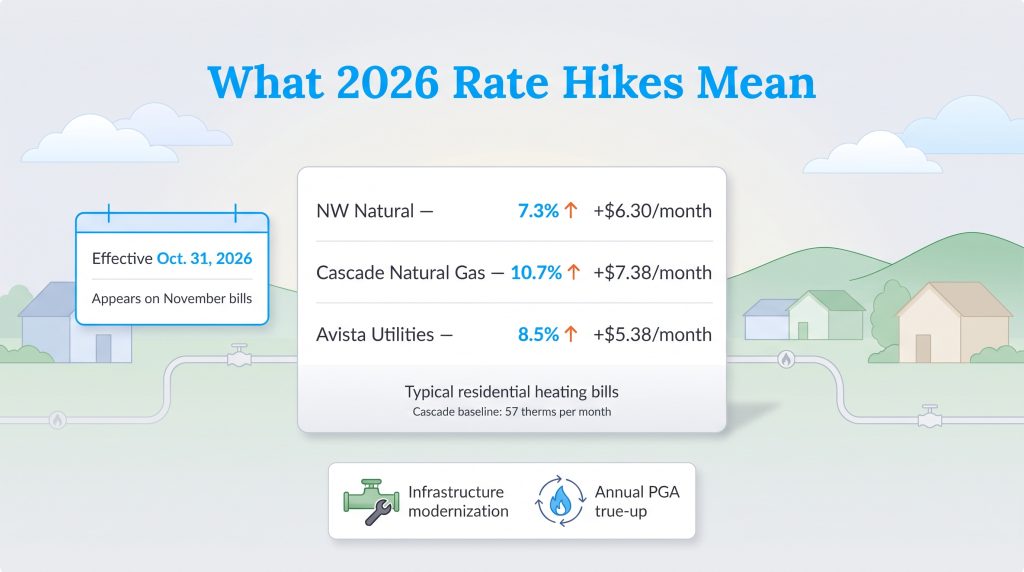
State regulators review natural gas rates annually to balance utility investments against household protections. These newly approved rate adjustments officially take effect on Oct. 31, 2026, meaning you will notice the price changes reflected on your November billing statements.
Breaking Down Costs by Utility Provider
The rate adjustments vary depending on which utility serves your neighborhood, reflecting differing capital modernization projects and regional fuel purchases across each service territory. Here is how typical residential heating bills are shifting this heating season:
| Utility Provider | Percentage Increase | Average Monthly Dollar Increase | Underlying Baseline Consumption | Primary Regulatory Mechanism |
| NW Natural | 7.3% | $6.30 / month | Typical residential heating load | Base distribution capex and annual PGA reset |
| Cascade Natural Gas | 10.7% | $7.38 / month | 57 therms per month | System modernization and PGA gas cost true-up |
| Avista Utilities | 8.5% | $5.38 / month | Typical residential heating load | Pipeline integrity and commodity adjustment |
Why Heating Costs Are Climbing
The regulatory commission’s determinations combine two distinct rate elements: general capital project expenditures and the Annual Purchased Gas Adjustment (PGA). The PGA functions as an annual true-up mechanism, reconciling the estimated cost of buying wholesale natural gas with the actual prices paid during the preceding heating cycle.
Even though a milder preceding winter softened wholesale gas commodity prices and prevented steeper increases, physical pipeline upkeep pushed distribution rates upward. Utilities are investing heavily in automated leak detection systems, aging cast-iron replacement programs, and compliance obligations tied to Oregon’s clean energy and decarbonization policies. In Cascade Natural Gas’s territory, for instance, the 10.7% jump directly covers widespread infrastructure modernizations and enhanced safety monitoring across central and eastern Oregon.
Regional Breakdown of Affected Oregon Communities
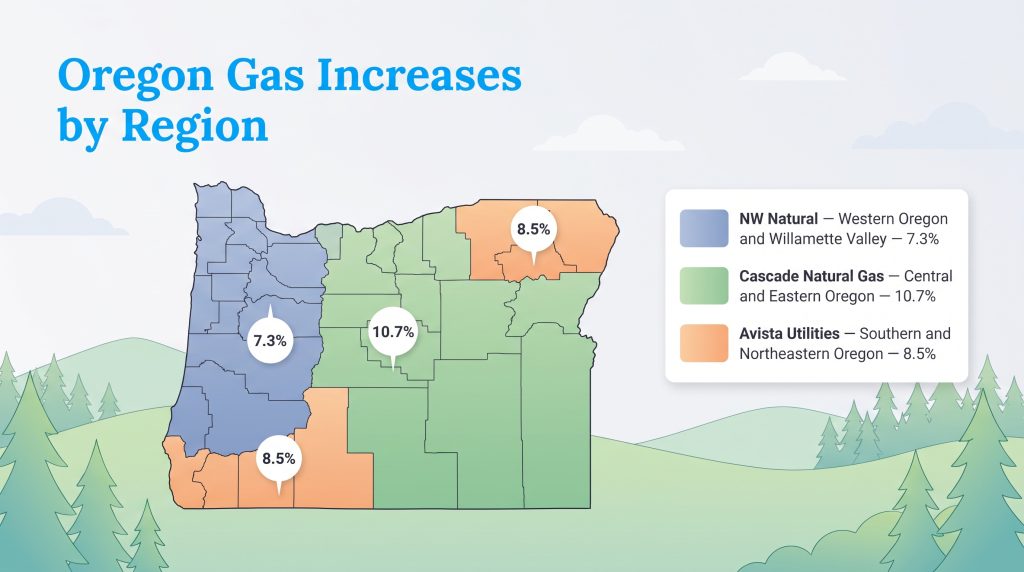
Natural gas in Oregon is delivered by designated local utilities assigned to specific geographic territories. Because customers receive service directly from their regional provider, knowing which company operates in your county helps you budget accurately for the winter ahead.
NW Natural Service Territory
NW Natural is the largest gas utility in Oregon, supplying energy to more than 700,000 homes and commercial facilities. Its service footprint centers on western Oregon and the Willamette Valley.
Major municipalities impacted by NW Natural’s 7.3% increase include:
- Portland Metro Area: Portland, Beaverton, Hillsboro (Multnomah, Washington, and Clackamas counties)
- Mid-Willamette Valley: Salem, Keizer, Corvallis, and Eugene (Marion, Polk, Linn, Benton, and Lane counties)
- Coastal and Gorge Communities: Astoria, Seaside, and Hood River
Cascade Natural Gas Service Territory
Cascade Natural Gas provides service to roughly 86,000 customers concentrated in central, south-central, and eastern communities. Residents in these high-desert climates experience colder winters, making the 10.7% escalation especially noticeable on heating statements.
Major municipalities impacted by Cascade Natural Gas include:
- Central Oregon: Bend, Redmond, and La Pine (Deschutes, Crook, and Jefferson counties)
- Eastern Oregon: Baker City and Ontario (Baker, Malheur, and Umatilla counties)
Avista Utilities Service Territory
Avista Utilities supplies natural gas to approximately 106,500 residential and commercial accounts in southwestern pockets and parts of northeastern Oregon. Customers in this region will absorb an average 8.5% bill bump.
Major municipalities impacted by Avista Utilities include:
- Rogue Valley and Southern Oregon: Medford, Ashland, and Klamath Falls (Jackson, Josephine, Douglas, and Klamath counties)
- Northeastern Oregon: La Grande and Union (Union County)
Phasing Out Subsidies for New Natural Gas Connections
Beyond approving higher monthly billing rates, state regulators established an important structural change by phasing out line-extension subsidies over the next three years. Historically, all existing gas customers indirectly covered a share of the capital expense when utilities extended mains and service lines to newly built subdivisions and commercial parcels.
By transferring those hookup costs directly to property developers and builders, regulators intend to protect existing households from paying for infrastructure that could become stranded as clean energy policies expand.
To complement this phaseout, state regulators launched a pilot incentive offering $1,500 to help low- and moderate-income households install high-efficiency electric heat pumps.
Electric heat pumps provide both winter heating and summer cooling through a single, highly efficient system. By choosing an eco-conscious alternative like an electric heat pump, households can reduce overall home energy demand while pairing the equipment with existing state clean energy incentives from the Oregon Department of Energy
.
Actionable Steps to Lower Your Monthly Energy Expenses
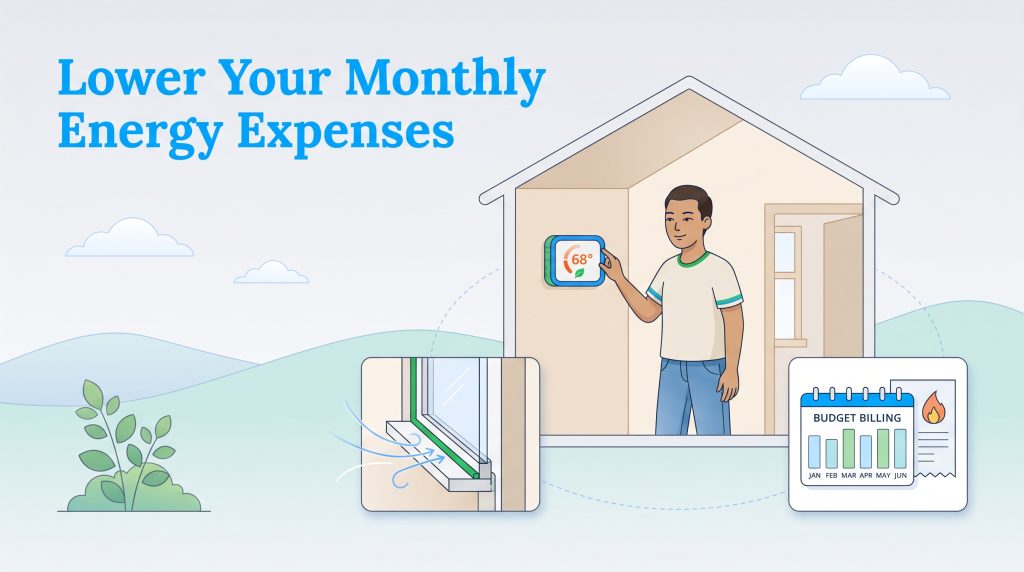
Natural gas customers cannot swap providers, but you still have dependable tools to protect your household budget against rising heating costs. Taking proactive steps before subfreezing temperatures arrive will keep your living spaces comfortable without straining your bank account.
- Enroll in Levelized Budget Billing: Every major gas provider in the state offers a free budget billing program. These plans analyze your annual fuel consumption and divide the total into predictable, equal monthly payments, shielding you from dramatic midwinter billing shocks.
- Seal Air Leaks and Upgrade Insulation: Drafty windows, unsealed door frames, and inadequate attic insulation force heating systems to run constantly. Adding simple weatherstripping and door sweeps is an energy-saving option that delivers immediate bill relief.
- Upgrade to a Smart Thermostat: Installing an ENERGY STAR certified smart thermostat helps you dial back heating levels automatically while you are sleeping or away at work, trimming monthly consumption by up to 10%.
- Tap Into Efficiency Rebates: Team up with the Energy Trust of Oregon to discover cash rebates on high-efficiency equipment, energy audits, and comprehensive weatherization improvements for both single-family homes and rental properties.
- Access Bill Assistance Programs: If your family faces financial hurdles this season, apply for assistance through the Low Income Home Energy Assistance Program (LIHEAP) or your utility’s income-qualified bill discount program before past-due balances accumulate.
Preparing Your Home for Rising Winter Energy Expenses
Higher utility bills are never welcome news, particularly as winter weather drives up domestic heating demand across the Pacific Northwest. By understanding how your regional utility calculated these adjustments and taking advantage of efficiency rebates, you can preserve your household budget and keep your home cozy all season long. Combining small everyday habits with larger home efficiency investments offers a practical, environmentally mindful choice for navigating these rate adjustments with confidence.
Frequently Asked Questions About Oregon Natural Gas Rates
Why did Oregon natural gas rates go up on Oct. 31, 2026?
How much will my monthly natural gas bill increase?
What is the new Oregon line-extension subsidy phaseout?
What financial help is available if I cannot pay my heating bill?
About the Author

Claudio is a sustainability-focused writer with a background in Anthropology and Psychology from NC State University. He has spent over 15 years working in writing, interpretation, and translation, driven by a deep interest in how human culture shapes the environment. Today, he shares his curiosity with readers by writing about sustainable living solutions and the connection between everyday choices and environmental impact.