Everything you need to know about starting service, understanding your utility bill, and finding environmentally mindful choices with Cascade Natural Gas.
Key Takeaways
- Check the service area first because Cascade Natural Gas only serves specific communities in Washington and Oregon.
- Understand how regulated tariffs and gas delivery charges impact your monthly utility bills.
- Learn the steps and requirements when initiating your new account.
- Discover current rebate options that can lower your monthly gas use and reduce heating costs.
Setting up natural gas is one of those moving tasks you don’t want to leave until the first cold night in your new home. This guide walks you through how Cascade Natural Gas service works in parts of Washington and Oregon, what to prepare before starting service, how rates and bill charges are structured, and where to look for rebates or energy-saving upgrades that can help lower your monthly costs.
Cascade Natural Gas Coverage Area in Washington and Oregon
Before transferring your services, you need to verify that your new property falls within the Cascade Natural Gas coverage area. Unlike massive utility conglomerates that blanket entire states, this provider operates in specific geographic pockets across the Pacific Northwest. If you are comparing Washington natural gas providers, you will notice that their territory spans diverse climates — from coastal regions to the high desert — meaning your winter heating requirements will vary dramatically depending on where you settle down.
Cascade Natural Gas serves parts of Washington and Oregon, including communities such as:
- Bellingham, Washington
- Bremerton, Washington
- Kennewick, Washington
- Mount Vernon, Washington
- Yakima, Washington
- Bend, Oregon
- Baker City, Oregon
- Pendleton, Oregon
Because service boundaries can vary by address, confirm availability through Cascade Natural Gas before assuming your home is eligible for service.
Cascade Natural Gas Plans, Pricing, and Tariffs
Deciphering utility bills often leaves new homeowners scratching their heads, especially when trying to compare natural gas rates WA OR across different municipal boundaries. For regulated natural gas utilities, the commodity cost of gas is typically passed through to customers through approved rate mechanisms, while delivery, infrastructure, and customer service costs are recovered through regulated rates.
This regulated structure protects consumers from arbitrary price gouging. When the company wants to adjust the base rates you pay for pipeline maintenance and delivery, they must submit detailed proposals and gain approval from state utility regulators. Consequently, Cascade Natural Gas rates fluctuate based on global market conditions for fuel, but the operational costs tied to your bill remain highly regulated and transparent. Rates change periodically, so check Cascade Natural Gas’s current tariff or rate schedule before estimating your bill.
How to Read Your First Cascade Natural Gas Bill
When your first statement arrives, it helps to know exactly what you are paying for. Here is a breakdown of standard bill components:
| Bill Item | What It Means | Why It Changes |
|---|---|---|
| Basic service charge | Fixed monthly customer charge | Usually set through approved tariffs |
| Delivery charge | Cost to deliver gas through the utility system | May change through rate cases |
| Gas cost or purchased gas adjustment | Cost of the natural gas commodity | Changes with market prices and regulatory adjustments |
| Taxes and fees | State, local, or franchise-related charges | Varies by location |
Cascade Natural Gas Setup Fees and Guarantees
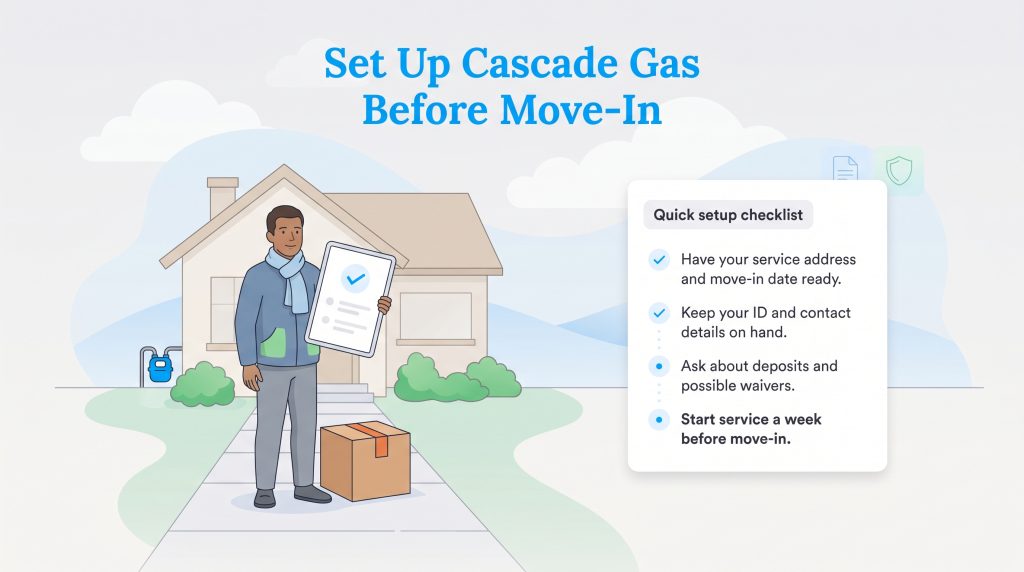
You want to start service with fewer delays at least a week before your official move-in date to guarantee a warm house upon arrival. Opening a new account requires providing your exact service address, primary identification details, and a soft credit check to determine your initial financial standing. The Cascade Natural Gas customer service team works directly with movers to establish these connections swiftly, though certain upfront costs often apply.
Cascade may charge account setup fees or request a deposit depending on your location, credit history, and service rules. If you are asked for a deposit, ask whether a prior utility payment history or letter of credit can reduce or waive it.
What to Have Ready Before You Start Service
To ensure a smooth connection process when you contact Cascade Natural Gas, gather the following details before reaching out:
- Full service address
- Move-in date
- Government-issued ID or Social Security number, if required
- Contact information
- Lease or closing date, if requested
- Previous utility account history, if applying for a deposit waiver
- Mailing address, if different from the service address
- Preferred billing and payment method
Here is how to get your account activated quickly:
- Gather your required documents and head to the official Cascade Natural Gas start service page to initiate your request.
- Call the customer care line at 888-522-1130 or navigate to their online portal to initiate a transfer or new connection request.
- Request a deposit waiver by submitting your previous utility payment history if prompted for a security deposit.
We recommend requesting service several business days before move-in, especially during winter or peak moving periods.
Understanding Late Fees and Customer Protections
Missing a payment happens to the best of us during a chaotic move, but you should anticipate standard late fees applied to your next billing cycle if you slip past the due date. Ignoring these notices eventually triggers a service disconnection warning. Fortunately, local governments enforce strict winter shut-off protections for vulnerable households. These state-mandated regulations in Washington and Oregon can prevent utilities from disconnecting your primary heating source during freezing temperatures if you meet specific medical or income eligibility requirements. Keep in mind that exact dates and protection rules differ between the two states. We highly recommend contacting customer service proactively if you anticipate missing a payment, as they can frequently connect you with local emergency relief funds before the situation escalates.
When to Call vs. Use the Portal
Knowing exactly where to go can save you serious time when dealing with your new utility setup. Here is a quick breakdown of the best starting points for common account tasks:
| Task | Best Starting Point | Notes |
|---|---|---|
| Start or transfer service | Cascade Natural Gas online account/service page | Request service several days before move-in |
| Pay a bill | Cascade Natural Gas bill pay portal | Watch for third-party payment fees |
| Report a gas leak | 911 and Cascade emergency line (888-522-1130) | Call from a safe location outside |
| Ask about rebates | Cascade rebate center | Eligibility may vary by home and equipment |
Deals, Discounts, and Best Ways to Lower Your Gas Bill
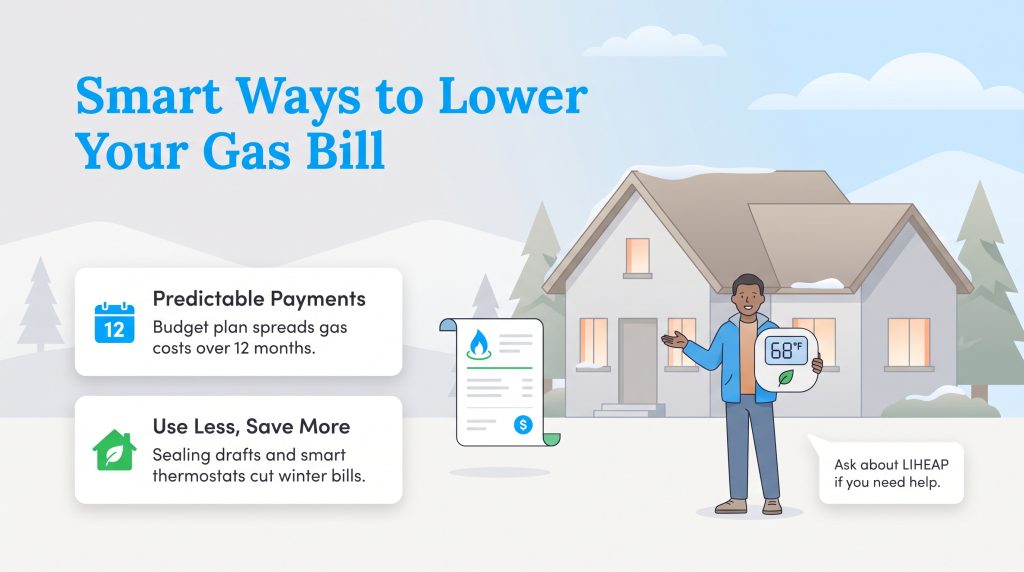
Winter storms in the Pacific Northwest can cause your heating expenses to spike dramatically, but utilizing the right financial management tools keeps those costs predictable. Enrolling in the Cascade Natural Gas budget pay plan offers helpful predictability for homeowners who despise seasonal billing surprises. This program calculates your projected annual gas usage and divides it into 12 equal monthly installments, ensuring your Cascade Natural Gas bill pay process remains steady even during the coldest months of the year.
If you find yourself struggling to maintain those monthly minimums, federal programs like the Low Income Home Energy Assistance Program (LIHEAP) provide direct financial grants to qualifying families to help cover heating expenses. Beyond financial assistance, lowering your baseline consumption can make a noticeable difference in your bill. Here are some actionable tips for keeping those utility costs low:
- Seal air leaks around exterior doors and drafty windows.
- Lower the thermostat when sleeping or away from the house.
- Schedule routine furnace maintenance to ensure optimal efficiency.
- Install a smart or programmable thermostat.
- Check rebate eligibility before buying new household heating equipment.
We always recommend exploring actionable tips for weatherizing your home to keep the expensive warm air trapped inside where it belongs.
Energy-Saving Rebates and Conservation Efforts
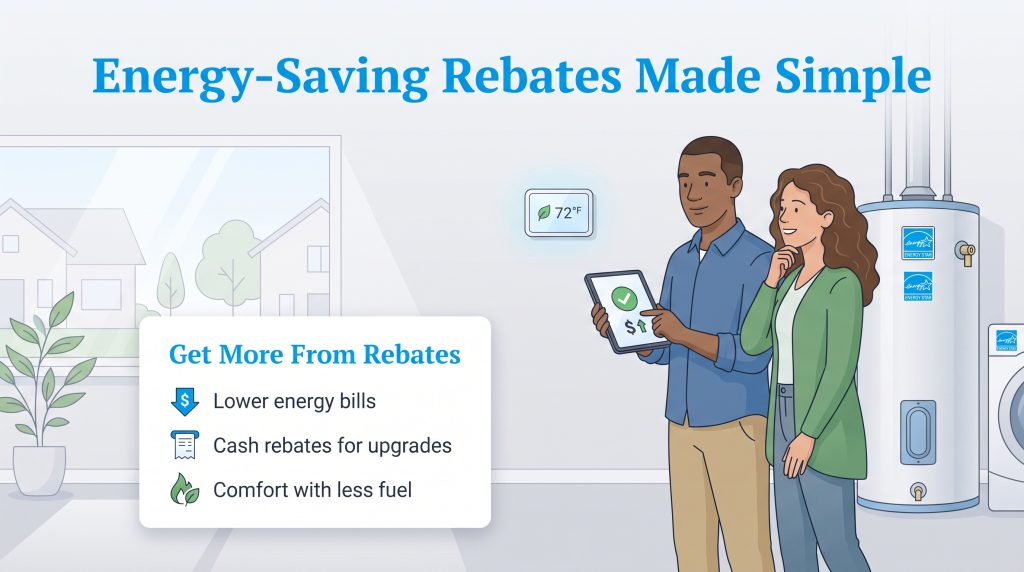
Upgrading your household hardware represents an environmentally mindful choice that reduces your long-term energy usage while simultaneously slashing your monthly utility costs. If your new home features outdated appliances, it’s worth checking out the current rebate options from Cascade Natural Gas to offset the initial sting of modernization.
The utility strongly incentivizes consumers to transition toward high-efficiency equipment. You can often claim substantial cash rebates for installing ENERGY STAR certified appliances, upgrading to high-efficiency tankless water heaters, and completing comprehensive home insulation projects. Check the official Cascade Natural Gas rebates page to review exact eligibility requirements, as offers can periodically change. These energy-saving options ensure you consume less raw fuel to maintain the exact same comfort levels inside your living space.
Why You Should (or Shouldn’t) Choose Cascade Natural Gas
Reviewing utility options often feels slightly paradoxical because, like most regional providers, Cascade operates as a monopoly in its territory. When looking at Cascade Natural Gas reviews, you quickly realize that traditional shopping around simply isn’t an option for piped gas. If your house has a gas line, they are your dedicated provider.
Here is a quick breakdown of what to expect:
- Pros: Regulated pipeline utility service, transparently regulated pricing, and strong rebate programs for energy efficiency upgrades.
- Cons: Complete lack of competitor choice for gas delivery, total reliance on fossil fuels, and susceptibility to global market price spikes.
If you prefer to move away from fossil fuels entirely, an electric heat pump may be an eco-conscious alternative, especially when paired with efficient weatherization and cleaner electricity options. Disconnecting your gas service and opting to install an electric heat pump eliminates your reliance on piped gas while reducing your home’s overall greenhouse gas emissions.
Planning Your Next Steps With Your Utility Services
Setting up your gas service is just one piece of the larger puzzle when optimizing your new home for maximum comfort and energy efficiency. While moving inherently brings chaos, establishing your baseline utilities early provides crucial peace of mind as you settle into your new neighborhood. We strongly encourage you to register your online account the moment you take possession of your keys. Doing so allows you to track your daily energy usage immediately and easily apply for any relevant conservation rebates before winter weather sets in.
Frequently Asked Questions About Cascade Natural Gas
How do I contact Cascade Natural Gas customer service?
Does Cascade Natural Gas have a mobile app?
What is the Cascade Natural Gas budget pay plan?
Are there rebates available for new furnaces or water heaters?
What should I do if I smell natural gas in my home?
How can I lower my winter heating bill?
About the Author

David has been an integral part of some of the biggest utility sites on the internet, including InMyArea.com, HighSpeedInternet.com, BroadbandNow.com, and U.S. News. He brings over 15 years of experience writing about, compiling and analyzing utility data.