
What the WUTC Decision Means for Your Monthly Natural Gas Bills and How You Can Save Money
Key Takeaways
- Monthly bills for average residential customers in Southwest Washington will rise by $12.81 starting Aug. 1, 2026, with further adjustments scheduled for 2027 and 2028.
- State regulators at the WUTC removed a costly geothermal proposal and excluded charitable expenses from customer rates to scale back the utility’s original request.
- Eligible households can apply for monthly bill discounts from 15% to 80% alongside energy-saving weatherization programs to help offset rising heating costs.
If you rely on natural gas to heat your home or water in Southwest Washington, your monthly energy expenses are going up this summer. State regulators at the Washington Utilities and Transportation Commission recently approved a multi-year rate plan for NW Natural Gas that adds $12.81 per month to average residential bills effective Aug. 1, 2026. While the utility originally requested a steeper price hike, regulators stepped in to scale back overall revenue requirements and strip out non-essential project costs. In this guide, we break down what the new rate schedule means for your household budget, which communities are affected, and the practical steps you can take today to lower your monthly gas bill.
Breakdown of the NW Natural Rate Increase Schedule
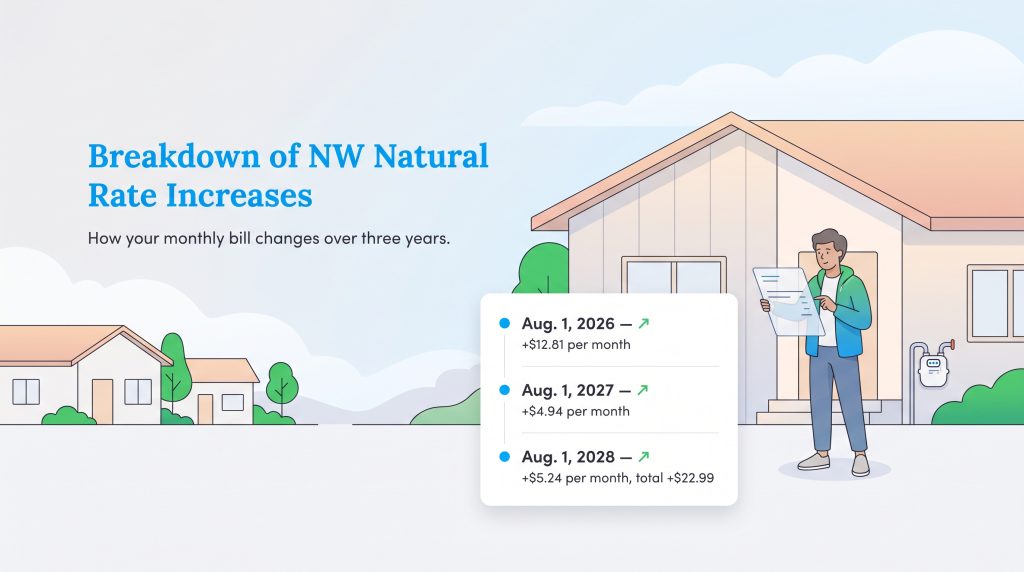
Under the newly approved three-year rate plan, NW Natural Gas will collect $20.1 million in additional revenue during the first year starting Aug. 1, 2026. Additional revenue adjustments of $7.5 million and $7.4 million will take effect in August 2027 and August 2028, respectively. For a typical residential household using an average of 54 therms per month, the rate plan phases in bill adjustments over three annual steps.
Year-by-Year Monthly Bill Impact
The rate adjustments affect your monthly charges in three distinct phases over the next three years:
| Effective Date | Average Monthly Bill Increase | Cumulative Monthly Increase |
| Aug. 1, 2026 | +$12.81 | +$12.81 |
| Aug. 1, 2027 | +$4.94 | +$17.75 |
| Aug. 1, 2028 | +$5.24 | +$22.99 |
By the time the third adjustment takes effect in August 2028, the average residential customer will see their monthly bill increase by a total of $22.99 compared to pre-August 2026 rates.
Why Rates Are Changing and What Regulators Trimmed
Utilities periodically file general rate cases to cover necessary system maintenance, safety upgrades, and rising infrastructure costs across their pipeline network. However, the final approved rate plan reflects a negotiated settlement among NW Natural, commission staff, and consumer advocacy groups that trimmed the utility’s initial pricing demands.
Key Adjustments Made by State Regulators
To protect ratepayers from excessive costs, state regulators attached two key conditions to the final rate order:
- Removal of Vancouver Geothermal Project: The commission removed a proposed geothermal heating and cooling pilot project in Vancouver from customer rate recovery after the project experienced a significant reduction in expected grant funding.
- Exclusion of Charitable Expenses: Regulators barred the utility from recovering any remaining corporate charitable contributions through customer billing rates.
These modifications helped reduce the immediate bill impact compared to the original rate proposal submitted by the company.
Southwest Washington Communities Affected by the Rate Hike
NW Natural Gas serves approximately two million people across Oregon and Southwest Washington. The rate decision issued by the commission specifically impacts residential and commercial customers located within the company’s Washington service territory.
Covered Cities and Counties
If you live in any of the following municipalities or surrounding unincorporated areas, the new rate structure will apply to your account:
- Clark County: Vancouver, Camas, and Washougal.
- Skamania County: Carson and North Bonneville.
- Klickitat County: White Salmon, Bingen, Klickitat, and Dallesport.
Actionable Ways to Lower Your Gas Bill in Washington
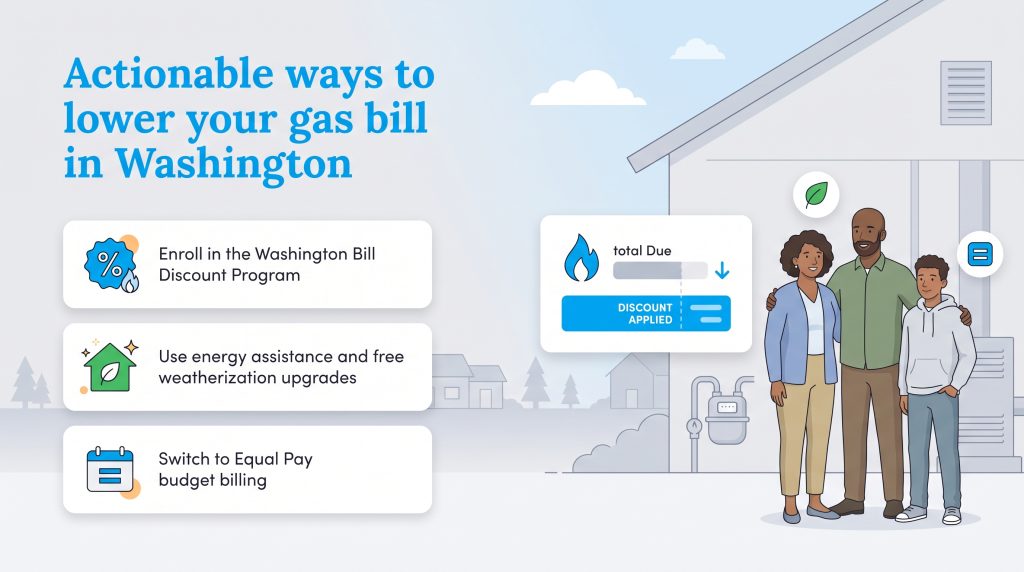
Higher utility rates can put a strain on your monthly budget, but you do not have to absorb the full cost increases unprepared. Taking advantage of state-mandated relief programs, payment smoothing tools, and eco-conscious energy efficiency upgrades can help keep your heating bills manageable.
Enroll in the Washington Bill Discount Program
Income-qualified households can receive significant ongoing relief through the NW Natural Bill Discount Program. Depending on your household size and gross annual income (for households earning at or below 80% of the Area Median Income), you can receive a monthly discount of 15% to 80% on your gas bill. Applying is quick and straightforward, and applicants can self-certify their income without needing to upload tax returns or pay stubs.
Utilize Energy Assistance and Weatherization Grants
If you need emergency help or want to permanently reduce your energy consumption, several grant-funded programs are available:
- LIHEAP and GREAT Grants: Federal funding through the Low-Income Home Energy Assistance Program and NW Natural’s Gas Residential Energy Assistance Tariff provide direct grant funds to help pay past-due or current heating bills. You can explore available state funds via the WUTC Energy Assistance Directory.
- Free Home Weatherization: Income-eligible renters and homeowners can receive free energy efficiency upgrades — such as attic insulation, air sealing, and high-efficiency furnace retrofits — through local community action agencies in Clark, Skamania, and Klickitat counties.
Switch to Equal Pay Budget Billing
To avoid high bill spikes during the cold winter heating season, consider enrolling in Equal Pay budget billing. This option averages your projected annual natural gas usage into 12 equal monthly installments, making your household budget far more predictable throughout the year.
Managing Your Home Energy Costs Through Rate Changes
While rate increases approved by state regulators are an inevitable part of utility management, taking an active approach to your home energy use can significantly cushion the financial impact. By combining income-qualified bill discounts, equalized payment plans, and simple air-sealing or insulation improvements, you can maintain a warm home while keeping your monthly energy expenses in check.
About the Author

Claudio is a sustainability-focused writer with a background in Anthropology and Psychology from NC State University. He has spent over 15 years working in writing, interpretation, and translation, driven by a deep interest in how human culture shapes the environment. Today, he shares his curiosity with readers by writing about sustainable living solutions and the connection between everyday choices and environmental impact.