
Electric Bills Are Rising for 558,000 West Virginia Households Starting Aug. 1, 2026
Key Takeaways
- Potomac Edison and Mon Power implemented Step 1 of a $75.6 million base rate hike on Aug. 1, 2026, raising average monthly residential electric bills by $4.12 (~3%).
- The rate adjustment impacts 558,000 customers in 40 West Virginia counties, with a second equal increase scheduled for June 1, 2027.
- Because West Virginia is a regulated energy market, households can lower expenses by using budget billing and energy-efficiency programs.
If you live in West Virginia and open your electric bill this month, you will likely notice a higher charge for your monthly service. On Aug. 1, 2026, Potomac Edison and sister utility Mon Power implemented the first phase of a $75.6 million base rate increase across their state service territories. We broke down what this rate hike means for your household budget, why electric rates are rising, and the practical steps you can take today to soften the impact on your wallet.
Understanding the $75.6 Million Two-Step Rate Hike
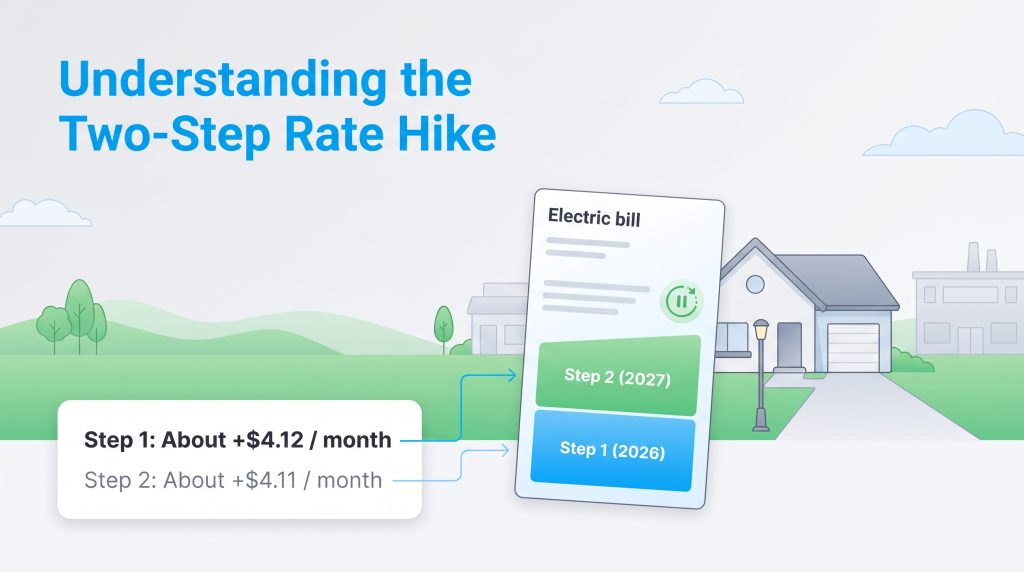
The West Virginia Public Service Commission (PSC) authorized a two-step rate adjustment plan that phases in the revenue increase over two consecutive years. Under the approved framework, FirstEnergy utilities will collect roughly $38 million in additional annual revenue during each phase, helping avoid a single massive jump on customer statements.
Step 1 Breakdown (Effective Aug. 1, 2026)
Beginning with August 2026 billing cycles, the average residential customer using 1,000 kilowatt-hours (kWh) per month will see a bill increase of $4.12 per month, representing a 3% rate shift. Commercial and industrial customers will experience rate increases of 1.7% and 1.3%, respectively, while street lighting rates will rise by 2%.
Step 2 Breakdown (Effective June 1, 2027)
The second step takes effect on June 1, 2027, adding another $4.11 per month (~2.9%) to average residential electric bills. As part of the two-step settlement, Potomac Edison and Mon Power agreed not to request another general base rate review until at least April 2028 according to FirstEnergy Corp. investor filings.
| Rate Class | Step 1 Impact (Aug. 1, 2026) | Step 2 Impact (June 1, 2027) | Combined Annual Impact |
| Residential (Average 1,000 kWh) | +$4.12/month (+3.0%) | +$4.11/month (+2.9%) | +$8.23/month (~5.9%) |
| Commercial Class | +1.7% | Proportional adjustment | Combined revenue increase |
| Industrial Class | +1.3% | Proportional adjustment | Combined revenue increase |
| Street Lighting | +2.0% | Proportional adjustment | Combined revenue increase |
Why Potomac Edison Electric Rates Are Going Up
Power companies routinely request base rate adjustments from state regulators to keep pace with necessary system repairs and rising operational expenses. According to public notices released by state regulators and local reporting by the Morgan Messenger, Potomac Edison requested these higher rates under an Inflation and Plant Investment Rate Adjustment.
Key infrastructure investments covered by this rate increase include:
- Upgrading aging transmission lines and electric distribution poles to improve weather resilience.
- Installing modern digital grid monitors to detect localized power outages faster.
- Offsetting general inflationary pressures on equipment, fuel, and labor costs.
Communities and Counties Impacted Across West Virginia
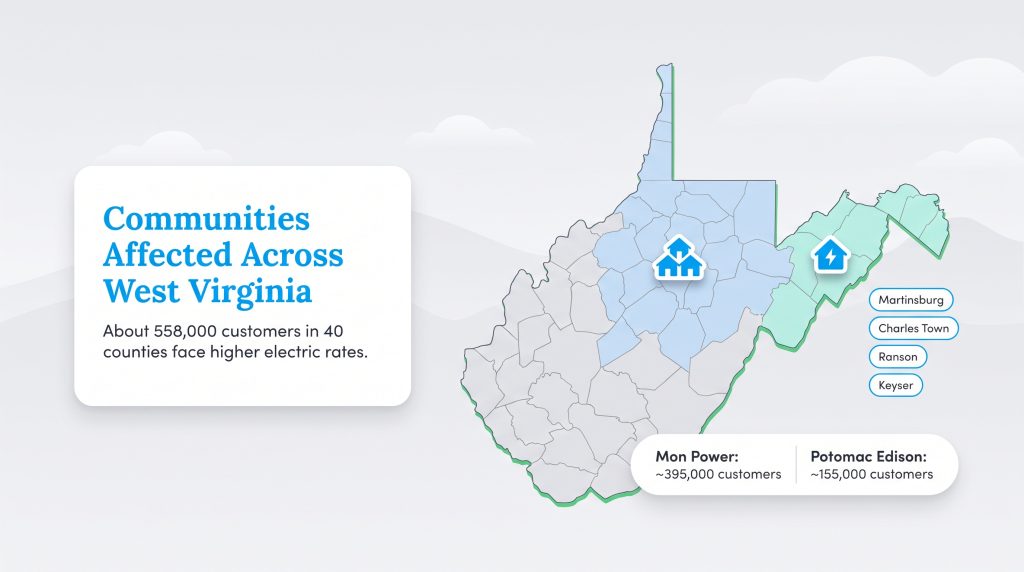
This rate increase applies broadly across the utility service areas in central, northern, and eastern West Virginia. In total, the combined rate case affects approximately 558,000 customers spread across 40 of West Virginia’s 55 counties according to Utility Dive coverage.
Potomac Edison serves roughly 155,000 customers concentrated in the Eastern Panhandle region. Major communities affected by the rate hike include Martinsburg, Charles Town, Ranson, Shepherdstown, Berkeley Springs, Keyser, and Moorefield. Meanwhile, Mon Power serves about 395,000 customers in 34 surrounding central and northern counties.
Practical Ways to Lower Your Electric Bill in a Regulated Market
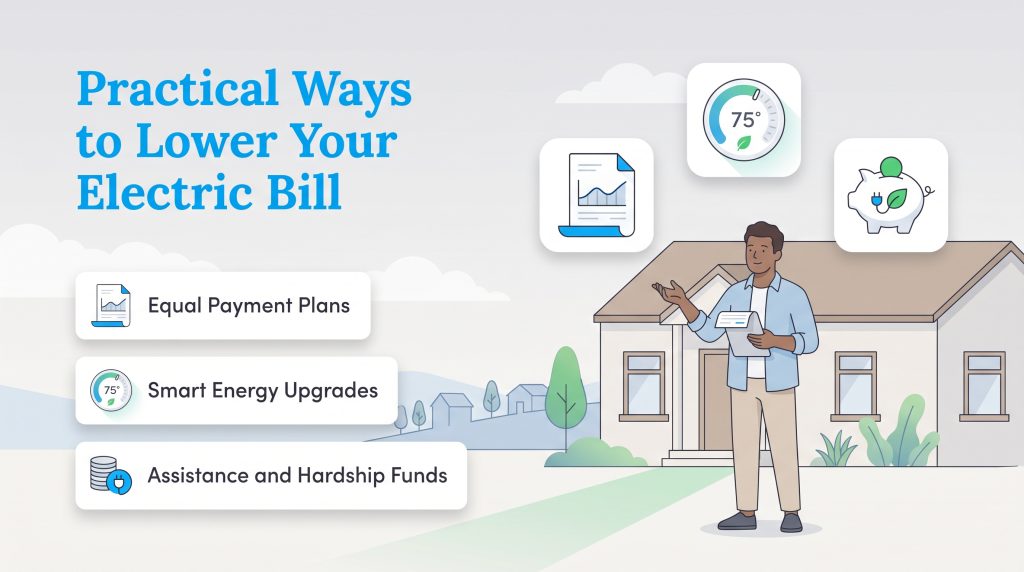
Because West Virginia is a traditional regulated electricity market, you cannot shop around or switch retail electric suppliers to find a lower rate. However, you still have several strong tools to manage your monthly energy expenses and keep bills predictable.
Billing Adjustments and Financial Support
- Equal Payment Plan (Budget Billing): Potomac Edison offers an equal payment option that calculates your annual electricity costs and divides them into 12 equal monthly payments. This eliminates sharp bill spikes during heavy air conditioning in summer or electric heating in winter.
- Low-Income Home Energy Assistance Program (LIHEAP): Income-qualified households can receive federal heating and cooling assistance grants administered by the state of West Virginia.
- Dollar Energy Fund: If you face unexpected financial hardship, the Dollar Energy Fund works directly with West Virginia utilities to provide hardship grants that prevent service disconnections.
Eco-Conscious Energy Efficiency Upgrades
- Smart Thermostat Installation: Installing an ENERGY STAR-certified programmable thermostat can lower annual heating and cooling expenses by up to 10%.
- FirstEnergy Appliance Rebates: Take advantage of home energy audits, HVAC tune-up rebates, and incentives on high-efficiency heat pumps offered through Potomac Edison’s energy-efficiency programs.
- Simple Household Adjustments: Switching over to LED lighting, sealing windows and exterior doors with weatherstripping, and washing laundry in cold water are easy ways to cut kilowatt-hour consumption immediately.
Taking Control of Your West Virginia Electric Costs
While rate increases are challenging for any household budget, staying informed allows you to adjust your energy habits before costs add up. By combining utility budget billing with small, eco-conscious energy-efficiency updates around your home, you can effectively balance out the Step 1 price increase and prepare for next year’s Step 2 adjustment.
About the Author

Claudio is a sustainability-focused writer with a background in Anthropology and Psychology from NC State University. He has spent over 15 years working in writing, interpretation, and translation, driven by a deep interest in how human culture shapes the environment. Today, he shares his curiosity with readers by writing about sustainable living solutions and the connection between everyday choices and environmental impact.