
We break down why your PPL Electric bills are going up this summer and how you can shop for competitive rates to completely beat the hike
Key Takeaways
- Default supply rates are rising to 13.147¢/kWh starting June 1, 2026, marking a 1.5% increase for residential customers who do not shop for an independent supplier.
- Monthly distribution charges will increase by a flat $7.42 starting July 1, 2026, to fund critical grid resilience, storm hardening, and infrastructure upgrades.
- You can bypass the supply hike by switching to an independent electric supplier, with competitive plans currently starting well below the utility’s new default rate.
If you get your electricity from PPL Electric Utilities, your monthly bills are about to look a little different. Starting June 1, 2026, a dual rate adjustment is coming to eastern and central Pennsylvania, bringing a mix of higher default supply rates and a newly settled increase in distribution charges. At first glance, seeing two price hikes hit your statement at the same time can feel overwhelming — especially if you are in the middle of moving or trying to keep a tight household budget. But here is the good news: we are here to walk you through exactly why these changes are happening, how they will affect your typical monthly statement, and how you can take charge of your energy choices to keep your hard-earned money in your wallet.
Understanding Your Electric Bill: Delivery vs. Supply
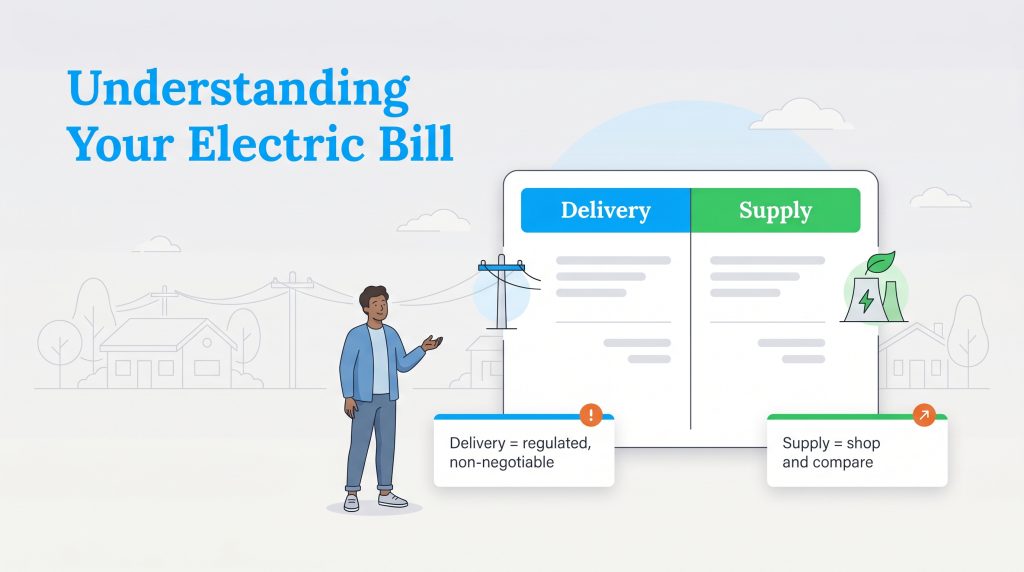
Under Pennsylvania law, your electric bill has two primary parts. It is essential to understand the difference between delivery and supply so you can see why only part of your bill is negotiable.
What Are Delivery Charges?
These are the rates you pay PPL Electric to maintain the local grid. PPL Electric owns the poles, wires, and transformers, and they are responsible for fixing power outages. These distribution rates are strictly regulated, and they remain the same regardless of who generates your power.
What Are Supply Charges?
Supply charges cover the cost of generating the electricity you actually consume. If you do not choose an independent supplier, you pay PPL Electric’s default Price to Compare (PTC), which changes every six months to track wholesale market trends.
Why PPL Electric Rates Are Changing This Summer
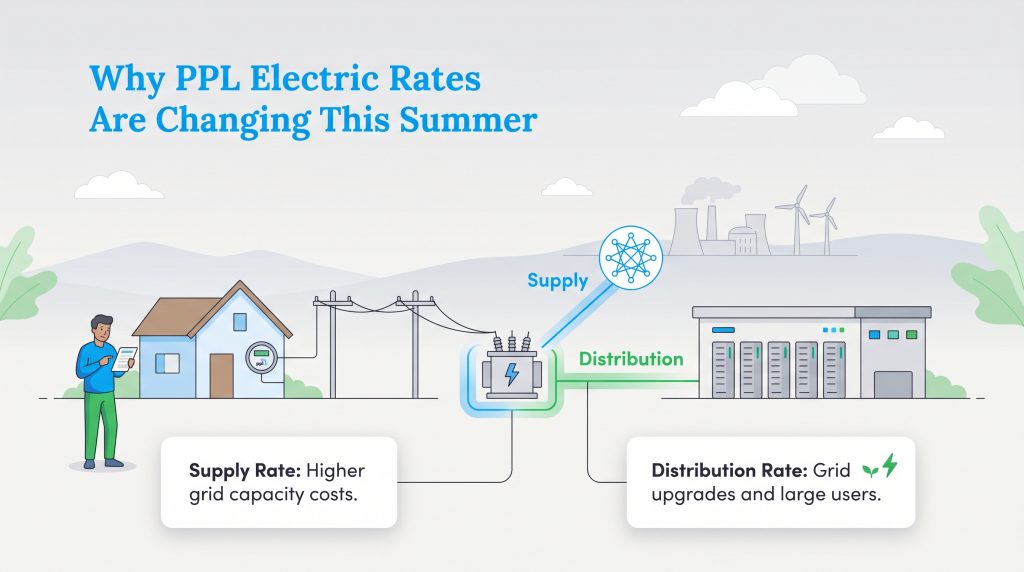
Your electric bill is seeing a dual adjustment because of two completely separate grid and regulatory movements. Here is a look at what is driving these changes from both sides.
Rising Capacity Costs in the Regional Power Grid
PPL Electric operates within the PJM Interconnection regional grid. Recent capacity auctions, which secure backup generation to keep the grid stable, have seen massive price hikes. As older, traditional power plants retire and clean energy projects face connection delays, the market price to keep the grid secure has risen, pushing up PPL’s default supply rate.
A Major $275 Million Distribution Rate Settlement
PPL Electric has not raised its distribution base rates since 2016. On Sept. 30, 2025, the utility filed a formal request (Docket No. R-2025-3057164) with the Pennsylvania Public Utility Commission to adjust these delivery rates. By March 13, 2026, PPL Electric submitted a settled agreement with active consumer advocates, capping the distribution revenue increase at $275 million — about 23% less than the utility originally requested.
Investing in a Stronger, Smarter Grid
The money from this settlement goes directly into physical upgrades. PPL Electric is replacing aging wooden poles, installing advanced smart-grid automated switches to restore power quickly, and stepping up tree-trimming efforts to prevent storm damage. Additionally, the utility is converting community streetlights to energy-efficient LED bulbs and absorbing credit card payment fees. Fortunately, the settlement binds PPL to a two-year rate freeze, meaning distribution rates cannot rise again until at least 2028.
The Impact of Tech and Data Centers
The rapid expansion of artificial intelligence (AI) data centers is another major reason for the distribution rate case. To protect everyday homeowners from paying for the massive grid upgrades these facilities require, the settlement introduces a specialized “large load tariff.” This mandates that massive data centers sign 10-year commitments, pay for their own connection upgrades, and provide $11 million per year directly to support PPL’s low-income programs.
How These Rate Changes Will Impact Your Monthly Bill
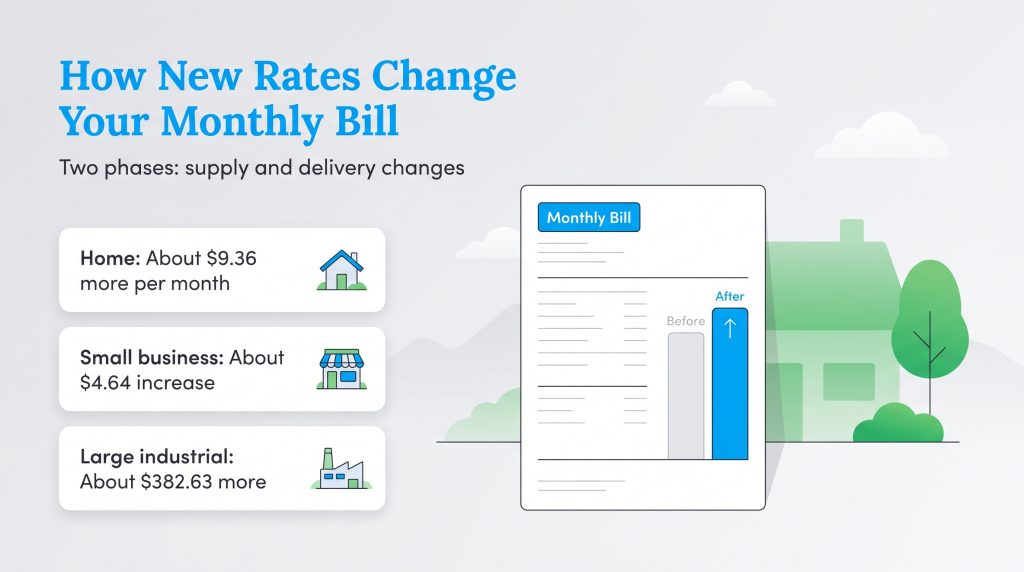
The combined impact of these adjustments means most residential default service customers will see their bills climb in two separate phases. Let’s look at the numbers to see how your monthly statement will change.
Breaking Down the Typical Household Bill
On June 1, 2026, the residential Price to Compare will rise from 12.953¢/kWh to 13.147¢/kWh. For a home using 1,000 kWh per month, this raises the monthly supply charge from $129.53 to $131.47 (a minor $1.94 increase). On July 1, 2026, the settled distribution charge takes effect, adding a flat $7.42 to the delivery portion of your bill. Together, these adjustments create a total monthly bill increase of $9.36 for a standard default customer.
Business and Industrial Bill Impacts
Commercial and industrial customers will also see adjustments. A small business utilizing 1,000 kWh and 3 kW of demand will see a delivery-driven bill increase of $4.64 per month. Large industrial accounts consuming 150,000 kWh with 500 kW of demand can expect a monthly distribution increase of about $382.63.
| Customer Type | Average Usage | Estimated Monthly Increase |
| Residential (Default Service) | 1,000 kWh/month | $9.36 total |
| Residential (Delivery Only) | 1,000 kWh/month | $7.42 (approx. 4.9%) |
| Commercial (Delivery Only) | 1,000 kWh/month | $4.64 |
| Industrial (Delivery Only) | 150,000 kWh/month | $382.63 |
Major Pennsylvania Cities and Counties Impacted
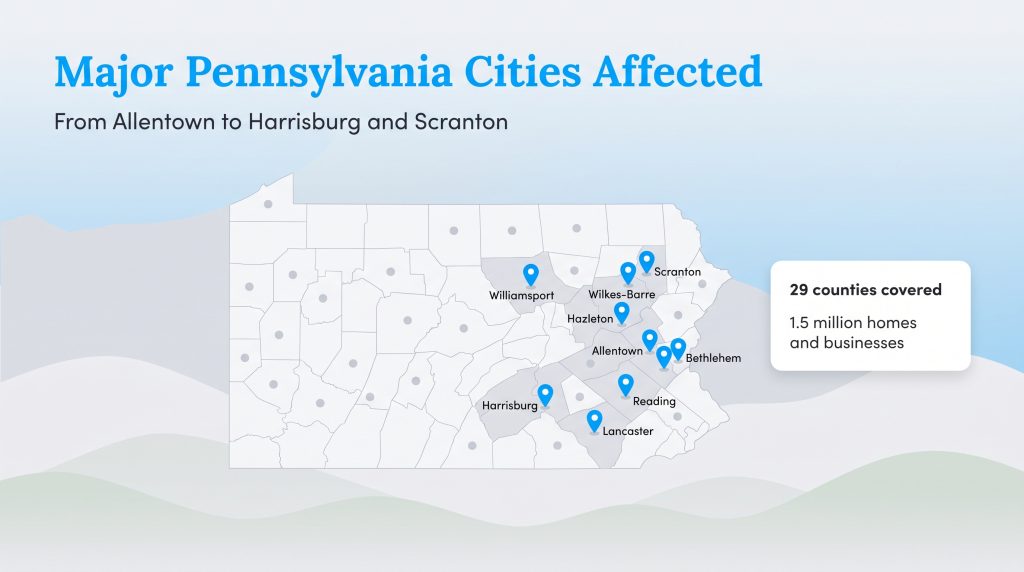
PPL Electric’s service territory covers 29 counties across eastern and central Pennsylvania, delivering power to 1.5 million homes and businesses. These upcoming rate changes will apply uniformly across all counties in PPL’s footprint.
Core Metro Areas Feeling the Shift
The rate adjustments will affect major municipalities and their surrounding suburban and rural neighborhoods. This includes Allentown and Bethlehem in the Lehigh Valley, the state capital of Harrisburg in Dauphin County, the historic city of Lancaster, and the northeastern hubs of Scranton and Wilkes-Barre. Other impacted cities include Reading, Hazleton, and Williamsport.
What You Can Do: Shopping for Lower Rates and Energy Savings
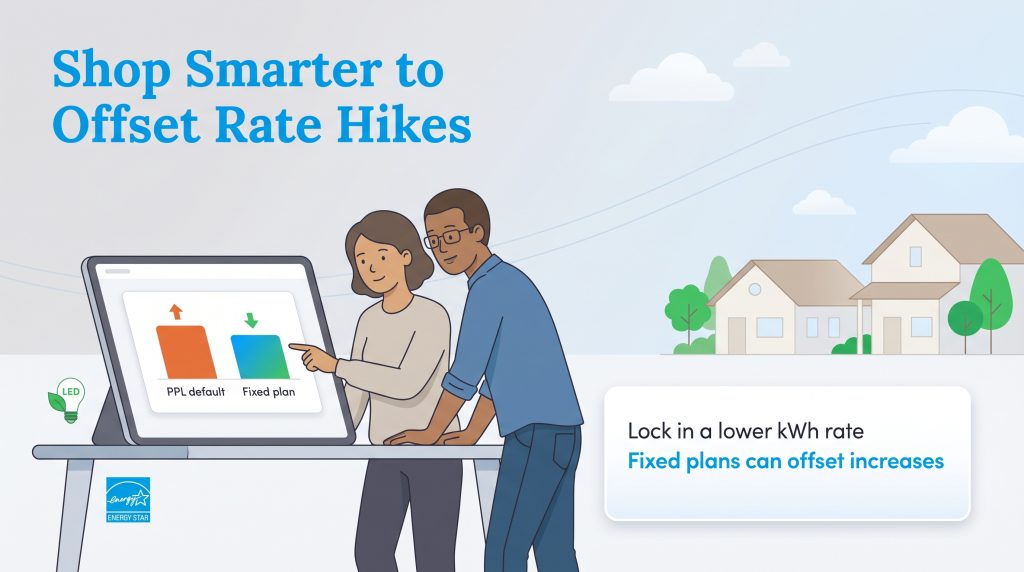
While the $7.42 distribution charge increase is fixed and must be paid by everyone, you have complete control over the supply side of your electric bill. Because Pennsylvania is an energy choice state, you can shop around to avoid PPL’s default supply rate.
How to Find and Lock in a Competitive Rate
By visiting the official state shopping platform, PA Power Switch, you can compare rates from dozens of licensed suppliers. As of mid-2026, competitive retail electricity plans in Pennsylvania are highly favorable, with some fixed-rate plans starting between 7.59¢/kWh and 9.79¢/kWh depending on your zip code. Securing a fixed-rate plan at 9.79¢/kWh for a 1,000 kWh household would drop your monthly supply cost to $97.90 — saving you over $33 per month compared to PPL’s default rate, which easily wipes out the $7.42 distribution hike!
Choosing the Right Plan Structure for Your Home
When comparing independent plans, you will generally choose between fixed-rate and variable-rate options. Fixed-rate plans lock in your price per kilowatt-hour for a set term (typically 12 to 36 months), protecting you from seasonal market spikes, though some carry early termination fees of $50 to $150 if you cancel early. Variable-rate plans offer ultimate flexibility with no cancellation fees, but your rate can spike dramatically during extreme hot or cold weather.
Environmentally Mindful Choices and Energy Efficiency
If you are looking to shrink your environmental footprint while protecting your budget, shopping the competitive market is a great time to look for an environmentally mindful choice. Many competitive suppliers offer green energy plans backed by renewable energy certificates, allowing you to support clean power projects. Additionally, you can pair your rate savings with practical, energy-saving options around the house. Upgrading to Energy Star certified appliances or switching to LED lighting can significantly lower your overall kilowatt-hour consumption, giving you a double layer of protection against rising utility costs.
Customer Assistance and Bill Relief Programs
If you or someone you know is struggling to keep up with rising energy costs, PPL Electric Utilities offers several income-eligible assistance programs. You can apply for the OnTrack Payment Plan, which offers a reduced, fixed monthly payment and structured debt forgiveness. Emergency assistance is also available through Operation HELP, while the Weatherization Recovery Assistance Program (WRAP) provides free home energy audits and weatherization upgrades to help you permanently lower your energy use.
Taking Charge of Your Energy Bill This Summer
As PPL Electric’s dual rate adjustments roll out this summer, taking a proactive approach to your home utility bill is the smartest way to protect your budget. While the rising delivery costs reflect necessary investments to modernize our power grid and protect against severe storms, Pennsylvania’s competitive energy market gives you a powerful tool to fight back. By taking a few minutes to compare competitive plans and exploring eco-conscious, energy-saving habits, you can easily offset these utility rate increases. Remember to keep an eye on your statements as June approaches, and do not hesitate to make the switch to a rate plan that works best for your family’s financial and environmental goals.
About the Author

Claudio is a sustainability-focused writer with a background in Anthropology and Psychology from NC State University. He has spent over 15 years working in writing, interpretation, and translation, driven by a deep interest in how human culture shapes the environment. Today, he shares his curiosity with readers by writing about sustainable living solutions and the connection between everyday choices and environmental impact.