
We have broken down why your UGI bill is increasing and how you can switch providers to keep your monthly costs down.
Key Takeaways
- UGI is raising its default electricity price to $0.1262 per kWh, which could increase your monthly bill by nearly 13%.
- These changes are fueled by infrastructure upgrades and record-high wholesale energy costs across the PJM power grid.
- You can avoid these spikes by shopping for a fixed-rate plan through the PA Power Switch website to lock in a lower rate.
Moving into a new home in Northeastern Pennsylvania usually involves a long to-do list, and lately, figuring out why your electric bill looks different might be at the top of it. UGI Utilities — the company serving much of Luzerne and Wyoming counties — is adjusting its rates from $0.11212 to $0.1262 per kilowatt-hour (kWh), meaning a typical household could see their monthly costs jump by about 12.8%. While that might sound like a bit of a headache, we are here to help you navigate these changes, find the best eco-conscious alternatives, and show you exactly how to protect your budget from future market swings.
Why Your UGI Electric Rates Are Rising
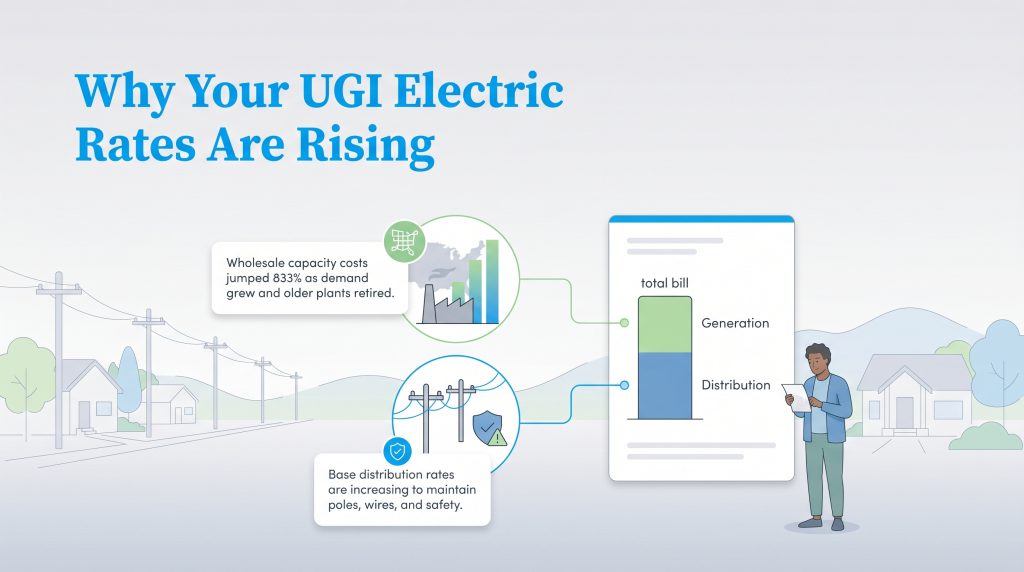
The increase you are seeing on your statement isn’t just one single change but a combination of two different factors hitting at once. First, UGI filed a request with the Pennsylvania Public Utility Commission (PUC) to increase its base distribution rates — the part of your bill that pays for the physical poles, wires, and safety tech. Second, the cost to actually generate electricity has spiked due to a massive 833% jump in wholesale “capacity” costs across the PJM Interconnection power grid. This rare market event happened because energy demand is growing fast while some older power plants are retiring, creating a tighter supply.
How This Hike Impacts Your Typical Monthly Bill
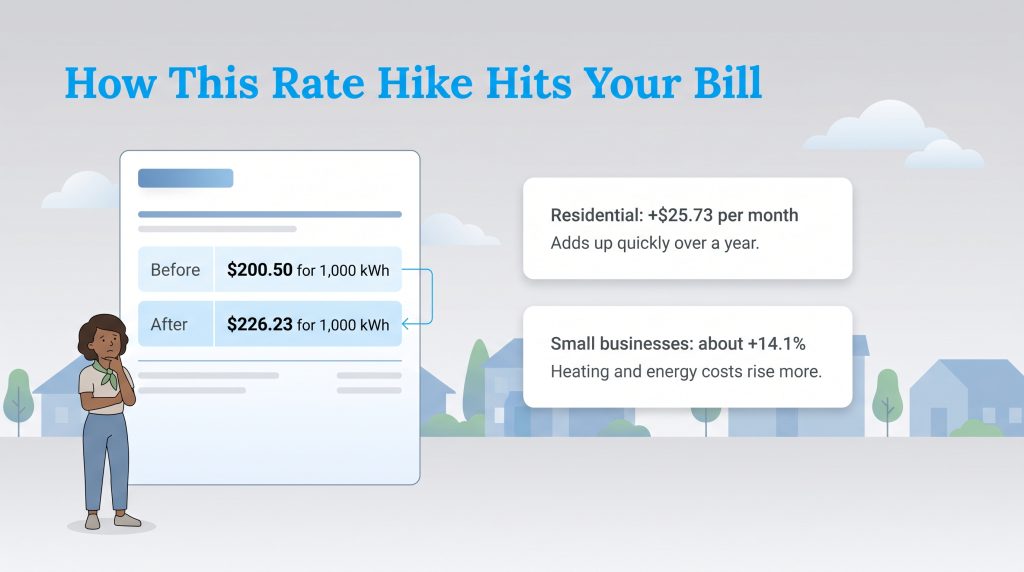
When we talk about a jump from $0.11212 to $0.1262 per kWh, it is helpful to see what that looks like on a real receipt. For a standard residential home using 1,000 kWh of electricity each month, your total bill is projected to climb from $200.50 to $226.23. This extra $25.73 every month can really add up over a year, especially if you are already juggling the costs of a recent move. Commercial customers might see an even bigger percentage hit, as heating costs for small businesses are expected to rise by about 14.1% under these new structures.
Steps You Can Take to Lower Your Bill
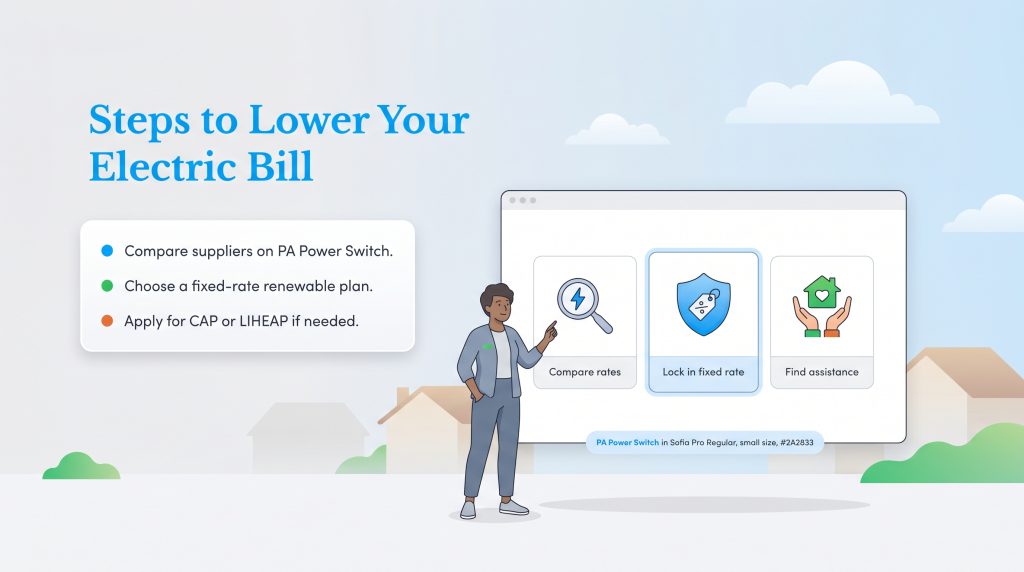
The good news is that you don’t have to just accept the default utility price. Since Pennsylvania has a deregulated energy market, you have the power to “shop” for your electricity supplier and potentially find a much better deal. By visiting the PA Power Switch website, you can compare offers from dozens of licensed companies that might be charging less than UGI’s current rate. We recommend looking for an eco-conscious alternative, such as a 100% renewable energy plan, which often provides a fixed rate that won’t change even if the market gets even more volatile.
Locking In a Fixed-Rate Plan
A fixed-rate plan is your best friend when prices are on the move. Unlike a variable rate that can surprise you every month, a fixed-rate contract keeps your price the same for six, 12, or even 36 months. This gives you total budget certainty and protects you if capacity costs climb even higher in June 2026.
Finding Help Through Assistance Programs
If these higher rates make it difficult to manage your monthly expenses, there are several programs designed to lend a hand. UGI offers a Customer Assistance Program (CAP) for those meeting certain income guidelines, and you can also apply for the LIHEAP federal grant. These options are there to ensure that every family in our community can keep the lights on without sacrificing other essentials.
Areas and Cities Feeling the Impact
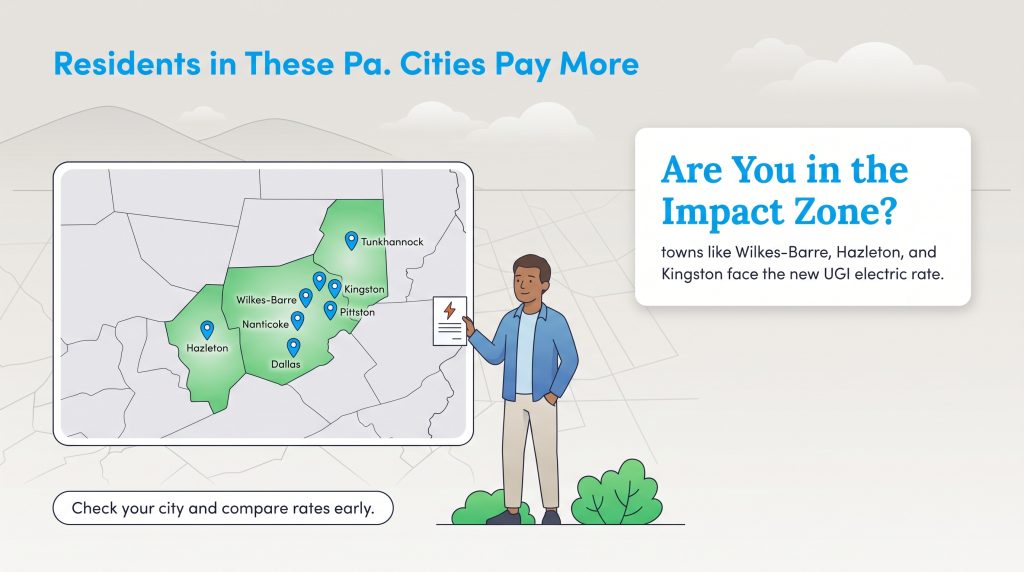
This rate change specifically affects those living in UGI’s electric service territory in Northeastern Pennsylvania. While UGI provides natural gas to 46 counties, its electric division is focused on a smaller footprint in Luzerne and Wyoming counties. If you live in one of the following major hubs, these changes apply to your home:
Navigating utility changes doesn’t have to be overwhelming if you know where to look and what questions to ask. While the shift toward $0.1262 per kWh represents a real increase for many Pennsylvanians, the ability to shop for a competitive, environmentally mindful choice puts the control back in your hands. By staying informed and acting early to lock in a stable rate, you can keep your new home running efficiently while keeping your budget on track for the long haul.
Frequently Asked Questions About UGI Electric Rates
When do the new UGI electric rates take effect?
Can I switch back to UGI if I choose another supplier?
What is the difference between a distribution charge and a generation charge?
About the Author

Claudio is a sustainability-focused writer with a background in Anthropology and Psychology from NC State University. He has spent over 15 years working in writing, interpretation, and translation, driven by a deep interest in how human culture shapes the environment. Today, he shares his curiosity with readers by writing about sustainable living solutions and the connection between everyday choices and environmental impact.