
Oncor customers will see higher monthly bills following a major regulatory decision, but there are several ways we can help you stay ahead of the rising costs.
Key Takeaways
- The Public Utility Commission of Texas approved a $7 monthly increase for typical households to fund grid repairs, inflation adjustments, and massive infrastructure growth.
- A new retrospective surcharge will also appear on bills throughout the rest of 2026 to cover costs from the first quarter of the year.
- Locking in a fixed-rate electricity plan and utilizing Oncor’s energy efficiency rebates are the most effective ways to keep your home budget in check.
If you’ve noticed your Texas electric bill creeping up lately, you aren’t alone. On April 17, 2026, state regulators officially gave Oncor Electric Delivery the green light to raise its base rates, a move that impacts about 3.8 million homes and businesses across the Lone Star State. While a $7 monthly bump might not seem like a dealbreaker at first glance, the addition of retrospective surcharges and a secondary “tracker” filing means we need to take a closer look at our energy habits to keep costs under control. We’re here to help you navigate these changes, from understanding why prices are moving to finding the best energy-saving options for your home.
Why Oncor Rates Are Changing in 2026
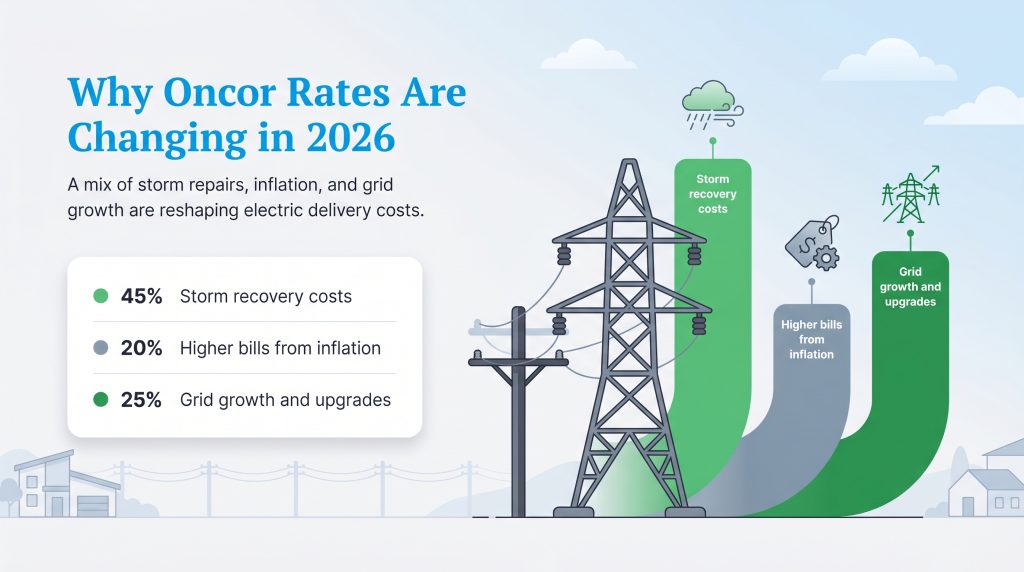
The Public Utility Commission of Texas (PUCT) approved this rate hike to help Oncor manage a massive $6.97 billion revenue requirement. This isn’t just about corporate profits — the utility is facing a “perfect storm” of economic and environmental pressures that have made the old 2021 rates unsustainable. According to official rate case filings, the increase is primarily driven by three factors: storm recovery, inflation, and historic infrastructure growth.
Storm Recovery and Grid Resilience
About 45% of the rate increase is dedicated to recovering the costs of repairing the grid after severe weather. Oncor currently manages an average of 31 major storm events every year, that is roughly one major event every 12 days. To prepare for the future, the new order increases the annual storm reserve fund to $200 million so the utility can fix poles and wires faster when the next North Texas ice storm or West Texas thunderstorm hits.
Inflation and the $47.5 Billion Investment Plan
Another 20% of the hike addresses the rising costs of labor, equipment, and insurance, which have jumped significantly since rates were last set. The final 25% supports a record-breaking $47.5 billion capital plan for 2026 through 2030. This plan is designed to keep up with the “hyper-growth” of the Texas economy, including new high-voltage lines to support the Permian Basin and the rapidly expanding Dallas-Fort Worth metroplex.
How the Increase Impacts Your Monthly Bill
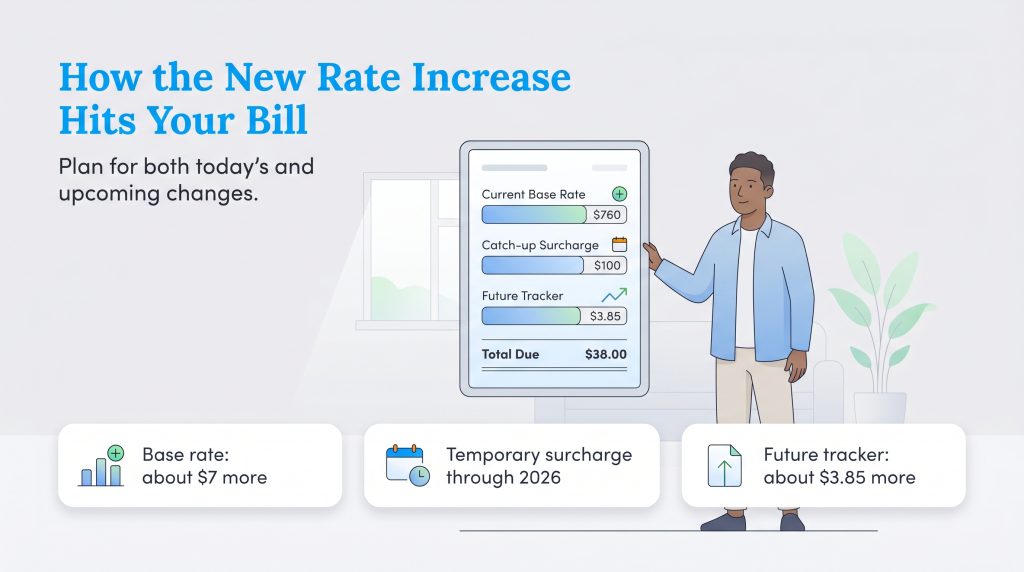
For most of us, the most important number is the bottom line on our monthly statement. The standard estimate is a $7 increase (about 4.7%) for a household using 1,000 kWh per month. However, because the new rate structure changed both the fixed monthly fees and the variable usage fees, your actual impact will depend on how much electricity you use.
| Monthly Electricity Usage | Estimated Base Rate Increase | Estimated Total Bill Impact |
| 500 kWh (Small Apartment) | $3.50 | $78.50 |
| 1,000 kWh (Standard Home) | $7.00 | $157.00 |
| 2,000 kWh (Large Home) | $14.00 | $314.00 |
The Surprise Retrospective Surcharge
There is a bit of a catch in the timing of this decision. Because the new rates were approved in April 2026 but cover costs dating back to Jan. 1, Oncor is allowed to “catch up” on that missing revenue. You will see a temporary surcharge on your bill through the end of 2026 to cover this gap. We recommend budgeting a few extra dollars each month this year to account for this one-time recovery period.
New Annual Tracker Adjustments
Shortly after the base rate approval, Oncor filed its first request under the new Unified Tracker Mechanism (UTM). This is a streamlined annual review process created by the Texas Legislature to help utilities recover infrastructure costs more quickly. If approved, this could add another $3.85 to the average monthly bill starting later in 2026. While this makes the regulatory process more efficient, it means we should expect smaller, more frequent rate updates rather than waiting years between changes.
Major Texas Cities Impacted by the New Rates

Oncor is the largest utility in the state, serving over 400 communities. If you live in North, Central, or West Texas, there is a very high chance you are affected by this order. A coalition of over 140 cities, known as the Steering Committee of Cities Served by Oncor, actually stepped in during the legal proceedings to help lower the initial request and protect residents from even higher hikes.
The major metropolitan areas impacted include:
- The DFW Metroplex: Dallas, Fort Worth, Arlington, Plano, Garland, Irving, and McKinney.
- Central Texas: Waco, Temple, Killeen, and Round Rock.
- West Texas: Midland, Odessa, and Big Spring.
- North Texas: Wichita Falls, Tyler, and Denison.
What You Can Do to Lower Your Electric Bill

While you can’t opt out of the Oncor delivery charges — those are the “poles and wires” fees regulated by the state — you have total control over the “energy” portion of your bill. In the deregulated Texas market, you can shop around for a Retail Electric Provider (REP) that offers lower rates than your current one.
Lock in a Fixed Rate Plan
If you are currently on a variable or month-to-month plan, you are at the mercy of seasonal price spikes. We suggest visiting the state’s Power to Choose portal to find a 12-month or 24-month fixed-rate plan. Locking in your rate during the “shoulder seasons” of spring or fall can often save you enough to completely offset the Oncor increase.
Use Energy-Saving Rebates
Oncor offers several environmentally mindful choices through its Home Energy Efficiency Program. You can receive point-of-sale discounts on Energy Star products at major retailers like Home Depot or Lowe’s. These incentives include:
- Up to $65 off smart thermostats (like Nest or ecobee).
- Up to $500 off heat pump water heaters.
- Discounts on LED lighting and advanced power strips.
- Incentives for home insulation upgrades if your current R-value is 22 or less.
Staying Savvy in a Changing Energy Market

The 2026 Oncor rate order is a reminder that the cost of maintaining a reliable grid in a fast-growing state like Texas is rising. By staying informed about these regulatory shifts and taking advantage of the competitive market, you can protect your wallet and make more sustainable choices for your home. Whether you are switching to a greener energy plan or beefing up your attic insulation, taking small steps today will lead to big savings on your future utility bills.
Frequently Asked Questions About the Oncor Rate Increase
When do the new Oncor rates take effect?
Do I have to pay the increase if I switch electricity providers?
How do I qualify for Oncor’s energy efficiency rebates?
About the Author

Claudio is a sustainability-focused writer with a background in Anthropology and Psychology from NC State University. He has spent over 15 years working in writing, interpretation, and translation, driven by a deep interest in how human culture shapes the environment. Today, he shares his curiosity with readers by writing about sustainable living solutions and the connection between everyday choices and environmental impact.