
Oregon Regulators And Consumer Advocates Approve A $12 Million Rate Settlement Increasing Peak Winter Bills By $14 A Month
Key Takeaways
- Cascade Natural Gas rates will increase by 12.3% for residential customers starting in October 2026 following a settled agreement with state regulators.
- Peak winter bills will rise by about $14 a month, bringing average cold-weather heating bills to around $133 per month across Central and Eastern Oregon.
- Budget billing and energy assistance programs are available to help households manage monthly heating budgets and lower overall energy consumption.
Cascade Natural Gas customers across Oregon will soon see an adjustment on their monthly heating bills. Following months of review, Cascade Natural Gas reached a settled agreement under Public Utility Commission of Oregon Docket UG 525 with state regulators, consumer advocacy groups, and environmental organizations. The agreement reduces Cascade’s initial rate hike request, helping protect ratepayers while covering necessary system reliability and safety upgrades. We broke down what this new settlement means for your household budget and how you can prepare before cold weather arrives.
Understanding The Cascade Natural Gas Rate Settlement
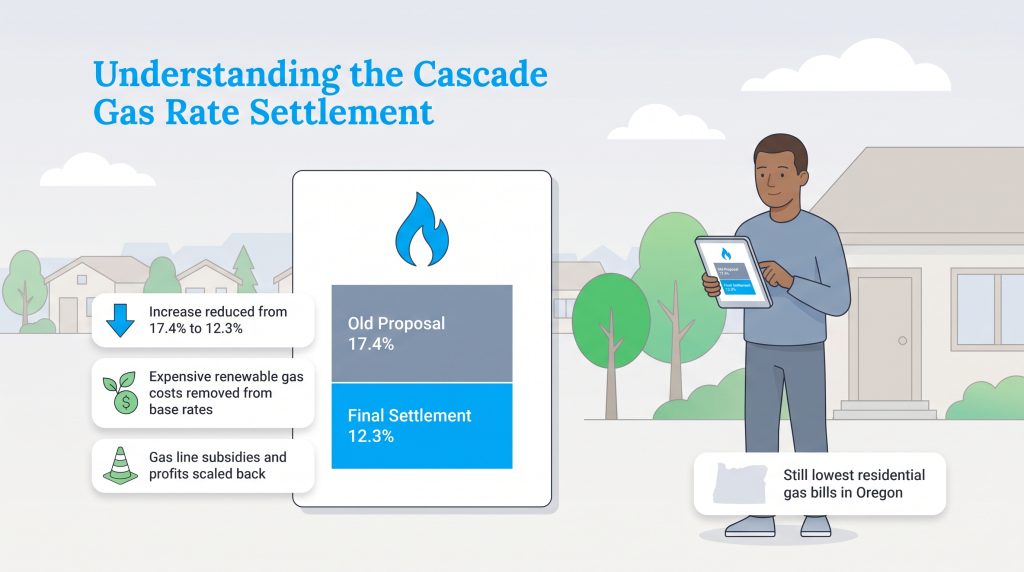
The settled agreement establishes a $12 million annual revenue requirement increase for Cascade Natural Gas, which lowers the utility’s original proposed increase from 17.4% down to 12.3% for residential customers. Because the company had not updated its base rates in six years, deferred capital costs and system investments had accumulated on its balance sheet since 2020.
Consumer advocates, including the Oregon Citizens’ Utility Board, worked to scale back several costly items from the initial proposal. The final settlement eliminated expensive renewable natural gas purchasing expenses from base rates, limited shareholder profit margins, and began phasing out customer-funded subsidies for new building gas line hookups. Even with the upcoming rate adjustment, Cascade Natural Gas continues to maintain the lowest residential gas billing rates among all regulated natural gas utilities in Oregon.
How The New Gas Rates Impact Your Monthly Bill
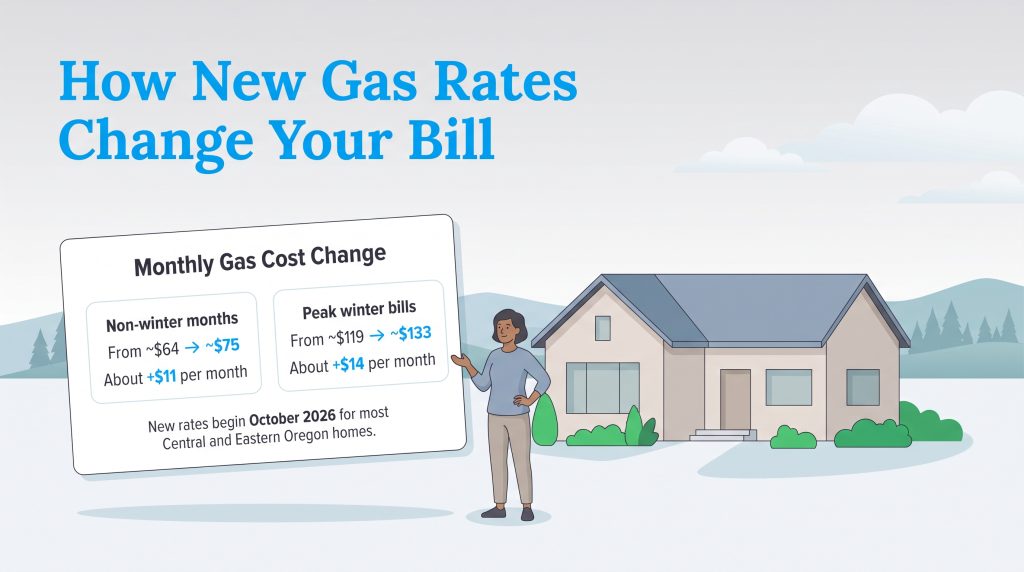
Starting in October 2026, residential customers will see their monthly bills change based on the season and overall therm consumption. During mild weather months, the typical bill increase will average roughly $11 per month, but the impact will be felt most during the cold winter heating season.
| Billing Metric | Before Settlement | After October 2026 Settlement | Net Change |
| Overall Residential Rate | Base Rate | +12.3% Adjustment | +12.3% |
| Average Non-Winter Bill | ~$64.00 / month | ~$75.00 / month | +$11.00 / month |
| Peak Winter Monthly Bill | ~$119.00 / month | ~$133.00 / month | +$14.00 / month |
These updated rates affect approximately 80,000 households and businesses throughout Central and Eastern Oregon, including communities in Bend, Redmond, Prineville, Baker City, and Ontario (Cascade Natural Gas Corporation).
Actionable Ways To Lower Your Natural Gas Heating Costs
You do not have to absorb higher winter heating bills without a plan. Taking a few proactive steps now can keep your home warm while keeping monthly costs predictable.
Enroll In Budget Billing
Setting up Equal Payment Plan budget billing averages your expected annual gas usage across 12 equal monthly payments. This eliminates sharp bill spikes during freezing winter months by spreading out peak seasonal costs evenly over the entire year.
Access Energy Assistance Programs
If higher heating bills create a strain on your household finances, several assistance options can help:
- Low-Income Home Energy Assistance Program (LIHEAP): Federal grants administered by local Oregon community action agencies to cover winter heating bills.
- Oregon Energy Assistance Program (OEAP): Utility-supported funds designed to prevent winter heating service disconnections for eligible households.
- Low-Income Rate Assistance Program (LIRAP): Direct monthly bill discounts provided through Cascade Natural Gas for qualifying income levels.
Make Energy-Saving Home Improvements
Small eco-conscious updates around your home can cut therm usage significantly:
- Install a Smart Thermostat: Automatically lower indoor temperatures overnight or while you are away to reduce gas furnace runtime. See our choices for Best Smart Thermostats.
- Seal Air Leaks: Use weatherstripping around doors and caulking around windows to prevent heat loss.
- Apply for Energy Trust Rebates: Oregon residents can claim cash incentives through Energy Trust of Oregon for upgrading to high-efficiency gas furnaces, adding attic insulation, or sealing ductwork.
Preparing Your Home For Upcoming Gas Rate Changes
Getting ahead of seasonal utility increases is the best way to safeguard your monthly household budget. By enrolling in budget billing, taking advantage of state energy efficiency rebates, and making simple air-sealing improvements around your house, you can offset rate adjustments while maintaining a cozy, comfortable home all winter long.
About the Author

Claudio is a sustainability-focused writer with a background in Anthropology and Psychology from NC State University. He has spent over 15 years working in writing, interpretation, and translation, driven by a deep interest in how human culture shapes the environment. Today, he shares his curiosity with readers by writing about sustainable living solutions and the connection between everyday choices and environmental impact.