

Setting up Oregon utilities is easier when you confirm your providers early, schedule start dates ahead of time, and budget for seasonal energy use.
Key Takeaways
- Determine your regional utility providers ahead of time to avoid service gaps on moving day.
- Budget for your average utility bill by comparing Oregon’s energy rates to national averages.
- Transfer your current utilities early and explore eco-conscious options like renewable energy plans.
Moving to Oregon comes with enough logistics already, so securing your basic home services should be one of the easier tasks on your list. When you are busy packing boxes and coordinating movers, figuring out your moving to Oregon utilities strategy needs to be as straightforward as possible. Whether you are establishing connections for a downtown Portland apartment or a quiet coastal town, tackling your electricity, water, and internet requirements methodically prevents service gaps on move-in day. We crafted this guide to walk you through the setup process with practical timelines, clear cost expectations, and actionable advice to get your new Pacific Northwest home up and running.
Average Utility Bill in Oregon: What to Expect
Understanding the average utility bill in Oregon helps you build an accurate monthly budget before you even unpack your first box. Fortunately, residents here generally enjoy electricity rates that sit below the national average, thanks largely to the region’s robust hydroelectric power infrastructure. Recent residential data from EIA’s Oregon state energy profile shows Oregon’s average electricity price has been lower than the U.S. average, though your actual bill depends on usage, home size, heating type, and the season.
While electricity might be cheaper, keeping your home warm during damp Pacific Northwest winters often increases natural gas usage. Instead of relying on a broad monthly estimate, review the following utility cost factors to better anticipate your household expenses. You can always proactively reduce your monthly electric costs by adopting energy-saving habits right from day one.
| Utility Type | Typical Monthly Cost Factors | Oregon-Specific Notes |
|---|---|---|
| Electricity | Home size, heating source, insulation, EV charging, appliance age | Oregon rates are often below the national average, but winter usage can still climb. |
| Natural gas | Furnace use, water heating, fireplaces, cooking | Damp winters can increase heating demand. |
| Water and sewer | City rates, household size, irrigation, stormwater fees | Municipal billing structures vary by city. |
| Trash and recycling | City or franchised hauler, bin size, pickup frequency | Many Oregon communities have strong recycling and yard debris programs. |
| Internet | Provider availability, speed tier, equipment fees | Fiber availability varies by neighborhood. |
💸 Money-Saver: Schedule a professional home energy audit shortly after moving in to identify hidden drafts, outdated appliances, or poor insulation that might be quietly inflating your energy bills.
Major Oregon Utility Companies by Region
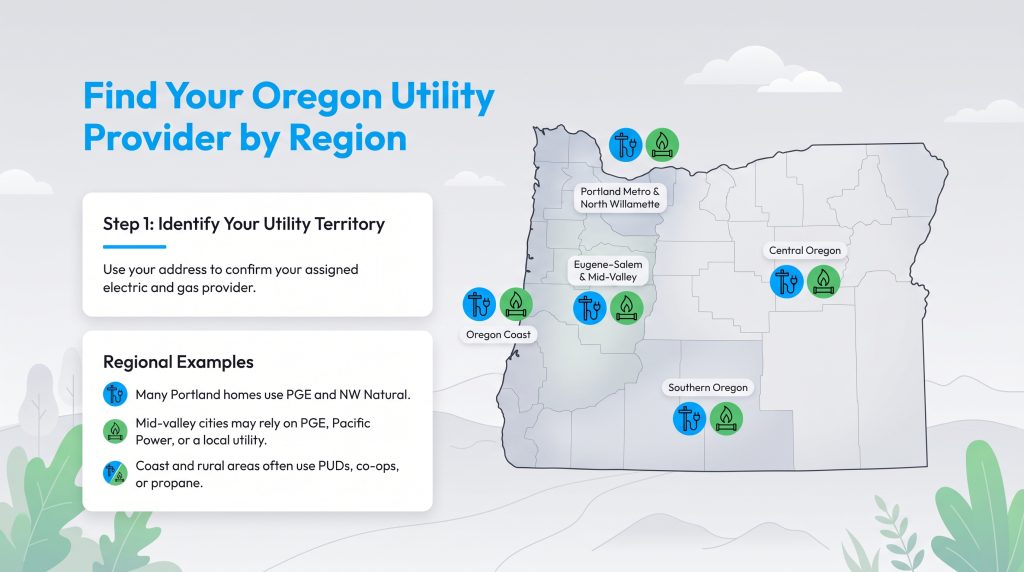
Out-of-state transplants coming from deregulated energy markets are sometimes surprised to learn that residential electricity and gas services operate differently here. Most Oregon households use the electric or gas utility assigned to their service territory, though some cities and rural areas are served by municipal utilities, people’s utility districts, or cooperatives. Always verify service by your exact address before scheduling a start date. Many Portland addresses, for instance, are assigned to Portland General Electric (PGE) for power and NW Natural for gas, while those further south generally rely on Pacific Power.
Since you generally cannot shop around for different rates, identifying your mandatory or cooperative provider is the first crucial step in your setup process. Review the breakdown below to see which companies typically service the state’s distinct geographical zones, and use resources like the Oregon Public Utility Commission consumer resources to confirm the provider tied to your exact address.
| Region | Common Electric Providers | Common Natural Gas Providers | Setup Note |
|---|---|---|---|
| Portland Metro and North Willamette Valley | PGE, Pacific Power, local municipal utilities | NW Natural | Verify by address, especially outside Portland city limits. |
| Eugene, Salem, and Mid-Willamette Valley | EWEB, PGE, Pacific Power, Salem Electric, local utilities | NW Natural | Some cities operate their own electric utility. |
| Central Oregon | Pacific Power, Central Electric Cooperative | Cascade Natural Gas | Rural addresses may fall under a cooperative. |
| Southern Oregon | Pacific Power, local utilities | Avista, NW Natural, or limited service depending on area | Natural gas may not be available at every property. |
| Oregon Coast | Pacific Power, local PUDs, cooperatives | NW Natural, Avista, propane, or no gas service | Coastal service territories vary widely. |
Portland, Oregon, Utilities Setup at a Glance
If your relocation brings you to the state’s largest metro, your Portland Oregon utilities setup will follow a fairly consistent pattern. While exact providers can occasionally shift near city limits, most residents will coordinate with a predictable group of companies.
- Electric service is commonly provided by Portland General Electric within the city of Portland.
- Natural gas is commonly provided by NW Natural where gas service is available.
- Water, sewer, and stormwater billing are handled through the Portland Water Bureau and city billing system.
- Garbage, recycling, and compost are collected by assigned local haulers under city rules.
- Internet availability varies by address, so check service before move-in.
How to Set Up Utilities in Oregon Before Move-In
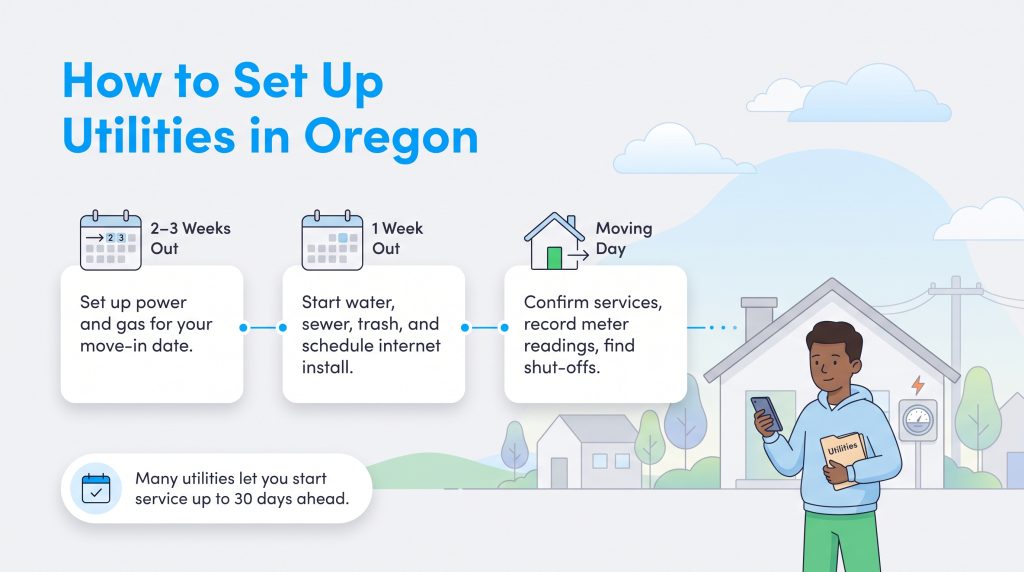
Keeping your connections organized prevents overlapping bills and moving-day headaches. We developed this chronological Oregon move-in utility checklist to help you tackle every required phone call and online form exactly when you need to, ensuring the lights are already on when you arrive with your boxes. Before you start making calls, gather your service address, move-in date, identification, and contact information.
What You’ll Need Before You Call:
- Your exact new service address
- Your official move-in date
- A government-issued ID or Social Security number
- Your preferred payment method
- Your lease start date or closing date
- Your prior utility account number, if transferring service
- Two to Three Weeks Out: Identify your regional electricity and gas providers. Create your online accounts and submit a request to start service on your official move-in date. Ask whether a technician visit is required.
- One Week Out: Contact the local municipality to establish water, sewer, and trash collection. Schedule an installation appointment with an internet service provider since technician availability often books up fast.
- Moving Day: Locate the electrical panel and water shut-off valves in your new home. Verify that all requested services are active, document the starting meter readings for both electricity and gas to ensure accurate initial billing, and save your provider’s outage reporting method to your phone.
📌 Quick Fact: Many major Oregon utility providers allow you to schedule a service start date up to 30 days in advance, giving you plenty of runway to organize your move. Always confirm the exact timing and deposit rules with your specific provider.
Electricity and Natural Gas Setup
Understanding exactly how to set up utilities in Oregon comes down to knowing whether you are establishing brand-new connections as a first-time customer or transferring an existing account. If you are relocating from another state, you will need to open a new account online or over the phone. Many utilities ask for identity verification and may review your payment history before deciding whether to require a deposit. If you have had reliable service with a previous utility, ask whether a letter of credit or payment history can help reduce or waive the deposit.
If you already live in the state and simply need to start PGE service at a different address, the process is much faster. You can usually log into your existing online portal and submit a transfer request, which seamlessly shuts off power at your old residence and activates it at your new home on your specified dates. You will use a similar procedure for managing your natural gas service, though you might need a technician to physically visit the property to unlock the gas meter if the home has been vacant for an extended period.
🌱 Eco Edge: Oregon utilities commonly offer renewable electricity options, such as PGE’s Green Future program and Pacific Power’s Blue Sky program, which let you support wind, solar, or other renewable energy sources for an added cost. You can learn more about finding environmentally mindful choices through EPA Green Power Partnership resources.
Water, Sewer, and Trash Services
While private companies dominate the energy sector, the water and sewer utilities Oregon residents rely on are almost exclusively managed by local municipalities. Cities usually handle these connections directly, meaning you will need to contact your local city hall or municipal water department to establish an account. For example, new residents in the state’s largest city will coordinate directly with the Portland Water Bureau when setting up your home’s water supply.
In many Oregon communities, your water, sewer, and garbage collection services are conveniently bundled into a single municipal bill. This streamlined approach makes managing monthly payments easier, but it also means you cannot pick your trash collection days or shop around for a different waste management company. Be sure to ask your local municipality about their specific curbside recycling guidelines, as Oregon takes waste reduction seriously and often requires strict separation of paper, plastics, and compostable yard debris.
Internet and Home Connectivity in Oregon
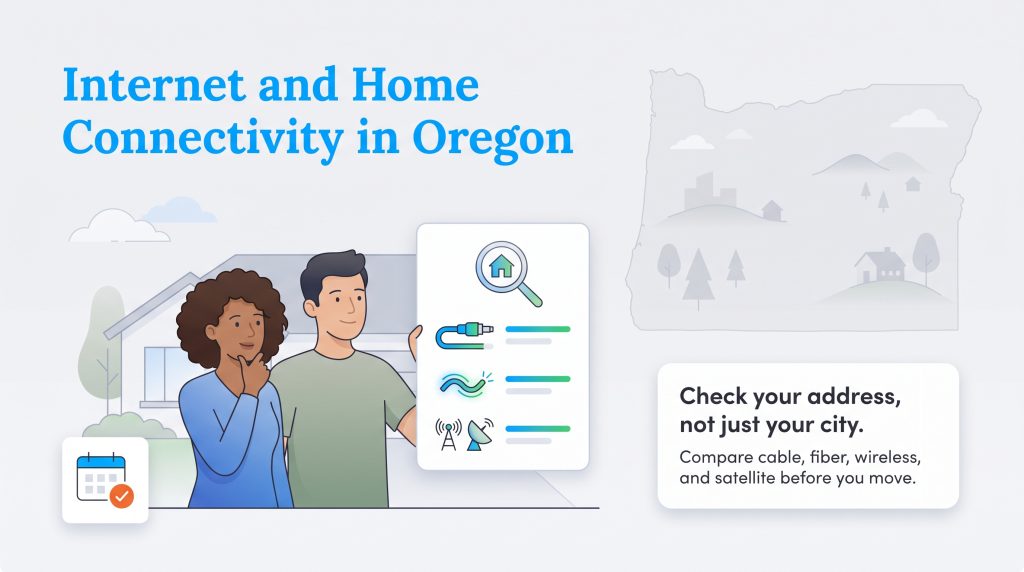
For most movers, securing a reliable internet connection is just as vital as keeping the lights on. Because broadband infrastructure varies heavily by neighborhood, you must check availability by your exact address rather than just the city name. When you compare home internet setup options, take the time to evaluate cable, fiber, fixed wireless, and satellite providers — especially if you are moving to a rural part of the state. We recommend scheduling your installation appointment one to two weeks ahead of your move if a technician is needed, or simply asking whether a self-install kit is available to save on equipment fees.
Renting vs. Buying: Transferring Utilities in Oregon
Your path to securing home services changes significantly based on whether you are signing a lease or closing on a mortgage. When you transfer utilities moving to Oregon as a renter, you must carefully review your lease agreement to see exactly which services fall under your financial responsibility. Landlords may cover municipal water, sewer, and trash collection, leaving tenants responsible solely for electricity and internet. Familiarize yourself with tenant rights regarding energy billing by checking out the state’s consumer resources regarding regulated utility rights.
Homebuyers, however, face a slightly different coordination challenge. If you are purchasing a property, you need to communicate clearly with the seller to align the dates for terminating their service and activating yours. Leaving a gap between those two dates can trigger costly shut-off and reactivation fees from the energy provider. Ensuring a seamless handover keeps the power on for your final walkthrough and protects your wallet from unnecessary administrative charges.
🚩 Heads Up: Before signing a lease, ask the landlord, property manager, or current occupant for recent utility cost history. You can also ask the utility whether it provides average usage estimates for the address so you can build a highly accurate monthly budget.
Wrapping Up Your Oregon Utility Strategy
Relocating across state lines naturally brings a whirlwind of logistics, but mapping out your household connections doesn’t have to be the stressful part of the journey. By identifying your regional providers early, noting baseline energy costs, and communicating setup timelines clearly, you guarantee a comfortable, well-lit landing in your new space. Check these essential setup tasks off your to-do list a few weeks in advance so you can confidently prepare for the rest of your move with absolute peace of mind.
Frequently Asked Questions About Oregon Utilities
Still sorting through the details? These quick answers cover common Oregon utility setup questions for renters, homeowners, and out-of-state movers.
What information do I need to start utility service in Oregon?
How far in advance should I set up my utilities before moving to Oregon?
Do I need to set up water service myself in Oregon?
Are utility deposits required in Oregon?
Can I choose my electricity provider in Oregon?
Is natural gas available everywhere in Oregon?
How do I report a power outage in my new Oregon neighborhood?
About the Author

LaLeesha has a Masters degree in English and enjoys writing whenever she has the chance. She is passionate about gardening, reducing her carbon footprint, and protecting the environment. She also recently served as President of the Board for City Sprouts (a community garden).

Claudio is a sustainability-focused writer with a background in Anthropology and Psychology from NC State University. He has spent over 15 years working in writing, interpretation, and translation, driven by a deep interest in how human culture shapes the environment. Today, he shares his curiosity with readers by writing about sustainable living solutions and the connection between everyday choices and environmental impact.