
Understanding how extreme cold disrupts the energy grid and affects your monthly costs
Key Takeaways
- Natural gas freeze offs occur at the production wellhead, not inside your home’s plumbing or pipes.
- Water vapor turns to ice inside extraction equipment during extreme cold, blocking gas flow and causing supply shortages.
- Reduced supply drives up prices and can force power plants offline, leading to potential blackouts and higher utility bills.
You have probably heard the term on the evening news during a major winter storm: “natural gas freeze offs” are being blamed for power outages or skyrocketing heating prices. It paints a confusing picture, sounding almost as if the gas lines inside your walls are freezing solid. The reality is a bit more industrial but has a direct impact on your home comfort and your wallet. We’re here to translate this complex industry phenomenon into plain English so you understand why fuel supply drops when you need it most, why prices rise as the temperature falls, and how you can prepare your home for the volatility of winter energy markets.
What Is a Natural Gas Freeze Off?
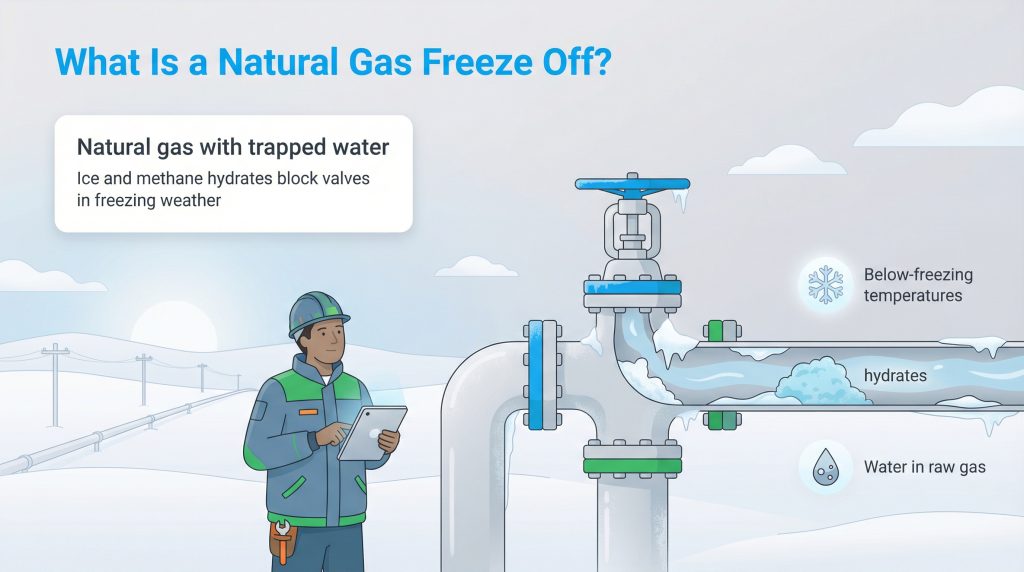
A natural gas freeze off is an interruption in production that happens at the very start of the supply chain. It occurs when ice or hydrate formations block the flow of gas at the wellhead (where gas comes out of the ground) or in the gathering lines that connect wells to processing plants. Unlike a frozen water pipe in a house, which is a plumbing issue, a freeze off is an extraction issue. When temperatures plummet, the equipment used to pull gas from the earth can become clogged with ice, effectively shutting off the flow of gas until crews can thaw the equipment or temperatures rise enough to melt the blockage.
The Science: Why People Say Natural Gas “Freezes”
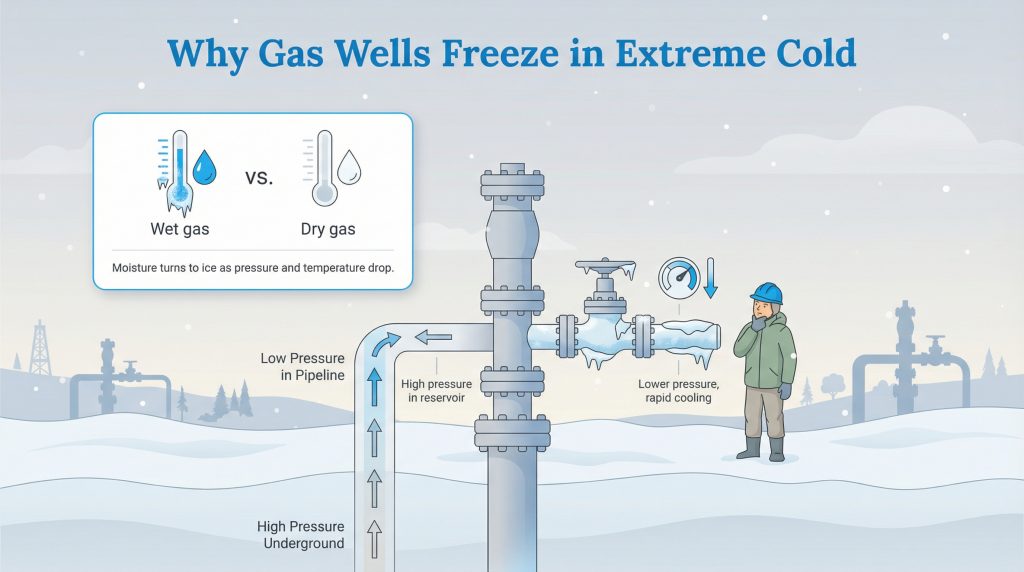
To understand why this happens, we have to look at what is actually coming out of the ground. Pure natural gas (methane) has an incredibly low freezing point, but the raw mixture extracted from the earth is rarely pure.
Wet Gas vs. Dry Gas
When energy companies drill, they often pull up “wet gas.” This is a raw mixture that contains methane along with water vapor, propane, butane, and other liquids. Because this mixture is wet, it’s highly vulnerable to freezing temperatures. The water content is the culprit here. Once the gas is processed and sent to your home, it’s considered “dry gas” because the water and impurities have been removed. Dry gas flows easily in winter, but wet gas at the wellhead is prone to freezing up before it ever gets processed.
The Ice Blockage
The blockage isn’t always just standard ice. Under high pressure and low temperatures, water and methane can combine to create “natural gas hydrates.” These are slushy, ice-like crystals that can form at temperatures higher than the normal freezing point of water. These hydrates accumulate rapidly in valves, chokes, and pipe bends, acting like a clogged artery that stops production cold. When this happens across a whole region, like the Permian Basin in Texas or the Marcellus Shale in Pennsylvania, a massive amount of fuel is suddenly removed from the grid. For more on how winter conditions impact production, the U.S. Energy Information Administration (EIA) offers data on production declines during cold snaps.
How Producers Try To Prevent Natural Gas Freeze Offs
Can Producers Prevent Freeze Offs?
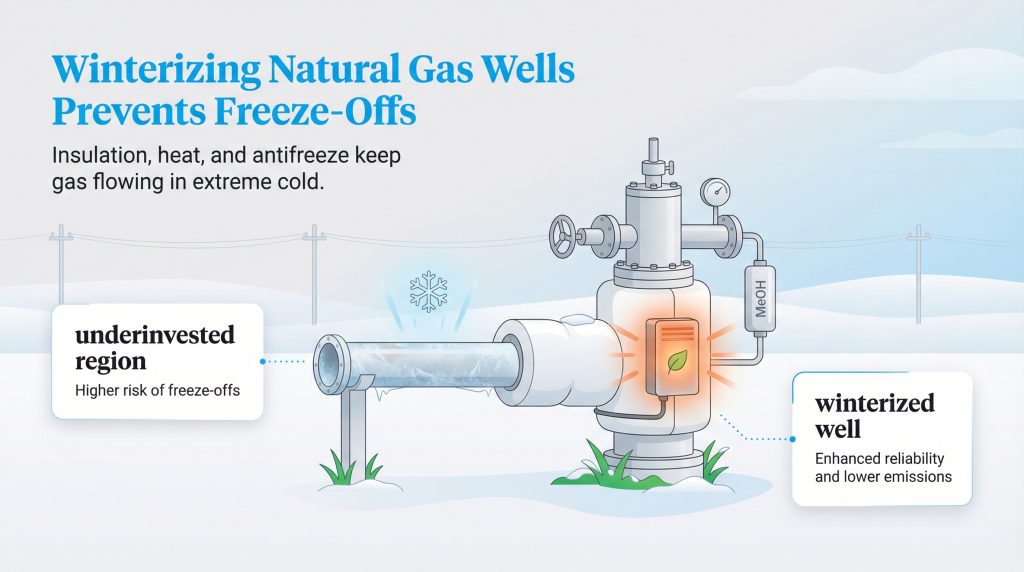
The good news is that freeze offs are solvable with the right technology. This process is called “winterization.” Producers can inject methanol (a type of antifreeze) into the lines to lower the freezing point of the water. They can also install heating units on the wellheads or wrap pipes in thick insulation to shield them from the wind.
However, winterization is expensive. In places like North Dakota, where deep freezes are guaranteed, wells are built to withstand extreme cold. In warmer regions like Texas or the South, where severe freezes have historically been rare, producers haven’t always invested as heavily in these protections. We’ve seen that this is a calculated risk that saves money in the short term but can lead to chaos when a once-in-a-decade storm hits. Properly winterizing natural gas wells is essential not just for reliability, but for reducing the environmental impact of emergency venting.
From Wellhead to Burner: The Chain Reaction
A freeze off might happen hundreds of miles away, but the ripple effects travel instantly through the pipeline network to your town. Here is the chain reaction that leads from a frozen valve to a crisis in your home:
- Step 1: The Freeze: Temperatures drop significantly, and wellheads freeze off, cutting production volume immediately.
- Step 2: The Shortage: Interstate pipelines have less gas flowing through them just as millions of homeowners turn up their thermostats to fight the cold.
- Step 3: The Power Plant Problem: Many electric power plants run on natural gas. When fuel supply drops and pipeline pressure falls, these plants cannot generate electricity.
- Step 4: The Impact: Grid operators may be forced to implement rolling blackouts to prevent total grid failure, or wholesale prices may skyrocket due to extreme scarcity.
This dependency is why reliability has become such a big concern for both utilities and homeowners. To learn more about how different fuel sources interact with the grid, you can read our guide on energy grid basics.
Does This Mean My Home’s Gas Line Will Freeze?
This is the most common fear homeowners have, but you can breathe a sigh of relief. The natural gas that enters your home is consumer-grade “dry gas.” It has gone through processing plants that dehydrate it, removing the water content that causes freezing. Because of this, it’s extremely unlikely that the gas line inside your walls or under your street will freeze, even in sub-zero temperatures.
For more detailed information on gas infrastructure safety, the American Gas Association (AGA) provides extensive resources on how the delivery system is designed to withstand winter conditions.
Watch Your Meter
While the gas itself won’t freeze, your equipment is still vulnerable to the elements. Your outdoor gas meter and the regulator (the disc-shaped object) have small vents that need to breathe. If these get covered in heavy snow or encased in ice from a dripping gutter, they can malfunction and cut off your supply. Always gently brush snow off your meter with a broom, never chip at it with a shovel, to keep the gas flowing safely.
Why Freeze Offs Cause Your Bills to Spike
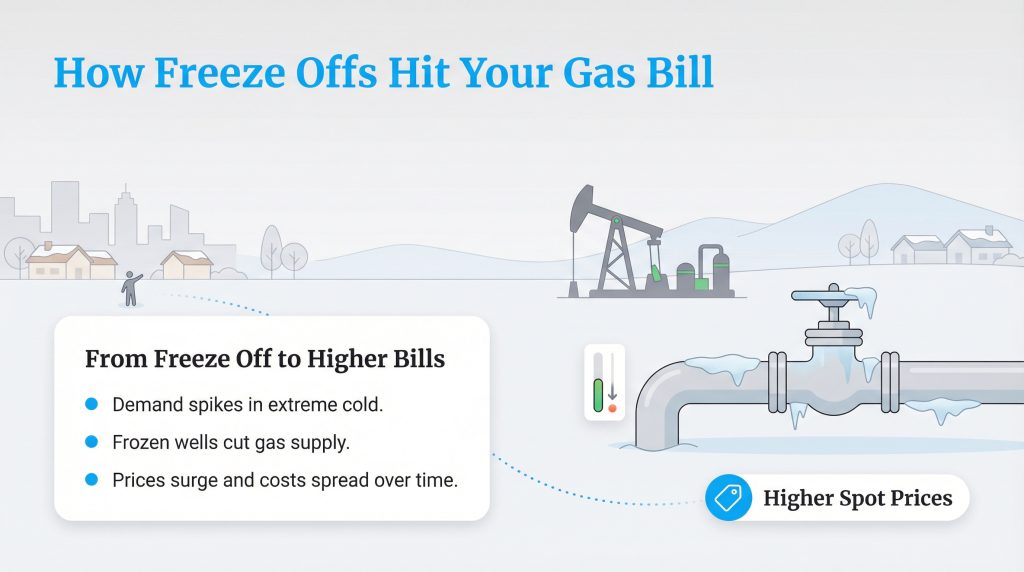
When freeze offs reduce the supply of gas at the exact moment everyone needs more of it to stay warm, the laws of economics take over. The wholesale price of natural gas can jump by hundreds or even thousands of percent in extreme events, as seen during major winter storms like Winter Storm Uri.
Your utility company has to pay these exorbitant rates to keep the gas flowing to your furnace. While regulations often prevent them from charging you the full amount all at once, they typically pass these costs on to you eventually. You might see a “cost recovery factor” or a higher rate per therm on your bill for months, or even years, after the storm has passed.
How to Protect Your Wallet and Home During a Freeze Off
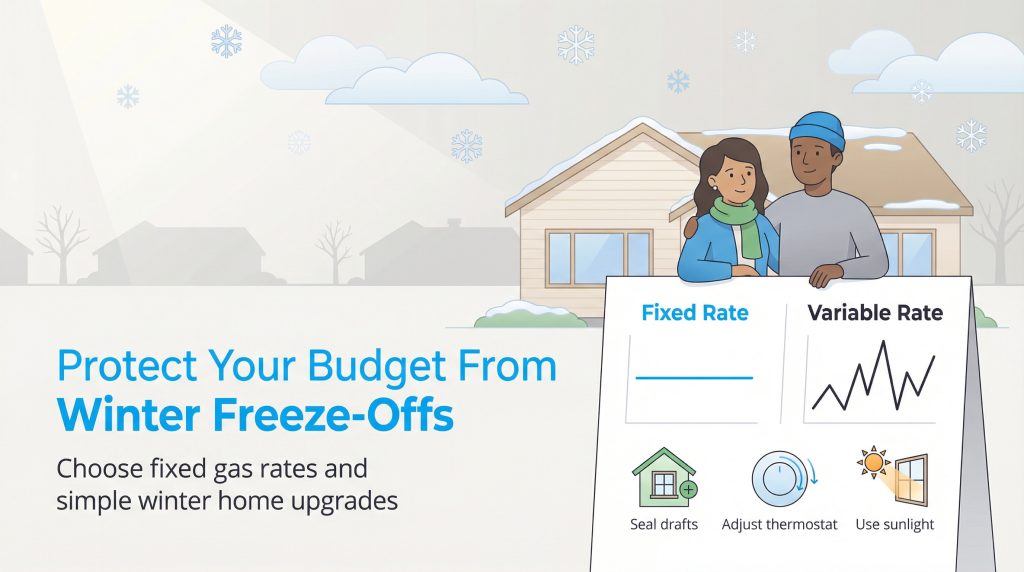
You can’t drive out to the oil fields and thaw a wellhead, but you can control how your home uses energy. Reducing your demand during a freeze off helps stabilize the grid and protects your personal finances from volatile surcharges.
- Draft Proofing: Seal windows and doors with weatherstripping or draft stoppers. Use inexpensive foam weatherstripping around door frames to keep the heat you’ve already paid for inside your home. It’s the cheapest way to stay warm.
- Thermostat Management: Lowering your thermostat by just a few degrees reduces the strain on the gas network and lowers your bill. Try lowering your thermostat by 2–4°F during a freeze event, wear a sweater, and grab a blanket instead of cranking up the heat.
- Eco-Friendly Upgrades: Consider installing a smart thermostat or switching to electric heat pumps. Newer cold-climate heat pumps are designed to perform efficiently even at below-freezing temperatures and disconnect your heating needs from direct natural gas shortages. Local utilities and state programs often offer rebates for smart thermostats or heat pumps, so check their websites before you buy. You can also check Energy.gov for more details on heat pump technology.
For more tips on reducing your consumption, check out our guide to natural gas in your home.
Why Energy Resilience Matters For Your Home
Natural gas freeze offs are a reminder of how interconnected our energy systems are. A frozen valve hundreds of miles away can impact the warmth of your living room and the bottom line of your monthly budget. While the energy industry works on weatherizing equipment to prevent these disruptions, your best defense is a resilient, energy-efficient home. An energy-efficient, weatherized home doesn’t just save money; it also uses less fuel overall, which is an environmentally mindful choice. By understanding the source of these price spikes and taking steps to reduce your reliance on heavy fuel consumption, you can weather the winter storms with more peace of mind.
FAQs About Natural Gas Freeze Offs
What is a natural gas freeze off in simple terms?
Do natural gas lines freeze in the winter?
How do companies prevent natural gas freeze offs?
Can natural gas turn into a solid?
Why does my electricity go out if I have a gas furnace?
Is wet gas worse than dry gas?
About the Author

Claudio is a sustainability-focused writer with a background in Anthropology and Psychology from NC State University. He has spent over 15 years working in writing, interpretation, and translation, driven by a deep interest in how human culture shapes the environment. Today, he shares his curiosity with readers by writing about sustainable living solutions and the connection between everyday choices and environmental impact.