
We analyzed the rates, hidden fees, and customer service reputations of Georgia’s two biggest providers to help you decide where to sign up.
Key Takeaways
- Gas South often wins on flexibility with potential no deposit requirements for qualified customers and a permanent discount for staying loyal.
- Georgia Natural Gas offers brand stability and a variety of fixed-rate plans that appeal to homeowners looking for long-term predictability.
- Hidden fees usually determine the real cost, so you must compare the cancellation fees and monthly service charges before signing a contract.
If you just moved to Georgia or opened a renewal bill that made your jaw drop, you are likely scrambling to find a better natural gas deal. While Georgia Natural Gas (GNG) is the established market leader with the most recognizable brand, Gas South has established itself as an aggressive challenger focused on simplicity and community. However, flashy marketing slogans do not lower your monthly expenses. We look past the advertisements to analyze the “Total Cost of Ownership” for both providers, helping you understand exactly where your money goes every month.

- $0.590 /THM
- $6.95-9.95
- None
- 1-24 Months
- $0.399 /THM
- $0.00-9.99
- None
- 1-24 Months
*rates may vary by location and household usage
At A Glance: Georgia Natural Gas vs. Gas South Comparison
| Feature | Georgia Natural Gas (GNG) | Gas South |
|---|---|---|
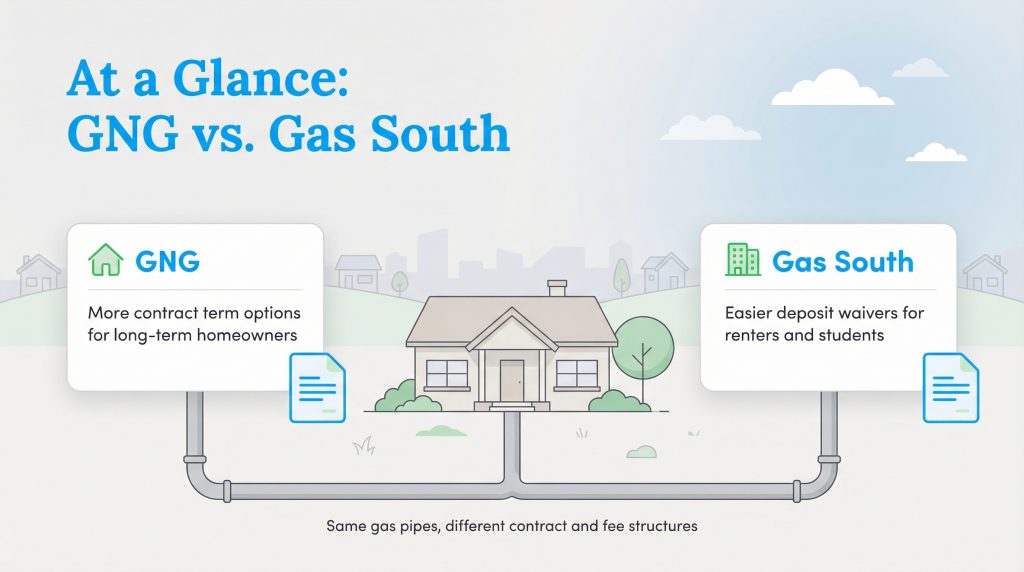
| Best For | Homeowners wanting brand stability and varied term options | Renters or those wanting flexibility and potential deposit waivers |
| Contract Lengths | 6, 12, 18, 24 months (Fixed); Variable available | 6, 12, 24 months (Fixed); Variable; OnePrice Plan |
| Cancellation Fees | Typically tiered (e.g., $50–$150 depending on contract length) | Generally lower or flat fee (Check specific plan terms) |
| Monthly Service Charge | Typically $5.99 – $9.99 (Varies by plan) | Typically $6.95 – $9.95 (Varies by plan) |
| Eco-Friendly Options | Greener Life® (Carbon offsets for a fee) | Green gas options and solar partnerships |
These two providers share a lot of similarities because they both utilize the same pipes and infrastructure managed by Atlanta Gas Light. The gas entering your home is identical regardless of which company bills you. The primary differences lie in how they structure their contracts and fees. GNG typically leans on its reputation and wide variety of term lengths to attract long-term homeowners.
Gas South differentiates itself by attacking “pain points” like security deposits. Their credit requirements for waiving deposits are often viewed as more lenient, which makes them a strong contender for younger renters or students, though approval is always subject to a credit check. While rates fluctuate daily based on the commodities market, the structure of these plans remains consistent throughout the year.
Analyzing the Rates: Fixed vs. Variable Plans
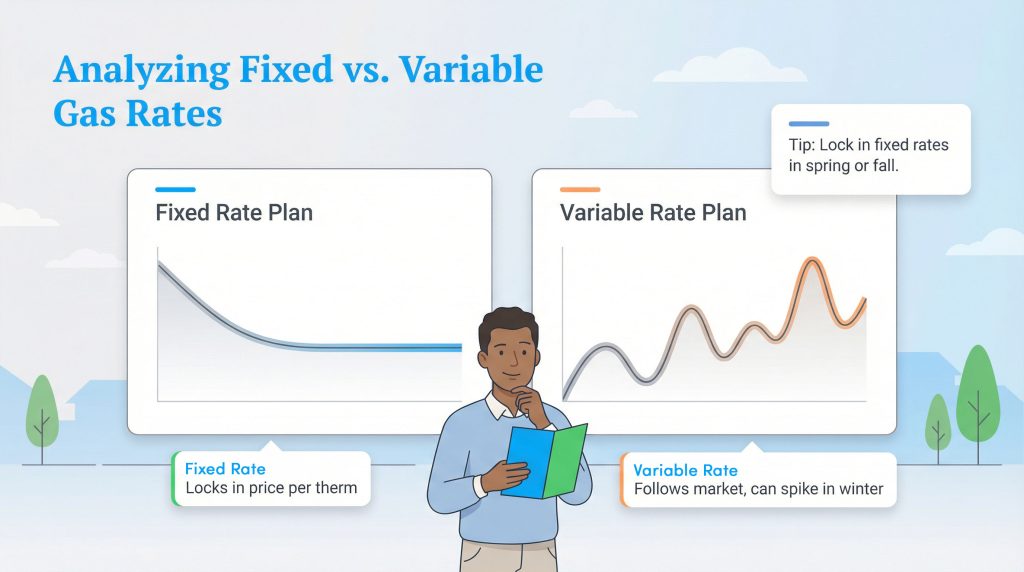
When comparing Georgia Natural Gas vs Gas South rates to find the best price per therm, the gap is often just a few cents. You first need to understand the two main plan types. A fixed-rate plan locks in your price per therm for the duration of your contract, protecting you from price spikes. A variable-rate plan fluctuates based on the current market price of natural gas. Georgia Natural Gas often advertises very competitive introductory rates for new customers on fixed plans, but their standard variable rates can be significantly higher.
Gas South competes with a unique “OnePrice” plan option, which functions like a flat bill, smoothing out payments so you don’t see massive spikes in the winter. However, for standard fixed-rate comparisons, Gas South is usually competitive with GNG. The real winner often depends on who is running a specific “new customer” promo during the month you sign up. If you are new to the area, check out our guide to understanding the natural gas market to learn more about how these rates work.
Gas South Plans and Pricing
| Plan Name | Rate | Plan Type | Base Charge | Cancellation Fee | |
|---|---|---|---|---|---|
| 6 Month Fixed - $50 in Bill Credits | $0.590 /THM | 6 Months Fixed Rate | $6.95-9.95 | $150 | Check Availability |
| 12 Month Fixed - $50 in Bill Credits | $0.690 /THM | 12 Months Fixed Rate | $6.95-9.95 | $150 | Check Availability |
| Intro Variable | $0.690 /THM | 1 Months Fixed Rate | $6.95-9.95 | $150 | Check Availability |
| 24 Month Fixed -$50 in Bill Credits | $0.750 /THM | 6 Months Fixed Rate | $6.95-9.95 | $150 | Check Availability |
| Variable | $2.110 /THM | 1 Months Fixed Rate | $6.95-9.95 | $150 | Check Availability |
Georgia Natural Gas Plans and Pricing
| Plan Name | Rate | Plan Type | Base Charge | Cancellation Fee | |
|---|---|---|---|---|---|
| Market Intro | $0.399 /THM | 2 Months Fixed Rate | $0 | None | Check Availability |
| 6-Month Fixed | $0.649 /THM | 6 Months Fixed Rate | $6.99-7.99 | $50 | Check Availability |
| 12-Month Fixed | $0.749 /THM | 12 Months Fixed Rate | $7.99-8.99 | $100 | Check Availability |
| 24-Month Fixed | $0.749 /THM | 24 Months Fixed Rate | $8.99-9.99 | $200 | Check Availability |
| 18-Month Fixed | $0.749 /THM | 18 Months Fixed Rate | $8.99-9.99 | $150 | Check Availability |
| Variable Select | $2.009 /THM | 1 Months Variable Rate | $3.99-6.99 | None | Check Availability |
| Pre-Pay | $2.109 /THM | 1 Months Variable Rate | $8.99 | None | Check Availability |
The “Hidden” Costs: Fees You Need to Know About
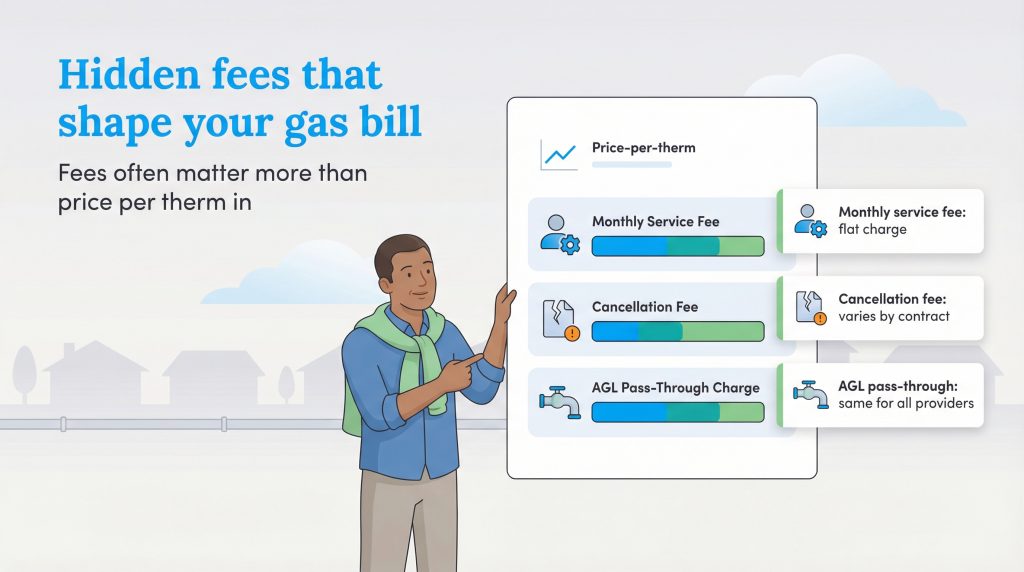
The price per therm is only half the story. To find the true cost, you must look at the fees. First, there is the monthly customer service fee. This is a flat charge you pay just to have an account open, regardless of how much gas you use. Both GNG and Gas South typically charge between $6 and $10 for this, but it varies by plan. Always check the “Terms of Service” or plan details to see the exact amount.
Next is the Georgia Natural Gas cancellation fee versus the Gas South equivalent. GNG typically uses a tiered system. For example, if you break a 12-month contract, the fee might be around $100, but if you break a 24-month contract, it could be closer to $150. Gas South generally employs a simpler fee structure, and in some aggressive promotional periods, they may offer to cover your cancellation fee if you switch to them from another provider.
Finally, there is the AGL Pass-Through Charge. We see many complaints about this, but it is important to know that neither provider controls this charge. This fee is regulated and approved by the Georgia Public Service Commission and goes directly to Atlanta Gas Light for maintaining the pipelines and meters. Every marketer in Georgia passes this cost on to you, and it will be the same regardless of which company you choose.
Breakdown: What Your Bill Actually Looks Like
To help you visualize the “Total Cost of Ownership,” here is a simple breakdown of the components that make up a typical monthly bill. Since the base price per therm is similar, the service fees often make the difference.
- Usage Charge: (Price per Therm × Therms Used)
- Monthly Service Charge: (Paid to GNG or Gas South)
- AGL Pass-Through Charge: (Paid to Atlanta Gas Light)
- Taxes & Local Fees: (Standard across all providers)
Customer Service and Reviews: Who Treats You Better?
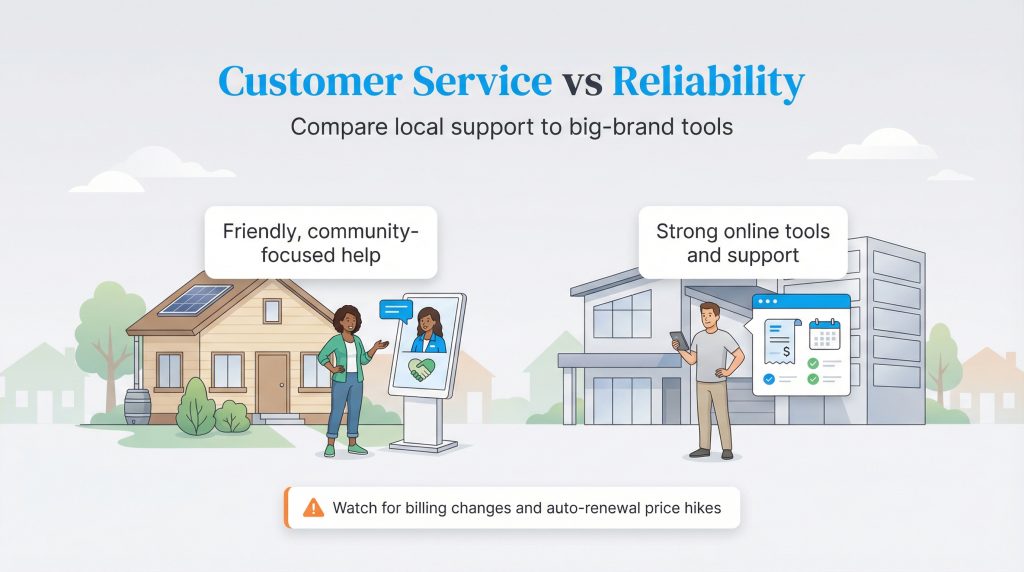
When you look up Gas South vs Georgia Natural Gas reviews, you will find a mix of 5-star praise and 1-star frustration for both. This is common in the utility industry. However, Gas South positions itself as a “local, community-focused” company. They invest heavily in community charities and often highlight high customer satisfaction scores in their marketing. Their support team is generally regarded as friendly and accessible.
Georgia Natural Gas, being the larger entity, is sometimes viewed as more corporate. However, their size brings reliability. They have a massive support infrastructure and sophisticated online tools for bill management. For many users, this reliability outweighs the “local feel” of a competitor.
Going Green: Eco-Conscious Program Options
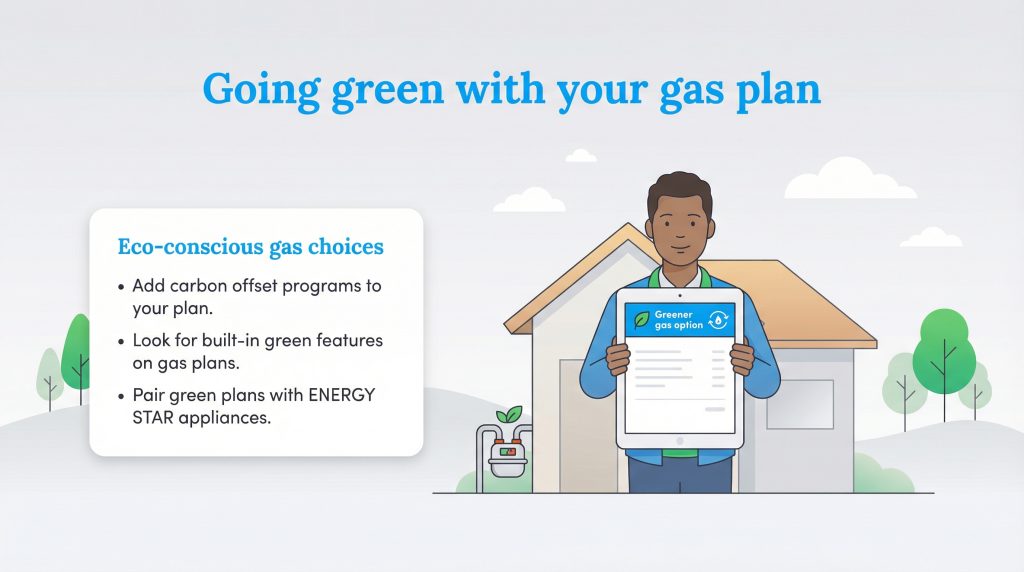
If sustainability is a priority for your household, both providers offer an environmentally mindful choice. Georgia Natural Gas offers the “Greener Life” program. For a small monthly fee, they calculate your greenhouse gas emissions from natural gas usage and purchase carbon offsets to make your natural gas use carbon neutral. They make it easy to add this to your bill during checkout.
Gas South also supports sustainability through initiatives like renewable projects and carbon offset options on some plans. Be sure to read your specific plan’s details to see whether green features are included or optional add-ons. Remember that these programs are just one step; combining them with energy-efficient upgrades, like installing ENERGY STAR appliances, can further reduce your footprint and your bill.
What Happens When Your Contract Ends?
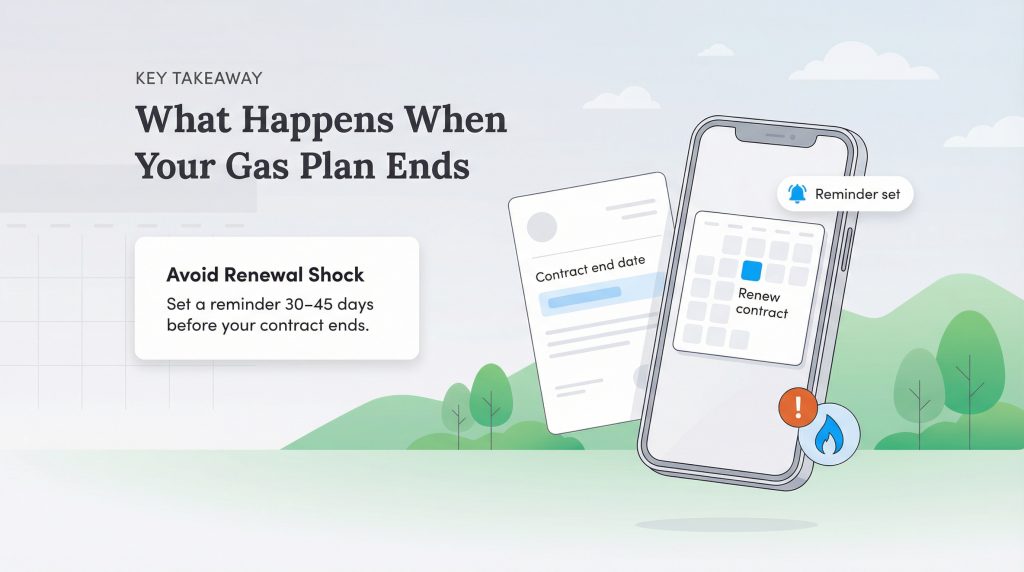
The most dangerous moment for your wallet is the day your contract expires. If you do nothing, both Georgia Natural Gas and Gas South will automatically roll you over to a variable rate plan. These variable rates are often significantly higher than the fixed rate you were paying. This “renewal shock” is the primary reason for customer complaints.
Both companies are required to send you a notification before your contract ends. GNG is generally very consistent with these notices, but it is easy to miss a piece of mail or an email. We recommend setting a calendar reminder on your phone for 11 months after your service start date. This gives you one month to shop for a new rate before your contract expires.
It is also smart to start comparing offers 30–45 days before your expiration date. If you want to understand more about how these plans work, you can read our guide on fixed vs. variable rates to see which strategy suits your financial goals.
Our Verdict: Who Wins for Your Home?
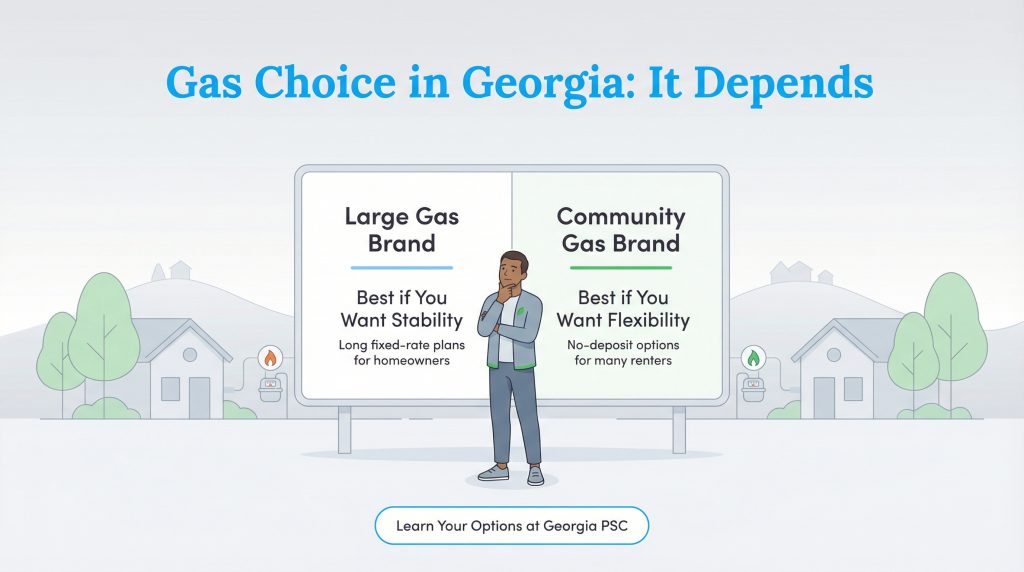
After we analyzed the data, we found that the right choice depends on your specific situation. There is no single winner for every household in Georgia.
Choose Georgia Natural Gas if: You value brand stability and want a wide variety of contract terms. If you plan to stay in your home for many years, their 18-month or 24-month fixed plans offer great peace of mind. They are the market leader for a reason and provide a very consistent service experience.
Choose Gas South if: You want flexibility or are renting your home. Their “no deposit” option for qualified customers is a major financial relief for movers with good credit. Additionally, if you prefer a company that feels more like a community partner than a utility giant, their branding and service approach will likely appeal to you.
For more information on your rights as a consumer, or to verify the license status of a marketer, you can visit the Georgia Public Service Commission website.
Ready to Switch? Here Is How to Do It Painlessly
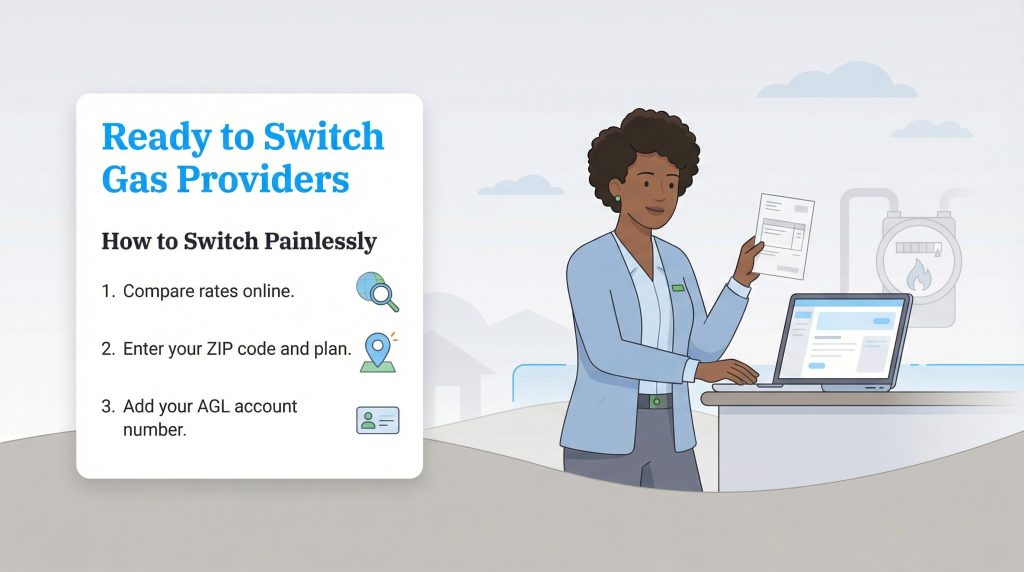
Switching providers is much easier than most people think. You do not need a technician to come to your house, and your pipes do not get dug up. It is purely a billing change, and we recommend comparing rates online to find the best fit. Simply go to the provider’s website, enter your zip code, and select the plan that fits your budget. During the sign-up process, you will provide your AGL account number (found on your current bill), and the new provider handles the switch with Atlanta Gas Light. You’ve got this!
FAQs About Georgia Natural Gas and Gas South
Which provider is cheaper, Georgia Natural Gas or Gas South?
Does Gas South require a deposit?
What is the cancellation fee for Georgia Natural Gas?
Can I switch my natural gas provider if I rent my home?
Who do I call if I smell gas?
About the Author

David has been an integral part of some of the biggest utility sites on the internet, including InMyArea.com, HighSpeedInternet.com, BroadbandNow.com, and U.S. News. He brings over 15 years of experience writing about, compiling and analyzing utility data.