
Choosing between Constellation and Xoom Energy requires evaluating their fixed rates, termination fees, and eco-conscious options to find the best fit for your home.
Key Takeaways
- Comparing fixed vs variable energy plans alongside Constellation’s flat terms is the most effective way to avoid seasonal bill spikes.
- You must read the fine print to uncover scaling cancellation fees and Xoom Energy’s monthly recurring charges before signing a long-term contract.
- Whether you need the best natural gas supplier for your home or a renewable electricity plan, assessing verified consumer reviews ensures reliable service year-round.
Moving into a new residence usually brings you face-to-face with an overwhelming list of utility options. Navigating a deregulated energy provider comparison can feel like an endless guessing game, especially when you are trying to keep your monthly budget under strict control. The core difference between these two massive suppliers is simple: Constellation favors long-term rate stability, while Xoom Energy offers flexible introductory terms. We are here to decipher the confusing pricing structures and hidden fees so you can finally answer the question, “Who is the best natural gas supplier for my home?”

- $0.599 /THM
- $6.95-7.95
- 90 days
- 12-36 Months

- $0.659 /THM
- $5.85
- None
- 1-24 Months
*rates may vary by location and household usage
Head-To-Head Comparison: Constellation Vs Xoom Energy
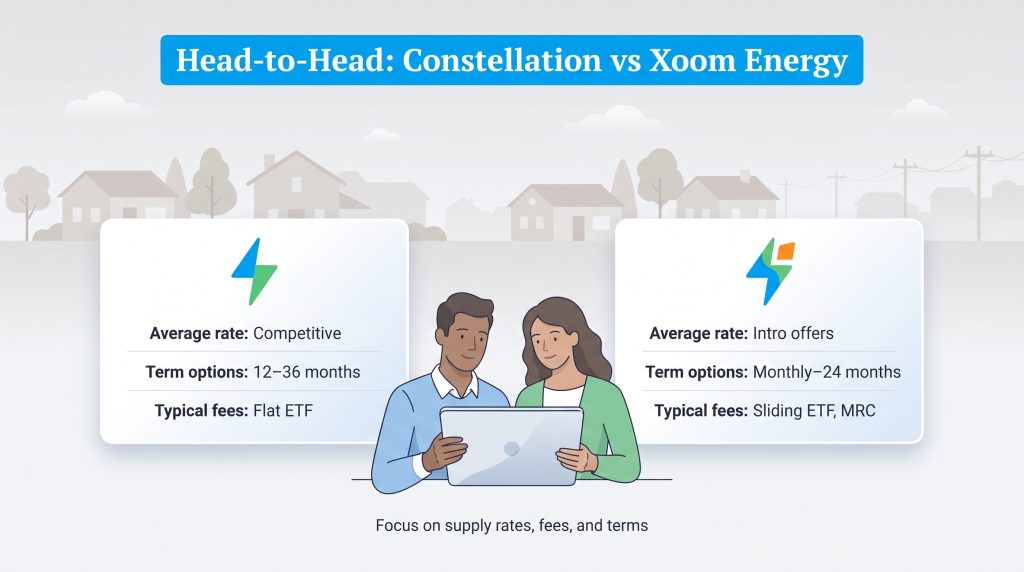
Both of these companies operate as major competitors across deregulated utility markets in states like Georgia, Texas, Ohio, and Maryland. When you compare Constellation and Xoom Energy rates, the primary distinction lies in contract flexibility versus long-term predictability. If you are specifically researching Xoom vs Constellation gas plans, comparing their baseline structures helps reveal exactly where your money goes every month. To give you a definitive picture of how these two suppliers match up, we broke down their most prominent features side by side.
| Feature | Constellation | Xoom Energy |
|---|---|---|
| Average Rate | Competitive market average | Low introductory rates |
| Term Length Options | 12, 24, or 36 months | Month-to-month, 12, or 24 months |
| Monthly Recurring Charge (MRC) | $0 in most markets | $0 – $9.95 depending on plan |
| Early Termination Fee (ETF) | Flat $150 fee | $50 – $200 scaling fee |
| Digital Experience | Streamlined portal & highly rated app | Basic portal, functional auto-pay |
| Base Utility Pass-Through Fees | Varies by utility (passed through without markup) | Varies by utility (passed through without markup) |
| BBB Rating | A+ | A+ |
When evaluating these suppliers, remember that you are only shopping for your competitive supply rate. Your local utility company still charges mandatory delivery fees to maintain the physical infrastructure — like the pipes and power lines — regardless of whether you choose Constellation or Xoom Energy. Because of this, assessing the supply rate alongside monthly recurring charges and term lengths gives you the most accurate cost projection for your upcoming bills.
Always have your zip code and a few past utility bills handy when comparing live rates, as this allows you to accurately match your historical usage with the correct pricing tier.
Constellation Energy Plan Structures

Constellation has built a strong industry reputation as a highly stable, well-established energy supplier. If you value peace of mind and hate dealing with unexpected spikes in your utility bills, their energy plans cater perfectly to your household. The company focuses almost exclusively on fixed-rate contracts spanning 12, 24, or even 36 months, effectively shielding you from volatile wholesale market swings.
When you start comparing natural gas providers, locking in a rate with a massive legacy provider often translates to seamless service transfers and highly dependable customer support. Constellation rarely offers flashy introductory gimmicks or complex tiered structures, preferring to attract customers who want a straightforward, set-it-and-forget-it approach to their home utilities.
Plan Term Lengths: Short-Term Vs Long-Term Value
Your living situation heavily dictates the term length you should choose. While a 12-month lock is suitable for those seeking a brief commitment, securing a 24-month or 36-month fixed term with Constellation yields specific long-term financial benefits:
- Inflation Protection: A multi-year fixed rate shields your household from sudden inflationary spikes in the global energy market.
- Absolute Budget Predictability: Knowing your exact price per therm or kWh for three full years makes managing your monthly expenses significantly easier.
- Zero Auto-Rollover Anxiety: Longer terms mean you do not have to shop around and actively compare natural gas providers every single year to avoid penalty rates.
| Plan Name | Rate | Plan Type | Base Charge | Cancellation Fee | |
|---|---|---|---|---|---|
| 12 Month Home Natural Gas Plan | $0.599 /THM | 12 Months fixed rate Rate | $6.95 MRC (Monthly Recurring Charge) is a fixed monthly fee charged by the energy provider, separate from the cost of the energy you use. | $150 | Check Availability |
| 24 Month Home Natural Gas Plan | $0.629 /THM | 24 Months fixed rate Rate | $7.95 MRC (Monthly Recurring Charge) is a fixed monthly fee charged by the energy provider, separate from the cost of the energy you use. | $150 | Check Availability |
| 36 Month Home Natural Gas Plan | $0.639 /THM | 36 Months fixed rate Rate | $7.95 MRC (Monthly Recurring Charge) is a fixed monthly fee charged by the energy provider, separate from the cost of the energy you use. | $150 | Check Availability |
*plans and pricing may vary by location
Xoom Energy Fixed And Variable Rate Options
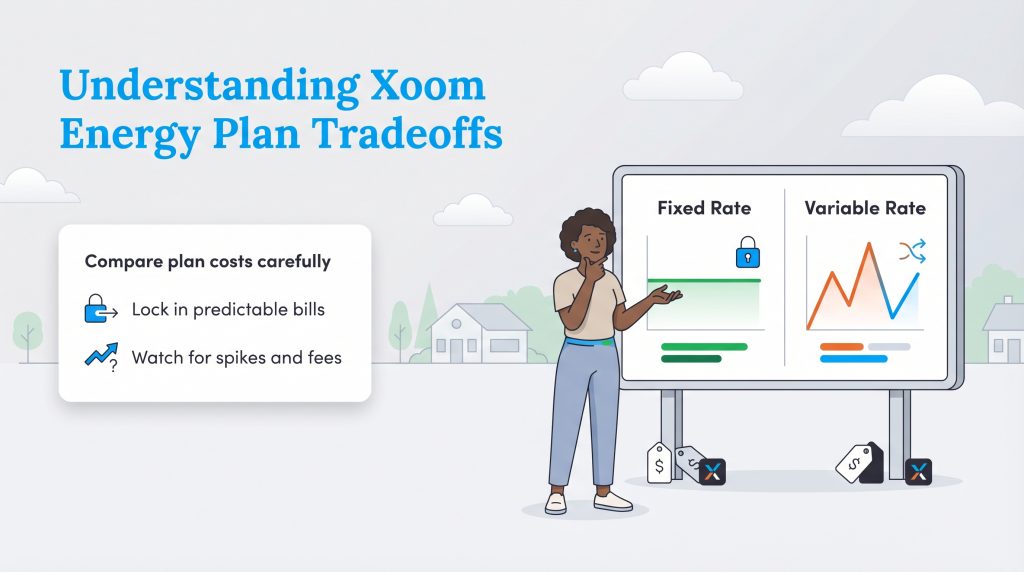
Xoom Energy takes a more aggressive approach to the market by focusing on highly competitive introductory pricing and flexible term lengths. Evaluating fixed vs variable energy plans is essential because variable options fluctuate directly with wholesale energy markets. While a variable rate provides the ultimate flexibility of zero cancellation fees, it leaves you entirely exposed to global supply chain shifts, summer heat domes, or extreme winter freezes.
If your primary goal is to aggressively save on your gas bill or reduce your monthly electric bills in the short term, a plan like the Xoom Energy SureLock 12 provides a solid fixed rate for a single year. However, we highly advise caution before defaulting into a month-to-month variable rate, as your energy bills can easily double when your contract expires and auto-rolls over during peak demand seasons.
| Plan Name | Rate | Plan Type | Base Charge | Cancellation Fee | |
|---|---|---|---|---|---|
| SureLock 12 | $0.659 /THM | 12 Months fixed rate Rate | $5.85 MRC (Monthly Recurring Charge) is a fixed monthly fee charged by the energy provider, separate from the cost of the energy you use. | $100.00 | Check Availability |
| SureLock 24 | $0.689 /THM | 24 Months fixed rate Rate | $5.85 MRC (Monthly Recurring Charge) is a fixed monthly fee charged by the energy provider, separate from the cost of the energy you use. | $150.00 | Check Availability |
*plans and pricing may vary by location
Locking in a fixed rate during the mild spring or fall shoulder seasons often yields the lowest possible price per therm or kWh, securing you a cheaper baseline before extreme weather hits.
Hidden Fees: Administrative Charges And Early Termination
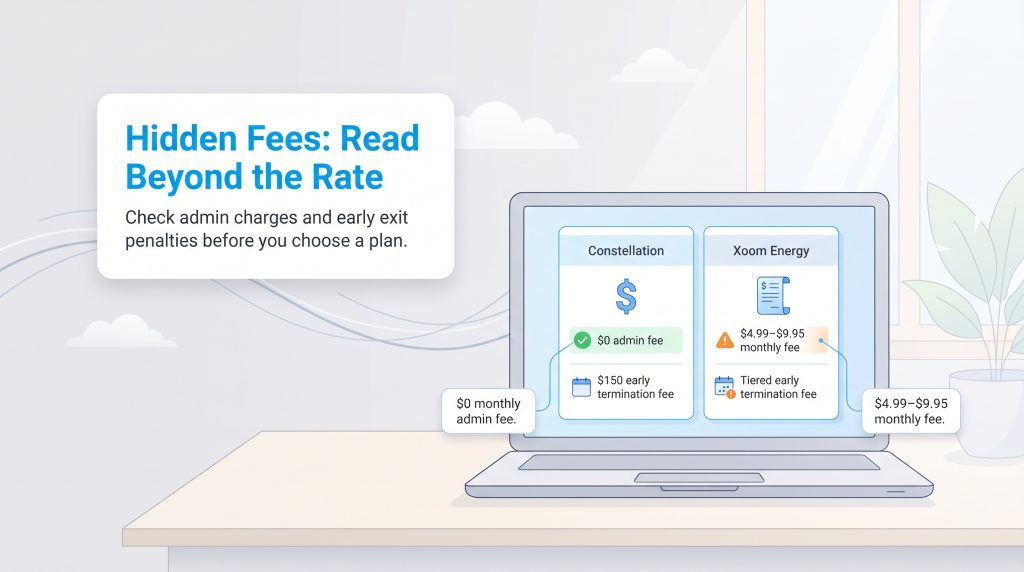
You must always read the fine print to uncover monthly base fees or early termination penalties before officially enrolling in any energy plan. An offer boasting an incredibly low cents-per-therm rate might actually cost you significantly more overall if it carries a high recurring base charge. This is especially true for smaller apartments or energy-efficient homes that use very little power each month.
When comparing the two companies, you will quickly notice drastically different cancellation structures. Breaking a fixed-rate contract prematurely triggers a penalty for both providers, but the severity differs:
- Constellation early termination fee: You will generally face a flat $150 penalty for breaking a fixed-rate contract early, regardless of how many months remain on your agreement.
- Xoom energy cancellation policy: This provider utilizes a scaling penalty structure. Depending on your market, a Xoom early termination fee usually costs $50 for a 12-month contract, but it jumps to a steeper $200 if you decide to break a 24-month agreement.
Additionally, you must scrutinize the recurring fees applied by both providers. You will rarely find a Constellation monthly administrative charge, as they feature a $0 MRC in the vast majority of their service areas, making their pricing highly straightforward. Xoom Energy, however, sometimes attaches a Xoom energy monthly recurring charge ranging from $4.99 to $9.95 on select plans. If your household only uses 20 therms of gas in the spring, that $9.95 base charge drastically inflates your actual price per unit.
Calculating Your True Monthly Energy Cost
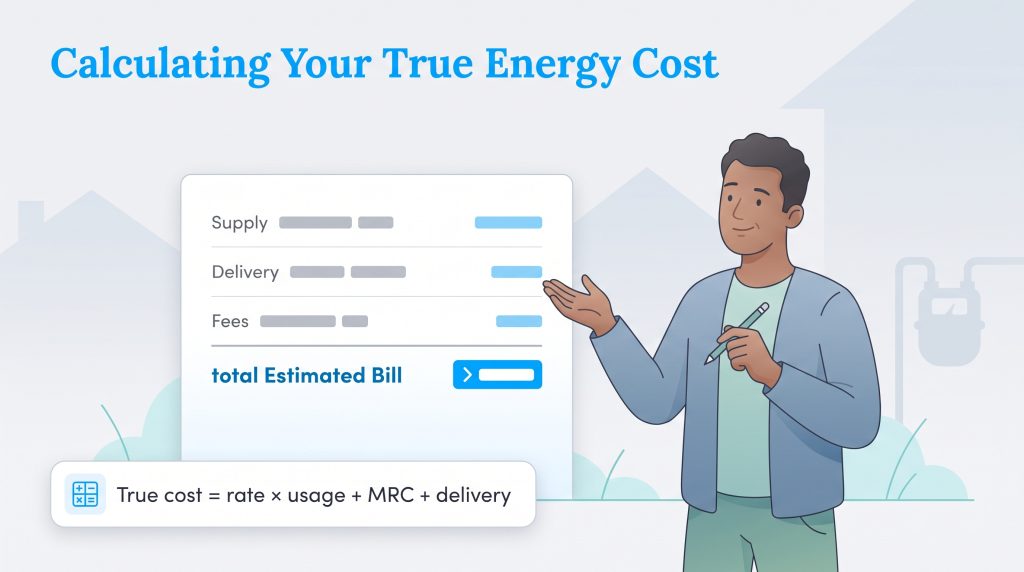
Marketed cents-per-therm or kWh rates rarely tell the entire story. To accurately forecast your upcoming bills, you need to calculate your true monthly energy cost by combining your supply rate, mandatory delivery charges, and any base fees. By applying a simple formula and understanding your natural gas bill, you can strip away the marketing fluff and compare Constellation and Xoom Energy rates based on hard math.
The True Cost Formula:
(Per-Unit Supply Rate × Historical Usage) + Monthly Recurring Charge (MRC) + Base Utility Pass-Through Fees = Total Estimated Bill
Local utility pass-through charges are non-negotiable fees mandated by your region’s physical infrastructure owner to cover pipe maintenance and meter reading. The Monthly Recurring Charge (MRC) is the administrative fee your chosen supplier tacks on. Finally, the per-unit rate is the actual cost of the energy you consume. Let’s look at a mathematical example for a home using 50 therms of natural gas in a single month.
- Constellation Example: (50 therms × $0.60 per therm) + $0 MRC + $35 utility pass-through = $65.00 Total Bill
- Xoom Energy Example: (50 therms × $0.55 per therm) + $9.95 MRC + $35 utility pass-through = $72.45 Total Bill
Even though Xoom Energy offered a cheaper advertised per-therm rate in this scenario, Constellation ultimately yielded the lower total bill due to their $0 administrative charge.
Green And Renewable Energy Options
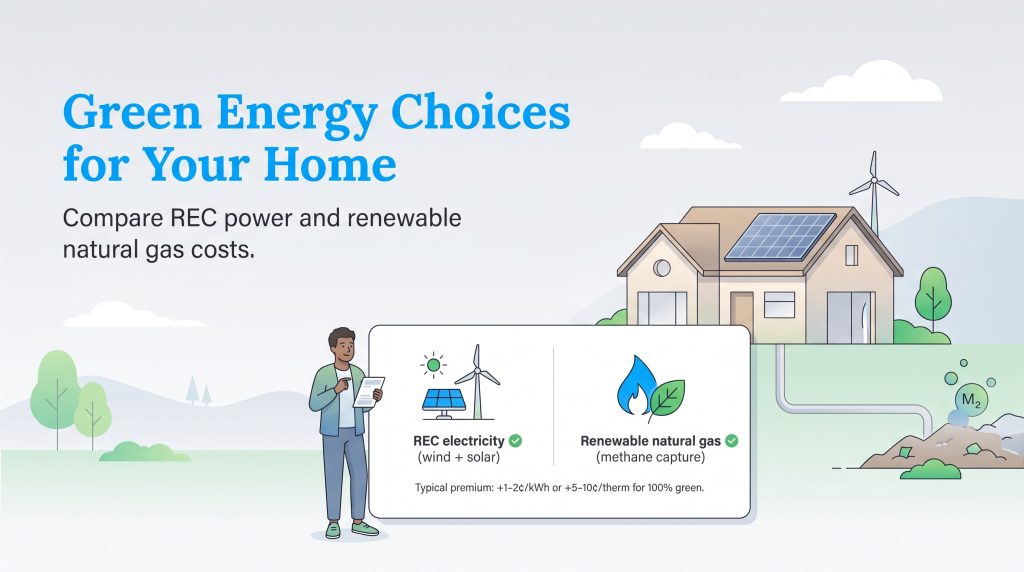
For families prioritizing sustainability, selecting an environmentally mindful choice for your home does not have to be overly complicated. Both Constellation and Xoom Energy offer actionable pathways to reduce your carbon footprint, though they execute their green initiatives slightly differently.
Constellation provides several REC-backed green energy plans sourced from wind and solar generation across the country. Renewable Energy Certificates (RECs) ensure that for every unit of energy you use, an equal amount of renewable energy is generated and placed onto the grid. These initiatives align strongly with national standards like the EPA Green Power Partnership. On the other hand, Xoom Energy counters with their EcoLock electricity plans and renewable natural gas (RNG) initiatives. RNG is particularly innovative because it captures naturally occurring methane from landfills and agricultural sites, repurposing it into usable energy for your home.
Opting for a green plan usually carries a slight premium over standard fossil fuel offerings. You can generally expect to pay an extra one to two cents per kilowatt-hour (kWh) or an additional five to 10 cents per therm for a 100% renewable option from either provider. Assessing whether this small premium fits your household budget is a crucial step in supporting a more sustainable, resilient power grid without sacrificing daily reliability.
Customer Service, BBB Ratings, And Digital Experience
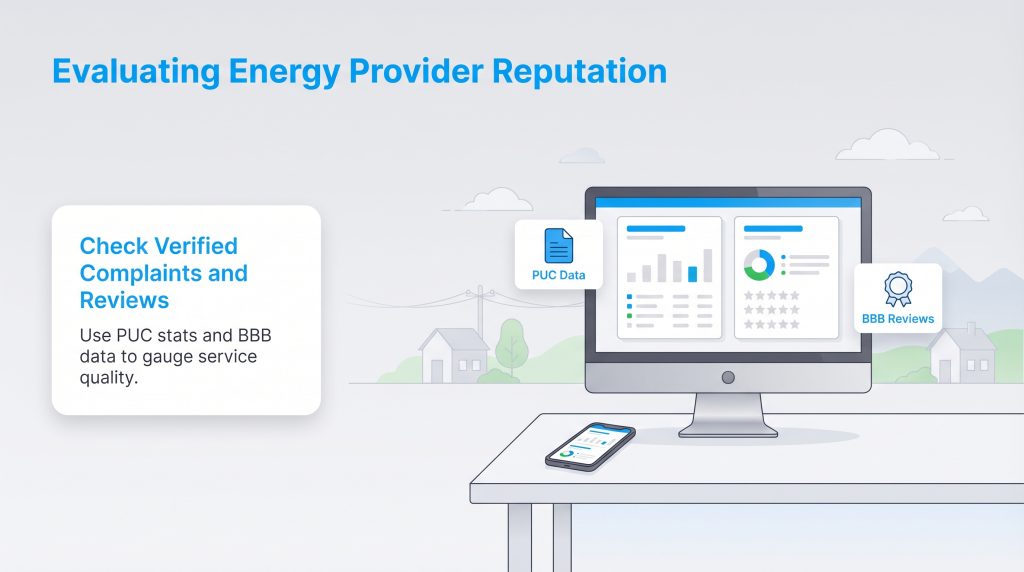
Your relationship with an energy supplier extends far beyond the initial rate you secure. Quality customer service becomes incredibly important when you deal with billing disputes, unexplainable usage spikes, or complex plan renewals. Rather than relying purely on anecdotal experiences, we recommend checking your state’s Public Utility Commission (PUC) complaint statistics for verifiable data. Both Constellation and Xoom maintain strong A+ BBB ratings, but verified Constellation energy reviews and Xoom feedback highlight distinct customer experiences.
When assessing their online platforms, Constellation’s digital experience features a highly intuitive web portal and a streamlined mobile app that makes setting up auto-pay or tracking daily usage incredibly easy. In contrast, Xoom Energy’s web portal is highly functional for standard auto-pay management, but some users report that the interface feels slightly dated during the initial setup process.
We reviewed the feedback for both suppliers, extracting the most common themes reported by active customers. When evaluating the two providers, four key takeaways emerge:
- Billing Transparency: Customers consistently praise Constellation for straightforward, predictable billing with no hidden surprises month to month.
- Introductory Pricing: Xoom Energy receives high marks from savvy consumers who actively monitor their accounts to capitalize on exceptionally low promotional rates.
- Strict Contract Enforcement: Negative reviews for Constellation frequently center on their rigid enforcement of the $150 early termination fee when users try to switch providers early.
- Auto-Rollover Spikes: Xoom Energy users often express frustration when their fixed-rate plans expire and automatically convert into much more expensive variable month-to-month rates.
Comparing Natural Gas Rates In Your Area
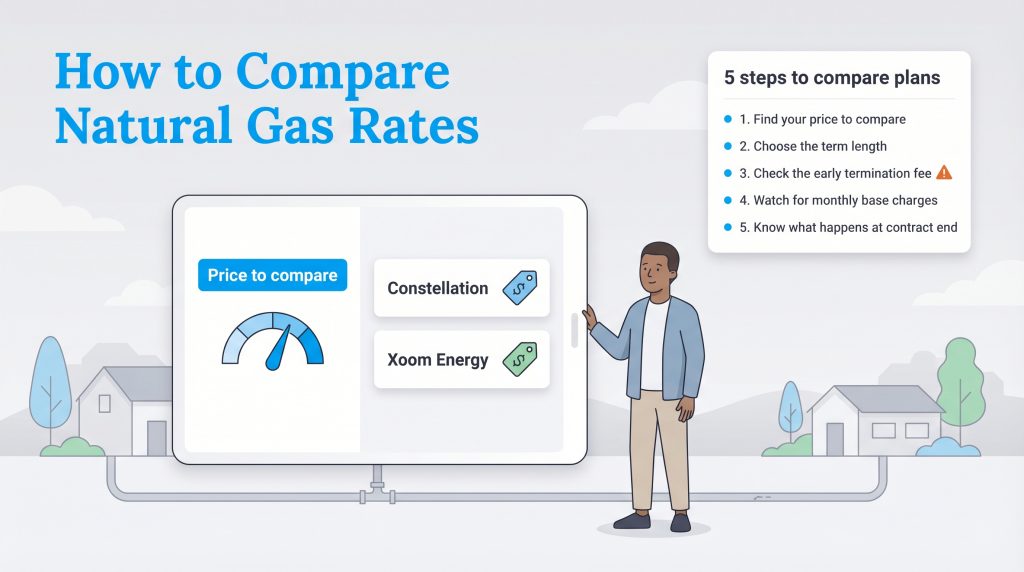
Actively shopping for utilities requires you to understand the “Price to Compare” provided by your local utility company. This baseline figure represents exactly what you currently pay for the supply portion of your bill, giving you an exact metric to beat when evaluating third-party suppliers.
Whether you are tracking historical natural gas price trends or actively setting up utilities in Atlanta, your strategy should remain consistent. You must evaluate third-party suppliers based on your household’s actual historical usage.
Before committing to a provider, follow this three-step actionable checklist to secure the most competitive rate:
- Calculate your true baseline cost: Check your local utility bill for the baseline supply rate. You must also account for base utility pass-through fees — such as Atlanta Gas Light (AGL) pass-through charges in Georgia or Transmission and Distribution Utility (TDU) fees in Texas — as these apply regardless of your chosen supplier.
- Evaluate the term length and hidden fees: Decide if a short 12-month deal or a stable 36-month lock best fits your living situation. Concurrently, scrutinize the plan for monthly recurring charges (MRC) and verify the exact early termination fee (ETF) so you understand the true cost of breaking the contract.
- Understand the end-of-term rules: Verify exactly what happens when your contract expires to avoid severe auto-rollover variable rate spikes.
If you aim to compare Georgia natural gas providers, you face a highly deregulated market where picking the cheapest rate heavily impacts your winter heating bills. Because residents must choose a third-party marketer, the battle for dominance is fiercely competitive. While Constellation frequently wins out for residents wanting a flat-rate 24-month lock, Xoom Energy provides aggressive 12-month deals for those willing to shop around again next year.
Making Your Final Energy Provider Decision

Choosing the right energy provider ultimately comes down to matching your personal risk tolerance and living situation with the correct corporate pricing model. We have broken down the definitive recommendations based on the two most common buyer personas.
Homeowners Seeking 3 Years Of Stability
Winner: Constellation
If you own your home and have no plans to relocate, Constellation stands out as the optimal choice. Their 24- and 36-month terms offer unmatched budget predictability. With zero monthly recurring charges in most markets and robust green energy options, they provide the long-term billing stability that established homeowners crave.
Renters Needing A Cheap 12-Month Intro Rate
Winner: Xoom Energy
Xoom Energy holds greater appeal if you need short-term flexibility, lower introductory pricing, or plan on moving at the end of your current lease. Savvy consumers who monitor their accounts can capitalize on these aggressive rates, provided they are willing to shop around again before the 12-month contract expires.
As you focus on building a sustainable living environment, carefully weigh the early termination fees against any monthly base charges. Once you enroll in your preferred plan, always set a calendar reminder 30 to 60 days before your contract ends. Doing this ensures you have ample time to compare current rates, switch providers if necessary, and avoid any unwanted auto-rollover surprises on your next statement.
Frequently Asked Questions About Constellation And Xoom Energy
Is Constellation or Xoom Energy cheaper?
What is the cancellation fee for Xoom Energy?
Does Constellation charge a monthly administrative fee?
How long does it take to switch from Xoom Energy to Constellation?
Can I transfer my Constellation or Xoom Energy plan to a new address if I move?
Do Constellation and Xoom Energy require a credit check?
Are there eco-friendly energy plans available from Xoom Energy?
What happens when my Xoom Energy contract expires?
Will switching to Xoom Energy or Constellation disrupt my service?
How do I avoid the early termination fee if I move?
About the Author

David has been an integral part of some of the biggest utility sites on the internet, including InMyArea.com, HighSpeedInternet.com, BroadbandNow.com, and U.S. News. He brings over 15 years of experience writing about, compiling and analyzing utility data.