
Master your next PCS or civilian transition with this strategic plan for transferring services and saving money.
Key Takeaways
- Secure utility deposit waivers by knowing exactly what to ask for and having the right documentation ready before you call.
- Coordinate your disconnect and reconnect dates precisely to avoid paying for services you aren’t using or arriving at a dark house.
- Leverage long-term veteran benefits and energy-efficient upgrades to keep your monthly bills low in your new home.
Moving is stressful enough without the added chaos of figuring out lights, water, and internet in a new city. Whether you are navigating a PCS or transitioning to civilian life, managing your utility setup requires military precision to avoid unnecessary fees and service gaps. We created this guide to bridge the gap between logistical headaches and financial smarts, ensuring you have a clear plan to get connected and save money from day one.
Pre-Move Intelligence: The 4-Week Countdown
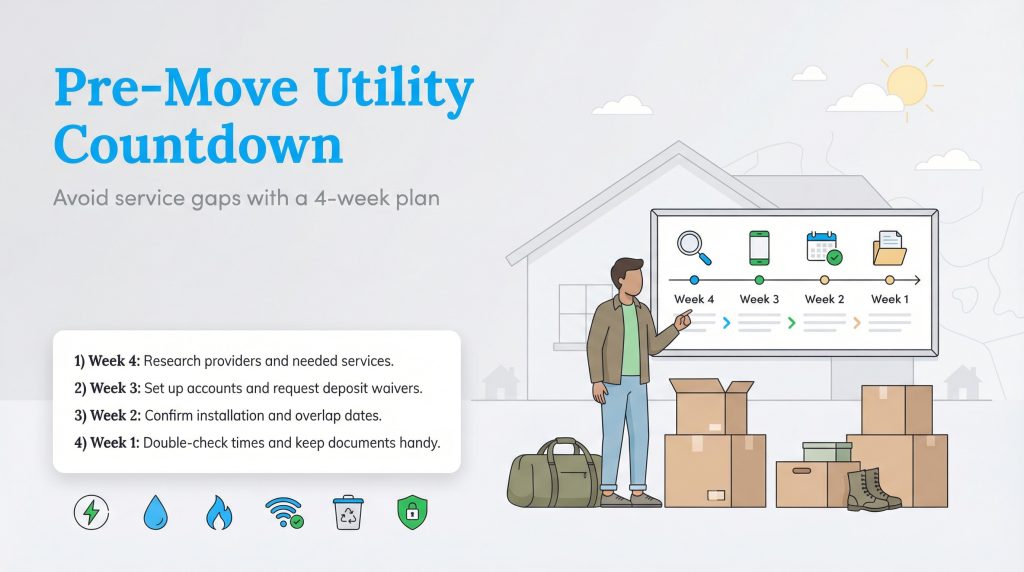
A successful military move utility checklist relies on timing. Waiting until the last minute often leads to rush fees or nights spent without power. You should start gathering intelligence and making calls about a month before your report date or lease start date:
- Week 4: Research providers and confirm which services you need.
- Week 3: Call to set up accounts and request deposit waivers.
- Week 2: Confirm connection appointments and overlap strategy.
- Week 1: Double-check dates and keep your documentation handy.
Compare Utility Providers for Your Home
Find which utilities service your address and connect your home to the best electricity, natural gas, water, internet, and trash companies in your area.
Inventory Your Services
Before you pack a single box, you need a clear picture of what services you currently have and what you will need at the new location. Create a bulleted list of essential utilities to address:
- Electric
- Natural Gas
- Water and Sewer
- Internet and Cable
- Waste and Recycling
- Smart Home Security
Research the New Terrain
Finding providers in a new area can be tricky, especially if you are moving to a region with different regulations. In many parts of the country, utility markets are regulated, meaning there is only one provider for each service. However, deregulated states like Texas, Pennsylvania, and Ohio allow you to shop for your energy supplier. This competition can help you lock in a lower rate per kilowatt-hour or find a plan with better terms. If you are moving to a deregulated area, take the time to compare electric rates or natural gas plans to ensure you aren’t overpaying.
Schedule the Switch
Once you know who to call, contact your providers 2–3 weeks in advance. The goal is to avoid a service gap. We recommend using the “overlap strategy” for your disconnect and reconnect dates. Schedule your utilities to remain on at your old home for 24 hours after you depart and to turn on at your new home 24 hours before you arrive. This buffer ensures you have power for final cleaning at the old place and a lit house waiting for you at the new one.
The Military Deposit Waiver Strategy
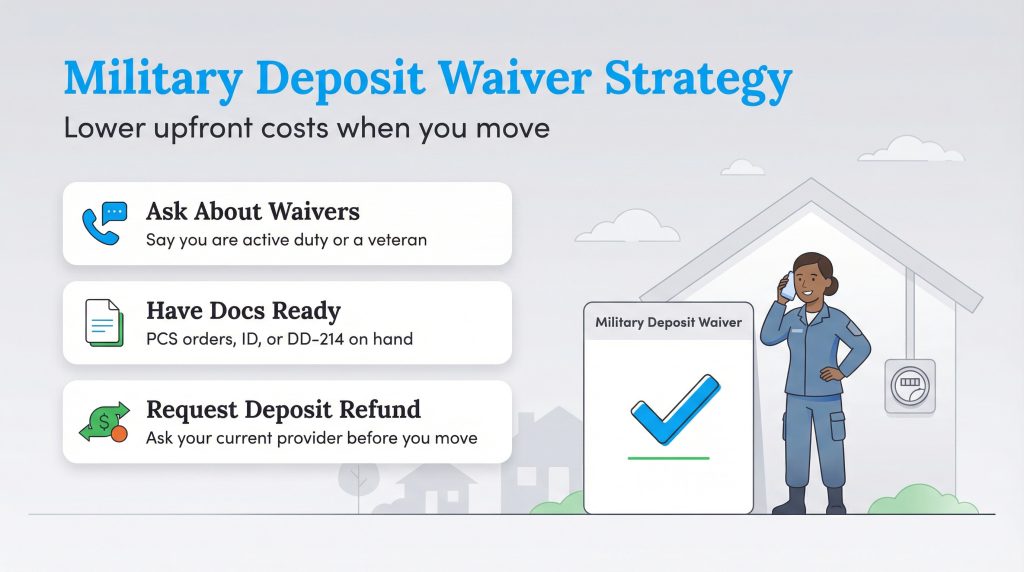
Security deposits for new utility accounts often range from around $100 to over $400, depending on your credit history and the provider’s policies. Fortunately, veteran utility deposit waivers and active duty utility deposit waivers are available from many providers, though companies rarely advertise them openly. You generally have to ask for them specifically.
Understanding the Benefit
Many utility companies recognize the frequent moves required by military service and will waive credit checks or upfront security deposits for active duty personnel and veterans. This policy recognizes that a lack of local credit history doesn’t necessarily mean you’re financially irresponsible. Securing this waiver keeps cash in your pocket during a time when moving expenses are already high.
The “Script” for Success
When you call to set up service, do not wait for the representative to offer a discount. Be proactive and polite. Use the following talking points to clearly state your request:
“I am an active duty service member/veteran moving under orders. Do you offer a waiver for the security deposit or credit check for military personnel?”
Required Documentation
If the provider agrees to the waiver, they will likely need proof of your status. Have these digital files ready to email or upload immediately to avoid delays:
- Copy of your PCS Orders
- Military ID (front and back)
- A letter from your commanding officer (if applicable)
- DD-214 (for veterans)
Refunding Existing Deposits
Don’t forget about the money you have already paid. If you paid a deposit at your current residence, ask your current provider for a refund of that initial deposit before you close the account. While some companies apply it to your final bill automatically, others might mail a check to your forwarding address, so ensure your new address is on file.
Executing the Move: Arrival Day Tactics
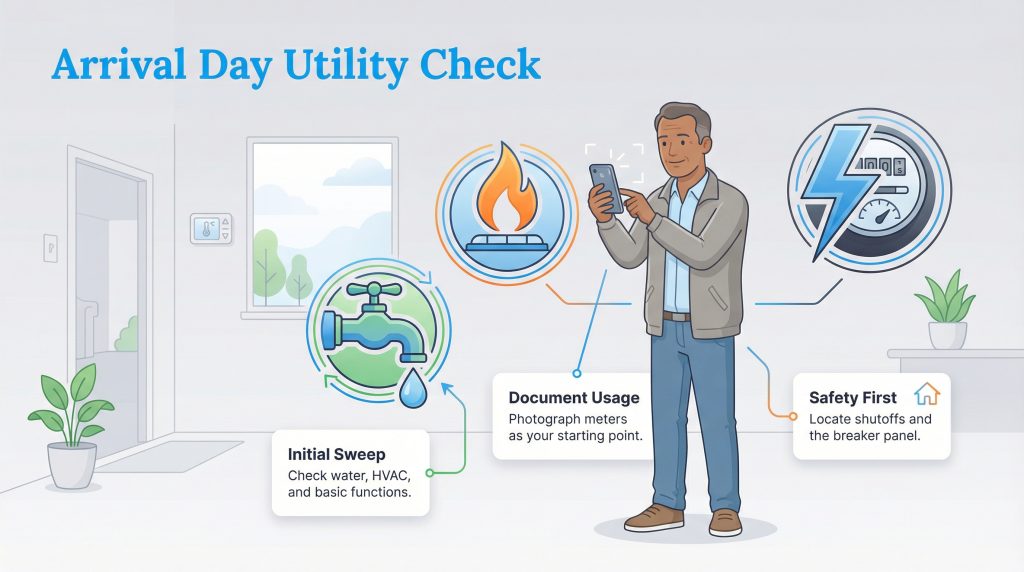
Setting up utilities in a new home as a veteran involves more than just flipping a switch. On moving day, you need to verify that everything is working safely and correctly. These tactics help you catch issues early.
The Initial Sweep
As soon as you unlock the door, perform a utility sweep. Check every faucet for water leaks and flush toilets to ensure proper pressure. Turn on the thermostat to verify the HVAC system kicks on. Locate your internet modem connection point so you are ready when the technician arrives or when you self-install your equipment.
Document Everything
Take clear photos of the gas, water, and electric meters immediately upon arrival. These photos serve as proof of the exact usage reading when you took possession of the property. If the utility company accidentally bills you for the previous tenant’s usage, these time-stamped photos will be your best defense to get the charges removed.
Safety First
Familiarize yourself with the critical infrastructure of your new home. Locate the main water shut-off valve so you can stop a leak instantly if a pipe bursts. Find the circuit breaker panel and ensure the labels are accurate. Knowing where these are located before an emergency happens is a key part of home readiness.
Long-Term Strategy: Efficiency and Assistance
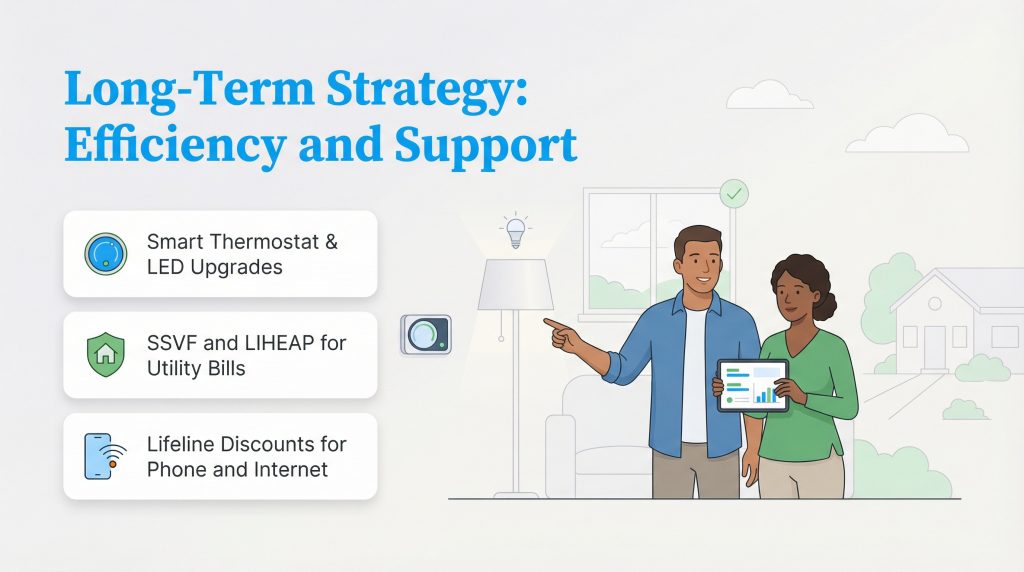
Once you are settled, shift your focus to long-term savings. Utilizing VA utility assistance programs and efficiency upgrades can significantly lower your monthly overhead. It is about making your home as resilient and efficient as possible.
Modernizing for Efficiency
Veterans can use smart home technology to reduce waste and lower bills. Installing a smart thermostat allows you to program heating and cooling schedules that match your lifestyle, ensuring you aren’t cooling an empty house. Swapping out old bulbs for LED lighting is a simple, low-cost upgrade that reduces electricity demand. Some utilities even offer low-cost or free home energy audits that identify air leaks, insulation issues, and other energy drains. Think of this as mission readiness for your home. An efficient home saves resources and money.
Assistance Programs
If you face financial hardship during or after your transition, there are safety nets available designed to support veterans.
- SSVF (Supportive Services for Veteran Families): This program is designed to promote housing stability. If you are at risk of homelessness due to unpaid bills, SSVF may be able to assist with emergency utility payments.
- LIHEAP (Low Income Home Energy Assistance Program): This federal program helps low-income households with energy costs. Eligibility often depends on income and household size.
Lifeline Program
Communication is vital, and costs for phone and internet can add up. The FCC Lifeline program provides a monthly discount on phone or internet services for qualifying low-income consumers, including veterans who receive a veteran’s pension or survivor benefit.
Mission Complete: Enjoying Your New Home Base
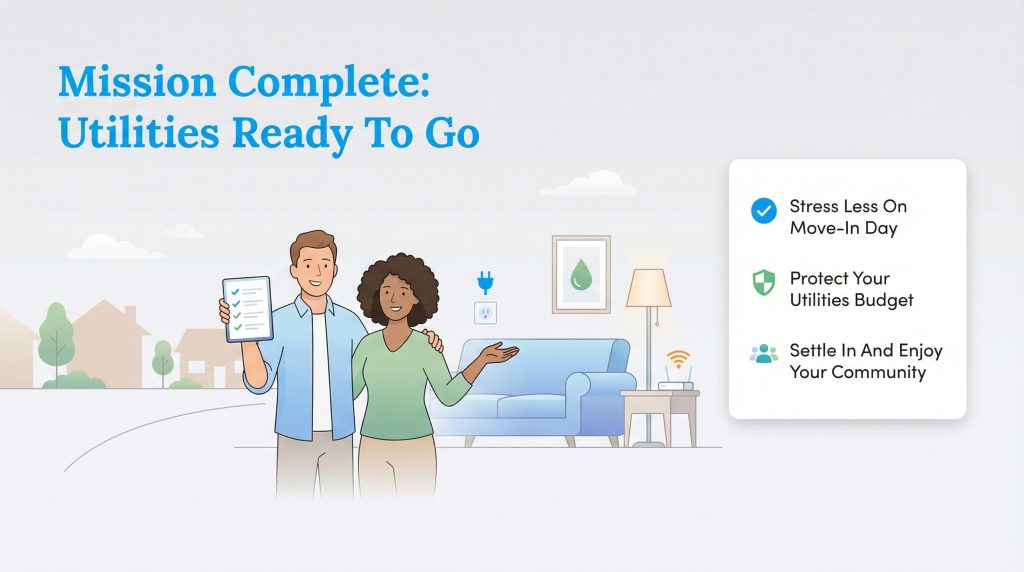
Relocating is never easy, but having a solid plan for your utilities removes a significant layer of stress from the process. By securing deposit waivers, documenting your move-in condition, and taking advantage of assistance programs, you protect your budget and ensure your new home is comfortable from the moment you arrive. Take the time to set these services up correctly now so you can focus on settling in and enjoying your new community.
FAQs About Veterans Utility Setup
Do veterans get discounts on electricity bills?
How do I transfer my utilities when I PCS?
Can the VA help me pay my utility bills?
What documents do I need for a military utility waiver?
Is there internet assistance for veterans?
About the Author

David has been an integral part of some of the biggest utility sites on the internet, including InMyArea.com, HighSpeedInternet.com, BroadbandNow.com, and U.S. News. He brings over 15 years of experience writing about, compiling and analyzing utility data.