

Setting up your utilities in Iowa doesn’t have to be stressful when you have the right checklist
Key Takeaways
- Finding your Iowa energy providers early ensures your lights and heat are on before moving day.
- Understanding the average utility bill in Iowa helps you properly budget for seasonal changes and extreme winters.
- Installing renewable energy and smart home devices can help reduce energy waste and lower your long-term monthly expenses.
Welcome to the Hawkeye State! Moving to Iowa requires managing a lot of moving parts, but getting your household up and running doesn’t have to be stressful. By taking a proactive approach, you can efficiently establish essential services and create an eco-friendly living space right from the start. We want to make sure your transition is as smooth as possible, so we put together a practical guide to help you manage your utility checklist, navigate local providers, and make smart energy choices for your new home.
Moving to Iowa Utility Checklist by Timeline
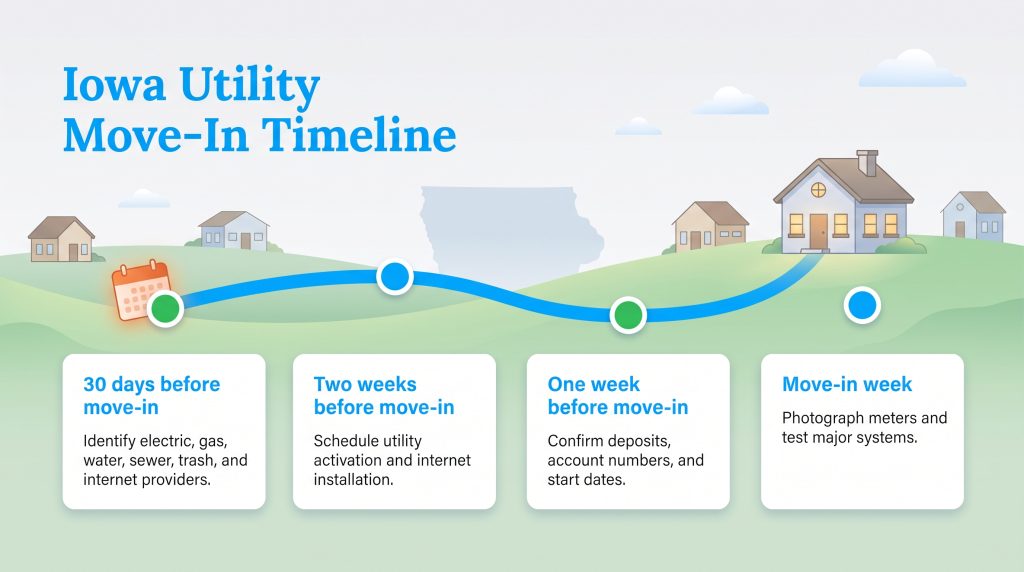
Setting up your home services is much easier when you follow a structured schedule. Using a timeline ensures you give local municipalities and rural cooperatives enough notice to activate your accounts before you arrive.
| When to Do It | Utility Task | Why It Matters |
|---|---|---|
| 30 days before move-in | Identify electric, gas, water, sewer, trash, and internet providers. | Some rural or municipal services may need extra setup time. |
| Two weeks before move-in | Schedule utility activation and internet installation. | Installation appointments can fill up quickly. |
| One week before move-in | Confirm deposits, account numbers, and start dates. | This prevents billing mix-ups and service gaps. |
| Move-in week | Photograph meters and test major systems. | This gives you a record if billing or maintenance questions come up. |
How to Find Your Iowa Electric and Gas Providers
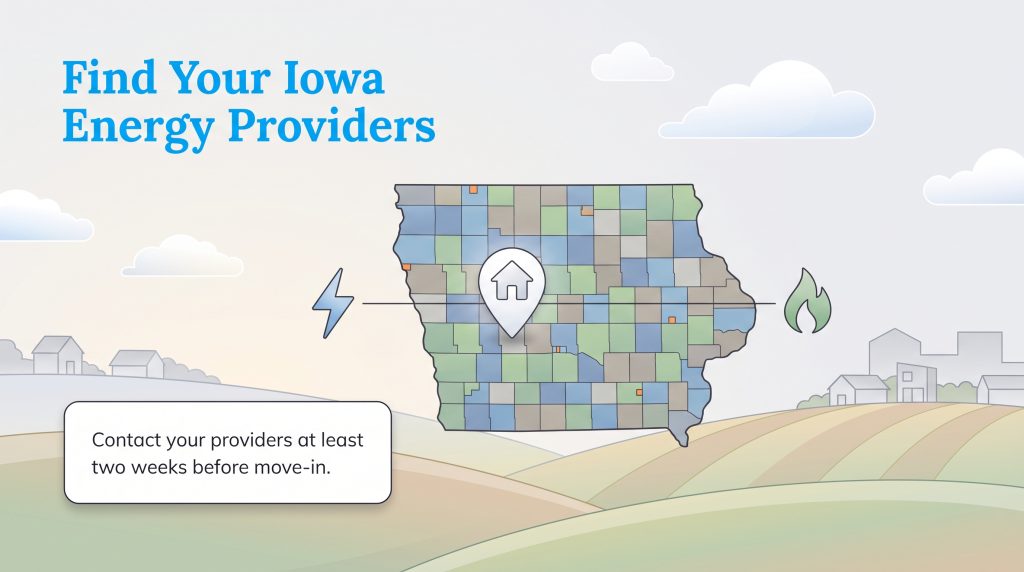
Depending on your exact address, your electricity may come from an investor-owned utility, municipal utility, or electric cooperative. Natural gas service is usually provided by a local gas utility, while some rural homes use propane instead. Navigating this network is the first hurdle in setting up utilities in Iowa, as coverage maps often look like a patchwork quilt across the state. Because Iowa does not have broad retail electric choice, you will typically use the utility assigned to your service territory rather than shopping among multiple suppliers.
Pro Tip
Contact your utility providers at least two weeks before your move-in date so you aren’t left in the dark on your first night in your new home.
Taking the time to pinpoint your exact Iowa energy providers right away prevents billing mix-ups and last-minute service delays. Start by checking official utility service territory maps, then confirm service directly with the provider for your exact address. You can easily identify which companies have service territories over your specific county or municipality by checking the Iowa Utilities Commission utility service maps. Once you know who holds the keys to your power grid, you can push forward with confidence.
When you contact your new providers, ask these essential questions to get your services flowing smoothly:
- Is there a deposit, and can it be waived with a letter of good credit?
- Are there connection or transfer fees?
- Are budget billing programs or time-of-use rates available?
- Does the provider offer renewable energy plans or green pricing options?
- Does a technician need physical access to the meter for activation?
How to Budget for Iowa Utility Bills
The Midwest is famous for its wild weather swings, and your home’s energy usage will directly reflect those seasonal shifts. Factoring the average utility bill in Iowa into your monthly budget requires you to plan for intensely humid summers and freezing, blustery winters. Air conditioners run on overdrive during July heatwaves, while furnaces churn around the clock to combat January wind chills.
Getting a realistic picture of the cost of living in Iowa means understanding exactly how much energy your household consumes throughout the year. According to the U.S. Energy Information Administration’s Iowa profile, Iowa households often see higher winter energy use because many homes rely on natural gas or electricity for space heating. If you are moving from a temperate climate, that first winter heating bill can catch you off guard if you haven’t budgeted properly. Keep in mind that your actual costs will vary based on your home size, insulation quality, heating fuel type, and whether you live in a rural or urban location.
To avoid unexpected financial strain, we highly recommend calling your provider to ask if budget billing is available. Many providers offer these programs, which average out your yearly energy consumption and spread the costs evenly across 12 months, protecting your wallet from severe seasonal spikes.
Money Saver
Weatherstripping your doors and windows before the first winter freeze hits is one of the cheapest, most effective ways to trap heat and lower your monthly heating bill.
Water, Sewer, Trash, Wells, and Septic Service
Unlike electricity or internet services — which are frequently handled by private corporations — your Iowa water and sewer setup is typically managed directly by your local municipality. You won’t have to spend hours comparing rates or shopping around for a provider. Instead, you simply need to visit your local city government website or stop by the municipal clerk’s office to establish your new water account. This is also a great time to ask about municipal trash, recycling pickup, and stormwater fees.
Keep in mind that responsibilities differ greatly depending on your housing situation. Homeowners are required to place these municipal utilities directly in their name, often needing a deed or closing disclosure to prove ownership. Renters, however, should check their lease agreements carefully before reaching out to the city. Many property managers and landlords keep water and sewer accounts in their own names, rolling the estimated costs into your monthly rent or billing you for usage directly.
If you are moving to a rural property, ask whether the home uses a private well, septic system, propane tank, rural water district, or sanitary district. Those services may require inspections, transfer forms, or separate billing entirely from the local city government.
Internet Options in Iowa Cities and Rural Areas
Staying connected is a top priority, but the digital landscape here varies drastically depending on your zip code. When searching for the best internet providers in Iowa, residents moving to larger metropolitan areas like Des Moines, Iowa City, or Cedar Rapids will find highly competitive fiber optic networks offering blazing-fast gigabit speeds.
Conversely, rural movers might face a vastly different reality. If your new home sits outside the main urban clusters, you may need to rely on satellite providers, fixed wireless connections, or local broadband cooperatives. Before you sign a lease or close on a home, check internet availability by exact address using tools like the FCC National Broadband Map. A provider may advertise service in a ZIP code but not serve your specific road, building, or subdivision. Take the time to compare connection speeds and heavily scrutinize the fine print for restrictive data caps. We also suggest evaluating promotional rates to ensure your monthly payment won’t suddenly double after your first year of service.
Energy-Saving Upgrades for Iowa Homes
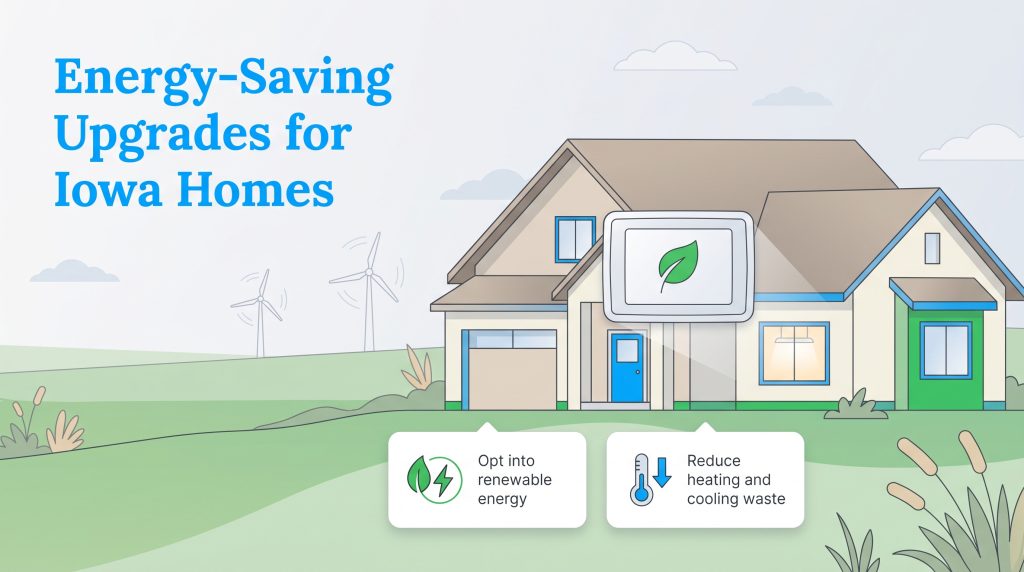
Transitioning into a new space is the perfect opportunity to rethink your environmental impact and implement long-term sustainability practices. Iowa is actually a national powerhouse when it comes to wind energy generation, producing a large portion of its electricity from towering turbines scattered across the state’s sprawling plains. Utilizing renewable energy in Iowa homes is surprisingly accessible, as many utility providers offer specific green energy purchasing options you can select when setting up your account.
Eco Edge
Opting into a renewable energy program through your local utility provider is a hassle-free, environmentally mindful choice that directly supports wind and solar generation in your new community.
Maximizing your home’s efficiency doesn’t stop at the power grid. If you are planning smart home upgrades in Iowa, start with devices that reduce heating and cooling waste. Outfitting your residence with intelligent devices allows you to monitor and control your resource consumption from the palm of your hand.
Installing smart thermostats, efficient lighting, and renewable energy options can help reduce energy waste and lower long-term utility costs. One of the most effective upgrades you can make is swapping out your old manual dial for an energy-saving smart thermostat. These devices learn your daily routines and automatically manage your HVAC usage to combat harsh midwestern weather without running up your electric bill. You can research certified, high-efficiency models through ENERGY STAR to find a device that delivers a solid return on investment over its lifespan.
To make your sustainability efforts even more actionable, we recommend sealing air leaks, checking your attic insulation, replacing old bulbs with LEDs, and using smart plugs for major electronics. If you are interested in residential solar, consider it only after reviewing your roof’s age, shade coverage, local utility net metering rules, and the expected payback period. Always remember to ask your utility company about available rebates before buying any new energy-efficient equipment.
What to Handle After Move-In
Once your utilities are humming along and your Wi-Fi is connected, there are a few administrative tasks left to secure your status as an official Iowa resident. First, prioritize updating your mailing address with the United States Postal Service so you do not miss any important localized bills.
Next, focus on updating your legal documentation. New residents are required to secure an Iowa driver’s license or state identification card and register their vehicles through the Iowa Department of Transportation. Completing these registrations within the state’s required timeframe prevents unnecessary fines and fully establishes your residency in your new community.
A Smoother, More Efficient Iowa Move
Although relocating involves mountains of cardboard boxes and endless logistical hurdles, tackling your utility checklist early sets you up for a much easier transition. When you confirm your providers early, plan for Iowa’s seasonal energy swings, and make a few smart efficiency upgrades, your new home will be easier to manage from day one. We are thrilled to welcome you to your new life in Iowa, and we hope your eco-conscious home provides a perfect sanctuary for all the exciting adventures ahead.
Frequently Asked Questions About Moving to Iowa
Here are quick answers to common questions new residents ask when planning their move to Iowa. Use these as a starting point, then confirm details with your city, utility provider, landlord, or state agency.
How Early Should I Set Up Utilities Before Moving to Iowa?
What Is the Most Important Item on a Moving to Iowa Checklist?
Can I Choose My Electric Provider in Iowa?
Do Rural Iowa Homes Use Natural Gas or Propane?
What Are the Major Moving to Iowa Pros and Cons?
Are There State Programs to Help With Winter Heating Bills in Iowa?
Is It Expensive to Set Up a Smart Home in Iowa?
About the Author

LaLeesha has a Masters degree in English and enjoys writing whenever she has the chance. She is passionate about gardening, reducing her carbon footprint, and protecting the environment. She also recently served as President of the Board for City Sprouts (a community garden).

David has been an integral part of some of the biggest utility sites on the internet, including InMyArea.com, HighSpeedInternet.com, BroadbandNow.com, and U.S. News. He brings over 15 years of experience writing about, compiling and analyzing utility data.