

Transferring Your Utilities to a New Indiana Home Is a Seamless Process When You Plan Ahead and Know Your Regional Providers
Key Takeaways
- Start your utility transfers at least three to five business days before moving to ensure your Indiana home has electricity, water, and internet on day one.
- Your utility providers depend heavily on your specific zip code, as Indiana features a mix of investor-owned utilities, rural cooperatives, and municipal systems.
- Opting for energy-efficient plans and eco-conscious alternatives can significantly reduce your monthly utility costs across the Hoosier State.
Moving to a new state brings plenty of excitement, but figuring out how to keep the lights on and the water flowing shouldn’t add to your stress. Whether you are buying a historic home in Indianapolis or renting an apartment in Bloomington, setting up utilities before moving to Indiana can make your first week in the new home much smoother. To get your essential accounts activated right away, follow this quick-start checklist: 1. Identify your location-bound providers based on your specific address, 2. Gather your required identity and residency documents, and 3. Schedule your service connection dates at least three to five days in advance. Navigating the Hoosier State’s unique mix of large investor-owned utilities, rural cooperatives, and localized municipal water systems can feel like a puzzle at first glance, but we designed this guide to help you quickly identify exactly who provides your essential services and establish your new accounts without a hitch.
Understanding the Average Utility Cost in Indiana
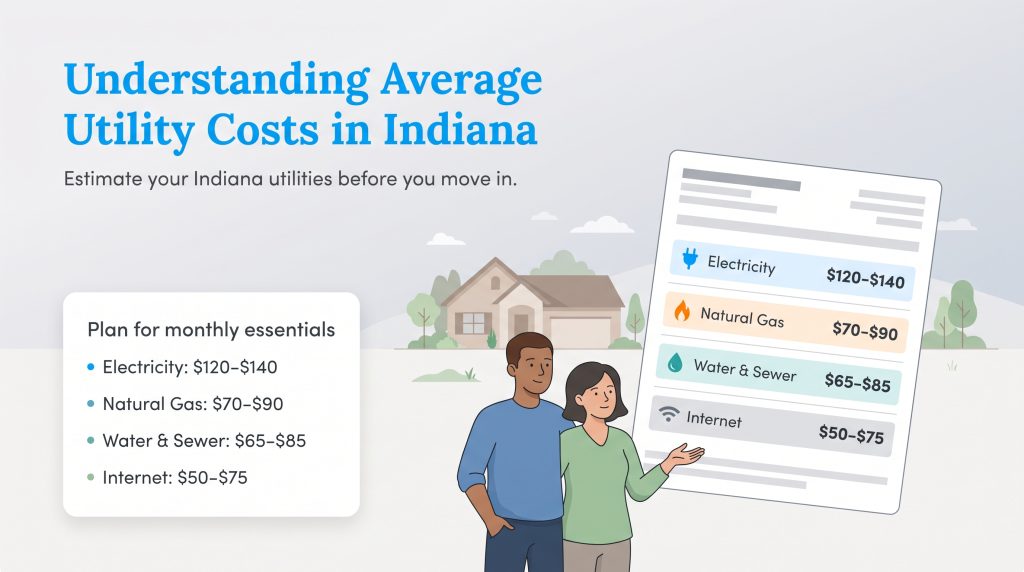
Establishing a solid household budget requires knowing what your average utility bills in Indiana will look like before you officially unpack your boxes. Indiana’s residential electricity rates generally hover near or slightly below the national average, but your exact monthly invoice depends heavily on personal usage, home efficiency, and seasonal heating or cooling needs. Reviewing these typical expenses ahead of time gives you a clear financial picture and prevents unwelcome surprises when that first round of bills arrives in your mailbox.
These are planning estimates for a typical single-family household and may vary by provider, home size, fuel type, and season.
| Utility Type | Planning Estimate | What Affects the Bill | Setup Tip |
|---|---|---|---|
| Electricity | $120 to $140 | HVAC efficiency, home size, summer AC usage | Opt into budget billing for predictable costs |
| Natural Gas | $70 to $90 | Winter heating demands, home insulation | Schedule activation before cold weather hits |
| Water & Sewer | $65 to $85 | Lawn watering, municipal base rates | Check for hidden plumbing leaks upon move-in |
| Internet | $50 to $75 | Fiber vs. cable, selected speed tiers | Provide your own router to avoid rental fees |
For the most authoritative and up-to-date regional energy data, you can check the U.S. Energy Information Administration (EIA) Indiana State Energy Profile. Regardless of your baseline rates, investing in energy-saving options like smart thermostats, weather stripping, and ENERGY STAR-rated appliances will keep your monthly usage well under control. A few simple adjustments can go a long way when you want to save on your electric bill over the entire year.
How to Set Up Utilities in Indiana
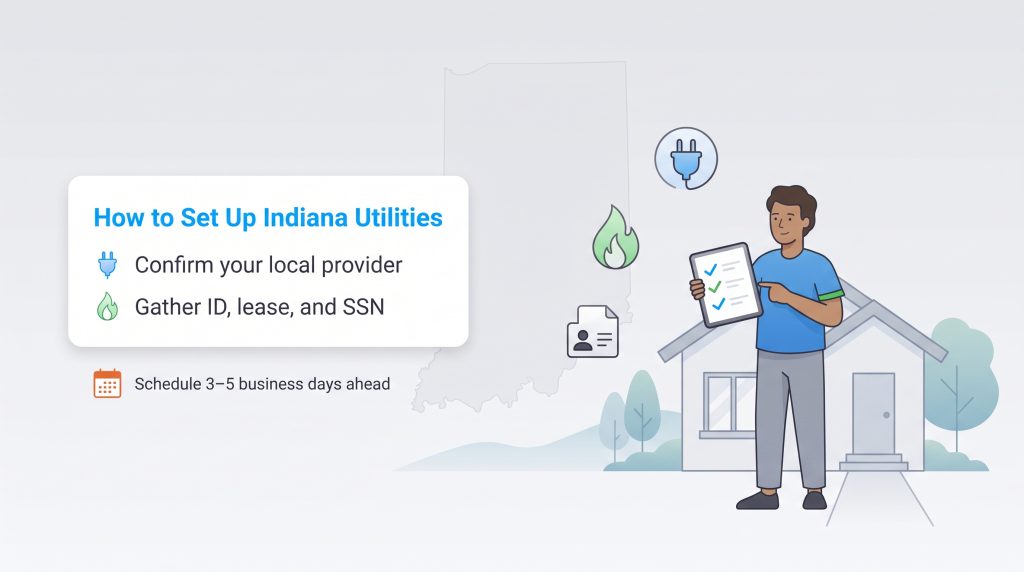
Learning how to set up utilities in Indiana starts with understanding the state’s regulated energy grid. Unlike deregulated states where you can shop around for the lowest kilowatt-hour rate, residential electricity in Indiana is strictly territory-bound. Your home is exclusively served by the single electric utility assigned to your local region, which could be a large investor-owned company, a small municipal utility, or a rural electric cooperative. Because you cannot choose your electric provider, setting up your power simply involves identifying the designated company for your exact zip code and opening an account in your name.
If you are trying to determine who handles your home’s natural gas supply or electricity, checking your lease or closing documents is the fastest method. You can also ask the seller, landlord, or real estate agent for a list of the current active providers. Once you pinpoint the right companies, creating your new accounts usually only takes a few minutes online or over the phone.
Required Documents for New Residents
Utility companies need to verify your identity and confirm you actually live at the service address before they flip the switch. Having your paperwork organized before you call saves significant time and prevents activation delays. Prepare to provide the following items when establishing your new utility accounts:
- The full, exact service address (including your apartment or unit number).
- A valid government-issued ID, such as a driver’s license or passport.
- Your Social Security number, which providers mandate to run a standard soft credit check.
- A finalized copy of your residential lease, property deed, or closing disclosure to prove you have a legal right to start service at the property.
📌 Quick Fact: Once your service is active, your first monthly invoice will serve as an official proof of residency utility bill in Indiana. You can use this document when updating your address or registering your vehicle at the Bureau of Motor Vehicles (BMV).
Lead Time and Scheduling Limits
Failing to schedule your connections early enough is one of the most common mistakes new residents make. When organizing a Duke Energy Indiana moving request or submitting an AES Indiana start service application, you must adhere to strict minimum lead times. Major utility companies require at least three to five business days to process your information, verify your identity, and dispatch a technician if a physical meter reading is necessary. Waiting until the Friday before you move practically guarantees you will spend your first weekend in the dark.
Major Indiana Utility Companies for New Residents
Narrowing down the primary Indiana utility companies for new residents is straightforward once you know which metropolitan area you are moving into. While rural areas frequently rely on local Rural Electric Membership Corporations (REMCs), the state’s largest cities are dominated by a handful of primary investor-owned utilities and municipal organizations. We compiled this quick-reference table outlining the default electric and natural gas providers for five of the most populated cities across the state.
| Indiana City | Default Electric Provider | Primary Natural Gas Provider |
|---|---|---|
| Indianapolis | AES Indiana | Citizens Energy Group |
| Fort Wayne | Indiana Michigan Power | NIPSCO |
| Evansville | CenterPoint Energy | CenterPoint Energy |
| South Bend | Indiana Michigan Power / NIPSCO | NIPSCO |
| Carmel | Duke Energy | CenterPoint Energy |
Natural Gas: Understanding the NIPSCO Choice Program
While electricity in Indiana remains fully regulated, certain residents enjoy a unique advantage when it comes to heating their homes. If you are moving to northern Indiana and fall within the Northern Indiana Public Service Company service territory, you can participate in the NIPSCO Choice program for natural gas. This partial deregulation framework means you have the power to shop around and select an alternative retail natural gas supplier for your home’s actual energy usage.
Under this program, you can lock in fixed rates to protect yourself against winter price spikes or choose a supplier that offsets carbon emissions for a more eco-conscious lifestyle. Even if you choose a retail supplier, NIPSCO still reliably delivers the gas to your home, maintains the physical pipelines, and sends you a single monthly bill. If you prefer to keep things simple or if you live outside of northern Indiana, your default local utility company will automatically handle both the supply and delivery of your natural gas without any extra effort on your part.
Setting Up Water, Sewer, and Trash Collection
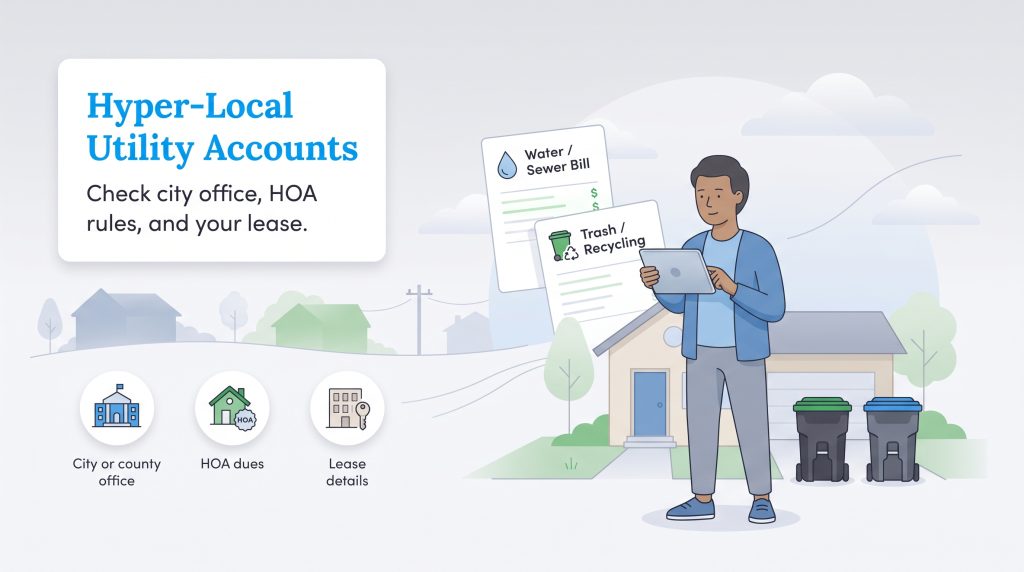
Unlike massive statewide electric grids, water and waste management operate almost exclusively at the hyper-local municipal level. When tackling your Indianapolis water and trash setup, for example, you will work directly with Citizens Energy Group for your water supply and the city’s Department of Public Works for trash hauling. If you are moving to a smaller town, you will generally need to contact the local city or county clerk’s office to establish these essential municipal accounts.
In most incorporated Indiana cities, your standard residential trash and recycling collection fee rolls directly into your municipal water and sewer bill for ultimate convenience. However, if you move into a neighborhood managed by a Homeowner’s Association (HOA), your monthly dues might already cover private, weekly trash hauling. Renters should always clarify with their landlord which municipal utilities stay in the property owner’s name, as water and sewer costs are frequently wrapped directly into standard lease agreements.
Indiana Utility Deposits and Connection Fees
Renters and new homeowners alike must account for upfront Indiana utility deposits when calculating their final moving budget. Regulated utility companies possess the right to require a security deposit before starting service to protect themselves against unpaid balances. When you apply for a new account, the provider will run a soft credit check using your Social Security number. If you have no established credit history, a poor payment record, or past-due balances with other utility companies, you will likely need to pay a deposit.
Standard residential deposits typically range from $50 to $150, though state regulations tightly cap these amounts based on the estimated monthly usage of the property to prevent unreasonable financial barriers. In addition to a deposit, many companies charge a small, non-refundable activation fee — usually between $10 and $30 — which simply appears on your first billing statement.
💸 Money-Saver: You can often get an upfront deposit entirely waived by providing a letter of creditworthiness from your previous utility company. This official letter simply needs to demonstrate that you made 12 consecutive months of on-time payments at your prior residence.
Connecting Internet Service in Indiana
Finding the best internet providers in Indiana largely depends on whether you land in a bustling urban hub or a quiet rural community. Cities like Carmel, Fort Wayne, and Indianapolis boast extensive fiber-optic networks from providers offering high-speed fiber options ideal for remote work and heavy streaming. Meanwhile, remote properties might rely on regional carriers, 5G home internet, or satellite connections to stay online. Comparing speeds and data caps across local companies guarantees you secure the right residential internet service for your household’s daily browsing habits.
🌱 Eco Edge: When setting up your home network, opt for energy-saving equipment. You can search for efficient routers and modems on the ENERGY STAR products list to support an environmentally mindful choice while reducing phantom power drain.
Preparing for Your Indiana Move-In Day
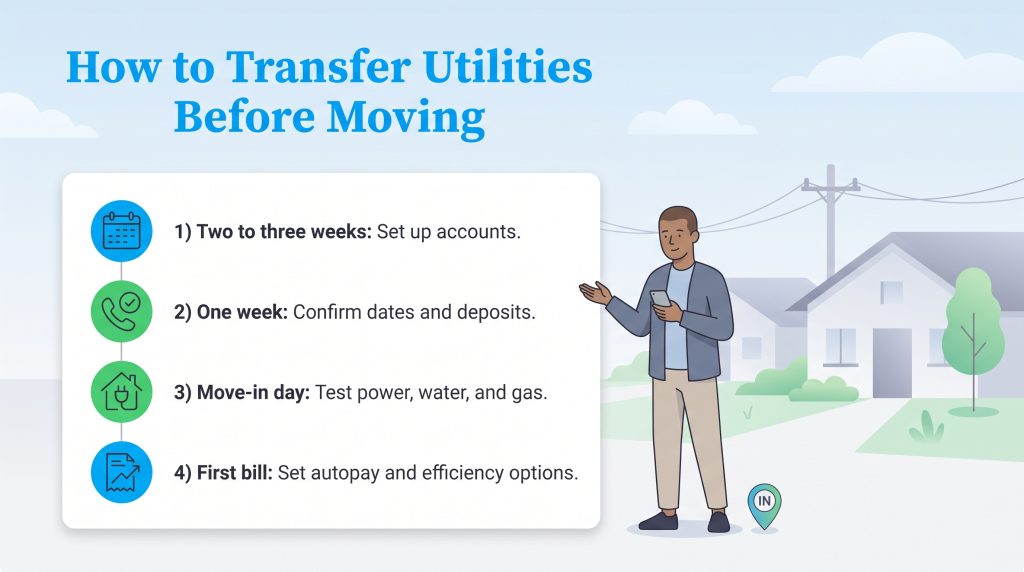
Learning how to successfully transfer utilities in Indiana feels significantly less daunting when you break the administrative process down into manageable steps. Packing boxes and coordinating moving trucks requires immense physical energy, so treating your service connections like an unyielding checklist prevents any crucial details from slipping through the cracks. Follow this reliable timeline sequence to ensure your new home remains fully functional the moment you turn the key:
- Two weeks before move: Research your required providers, gather your lease documents, and decide on an internet plan. Request a letter of creditworthiness from your previous utility company if you plan to waive any upcoming deposits.
- Three to five business days before move: Officially submit your activation requests for electricity, natural gas, and water. Confirm your exact start date with customer service and pay any mandatory activation fees.
- Move-in day: Test the main electrical breaker box, verify the water pressure in the sinks and showers, check that your gas heating appliances turn on safely, and locate your assigned municipal trash carts.
- First billing cycle: Log into your new online utility accounts to confirm your autopay settings, explore predictable budget billing options, and verify you are not being charged for services prior to your move-in date.
Energy-Saving Steps for Your First Month
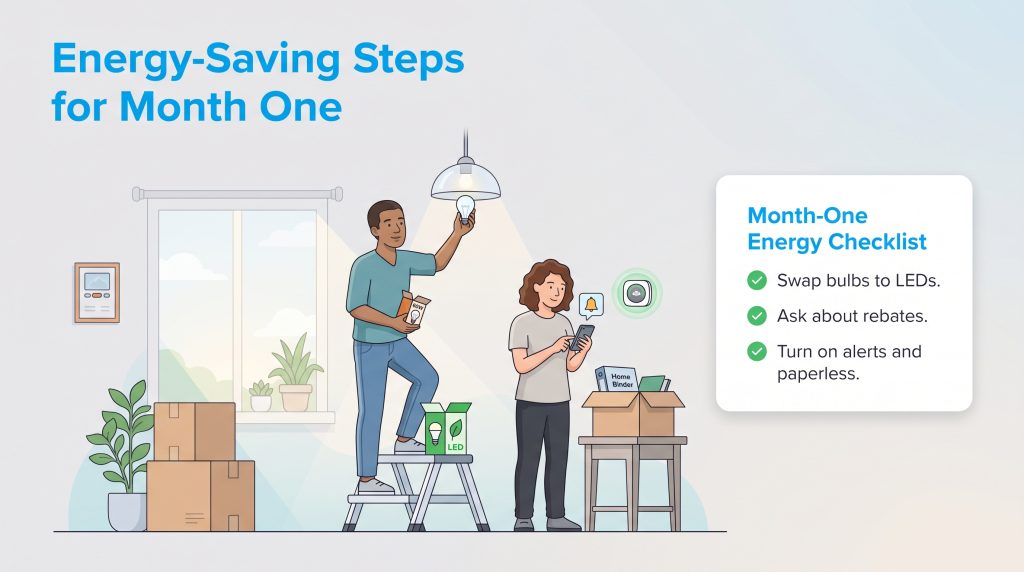
Making eco-conscious choices during your first month sets a positive tone for years of future savings. As you unpack your belongings, switch out older incandescent light bulbs for LED fixtures to immediately curb your electricity usage. Check with your assigned electric provider for utility rebates on weatherization materials, heat pump upgrades, or programmable smart thermostats. Requesting paperless billing and signing up for digital usage alerts ensures you stay completely aware of your daily consumption habits well before the first bill arrives.
Settling Into Your Hoosier Home With Confidence
Establishing your essential household services requires a bit of regional research and a few timely phone calls, but checking these tasks off your list early pays massive dividends on moving day. Knowing exactly who manages the power grid in your specific zip code and submitting your municipal water applications at least a few days ahead of time ensures you can comfortably enjoy your new residence the moment you walk through the door. Keep sustainability in mind as you set up your daily routines, confidently explore energy-saving options, and focus your remaining energy on turning your new Indiana property into a true home.
Frequently Asked Questions About Indiana Utilities
How far in advance should I set up utilities in Indiana?
Do I need a credit check to start utilities in Indiana?
Can I choose my own electric provider in Indiana?
What utilities should I set up first when moving to Indiana?
What documents do I need to start utility service in Indiana?
Who handles trash and recycling collection in Indiana?
Are there eco-conscious energy options available in Indiana?
About the Author

LaLeesha has a Masters degree in English and enjoys writing whenever she has the chance. She is passionate about gardening, reducing her carbon footprint, and protecting the environment. She also recently served as President of the Board for City Sprouts (a community garden).

David has been an integral part of some of the biggest utility sites on the internet, including InMyArea.com, HighSpeedInternet.com, BroadbandNow.com, and U.S. News. He brings over 15 years of experience writing about, compiling and analyzing utility data.