

Compare Speeds, Pricing, and Installation Setups to Find the Most Reliable Connection for Your Household
Key Takeaways
- Verizon often leads in 5G fixed wireless flexibility, while AT&T provides highly competitive fiber-optic pricing for ultra-fast, symmetric speeds.
- You can save money on your monthly utility costs by bundling either internet service with an existing cellular plan.
- Understanding the physical installation requirements of fiber versus 5G is crucial when moving into a new residence.

- 5 Gbps
- Fiber
- Unlimited
- $35.00/mo

- 5 Gbps
- Fiber
- Unlimited
- $30.00/mo
*Not all internet providers and speeds available in all areas.
Moving into a new residence requires locking down a fast, dependable internet connection. When comparing AT&T vs. Verizon home internet, both providers offer top-tier fiber optic and 5G fixed wireless technologies that keep you seamlessly connected. While both companies deliver highly robust performance for everything from 4K streaming to smart home automation, your specific local availability will ultimately dictate the winner for your household.
Quick Verdict: AT&T vs. Verizon
If you are juggling a chaotic moving checklist and need an immediate recommendation, we can help. Here is our bottom-line assessment of how these two telecom giants stack up in 2026:
- Best Overall Speed: AT&T Fiber. With widespread multi-gig plans reaching up to 5 Gbps, AT&T simply outpaces Verizon’s 1 Gig and 2 Gig offerings in raw bandwidth, making it the undisputed champion for massive households and heavy remote workers.
- Best Availability: Verizon 5G Home Internet. Verizon leverages a highly mature nationwide cellular network, ensuring excellent coverage even in areas where physical fiber-optic lines have not been installed yet.
- Best Value: Tie. Both providers offer incredibly competitive entry-level pricing around $50 to $55 per month with no hidden data caps or mandatory equipment fees, provided you sign up for autopay.
At a Glance: Head-to-Head Comparison
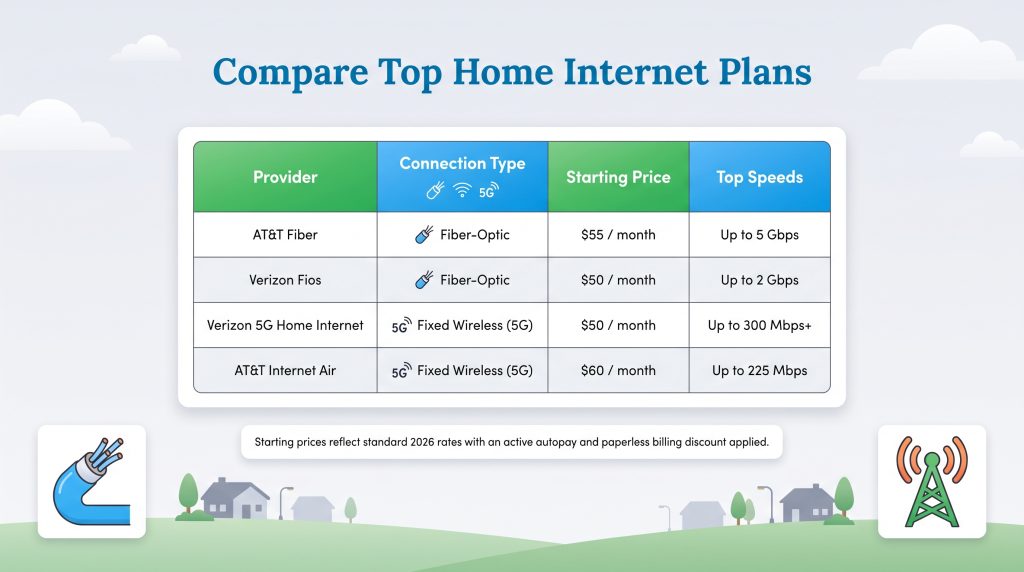
To help you narrow down the best choice for your exact needs, we compiled the essential metrics into a clear, head-to-head breakdown. This table covers the absolute best 5G home internet and fiber packages available today.
| Provider | Connection Type | Starting Price | Top Speeds |
|---|---|---|---|
| AT&T Fiber | Fiber-Optic | $55 / month | Up to 5 Gbps |
| Verizon Fios | Fiber-Optic | $50 / month | Up to 2 Gbps |
| Verizon 5G Home Internet | Fixed Wireless (5G) | $50 / month | Up to 300 Mbps+ |
| AT&T Internet Air | Fixed Wireless (5G) | $60 / month | Up to 225 Mbps |
AT&T Fiber vs. Verizon Fios: The Heavyweights
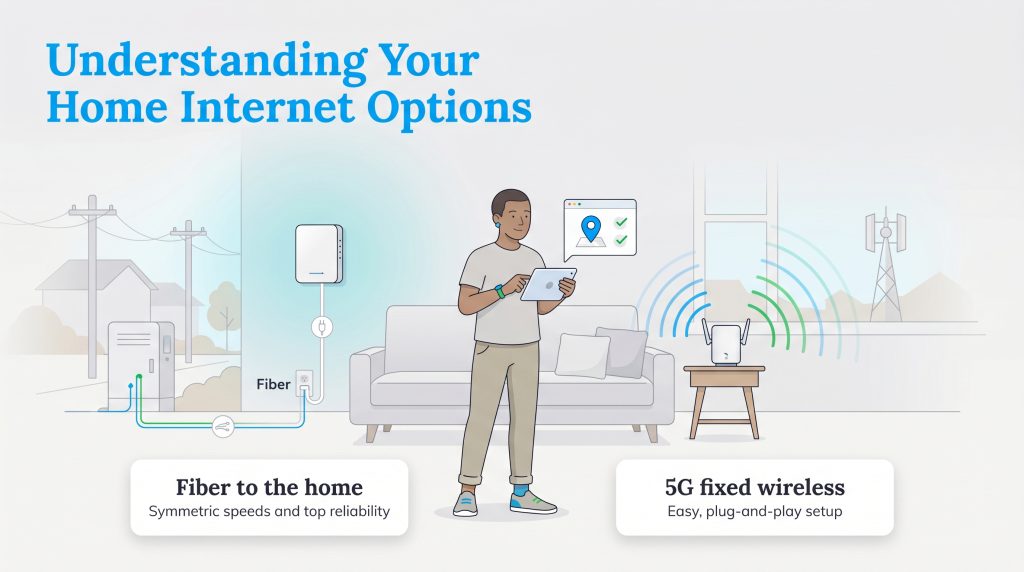
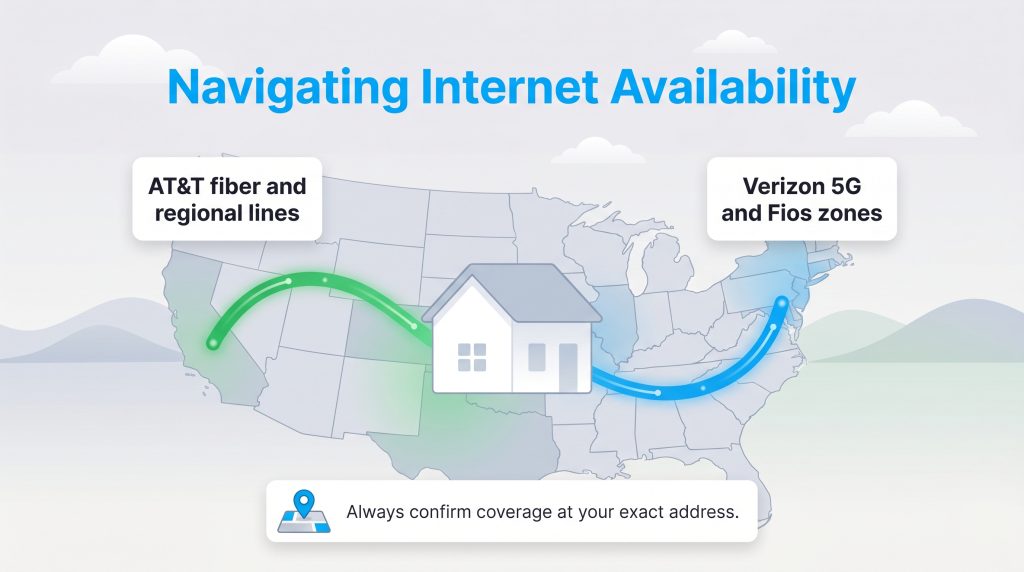
Before signing any contracts, you must figure out what kind of internet infrastructure actually reaches your specific street. Because underground utility maps vary drastically from one neighborhood to the next, your physical address almost entirely dictates what you can install. If you happen to move into a property with multiple hardwired choices, comparing home internet options becomes much easier. When you evaluate AT&T Fiber vs. Verizon Fios, you are looking at the absolute gold standard of residential web connectivity.
Both providers utilize dedicated glass lines run directly to your property, allowing for incredible bandwidth capacity without the frustrating slowdowns typically caused by neighborhood traffic congestion during peak evening hours. What sets them apart is their sheer ceiling for speed. AT&T continues expanding an aggressive fiber footprint across the South and Midwest, offering blazing-fast multi-gig capabilities that reach up to an incredible 5 Gbps. Meanwhile, Verizon Fios is highly regarded across the Northeast for delivering widely trusted 1 Gig and 2 Gig plans.
Crucially, both providers offer symmetrical speeds. This means your upload times match your download rates — an essential feature if your household frequently uploads large video files, runs heavy cloud backups, or hosts high-definition virtual meetings.
5G Home Internet: Verizon 5G vs. AT&T Internet Air
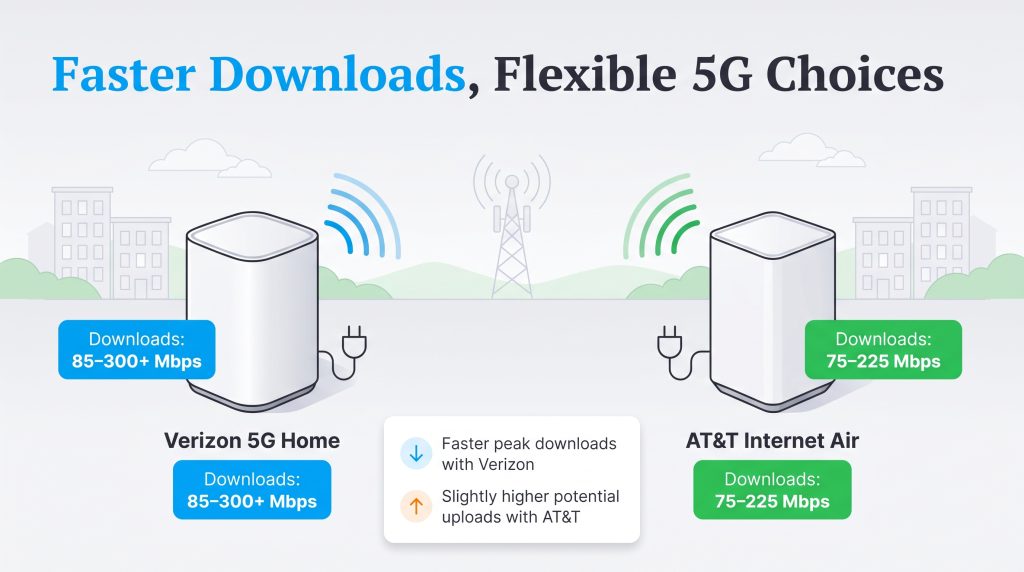
Not every neighborhood possesses the necessary underground lines for a hardwired connection, which is exactly where fixed wireless access (FWA) technology steps in. Comparing Verizon 5G Home Internet vs. AT&T Internet Air reveals two highly capable cellular-based alternatives that bypass invasive physical cable installations entirely. These 5G solutions are an absolute dream for renters or anyone living in an apartment complex where permanent structural modifications are strictly prohibited.
There is a distinct difference in the network maturity and speed potential between these two services. Verizon got a massive head start in this sector. Their mature 5G network routinely delivers download speeds ranging from 85 to over 300 Mbps, making it the stronger established choice for most users. AT&T Internet Air serves as a newer, rapidly growing service designed to replace their aging DSL infrastructure. While Internet Air is a highly viable fallback with typical download speeds between 75 and 225 Mbps, it lacks the expansive reach of Verizon’s current 5G footprint.
Verizon 5G Home Internet Pros & Cons:
- Pros: Excellent peak download speeds, wider national availability, massive bundle discounts for existing mobile users.
- Cons: Speeds fluctuate heavily based on tower proximity and peak network congestion.
AT&T Internet Air Pros & Cons:
- Pros: Easy plug-and-play setup, seamless billing for current AT&T customers, excellent replacement for outdated DSL.
- Cons: Smaller coverage map, lower peak download ceilings compared to Verizon.
Pricing, Hidden Fees, and Equipment Costs
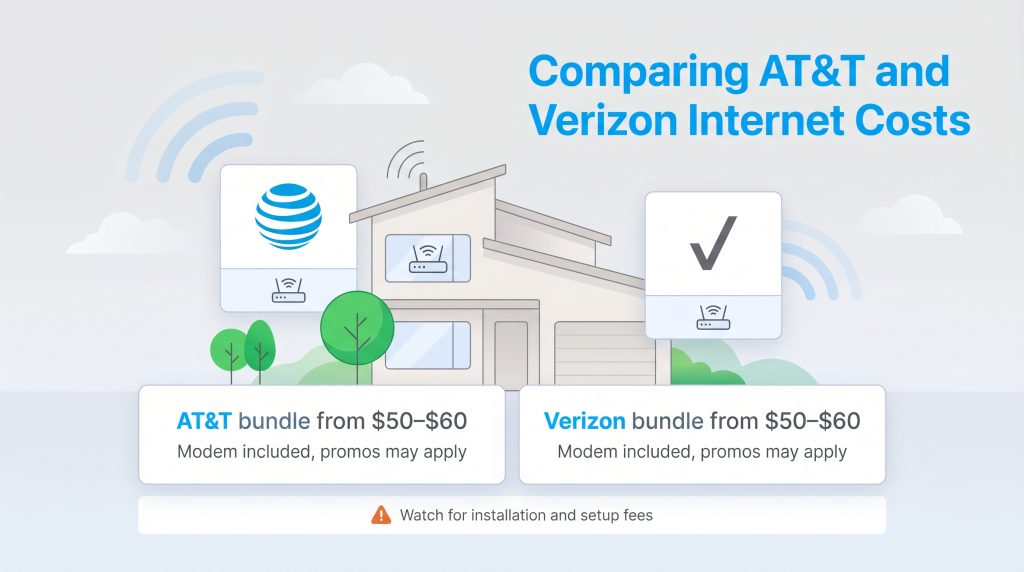
Nobody wants to deal with surprise charges on their first utility bill after an expensive relocation. When comparing AT&T vs. Verizon internet prices, you will find both companies have made significant strides toward transparent billing. For 2026, AT&T Fiber starts at $55 per month for its baseline 300 Mbps plan, while Verizon Fios undercuts slightly at just $50 per month for a similar 300 Mbps connection.
Historically, telecom companies notoriously charged an extra $10 to $15 every month just to rent the necessary modem. Thankfully, both AT&T and Verizon now include the mandatory gateway equipment fees in their advertised baseline prices. You receive a modern, eco-friendly Wi-Fi 6 router at no extra monthly cost. Just ensure you enroll in their autopay and paperless billing programs, as failing to do so will typically add a $10 penalty to your monthly invoice.
| Service Tier | AT&T Typical Starting Price | Verizon Typical Starting Price |
|---|---|---|
| Entry-Level Fiber (300 Mbps) | $55 / month | $50 / month |
| Mid-Tier Fiber (500 Mbps) | $65 / month | $70 / month |
| High-Tier Fiber (1 Gbps+) | $80 – $250 / month | $90 / month |
| 5G Fixed Wireless | $60 / month | $50 – $70 / month |
AT&T Plans and Pricing
| Plan Name | Price | Download Speeds | Connection Type | |
|---|---|---|---|---|
| Internet 100 | $60 /month | Up to 100 Mbps | DSL | Check Availability |
| Internet 300 | $35 /month | Up to 300 Mbps | Fiber | Check Availability |
| Internet Air | $40 /month | Up to 300 Mbps | 5G | Check Availability |
| Internet 500 | $50 /month | Up to 500 Mbps | Fiber | Check Availability |
| Internet 1000 | $50 /month | Up to 1000 Mbps | Fiber | Check Availability |
| Internet 5000 | $125 /month | Up to 5 Gbps | Fiber | Check Availability |
Verizon Plans and Pricing
| Plan Name | Price | Download Speeds | Connection Type | |
|---|---|---|---|---|
| High Speed Internet | $40 /month | Up to 15 Mbps | DSL | Check Availability |
| Verizon Home Internet Lite | $35 /month | Up to 25 Mbps | 5G | Check Availability |
| Verizon Home Internet Lite Extra | $55 /month | Up to 25 Mbps | 5G | Check Availability |
| 5G Home | $50 /month | Up to 100 Mbps | 5G | Check Availability |
| 5G Home Plus | $60 /month | Up to 150 Mbps | 5G | Check Availability |
| Fios 300 Mbps | $30 /month | Up to 300 Mbps | Fiber | Check Availability |
| 5G Home Ultimate | $75 /month | Up to 300 Mbps | 5G | Check Availability |
| Fios 500 Mbps | $65 /month | Up to 500 Mbps | Fiber | Check Availability |
| Fios 1 Gig | $80 /month | Up to 1000 Mbps | Fiber | Check Availability |
| Fios 2 Gig | $90 /month | Up to 2.3 Gbps | Fiber | Check Availability |
| Fios 5 Gig | $104.99 /month | Up to 5 Gbps | Fiber | Check Availability |
Speed, Reliability, and Data Caps
Determining exactly which is better, AT&T or Verizon internet, often comes down to the sheer number of devices pulling data under your roof simultaneously. Modern properties require surprisingly robust bandwidth just to handle background tasks. While fixed wireless can occasionally suffer from minor network deprioritization or weather interference during peak hours, hardwired fiber delivers the exact same bandwidth 24 hours a day.
When comparing AT&T vs. Verizon data caps, you will be thrilled to know that neither provider enforces frustrating monthly limits on their primary fiber or 5G home internet plans. You receive unlimited data to stream, surf, and automate your property without fear of surprise overage penalties. We still recommend checking the Verizon home internet data cap policy on older legacy plans if you utilize standard DSL services, but modern subscribers generally enjoy truly unlimited usage.
Bandwidth for Gamers and Remote Workers
When evaluating AT&T vs. Verizon internet for gaming and remote work, you need to look beyond raw download capabilities and pay close attention to network responsiveness. Often referred to as “ping,” latency measures the milliseconds it takes for a data packet to travel from your console or computer to a distant server and back. Lower numbers mean a tighter, far more responsive connection.
Fiber usually delivers significantly lower latency than fixed wireless, which matters heavily for these specific use cases. Both Fios and AT&T Fiber generally offer excellent ping times, minimizing lag during competitive gaming and reducing awkward delays in video conferences. If you depend on lightning-fast reflexes for online matches or run a demanding home office, highly prioritize securing a hardwired fiber connection over any cellular-based 5G alternative.
Eco-Conscious Smart Home Integration
A stable, uninterrupted signal plays a surprisingly critical role in running a sustainable home environment. Devices like Wi-Fi-enabled solar inverters, smart leak detectors, and programmable thermostats rely entirely on your network to transmit real-time usage metrics and adjust settings autonomously. By keeping these systems reliably online, you maximize their ability to optimize resource consumption and drastically reduce utility waste.
If you are actively trying to decrease your carbon footprint while unpacking, ensure you connect your ENERGY STAR-certified smart home devices to a network that won’t continuously drop the signal. Both companies provide modern gateway hardware capable of easily supporting an intricate mesh of eco-friendly technology across your floor plan.
Installation and Equipment Setup
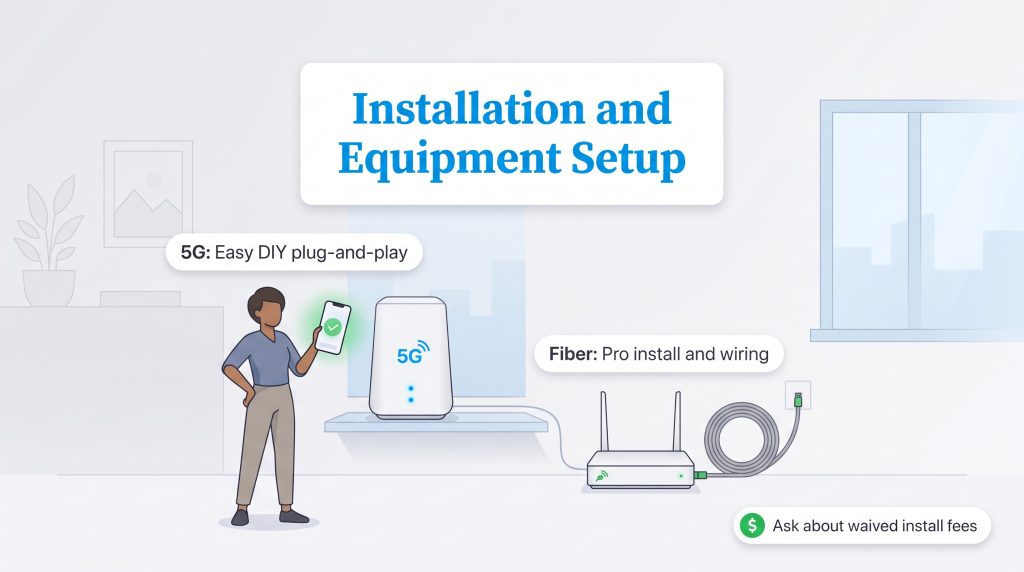
While the monthly equipment fees are covered, you still need to be aware of the stark differences in the physical installation process. Setting up 5G home internet is a fully DIY, plug-and-play process. You simply receive the gateway in the mail, plug it into an outlet near a window facing the closest cell tower, and follow the mobile app instructions. Conversely, a first-time physical fiber installation usually requires scheduling a professional technician to run a dedicated optical line directly into your house, which can sometimes trigger a one-time activation or installation fee.
Mobile and Home Internet Bundle Discounts
The absolute best way to cut your monthly overhead involves taking advantage of AT&T internet bundles vs. Verizon bundle deals. Both corporations want you to use their services for your smartphone and your home network, and they offer steep discounts to make that happen. Keeping your mobile and residential utilities tightly integrated under a single provider greatly simplifies your monthly budgeting process while putting substantial cash back in your pocket.
If you have a qualifying premium cellular plan with Verizon, you can receive an incredible discount of up to $25 per month off your Fios or 5G Home Internet bill. This cuts the baseline price in half for many users. AT&T is similarly aggressive, offering a 20% discount on your monthly fiber bill when bundled with an eligible wireless plan, which equates to roughly $11 to $17 per month in exact savings depending on your chosen speed tier. If you find both providers heavily present at your new address, you should absolutely default to the company you already use for your cell phone to secure the lowest possible bundled rate.
Customer Service and Reliability
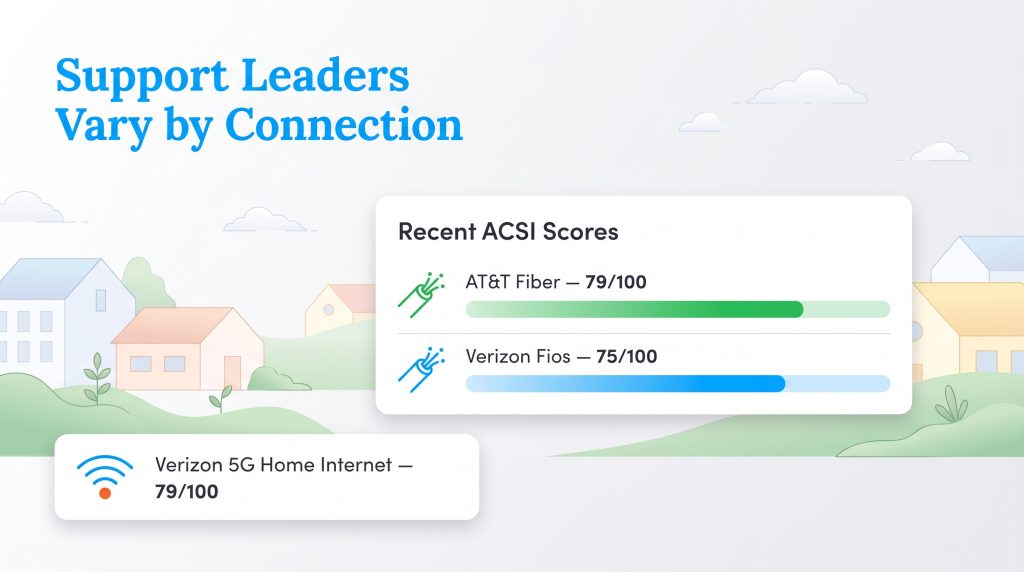
Reliable technical support matters immensely when your home network inevitably hiccups. When evaluating AT&T vs. Verizon internet customer service, looking at objective third-party data provides the clearest picture. According to the 2026 J.D. Power U.S. Residential Internet Service Provider Satisfaction Study and the latest American Customer Satisfaction Index (ACSI) data, both brands perform remarkably well compared to traditional cable providers.
AT&T Fiber routinely leads the fiber-optic segment, securing an impressive ACSI score of 79 out of 100 in recent studies, slightly edging out Verizon Fios (which scored a 75). However, Verizon fiercely defends its reputation in the fixed wireless arena, with its 5G Home Internet service also landing a highly competitive score of 79. Ultimately, AT&T takes the crown as the clear winner for hardwired fiber customer support, but Verizon proves exceptionally reliable if you lean toward a fast 5G cellular connection.
Choosing the Right ISP for Your Home
Selecting the perfect internet provider shouldn’t require an advanced degree in network engineering. Finding the right plan means absolutely nothing if the company’s network doesn’t actually reach your driveway. If you are setting up utilities in Houston, for example, you have a high chance of tapping into AT&T’s extensive fiber network. Conversely, residents setting up service in the Northeast corridor will likely lean on Verizon Fios.
You should choose AT&T if you want the absolute fastest, most stable fiber connection possible. With symmetrical speeds reaching up to 5 Gbps, AT&T is the superior choice for hardcore gamers, remote workers handling massive file uploads, and households running extensive eco-friendly smart home systems. It is also the ideal pick if you already have an AT&T mobile plan and want to secure that sweet 20% bundle discount.
You should choose Verizon if you live in an apartment where installing new physical cables isn’t an option, or if you reside in the Northeast where Fios reigns supreme. Verizon’s 5G Home Internet offers a vastly larger footprint and higher peak speeds than AT&T Internet Air, making it the premier fixed wireless choice. Furthermore, if you are a current Verizon mobile subscriber, the massive $25 monthly bundle discount makes their network almost impossible to pass up.
Whether you opt for an adaptable 5G gateway that sits quietly on your windowsill or a fast hardwired line, getting your Wi-Fi sorted brings you one massive step closer to fully completing your moving checklist. Before you pack a single moving box, we highly recommend checking your local coverage on the FCC national broadband map and reviewing the official FCC broadband consumer labels to verify exactly what tier of service hits your specific property line. If you need a bit more guidance on managing your utilities, our guide to saving on your electric bill offers similarly practical tips for cutting household costs.
Frequently Asked Questions About AT&T and Verizon Home Internet
Review the answers below to clear up any lingering confusion regarding network speeds, installation requirements, and monthly pricing before you lock in a new internet contract.
Which is better: AT&T or Verizon home internet?
AT&T typically wins top marks for its widespread fiber availability across the South and Midwest, delivering incredible symmetric speeds up to 5 Gbps that are perfect for heavy usage. On the other hand, Verizon is highly rated for its legendary Fios reliability in the Northeast and boasts a vastly superior nationwide 5G fixed wireless network for homes that lack fiber infrastructure.
Is Verizon 5G home internet faster than AT&T Internet Air?
Yes, Verizon generally offers faster peak speeds due to its massive head start and mature 5G coverage footprint. Verizon 5G Home Internet typically delivers higher peak download speeds (often up to 300 Mbps or more) compared to AT&T Internet Air, which usually tops out around 225 Mbps. However, AT&T remains a highly capable alternative if you live in a region with excellent AT&T cellular coverage.
Do AT&T and Verizon have data caps on home internet plans?
No, both AT&T Fiber and Verizon Fios, along with their primary 5G home internet offerings, provide unlimited data with zero overage fees. You can stream, game, and automate your eco-friendly home without worrying about a sudden bill hike at the end of the month. We only advise checking the specific terms if you utilize their older legacy DSL plans.
Can I get a discount if I bundle my cell phone with AT&T or Verizon internet?
Yes, bundling is the best way to lower your monthly bill. Verizon offers up to a $25 monthly discount on Fios or 5G Home Internet if you maintain a qualifying premium wireless plan. AT&T offers a 20% monthly discount on their fiber plans for eligible wireless customers, which usually equates to $11 to $17 in monthly savings.
Do AT&T or Verizon home internet plans require a contract?
No, neither AT&T nor Verizon requires annual contracts for their primary fiber or 5G home internet plans. You can cancel your service at any time without facing steep early termination fees, giving you maximum flexibility if you ever need to move or switch providers down the line.
Can I install Verizon or AT&T internet myself?
Installation logistics vary drastically depending on the exact technology reaching your house. Setting up 5G home internet is almost always a simple, DIY plug-and-play process that takes less than 15 minutes to complete. Conversely, a first-time fiber installation usually requires a professional technician to physically run a new cable to your property and configure the terminal directly inside your home.
About the Author

David has been an integral part of some of the biggest utility sites on the internet, including InMyArea.com, HighSpeedInternet.com, BroadbandNow.com, and U.S. News. He brings over 15 years of experience writing about, compiling and analyzing utility data.

LaLeesha has a Masters degree in English and enjoys writing whenever she has the chance. She is passionate about gardening, reducing her carbon footprint, and protecting the environment. She also recently served as President of the Board for City Sprouts (a community garden).