
Understanding this benchmark rate is the key to unlocking potential savings on your monthly energy costs.
Key Takeaways
- The Price to Compare (PTC) is the rate your utility charges for the electricity supply portion of your bill if you don’t choose a competitive supplier.
- You can find this specific number on your monthly statement, often listed under sections labeled “Supply Detail” or “Message Center.”
- Shopping for a lower rate involves comparing a supplier’s fixed price against the utility’s variable PTC to calculate potential savings.
Opening your electric bill can sometimes feel like deciphering a secret code, especially when you spot terms like “generation charge,” “distribution,” and the elusive “Price to Compare.” If you live in a deregulated energy market, this single number is the most powerful tool you have to take control of your household budget. It represents the benchmark price you are currently paying for electricity supply, and knowing it allows you to shop around for better deals, lock in fixed rates, or switch to cleaner renewable energy sources without fear of overpaying.
What Is the Price to Compare (PTC)?
How Your Utility’s Default Supply Rate Works
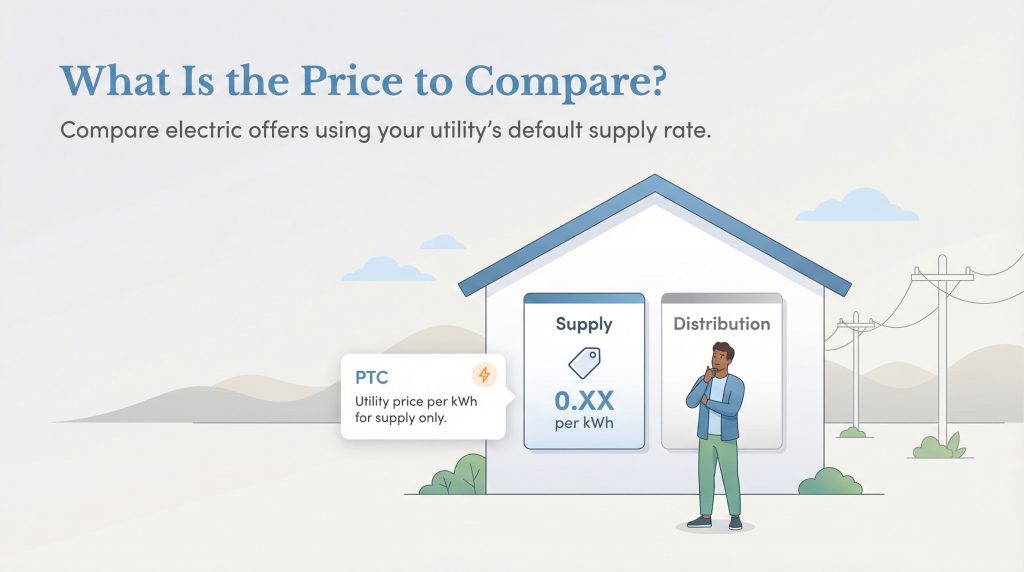
The Price to Compare (PTC) is the price per kilowatt-hour (kWh) that your local utility company charges for the “Supply” or “Generation” portion of your bill. Think of this as the “default setting” or “standard offer” for your electricity. This default service is often called “Standard Offer Service” or “Default Service” on your bill. If you have not switched to a third-party energy supplier, you are automatically enrolled in this default service. The utility buys electricity on the wholesale market and typically passes that cost directly to you, with supply charges overseen by your state’s public utility commission.
It is important to distinguish between the two main parts of your bill: Supply and Distribution. Supply is the actual electricity you use in your home. Distribution covers the poles, wires, and maintenance required to deliver that power to you. The Price to Compare only applies to the Supply portion. While distribution rates are set by regulators and stay relatively consistent, the PTC is often variable. It can change quarterly or biannually based on market conditions, meaning your bill could fluctuate even if your usage stays the same.
Where to Find the Price to Compare on Your Bill
What To Look For On Your Bill
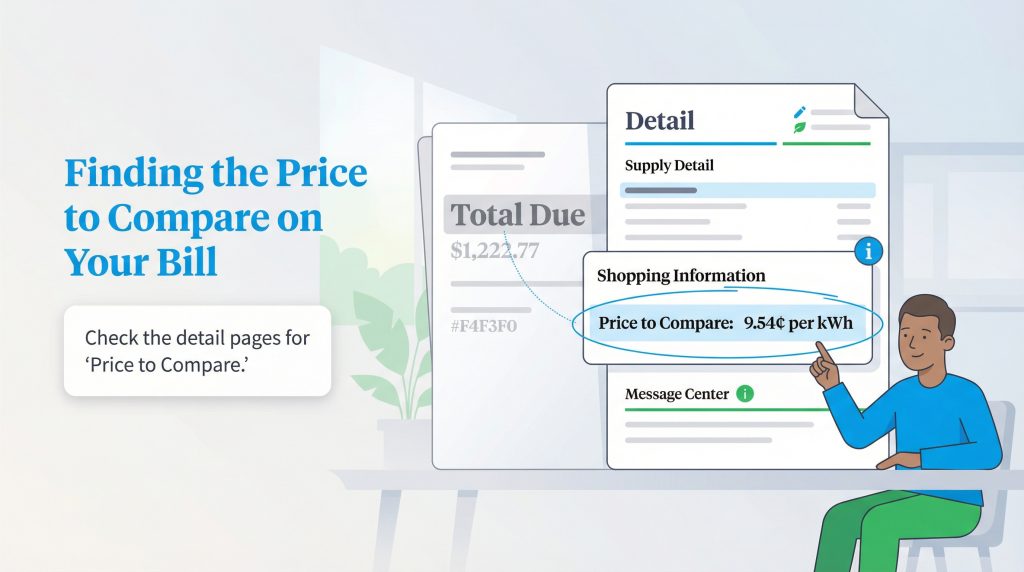
Finding the Price to Compare isn’t always as easy as glancing at the “Total Due” line. Utilities rarely place this number on the first-page summary. To find it, you usually need to flip to the “Detail” pages of your statement, which are often on page two or three. You will want to scan the document for specific section headers like “Supply Detail,” “Message Center,” or a box explicitly labeled “Price to Compare.”
In some cases, the number is tucked away in the small print within a sidebar or a dedicated “Shopping Information” box. It will always be expressed in cents per kWh (e.g., $0.0954 per kWh). If you see separate line items for “Transmission” and “Generation,” you may sometimes need to add these two rates together to get the total Price to Compare, though most utilities now provide the consolidated figure to make shopping easier for you.
If you are struggling to locate the rate on your paper bill, you can visit your state’s official energy choice website, such as PA Power Switch or the Public Utilities Commission of Ohio’s Apples to Apples, or simply call your utility provider directly to ask for the current residential Price to Compare.
The Savings Formula: How to Do the Math
A Simple Equation To Check Your Savings
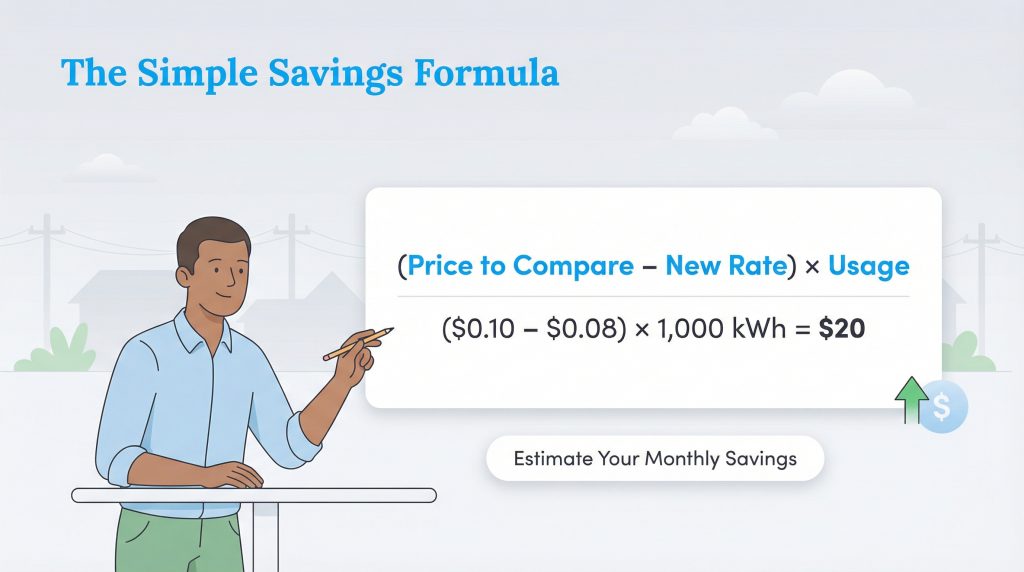
Once you have your Price to Compare, you need to know how to use it. Many people see a lower rate from a supplier and assume they will save money, but we recommend doing the specific math to see exactly what those savings look like for your budget. To determine if a switch is worth it, use this simple calculation:
(Price to Compare – New Supplier Rate) x Average Monthly Usage = Estimated Monthly Savings
For example, imagine your utility’s Price to Compare is 10 cents per kWh ($0.10). You find a competitive supplier offering a fixed rate of 8 cents per kWh ($0.08). This is a difference of 2 cents per kWh. If your household uses an average of 1,000 kWh per month, the math looks like this: ($0.10 – $0.08) x 1,000 = $20. That is $20 back in your pocket every month just for switching who generates your power.
Apples to Apples: Fixed Rates vs. Variable PTC
Fixed Rate Stability vs. Variable Rate Risk
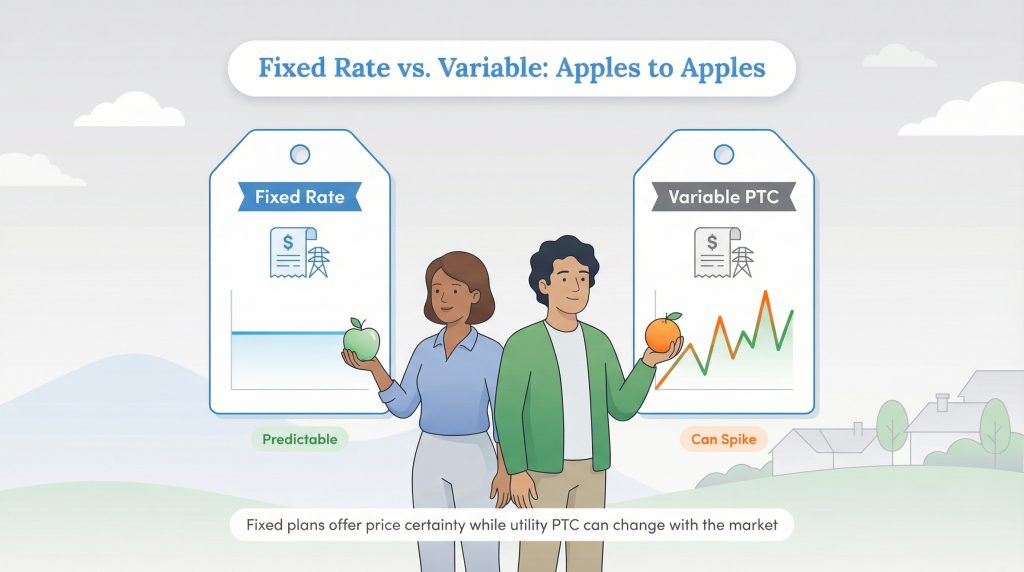
When you shop for electricity, you are essentially making an “apples to apples” comparison between the utility’s default rate and a competitive supplier’s offer. However, the most significant difference often isn’t just the price today, it is price certainty for the future. The utility’s Price to Compare is variable; it changes periodically based on the wholesale cost of energy. This means a rate that looks good in the spring might spike significantly during peak summer or winter months.
In contrast, many third-party suppliers offer fixed-rate plans. When you lock in a fixed rate, you are securing that price for the duration of your contract, usually 12, 24, or 36 months. This protects you from market volatility. Even if the gap between the utility’s price to compare and your supplier’s rate narrows, the peace of mind that comes with a predictable bill can be valuable. We suggest looking at the history of your utility’s rate changes to decide if locking in a fixed price is the safer bet for your home.
Can I Use the Price to Compare to Go Green?
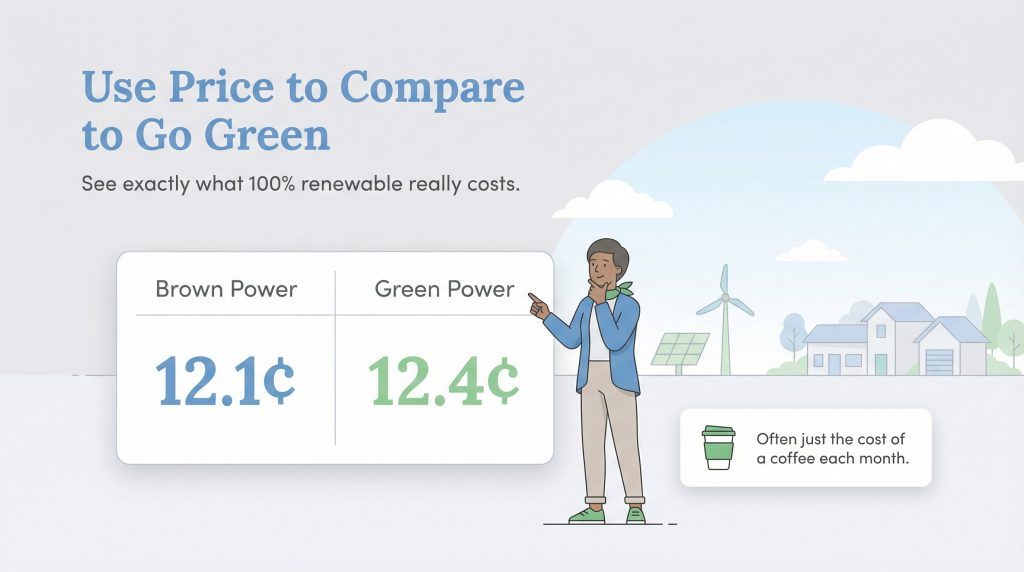
Using Price To Compare To Evaluate Green Energy Plans
The Price to Compare is also an excellent tool for eco-conscious consumers. If your goal is to reduce your carbon footprint, you might be worried that renewable energy is too expensive. By using the PTC as a baseline, you can see exactly how much extra, if anything, it costs to switch to a 100% green energy plan.
Often, the difference between the standard “brown” power from the utility and a wind or solar plan from a supplier is negligible. In some market conditions, you might even find a renewable plan that is cheaper than the fossil-heavy utility mix. Even if the green plan is slightly higher, the PTC helps you contextualize that cost. Knowing that supporting clean energy might only cost you the price of one coffee a month makes the decision much easier.
Step-by-Step: How to Shop Using the Price to Compare
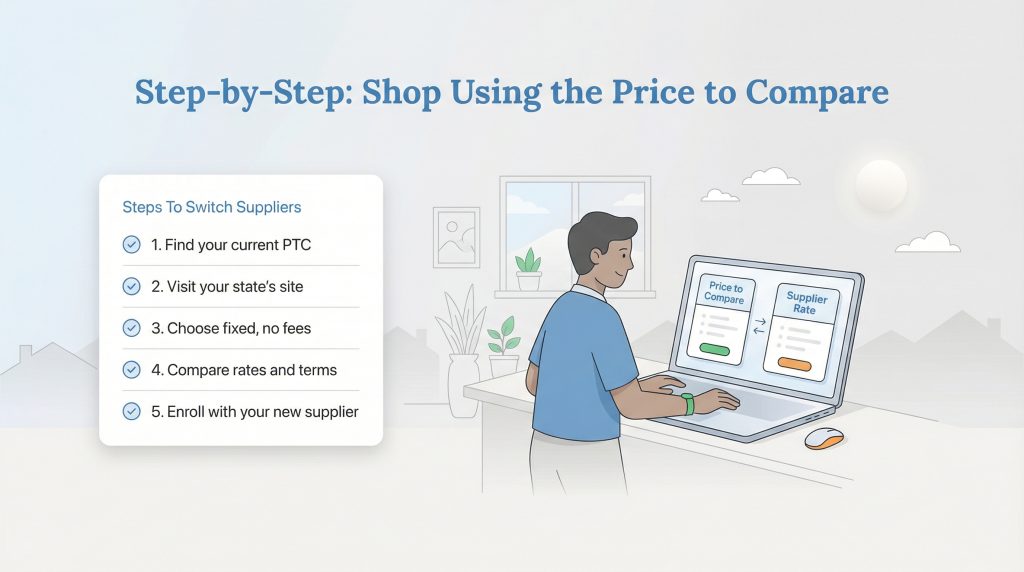
Steps To Switch Suppliers With Confidence
Ready to take action? Switching suppliers is a straightforward process that happens entirely on paper (or screens), no one needs to come to your house to install new equipment. Follow these steps to find the best deal:
- Find your current PTC: Locate the Price to Compare on your most recent electric bill.
- Visit a comparison site: Go to your state’s official shopping website, such as Power to Choose in Texas or similar official portals in your area.
- Filter your results: Select “Fixed Rate” and “No Monthly Fees” to see the most transparent offers.
- Compare the rates: Check the supplier rate against your utility’s PTC. Ensure you read the fine print regarding contract length and early termination fees.
- Sign up: Complete the enrollment with the supplier. Your utility will continue to handle billing and outages, so your service reliability remains unchanged.
Don’t Just Set It and Forget It
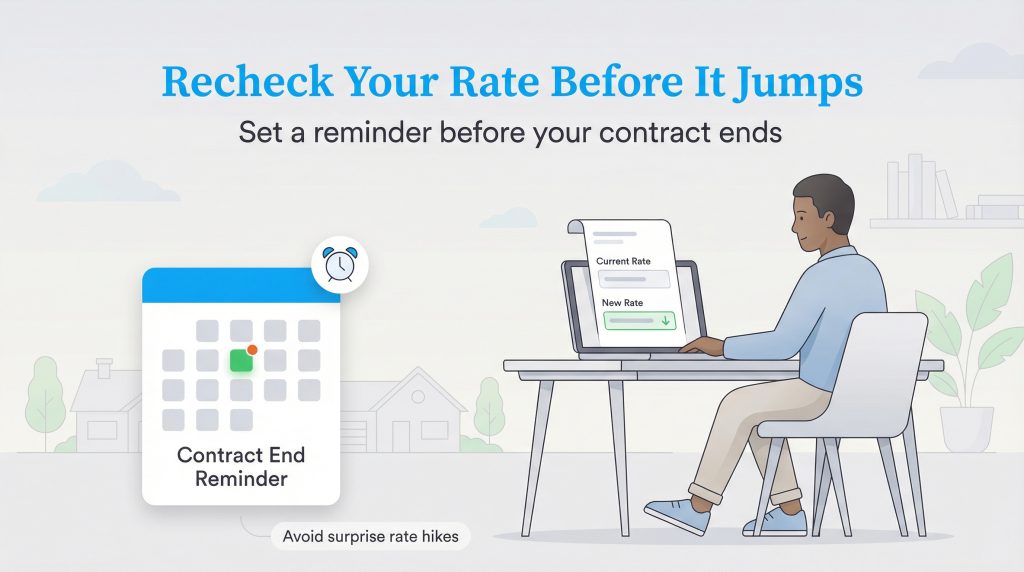
Why You Should Recheck Your Rate When Contracts End
While finding a great rate below the Price to Compare is a win for your wallet, your responsibility doesn’t end there. Energy contracts eventually expire, and if you aren’t paying attention, you could automatically roll over onto a variable rate that is higher than what you started with. We recommend marking your calendar for the month your contract ends. This gives you time to shop around again and compare new offers against the current utility PTC. Taking charge of your energy costs is an ongoing process, but staying proactive ensures you never pay more than you have to.
Bringing Your Price To Compare Strategy Together
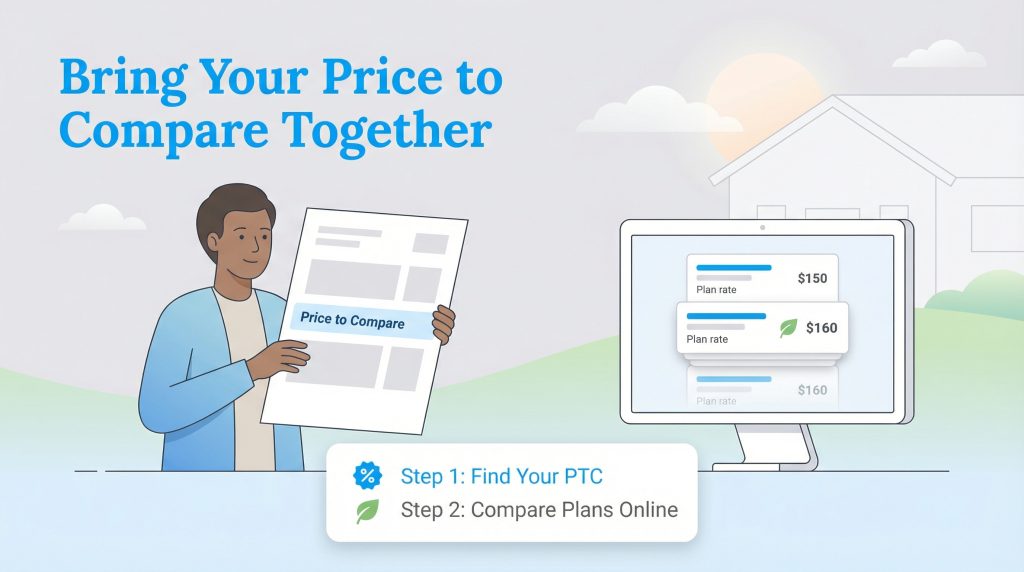
When you understand your utility’s Price to Compare, you’re no longer guessing about your electric costs. You can see exactly what you’re paying for supply, do a quick savings calculation, and decide if a fixed-rate or renewable plan fits your budget and values. The next time your bill arrives, find that PTC number, compare it to a few offers on your state’s official shopping site, and choose the option that keeps your home comfortable, your costs under control, and your energy use as eco-conscious as you’d like it to be.
FAQs About the Price to Compare
Does the Price to Compare change?
Is the Price to Compare the same as my total electric rate?
Where can I find the official Price to Compare for my state?
Does switching suppliers affect my service reliability?
What happens if I don’t choose a supplier?
About the Author

David has been an integral part of some of the biggest utility sites on the internet, including InMyArea.com, HighSpeedInternet.com, BroadbandNow.com, and U.S. News. He brings over 15 years of experience writing about, compiling and analyzing utility data.