
Discount Power offers lower advertised rates for high usage, while TXU Energy provides superior stability and customer service for renters and smaller homes.
Key Takeaways
- Discount Power is generally cheaper for homeowners who consistently use over 1,000 kWh per month due to their bill credit structures.
- TXU Energy is the safer choice for apartment dwellers and low-usage homes because their plans rarely punish you with extreme rate hikes for missing usage targets.
- Both providers are backed by massive parent companies, TXU is owned by Vistra Corp, and Discount Power is a subsidiary of NRG Energy.
Shopping for electricity in Texas often feels like choosing between a bargain bin and a luxury boutique, only to realize both sell the exact same electrons. You might see Discount Power advertising incredibly low rates that seem too good to pass up, while TXU Energy leans heavily on its reputation as a trusted, stable giant. The right choice for your home doesn’t come down to brand loyalty, but rather the size of your house and your willingness to do a little math every month to ensure you get the deal you signed up for.

- 13.5¢ /kWh
- 3-100%
- 60 days
- 1-36 Months
- Best for Plan Variety & Reliability

- 7.6¢ /kWh
- 24%
- 90 days
- 12-36 Months
- Get Rewarded for Higher Usage
*rates may vary by location and household usage
The Verdict: When to Choose Which Provider
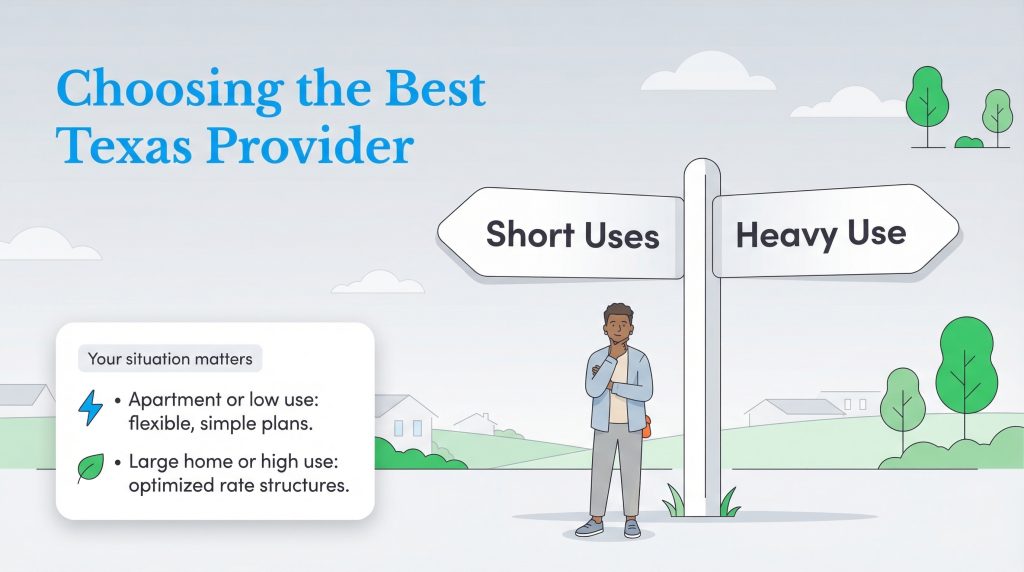
If you are skimming for a quick answer, we have broken down the winner based on your specific living situation. Because Texas electricity plans are so complex, the “best” provider is entirely dependent on how much energy you consume.
Price Comparison: The “Usage Trap” Explained
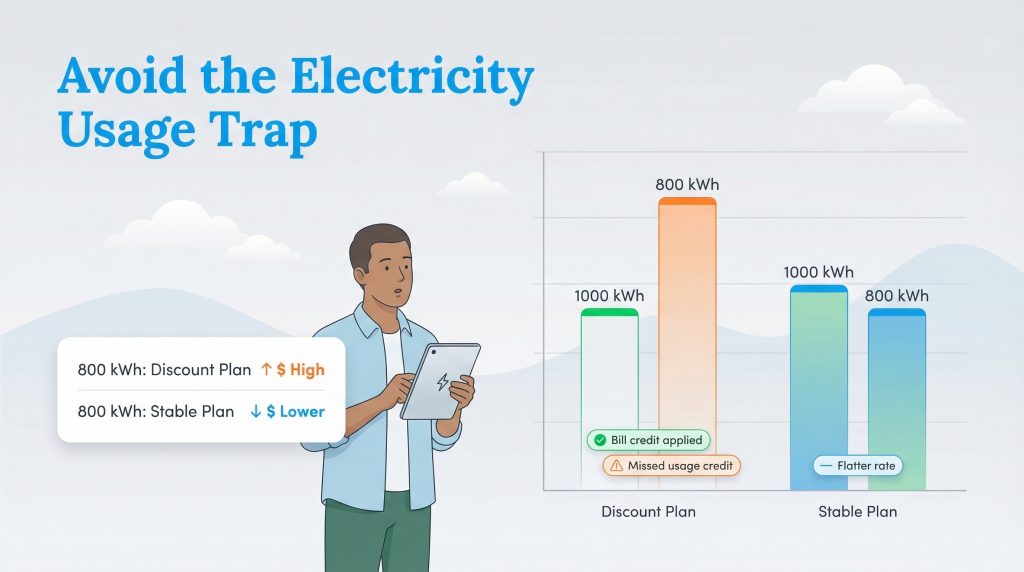
When you look at comparison websites, you will often see Discount Power listed with a much lower rate per kilowatt-hour (kWh) than TXU Energy. However, that advertised number often relies on a specific “bill credit” that kicks in only after you use a certain amount of power, usually 1,000 kWh.
This is what we call the usage trap. If you sign up for a Discount Power plan expecting a cheap rate but only use 800 kWh in a mild spring month, you miss the credit. Suddenly, your effective rate spikes, and your bill is much higher than expected. TXU Energy generally offers flatter rate structures that are less volatile if your usage drops.
Here is a hypothetical illustration of how missing that credit affects your wallet:
| Scenario | Discount Power (Est.) | TXU Energy (Est.) |
|---|---|---|
| Advertised Rate (at 1,000 kWh) | 11.9¢ per kWh | 14.5¢ per kWh |
| Actual Usage | 800 kWh (Missed Credit) | 800 kWh |
| Effective Price You Pay | ~19¢ per kWh | ~14.9¢ per kWh |
| Result | Price Spike | Steady Rate |
For apartment renters or energy-conscious homeowners, this difference is critical. You can learn more about monitoring your usage to avoid these traps in our guide on how to save on your electric bill.
Comparing Plan Structures: Bundled Rates vs. Bill Credits
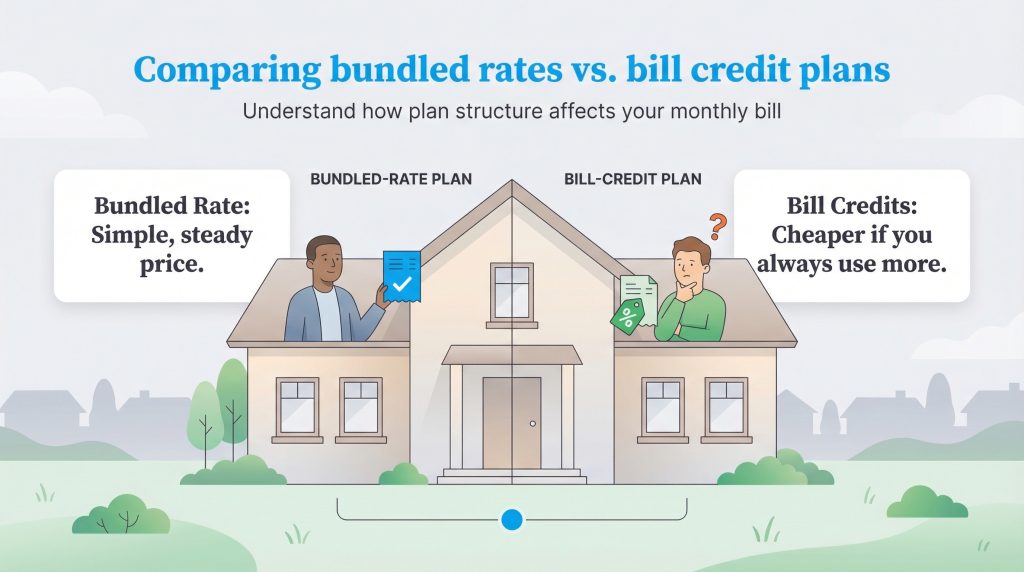
To give you a better idea of what you are signing up for, let’s look at the common plan structures these providers usually offer. Keep in mind that specific names and rates change, but the structures remain consistent.
TXU Energy Plans (e.g., Smart Edge)
TXU markets plans like Smart Edge as their “reliable” option. It typically features a bundled rate that includes transmission fees and energy charges. While it might be a few cents more expensive per kWh than the cheapest plans on the market, it often comes with perks like A/C protection or cash-back loyalty rewards. The primary benefit here is stability; you don’t have to panic if you go on vacation and your usage drops for a week.
| Plan Name | Rate | Plan Type | Cancellation Fee | |
|---|---|---|---|---|
| Value Edge 12 | $0.135 /kWh | 12 Months Fixed Rate | $150.00 | Check Availability |
| Smart Edge 12 | $0.139 /kWh | 12 Months Fixed Rate | $150.00 | Check Availability |
| Smart Edge 24 | $0.145 /kWh | 24 Months Fixed Rate | $295.00 | Check Availability |
| Clear Deal 24 | $0.156 /kWh | 24 Months Rate | $295 | Check Availability |
| Simple Value 12 | $0.157 /kWh | 12 Months Fixed Rate | $150.00 | Check Availability |
| Clear Deal 12 | $0.165 /kWh | 12 Months Rate | $150 | Check Availability |
| Simple Rate 12 | $0.173 /kWh | 12 Months Rate | $150 | Check Availability |
| Solar Value 12 | $0.175 /kWh | 12 Months Rate | $150 | Check Availability |
| On Your Terms | $0.175 /kWh | 1 Month Months Rate | $ | Check Availability |
| Ultimate Season Pass 12 | $0.187 /kWh | 12 Months Rate | $150 | Check Availability |
| Solar Club 12 | $0.191 /kWh | 12 Months Fixed Rate | $150.00 | Check Availability |
| Texas Choice 12 | $0.192 /kWh | 12 Months Fixed Rate | $150.00 | Check Availability |
| Texas Choice 24 | $0.192 /kWh | 24 Months Fixed Rate | $295.00 | Check Availability |
| Flex Forward | $0.192 /kWh | 1 Month Months Rate | $ | Check Availability |
| Flex Rewards | $0.193 /kWh | Variable Rate | $0.00 | Check Availability |
| Free Nights & Solar Days 12 (8 pm) | $0.195 /kWh | 12 Months Rate | $150 | Check Availability |
| Smart Deal 12 | $0.196 /kWh | 12 Months Fixed Rate | $150.00 | Check Availability |
| Solar Saver 12 | $0.198 /kWh | 12 Months Rate | $150 | Check Availability |
| Smart Deal 24 | $0.204 /kWh | 24 Months Fixed Rate | $295.00 | Check Availability |
| Smart Deal 36 | $0.204 /kWh | 36 Months Fixed Rate | $395.00 | Check Availability |
| Saver's Discount 12 | $0.211 /kWh | 12 Months Rate | $150 | Check Availability |
| Saver's Discount 24 | $0.251 /kWh | 24 Months Rate | $295 | Check Availability |
Discount Power Plans (e.g., Bill Credit Bundle)
This is a high-risk, high-reward plan type. The structure is simple: use more than 1,000 kWh, and you receive a massive credit (often substantial enough to lower your average rate significanlty) on your bill. If you hit that number every month, this plan is mathematically cheaper than almost anything TXU offers. However, if you fall short, you are paying a premium rate for the energy you did use, making it a gamble for smaller homes.
| Plan Name | Rate | Plan Type | Cancellation Fee | |
|---|---|---|---|---|
| Bill Credit Bundle 24 | $0.096 /kWh | 24 Months Rate | $295 | Check Availability |
| Bill Credit Bundle 12 | $0.124 /kWh | 12 Months Rate | $150 | Check Availability |
| Saver 15 | $0.128 /kWh | 15 Months Fixed Rate | $150.00 | Check Availability |
| Saver 12 | $0.132 /kWh | 12 Months Fixed Rate | $150.00 | Check Availability |
| Saver 24 | $0.136 /kWh | 24 Months Fixed Rate | $295.00 | Check Availability |
| Saver 36 | $0.137 /kWh | 36 Months Fixed Rate | $395.00 | Check Availability |
| Wise Buy Basic 24 Online | $0.157 /kWh | 24 Months Rate | $295 | Check Availability |
| Discount Nights 24 | $0.161 /kWh | 24 Months Fixed Rate | $295.00 | Check Availability |
| Wise Buy 12 | $0.169 /kWh | 12 Months Fixed Rate | $150.00 | Check Availability |
Hidden Fees and Fine Print: What to Watch Out For
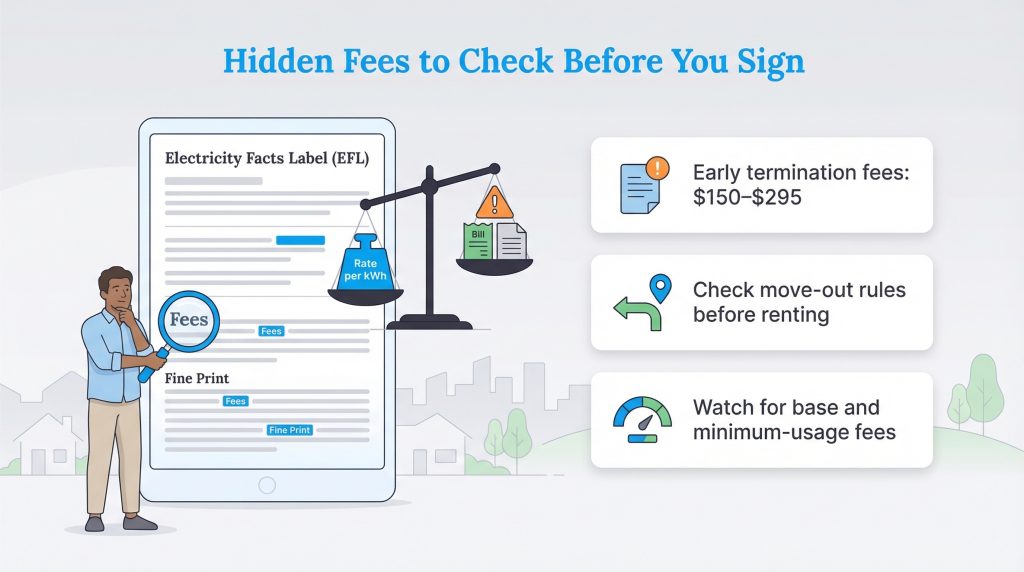
Beyond the rate per kWh, the fine print in the Electricity Facts Label (EFL) can hide costs that sting later. Both companies pass through TDU delivery charges (the fees from Oncor, CenterPoint, etc.), but their contract terms differ.
Cancellation Fees
Early Termination Fees (ETFs) are standard in Texas fixed-rate contracts. Discount Power usually charges a flat fee ranging from $150 to $295, depending on the contract term length. TXU Energy is similar, with fees typically landing in the $150 to $295 range. If you are renting and might move before your contract expires, you should verify if they allow you to move the service to your new address without penalty.
Usage Fees
We touched on this earlier, but it bears repeating: Discount Power often includes a “minimum usage fee” or simply lacks the credit for low usage, which acts as a penalty. Many TXU plans don’t use bill-credit thresholds the same way, but you should still confirm whether your plan includes a base charge or minimum usage requirement in the EFL.
Customer Service and Brand Reputation
Trust is a major factor when choosing a utility provider. You want to know that if the lights go out or a bill looks wrong, someone will answer the phone.
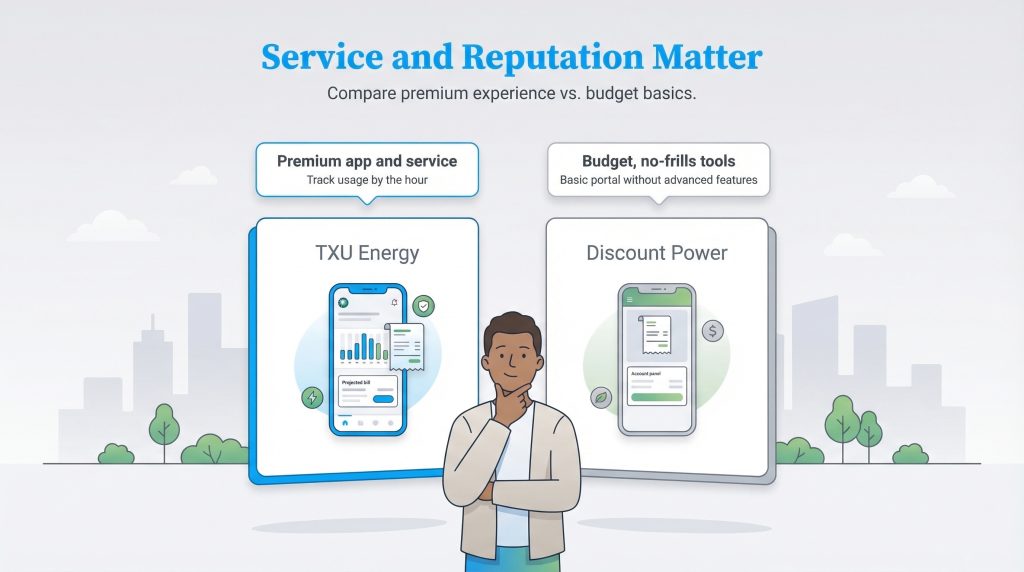
Both providers are owned by massive corporations, so you aren’t dealing with fly-by-night operations. TXU Energy is the flagship brand of Vistra Corp, a Texas-based energy giant. They position themselves as a premium brand, investing heavily in a top-tier mobile app that lets you track usage by the hour, view projected bills, and manage your account easily.
Discount Power is a subsidiary of NRG Energy, which also owns Reliant. NRG positions Discount Power specifically as a budget brand. This means you get a “no-frills” experience. Their website and customer portal are functional but lack the polish and advanced tracking tools found with TXU. If you live in a major metro area, you can see how these providers stack up locally on our Houston utilities page.
Sustainability and Solar Buyback Options
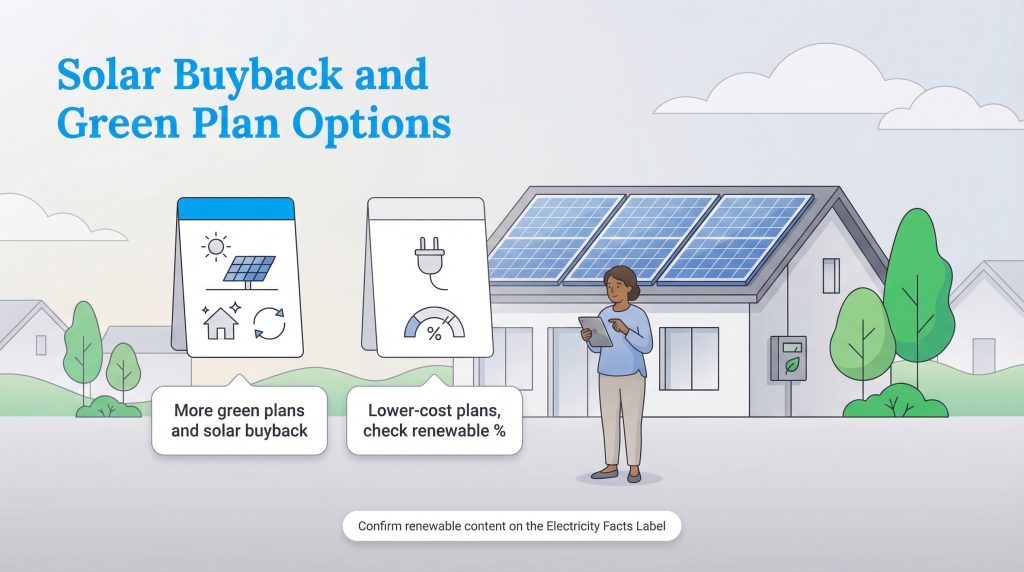
If powering your home with green energy is a priority, TXU Energy generally has the edge in variety. They frequently offer plans like “Free Nights & Solar Days” or 100% renewable energy plans sourced from Texas wind and solar farms. They also have established solar buyback programs for homeowners with panels.
Discount Power tends to offer standard supply plans; check the EFL for the renewable percentage to keep their costs as low as possible. While they may offer green add-ons, it isn’t their primary focus. You can verify the renewable content percentage of any plan by looking at the Electricity Facts Label or visiting the official Power to Choose website.
Choosing Between TXU and Discount Power With Confidence
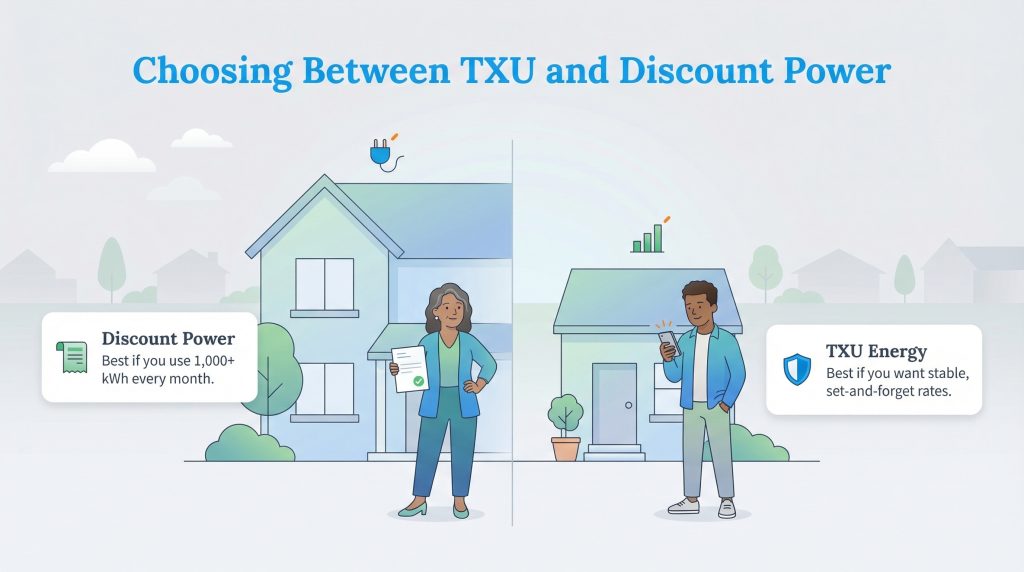
Choosing between these two comes down to your personality and your property. If you are a math-savvy homeowner with a large house and you are confident you will consistently use over 1,000 kWh a month, Discount Power will likely save you money. The bill credits are substantial and effective if you manage your usage correctly. On the other hand, if you are a renter, live in a smaller home, or simply want peace of mind knowing your rate won’t skyrocket during a mild month, TXU Energy is worth the slight price premium. Their stability, app quality, and lack of “gotcha” usage cliffs make them the better set-it-and-forget-it option. For more comparisons and guides, check out our main electricity hub.
FAQs About TXU Energy and Discount Power
Discount Power vs. TXU Energy: Which is cheaper?
Is Discount Power the same as Reliant?
Does TXU Energy charge cancellation fees?
Can I transfer my Discount Power plan if I move?
Who has better reviews, TXU or Discount Power?
About the Author

David has been an integral part of some of the biggest utility sites on the internet, including InMyArea.com, HighSpeedInternet.com, BroadbandNow.com, and U.S. News. He brings over 15 years of experience writing about, compiling and analyzing utility data.