

Compare Rates, Renewable Plans, and Cancellation Fees to Decide Which Energy Giant Fits Your Specific Usage Style

- 10.9¢ /kWh
- 3-100%
- 60 days
- 1-36 Months
- Highest Trustpilot Rating 4.7/5 ★

- 12.4¢ /kWh
- 26-100%
- 90 days
- 3-36 Months
- Proven Leader in Clean Energy
*rates may vary by location and household usage
Key Takeaways
- Constellation generally offers simpler fixed-rate plans that are often more cost-effective for homeowners with consistent, higher energy usage.
- TXU Energy excels in plan variety, offering specialized options like “Free Nights” that benefit users who can shift their electricity usage.
- Corporate sustainability matters; Constellation operates America’s largest nuclear fleet for clean energy, while TXU Energy’s parent company uses a mixed generation of gas, coal, and renewables.
Choosing between two of the biggest names in the Texas electricity market can feel like splitting hairs, but the difference in your monthly bill could be significant. While both TXU Energy and Constellation are massive, reliable retailers, they cater to very different types of energy users. If you are trying to cut through the marketing noise to find the best value for your apartment or house, you need to look past the advertised rate and understand how your household actually consumes power. We are here to conduct a comprehensive TXU Energy vs. Constellation comparison, analyzing their price structures, customer service records, and potential hidden fees to help you make the smartest, most cost-effective choice for your home. By evaluating their specific flagship plans alongside their corporate generation backgrounds, you can confidently select the best energy provider in Texas for your unique lifestyle.
At a Glance: TXU vs. Constellation Data Table
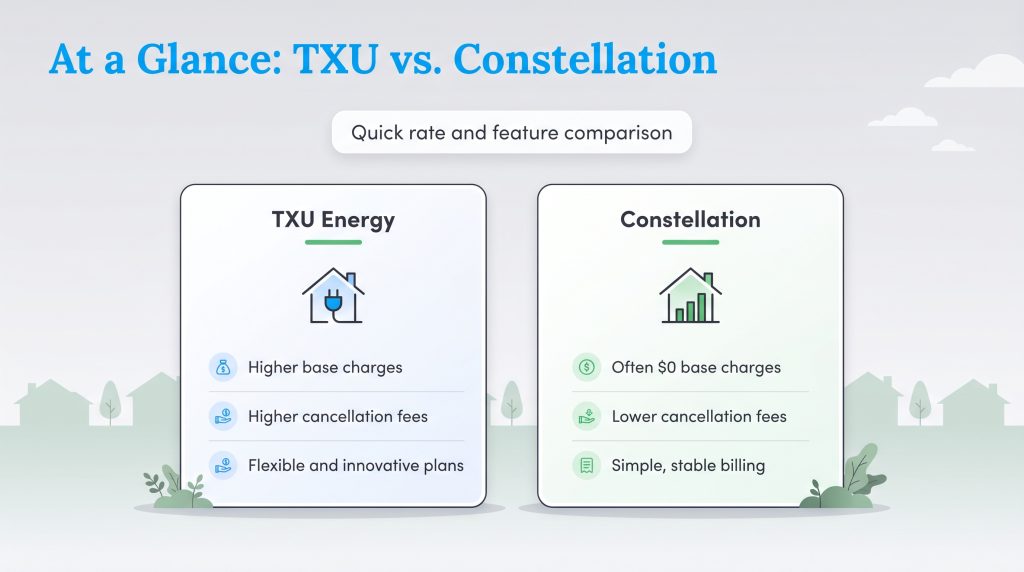
Before diving into the fine print of your next electricity contract, here is a high-level visual breakdown of how these two providers compare across the categories that matter most to your wallet. Use this quick reference guide to see which energy giant aligns with your household priorities.
| Feature | TXU Energy | Constellation |
|---|---|---|
| Parent Company | Vistra Corp | Constellation Energy Corporation |
| Years in Texas | Legacy provider (roots dating back to 1882) | Entered the market over 20 years ago |
| Credit Check Requirements | Yes (soft or hard pull typically required) | Yes (soft or hard pull typically required) |
| Early Termination Fees | Typically $150 to $395 depending on term | Typically $50 to $150 depending on term |
| Green Plan Availability | 100% solar and wind add-ons available | 100% wind and solar REC options available |
| Best Feature | Exceptional plan variety and digital tools | Clean energy generation and simple rates |
Frequently Asked Questions About TXU Energy vs. Constellation
What is the cancellation fee for TXU Energy vs. Constellation?
Cancellation fees, also known as Early Termination Fees (ETFs), vary by plan. TXU Energy typically charges between $150 and $395 depending on the length of your contract. Constellation usually charges a slightly lower flat fee, ranging from $50 to $150. Always check your Electricity Facts Label to confirm the exact amount before canceling.
Are TXU Energy’s free nights actually free?
The electricity consumed during the specific nighttime hours (usually 8 p.m. to 5 a.m.) is free from energy charges. However, to offset this, TXU charges a significantly higher rate during the daytime. These plans only save you money if you can shift at least 40% to 50% of your total household usage into the free nighttime window.
Which provider has the cheapest electricity rates in Texas?
There is no single cheapest provider in Texas, as rates fluctuate daily and depend on your specific monthly usage. Constellation often offers cheaper flat rates for lower-usage homes and apartments, while TXU Energy can be more cost-effective for large homes that hit high-usage bill credit thresholds.
Do TXU Energy and Constellation require a credit check?
Yes, both providers typically require a soft or hard credit check when you sign up for a new electricity plan. This helps them determine if an upfront security deposit is needed before initiating service at your address.
Which provider is better for apartments versus large single-family homes?
Constellation is usually the better choice for apartments because they offer simple, fixed-rate plans without base fees that penalize low usage. TXU Energy often shines for large single-family homes, as those households can easily hit the higher usage thresholds required to unlock TXU’s generous bill credits.
Can I get prepaid or no-deposit electricity plans from TXU or Constellation?
While both Constellation and TXU Energy generally require a deposit for new customers, this can often be waived if you have a satisfactory credit score or can provide a letter of credit from your previous provider. Neither company typically specializes in traditional “no-deposit” or prepaid plans, which are usually handled by alternative tier-two retailers.
Is TXU Energy the same as Constellation?
No, they are separate companies and fierce competitors in the Texas electricity market. TXU Energy is a subsidiary of Vistra Corp, while Constellation is part of Constellation Energy Corporation. Both are major retail electric providers serving deregulated areas of Texas.
Which company has better reviews in Texas?
Rankings vary by year and source. J.D. Power studies have historically ranked TXU Energy well for customer satisfaction, citing responsive support and a helpful mobile app. Constellation is often viewed favorably as a reliable, no-frills option with transparent billing. It is best to check the most recent reviews and PUCT complaint data for the latest information.
Can I switch from TXU to Constellation without a penalty?
You can only switch without a penalty if your current contract has expired or if you are within 14 days of your contract’s expiration date. If you switch mid-contract, TXU will likely charge you an Early Termination Fee, unless you are moving to a new address and provide the required proof.
Do both providers cover all of Texas?
Both providers serve the majority of deregulated areas in Texas. This includes major metropolitan areas like Houston (CenterPoint), Dallas-Fort Worth (Oncor), and parts of South and West Texas (AEP). They do not serve regulated areas like Austin (Austin Energy) or San Antonio (CPS Energy).
Understanding the Corporate Backgrounds: Vistra Corp vs. Constellation
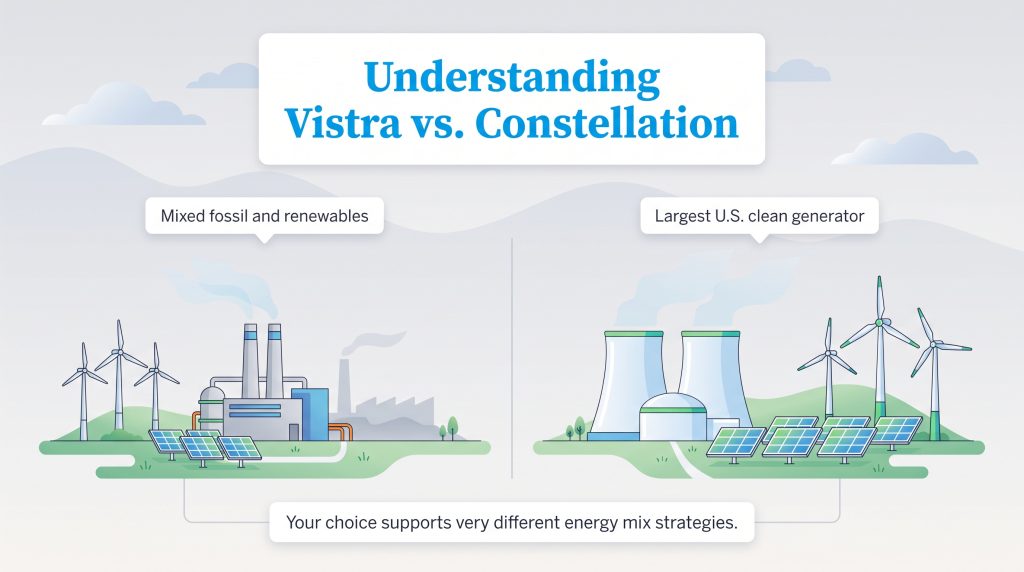
When evaluating Texas deregulated energy market providers, looking at the parent companies reveals exactly where your electricity originates. TXU Energy is a prominent subsidiary of Vistra Corp, an energy titan with deep historical roots across the Lone Star State. While Vistra Corp is actively investing in utility-scale battery storage and renewable transition projects, its current generation fleet relies heavily on a mixed portfolio that still includes traditional natural gas and coal facilities. This mixed generation model helps ensure reliable power during grid strain, but it may not immediately appeal to households aiming for a pristine zero-carbon footprint right at the source.
On the other side of the Vistra vs Constellation Energy matchup is Constellation Energy Corporation. Unlike many retail electricity providers that only act as middlemen purchasing energy on the wholesale market, Constellation actually generates a massive amount of power itself. In fact, Constellation is the largest clean energy generator in America, largely due to its industry-leading commercial nuclear fleet and growing investments in solar power. When you choose Constellation, you are supporting a corporate infrastructure heavily invested in baseload, carbon-free energy production.
Plan Variety: Free Nights vs. Usage Bill Credits
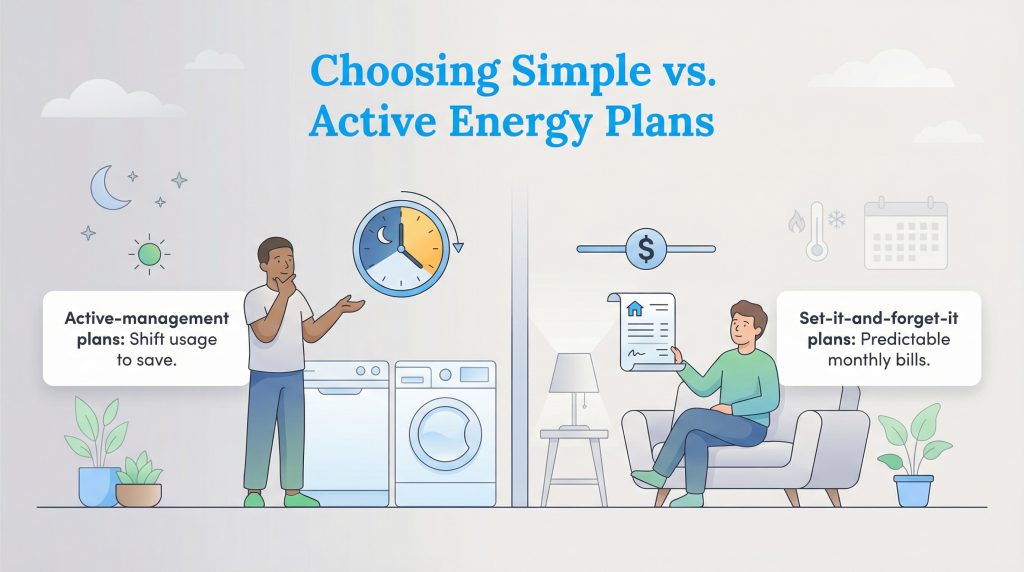
Comparing the TXU Energy free nights vs Constellation plans reveals two completely different approaches to household budgeting. TXU Energy thrives on lifestyle-based pricing, offering heavily marketed time-of-use options that provide incredible value if you can drastically shift your daily routine. Constellation fixed rate plans focus on straightforward billing and functional bundles that eliminate guesswork, which is highly beneficial if you are researching fixed vs. variable electricity rates.
Here is a breakdown of how to match their flagship plans to your specific household needs:
- Choose Constellation A/C Protect Plus if you own an older home and want built-in HVAC maintenance. This plan bundles your electricity rate with priority cooling system service, which is a lifesaver during brutal Texas summers.
- Choose Constellation 12 Month Usage Bill Credit if your family consistently hits higher usage tiers (like 1,000 or 2,000 kWh) every month and wants a simple, automated credit applied to the bill without checking the clock.
- Choose TXU Energy Free Nights if you work away from home during the day, own an electric vehicle, or can easily program your smart home devices to run heavy appliances strictly after 8 p.m.
- Choose TXU Solar Days if your household operates primarily during the daytime and you want your peak usage backed by 100% Texas solar generation.
Pro Tip: To actually save money on a Free Nights plan, you typically need to push at least 40% to 50% of your total household electricity usage into the “free” window. Running your air conditioner all day while working from home will completely erase the savings generated during the free nighttime hours.
TXU Energy Plans and Pricing
| Plan Name | Rate /kWH | Plan Term | Cancellation Fee | |
|---|---|---|---|---|
| Smart 1000 Saver 12 | 11.5¢ | Month to Month | N/A | Check Availability |
| Smart Edge 12 | 13.5¢ | 12 Months | $150.00 | Check Availability |
| Clear Deal 12 | 13.8¢ | Month to Month | N/A | Check Availability |
| Smart Edge 24 | 13.9¢ | 24 Months | $295.00 | Check Availability |
| Smart 500 Start 12 | 16.5¢ | Month to Month | N/A | Check Availability |
| Solar Value 12 | 16.5¢ | Month to Month | N/A | Check Availability |
| On Your Terms | 16.9¢ | Month to Month | N/A | Check Availability |
| Simple Rate 12 | 17.3¢ | Month to Month | N/A | Check Availability |
| Free Nights & Cool Summer 12 | 17.9¢ | Month to Month | $Fixed | Check Availability |
| Ultimate Season Pass 12 | 18.8¢ | Month to Month | N/A | Check Availability |
| Solar Club 12 | 19.1¢ | 12 Months | $150.00 | Check Availability |
| Texas Choice 12 | 19.2¢ | 12 Months | $150.00 | Check Availability |
| Texas Choice 24 | 19.2¢ | 24 Months | $295.00 | Check Availability |
| Flex Rewards | 19.3¢ | Month to Month | $0.00 | Check Availability |
| Smart Deal 12 | 19.6¢ | 12 Months | $150.00 | Check Availability |
| Solar Saver 12 | 20.2¢ | Month to Month | N/A | Check Availability |
| Flex Forward | 20.2¢ | Month to Month | N/A | Check Availability |
| Smart Deal 24 | 20.4¢ | 24 Months | $295.00 | Check Availability |
| Smart Deal 36 | 20.4¢ | 36 Months | $395.00 | Check Availability |
| Saver's Discount 12 | 22.6¢ | Month to Month | N/A | Check Availability |
Constellation Energy Plans and Pricing
| Plan Name | Rate /kWH | Plan Term | Cancellation Fee | |
|---|---|---|---|---|
| 12 Month Usage Bill Credit | 12.4¢ | Month to Month | N/A | Check Availability |
| 12 Month GREEN Usage Bill Credit | 12.9¢ | Month to Month | N/A | Check Availability |
| 24 Month Usage Bill Credit | 13¢ | Month to Month | N/A | Check Availability |
| 11 Month A/C Alert & Service for 2 units | 13.7¢ | Month to Month | N/A | Check Availability |
| 12 Month Electric Vehicle FlexCharge Plan | 13.8¢ | Month to Month | N/A | Check Availability |
| 12 Month (No Min Usage Fee) | 14.1¢ | Month to Month | N/A | Check Availability |
| 24 Month Electric Vehicle FreeCharge Plan | 14.2¢ | Month to Month | N/A | Check Availability |
| 12 Month Electric Vehicle FreeCharge Plan | 14.3¢ | Month to Month | N/A | Check Availability |
| 24 Month Electric Vehicle FlexCharge Plan | 14.3¢ | Month to Month | N/A | Check Availability |
| 24 Month (No Min Usage Fee) | 14.6¢ | Month to Month | N/A | Check Availability |
| 12 Month GREEN (No Min Usage Fee) | 14.7¢ | Month to Month | N/A | Check Availability |
Pricing Structures and Electricity Facts Labels
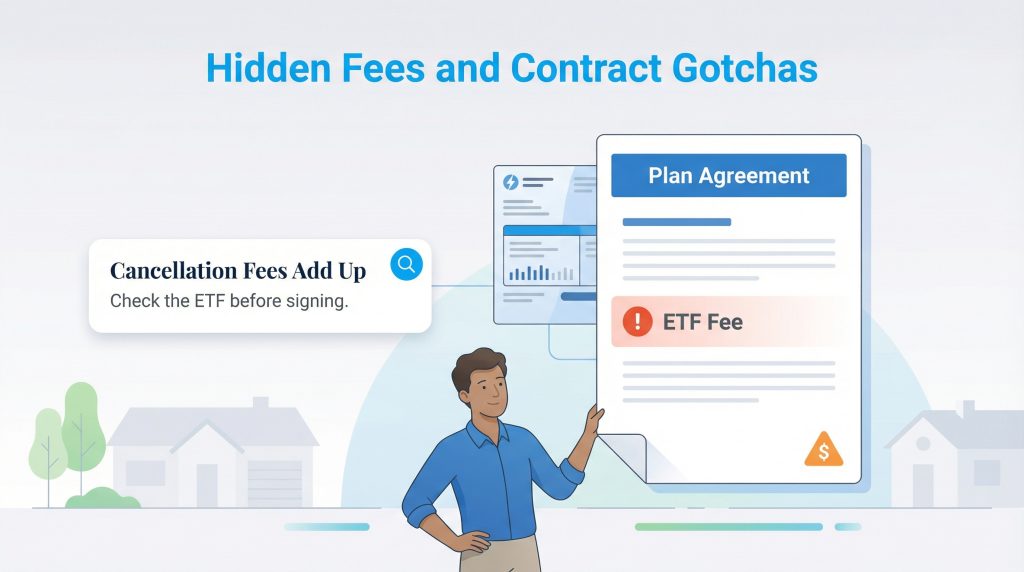
To avoid expensive billing surprises, you must master conducting a Texas electricity facts label comparison for every plan you consider. Texas energy regulations require all retail electric providers to publish an EFL, which acts as the nutritional label for your electricity contract. On this document, you will find the exact locations of potential hidden fees, including the minimum base charge and the minimum usage threshold.
Advertised rates in Texas are almost always based on exactly 1,000 or 2,000 kWh of usage. If your usage fluctuates, your effective rate will change. For example, if a TXU plan relies on a $50 bill credit that only applies between 1,000 and 1,500 kWh, crossing into 2,000 kWh means you lose that credit entirely, which can cause your bill to spike. A flat-rate Constellation plan at 14 cents per kWh without thresholds would simply cost exactly what you expect for the power you use.
Calculating Your Final Bill with TDU Delivery Charges
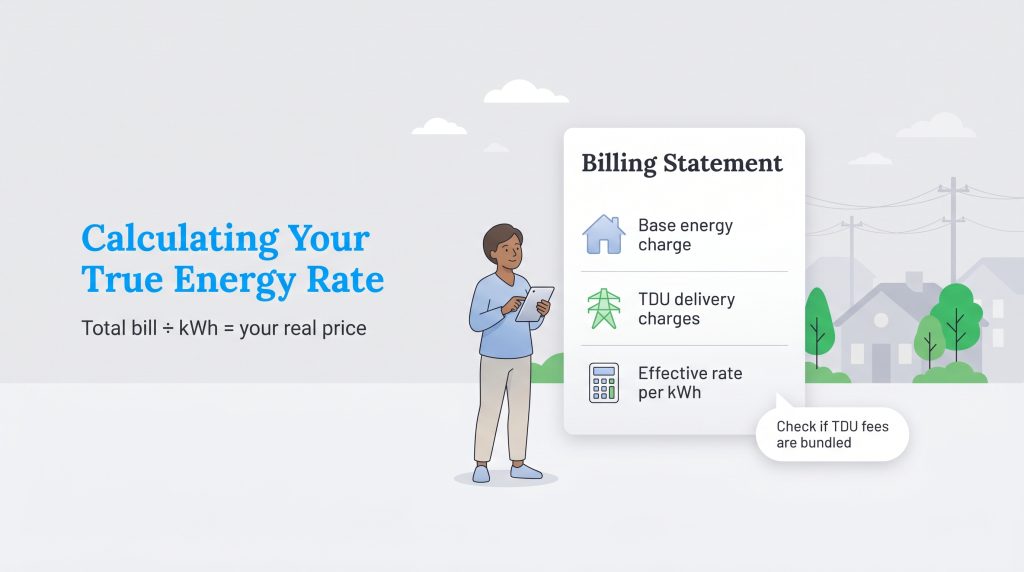
Understanding the TDU delivery charges is also crucial when calculating your final bill. These fees are passed through from your local utility company (like Oncor or CenterPoint) to maintain the power lines and meters in your area. Both TXU Energy and Constellation pass these charges onto the consumer, but you must check the EFL to see if the advertised rate bundles the TDU fees or lists them separately.
Finally, we need to address the early termination fees Texas electricity providers charge. This is a major factor if you think you might switch plans mid-contract. When comparing cancellation fees, the two providers take different paths:
- TXU Energy ETFs: Typically range from $150 to $395 depending on the length of your multi-year contract.
- Constellation ETFs: Generally utilize standard flat fees ranging from $50 to $150.
When does it make financial sense to pay the fee and switch? If you are stuck in an expensive 24-cent per kWh contract and find a new rate for 12 cents per kWh, the monthly savings on a large home will likely cover a $150 cancellation fee within just a few months. Always run the math on your remaining term before making the jump.
Green Energy and Sustainability Options
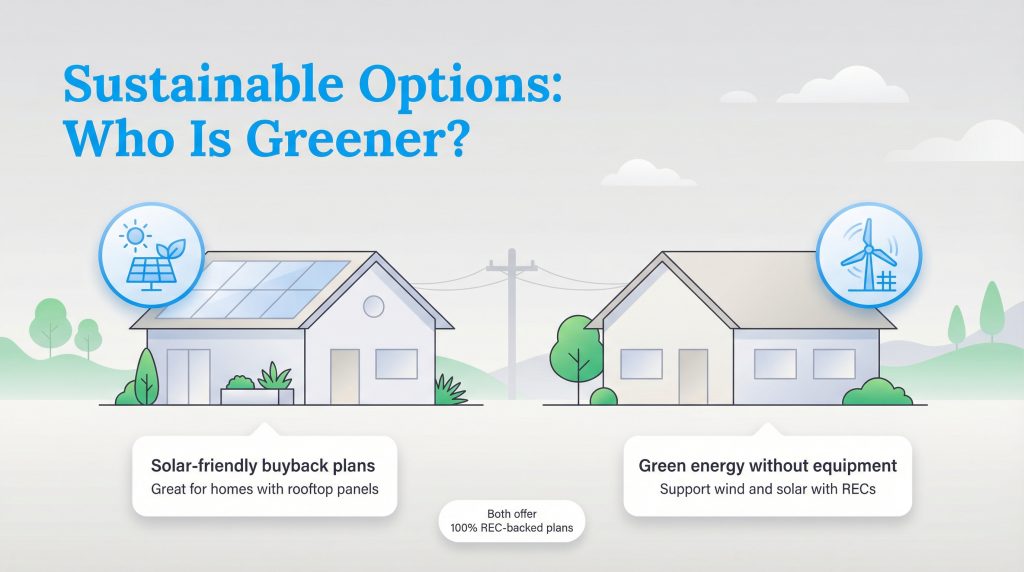
If reducing your household carbon footprint is a priority, both providers have environmentally mindful choices for you. The baseline, non-green plans for both companies contain roughly 25.9% renewable energy, which perfectly mirrors the standard Texas state average. However, if you want a fully sustainable option, both companies offer plans backed by 100% renewable energy credits (RECs). You can learn more about how RECs work from the EPA’s Green Power Partnership.
Where the two companies diverge is in their specialty eco-conscious offerings. TXU Energy heavily markets its solar buyback programs, making them a phenomenal contender for homeowners who already have rooftop solar panels installed. They will credit you for the excess energy your panels pump back into the grid, and you can add 100% green energy upgrades to nearly any standard plan.
Constellation, backed by the diverse clean energy portfolio of its parent company, focuses on offering robust 100% wind and solar REC plans. Because they are the nation’s top producer of carbon-free nuclear power, choosing a Constellation green plan means you are supporting a corporate structure aggressively dedicated to sustainable energy. To verify the exact renewable percentage of your chosen plan, always check the “Disclosure Chart” section at the bottom of the EFL before signing up.
Customer Service and Smart Home Perks

Customer service is a major differentiator in the deregulated energy market. As a legacy provider, TXU Energy customer reviews often highlight the brand’s incredible investment in multi-channel, 24/7 support. Their mobile app is widely praised for being exceptionally user-friendly, allowing customers to track usage trends in real-time, troubleshoot issues, and adjust their consumption accordingly through high-tech digital tools.
Constellation is a massive national corporation with a solid reputation for reliable, no-frills service. When reading reviews for Constellation, you will often find praise for their lack of billing surprises and smart home tie-ins. The company frequently partners with smart thermostat brands and offers specialized bundles catering to electric vehicle (EV) owners who need affordable overnight charging solutions.
According to the 2026 Public Utility Commission of Texas (PUCT) complaint scorecard data, both companies maintain highly respectable records given their massive customer bases, with Constellation maintaining an exceptionally low complaint ratio. Both companies also have incredibly low instances of severe violations like slamming and cramming, reinforcing their status as trustworthy retail electric providers.
The Final Verdict on Choosing the Right Provider

Finding the cheapest energy provider in Texas rarely comes down to the brand name; it almost entirely depends on your square footage and historical usage. There is no undisputed winner when naming the best electricity provider in Texas. The right choice depends entirely on your lifestyle, your home size, and your willingness to actively manage your daily energy consumption.
Comparing Providers for Apartments vs. Large Homes
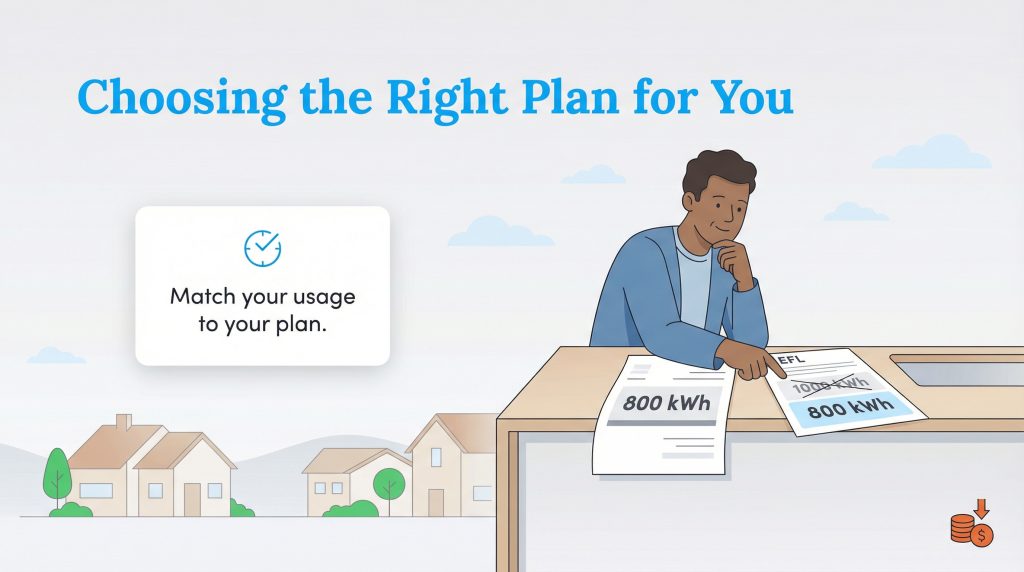
If you are wondering how to compare Texas electricity providers for different housing types, we strongly advise looking into Constellation fixed rate plans for apartments. Apartment renters typically use between 500 and 800 kWh per month. Because many TXU Energy plans include monthly base charges or require you to hit a 1,000 kWh minimum to earn a bill credit, low-usage customers are frequently penalized with a higher effective rate. Choosing a Constellation plan with no minimum usage fee allows apartment dwellers to pay for exactly what they use without jumping through mathematical hoops.
Conversely, large homeowners using 2,000 kWh or more per month can strategically leverage TXU Energy’s high-usage tiered plans. If you have a large HVAC system, a pool pump, or an electric vehicle, you are practically guaranteed to hit the high-usage bill credit thresholds that TXU offers. If your home features smart thermostats that allow you to program usage for the overnight hours, TXU’s Free Nights plans can dramatically lower the cooling costs of a multi-story home during the brutal summer heat.
Selecting the Best Electricity Plan for Your Household Budget
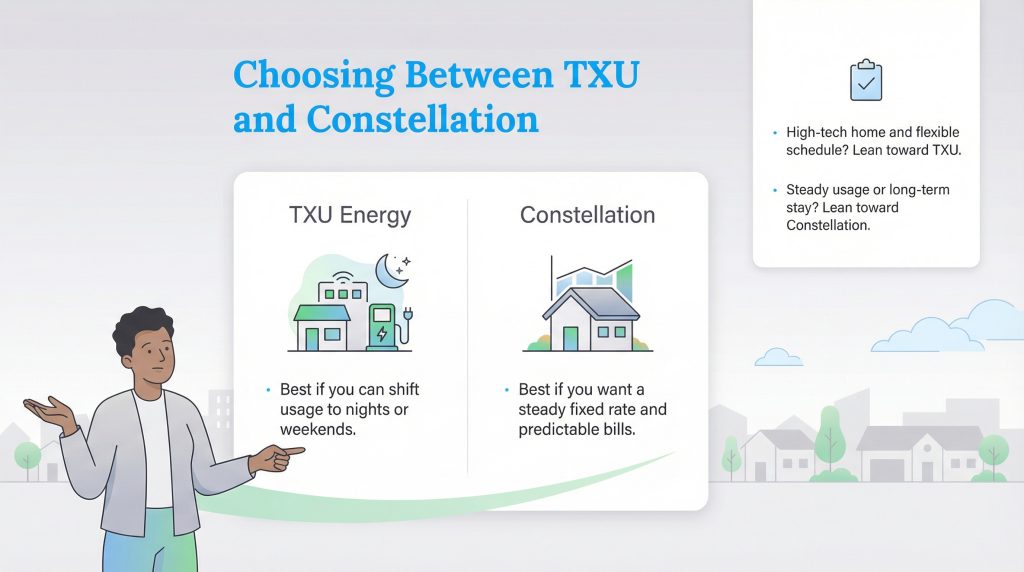
Ultimately, choose TXU Energy if you value top-tier digital tools, exceptional customer service, and have a smart home that allows you to shift usage to off-peak hours. Choose Constellation if you prefer a hassle-free, predictable bill with zero gimmicks, or if you want to support America’s largest producer of clean, carbon-free energy. For more comparisons, check out our guide to Texas utility providers. For more strategies on keeping your monthly costs low, read our comprehensive guide on how to save on your electric bill.
Frequently Asked Questions About TXU Energy vs. Constellation
What is the cancellation fee for TXU Energy vs. Constellation?
Cancellation fees, also known as Early Termination Fees (ETFs), vary by plan. TXU Energy typically charges between $150 and $395 depending on the length of your contract. Constellation usually charges a slightly lower flat fee, ranging from $50 to $150. Always check your Electricity Facts Label to confirm the exact amount before canceling.
Are TXU Energy’s free nights actually free?
The electricity consumed during the specific nighttime hours (usually 8 p.m. to 5 a.m.) is free from energy charges. However, to offset this, TXU charges a significantly higher rate during the daytime. These plans only save you money if you can shift at least 40% to 50% of your total household usage into the free nighttime window.
Which provider has the cheapest electricity rates in Texas?
There is no single cheapest provider in Texas, as rates fluctuate daily and depend on your specific monthly usage. Constellation often offers cheaper flat rates for lower-usage homes and apartments, while TXU Energy can be more cost-effective for large homes that hit high-usage bill credit thresholds.
Do TXU Energy and Constellation require a credit check?
Yes, both providers typically require a soft or hard credit check when you sign up for a new electricity plan. This helps them determine if an upfront security deposit is needed before initiating service at your address.
Which provider is better for apartments versus large single-family homes?
Constellation is usually the better choice for apartments because they offer simple, fixed-rate plans without base fees that penalize low usage. TXU Energy often shines for large single-family homes, as those households can easily hit the higher usage thresholds required to unlock TXU’s generous bill credits.
Can I get prepaid or no-deposit electricity plans from TXU or Constellation?
While both Constellation and TXU Energy generally require a deposit for new customers, this can often be waived if you have a satisfactory credit score or can provide a letter of credit from your previous provider. Neither company typically specializes in traditional “no-deposit” or prepaid plans, which are usually handled by alternative tier-two retailers.
Is TXU Energy the same as Constellation?
No, they are separate companies and fierce competitors in the Texas electricity market. TXU Energy is a subsidiary of Vistra Corp, while Constellation is part of Constellation Energy Corporation. Both are major retail electric providers serving deregulated areas of Texas.
Which company has better reviews in Texas?
Rankings vary by year and source. J.D. Power studies have historically ranked TXU Energy well for customer satisfaction, citing responsive support and a helpful mobile app. Constellation is often viewed favorably as a reliable, no-frills option with transparent billing. It is best to check the most recent reviews and PUCT complaint data for the latest information.
Can I switch from TXU to Constellation without a penalty?
You can only switch without a penalty if your current contract has expired or if you are within 14 days of your contract’s expiration date. If you switch mid-contract, TXU will likely charge you an Early Termination Fee, unless you are moving to a new address and provide the required proof.
Do both providers cover all of Texas?
Both providers serve the majority of deregulated areas in Texas. This includes major metropolitan areas like Houston (CenterPoint), Dallas-Fort Worth (Oncor), and parts of South and West Texas (AEP). They do not serve regulated areas like Austin (Austin Energy) or San Antonio (CPS Energy).
About the Author

LaLeesha has a Masters degree in English and enjoys writing whenever she has the chance. She is passionate about gardening, reducing her carbon footprint, and protecting the environment. She also recently served as President of the Board for City Sprouts (a community garden).

David has been an integral part of some of the biggest utility sites on the internet, including InMyArea.com, HighSpeedInternet.com, BroadbandNow.com, and U.S. News. He brings over 15 years of experience writing about, compiling and analyzing utility data.