
Take control of your home’s energy costs with these proven, money-saving strategies.
Key Takeaways
- Calculate your home’s average energy usage before locking into a long-term contract to ensure you get the most cost-effective tier.
- Compare fixed vs. variable rate plans to find the right balance of price stability and market flexibility for your household budget.
- Always read the fine print to spot early termination fees, base charges, and renewable energy percentages before you sign.
Moving to a new home in a deregulated market can feel incredibly overwhelming, but finding the right provider doesn’t have to be a headache. If you are searching for the best tips for choosing an electricity plan, we have you covered with strategies that cut right through the confusing industry jargon. You hold the power to dictate your monthly energy expenses by choosing a supplier that works for your unique household needs. By breaking down the fine print and focusing on the details that actually matter, we can help you secure a contract that fits your lifestyle perfectly.
Determine If You Live in a Deregulated Energy Market
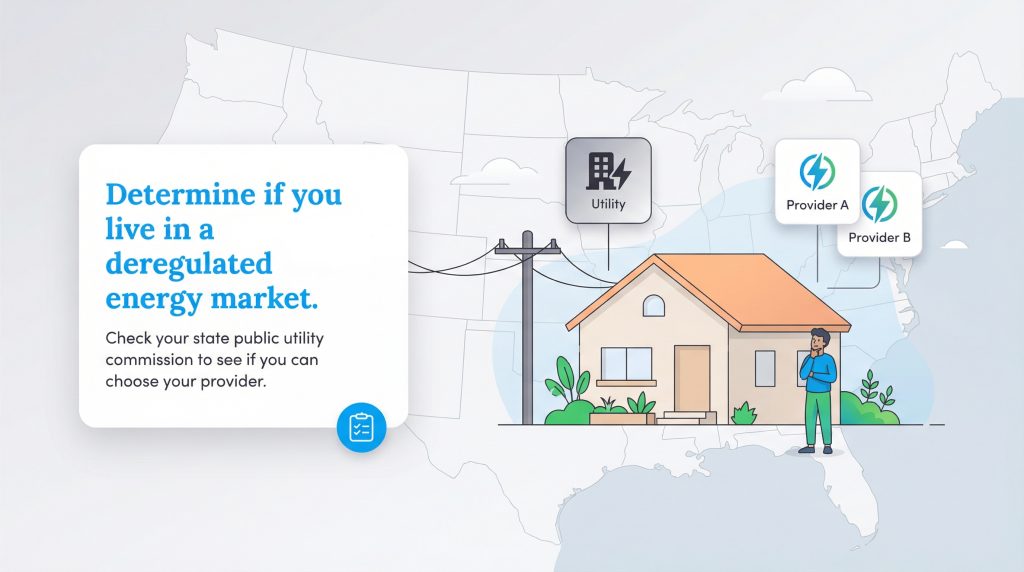
Not everyone can choose their electricity provider. In fully regulated states, a single local utility company owns the power lines and supplies the electricity, meaning you pay the standard rate they set. In deregulated markets, the local utility still delivers the power to your home, but you have the freedom to shop around for the actual energy supply. Checking with your state’s public utility commission is the easiest way to confirm if you have the power to choose your retail energy provider.
Gather Your Information Before Shopping
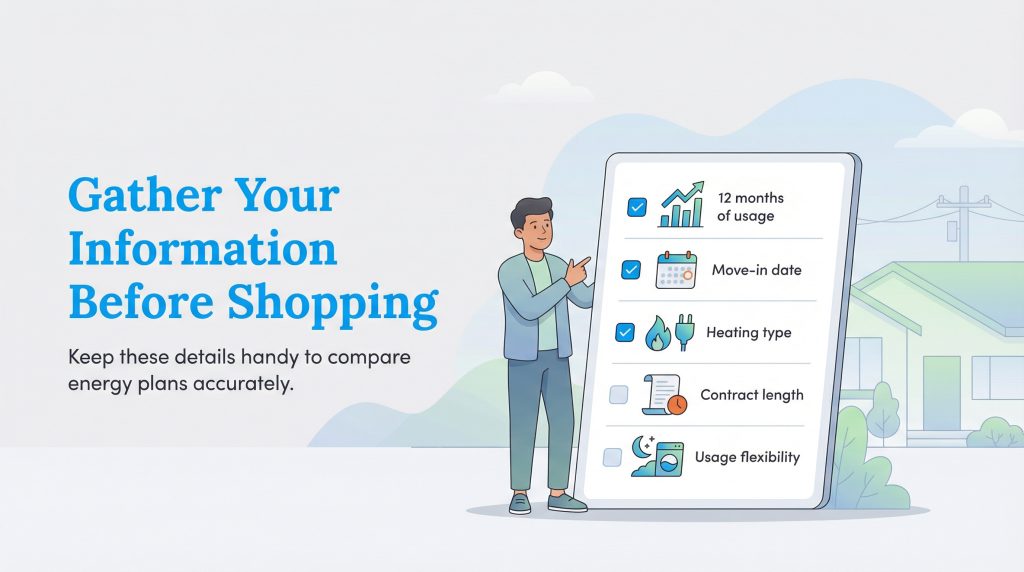
Preparation is key to finding the best energy deal. Before you start browsing rates, take a few minutes to collect essential details about your household and your energy needs. Having these facts on hand makes it much easier to compare options accurately.
- Your historical energy usage: Track down your past 12 months of kilowatt-hour (kWh) usage.
- Your move-in date: Know exactly when you need service to start at your new address.
- Your home’s heating type: Note whether you use electric or natural gas heat, as this drastically impacts seasonal usage.
- Your preferred contract length: Decide if you want a short-term trial or long-term price protection.
- Your flexibility: Determine if you can easily shift heavy appliance use to nighttime hours.
1. Know Your Home’s Average Energy Usage
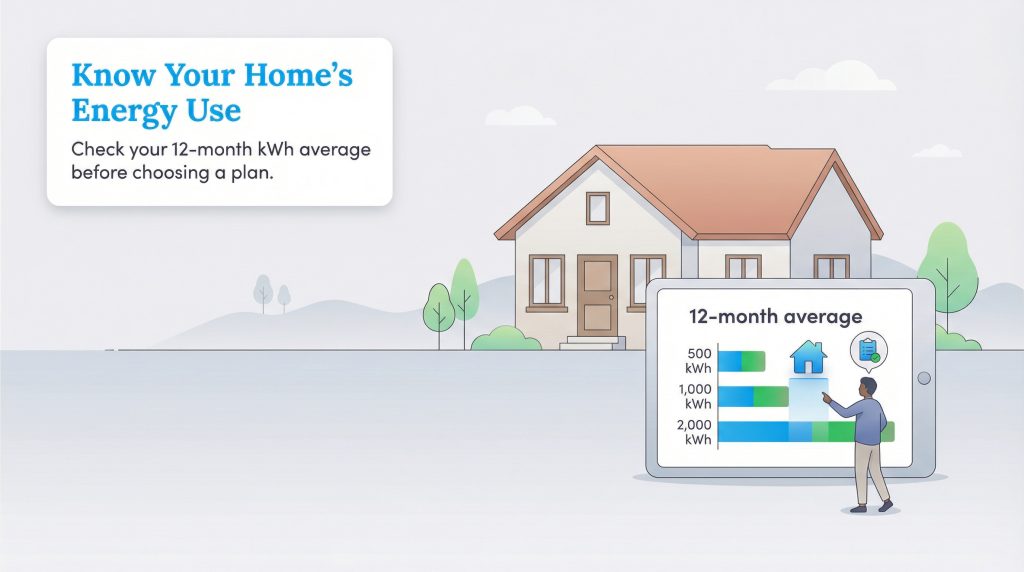
Retail electric providers love to advertise jaw-droppingly low rates, but those shiny numbers usually apply only if you hit specific consumption tiers. Most contracts base their pricing on usage blocks of 500, 1,000, or 2,000 kilowatt-hours (kWh) per month. If you want to know how to calculate your energy usage, start by pulling up your past utility bills to find your 12-month average. New homeowners who lack that history should simply ask the previous owners or call the local utility company to request historical data for the address. Guessing your usage often leads to paying a much higher rate if you fall short of or exceed your targeted tier. Taking a few minutes to pin down your exact numbers will protect you from unexpected spikes on your monthly statement. If you find your historical usage is high, you can take steps to reduce your overall energy consumption before locking into a contract.
According to the U.S. Energy Information Administration’s Residential Energy Consumption Survey, an average household uses around 877 kWh per month, though one-bedroom apartments often fall in a lower range depending on the local climate and heating type.
2. Understand Fixed vs. Variable Rate Electricity Plans
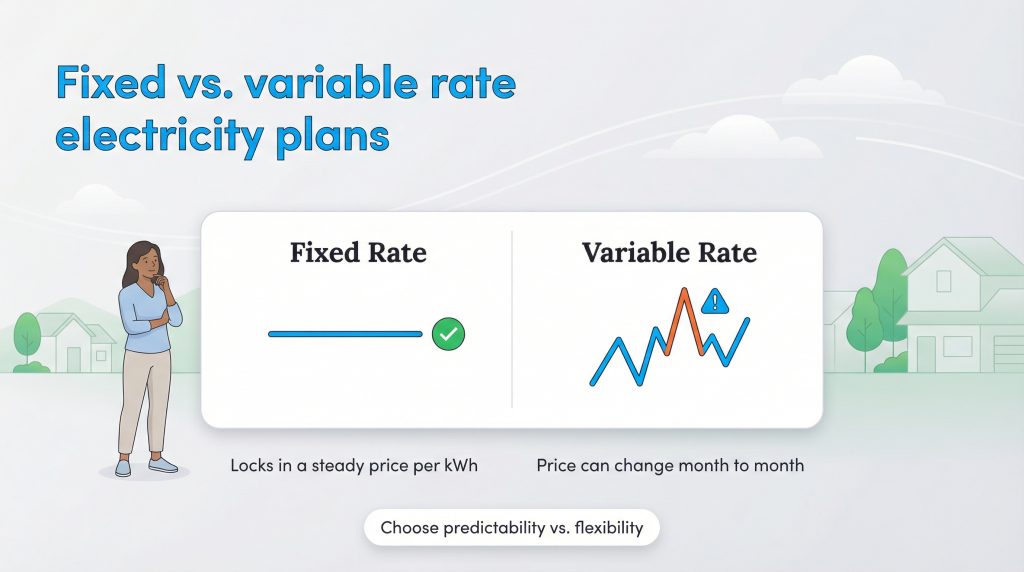
Understanding fixed vs variable rate electricity options is arguably the most crucial step in securing a predictable monthly budget. Energy markets fluctuate wildly based on extreme weather, global events, and supply chain constraints. When you sign a fixed-rate contract, you lock in a specific price per kWh for the entire term length, shielding your wallet from those unpredictable market swings. Variable-rate plans, conversely, shift from month to month based on current market conditions. While they offer immense flexibility without locking you down, a sudden heatwave can spike your bills significantly within a single billing cycle.
Most households find peace of mind with a fixed rate. Still, weighing the benefits and drawbacks of each structure can help you make a confident decision.
| Plan Type | Best For | Watch-Outs |
|---|---|---|
| Fixed-Rate | Predictable monthly budgeting and long-term price stability. | Early termination fees if you break the contract before the term expires. |
| Variable-Rate | Short-term housing situations or trying out a new provider without commitment. | Market volatility leaving you vulnerable to unexpected and sudden bill surges. |
| Time of Use | Households that can easily shift major energy consumption to late off-peak hours. | Premium pricing during peak daytime and early evening hours. |
3. Watch Out for Early Termination Fees
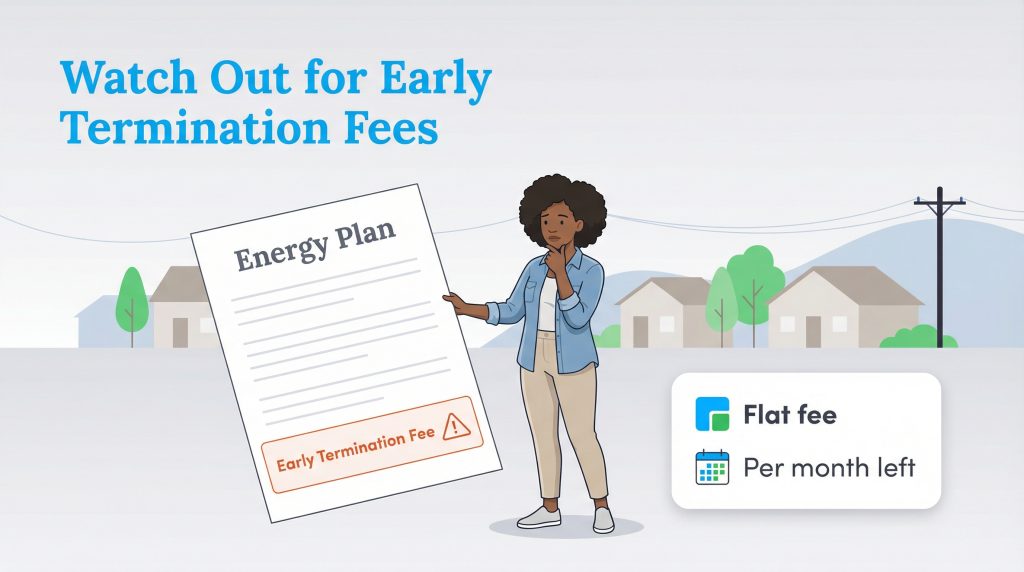
Nothing ruins the excitement of finding a cheaper energy provider quite like getting surprised by a penalty for leaving your old one. Understanding early termination fees electricity companies charge is a vital part of the shopping process. An early termination fee (ETF) kicks in if you cancel your fixed-rate contract before the agreed-upon expiration date. Providers typically structure these penalties in two ways. You might face a flat fee, regardless of how much time remains on your contract. Alternatively, some companies charge a set amount for every month left on your agreement. Always check the ETF policy before you sign, especially if you anticipate moving or want the freedom to chase better rates later.
4. Decide If a Time of Use Electricity Plan Makes Sense
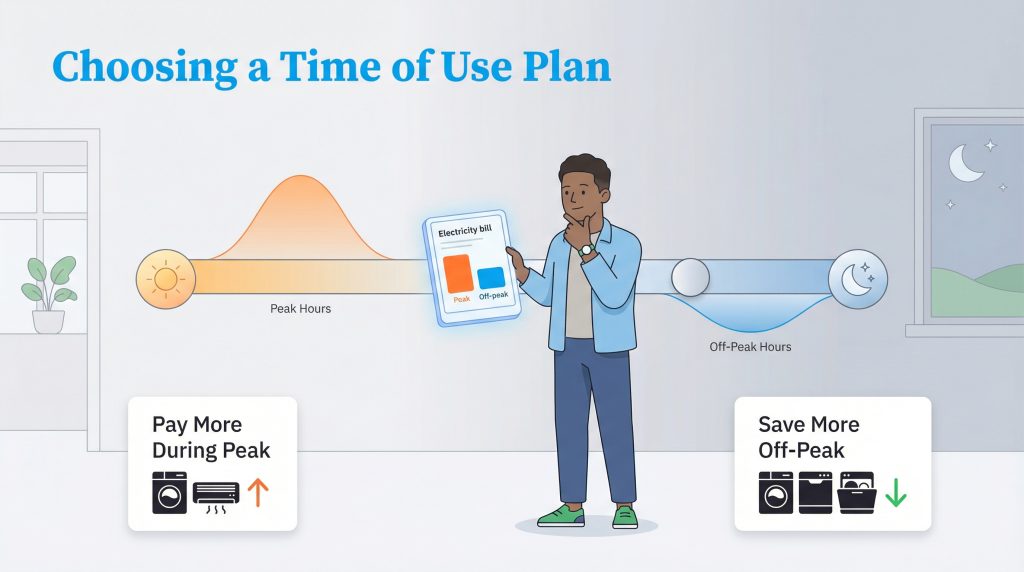
You might see advertisements touting “Free Nights and Weekends” and wonder if there is a catch. Having time of use electricity plans explained properly reveals that these structures shift the cost of energy based on when you actually consume it. Providers charge a premium during peak demand times, usually late afternoon and early evening when families return home, crank up the air conditioning, and run appliances. To compensate, they offer heavily discounted or even free energy during off-peak hours, like the middle of the night.
These plans only save you money if you strictly adjust your lifestyle to match the billing cycle. If you work night shifts and run your dishwasher, washer, and dryer while the sun is up, a Time of Use plan will likely inflate your bill. However, if you possess the flexibility to delay running heavy appliances until after 9:00 p.m., these plans can be an energy-saving option.
5. Look Into the Best Green Energy Plans for Eco-Conscious Savings

Supporting sustainable power generation is easier today than ever before. The best green energy plans offset your household consumption by purchasing Renewable Energy Certificates (RECs) on your behalf. These RECs represent the environmental attributes of renewable generation, ensuring that an equivalent amount of clean energy enters the broader grid to match what you use. While this environmentally mindful choice might cost a fraction of a cent more per kWh compared to a traditional fossil-fuel plan, it drastically reduces your carbon footprint. You can even browse verified renewable energy programs to ensure your provider meets strict environmental standards. For homeowners looking to make a permanent impact, investigating these plans serves as a great stepping stone before transitioning to residential solar power.
6. Review the Contract Terms Carefully
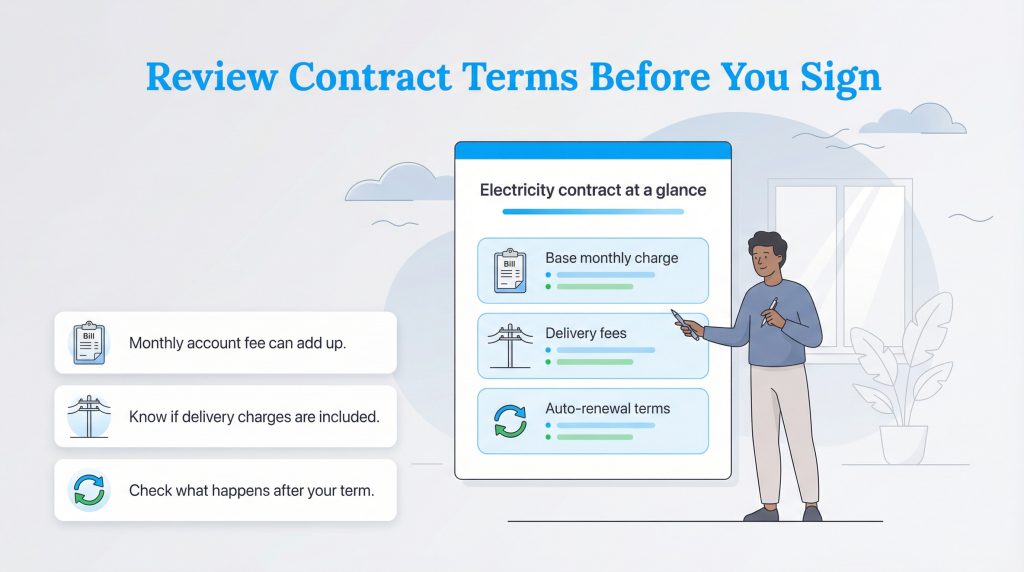
Before committing to a provider, you must dissect the plan’s disclosure documents. In Texas, this is known as the Electricity Facts Label (EFL). In other deregulated states, look for the provider’s contract summary, terms and conditions, or price comparison disclosures. These standardized documents serve as the ultimate source of truth for your agreement, cutting through the marketing fluff to show you exactly how your bill is calculated. Knowing what to look for in an energy contract prevents nasty surprises when your first invoice arrives. Pay close attention to the math governing the different usage tiers, as a rate that looks incredibly cheap at 2,000 kWh might be shockingly expensive at 500 kWh.
Always double-check these three crucial line items on your disclosure documents before signing:
- Base monthly charges: Many providers tack on a flat fee ranging from $5 to $10 just for having an active account.
- Utility delivery fees: Ensure you know whether the advertised rate includes the transmission and distribution charges from your local utility.
- Auto-renewal clauses: Check what happens when your term expires to avoid automatically rolling over into an exorbitant variable rate.
7. Use State Resources to Compare Electricity Rates
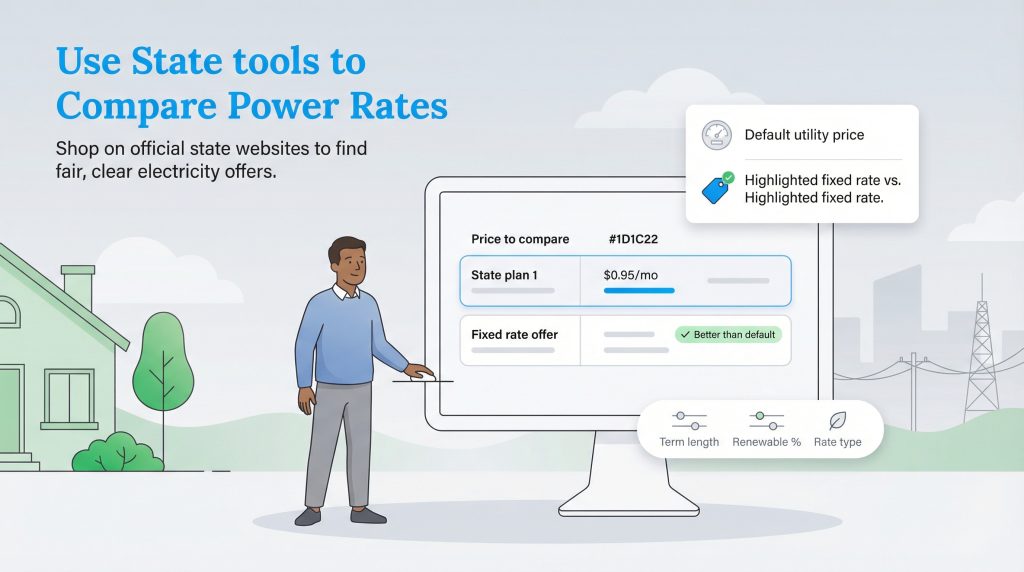
Dodging aggressive door-to-door salespeople and confusing mailers can be a frustrating part of living in deregulated energy markets. The absolute safest and most objective way to shop is by using official state-sponsored utility commissions. These impartial platforms force retail energy providers to compete for your business on a level playing field without relying on misleading advertising tactics.
When you want to compare electricity rates, start by visiting your state’s designated shopping portal. For instance, residents in Texas can use Power to Choose to filter plans by term length, renewable energy percentage, and pricing structure. Many states offer similar resources, so check your local public utility commission’s website for an official shopping portal. Utilizing these governmental resources helps you find legitimate offers backed by standardized disclosures, reducing the risk of signing up for an unfavorable plan. Figuring out how to choose an energy provider becomes infinitely simpler when you can easily sort out the reputable companies from the less reliable ones. Beyond just looking at the price, spend some time reviewing specific provider track records and customer reviews to ensure your new energy company delivers reliable customer service.
Find Your Utility’s Price to Compare
As you browse different state resources or provider websites, keep an eye out for your local utility’s “Price to Compare” or default supply rate. This benchmark figure represents the standard price you will pay if you do not choose a competitive retail supplier. By comparing available fixed rates against this default number, you can easily determine if a new plan offers genuine savings over simply sticking with your local utility company.
Powering Your Home on Your Terms

Taking charge of your monthly utility expenses is a deeply empowering aspect of managing your household. Spending just 20 minutes researching your usage, verifying contract terms, and comparing offers can easily save you hundreds of dollars a year. You work hard for your money, and you deserve an electricity plan that respects your budget while accommodating your lifestyle.
Armed with these strategies, you are entirely prepared to navigate the deregulated market. Keep an eye on your consumption, embrace the predictability of a fixed rate, and watch those monthly savings stack up.
Frequently Asked Questions About Choosing an Electricity Plan
What is a good electricity rate per kWh?
Do I have to pay a deposit for a new electricity plan?
What happens when my electricity contract expires?
Can I switch electricity providers if I owe my current one money?
Is it cheaper to do my laundry at night?
About the Author

David has been an integral part of some of the biggest utility sites on the internet, including InMyArea.com, HighSpeedInternet.com, BroadbandNow.com, and U.S. News. He brings over 15 years of experience writing about, compiling and analyzing utility data.